Blogs

Financial Planners & the Death of the “Fiduciary Rule”

With our technology today and the availability of financial information right at your fingertips, many people consider doing D-I-Y financial planning on their own.

We can’t blame them!

Some do not trust financial planners these days and they do not think that they’re not following the fiduciary rule at all. Perhaps, they have this one acquaintance who suddenly, out of nowhere, will message you and invite you for coffee. Only to find out that they want to discuss wealth management and financial analysis!

Is it still worth your time and resources to trust a financial planner?

https://youtu.be/KSar5qUV1d0

What’s a Financial Planner and What is Their Purpose

A Financial Planner assists you on your financial goals and purpose. They may involve in your budgeting, saving, tax strategies, wealth building and financial legacy creation.

They figure out your financial situation, digging in from your past financial problems towards creating doable financial goals that will bring freedom. In which, they must respond to the BEST interest of their client.

They figure out your financial situation, digging in from your past financial problems towards creating doable financial goals that will bring freedom. In which, they must respond to the BEST interest of their client.

David Rockefeller

Financial Planners and My Experience

Today, we call this ACH direct deposits but the importance of this cashflow has not changed. Yet, in the 1960-1980s, Americans were brainwashed to invest in non-income based investments that had heavy hidden fees with the creation of mutual funds.

This topic really fires me up!

Here is a little humorous video to lighten the mood. Warning… the video is 20 minutes so better put the sign on your desk saying you are “away at the toilet” or “away at lunch.”

I’m not a fan of Suze Orman/Dave Ramsey show because of their scarcity/frugal money saving ideas. But for some people who can’t seem to save two pennies to save their life, I guess it is better than nothing.🤷🏻

Obsessed on planning for your retirement?

https://youtu.be/gvZSpET11ZY

NOTE: Check out Suze Orman WTF face at 4:41 when the caller says their financial planner recommended buying an annuity (shocking 5% commission for the financial planner) . 

At 4:00 financial advisors make commissions and often put you in investments that are good for their pockets.

Obama tried to do a good thing and pass a law where all financial professionals (like brokers and insurance agents) had to adhere to the “fiduciary” standards—meaning they’d have to work in your best interest if they were advising you on your retirement investments. Unfortunately, this died recently and there is no more fiduciary rule.

Let’s make it clear, financial planners are NOT financial experts.

Have you noticed that many ‘experts’ are simply fee-based salespeople?

Most financial planners, advisors, wealth managers, professional managers, brokers, etc. are paid fees regardless of whether you make money. Even those who cater to the ultra-wealthy or manage family offices receive asset management fees based on total funds under management.

Look you don’t have to invest in real assets and get the amazing returns and tax benefits but whatever you do don’t invest with a financial planner!

Why?

Putting your money in an S&P 500 index fund and forgetting about it will almost guarantee you higher returns than relying on a finance professional. The S&P 500 beats financial professionals, including advisors and mutual funds, 92.2% of the time. You’re better off investing on your own and investing in an S&P 500 Index Fund!

Note: Federal Department of Licensing discussion on conflicts of interest or kickbacks to the tune of $17 billion


My Recommendation:

I do not recommend any financial planner because I don’t take financial advice who is still working for a paycheck and not out of the rat race (lives in their parent’s basement) but if you must go with one of my friends or a flat-fee one – http://www.fpany.org/

I have heard of these guys/gals do their sales pitch and use fear-based words like “diversity”, “security” and “risk” where the 25-year-old kid is trying to sell random investments to me. And don’t get me started when I tried to tell them about the being your own bank concept. #FacePalm They just tried to sell a higher return (6% whoop-ti-doo) with no liquidity. Totally not what I was going for. Not saying these guys are bad people, they just don’t know any products of the Wall Street institutions.

Note: When I call out financial planners I am also calling out brokers and insurance salespeople. I repeat, never listen to a broker! If they make enough phone calls, eventually they get someone to purchase a stock and make their commission.

Don’t be another Tool who invests in mainstream retail investments. You are getting robbed with you knowing!

Share this with your co-workers & friends/family that still believe in the Easter Bunny (happy pre-Easter!) and have a false sense of security in what this financial planner says.

Who took all your money?!? We are living in the best time to be alive with all this information at our fingertips.

Why do people still choose to follow the advice from financial planners working for a commission or so-called low-cost index funds that have about a million middlemen taking the majority of your returns? Who knows, probably why 10% of people in this test are still using the “pull out method” as their form of birth control?

This is a little off topic but make sure you are still awake there because financial education is very important.

Check out this podcast with a CFP telling us of the insider secrets in the industry.

Speaking of less known tricks! Last year, I learned this cool financial hack utilized by the smart money. By being your own bank and using the “Infinite Banking Concept” you can create a dividend-paying whole life insurance. It is called Life Insurance but its just a tax code loophole to make a tax free yield in an account that is sheltered from lawsuits and creditors. I can assure you this is another thing your financial advisor or life insurance sales guys just don’t get. Likely because they are still working for a paycheck and it actually decreases their commissions.

Go to SimplePassiveCashflow.com/banking for more info.

“Fiduciary”- AKA Fid- “dushe” -iary –  Means nothing more than someone is intentionally not going to screw you. Or sell you investments that put more money in their pocket.

For you, high net-worth professions still dabbling in paper assets you won’t want to miss this other trick that I will reveal on there too.

Financial advisers and portfolio managers get paid no matter what.

They make money by taking a percentage of your portfolio called an asset management fee. They have skin in the game.

Here’s how it works when things are good and the tide is floating all boats:

  • Your manager creates your portfolio but doesn’t really out preform the index funds
  • You have a gain and your manager takes 1% of that sum.

But in a bear market this is how it works:

  • Your manager cannot save you from a market downturn because they don’t put you in hard assets (cause they can’t get paid off of it)
  • You lose 20% of your nest eff and yet your manager takes 1% of the sum.
  • They still invite your to the customer appreciation party 😉

In bad times these managers rarely take any blame. Conventional conversation says nobody could see a downturn and we were dollar-cost averaging anyway.

If the market is good, they can take full credit for their supposed management skills.

They try to make things confusing with their complex trading systems which no one can explain in order to glorify their position and allow you to just let them drive.

No one really gets rich with Wall Street investing other than the insiders. Not retail, mainstream investors. As real estate investors, we do not buy retail (turnkey is sort of retail) but syndications and private placements are not retail.

https://youtu.be/Y1PZCSZbBDI

I only invest in things that make sense. Where the income has to exceed the expenses. And where there is a forced appreciation (not market appreciation) where you have control over your destiny.

In the end, you want to buy direct as possible. Buying REITS is the same thing as buying mutual funds with a bunch of middlemen. Crowdfunding sites remove a few layers but as a syndication working with a Crowdfunding site is very expensive way of acquiring capital. Sometimes I wonder who are the people using this high cost of private equity… Perhaps they are “desperate syndicators?”


Do you believe in the Easter Bunny?

Annuities are products of insurance companies peddled by their agents. And built upon a pyramid scheme with an older guy (which white hair) employing a bunch of young guys to find warms leads to a fancy office. 

Annuities pay extremely high commissions, often 7% or higher. On a sale of a $200,000 annuity, an insurance salesperson can earn $14,000.

When you have to pay Peyton Manning and Brad Paisley to advertise your product.. I’m out.

The drawbacks of an annuity (especially the opportunity costs of buying your first turnkey rental) are often ignored by ignorant salespeople.  An annuity is one of the worst investments you can make!

Insurance salespeople use scare tactics to sell annuities using terms like: 1) capital preservation, 2) diversification, 3) risk.

They claim, with an annuity, you’ll never run out of money. The one so-called advantage every insurance salesperson will tout is the guaranteed monthly income the holder will receive once he reaches retirement age. No matter the state of the economy, the salesperson touts, “you will always get paid, and your principal will not lose value.”

Protected principal and a fixed income sound nice but here is the truth…


Before we get into the drawbacks of annuities, it’s important to discuss the principle differences between the two main types of annuities, fixed and variable annuities.

Fixed annuities are very much like a bank CD. You deposit a sum of money, and the insurer agrees to pay a certain interest rate over a specified period. Supposedly, you’re protected from downside risk in that your principal is contractually guaranteed.

Variable annuities, on the other hand, are more like mutual funds and can go up and down with the market. However, there are some significant differences between annuities and mutual funds that make choosing mutual funds over a variable annuity a no-brainer.

Stock Market Scenario (2022)

With the differences between fixed and variable out of the way, here are the primary reasons why you should avoid annuities:

1. Limited Upside

With fixed annuities, in exchange for the security of a monthly income, you give up most of the upside on your investment. Fixed annuities protect principal but also limit the upside. Some fixed annuities allow the holder to participate in the upside of their investment; however, they usually cap it at around 4% per year.

So even though it’s true if the market falls 20%, the investor won’t lose any money with a fixed annuity, on the flip side, if the market gains 20%, in most cases you will not participate in the upside. If you do, you’ll be limited to 4%.

With fixed annuities, even with the highest paying offerings, the most you will top out at is 4% per year. Factoring in inflation, that 4% on your principal in today’s dollars, may not be worth much when you retire in 20 years.

2. Fees & Expenses

Some compare variable annuities to mutual funds, but there’s one big problem with that comparison. Even though you can enjoy more upside than with fixed annuities, variable annuities are saddled with additional management fees not associated with mutual funds.

These high fees, usually known as insurance costs or M&E (mortality and expense) charges, result in higher annual operating expenses than mutual funds.

https://youtu.be/8v-DiV2b6wI

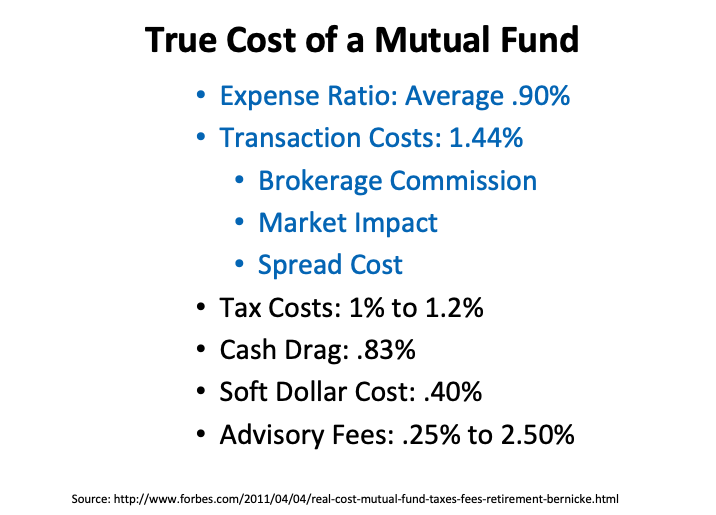
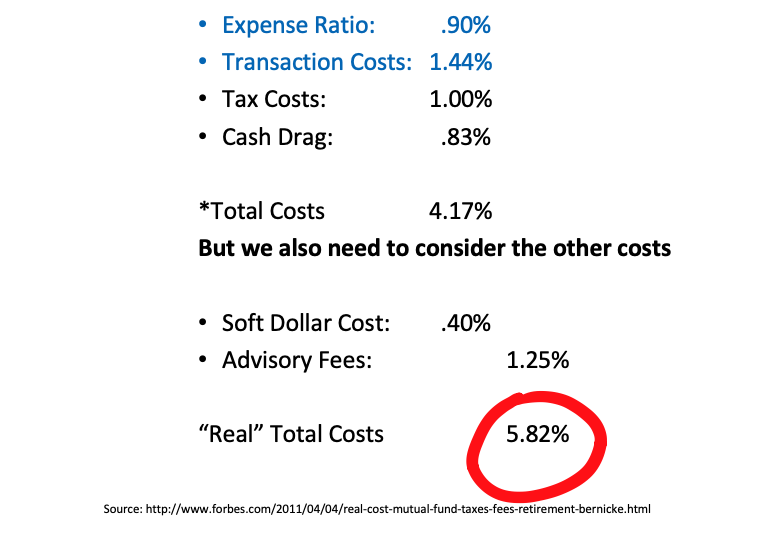
 Average annual expenses are up to three times higher than a typical mutual fund’s expenses, sharply reducing your future investment returns.

Example how impactful fees are:$1,000 for 40 years @ 8% = 24,523.81 => 0% fees = you keep it all$1,000 for 40 years @ 7% = 16,440.17 => 1% fees = you keep 66% of your return$1,000 for 40 years @ 6% = 11,020.97 => 2% fees = you keep 45% of your return1% in fees on an 8% return costs you 33% in compounded losses over 40 years.
3. Taxes and Penalties

Annuity distributions are taxed at ordinary rates. The monthly distribution on a fixed annuity is taxed just like interest on a CD. That fixed annuities are taxed like CDs is not unexpected. That variable annuities, invested like mutual funds, are taxed at ordinary rates when money is withdrawn should make every potential buyer of annuities run for the hills.

So on top of the already high management fees, you’ll more than likely pay more in taxes when withdrawing your money at ordinary rates instead of the capital gains rate you’d pay from withdrawals on your mutual funds. On top of the obvious tax disadvantages of investing in annuities, the various penalties associated with annuities should also deflate any enthusiasm for these products.

Annuities are contracts that require you to hold them for a minimum amount of years (i.e., surrender period) before the guaranteed payments kick in. If you withdraw your money within this surrender period, you’ll incur early withdrawal penalties. Surrender periods vary from two years to 10 or more, and the corresponding charges typically decline with time.

For example, a deferred annuity with a 10-year surrender period would charge 10 percent on money withdrawn the first year, 9 percent the second year, 8 percent the third year and so on. On top of the early withdrawal penalty, if you make a withdrawal before age 59½, you’ll be subject to a 10 percent federal tax penalty. With these types of penalties, annuities are designed to keep you in for life.

4. Their Guarantee is not Exactly a Guarantee

Unlike bank deposits that are guaranteed by FDIC for up to $250,000, annuities are not federally insured. The insurance companies themselves make the guarantees, and those guarantees are only as secure as the insurance company making them. If the insurance company goes belly up, you’ll be out of luck.

5. About That Guaranteed Income

It doesn’t sound so great when you really dig into the math. For example, if you bought an annuity at age 35 that doesn’t start paying until age 65, you’re tying up your money for 30 years. For what? The chance to make a maximum of 4% a year on a fixed annuity, taxed at ordinary rates? Variable annuities aren’t much better as outrageous fees absorb any potential upside. To illustrate how bad annuities are as an investment, especially for retirement, consider the performance of the S&P 500 over the past 30 years, which had an average annual return of 6.73%. You’d be far better off putting your money in an index fund for 30 years and letting that money compound so by retirement age, your return will far exceed the 4% return on a fixed annuity, and you will enjoy the advantage of your withdrawals being taxed at the capital gains rate instead of at ordinary rates with annuities.

Like a subpar cell phone pushed by an overzealous salesperson, annuities are subpar financial products pushed by overzealous insurance agents who stand to make a killing on commissions if they sell you one.

They prey on the fear that you’ll run out of money in retirement if you don’t go with something that pays you a guaranteed fixed income. You may want to think twice before considering annuities as an investment. I can’t think of one person annuities would benefit and the only ones profiting from them are the insurance companies and their agents selling them. Don’t fall for their incentivized sales pitch!

The hardest part of breaking up is just transferring over the money when your salty-FP does not help you and stops being your pal.

https://youtu.be/HJ89lMXLJGA

An excerpt from “Tax-Free Wealth” by Tom Wheelwright

THE MUTUAL FUND TAX TRAP

Mutual funds are the most common form of stock market investing. The problem is that mutual funds contain a tax trap that many people don’t know about. Think of a mutual fund as a pass-through entity like a partnership. The income earned in a mutual fund is not taxed to the mutual fund. Instead, it’s taxed to the investors. That might be okay if everyone entered a mutual fund at the same time. Everyone would simply report their share of gains and losses on the stocks sold in the mutual fund, and then they would see the value of their investment grow or decrease by those same gains and losses.  

That, however, is not how it works. If you invest in mutual funds, you will likely buy into a fund that has been around for many years. Over the years, investors have come and gone while the fund has purchased many different stocks over those same years. The challenge comes when the fund goes to sell a particular stock. Let’s say you decided to invest in Mutual Fund A at the beginning of the year. The fund bought Stock B for $10 per share fifteen years ago. When you joined the fund at the beginning of the year, Stock B had a market value of $50 per share. The day after you join the fund, the fund managers decided to sell the stock. So there is a gain to the fund of $40 per share on the sale of Stock B.

Who pays the tax on the $40 gain? You do, even though you just joined the fund the day before. All investors who owned shares of Mutual Fund A on the day the mutual fund sold the stock share the gain. Doesn’t seem fair, does it? It gets worse.

Suppose you paid $100 per share for Mutual Fund A when you bought it in January. At the end of the year, the stock takes a dip in value and now your shares of Mutual Fund A are only worth $80 per share. You still have to pay tax on your share of the $40 gain from the sale of Stock B inside the mutual fund.

RULE #17: Mutual funds are one of the few places where you can lose money and still owe tax on your investment.

Our mastermind did a book club on this book and here are the recordings.
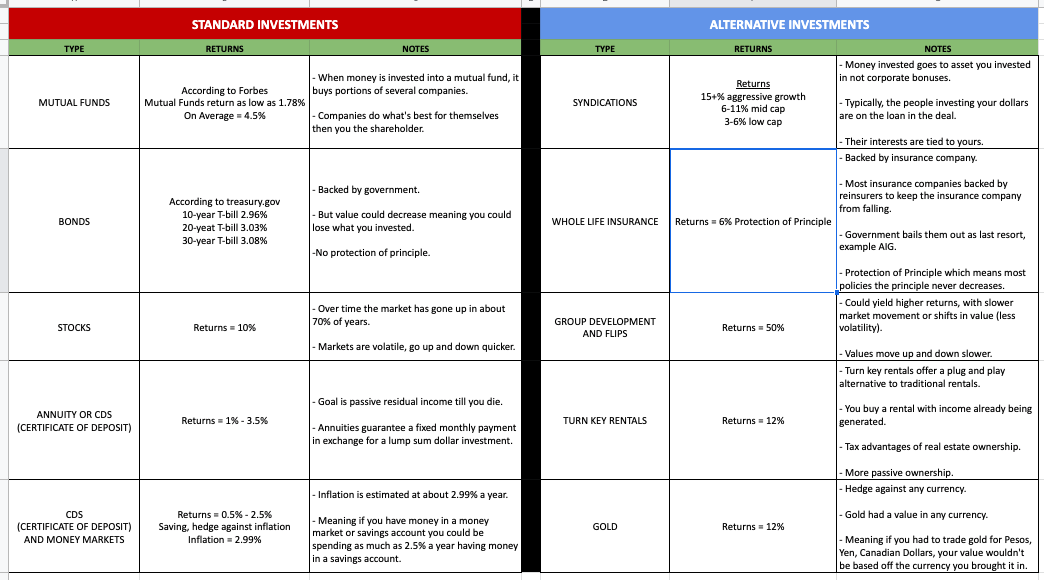
Printable file to share with love ones

Financial Dogma
“Wall Street is the only place that people ride to in a Rolls-Royce to get advice from those who take the subway” -Warren Buffet s


This is a confession that I have trouble hanging out with regular people because I struggle to biting my tongue whenever I hear money myths.

Part of the problem is that people and their parents (role models) have lived this way for so long that I am fighting uphill. Combine this with confirmation bias and fragile over compensating egos who don’t have a clue what they are doing financially it’s just better to shut up and smile silently.

Many of the misconceptions out there are born from millions and millions of marketing dollars to feed the Financial Complex and commissions for misled sales-folks just trying to pay for food, shelter, and clothing.

I was reading this article on brainwashing your child to like your favorite sports team and it made me realize how impressionable we all are. And how it is all reinforced by each other.

Here are some of these myths that I want to call out in this safe SPC environment:

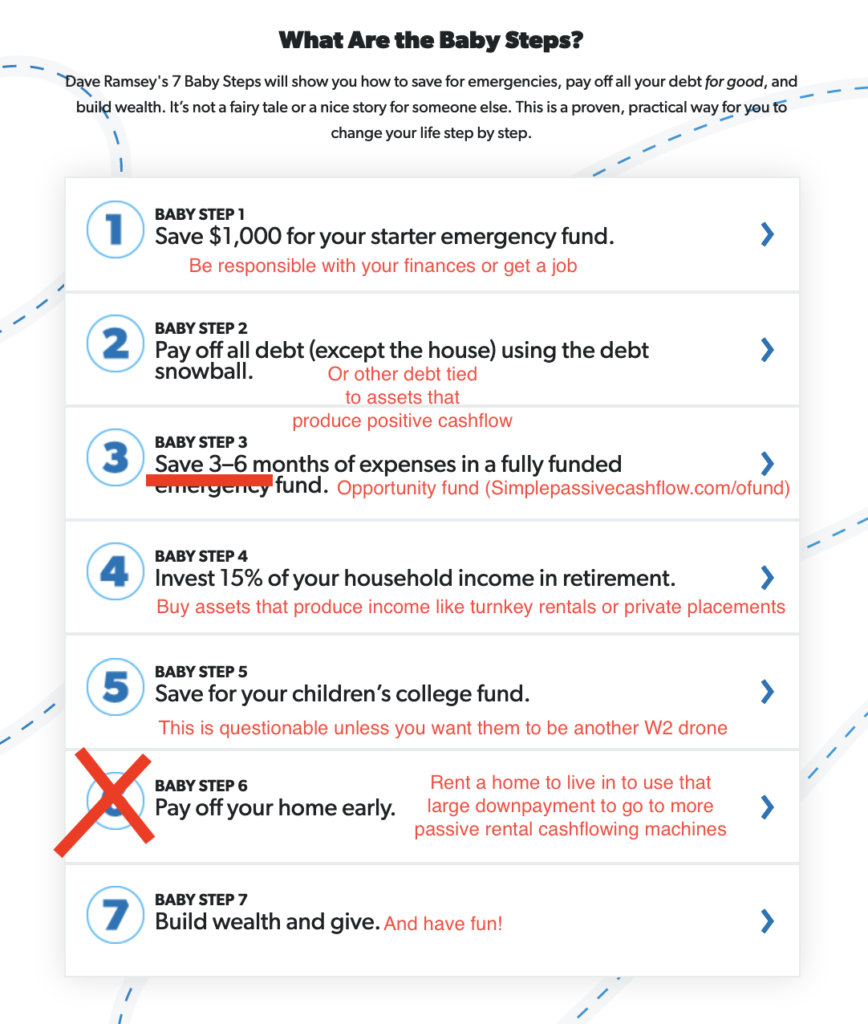
  1. A 529 college saving is for the investing clueless. A 529 plan is a type of savings account designed to help pay for college-related expenses. There are two types of 529 plans: college savings plans and prepaid tuition plans where college savings plans are more typical because prepaid tuition plans come with big premiums and are not guaranteed by the state Like a 401K or other retirement accounts, it grows tax-free. By investing any after-tax contributions in stocks, bonds, or a mix of other investment options you choose you can shelter it from taxes until you can take it out if used for qualified educational expenses (undergraduate or graduate studies, including tuition, books, computers, and even room and board and now private elementary, middle, and high school tuition). Prepaid tuition plans allow you to pre-purchase all or part of tuition costs for an in-state, public college. You can also transfer your investment to a private college 529 plan that is sponsored by over 250 private and out-of-state colleges. You are essentially locking yourself into current tuition rates but the sophisticated SPC Nation knows that you are losing out on the immense opportunity costs if you invested that money instead in income producing turnkey rentals or syndications. And that brings us to the bigger issue… investing within a 529 is will get you some tax incentives but you are still investing in garbage (stocks, bonds, REITs, money market accounts, mutual funds) with the most risk and lowest returns. Other notes: be careful not to put into the child’s name because that would not be smart because they will likely like to screw off in Japan or something (unqualified and will face a 10 percent penalty tax). Also, the maximum lump sum contribution allowed before a gift tax is applied is $15,000 per year ($30K per couple if your child is so lucky to have two parents) #gratitude. If you are trying to game your FAFSA to get student loans in most cases if a dependent child or their parent owns the plan, financial aid eligibility will only be reduced by five to six percent. If the child owns the account and files as an independent, it can reduce aid by 20 percent (we told you not to do this above). You can get really tricky if a non-parental relative owns the fund, there will be no effect on financial aid — unless they withdraw the money. In this case, FAFSA sees the funds as income, and this can reduce financial aid eligibility by up to 50 percent. To avoid reducing your child’s eligibility, be sure to withdraw the money after any financial aid has been awarded. But remember you are still investing in garbage (stocks, bonds, REITs, money market accounts, mutual funds) with the most risk and lowest returns. Invest in hard tangible assets where the risk is less and returns are stronger! 
  2. Non- solicited Advice. Ever hear retirement advice from a fellow co-worker? Well if they have been there investing their money in risky stock/mutual funds or better worse the company sponsored 401K or pension plan. Why the heck would you take their advice? One of the most common pieces of advice is that they tell you if you delay your retirement to age 65, you get more money! Of course, you will because the Government has done the math and they figure many of those sorry souls will die decreasing their entitlements they have to pay out.

  3. The tax code is written in such a way where only the first few pages of the tax code explain the tax rates. The remaining thousands and thousands of pages explains how the government will incentivize you for government stimulus activities where you can get tax breaks for them. If the government takes these tax breaks it would remove the incentive for the so-called rich (leaders in creating) business and jobs, provide housing, oil, gas, food or whatever government stimulus is needed. Learn more from our Book Club study of Tax-Free Wealth. Avoid Ordinary Income – The wealthy avoid ordinary income because you can pay up to 39.5%.
  4. Borrowing as a Strategy for Asset Protection. Having a paid off house is the worse thing for asset protection. Everyone knows what you owe (or lack thereof) and you are a sitting duck for litigation in a country that leads the world in silly lawsuits. Encumbering your assets (hopefully good ones that produce income) in debt makes you less of a target to a predatory lawyer. PS… debt increases your return on investment as well as locks in your value because as inflation continues to rise you are paying back the balance on the pre-dated amount.

REITS are like mutual funds. There are so many middlemen taking your money with hidden fees. It is like investing in real estate just as much as drinking high-fructose corn syrup “real” soda.     

-Lane Kawaoka

According to the 2017 American Association of Individual Investors Asset Allocation Survey, the average individual investment portfolio consisted of about 66% equity, 16% fixed income, and 18% cash.

Large institutional investors or “Smart Money” asset allocation models contrast that of the average retail investor.

According to a January 2017 report from the National Association of College and University Business Officers (NACUBO), university endowments report average asset allocations of 35% equity, 8% fixed income, 4% cash and 53% alternatives.

With 401(k)s and IRAs heavily invested in mutual funds and with investment advisors heavily skewed towards equities to drive up fees, it’s easy to see why individual investors prefer the convenience of Wall Street.
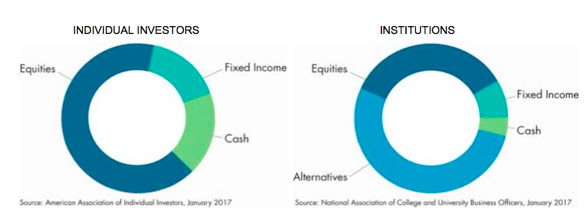
Why does the smart money allocate a majority of their assets to alternative investments? The simple answer is the returns are better.

Alternative investments are shielded from the volatility of Wall Street.

The JOBS ACT opened up the playing field is allowing more people into syndications.

This guy sold me a scammy life insurance policy, unlike the ones that the rich do… what can I do?

You basically have three options:. 

First option: Cash it out and just walk away with the cash that’s in it is the obvious choice that I would recommend in most cases especially when you can put it into a turnkey rental or syndication. In that case, you obviously no longer have a life insurance policy so the death benefit goes away.. Because of the way it was designed, it hasn’t built enough cash value yet for there to be any tax consequence so she doesn’t have to worry about that..

Second option: You could borrow against this policy and use the money that way.. Basically, she could do banking inside what she currently has, the downside is that it’s not a great cash building policy so there’s more cost in it than what you’d like to see and then the loan rate may not be real favorable..

Third option: Open a new policy (one that is designed for cash build up) and do a 1035 exchange into it where you could use the policy for banking.. The nice thing here is that you would have a little cash right up front to boost the new policy.. The downside is just going through the process of getting a new policy..

So basically, if you need/want the insurance death benefit and/or would like to use the banking strategy, the best bet would probably be to get a new policy that designed for that purpose and dramatically reduced cost.. If you don’t really care about using the banking strategy then you can just cash out and walk away with no issue..

Why We Avoid Investing in Wall Street

Wall Street investments:

  1. Is a roller coaster. Your investments are at the whim of the market. And things move so quickly.
  2. You have little input or control. With real estate you can use insider knowledge.
  3. Investments are retail meaning there are many layers of salesmen. Everything is based off sales commissions. The key is to get closer to the source to cut out all the layers of middlemen.

“We know what is going to happen if you keep investing in the same old stocks/mutual funds/bonds… you will keep working at your job with a lackluster retirement in 40-50 years. Invest in real estate for cashflow is a proven way that I created my pension today and allowed me to retire before I hit the age of 34. Do the math… the numbers don’t lie… people do”  -Lane Kawaoka

Thank you for supporting SimplePassiveCashflow. I made this website because I was lonely and wanted to build a tribe. Join me below:

Podcast #105 – Jordan Goodman – Affiliate connections + mortgage rate optimization + Dolphin mentality

https://youtu.be/MAvb05-xROY

Here is the download link for Jordan’s text on the mortgage rate optimization strategy: https://drive.google.com/open?id=1XajKX3Otl9egfIbTnPBsr49wf7pDZHsO

Cash our or Refi – https://simplepassivecashflow.com/cash-refi-question/

Webinar  – How to pay your 30-year mortgage in 4 to 8 years with Mortgage Rate Arbitrage – https://youtu.be/fwcY79AKkMA

YouTube Link: https://youtu.be/MAvb05-xROY

Text “simple” to 314-665-1767 to get access to the Hui Google Drive files and the 2018 Rental Property Analyzer

Please help the show by leaving a review: http://getpodcast.reviews/id/1118795347

Join the Hui Deal Pipeline Club! SimplePassiveCashflow.com/club

Pardon the grammar – I’m an Engeneer, Enginere, Engenere… I’m good with math! Here are the Show Notes:

Gets a piece of the action by leveraging your time, knowledge, and connections.

Download a free chapter in the Hui Files

Get a heloc, keep your income in the heloc and pay down your home mortgage
People depend on traditional sources
Don’t quit your job until you have the next thing going
Dolphin culture – help people without any return

Jordan Goodman has spent the past 40 years focused on one mission: to help Americans do better with their money. In a career spanning newspapers, magazines, books, radio, television, live events, teleseminars, and the Internet (www.moneyanswers.com), he has helped millions of people to solve their financial problems and realize their financial dreams.

An honors graduate of Amherst College, Jordan had just received his masters degree from the Columbia University School of Journalism in 1977 when he launched an award-winning, consumer-oriented newspaper insert, INFO, which reached 4 million readers every week. That early foray into consumer journalism soon led to an 18-year stint at MONEY, the foremost personal-finance magazine in the U.S., where Jordan reported and wrote on every aspect of personal finance. During his tenure at MONEY, he also became a regular presence on radio and television programs around the country. When Jane Pauley and Bryant Gumbel of the “Today Show” wanted to refute some of the more dubious strategies of financial guru Charles Givens in 1986, it was Jordan they asked to face down Givens. When Ted Koppel needed a financial expert to explain to “Nightline” viewers the implications of the stock-market crash of October 19, 1987, it was Jordan to whom he turned.

While at MONEY, Jordan also began to write the first of his 14 highly acclaimed books on personal finance. The Barron’s Dictionary of Finance and Investment Terms (1984), which Jordan co-authored with John Downes, has been translated into Spanish, German, Russian, Japanese, and Chinese, and has sold over 3 million copies worldwide. Now in its ninth edition, it is considered a classic in its field and a staple on the syllabi of college personal-finance and business courses, MBA classes, and securities training seminars.

In the 33 years since the dictionary was first released, Jordan has also written:
• Barron’s Finance and Investment Handbook (1986, co-authored with Downes) that provides a comprehensive analysis of every form of investment, plus a multitude of important investment resources. (The ninth edition came out in 2014.)
• Everyone’s Money Book (Dearborn, 1993, 1998 and 2001) a 970-page comprehensive financial reference that included over 6,000 resources and sold over 250,000 copies.
• The Everyone’s Money Book Series (Dearborn, 2003)
(including six separate volumes on Credit; Stocks, Bonds, and Mutual Funds; Real
Estate; College Financing; Retirement Planning; and Financial Planning)
• Reading Between the Lies: How to Avoid Becoming a Victim of Wall Street’s Next Scandal (Dearborn, 2004) aimed to educate consumers shaken by Enron-era debacles.
• Master Your Money Type (Warner Business Books, 2006) about the different psychological styles with which people relate to their finances, and how to minimize their weaknesses and maximize their strengths to build financial well-being.
• Fast Profits in Hard Times (Grand Central Publishing, 2008) that anticipated the current financial downturn and provides readers with investment strategies that allow them to make money even in a down market.
• Master Your Debt (John Wiley, 2010) which explains the many changes in the world of debt and offers specific resources to help readers pay off their mortgages in 5-7 years instead of 30 years, get control of their credit card debt, student loans and all other kinds of debt.
• The Ultimate Guide to Student Loans (CreateSpace, 2014) which explains how to save and invest before a child goes to college, how to get the best student loans when they get to college, and how to pay them off as quickly as possible after graduation.

It’s been 20 years since Jordan, in such demand as a keynote speaker, author, and guest expert on radio and television, left MONEY to focus on independent projects. He is the host of the weekly national Money Answers Radio Show which appears on the online VoiceAmerica Business Radio Network at www.voiceamerica.com. Once or more each week, he appears as a commentator on major TV news networks such as CNN, CBS, ABC, Fox News Network and Fox Business Network. During frequent trips around the country, he is a guest on local and regional radio and TV stations as well as a keynote speaker for such diverse audiences as the military, corporate employees, college students, and trade association members. He also participates in non-profit personal-finance-literacy programs such as those sponsored by the Jump$tart Coalition. And virtually every day, often several times a day, from a microphone on the desk in his home office, he speaks to millions of listeners through his regular guest appearances on countless radio shows. These include such prominent programs as “Sunday Morning Magazine” on KMOX that reaches numerous Midwestern states; KOA’s Money Monday hour with Mandy Connell in Denver, WCCO in Minneapolis with Jordana Green, WGN in Chicago with Steve Cochran.
Along the way, Jordan also has reached vast national audiences as a weekly commentator on CNN’s “Business Day” for 3 years; on Public Radio International’s “Marketplace Morning Report” weekly for 6 years; on the Mutual Broadcasting System’s “America in the Morning” daily for 8 years; and as a guest expert on NBC-TV’s “News at Sunrise” weekly for 9 years.

The son of a father who was a political-science professor for 32 years at the Ivy League’s Brown University, and a mother who was a dedicated community-service leader in Providence, Rhode Island, Jordan early on melded his father’s focus on world events with his mother’s emphasis on serving others. His parents’ formative influences, combined with his firsthand experience of a traumatic family financial crisis when he was a teenager, in large measure explain both the career path he has pursued with such passion and the reasons why he is today widely known as “America’s Money Answers Man.”

In all he does — in his books, his media appearances, his live speeches, his teleseminars, and even in the hundreds of email replies he crafts each month in response to listeners who write to ask for his advice, Jordan:
• teaches the underlying principles of responsible personal finance.
• makes clear the impact of current events on the consumer’s wallet.
• provides outstanding resources that can help the consumer to take the next smart step.

Podcast #104 – Interview – Brad Tacia – Mechanical Engineer transitions from SFH to MFH

YouTube Link: https://youtu.be/Z0SM21dLsCc

Text “simple” to 314-665-1767 to get access to the Hui Google Drive files and the 2018 Rental Property Analyzer

Please help the show by leaving a review: http://getpodcast.reviews/id/1118795347

Join the Hui Deal Pipeline Club! SimplePassiveCashflow.com/club

Pardon the grammar – I’m an Engeneer, Enginere, Engenere… I’m good with math! Here are the Show Notes:

Doing one house gets you started to gain momentum
Han solo moment was went when into MFH
At first wife was nervous in the beginning but with success came on board
Moved to MFH when had 5 units and 2k in cashflow
SFH is the way to go to learn to rent and pick out a property manager but its a personal question
Worse moment was seeing 2008
A pain point that forces people to make a change
Working up to expenses plus 20k
Do a little bit each day
Set goes every year – 40-50 goals – review once a week
Personal Background
Grew up in Oxford, Michigan
Graduated from General Motors Institute/Kettering University in Flint, Michigan in 2000 with a Bachelor’s in Mechanical Engineering
Married to wife, Lindsay and have 3 kids together
Started engineering career in 2000 and progressively moved up in position and responsibility to an engineering manager
Currently a program manager for automotive supplier Brembo

Real Estate Projects
Purchased primary residence in White Lake in 2008 as a foreclosure and rented out old primary residence in Madison Heights – “accidental landlord”
First intentional rental was a 3 bed 2 bath house in Waterford in 2011, added 3 more in Waterford from 2012-2014
Bought 12 apartment units in Monroe, Michigan in 2015
Bought 12 more apartment units in Monroe, Michigan in May 2016
In due diligence on a 63 unit apartment building in Lansing, Michigan
Goal is to retire my day job 2 years from now. From there, options I am looking into are real estate syndication and home inspecting

Success Habits
Keep a quarterly finance sheet to keep track of Net Worth, Assets, Liabilities, Income, & Expenses
List out yearly goals for family, finance, health, learning and track each week
Make sure to do things daily to get closer to goals
Dave Ramsey
Lifestyles Unlimited
REIs for networking
Checklists
Books
Millionaire Real Estate Investor – Gary Keller
Rich Dad Poor Dad – Robert Kiyosaki
The Complete Guide to Buying and Selling Apartments – Steve Berges
48 Days to the Work You Love – Dan Miller
What Color is Your Parachute – Richard Bolles
The Slightest Edge – Jeff Olson
Compound Effect – Darren Hardy
Quotes
“Leverage is key to wealth” – In regards to money, time, knowledge
“Money is on the other side of fear”
“Most people overestimate what can be done in the short term and underestimate what can be done in the long term”
“If you give a house a cookie…”
“What gets measured gets done”
“Spectacular achievement is always preceded by spectacular preparation”
“Those who say it can’t be done should get out of the way of those doing it”
“Go as far as you can see, once you get there, you will see farther”
“Play the game of money to win, don’t play not to lose”
“Don’t quit when you are tired, quit when you are done”
“Make sure your ladder to success is on the correct wall”

Contact Info
Email: bradtacia@gmail.com
Facebook & Linked In – Brad Tacia
Facebook Page – Apartment Investors of Michigan

Podcast #103 – My Story – Money Savings Ideas Before the Simple Passive Cashflow (Scarcity Mentality)

YouTube Link:https://youtu.be/HOeBP0w00eI

George Ross (Trump’s legal advisor pre-presidency)

People don’t realize how long it took me to be financially free after buying my first rental in 2009. Granted I bought way too many single family homes and should have bought bigger deals sooner I now know how to accelerate the process.

But before I even had $20,000 saved up for my first down payment I was cheap… well I still am.

Looking back on the crazy stuff I did to save money, I now realize that I was trading time for money.

I still believe that saving money and being responsive is a good behavior to have. To spend your money wisely on value and not get caught up on the Hedonic Treadmill where we keep trying to keep up with the Joneses.

I started to a hobby to make Mead or fermented honey wine. It’s pretty healthy because of the good bacteria cultures.

I started it because I needed to diversify from my Kombucha hobby because moving to Hawaii I was worried that there was going to be a fruit fly infestation that would wipe me out.

Got to be diversified with multiple streams of income!

It’s been a busy month after wrapping up the closing on these two latest deals. If you are interested in the deal flow, make sure you are a part of our Hui Deal Pipeline Club.

I recently met George Ross who came to speak to my Syndication Mastermind for a private dinner. If you have need the movie “The Founder” you know the lawyer had a very big impact to Ray Kroch.  George was the legal counsel to Donald Trump during his rise and “retired” once he hard Trump was running for presidency. George He held court to the remaining 15 of us for 3 hours after dinner until midnight telling stories for the past. Very insightful to know that this man shaped the Trumps business sense.

He is known as a master negotiator and he gave us the following relationship advice:

“In marriage, I tell my wife that I make all the Major decisions and she can have the Minor decisions… In all my years of marriage, we have not had one Major decision come up.”

The recently launched YouTube Channel just clocked in at 17,577 minutes or 293 hours or 36 working days. So there much be one person watching my content around the clock which on the clock.

I need a little bit of a break and took the time to reflect back on how far I have come from 2009 and buying that first rental property. By the way remember to incorporate “play” into your day.

The first twenty tips came from myself but after sharing the list and finding the other ex-cheapskates out there we have been slowly syndicating more and more bad ideas. Note: they are not in any particular order.

Our parents will be so proud of us!

If you want to add more, please email me and I will keep growing the list. And if you like I can add you initials at the end to cement your legacy.

If you call me collect, I will not pick up!

UPDATE 19.06.17 – In some respects I still wear the cheapo badge like a old war medal. The truth is that cheap/easy/free people rarely get anywhere. It took me 7 years to get to 11 units on my own. I was not until 2016 where I started to invest serious money into mentorship, traveling, and connecting with people. Little do cheap/easy/free people know is that others see right through them and it surfaces as textbook scarcity mindset which repels the right people.

More on this topic – SimplePassiveCashflow.com/people

Money saving ideas for the shameless… (the before)

  1. Stack Mr. Rebates shopping portal and Groupon discount codes with gift cards purchased from eBay or Safeway with more gift cards and Mr Rebates shopping portal. To sign up go here: http://www.mrrebates.com?refid=413597
  2. Take a shower at work to save on utilities, water, and electricity – as a side benefit you go to the gym more often (do your 3S’s there, shit, shower, shave)
  3. If you work in a startup company that caters food, it’s a no brainer— eat at work and bring food home. Maybe you can even befriend someone that works there and join them for lunch from time to time. For extra credit consider a life of “intermittent fasting” and totally binge at these free meals.
  4. Wash your car in the rain. No mineral deposits left while it dries. Video of me demonstrating this: https://youtu.be/kZkYnkXOI7Q
  5. Costco leasing to own program
  6. Buy an Anker powerbank and charge it at work. Sadly I never got around to use them during what little time I had at home 🙁
  7. I would sign up for Microsoft play-tests so I could get a free software to then sell on eBay for money. The sad thing is that I am not even a gamer and it was completely obvious to the playtest team.
  8. Always take a pee before leaving for the day.
  9. Try to poop at the same time every day while at work… get paid to poop. Time is money and flushes cost 10 cents.
  10. There are soft drinks available at restaurants?
  11. Why are you eating at a sit down restaurant, you have to pay tip?
  12. If you must, order food to go and eat on the premises. Best of both worlds!
  13. Wear clothes with the tag on it and return it.
  14. Buy a snorkel from Costco to go to Hanama bay while visiting Hawaii to return it. Another Hui member cautions that on many electronics there is a 90-day return policy. Lady who returned a dead Christmas tree on Jan 4th.
  15. I rode my dangerous 50cc moped in the Seattle rain so I would not have to pay $4 per galleon in 2010.
  16. Use an app like GasBuddy to find the cheapest gasoline station, better yet, double stack your Costco credit card (4% cash back on gasoline) and buy Costco gas.
  17. Cash flow, cash flow, cash flow. Also, see uncle Kohlers team for tax optimization (easily the single largest expense in your life) http://keystonecpa.com/~keystone/images/5_Cash_Flow_Strategies_for_RE_Investors_eBook.pdf
  18. This one is a bit morbid, but an important one. Set up a revocable living trust with your lawyer to avoid probate expenses following the death of your family members\
  19. Susie Orman’s advice – make coffee at home and save yourself the $5 Starbucks Vente frappucino
  20. FAST (intermittently, not forever)! Skip breakfast daily (work yourself up gradually) and when you’re ready to get to the big leagues, attempt to fast for an entire day (no breakfast, lunch or dinner)
  21. Solar panels (maybe?)
  22. Free (coffee) money, this one’s really easy ($25/quarter or $100/yr) w/ BofA and Amazon http://www.magnifymoney.com/blog/consumer-watchdog/better-balance-rewards-card
  23. Maximize and optimize what you’ve got BankPurely has a 1.30% APY since April (not sure if promo rate?) but most banks have 1.0+% (which is 10x the 0.1% APY rate given by most conventional brick and mortar banks like BofA, Chase, WellsFargo)
  24. https://www.depositaccounts.com/savings/
  25. Become an Uber driver or deliver post maters? (not a big fan)
  26. If you have a spare room not in use, AirBnB it from time to time
  27. Check out EventBrite or other social event platforms for free lunch/dinner/drinks
  28. InvestinAHP.com        or email me for a few Burnzone book with your mailing address
  29. Buy Mod Pizza’s mega salad for $11.27. Dinner for days!
  30. Paid online surveys (not a good use of time)
  31. Coupons (think http://www.freestufffinder.com/)
  32. Use www.bensbargains.com or slickdeals.net before buying anything online
  33. Use Honey or Ebates or other discount portals for Amazon/eBay or other internet purchases to save a few %
  34. Certain credit cards provide 5x bonuses (Chase Freedom has rotating categories) and Chase Business cards are good for auto-pay things like internet with extra bonus categories
  35. Make a Ghetto Latte at Starbucks and other fun
  36. Charging up your electronics/phones/Gameboys at work before you leave for the weekend
  37. I never paid for Tinder plus or extra coffee beans on When Coffee Meets Bagel (but I would pay for SPC Friend Finder)
  38. Courthouse wedding
  39. “free stuff” on Amazon – since it looks like you’re into buying random stuff at amazon 🙂
    Essentially, what it is:
    1) you buy the stuff on amazon
    2) go back to tahoevine’s deal manager page to put in the order #
    3) once the stuff arrives, wait 7 days to write a review on it (it has to be a positive review and you get better ratings if you include photo and/or video)
    4) copy the link of your review into  tahoevine’s deal manager
    5) get the full refund a day later via paypal.
    A bought a bunch of random stuff (mostly dog stuff lol) just to test it out but so far it’s been working like clockwork:
    image.png
  40. The things we do to save money…

Other unorthodox parenting tactics from the Hui:

  1. Save the money by not sending them to private school (for the supposed network) instead just buy them a crappy car un college and have them give the rich kids to and from the parties. Its like grain finishing grass fed cows.

Growing up in Hawaii where a gallon of milk is $8, I was taught to save money in strange ways. (I don’t drink milk)

Some of those were pretty bad which develop into unhealthy money mindsets and can translate to negative social profiles.

Some downright unethical but hey if you are a cheapskate, own it!

I don’t condone any of these tactics but look, it is no coincidence why you folks continuously have so much money to invest and pay your bills on time unlike 4 out 5 of my Birmingham rentals every month.

Trading money for time… (the Recovery) – updated 11/8/18… 

  1. Using disposable chopsticks, plates, bowls, clubs, and forks to minimize time to wash dishes and put away. Also need less space for more of this “stuff”. I think we do not realize how much not only time we waste on this but water and electricity go into this.
  2. Use Uber as much as I can to minimize stress, the chance of an accident, 50 cents a mile per the IRS in wear and tear to your vehicle but most importantly you can bring your laptop and get some work done.
  3. Leasing a car – such a great decision. Its fun, the numbers make sense if you are able to grow your money at more than 14% a year, and don’t have to deal with any maintenance issues.
  4. Eat out. It just tastes better too. And no cleanup, prep, grocery shopping, etc.
  5. I used to be notoriously known for taking a red-eye flight from Hawaii (save on hotel) to the mainland and start the next property trip or conference the next day. Late in 2018, I decided to really upgrade to first class (pay $300 of my own money as opposed to using some kind of credit card travel hack or using my frequent flier status when I was once a corporate slave).It felt good but I believe more for paying for value and will only do it when I need it
  6. Taking some of my money to buy jewelry.
  7. Avoid PITA! Awareness is the first step and here are some examples.
  8. For future updates go here.

Send me some of yours!

Join the Hui Deal Pipeline Club!


Please help the show by leaving a review: http://getpodcast.reviews/id/1118795347

Download the FREE 2018 Rental Property Analyzer


We have the best “propeller hats” in the Hui Deal Pipeline Club

Over the past year, it has been an honor to get to know you in the Hui Deal Pipeline Club. The average member is under the age of 55, engineers/IT, geek out on data, and very adept at looking up stuff on your own. You guys will balk at deals that get you under 12% a year!

That said if you guys are finding good deals or operators let me know because I know you are Googling this stuff into the night!

Another Hui member built this free web app to get the preliminary data and crunch the numbers automatically for you on an SFH.  Check it out at http://propalyzer.info         

No login required. Please reply back your suggestions so I can give them back to the developer.

I’m working on a concept of buying new build turnkey rentals (getting the financing for you) and working them as a group. Let me know if this appeals to you.

Commentary from the elder Hui members:


Podcast #102 – Starting from nothing + Losing an Apartment + Transitioning from Active to Passive Income with Pat Hiban

YouTube Link: https://youtu.be/dSNwXUhxpLE


Please help the show by leaving a review: http://getpodcast.reviews/id/1118795347

Download the FREE 2018 Rental Property Analyzer for free: https://simplepassivecashflow.activehosted.com/f/14

Pardon the grammar – I’m an Engeneer, Enginere, Engenere… I’m good with math! Here are the Show Notes:

$480k horizontal income
Podcast is not simple passive cashflow
Used commissions to invest into real estate
Started out trading tome for money, working 40 hours a week, and was left with a $100 every week
Sold timeshare presentations
Danny got 3-4 of these a day and was the leader at the time and Pat beat him
Went to college and went to real estate sales where he is making commissions
Discovered horizontal lines – bought SFHs and moved to apartments and other buildings/businesses
Lost 2/3 of initial investment
LTI – After you pay your bills – currently $200K a year
Moving around current investments
18% lawyer loan, some private equity notes, apartment building syndication
Crossed over at age 46 to financial freedom number
Works 3 days a week (Tuesday-Thursday)
Chose to not work as much in 40s
Look where the poor creative lives because that is where the transitioning area is
Robert Kiyosaki says don’t buy where there are crane
Alchemist talks about the beginner’s luck – Pat started investing in non-real estate investments in 2008 – 50-100K here and there and 50% of them failed
Rip and duplicate things that are working
Real estate rockstar podcast!

Podcast #101 – Interview Jorge Newberry – Note Buyer Bootcamp announcement and non-performing notes

YouTube Video Link: https://youtu.be/aJ5lSoJoRK4


Please help the show by leaving a review: http://getpodcast.reviews/id/1118795347

Download the FREE 2018 Rental Property Analyzer for free: https://simplepassivecashflow.activehosted.com/f/14

Pardon the grammar – I’m an Engeneer, Enginere, Engenere… I’m good with math! Here are the Show Notes:

After Turnkey rentals I see people go into 1) Syndcaitions 2) BRRRS 3) Non performing notes

12/20/2016 – SPC034 – Jorge Newbery goes $28 million into the hole and the fight to get back to even – https://www.youtube.com/watch?v=Y1IN4BTvRPg&t
5/30/2017 – Non-Performing Notes w/ AHP Fund making 12% a year! – https://www.youtube.com/watch?v=ZvKue-rq4y8&t=2s
What is performing notes and non performing notes
Steps to get started
What can you get from people or networking in note world
NBBC Training
How did you start to scale ahp
where AHP succeeded and where we failed
the importance of due diligence – and how identifying trouble before you buy a loser is as important is buying winners
What are a few specific things you do (sort the spreadsheet) and simple formulas for a quick and dirty analysis
how to connect with real sellers willing to sell at real discounts
how to build your note business with the maximum likelihood of success
why the note-buying opportunity continues, and how to get ready for the next downturn
what to expect when you start foreclosure or borrower files bankruptcy
how much to raise capital
the value of contacts and relationships (AHP has taken years to build these up – and you can connect with them in two days)
the overlooked value of servicing, collateral and recording
how to maximize returns with fast, consensual resolutions
choosing a law firm: how to align interests and turn slow & costly into fast & cheap
how to get the most out of your servicer

Notebuyerbootcamp.com use code “simplepassive” for $200 off admission

Podcast #100 – My Story – The 100th (Drunken) Episode with Abhi Golhar – Who is Lane 2.0

VIDEO VERSION: https://youtu.be/azbjx9fhVbU


YouTube Link: https://youtu.be/x1FsDcF0d2E

Please help the show by leaving a review: http://getpodcast.reviews/id/1118795347

Pardon the grammar… I’m an Engeneer, Enginere, Engenere… I’m good with math! Here are the Show Notes:

Lane is dringing Maui Brewing Company Makawao beer and POG IPA and homemade mead (honey wine), Abhi – Whiskey

https://abhigolhar.com/

How old are you? 1985

How much simple passive cash flow do you have coming in and from what investments?

At this point my cashflow is a little lower because some of sfhs are offline because I’m trying to sell them and my syndications are in the ramp up stage but I’m around 3k. more importantly I have very low expenses and essentially financially free. My salary from my paycheck is 4k at the-end if taxes and that’s what I use to put right back into my business. That’s 3k not including my day job.

– What are your healthiest habits? How do these help contribute to being your best, most productive self?
Intermittent fasting.
Used to do paleo but has evolved to keto
I used to do crossfit but the 225 lb deadlifts twenty one times for three rounds really got old. Its for people in their twenties
Got a trainer who won the hawaiian iron classic
Keep changing goals

– What do you attribute your ability to be prolific and productive to?

I don’t have that many distraction
I got lucky with initial positive feedback

I work really hard/consistent
Make tweaks frequently. If you follow me around I do weird things. or going to the restroom put coffee in microwave and then take a call like a machine

– Looking back what do you wish you had done differently along your journey so far?

I wish I would have gotten a personal mentor to call me out on my and minimize the hours of mental planning and scenario

Q1) You mentioned that you have spent close to $60K last year in coaching & mentoring programs/events, can you share some insights on how do you determine which ones worth investing your time & money into, which aren’t, and how to avoid the scammers/pitfalls? Are there ones that you recommend trying out or avoiding?

Get feedback from actual students. Make sure there is no referral fee going on.

Allocate a development allowance. 10 percent of your income.

A mentor taught me never to speak bad of others so I won’t here publicly. But if you guys get to know me I tell you what I think. Another example of going an inch wide mile deep.

Q2) I’ve listened to most of your podcasts (and yes I did leave reviews :-)) but can’t say every single one so apologize if I missed it if you shared already – how do you manage employer/manager after they learnt you were doing this REI “side gig” with the eye of quitting your day-job? I am sure quite a handful of your listens work for companies that have requirement of disclosing outside business activities that require either company/manager approval, or Compliance clearance, varying level of scrutiny , or maybe just a disclosure. What would be your words of advice or caution on how best to navigate this when one cannot fully launch into investing full-time?

I have a humorous article of what to do in a day job.

But honestly people don’t rreally know what I do. I am a government worker who drives a mercedes at work and smiles a lot. It does not make sense. Its good that my parking lot is really big so no one really sees me.

I work in a non profit so I try to respect that they are paying me for my time.

Honestly if they find out I bet the “clock watchers” will become whistle-blowers. my mindset is that it won’t be a bad thing. It will just pressure me to work my ass off and get out of day job and take that leap.

I just like how authentic I can be in the way I work with people… In the I interviews for the this last job they asked why should we hire you?

No one else has a masters degree and real world experience that I do and willing to be paid the salary level and will be happy there.

If people give you a hard time this is all about lifestyle creation. Financial freedom gives you the freedom to do what you want. a recommended real is Mark Madsen “How to not give a fuck”. Its not about living life like a cavalier but opting into a conscious life of people and projects that are aligned with you.


Podcast #98 – Fundamentals – How I lost $40,000 as a Passive LP Investor

Youtube: https://youtu.be/D7j79XknQqg

I later told this story on The Real Estate Guys Radio show’s annual Halloween Horror Stories – listen


Pardon the grammar: I’m an Engeneer, Enginere, Engenere… I’m good with math! Here are the Show Notes:

Summary: I brought a house for $43,000 in 2013 and the operator ran the property into the ground and I sold the property for a net of $7,000.

This is the dark side of investing as a passive.

“Failure is just admitting it and evidence you have learned something”

Timeline:

2013 – Had 43,000 in my SDROTH IRA, The deal 9% and 50/50 split on profits. I got the referral from a Self-Directed IRA company. I asked them where should I invest this money because I did not know any better. If you are looking for a good SDIRA custodian let me know.

2014 – Heard this dude was a scam artist from my network but it was too late. Lets just watch this. I started connecting with other clients via the interwebs and learned they had another market that they did this in to which was MS.

2015 – Heard there MS portfolio went underwater, taxes not paid

Mid 2016 – Got the letter saying they were going under and I had several options,
1) Deed in Lieu – had a lease purchase agreement
2) I did not really understand the other options but basically wait in court forever
For about a few months everything was fine. The tenants were paying their 500 dollar rents and I was pretty lucky compared to the other investors who tenants had trashed the homes. This is when the story started coming out on what this shyster did and the poor property manager that took over these problems.

Note that this was in my SDIRA so you can’t bring in outside funds to help the property or that could throw out your tax sheltered status per the IRS.

Early 2017…The property went offline

From the Property Mangement:
“The home is in pretty bad cosmetic shape. Keep in mind it looks worse than it really is. The photos will be shocking but most appears to be cosmetic repairs. The exterior just needs cleaned up (cut grass, trim hedges, clean and small repairs to gutters and down spouts). However, the interior had a bathroom leak on the second floor, there is alot of trash. It will require new flooring throughout, a new vanity in the bathroom as well as new caulking around the tub. It will need some patching and painting of the interior walls, a new drop ceiling tile and about a 30-yard trash out. I could not test the mechanicals but they appear serviceable. No way to really know until you have them up and running though.”

Summer 2017 – The city had a lot of complains about the grass not being kept.

We could not find these lost Western union checks – they were written out to my personal name.

August 2017 – House listed 25,000 with the broker fee 4000. Average days on market 180 days for a retail ready.

Average days-on-market for homes between $10,400 – $15,600 = 138 (in zip code 16101)

Time suck!

A couple offer/counters.

November 2017 – Property sold and I walk away with $7,000 after sales commissions 9

I only had about $12K in my Roth IRA. I could have kept building that amount via a fund or private money lending (although that was a small amount) because my contributions were 20-40K range. In a Roth IRA you can take out contributions any time. I used to do this for an emergency account but because I am pretty good at finding good deals I would rather have the cash and minimize administrative headaches that takes time away from deal finding, networking, and making podcasts. The fees were about 25 a quarter so that would have been 1% a year. Each transaction I would have done would have been an additional $50 dollars to execute along with the time it consumed.

More information on my recent transitions to syndications please check out my previous podcast.

QRPs

Lesson learned: don’t invest with anyone you don’t know, like, trust, or outside 1 degree of separation. There are deals out there being passed around via daisy chain style where no one really knows who each other are.

http://www.selectcranberry.info/remaxpade/modules/internet/search/search2.asp?p=findahome.asp&listing=true&mlsid=2196&mlsnumber=1301374&officeaccountid=182667&rnmid=171559122112164824&rnmsob=true

https://www.biggerpockets.com/forums/517/topics/490254-913-warren-ave-new-castle-4th-pa-16101

See pictures

Podcast #99 – #LaneHack – Pessimist 2×2 Matrix, Hacking Airport Baggage

Here are the Show Notes…. But first please leave me a review: http://getpodcast.reviews/id/1118795347

Go to this link to grab the Action Board worksheet guild. If you are already an email subscriber the link will automatically get sent out to you with all the post that never make it to podcast.

https://drive.google.com/open?id=1ZGa-E0kNgWSfsABozVaMe8fl11tNEoMQ

Optimist/Pessimist 2×2 Matrix – (My friend and his IPA Beer engineered the following idea…)

Good Outcome Bad Outcome
Optimist + +
Pessimist – –

Psychology Today, the average person has 50,000 thoughts a day.

The Rich Are Optimists – 67% of (Tom Corley study) the self-made millionaires in my study forged the habit of being positive and upbeat. A positive, mental outlook is critical to overcoming problems, obstacles, pitfalls, mistakes and failures. Staying positive is a critical component to becoming wealthy. Positivity is like a radar in search of solutions to intractable problems. Thus, positive thinkers are able to see opportunities, where others see only negative consequences.

The Poor Are Pessimists – 70% of the thoughts of the average person are negative (Psychology Today). Negative thinkers are unable to see solutions to problems. Thus, they are unable to overcome obstacles, pitfalls, their mistakes and their failures. Opportunities pass them by because they are not looking for opportunities. They are too focused on the negative consequences.

The Rich Are Decision-Makers – 91% of the rich in my study were decision-makers. Forging the habit of making decisions is critical to success. Those who develop the habit of making decisions are sought after as leaders, by others. Decision-makers have forged the habit of overcoming the fear of making decisions along with the paralysis of analysis associated with those unable to make decisions. The rich do not over think, which is a form of procrastination. It is impossible to know everything you need to know before making a decision. The rich forge the habit of being comfortable being uncomfortable about making decisions.

The Poor Let Others Make Decisions – 98% of the poor in my study were not decision-makers. They succumb to the fear of making a decision. They get lost in analysis and over thinking, which is a form of procrastination. The poor feel uncomfortable about making decisions, so they defer to others.

Don’t examine the roots just eat the fruit!

https://mymorningroutine.com/

Hacking Baggage at the Airport:
Getting your checked baggage off first before everyone else
1) Gate checked because luggage is queued on a First on last out order (FOLO) similar to an elevator. Downside you will have to lug your luggage through security.
2) Have them mark it as fragile

Also you don’t have to pay to gate check a bag, just be nice and ask the counter at the gate.