Blogs

129 – Matt Theriault – Changing strategies in this market

YouTube Link: https://youtu.be/SkY5izkbkoQ? sub_confirmation 1


Audio Version: https://youtu.be/cIYy9ViRoSw? sub_confirmation 1

Article Link: Text “simple” to 314-665-1767 to download the Hui Google Drive files and the 2018 Rental Property Analyzer

For a free electronic version of my bestselling book in 12+ categories text the word “ebook” to 587-317-6099.

Please help the show by leaving a review: http://getpodcast.reviews/id/1118795347

Join the Hui Deal Pipeline Club! SimplePassiveCashflow.com/club

Pardon the grammar – I’m an Engeneer, Enginere, Engenere… I’m good with math!

________Here are the Show Notes________

I worked with Matt’s team way back when in 2014 buying turnkeys. Simplepassivecashflow.com/turnkey Since then it is interesting as times change how his strategy has changed.
We just completed the last deal for an Mobile home park. Which is a little different than apartments.
Please leave an iTunes review – Help fight negative one-star review

Earning $30,000/mo through single-family homes and seller-financed notes.

Epic Real Estate started selling turnkey properties in 2009.

Built successful portfolio, but returns lowering. However, real estate always a good purchase to buy and hold long-term.

Amortization, depreciation, appreciation, and leverage (wealth multiplier) all make real estate investing attractive.

Focusing more on lease options now for C- and D-class properties to rent properties and eventually sell them to tenant.

Went from 7-figure year as a musician to bankrupt at 34. Found real estate mentor at grocery store and life changed.

Real estate is the final frontier for the average person to have a legitimate shot a creating wealth.

Paid $22,000 for mentorship in 2006. Everyone thought it was insane, but helped him get started.

People who made it were ready for it. “Move faster than your doubts.”

Find the deal first and then the money will find you.

Authored book “Do Over” that chronicled struggles and how he built his real estate empire.

Be intentional with who you surround yourself with. Peer pressure works.

Always be looking for a coach and outgrow them. Results accelerator.

Spends $100,000/year on masterminds – worth being around the right people of doers.

Goal was to increase passive income and decrease expenses. In 4 years became “retired,” but wants to be wealthy; not just financially independent.

Bookkeeper should be the first role you should outsource. Transaction coordinators and marketing person also helpful.

Hardest part of the business is to find the deal and get into contract.

Visit www.epicrealestateinvesting.com to check out the Epic Real Estate Investing Podcast.

Why invest in MFH

MFH is the obvious choice when it comes to jumping into syndications because it is the shorted logical leap for a single family home investor.

Here are some other reasons:

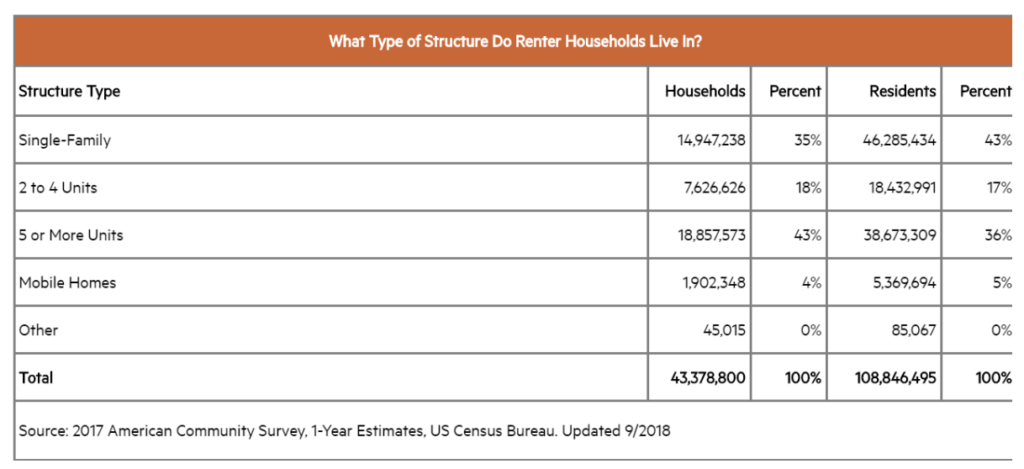
  1. We need more housing for class-C and class-B renters due to population increasing and rising interest rates
  2. Inflation favor hard assets
  3. We are no longer a buying nation we rent (think millennials)

    [This is the millennial version… cause they can’t seem to afford (or want) to own anything]

  4. The government is trying their best to incentive investors – Follow the money people!
  5. 2018 tax changes with bonus depreciation make it better for projects like large apartments to get better tax treatment than ever before via a cost segregation.
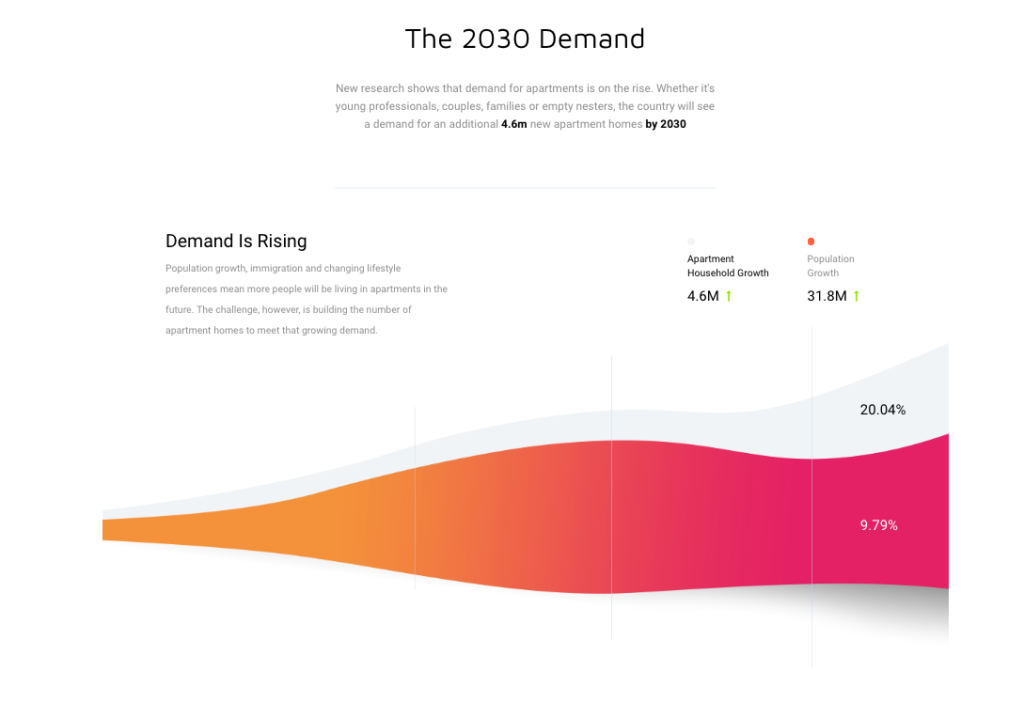
  6. The country needs 4.6m new apartments by 2030 (Source). We need more class C and B housing. Our country is becoming more like Asian Countries where the is a bigger divide in the wealth gap and need for low-income communities.

Market Indicators:

  1. Large employers or job growth
  2. Population increasing
  3. Rent increases
  4. Occupancy/Vacancy stabilized

Typical business plan (3D example here):

  1. 60+ units or more to get economies of scale and to have dedicated staff on site
  2. 1970-1980s Class B or C buildings
  3. Utilize Fannie Mae or Freddie Mac Non-Recourse debt with up to 12-year loan terms
  4. Buy right – rehab units with $2,000-8,000 per unit – reposition by improving operations and stabilizing rents for exit
  5. Property cashflows day one after purchase
  6. Re-brand (new signage and online presence)

Value-add:

  1. Poor existing property management
  2. Old tired units or leasing center
  3. Outdated amenities
  4.  Creative improvements using best practices and technology
  5. Additional opportunity for extra income

Miscellaneous ideas for thought:

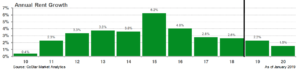
  • 2010 to 2015 is the golden era of Multifamily. Many rents were going up 5-10% per year (average 2-3% in a good market).
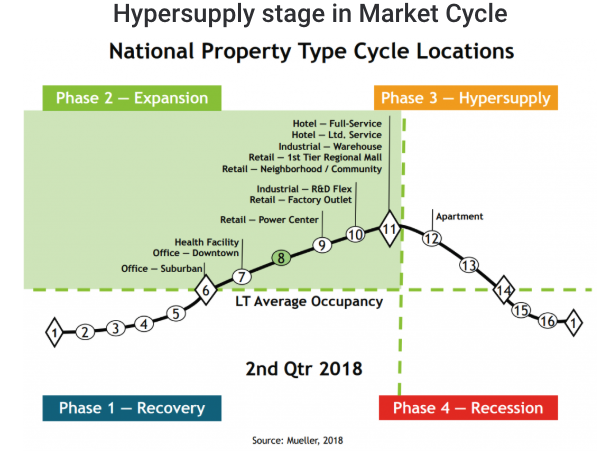
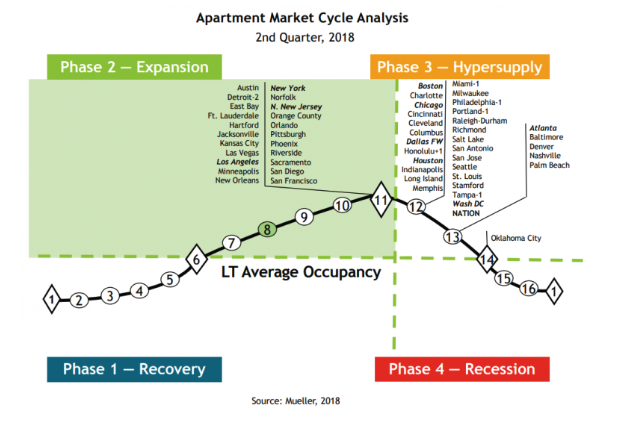
  • The (Global/National) markets go in cycles, the sub-markets (physical locations) go in cycles (see below)
  • Asset Classes go in cycles but hopefully, you are investing with the pros who transcend the high-level norm.

Lending


Unit Mix Discussion

When looking at the unit mix profile take notice of the mix of studio/efficiency units and 1,2,3 bedrooms. This can throw off your rent per square foot metric which is important when comparing comps. A sudio/1 bedrooms will have higher rent per square foot amounts however the tenants will be more transient.

The 2/3/4 bedroom units will yield lower revenue per square foot but will attract more of a family type renter and improve the intangible community aspect.

Headwinds

Millennials Leaving the Renter Pool?

Once they get married and have kids, they move out to the suburbs into a single-family house.  82% of couples between the ages of 25-39 married with 2 or more children live in a single-family home. The only difference today is that Millennials are getting married and having kids later in life so they stay in the renter pool longer. And the lack of affordable homes caused by the great recession of 2008 has delayed new builds to be created which creates more demand as population increases. New builds are really starting to come online.

The 73 million Americans aged 18 to 34 are beginning to cycle their way out of apartments and into homes. In fact, the net growth of 18-34-year-olds falls to zero by 2024.

Fun facts about new builds:

  • 2009 and 2010, multifamily housing starts hit a low of about 100,000 per year.
  • The 40-year historical average (1970-2010) is 355,000 starts per year.
  • Multifamily housing starts gradually increased, peaking at 383,000 units in 2015. Production then declined modestly, to 381,000 in 2016 and 345,000 in 2017 but reverted to 354,000 in 2018.
  • Annualized multifamily housing starts stood at 289,000 units in January 2019, up from 278,000 units in December 2018, but down from the one-month annualized peak of 435,000 in January 2018.
  • Multifamily statistical models forecast about 401,000 average annualized starts in each of 2019 and 2020, 389,000 in 2021, and 390,000 in 2022, all of which are modestly above the 40-year historical average of 355,000 multifamily housing starts per year.
  • The cumulative 17-year shortfall of multifamily housing starts (benchmarked against historical norms) peaked at over one million units in 2013 but is on a choppy decline, standing at 905,000 as of February 2019.

Zelman & Associates are forecasting multifamily starts to increase 3% year-over-year in 2019 and another 1% in 2020, as opposed to a decline which many researchers previously forecasted.


MFH is great but you need to be aware of new Class A apartments being built to put downward pressure on pricing – Source MHN

MFE 2-6-19  – 2018’s Record Deal Volume Suggests Positive Trajectory for 2019 – “driven in large part by increased interest in the student housing sector, which accounted for 17% of all deal activity in the third quarter, compared with a consistent 4% over the past 13 years” – [I don’t like student housing as I am seeing an education bubble with all the lending. It’s crazy how dorms get renovated every few years]

MFE 2-6-19 -Freddie Mac Sets Multifamily Production Record – “$78 billion in total production bests the company’s prior record of $73.2 billion set in 2017. Overall, the company financed more than 860,000 rental units, more than 90% of which are considered affordable to low- and moderate-income families making 120% of area median income (AMI) and below.” – [More more more!!!]

Past performance is no indicator of future success. Many operators in Dallas 2012-2014 were able to double investors money in just a year or two – come to find out they only implemented 20% of the rehab. It was mostly market appreciation which is out of our control and can bail out a bad operator.

Dallas Growth 2010-2018 +projections Co-star 19.02.7

Multifamily Investing Lingo

Real Estate terms:

  • Pretty simple if you understand the way to utilize them and how they play together in real estate transactions
  • Applies a lot in larger transactions (multifamily), but can be applied as well in smaller (single family) transactions

Income (types):

  • Different ways you can make money on a property
    • Rent – not what is on the contract, but what the market would yield for the space that you have
    • Other Income
      • Pet Fees
      • Laundry
      • Reserve Parking
      • Late Fees

Gross Market Rent:

  • Sum of all the different types of income you can earn from the property

Deductions that can be taken from the Income types (can also be called Efficiency deductions):

(Loss to) Lease:

  • Loss of income based on the market value of the property minus the amount you are renting the property for
    • Example: You have a property you are renting out at $750/month. The current market value of the property is actually $825/month (based on listings in Craigslist, etc.) You have a $75 Loss to Lease per month on that property
    • This is money that will never be gained, as the market changes so much
    • This has to be factored in when looking at properties, and you should constantly monitor the market you’re in to see what kind of Loss to Lease you’re taking on

(Loss to) Vacancy:

  • Especially on bigger properties – you will never have it leased all the time
  • Normally, there is a week or two of vacancy, sometimes more (up to a month or even longer) between tenants
  • A lot of people like to estimate 5% loss due to vacancy, but should be considered more scientifically than just stating a number. For example, if it’s a single family home, you’ll want to factor in at least one month’s rent, which would be equivalent to 8%. If it’s a duplex you’ll want to factor in one month’s rent for your most expensive unit. The more units you have, the more you can expect that vacancy rate to go down. But be conservative when you’re writing up a deal – the smaller the deal, the higher your vacancy rate. So start at 10 if it’s a one or two unit deal, and then drop accordingly.

(Loss to) Collections:

  • Isn’t just money you will be getting back from tenants who are late on payments
  • Includes loss of money from tenants who move out and are not able to pay their balance
  • You need to factor it on your own in the market you are in and what the economy you are dealing in is
    • Example: If you are dealing in C or D type neighborhood, you will have to factor in [Loss to] Collections. If you’re in a B or A type neighborhood, then you can lower Collections down to zero and assume the loss will just come out of Vacancy


Physical Occupancy vs. Economic Occupancy in Apartment Investing:

Note this is mostly used as an example of what LP’s should be aware of. In most cases LP’s either know too little for example they just look at the Pro-Forma returns and don’t look at the assumptions that the operator used to get there. Or they spend so much time evaluating things that have little impact to the numbers for example running away when they hear of minor foundation issues or rodents that can be remediated with a few thousand dollars of seller concessions. In the Passive Investor Accelerator & Mastermind we try to focus on what is really important but obviously that is not free (but going into a bad deal is costly too). Vacancy in apartments decreases top line income and getting occupancy as high as possible is the goal. There are two different types in apartment investing 1)

Physical Occupancy and 2) Economic Occupancy. Physical occupancy (number of units that have a tenant with a signed lease, occupying a unit) is what most people are familiar with in apartment investing and what is often overlooked when a passive investor reviews the underwriting assumptions of a syndicator. This is shown on the rent roll with the tenants name next to the unit number which also needs to by physically audited with boots on the ground verification. Physical occupancy is a percentage calculated by dividing the number of occupied units by the total number of units for example a 100 unit apartment with 8 units vacant has a physical occupancy is 92% (92 ÷ 100).

Pay attention here… if a rent roll shows a unit is occupied, doesn’t necessary mean it’s also generating income. A tenant might be a deadbeat or the nice way of putting it there might be “loss to lease.”

Economic occupancy is the amount of money of actual rents received as related to the occupancy. This also takes into account tenants who don’t pay the full rent and also things like concessions ($200 move in specials, discounts to motivate tenant prospects). This is the net rents received (not including other income). The net income will deduct for bad debts/loss to lease. The economic occupancy is calculated by dividing net rent received by the gross rents possible.

On the same 100 unit apartment, assume each unit rents for $1000/mo. There’s a gross potential of $1,200,000/year (100 units x $1000 = $100,000/mo x 12 = $1,200,000/year). Using the same physical example say there are an additional 10 deadbeats (that the previous seller stuffed in there right before the sale) and 10 people only able to pay half the rent… then you are looking at an economic occupancy of 75%.

This might be a little too much info for a LP but Economic occupancy can be a sign of the following:

Bad Management and bad collection practices
Bad tenant qualification practices
PM stealing money
Bad rent collection practices
Lack of maintenance, causing tenants to leave
Or a clear sign of opportunity!

Effective Gross Income (EGI):

  • Gross Market Rent minus whatever loss will come out during operations (Efficiency deductions)
  • Real money that comes in through the property
  • From your EGI, you will still need to deduct your expenses (listed below)

Expenses:

  • Insurance
  • Professional Services – Leasing commissions and/or other professional services you bring in (legal, accounting fees, etc.). If you’re an LLC, you will need to put in your budget the cost (tax) for the LLC every year ($400 – $500), IRS
  • Regular Maintenance (landscaping, snow removal, heater service, pest control, touch-ups and minor renovations on unit before tenant moves in, fixes like clogged-up toilets, etc.)
    • Rule of thumb for Regular Maintenance: Brokers will place it 3% of your EGI, but is more effective to think it as dollars per unit.
    • Example: If property is something you bought, did a full renovation on, put tenants in, and then got it refinanced (BRRRR – Buy Rehab Rent Refinance Repeat), your maintenance should be lower because you’ve done everything and should be able to call for a warranty call at the very beginning if it’s something the contractor who did the work on your property didn’t do. If you’re very good at turning these properties over, then you should have very little maintenance going in
    • If it’s a newer rental, could be anywhere from $300 – $400 every year
    • If it’s something you’re inheriting (inheriting maintenance issues as property already has current tenants and will need to deal with it as you go), you will want to go with higher maintenance numbers: $700 – $900 per unit per year
    • Will really depend on how much you project it to be (check out the property thoroughly, and/or if there are existing tenants, ask them what are the maintenance issues) as it can really kill or make you a lot of money on your deal.
  • Property Management Fee – 6%
    • Property Management means looking after the property and make sure operations is running smoothly
    • If you are managing the property, you will want to put that in your own pocket
  • Asset Management Fee – 2%
    • If you are hiring a Property Manager, you will also need to hire an Asset Manager, or you can be the Asset Manager and that money will also go into your own pocket
    • Fee of managing the Property Manager
    • Asset Manager will be the one to pay mortgage, ensure real estate taxes are being paid, monitor the markets and ensure that the right rents are being charged, will also have veto power to veto work orders that might come up that you don’t want to have done because they’re too expensive, etc.
    • Asset Manager is also there to look at the real value of return on the asset
  • Utilities
    • Everything from heat, water, sewer, even CCTV systems, phone lines
    • You will want to look at the prior owner’s expenses for utilities were (around 18 months’ worth), or look to see what the market or other people are paying
    • Make a good guesstimate on what your utility projections are going to be and go from there
  • Real Estate Taxes

(Above the) Line:

  • Term sometimes used by brokers when grouping Gross Market Rent, Efficiency deductions, EGI and Expenses (everything that gets deducted out to determine the profitability of the deal)
  • Note: I don’t really talk in terms of Cap rates because you can manipulate the “above the line” assumptions to get whatever you want

Net Operating Income (NOI):

  • EGI minus all the expenses that can be deducted from it
  • Does not include mortgage payments or Debt Service (money you have to borrow to buy the property)

Classes:

Class A

  • Built in last decade and are more luxury
  • Struggle in recessions as white-collar workers drop back to Class B Assets
  • People are jogging around at night

Class B

  • Generally 10-25 years old
  • Younger white-collar and blue-collar residents
  • Cap rates are higher than Class A and lower than Class C
  • Females not advised to take that evening jog around the block
Class C
  • 1970-1985 built
  • Mix of blue-collar to lower, single mothers etc
  • Good cashflow but comes with issues that property management must keep in check
  • In a recession, a lot of B and A class renters fall back to Class C
  • Its ok during the day but personally I would not want to be there at night
  • There is crime but you want to look for minimal violence/homicide
Class D
  • 1960s and older
  • Generally Section 8, government-subsidized residents such as LURA, LURK with rent restrictions
  • You don’t even want to get out of the car to walk around during the day
  • High crime area, security needed
  • Can be amazing rewards for taking on this risk

Capital Expenditures (Cap Ex):

  • Also usually referred to as Below the Line expenditure but is also sometimes considered as Above the Line, depending on whether you are selling or buying a property
  • Long-term improvements to your building/ property
  • Major renovations to bring unit/ property up to market standard (replacing the roof, replacing the furnace, full renovation on a unit)
  • Any expense that will add long-term value to your building
  • You will need to set aside money for this (Cap Ex Reserve)
  • Not taxable as it is just money you are earning but will be setting aside in a savings account

CAP Rate:

  • NOI divided by the price you’re buying the property for
  • Determines the money that the property will give you
  • Example:
    • If NOI is $100k and the price of the property was $1 million, then CAP Rate would be 10%
  • Intended to be used when valuing buildings (especially commercial real estate)

Cash Flow (CF):

  • NOI minus Debt Service
  • Also determines your Return on Investment (ROI) on the property

Debt Services Covered Ratio (DSCR):

  • Looked at by the banks
  • How many times the deal can cover the Debt Service
  • Calculation: NOI divided by debt service
  • Most banks will want to see a DSCR above 1.25%, you will want to see a DSCR of above 1.5% to get a higher ROI

Green Credits:

  • Breaks in your interest rates for employing energy saving means
  • Full report

FAQ:

What about popcorn ceilings and asbestos?

Many buildings have asbestos from the 1960-1970s.  We have a binder in each office that shows how to handle different situations should the asbestos be exposed.  All the managers go through training as well. As long as we don’t disturb the drywall than it’s safe. This is consistent with how many organizations do things outside of real estate… I know because I am a facilities Engineer as a day job.


How can you increase the value (increase income or decrease expenses)?

  1. Application Fees
  2. Late Fee
  3. Pet Rent
  4. Early Termination
  5. Month to Month Fee
  6. Lapse in Renters Insurance Fee
  7. Redecoration Fees
  8. Resident Discount Program (This seems counter-intuitive unless we’re at CostCo.)
  9. Marketing Coordination Fee (to pay for social media at the property)
  10. Eviction Holdoff Fee (You can’t pay, so we’re going to charge you not to kick you out)
  11. “We also have community gardens which we charge for”
  12. Sell/rent moving boxes to new residents.
  13. Refer business to moving services. Place an affiliate link on your website and new resident welcome emails.
  14. Install an automated Stockwell or vending machines.
  15. Sell laundry/cleaning supplies.
  16. Sell cleaning services.
  17. Offer dog walking/dry cleaning pickup services.
  18. Offer a steam cleaner, power washer, or other useful tools for rent by residents.
  19. Place native ads/sponsored posts from relevant local/lifestyle businesses on your community blog.
  20. Offer furniture rental packages.
  21. Sell ads on the digital signs in your leasing office/elevator lobby/parking garage.
  22. Create moving kits with tape, boxes, packaging, etc. Sell them from your website, or build a set of items you can resell through Amazon. One-click buy and move!
  23. Shared sponsored posts from local businesses on your property Instagram account.
  24. Upsell garages, bike lockers and/or storage space.
  25. Upsell smart home technology packages.
  26. Offer RentPlus to help residents build long-term credit. They charge a small fee to the resident, you get a cut.
  27. Rent rooftop space to cellular providers.
  28. Place Google banner ads on your blog.
  29. Install solar panels. Sell excess energy back to the local electric provider.
  30. Sell featured space in your resident loyalty app to local businesses.
  31. Sell renters insurance to new residents.
  32. Offer interior design consulting through Havenly. Make affiliate income when your renters buy goods and services through the app.
  33. Buy cable and Internet services in bulk at wholesale rates. Resell them to residents at a discount and make money off the markup.
  34. Host resident events. Partner with brands who are willing to pay to get in front of your renters as a target audience. (There are lots of them out there.)
  35. Publish a resident newsletter (print or digital). Sell ad/editorial space to local businesses.
  36. Rent space to Amazon so they have a place to put their lockers.
  37. Offer move-in upgrades: electronics setup, upgraded thermostat, priority parking/access to loading dock/elevators, moving assistants.
  38. Turn your move-in gift into a subscription box trial. Make money when new renters upgrade to an ongoing subscription.
  39. Host “premium” resident events that get people excited. Charge a small admission fee. Open them to the public and charge more for non-residents.
  40. Sell the furniture and items you showcase in your model. Partner with Wayfair, West Elm, or a local furniture store on this.
  41. Sign up for Amazon Associates (or any other affiliate marketing network). Create timely gift/necessity guides (Mother’s Day, spring cleaning, back to school) that are relevant to your residents.
  42. Open your community business center to local coworkers. Charge an hourly/daily fee for use of the space and services. Make it free or significantly discounted for residents. Provide coffee.
  43. Rent out space in your common areas to a small food/beverage retailer. Craft cold brew coffee, anyone?
  44. Open your property to short-term/corporate rentals.

Resources:

Reports for your digest:

18.11.15 – 3Q18_US_Multifamily_Capital_Markets_Report

18.11.18 – Yardi Monthy Report

127 – Estate Planning and Asset Protection with Lawyer Andrew Howell

YouTube Link: https://youtu.be/zaHW3_OEU8Y? sub_confirmation 1

Article Link: Text “simple” to 314-665-1767 to download the Hui Google Drive files and the 2018 Rental Property Analyzer

For a free electronic version of my bestselling book in 12+ categories text the word “ebook” to 587-317-6099.

Please help the show by leaving a review: http://getpodcast.reviews/id/1118795347

Join the Hui Deal Pipeline Club! SimplePassiveCashflow.com/club

Pardon the grammar – I’m an Engeneer, Enginere, Engenere… I’m good with math!

________Here are the Show Notes________

Estate planning
Guests I have are giving insights but always hire your own person because these things require personalization
I try to bring guests on and ask the questions that I think you folks would ask.
I believe you need to have a basic level of knowledge before engaging with a professional
For those of you who are in the Mastermind and my current investors you will hear about my Fort Knox strategy which makes LLC enitites creation look like childs play
Email me any questions to feature on the next ask Lane podcast or monthly email newsletter
Andrew L. Howell is the Co-Founder of the law firm, York Howell, with a focus on asset protection.

Many useful tools out there, but where do you as an investor fall on the asset protection spectrum?

Two fundamental risks: 1) Asset-based risks 2) Direct-based risks

Real estate considered as “hot” assets because liability risks are greater – more than equity.

Liabilities both inside and outside the asset.

Typically form a holding company to hold limited liability companies to abate asset- and direct-based risks.

Holding properties in one LLC basket is good, but still risks if something happens in one property.

Concentrate on family protection first (trust, wills, etc.). Then move to next level of asset protection planning.

If own property out-of-state, advise on setting up a parent LLC in states with charging-order protection.

Tough LLC rules and taxes for poor California residents!

Need to do your due diligence on reviewing PPM’s – especially who you are doing business with.

Asset does not create liability risk for LP’s; only GP’s.

If you get personally sued, can go after your MFH syndications and other assets even as LP.

6% of current generation feels obligated to give back to kids. Instead of giving, create a bank.

Create purpose when setting up your trust.

Please reach out to teamandrew@yorkhowell.com and visit www.yorkhowell.com.

126 – Gino Barbaro talks Apartment Investing


YouTube Link: https://youtu.be/lvd9F9OmDI0? sub_confirmation 1

Article Link: Text “simple” to 314-665-1767 to download the Hui Google Drive files and the 2018 Rental Property Analyzer

For a free electronic version of my bestselling book in 12+ categories text the word “ebook” to 587-317-6099.

Please help the show by leaving a review: http://getpodcast.reviews/id/1118795347

Join the Hui Deal Pipeline Club! SimplePassiveCashflow.com/club

Pardon the grammar – I’m an Engeneer, Enginere, Engenere… I’m good with math!

________Here are the Show Notes________

Jake and Gino have a great podcast and definaetly fit in the category as guys who are growing and doing things right
Let’s work together to redirect money from the Wall-Street casinos and corrupt financial institutions…To help the endangered ‘Middle Class’ savers find safer, more profitable investments in Main Street opportunities benefiting local communities. Join Hui Deal Pipeline Club and check out the sSimplePassiveCashflow.co/mission

Gino Barbaro from Jackandgino.com who focuses on MFH real estate.

Group owns 848 units valued at >$50 million. Expecting to go up this year.

Took 5 years to get $25K-30K/month in passive cash flow.

Fumbling around in the beginning with smaller cash flow amounts, but snowballs over time.

Came from the corporate world to managing a family restaurant. 2008 transitioned to real estate to make better use of time outside of the kitchen.

Highly recommend reading “The E-Myth” by Michael Gerber. Need a visionary, manager, and technician for any business.

Believes you need a Connector, Executer, and the Backbone. Can’t do all 3 – pick 1 or 2 and hire out.

95% of blocks are internal. The rest are external. So, focusing on resolving limiting beliefs and get a life coach.

Google Tony Robbin’s 6 human needs. Have to continue to grow and contribute in a large way.

Relocated to Florida and aiming to obtain $40K/month by end of this year.

Have lifestyle work for his business; not his business work for his lifestyle.

Becoming more efficient by hiring a VA and Digital Marketer for jackandgino.com. Wants to spread content and message; not work on menial tasks.

Focus on 1 or 2 niches for real estate and become an expert at it.

MFH has more barrier-to-entry v. stocks, crytocurrencies, etc. The more people in it, the less profit margin there will be.

Share weekly successes. It’s not bragging, it inspires people and surround yourself with the right people.

Be present in the moment. When you’re at work, with family, etc. focus on dealing with that situation.

Visit www.jackandgino.com. Also on FB, LinkedIn, Twitter, and Instagram. E-mail works too: gino@jackandgino.com.


125 – Living the FI dream abroad with Jeremy Jacobson from Go Curry Cracker

YouTube Link: https://youtu.be/3NQ0agjuxXY? sub_confirmation 1

Article Link: Text “simple” to 314-665-1767 to download the Hui Google Drive files and the 2018 Rental Property Analyzer

For a free electronic version of my bestselling book in 12+ categories text the word “”ebook”” to 587-317-6099.

Please help the show by leaving a review: http://getpodcast.reviews/id/1118795347

Join the Hui Deal Pipeline Club! SimplePassiveCashflow.com/club

Pardon the grammar – I’m an Engeneer, Enginere, Engenere… I’m good with math!

________Here are the Show Notes________

Went on normal path. Got a job after college, house, and fixated on paying off student loans.

Aggressively paid down student loans, but motivated by people who retired early.

5 years ago, both quit their jobs, traveling, raising family, and living their dream.

Ruthlessly slashed expenses and saved 70-80% after-tax income.

Max contributed to 401K, IRA, HSA, and after-tax accounts.

Short-term joy = trading years of financial-free opportunity.

Actively chose lifestyle. Traveled internationally by arbitraging where they lived with low living expenses.

Didn’t listen to mainstream advice of owning home. Choosing a renters lifestyle to not get “”stuck.””

Both have blogs and garnered new friendships; not the “”Seattle Chill.””

Finances on auto-pilot. Can work on growing family in Taipei and doing creative things they did during childhood.

Two types of things preventing people from being financially-free: Afraid to take leap to be financial-free and long-term goals to strive towards.

People don’t change minds because you provided info to them; they change when they’re ready.

Visit www.gocurrycracker.com and social media accounts on FB, Instagram.

124 – Brian Hamrick from the Rental Property Owners Association

YouTube Link: https://youtu.be/-ENcRI2LhuA? sub_confirmation 1

Article Link: Text “simple” to 314-665-1767 to download the Hui Google Drive files and the 2018 Rental Property Analyzer

For a free electronic version of my bestselling book in 12+ categories text the word “ebook” to 587-317-6099.

Please help the show by leaving a review: http://getpodcast.reviews/id/1118795347

Join the Hui Deal Pipeline Club! SimplePassiveCashflow.com/club

Pardon the grammar – I’m an Engeneer, Enginere, Engenere… I’m good with math!

________Here are the Show Notes________

Brian Hamrick is from Rental Property Owners Association (RPOA) and runs Rental Property Owner and Real Estate Investor Podcast.

Currently owns 380 units, which cash flow makes 50% of W2 job salary.

Paydays not only about cash flow. Cash out refi and syndication benefits once and twice a year exceed W2 job salary.

Was sitting on cash waiting for next downturn. However, in past year, became a silent investor in commercial property, a NPN, and a self-storage facility.

Expects rents to plateau in future, but not to 2008 levels.

Started off investing in high-load tech funds, but bubble burst in early 2000’s and stocks tanked.

Rich Dad, Poor Dad inspired Brian to begin investing in real estate and obtain more control.

California is cash-flow negative market, so looked at positive cash-flowing out-of-state markets.

Transitioned to multi-family investing in 2008 for better scalability and profitability.

As passive investor, focusing on leveraging partners’ strengths for new passive investments.

Down the road, looking at developing the “missing middle” properties (small MFH 2-10 units).

Visit www.higinvestor.com to get in touch with Brian.

Info on using retirement funds for deals

Question: I am considering investing in a 506c investment on a multifamily property. They are raising a 1 million from investors, then getting a loan and making improvements to the property and repositioning it over 5-7 years.

I wanted to use my funds from my SEP IRA which is currently in a qualified intermediary trust. What is the UBIT tax? Will I be subject to that on this deal? Also, should I set up an LLC that then loans the money to their LLC? How can I structure this for tax and liability benefits?

Answer [Note: From my CPA and not this is NOT legal or professional advice – in other words do your own research]: When you invest in a business (syndicate = business) with your IRA, the IRA will be subject to UBIT (unrelated business income tax) and UDFI (unrelated debt-financed income).

For our purposes, UDFI is produced when an IRA uses debt to purchase real estate. Essentially, the portion of the property’s income considered UDFI is based on the percentage of rental income derived from debt.

For example, Property A is purchased for $100,000. You put down 25% of the purchase price as a down payment and finance the remaining 75% with a traditional mortgage from the bank. The property produces $10,000 in net income for the year. $7,500 (75%) of the net income is considered UDFI and is subject to UBIT.

There is a deduction for the first $1,000 of income subject to UBIT. Income subject to UBIT over $1,000 is taxed at trust rates. For 2017, trust tax rates start at 15% and max out at 39.6% after just $12,400 of income subject to UBIT.

UBIT is paid by the IRA account. If for whatever reason UBIT is paid directly by the taxpayer, the amount paid is considered a contribution to the IRA.

Follow up question: Is there any difference in how the UDFI will apply for these:
1) SD IRA
2) SEP-IRA
3) Solo 401K
4) SD IRA (operated as an LLC) so this one is confusing… My LLC owns an LLC (syndication) which owns a property

I’m trying to decide if one is better than another for tax purposes.

Answer: The solo 401(k) is not subject to UDFI but it subject to UBIT. The IRAs are all subject to UBIT and UDFI. Note that generally the passive income flowing back to you is very low and the as a result we don’t see a huge UBIT tax.

Another idea would be to take a debt position (lending) rather than equity. The interest you would receive is free of UBIT and UDFI tax.

(This suggestion of a “debt” position or note investment with the SEP IRA to avoid UBIT and UDFI tax is a creative one… but it’s a very low chance of happening because it’s just too complicated and honestly not worth the effort from the syndicators side. It’s a very similar case of to a Tenant-In-Common (TIC) arrangement where an investor has 1031 exchange funds and wants to parlay that money into a syndication. It’s possible but from the syndicator’s perspective a lot of unneeded work when you can just raise the funds the traditional way. Caveat: if you are bringing in a huge amount of money say 50% of the raise then that might tip the scales in your favor)

Ask you can tell this is a really grey area. One CPA mentioned, the answer depends on how you structured the syndication, UBIT may or may not apply for the real estate holding for solo 401k. I would really try to toss the Operation Agreement to your individual CPAs to examine and determine ahead of time.

Downgrading transportation

I recently was involved in a car accident where my car got totaled (I’m 100% fine which is why you buy Mercedes) but I’m a bit at the crossroads now.

Should I get a…???
A) Bike with Electric Assist
b) road bike (maybe not like this one but definitely no spandex)
C) Electric unicycle

Important notes:
1) My daily commute is under a couple miles
2) I live in Hawaii the weather is perfect
3) I need to interject more activity and vitamin D. I’m getting fat because there is too much good food here.
4) If I need to go somewhere for fun I feel the time savings I would get by Ubering and getting work done will be a huge improvement#time>money – Here is my discussion on trading money for time.
5) I am not a good driver, to begin with, lol

This is my latest experiment to try and go with a combination of an electric bike for my normal commute and Uber (maybe even get the American Express perk card so I can get VIP Uber status). I figure I can always go and get my Ford Raptor if this experiment fails.

I know what a lot of people might be thinking. Oh, another millennial with this own nothing mentality. First off I’m a late Gen X’er (I just look like I’m 20 years old) and secondly my hourly rate these days makes driving a car a little dumb. I’m not really a saver like Mister Money Mustache (most famous financial blogger with 30M subscribers) but seem to be following in his footsteps.

I see a bunch of people strive for a gazzlion apartment units I have been trying to step back and ponder why??? This video captures how I am feeling.

For people going after said gazzlion apartments… cool, but a little weird to me personally. When does the madness end? What is the end game or is it just ego and a big pissing contest – cause I imagine those are a little messy.

Off the soapbox.

Here is what I plan on getting for Costco – the greatest store on the planet with the greatest return policy.

I already bought a helmet, Osprey bag, and this model below. Maybe I can even charge this at work 😉


In 2009 I as a young 20-something year old I bought an A class rental and it has been a series of lesser and lesser quality and size of housing arrangements. But is that really important?

I always wanted a Mercedes and got one a couple years ago (with a $500 payment that AHP pays for). But in the past few months, I noticed I was kinda over it. So it was interesting this turn of events happened. As Tony Robbins says “Things happen for you not to you.”

Freedom (FI) is really what’s important to me the most. Not shiny objects or looking cool in front of people you don’t care about (who are going to work at jobs they don’t like).

An excerpt from Kyle Wilson:

Great Lesson From Jim Rohn

In my earliest days as a seminar promoter (prior to launching Jim Rohn International in 1993) I was promoting an event in Dallas. I had booked Jim Rohn for a day long event starting at 10 am and going till 4 pm.

Typically I would arrive around 6:30 am to make sure the stage, room and tables were all set-up correctly and then my team and I would set-up product tables and get everything ready for when attendees arrived. Often people would start to to show up as early as 1-2 hours before the start time.

Well, for this event I was in for the shock of my life. I arrived at the meeting room to find it packed full of people eating a buffet style breakfast! Another event in MY meeting room! What??

I instantly went into panic mode. When I found my event coordinator they assured me everything was okay since that meeting would end by 9 and they could do a quick turnaround by 10.

Well that’s NOT how it works. It takes hours to set-up the room and tables/products plus we would already have guests showing up before the current meeting was even over.

I went into solution mode and asked if they could give us another room. Answer: no – they were booked solid (one of the reasons they tried to sneak this other event in).

Now I’m beyond upset and panicked. My first thoughts were all the expectations of those who had purchased tickets and their busy schedules. And I have to be honest and admit that I then started thinking about all the refunds that were going to happen as a result.Then it escalated to me worrying how all this would reflect upon me with not only the attendees but also the man I had booked to speak, my future mentor and business collaborator, Jim Rohn.

All attempts to find a solution, a fix were exhausted. Now what I faced was how to best communicate this to the folks showing up and how to tell Jim.

Around 8:30 am Jim came strolling down to check in before going to breakfast. I braced myself to share the really bad news.

I humbly and embarrassingly told him I had somehow dropped the ball and allowed the hotel to overlap us with another event. I explained at best we would be able to start at 11 and sheepishly would need to explain what was going on with attendees and ask them to wait. 

I’ll never forget this next moment for the rest of my life. After sharing the bad news and making it clear we were out of options, Jim just calmly looked at me and said, “Kyle it will be okay. It’s not like a good friend died. Now that would be a problem. This is just an inconvenience and I will make it up to them by going longer and making it my all-time, best seminar.” WOW!!

What a paradigm shift! And what an incredible life lesson for me to learn from my future mentor. “It’s not like a good friend just died!” How many times have I since used that line and the real meaning behind it to put into perspective when things don’t go the way I planned or intended.

I will always be grateful for all the remarkable lessons and wisdom Jim passed on to me beginning with the first time I promoted him in 1990, then starting Jim Rohn International in 1993 and up until his passing in 2009. 

This lesson in particular, maybe because it was so early in our relationship, has special meaning and memories and appreciation for my mentor and friend, Jim Rohn.

Networking tips & Psychology Guide

Strengthening relationships with people you know (family, existing friends, coworkers) is an integral part of life. However, one must be aware that personal growth happens outside of our comfort zone. Meeting new people and building the right relationship with the right people is part of exploring out of your comfort zone.

And want to know the secrets of high net worth investors? It’s their network.

A network that’s diverse and continuously expanding.

Importance of Networking

Whenever you meet someone in an event (mastermind) or they were introduced to you randomly, remember that you are already planting the seed. That initial hello, short talk, or coffee time can be your ticket to knowing who you can trust in the investing world or knowing the best great real estate deal. 

  • Expands your contact that can result in the betterment of your business or career.
  • Widens your knowledge and contributes to your growth.
  • Establish lasting relationships and promotes trust.

https://youtu.be/OBCC_EwR1bo

Keep checking on the EVENTS page

Do’s and Don’ts of Networking (Based on Experience)

1) Giver or Taker (Part 1)

So you have gone to a few networking events and met some cool people (and found people you would rather not be around).

One of the biggest mistakes I made was going to my local real estate group because they were not focused on passive real estate investing. I started to pay a little bit of money ($10-1500) to attend events and conferences where people had a little more skin in the game and actually had to take time out of their schedule and fly somewhere and get a hotel room. There I found much more serious people. At that point, I tried to find those who were similar to my pedigree (high paid professionals) just a little bit older than me.


Harvard Business Review Article

A common mistake is to start going for the “goods: who is your CPA, who are you investing with, who is bad, what IRA custodian are you using.” Stop trying to make it transactional because people get an icky feeling from that. Here at SPC our community is looking for long term relationships that extend beyond Financial Independence Friends.

Now, how do you turn that from swapping a few business cards to going “a mile deep, inch wide?”

https://youtu.be/zmBt2VCsF5E

GOAL: Identify people that you need to add to your network and target those people.

A “target” is someone who has influence, network, net worth, or knowledge you need.

To trim down your target answer the following: 1) What target sub-demographic do they influence?2) What are the target’s Needs, Wants, Desires, Goals and Objectives (NWDGO)?3) How can you help the target achieve their NWDGO?4) What position do you need to be in (from the target’s perspective) to approach them?5) Consider and think about this: What the heck does someone who is busy and successful want with another pain in the butt person just running the question train on them or just taking their time? Think about the next steps?

Personalize and don’t be like everyone else.

Caveat: Do not be a quid pro quo person. Doing things with an expectation for getting something back.

Optional reading: Givers and Takers by Adam Grant

2) Giver or Taker (Part 2)

Ex-NBA All-Star gives advice on how to handle the financial and social pressures of celebrity and wealth.

He explains on his voicemail how he wanted people to identify themselves as:  1) Addition 2) Subtractor 3) Divider 4) Multiplier. Some of us are unconsciously subtractors and dividers.

https://www.youtube.com/watch?v=7jqIgpAB0Yg

At the very end of the video, Jalen talks about how to not connect good people with bad people in your network in the “Female Assistant” role.

Additional readings – (Video) Adam Grant’s Givers and Takers – Summary

TAKERS

  • Scarcity Mindset
  • Problems Focused
  • Destructive Criticism
  • Pessimistic/Hopeless
  • Insecure- Exaggerated Ego
  • Uncontrolled Anger/Emotion
  • Helpless, Dependent-Victims
  • Sad/ Depressed
  • Wanting
  • Drama
  • Lying Habit
  • Me First- You Last
  • Impatient
  • Offensive Language
  • Fear of Feedbacks
  • Fake
  • Uncharitable
  • Short- Term Focused
  • Mean

GIVERS

  • Abundance Mindset
  • Solutions Focused
  • Constructive Criticism
  • Optimistic
  • Confident- Humble
  • Emotionally Stable
  • Independent, Can-Do
  • Happy, Upbeat
  • Grateful
  • Calm
  • Truth Habit
  • You First- Me Later
  • Patient
  • Controls Words
  • Seeks Feedbacks
  • Authentic
  • Generous
  • Long-Term Focused
  • Kind

3) Don’t Go to General Networking Events

I went to a general meetup of professionals. I don’t really know what I was looking for since I was not really looking to sell anything but I was curious because it seemed like a nice downtown venue and with over 100 participants.

Unfortunately, the crowd was a bit tough to break into (I’m not the natural extrovert) because I was talking about real estate investing. The group median age was in its early 30s with a vast array of professions and industries.

The majority of the people were very career focused (trading time for money) or technical in trade. I also found that the level of participants were mostly entry level in terms of career stage and thus the reason they are hustling for leads, networking, and even jobs. 

Needless to say, these people did not have much money to collaborate in a real estate deals and even if they did they were not drinking the Real Estate Kool-Aide and were into their JOBS (just over broke) and “401k 4-Life”.

With this experience, I am going to be more selective in my networking events as I try to find other like-minded investors but here are some fun observations.

I realize that one can call BS and say that I had a negative mindset and that I was not networking for quality or building a long-term relationships. However, I got the feeling that a lot of the people in the room were just interested in passing out cards and with the “what can I get mindset “, which is typical for the scarcity mindset population.

Here are a couple fun examples:

1. One broker for a large bank was hopping around the room (rudely/awkwardly) interrupting conversations, asking to collect cards, saying that they have 1% money market accounts but you have to have over $100,000 in your account. I don’t know what was worse, her tactics or those interest terms.

Just to give her the benefit of the doubt I attempted to find some way she could sell her services to me and since I have gotten portfolio from small banks, I inquired about similar options with Balls Fargo.  Her response was that she “was just collecting cards tonight”… ok I get it… BTW I ran out of cards at that point.

2. I had one Realtor give me a card after we exchanged our backgrounds and he did not even look me in the eye as he checked out the woman’s backside who walked by (wtf). The other funny thing was that I told him I don’t purchase in Washington State (due to cashflow) especially MLS retail, so why would he try to jam a card down my throat. The dude was in his mid-50s which I saw as really sad that this guy still did not get it – the whole holistic networking philosophy. I believe there is always a way two people can help each other to gain synergy – other than one person selling the other person with their product or services.

3. There were a few guys just hitting on women. I felt like I was in a meat market especially in the second half of the evening.

4.  And no night could be without a few bearded 22-year-olds who are referring to the “secret” and sell knives and other yummy supplements (MLM).

https://www.youtube.com/watch?v=_uubxXdjlSM

The saying “you pay for what you get” applies here. The cost for this event was $15 and it included a free drink… which I needed. 

In hindsight, the low price tag barrier to entry was the red flag.

 Not saying that the entrance fee is everything but the people who pay 10 dollars to attend a Meetup are a lot different than attendees that attend a free one.

Take that a step forward and think of the abundance of opportunities with these heavy hitters at events that are charging $500-$15,000. 

The second red flag was that this was a ‘Networking’ event. Typically networking evening are just plain bad because everyone is out for something. If someone had truly made it and able to move mountains they ain’t going to no ‘Networking’ event.


Good lord… this introvert needs go home and recharge his batteries.
Link to the event if you are that curious

4) Wall of Shame (don’t make these mistakes)

Deprival Super-Reaction Tendency

People prefer avoiding losses over acquiring gains.  Most of us have a stronger reaction toward losing something we already own. I see this when people have made bad decisions in buying a non cashflowing piece of land or crappy turnkey rental and they just won’t sell for a loss even though they have no other capital to get themselves moving again. When I lost $40K in this deal… my first inclination was to just hold on (stick my head in the sand), but realizing this I sold at a lost and moved on and freed up my mental bandwidth to close on over 1,500 units in 2018.

Excessive Self-Regard Tendency

We overestimate our skills, which leads to overestimating the competency of our decisions, which leads to overestimating the value of our investments or assets.  While confidence is needed in investing, excessive self-regard results in people thinking they’re better at picking stocks or investments than they actually are.  I see this went I go to networking events and run into someone venturing over from the stock trading camp or someone who thinks they are super smart because they are a genius in the computer science universe.

If you are doing well monitoring trends 28 hours a day awesome for you!

Sometimes I have a call with someone and they argue with against starting out with a turnkey rental and cite the reason why MFH is superior because they have listened to 1,000 hours of podcasts (inception by Guru) but they don’t have any experience even running a SFH!

Real estate is very simple and requires soft skills to acquire the network needed to excel. In that respect it is like playing ultimate frisbee where the playing field is leveled and the physically gifted don’t really stand out like a pick up basketball game would. If you don’t know what I’m talking about you should check out the sport, it could be your calling.

Social Proof Tendency

We tend to seek out people who think the same way we do, and we want to do something just because someone else has done it, rather than for its own merit or because we’ve done the research.  This leads to an unhealthy herd mentality.

Example:

Investor A tells Investor B that Operator C is a great operator. Investor A does not know anything (how to run the numbers) just investing in a few deals done by Operator Z. Now Investor B invests in Operator C’s deal.

Charlie Munger’s example:

“Big-shot businessmen get into these waves of social proof.  Do you remember some years ago when one oil company bought a fertilizer company, and every other major oil company practically ran out and bought a fertilizer company?  And there was no damned reason for all these oil companies to buy fertilizer companies, but they didn’t know exactly what to do, and if Exxon was doing it, it was good enough for Mobil, and vice versa.  I think they’re all gone now, but it was a total disaster.”

Combine Excessive Self-Regard (rich people with investing track record or not) with Social Proof Tendency you get a recipe for group thinking. This is something I constantly see in my of the groups that I paid to be in and as I grow my own mastermind.

Consistency Avoidance Tendency

Just because something has worked in the past does not mean that markets do not change. It is difficult to be objective and move against your past operating system. This is why in the podcast we always ask guests what is something they once thought, put their ego aside, but they realized was wrong.

Envy/Jealousy Tendency

Its no doubt that its impressive when someone says they own 2,600 units or whatever. Not going to lie, its definatly a pissing contest.

You might see a 310-unit deal come by and a 424-unit come by and want to invest just to increase your unit count. Just know to keep to your underwriting standards and not compromise.

Deals are like airplanes. Everyone is waves goodbye in great admiration and fanfare when the airplane takes off but once it disappears into the horizon no one knows if the plane made it to the end goal.

Sometimes it is clear that some planes leave the origin with a quarter tank of gas or a drunk pilot.

It is often the deals that you don’t do (even though it costs you $50,000 of earnest money) are the best deals you make because you prevent the drain of money and more important life energy.

4) Find a mentor:

  1. Listen to Tim Ferriss talk about this in the first 20 minutes of this podcast
  2. One of the biggest attributes you need to be successful is self-awareness. Look I get it when we are kids and teens we are idiots! Some adults and older adults still act like that. Knowing how you come across to people is one of the humbling yet critical pieces of anyone’s development.

Ego is the thing that gets in the way of greatness. Here are some things I changed by mind on based on other view points and new data:

  1. I thought getting 10 Fannie Mae loans for turnkey rentals was a good investing strategy then I found syndications.
  2. I thought I would be a cheapo and use a fan but it got too hot at home so I bought an air conditioner.

  3.  

SPC GIT ‘ER DONE PLAN:

1) Always help people first… there is no social contract for Quid Pro Quo in networking but be sure to be able to define what you are looking for
2) Be selective and go to events where attendees are curated – I believe that it’s better to go to the higher end networking events because of the caliber of participants are so much higher and these people have the abundance mindset and ability to put make things happen.

https://www.youtube.com/watch?v=I5KDB8qCTe0https://www.youtube.com/watch?v=aFO0l_rVDy8

123 – Why to break-up with your Financial Planner – Interview with Brent Sutherland

Just got back from Korea after my first vacation for the year. I wrote an article that you can get access by signing up for the monthly newsletter or via the Hui Deal Pipeline club.

Monthly updates and what I’m doing in my own investing

Podcasts have been piling up and I realized the need to add some context to the introductions to highlight important items to look out for. Also to call out opinions I don’t really believe in.

This podcast I had Brent Southerland what is a CFP but not one of those other quacks who get paid on commision and try to stuff you in whatever is most convenient or biggest paycheck for yourself.

Check out the bigger article here on this topic: SimplePassiveCashflow.com/fp

Enjoy and remember to go to SimplePassiveCashflow.com/club to join our investment club

Brent Sutherland is a CERTIFIED FINANCIAL PLANNER™ practitioner, with over 11 years experience in financial services.  With stops in the corporate accounting and investment world, and now the boutique financial planning arena Brent has witnessed, firsthand, how the financial services industry has fashioned itself into an overly complex machine in an effort to cause confusion, encourage mistakes, and justify fees; all to better benefit its own bottom line.  He believes there is a strong correlation between financial noise and financial mistakes which further delay one’s personal financial success.

Therefore, his objective is to help individuals turn off the noise and challenge the traditional approach to financial planning and thinking.  In his experience as a financial advisor and personal finance enthusiast (+ early retirement advocate + semi-minimalist + real estate investor), Brent has found that most often the simplest solutions and some outside the box thinking will better help individuals on their way towards sitting firmly in the driver’s seat of their own financial world.

Why don’t financial advisors advocate for real estate investing?

  • Primary = Compensation conflicts of interest
  • Secondary = Lack of education, so pose it as a risky asset
  • Secondary = ERISA and how mutual funds came about with employer-sponsored 401k

How do FA make money? Similar to MLM? — (Is this short for multi-level marketing?)

  • Can tie this into the first topic above (compensation conflict, which is a primary reason why FA’s don’t discuss real estate investing)

Hidden fees in even low got mutual funds?

  • Transaction fees, Management fees (can be tiered based on assets), Loads (front-end, back-end), 12-b1 fees

What tricks do FA use?

  • Use of traditional planning items related to portfolio to justify: “security”, “diversification”
  • Use of confusion terms related to portfolio to justify fees:  “alpha”, “sharpe ratio”
  • Use of graphics that show market returns (absent fees), but fail to discuss emotional impact on client and true returns normally witnessed

The importance of income diversification over portfolio diversification

  • Income diversification protects against big risks:  loss of job, market crash, injury
  • Portfolio diversification is important, but is a secondary risk.  Savings is even more important.

Why are paper assets more risky than hard assets?

  • Always going to be demand for hard assets, especially real estate (living, production)
  • Population trends are growing at an exponential rate, land and resources are not
  • You have more control over real estate; meanwhile the stock market is out of your hands

Why passive cash flow betters your odds of financial independence

  • Gets you to the point where you’re truly secure and can have peace of mind.  Not worried about your boss/job, and not worried about things going on the the world, country, state (etc) economies that are out of your control.  You become the boss of your personal economy.

Talk about your personal transition to direct ownership in Real estate and recovering from the lies?

  • Seeing it work for other people, educating myself (independent of my traditional “education”), and finally making the move to buy my first property (after some analysis paralysis and fear)

Proper planning techniques to access money tied up in your retirement accounts.

  • First know the rules involved (traditional IRA/401k versus Roth IRA/401k), as you don’t want to just hand a big chunk to Uncle Sam in form of taxes and fees.
  • Impact of cashing out plans
  • Strategies to more efficiently free up that money and keeping more in your pocket (Roth conversions, Substantially Equal Periodic Payments (IRS Code 72t))

What to look for in a FA?

  • Want someone who is fee-only (hourly or per service) and planning focused.  Someone who is focused solely on managing your money for a % fee is going to always have a biased interest in moving you towards a liquid/paper portfolio).
  • Find someone who lines up with your values and interests.  Never be afraid to interview multiple people and ask tough questions.  Advisor should have conviction in what they do.
  • Understand that a financial planner can be very valuable, as there is much more to financial planning than how you invest your money (insurance, estate, education needs all need to work in harmony with an investment plan to best meet a person’s financial goals), but imperative that that financial planner is on the same page as you.

brent@ntellivest.com