
It is so difficult to determine wether to invest in syndications or turnkey rentals as a professional who’s net-worth is 200-500k.
Every situation is different… lets take a look at this unique case.
Real Estate Investing for the W2 Working Professional
It is so difficult to determine wether to invest in syndications or turnkey rentals as a professional who’s net-worth is 200-500k.
Every situation is different… lets take a look at this unique case.
Summary: Learn about entities, series LLC, and other forms of asset protection
Youtube link: https://youtu.be/i4Y-RKOVUrQ
Website link: SimplePassiveCashflow.com/172scott
SPC Tax guide – SimplePassiveCashflow.com/tax
Start learning about real estate investing – SimplePassiveCashflow.com/start
Subscribe to the Top-50 Investing Free Podcast – https://podcasts.apple.com/us/podcast/simple-passive-cashflow/id1118795347
_________________________
Top SimplePassiveCashflow Posts:
This website has been going through daily improvements everyday since 2016. I admit things are a bit all over the place as I learn about these investments and wealth tactics.
Events – SimplePassiveCashflow.com/events
Past Projects – crowdfundaloha.com/past-projects/
Simple Passive Cashflow’s Investor Friend Finder!!! – SimplePassiveCashflow.com/friends
Menu of Investing Options – SimplePassiveCashflow.com/menu
LaneHack – SimplePassiveCashflow.com/lanehack
Group Coaching Mastermind – SimplePassiveCashflow.com/journey
Coaching – SimplePassiveCashflow.com/coaching
Join our Private Investor Club – SimplePassiveCashflow.com/club
Join our Team – SimplePassiveCashflow.com/jointeam
Our Mission – SimplePassiveCashflow.com/mission
Partner Opportunity – SimplePassiveCashflow.com/partner
Products I support – SimplePassiveCashflow.com/products
About Lane Kawaoka – SimplePassiveCashflow.com/about-me
Quarterly Investor Updates – http://simplepassivecashflow.com/investorletter
SPC YouTube Channel – https://www.youtube.com/channel/UC3cIIsGKx3osVU5rt2P0HfQ
Real Estate Book Recommendations – SimplePassiveCashflow.com/books
Backwards Engineering Happiness – SimplePassiveCashflow.com/happy
Rental Property Analyser – SimplePassiveCashflow.com/analyser
Visit Lane in Hawaii – SimplePassiveCashflow.com/retreat
Start Here – http://simplepassivecashflow.com/start
Ultimate Simple Passive Cashflow Guide to…
1031 Exchanges – Simplepassivecashflow.com/1031guide
Newbies – SimplePassiveCashflow.com/noob
Infinite Banking – SimplePassiveCashflow.com/banking
Your Opportunity fund – SimplePassiveCashflow.com/ofund
Taxes – SimplePassiveCashflow.com/tax
Tradelines – Simplepassivecashflow.com/tradelines
Turnkey Rental Guide: simplepassivecashflow.com/turnkey
Syndication Guide – simplepassivecashflow.com/syndication
Crowdfunding – SimplePassiveCashflow.com/crowdfunding
Networking – SimplePassiveCashflow.com/people
Private Money Lending – SimplePassiveCashflow.com/lend
Investing in Coffee/Cocoa – SimplePassiveCashflow.com/coffee
Investing in Non-Preforming Notes – SimplePassiveCashflow.com/ahp
Rent don’t buy – SimplePassiveCashflow.com/home
Investor Fallacy: Return of Equity – SimplePassiveCashflow.com/roe
How to Calculate Investment Returns – SimplePassiveCashflow.com/returns
Why you should break up with your Financial Planner – SimplePassiveCashflow.com/fp
Quitting your job – SimplePassiveCashflow.com/quit
Dear investor,
We wrapped up a couple of big deals recently!
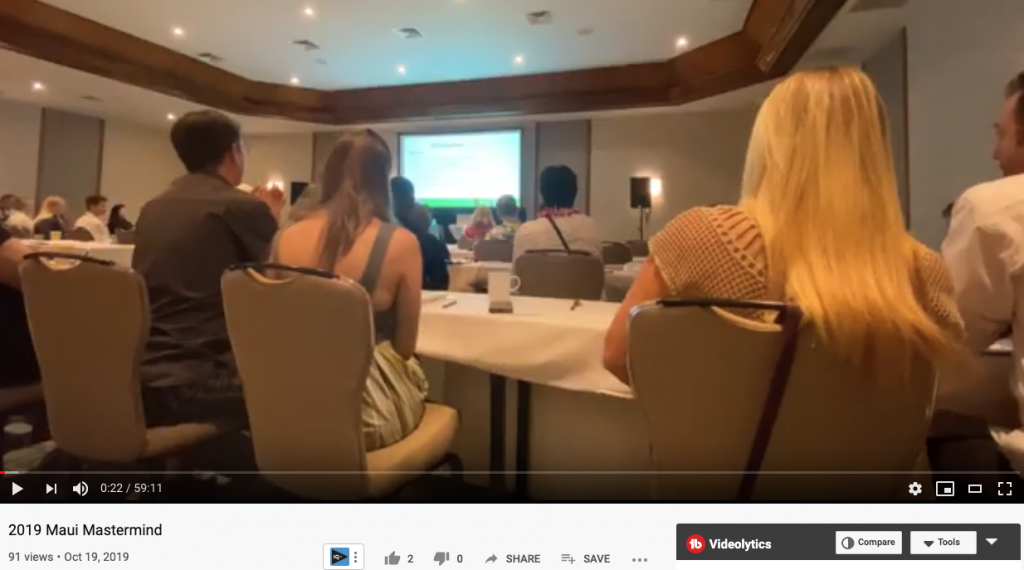
I just got back from Maui where I gave this talk (video replay). And San Francisco where I gave this talk (video replay).
Something about going on a short retreat puts things in perspective…
This year was a great year with the following Hui Deal Pipeline Club deals:
1) 309-Unit, Class-C+ Apartment @El Paso, Texas
2) 207-Unit, 5 Mobile Home Parks @Gulf Shores, AL
3) 80-Unit, Class B Apartment @Gulfport, MS
4) 104-Unit, Class B Apartment @Huntsville, AL
5) 212-Unit, Class B+ Apartment @ Irving, TX
Thank you all for your support and joining me on this journey!
I will be “taking it easy” these next couple months.
If you have anyone that is looking to get out of volatile stock market which seems to get worse as Trump and the Fed battle behind the scenes… please connect us via email*.
A referral to a friend/family is the best compliment. It is my mission to get people to financial freedom.


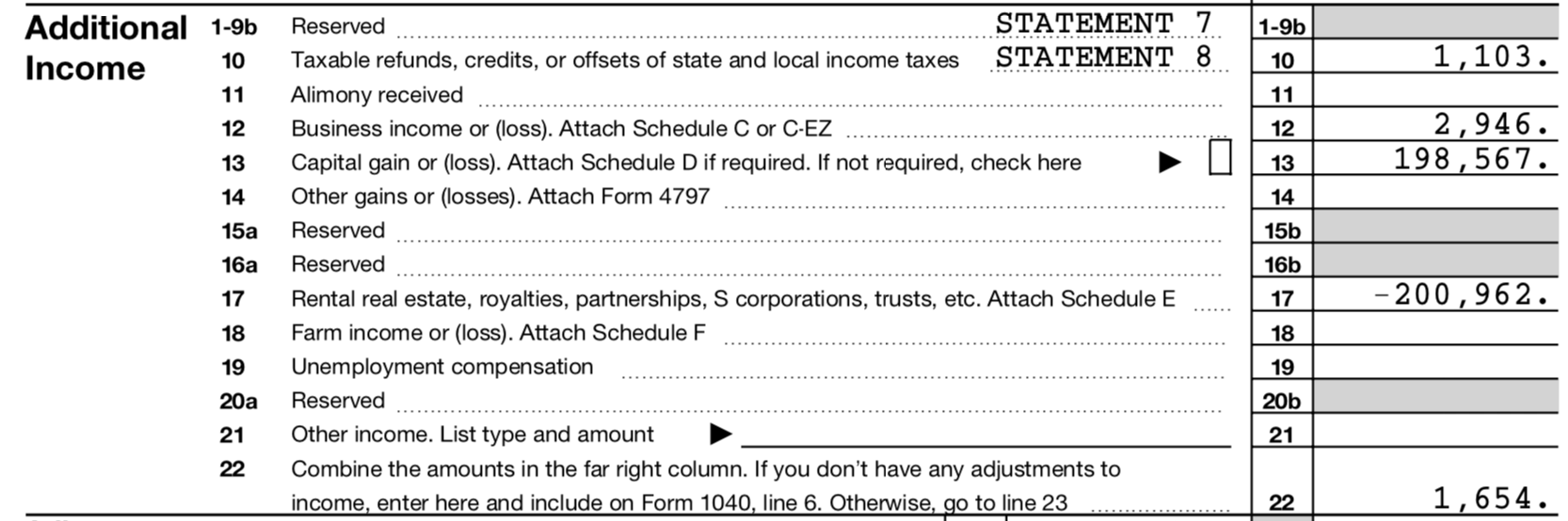
As we have seen when I posted my 2018 taxes and paying 4%… its un unfair game.
Now some rest and relaxation.
November Greensheet links
1) PDF Version
2) Web version
3) Video version









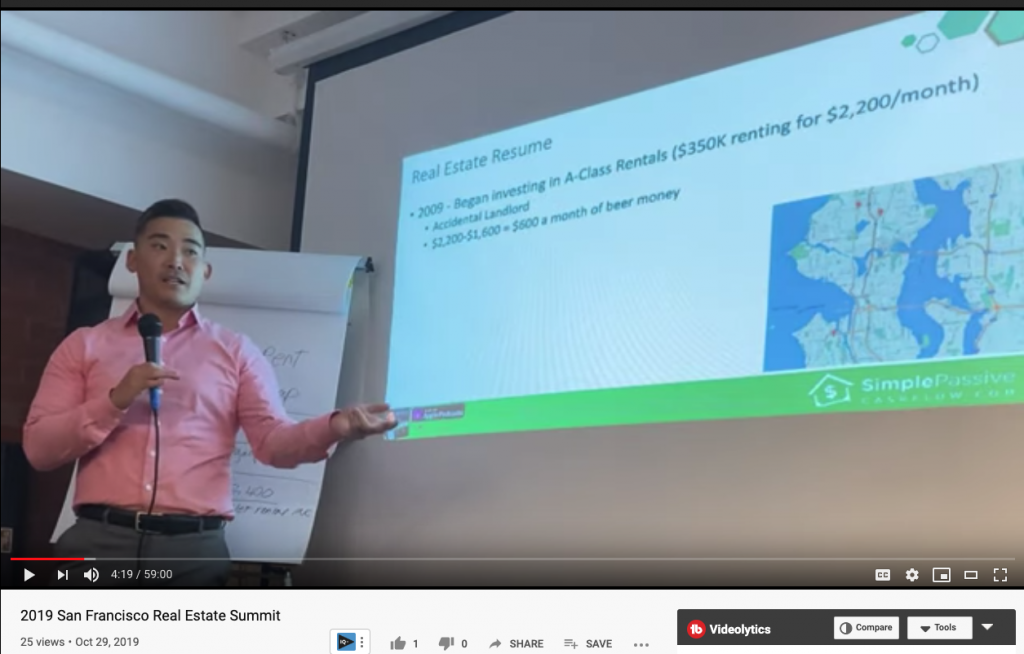
Two speaking engagements where I gave this talk (video replay).
And San Francisco where I gave this talk (video replay).

I am on a mission to give the secrets of the wealthy to everyone.
I recently used an S-Corp so I can start having 14 corporate meetings a year at my home.


Here is some of the work I put in to determine the fair market value of me renting out my home to my self per day.


Decided to hire some staff and take myself out of the business.
Simplepassivecashflow.com/jointeam if you have any impressionable family members who would like to start off on the right foot.



40-50 emails a day so I decided to filter ALL emails to be read later in the day so I only have to deal with a dozen must reply emails in my first hour of the day.


I broke down and bought Youtube Premium







Passive Investor Accelerator & Mastermind
-Mostly Accredited high paid professionals to connect with personally and build your own network (currently 45 members)
-27 modules of content in a closed membership site
-Bi-weekly Zoom Video calls (25+ on-demand recordings a year plus all library of past calls)
Learn more and apply before out max headcount is reached and 2020 pricing takes effect – SimplePassiveCashflow.com/Journey
If can do me a favor… If you get a chance people review leave a review for the podcast on iTunes (https://podcasts.apple.com/us/podcast/simple-passive-cashflow/id1118795347) and email simplepassivecashflow.com to a friend.




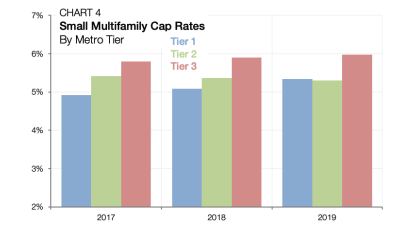
Unsophisticated investors buy off cap rates. I don’t really look at cap rates when I am purchasing because it is usually manipulated. If the seller or broker leaves out an expense or over counts revenue it greatly distorts the cap. Therefore it is a bad data point. I normally look at the Profit and Loss statement cause that is where you can drill in line by line.
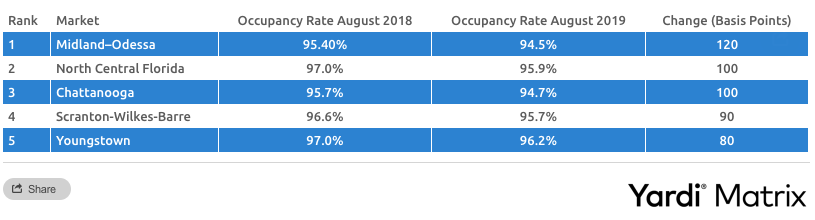
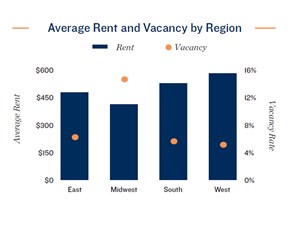
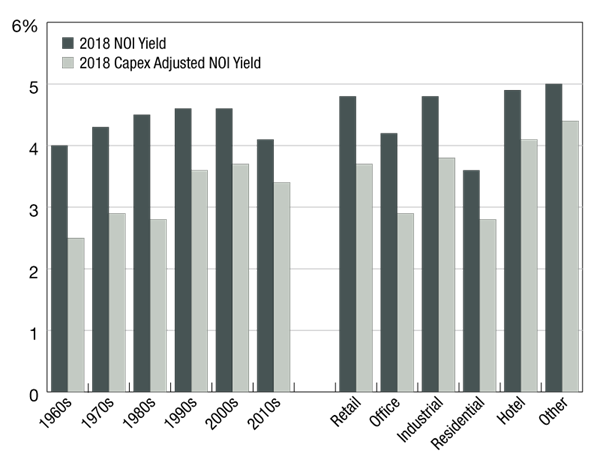
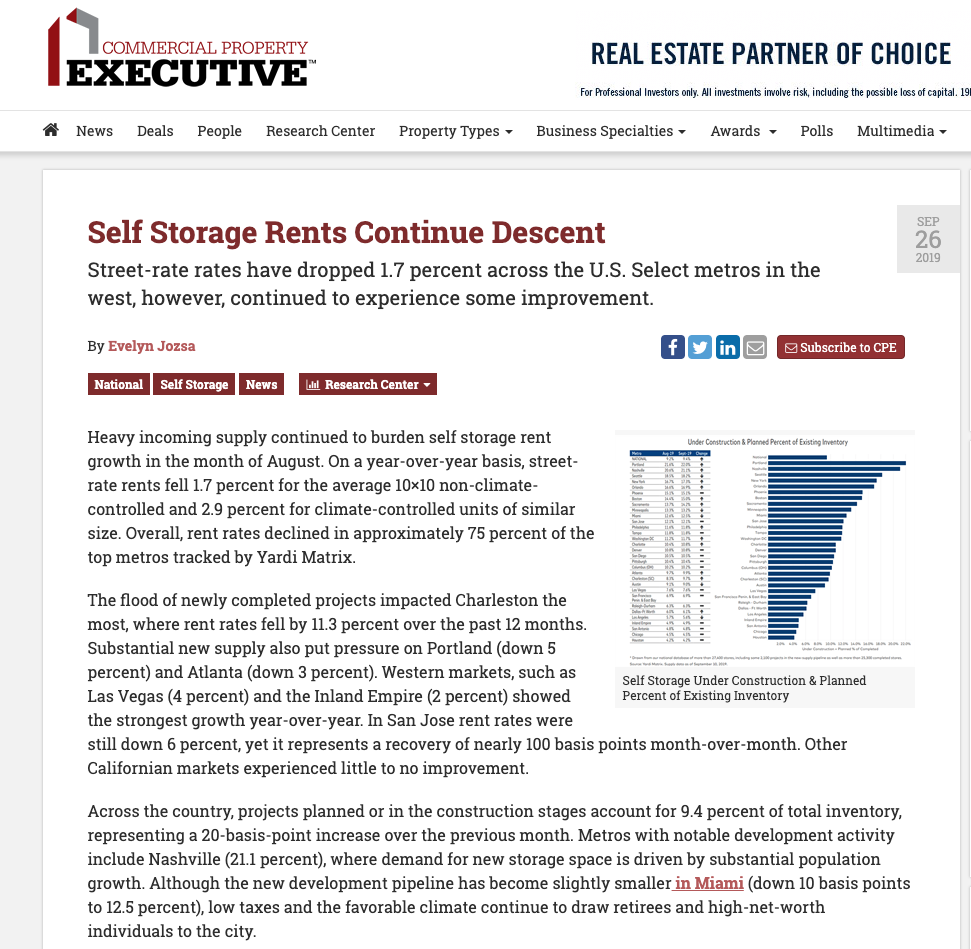
NOI vs. Capex Yield – CPE 19.11.2 – “Variables such as age, location and property type can influence how much capex is required to operate an asset”
I talk about this here.
Kyle McCorkel from www.realliferentals.com talks about his real life numbers on his rentals
URL/Contact: www.realliferentals.com
140-Character Bio: Father, Husband, Son. Industrial Engineering Consultant, part time options trader and real estate investor.
1) How much simple passive Cashflow are you making today and how are you doing it?
(You don’t need to give a number if you would like privacy. You can be vague such as halfway to quitting my job, cover my mortgage, Make 25% of my expenses, over $10k, although people like when people open up the kimono.)
About $1,700 per month PRO FORMA – accounting for a conservative amount of vacancy, maintenance, capex and management. 7 rental properties and counting. It is passive for the most part because they are all professionally managed. I spend very little time after the initial acquisition and rehab.
2) What is your Han Solo moment – Han Solo and his buddy Chewbacca from Star Wars were cruising around the galaxy as lowlife smugglers but then cross paths with Luke and Leia and his life took a pivot point. Describe the resistance that was the catalyst for change.
Did you “burn the boats” or did you let it happen naturally – was there an internal (you decided to make a change on own – what was thought process?) or external trigger (ie got fired from your job)?
I love Star Wars 🙂
I can talk about the moment when I realized I didn’t want to be a high powered consultant for the rest of my life. Then I realized that I had NO IDEA what I wanted to do with the rest of my life…
3) Worst life/business moment what did you do after? Lesson learned?
I could take this multiple directions…would like some examples of what others have answered…
4) Current 2-week experiment and 6-month project? (90-180 day goal) A mark of a high performer is to put your ego aside and accept the help of others and mastermind maybe folks can help you by you asking.
2 week experiment: I recently took on a “mentee” and asked him to help me find deals by driving for dollars.
6 month project: building a direct mail campaign to increase my deal flow.
5) What is your simple passive Cashflow number? Now imagine you had 2x that amount… Describe your ideal day, detailed routine, and what projects you are working on.
Assuming you mean how much cashflow I need to not work?
$6K per month and my wife and I could comfortably both not have to work, so that is the goal right now. That might increase depending on where we buy our next house (in a few years) and how many kids we have.
2x that amount…I’d wake up early, before the kids, and do my “Miracle Morning” routine, including meditation and a 1 hour workout. When the kids and my wife wake up, we would do something outside. One of our long term goals is to own a lake house, so I’d probably be working on improvement my lake house or future primary residence. I want my future primary residence and lake house to be value-add investments…
6) Something that you have recently or thought about “burning your cash” on for time savings or an improvement in quality of life.
I’ve made the decision to forgo making money on Fridays – Fridays are Daddy day for me to spend with my one and half year old son. I give up a lot of income but it is great for the soul to spend a whole day with just me and my son.
7) Something that you changed your mind on? Our ego often gets in the way of greatness.
I changed my mind about real estate – I used to treat it as a completely passive investment – I now think of it as a business and this mindset has opened up new possibilities and has opened up some fruitful relationships with property managers, contractors, etc.
8) In this sellers market… what are you investing in? What should a someone who does not have a substantial level of cashflow yet be investing in?
Value-add (also known as BRRRR’s) single family and multi-family properties. Less competition and opportunity to force appreciation and preserve capital.
Someone with little cash flow should buy a house hack – buy a multi family property, live in one of the units and rent the others out.
8) Tony Robbins identifies two large concepts that we are continually struggling to gain perfection at: #1-Art of Fulfillment and #2-Science of Achievement. If you died tomorrow and I were to email this to your kids a couple decades later… this is what they would hear.
I talked about the morning routine that I try to do. I would say be strategic in everything you do and constantly be running if/then scenarios. Have backup plans for everything. Be constantly prepared to react to things beyond your control. For example what if rents drop 20%? What if we have another Great Recession? What if I have a health problem and can’t work?
I would say just to act with integrity and honesty in everything you do. People like dealing with people they like…it’s pretty simple. Treat people with respect both in business and your personal life.
9) Anything we missed and contact info if you would like anyone to get a hold of you. URL?
My website is www.realliferentals.com and I use it to track my monthly portfolio performance. I can be reached through the contact page on my website.
Dear investor,
It has been a very busy month for sure!
Sold a couple of my turnkey rentals. One of these I had to pay a 37.7K repair bill. Full story here.
A lot of deal closings so things are very crazy.
Things should slow down very soon as I am looking to shut it down for the rest of the deal (like Lebron James not making the NBA playoffs he is on break). We put in an offer on a large Huntsville apartment and got out bid by $1M dollars LOL.
Looking forward to seeing a couple of these deals that I went into earlier in 2019 to start cashflow before the end of the year to add to the rest.
Here is the Video replay and the Greensheet (PDF).




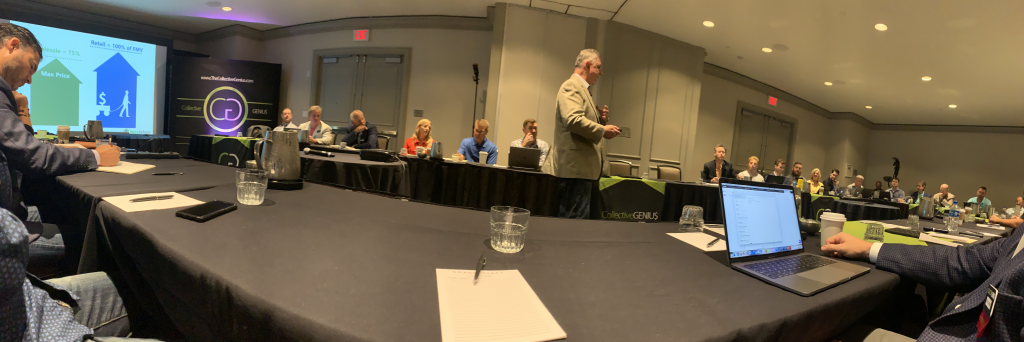

Creating a mastermind in Hawaii of passive investors

Watch me work out – SimplePassiveCashflow.com/fitness

Sold a couple of my turnkey rentals. One of these I had to pay a 37.7K repair bill. Full story here.
Annoying citations from counties for tall grass.

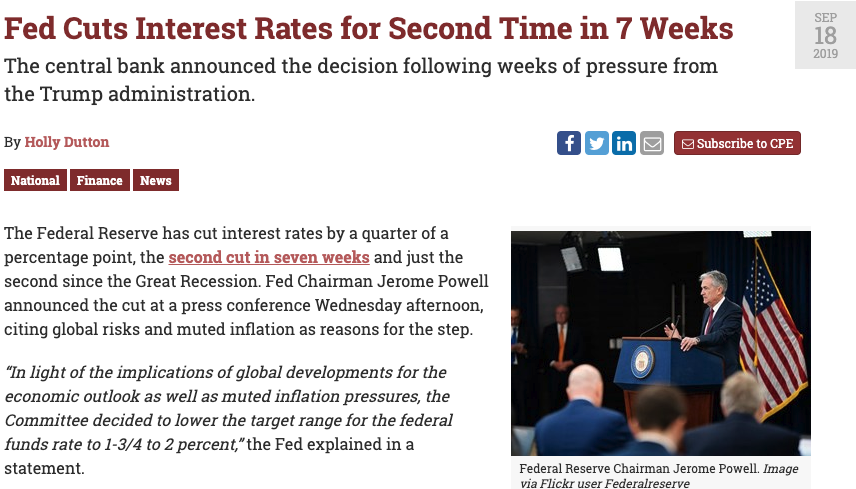
So many people have been complaining that a recession is coming.
Buy for cashflow simple…





Passive Investor Accelerator & Mastermind
-Mostly Accredited high paid professionals
-27 weeks of content
-bi-weekly Zoom Video calls
SimplePassiveCashflow.com/Journey
It’s going to be a really cool format where people take the journey together. Think like a Fraternity/Sorority without the weird stuff. When I was going through programs it was most beneficial to connect and climb the ladder with quality people. Who knows someone of your Cohorts might do a deal together or become lifelong friends or accountability partners.
If can do me a favor… If you get a chance people review leave a review for the podcast on iTunes (https://podcasts.apple.com/us/podcast/simple-passive-cashflow/id1118795347) and email simplepassivecashflow.com to a friend.
The Legal Labyrinth
Notes from a lawyer learning to see beyond the maze
Imbued with the dream of becoming a lawyer — upholding the law, arguing in front of a judge and jury, defending the underserved or mastering the art of the deal — you head to law school and never look back. Three years and over $150,000 in student loans later, you graduate, eager to apply your newly minted legal mind. You pass the bar and proudly step into your new job at a law firm, corporate legal department, or government office. But unbeknownst to you, despite your juris doctorate degree and “Esq.” title, you’ve just entered the same rat race as the majority of the U.S. workforce.
I know all this because I’ve been there. After graduating from law school, I was lucky enough to find a job at a “biglaw” firm where I practiced corporate law in the mergers and acquisitions field. That meant many 80+ hour weeks representing companies and private equity firms in the fast-paced, high pressure world of buying and selling companies. My colleagues in litigation practices were subject to less ups and downs, but were still regularly cranking out 60+ hour weeks under intense deadlines and filings. We all got there by employing the same mentality we used all through our lives — work hard, perform well to achieve the goal at hand and collect applicable accolades. What I realized when I got to the “top” of the legal profession, however, was that the view wasn’t so pretty.
The Golden Ticket?
Landing a job at a top ranked biglaw firm, at first, appears to be a golden ticket to higher compensation, benefits, opportunities and ultimately, a better life. Biglaw firms were seen as the most “prestigious” in the legal world for handling the most complex work and servicing even more illustrious clients – big pharma, tech giants and oil companies. The associates and partners are paid top dollar in return for their expertise, ability and availability. For instance, right out of law school in 2018, a first year biglaw associate is paid $190,000 as base salary and is eligible for a $15,000 annual bonus. For the next eight years, the base salary and annual bonus at most biglaw firms increases in a lock-step fashion according to the market-setting Cravath pay scale. Beyond the compensation, top-ranked law firms boast taglines of “unparalleled legal training” and the opportunity to “work with like-minded intellectuals” and “sophisticated clients” on “diverse and challenging matters.” For these reasons, even after a long hard week where you may be subjected to extreme stress, no sleep and eighty billable hours (not counting the ten non-billable hours of face time at the office), you are supposed to put your head down, keep going and receive that big fat paycheck every other week. After all, it’s worth it, right?
Why We Do What We Do
A handful of lawyers enjoy the practice of biglaw and its intellectual rigor — the litigator’s ability to creatively craft a brief to sway the court’s decision (or checkmate the opposing side into settlement) or the dealmaker’s negotiating savvy that secures the client’s acquisition of a promising portfolio company. These select few are the ones willing to grind it out for years into a lucrative partnership with the firm.
But the vast majority of biglaw attorneys are young professionals who admit they are not particularly interested in partnership and are only looking to gain some experience and training to parlay into an in-house position in a company’s legal department or a smaller firm, where they will take a substantial paycut in return for a more balanced lifestyle.
Nearly all biglaw attorneys share one thing in common: a $150,000 plus student loan burden that makes a high-paying six figure job that much more appetizing. Lawyers are known for their risk aversion, and many think that this debt is a risk in the sense of impairing their ability to dump their earnings into savings and their 401k. As a result, it was common for colleagues to talk about surviving in the trenches of biglaw long enough to eliminate their student debt.
Finally, there is the phenomenon of the golden handcuffs. Law firm associates get used to the high income and adjust their lifestyles accordingly. As a result, they believe themselves to be stuck in their jobs. Of course, they don’t realize along the way how much money they are wasting to make themselves “happy” — buying the nice watches, a few bottles of wine each week to unwind at a fancy dinner, the new car — and that they are holding the keys to the handcuffs that keep them at their job and lavish lifestyles.
At What Cost?
Time = Money
Being a lawyer at a firm is the epitome of trading time for money. Your working life (and therefore the majority of your life) become ruled by the billable hour, and you start to see your life measured in .25 hour increments. Associates are expected to meet certain billable hours (i.e., hours actually billed on client matters) in order to be eligible to receive the annual bonus. With the billable hour as a metric, your value as an attorney is measured by how productive you are and how efficiently and precisely you can churn out work product per hour. These billable hours are the firm’s source of revenue, and it is not uncommon to have a billable hour requirement of 2,000 hours per year. 2,000 hours equates to a roughly 40 hour workweek. Not bad right? But that does not include lunch, bathroom and water breaks, and any minute away from your desk chatting with a friend or asking your secretary to file away old matters. It was not uncommon to work a 9 a.m. to 8 p.m. work day only to see my billable time for the day clocked in at a measly 7 hours. Sometimes, there was not even enough work to support that, and during these slow times, it was not uncommon to bill 4 hours or less even though I was in the office the entire day. Finally, not having steady work flow meant oftentimes getting reacquainted with matters that you had not seen for 3 weeks or so, and feeling pressured into writing off the first hour you spend getting your bearings so as to not look slow or inefficient. This “billing” pressure — having partners pressure you into billing more hours to pad their pockets, but also to be conscious about keeping the client’s bill down to create the image of efficiency — takes a toll on associates and even partners. Even at the most elite firms, the most senior partners who have worked 60-80 hour weeks for over 20 years earn at most in the low seven figures. Unless you are the plaintiff attorney taking down big tobacco or pharma, there is no such thing as “the sky is the limit” in the legal profession.
Serving Two Masters
Associates working at a law firm really have two clients: the partners they are working for and the clients who the firm is working for. Both partners and clients expect that associates be available at all hours of the day, 24/7. For instance, a client could email regarding an emergency before the break of dawn, but the associate is still expected to give a timely response (within the hour). Similarly, a partner could give an associate an assignment before he heads home for the day and expect to see the work product before the next morning. There are no boundaries on when partners and clients can expect an associate to work. It is even more frustrating when you realize that the client bossing you and your partner around is a 25 year-old who stepped into his current gig after working at an investment bank for two years after undergrad. He’s the one who dictates your weekend plans by needing an update on the deal memo and other docs “immediately” so he can let his own boss know that his trip to Vegas won’t be a disruption since the lawyers will still be turning drafts all weekend.
A Thankless Profession
Starting out as a young associate, one expects to be inundated with the trivial tasks, such as due diligence of companies’ customer contracts in a buy-side deal or doc review to find the smoking gun. One would think that the more senior an associate becomes in a law firm, the more control they would have over their schedule, perhaps by delegating work to younger associates. However, it’s the opposite. The more senior an associate, the more responsibilities he or she will have and oftentimes, it is too complex of a matter to delegate to younger associate. Partners’ responsibilities and commitments between doing the work for multiple important clients to business development (which does not count toward their own billable hour requirements) have it even worse and are often working earlier in the morning and late into the night.
One particular memory I have from my time working in biglaw was a conversation I had with a partner on the eve of a transaction’s closing. It was about 3 a.m. Friday morning at the end of a week of late nights, and we were leaving to get a couple hours of sleep before an 8 a.m. closing call. He said, “You know how we lawyers all think we are the smartest people in the room? How when a business guy says something way off, we roll our eyes and figure we’ll have to get it right in the contract and negotiation? Well, we’re actually the stupid ones. We’re in the wrong profession. That business guy went to bed early fully expecting that we’ll get this thing done. He’s getting paid big tomorrow morning and may not ever have to work again. And we’re here until 3 in the morning and all we’ll get is a thank you and a bottle of wine at best. But if we mess it up, we’re gonna have a lot to lose. And this is only one of the 3 deals I have closing tomorrow.” That conversation stuck with me. Granted, he’ll get a share of the legal bill for the deal, but here was this well-respected, well-paid partner in his late 40s admitting to me that he made a career and lifestyle mistake. He was out of shape and always looked stressed out. The worst part was that he was sticking to this career with no end in sight because his attitude was that he made his bed and he just has to lay in it. I knew definitively that I never wanted to be like him, at the peak of my career, telling a younger colleague that someone else out there was living the dream while I was toiling away, trading my time for money.
Life on the Run
Because associates are expected to be available 24/7 and to meet the billable hour requirements as mentioned above, it is nearly impossible to find work/life balance. It was normal for associates to be working in their office late into the night everyday and on weekends and holidays. I used to joke with colleagues that “of course I’ll be in on Monday, it’s Labor Day after all!” Clients like to take their holidays, which meant that you would often be stuck with something as they head out the door.
Your exercise and eating habits also fall by the wayside. And even when I was able to drag myself to the gym on mornings with only 6 hours of sleep, there was always the stress. Some of my friends refused to wake up early for the gym because that meant another hour of consciousness where you could be subject to an email that would ruin your day. Biglaw is notorious for being able to take a normal working day from a 2 out of 10 stress level to a 10 out of 10 client emergency, and you never know when the next fire will need to be put out. I’ve counted more than five of my own personal biglaw acquaintances who fell prey to stress manifesting in the form of severe illness.
Countless birthdays, Thanksgivings and family get-togethers were either missed or spent in the other room cursing under my breath as I tried to turn a document before an artificial deadline. I would make weekend plans while at dinner on a Friday night, only to get an email or phone call later that evening letting me know I had to be in the office all weekend. Breaking plans with loved ones and friends was one of the most soul-crushing feelings about legal practice, as you knew that you were directly affecting their lives, not just your own. Ensuing stints of depression were not uncommon. And you know it doesn’t get better when the partners and more senior associates are in on weekends earlier than you and there well into the night. Sometimes my fellow associates and I joke that maybe these partners secretly hate their families, because they’re always at the office. But sadly, the truth is that they have convinced themselves that this is the only way to make a living, and therefore trapped themselves for good.
The lack of your ability to have a social life, take control of your health or maintain your relationships gives the biglaw attorney the sense of playing Russian roulette, but instead of a “bang,” you dread the “ding” of your email on a Friday night. There was always the sense of looking over your shoulder, because sooner or later, biglaw was going to get you.
Learning to Love the Law After Drinking the Kool-Aid
I knew pretty quickly that I could never sacrifice my family life to the needs of my clients to such an extreme, and so I began to look around for a way out of biglaw and the life of a lawyer in general. On my long commutes to work, I stumbled on investing podcasts, and then real estate specific podcasts (even this light hearted on with this dude and his ukulele), and although I did not have a way out mapped yet, the one catalyst on interviews that everyone mentioned was, of course, Rich Dad Poor Dad by Robert Kiyosaki. Once I read that and his Cash Flow Quadrant, I knew that the universe was telling me that there had to be another way to live a meaningful life, and that it was passive income and cash flow investing.
Of course, it was nearly impossible to take action, since biglaw was an all-encompassing job. So I tried to learn what I could about the world of passive real estate investing so that when the time came where I had enough control over my life to start investing, I could be ready to pounce.
After listening to hundreds of podcast episodes and reading dozens of books on the subject, it became clear that to escape the rat race, leverage was an important factor. Not just in the sense of using debt to acquire cash flowing properties, but leveraging your time and your talents. So that begged the question: how can a lawyer’s skills and resources be parlayed into real estate investing?
Lawyers generally have higher incomes due to their advanced degrees. As mentioned earlier, biglaw associates straight out of law school make nearly $200,000. Outside of biglaw, even government lawyers can make six figures. This means quick accumulation of investment capital through earned income (W-2 wages). With the right knowledge on controlling finances, a lawyer can save well into five-figure portions of their salary per year, which can allow for the rapid growth of a cash-flowing asset portfolio. In addition, a lawyer’s personal network will invariably include many similarly situated legal professionals with disposable income for investing, which may prove useful for raising capital and attracting other investors to deals.
The skillset of a lawyer is also applicable to passive real estate investing. Lawyers have very strong reading comprehension, writing, research and negotiating skills. Real estate property analysis can be learned, but the ability to spot issues and inconsistencies and to tackle complexities is what lawyers are trained for, and this will inevitably come in handy when dealing with agreements involving your real estate investing (including term sheets, purchase and sale agreements and private placement memorandums). Due diligence is a familiar term of art for transactional attorneys, and similar principles apply in the real estate purchase context. Furthermore, managing more junior attorneys or specialists (especially in an M&A deal) is useful experience when applied to overseeing your own investment team of property managers, agents and other advisors.
Finally, a lawyer’s title carries a sense of professionalism and respect that translates well in the investing world. When I was a biglaw associate, sophisticated clients with 20 years of experience in investing often called me to ask me to explain a complex vesting mechanism or to handle the entire due diligence process in their purchase of a hundred million dollar company. Being a lawyer may bring some negative associations due to popular culture and general experience, such as being conniving, risk averse or not business minded, but by branding yourself as a business savvy and commercially-minded attorney trusted with great responsibilities in your W-2 job, you can stand apart with your less common background and skill set.
Planning the Escape
As a lawyer at a biglaw firm, I had little control over my life and free time. Eventually, after years of going through the grind, I was fortunate enough to land an in-house position, where I am generally on a 9 a.m. to 6 p.m. schedule. This was a crucial step that allowed me to devote more time and resources to passive real estate investing.
In order to get started on escaping the maze of a W-2 legal job and the rat race, an action plan is needed. Most important is an investment in one’s financial education. Start with Rich Dad Poor Dad and Cash Flow Quadrant to drink the koolaid (or SPC Latte) and indoctrinate yourself into the paradigm of being financially free and having real wealth. Listen to podcasts such as the Simple Passive Cashflow podcast, and read books on real estate investing.
Then, after a few books and podcasts to get yourself comfortable, it is time to take action. Do not get caught up in looking for the next shiny object that will be the magic pill to get out of the matrix. Financial independence and escaping the rat race takes time, and you should not be distracted by what others have done to amass total wealth if their situation is much different from yours. When observing the stories of other W-2 income earners and how they have mapped out their escape, one thing became clear: the investing must be passive, and intentional efforts and actions have to be made towards pursuing even those passive investments. Not to say that quitting your legal job now and diving into real estate or other investments cannot be done, but just realize what it is you’re trying to achieve. If it is financial independence and escaping your rat race job, then focus on attaining passive income that will cover your expenses, and then replace your salary. If you’re looking to get out of the law by jumping into flipping or wholesaling real estate, just realize that you’re just doing a career switch into another active endeavor and that you are not achieving financial independence in that way until you have a passive income stream from your investments.
Like Plato in the Myth of the Cave or Neo in the Matrix, the paradigm shift is the most important first step in seeing the truth. Without it, we are just highly educated esquires blindly fumbling through the corporate ladder or firm hierarchy until we reach 59 ½ years to collect our 401(k) payments. I am lucky enough to have gotten through the first level of the maze of the legal profession that is biglaw, where time is traded for dollars. I am now on my way in the second level, where the only way out is the accumulation of passive income. Many tell me that once I free myself of the day job or the need to collect a paycheck I will begin to ponder what else to do with my time and find difficulty to find fulfillment after. Well, I welcome that first world problem 😉
If you’d like to learn more about how to escape, start here on the Journey to Simple Passive Cash Flow.
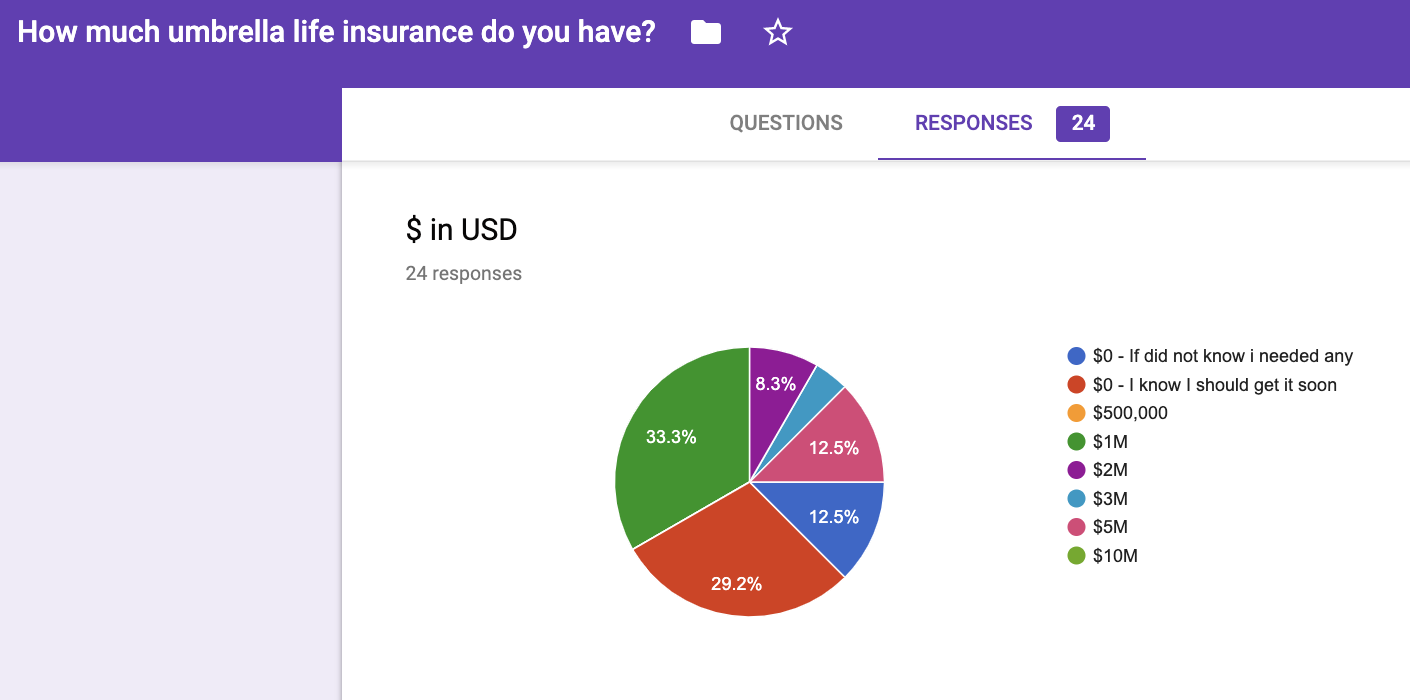
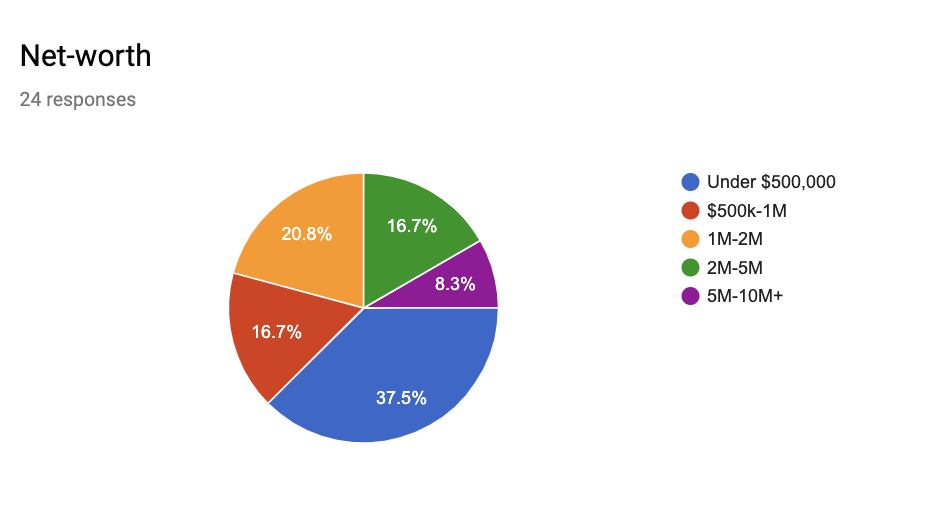
We did an informal survey of the members in the Passive Investor Accelerator & Mastermind
Do investors need umbrella insurance?


Fitness Tips and Virtual training for the Busy
1.) Morning routine – Lemon juice – Spring tips tea and homemade Kombucha – https://kit.com/SimplePassiveCashflow/fitness
2.) when to drink coffee – Simple Passive Cashflow Latte –
http://simplepassivecashflow.com/the-simple-passive-cashflow-latte/
https://kit.com/SimplePassiveCashflow/simple-passive-cashflow-latte
3.) sleep tips – Sleep Cycle alarm clock by Sleep Cycle AB
https://itunes.apple.com/us/app/sleep-cycle-alarm-clock/id320606217?mt=8
4.) what best workout program to get in shape
5.) how to drink alcohol
As far as workouts go for you, Jeff asks what your goals are, why they are important to you, and what time availability you have throughout the week to get in sessions. Then he recommends if 1 if not 2 days a week is good for you depending on what you are looking to do.
“We specialize in creating a personalized 13 point training system that holds you accountable to attain your desired health and fitness goal in 3 months…GUARANTEED”
Jeff McMahon
Start learning about real estate investing – SimplePassiveCashflow.com/start


