I’m currently in the middle of setting up my overfunded whole life policy with the guys over at Wealth Formula Banking that you connected me with.
Properties:
First purchase in August 2018 (duplex in PA)
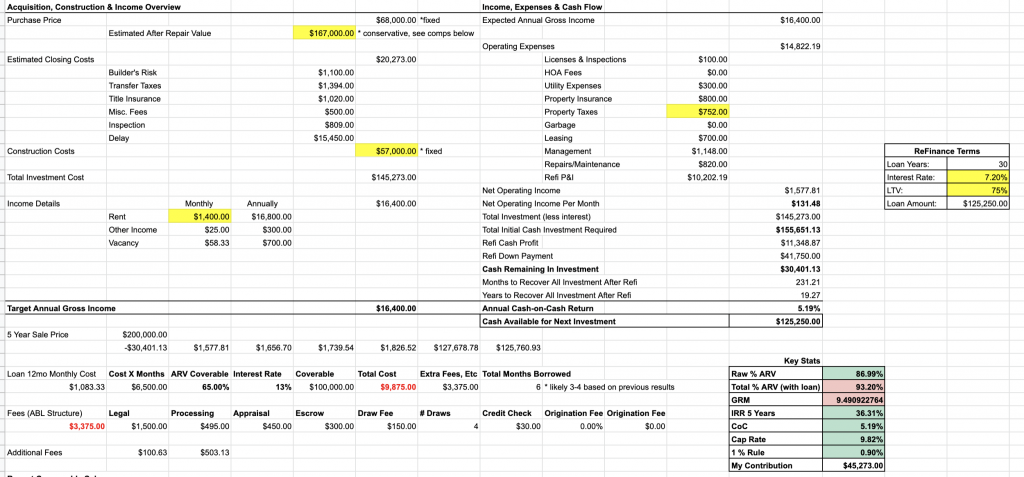
Currently in closing on another SFH that I’m 100% financing… currently waiting on a tenant situation to get them out before locking it in… see my underwriting here:
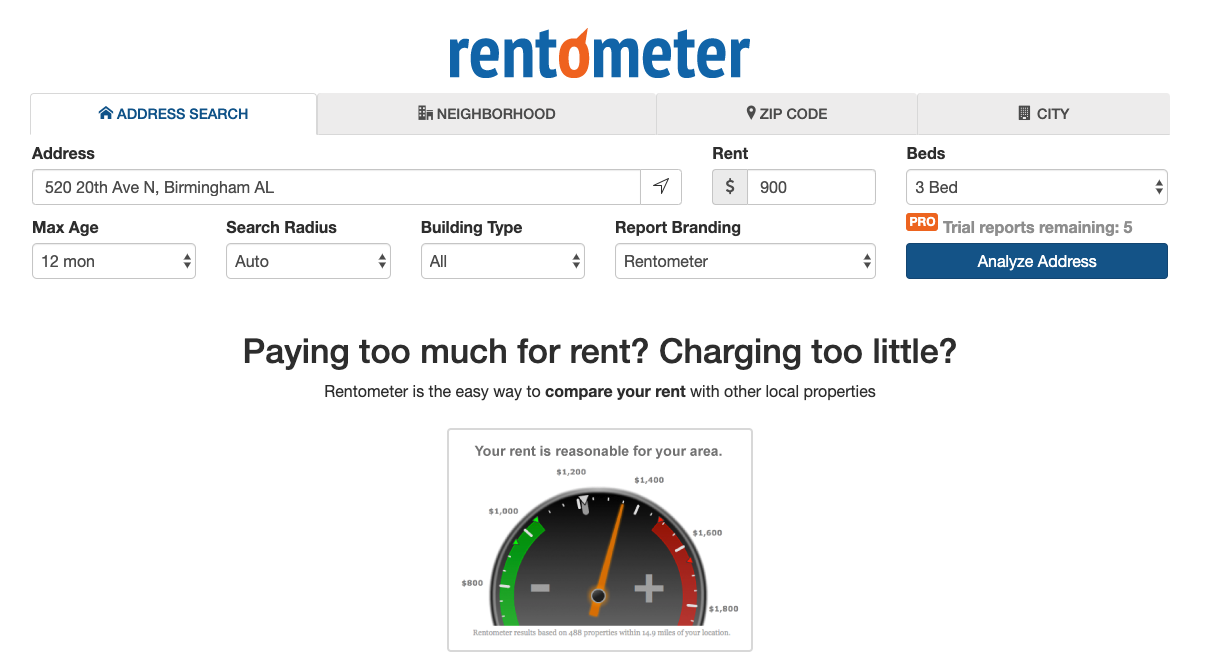
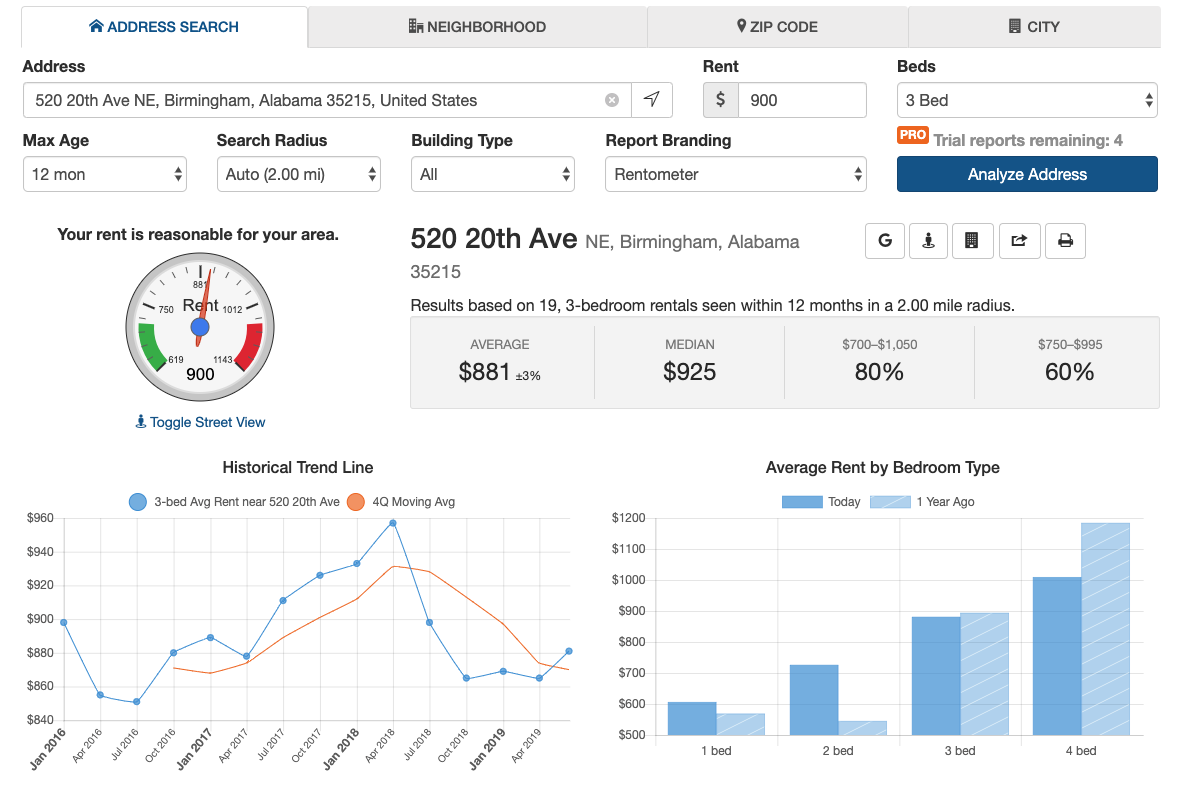
The cash flow is low on this one, but you can see the comps here are quite higher than what I’ve conservatively set (and what my financing is based on), so I expect to get even more equity right out of the gate on this one should we resolve the tenant situation. I’ll also be completely funding it through financing, which provides an effective infinite return there on this after refinancing it.
My other property can be seen here (it cash flows around 1k per month, and when I finish financing it at the end of this month, it’ll still cash flow around 500/month):
Going forward, will be focusing only on properties that I can recoup most of my investment during the refi
Currently starting up some branding around my RE ventures (Engineered Cash Flow):
Investment blog that will be converted to something behind Engineered Cash Flow: investwithross.com
I am a little different than most of your clients/followers in that although I do have a high income day job, I do enjoy the entrepreneurial side of the RE business and am looking to be a bit more active in the business side of my venture (honestly very similar to what you have created). I am looking to grow an investor list and scale this year. In addition to my income, I also have very good credit which has made it fairly easy to get lending and to get creative with leverage.
Currently have a solid team in Philadelphia that allows me to purchase discounted properties, rehab them, rent them out, and finance out my investment while still able to cash flow. They effectively wholesale me the deal, which I am the purchaser and funder. They then use their contractor team to do the rehab, and I use their property management group to manage the properties (could use other groups, but after doing due diligence and interviewing a couple of companies, went with them anyway).
I do realize there is a lot of eggs in the basket there, but this allows me to get into value add properties that allow me to get out a majority of my investment back out in order to scale faster. I also realize that they take nice margins for their selves during the wholesale and construction (which they guarantee and have a fixed construction cost so low risk for me there), but I’m willing to pay a little extra to do better than your normal turn key and be able to take advantage of a cash out refinance right after the construction. My plan is to do a few more with them, but I’ve also been building up my own team (i.e. wholesalers, contractors, bird dogs) out there in the area so that I can cut out a middle man factor and recoup another 10-15% equity per deal.
I’m currently in the middle of setting up my overfunded whole life policy with the guys over at Wealth Formula Banking that you connected me with. I’m planning on putting in 50k/year into as my “war chest”.
Properties:
First purchase in August 2018 (duplex in Philadelphia, PA)
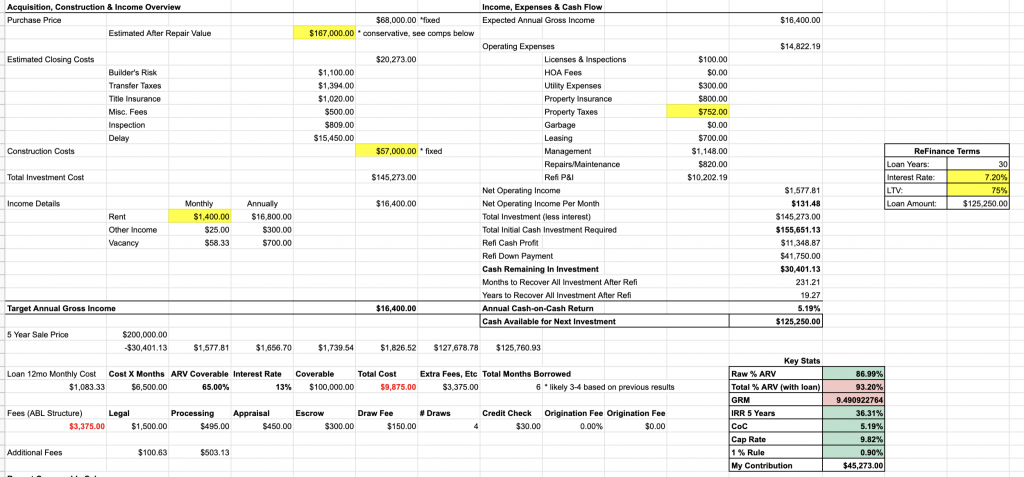
Currently in closing on another SFH in Philadelphia again that I’m 100% financing… currently waiting on a tenant situation to get them out before locking it in… see my underwriting here:
The cash flow is low on this one, but you can see the comps here are quite higher than what I’ve conservatively set (and what my financing is based on), so I expect to get even more equity right out of the gate on this one should we resolve the tenant situation. I’ll also be completely funding it through financing, which provides an effective infinite return there on this after refinancing it.
My other property can be seen here (it cash flows around 1k per month, and when I finish financing it at the end of this month, it’ll still cash flow around 500/month):
Investment blog that will be converted to something behind Engineered Cash Flow: investwithross.com
I am a little different than most of your clients/followers in that although I do have a high income day job, I do enjoy the entrepreneurial side of the RE business and am looking to be a bit more active in the business side of my venture (honestly very similar to what you have created). I am looking to grow an investor list and scale this year. In addition to my income, I also have very good credit which has made it fairly easy to get lending and to get creative with leverage.
We’ve chatted before, but I’ve attached a quick bio blurb that I’ve used for private lenders before that gives a bit more background on myself. Currently have a solid team in Philadelphia that allows me to purchase discounted properties, rehab them, rent them out, and finance out my investment while still able to cash flow. They effectively wholesale me the deal, which I am the purchaser and funder. They then use their contractor team to do the rehab, and I use their property management group to manage the properties (could use other groups, but after doing due diligence and interviewing a couple of companies, went with them anyway).
I do realize there is a lot of eggs in the basket there, but this allows me to get into value add properties that allow me to get out a majority of my investment back out in order to scale faster. I also realize that they take nice margins for their selves during the wholesale and construction (which they guarantee and have a fixed construction cost so low risk for me there), but I’m willing to pay a little extra to do better than your normal turn key and be able to take advantage of a cash out refinance right after the construction. My plan is to do a few more with them, but I’ve also been building up my own team (i.e. wholesalers, contractors, bird dogs) out there in the area so that I can cut out a middle man factor and recoup another 10-15% equity per deal.
With the financing and capital I have available, I am looking to do 6-8 more properties like this in the next year.
That PFS is a few weeks old. Added another ~5k-8k to general savings during that time.
The refi on the original duplex should be done in early February.
Forgot to note that I’ll be dropping some cash on an engagement ring after I get my refinance complete and my life ins policy set up (watched your diamond purchasing for bros podcast too ), so that’ll be ~10-15k out of the stash.
I worked at two startups (currently at one).
I have ~$35k of unexercised options at the first one (Boosted Boards, which just raised 60M for their series B) with a 10 year exercise window
$100k of unexercised options at my current company (Skydio)
Affiliate relationships with local realtors
Reach out to top insurance agents if they know large apartment owners looking to sell
Utilize relationships with regional banks for deals that fell out of contract
Affiliate relationships with local PM companies
Team up with other syndicators/investors
Contact organizers of local REIAs
Search BP for multifamily investors in specific area. Leverage their warm industry contacts.
Reach out to operators in groups like Michael Blank’s Slack group
Database of brokers or deals
Find investors locally
Find investors on the internet
Turnkey providers – to network with deal people
vendors
Find deals
Network with wholesalers
Talk to brokers
Talk to apartment owners
Brainstorm fundraiser sources
Church
Sports club
Professional organizations
Non-profit
neighborhood association
Military
Healthcare
Government agency
Family
Fraternal org
Culture org
Main Street/small business
Trade organization
Insurance companies
Faith-based companies
Support groups
Social service agency
Schools colleges
Large companies
BiggerPockets
Property management
Rehabbers
General broker blast
Apartment owners
Not only is Gene a CFP, Certified Financial Planner, in the US for over 20 years and licensed in Australia for the past 7 years, he has also spoken to over 300,000 people in 5 countries live from the stage. In addition, Gene has written 4 books and hosted 3 radio shows of his own. Gene understands what you are looking for from a guest and how to make the topic interesting and valuable for your listeners as well. Gene is a life long entrepreneur with 17 businesses over the past 39 years.
Why would your listeners be interested in the topic of Senior Housing?
The reality is that every one of us will have to face the fact that we will have to deal with aging and the need for care and housing as we age at some point.
Gene shares with listeners how they can participate in this opportunity as a real estate investor, business owner or simply investing in this fast growing niche.
1- Gene, with the baby boomers aging, how big of a crisis or opportunity is assisted living today?
2- How did you first get involved with assisted living?
3- Do Good and Do Well is your motto. What does that really mean and how do you help people?
4- At your Academy, you train people how to start and operate these homes as a business, is that correct?
5- How can people learn more about the Academy?
Additional Questions;
1- How many people need assisted living services today? How many seniors really need this help?
2- What does it cost to stay in an assisted living home? Is it different based on the location
3- How does the residential model that you teach compare to the “big box” facilities?
I met Bo (online) in early 2018. When I first chatted with him he was another propeller hat.
What makes him different but more importantly what tangible steps did he take.
Bio:
Bo is a buy and hold real estate investor from Southern California and has picked up 6 rental properties in 6 months since closing on his first property. He invests in working class neighborhoods across the markets of Indianapolis, Kansas City, and Little Rock. During the day, Bo works as a senior consultant for a regional CPA firm and hopes to create passive income to become financially free and also educate others to do the same.
Story
Learned about REI at a young age (landlord from 10-18 yrs old) was a chinese lady who taught her son how to be a landlord
Started to rent out room in 3 bed primary room for cash flow
Parents had “renter’s mentality/scarcity mindset”
“I cant afford that right now” – Rich Dad “How can i afford that”
“This is good enough. I don’t really want that bigger house, better car or fancy vacation anyway.”
Let go of fear!!
Why I chose REI -passive income: “David Bach – automatic millionaire, latte factor, pay yourself first”
RD → Pay yourself first, but with a purpose, savers are losers (inflation, money not making a return, etc.)
Started consuming all podcasts, books, audiobooks, and attending real estate conferences and meetups
Met mentors (lane, who showed him how to invest out of state (instead of REITs, other passive stuff)
Good mentors/Bad mentors
People who try to sell you things
Good mentors – are doing deals, negotiation tactics (saved 3K on first deal). Dont have to re-create wheel, introduce them to their circle of friends/investors. Looks at deals – responds 24-48 hrs
Ongoing relationship – i sent them leads if i find any, send them vendor listing compiled, heloc listing,
Bad mentors – arent doing the things they are “promoting”/exp from 10 years ago
Goal is to continue to BRRR in KC, Indy, Little Rock (atleast 10 in each location)
Build brand = blog, podcasting, networking like a madman
Tips
Bad things
“Motivation gets you started, but habits keep you going.” Finding my why – which is building income for my aging parents, and building a legacy for my family got me started. But I know that Ive started things in the past that have fizzled out – Like what?
Trying the latest workout, studying for licensure
To finish strong, I knew I needed to create lifelong habits that will help me take a step (no matter how small) in the direction where I want to go and the person that I want to be. To take a page out of Grant Cardone’s book – 10x rule. Uncle G says by increasing your target goals, and taking massive action (10x) your mindset will shift and so will your results.
Another key thing ive learned was create systems and processes that you can leverage in the future, whether it be
routine checkups w/ your PMs – What exactly?
Utilizing custom spreadsheet to keep track of all P&L items across 6 properties
“Gauge” expense % and if over time its trending towards higher than expected (i.e. 50%) then have a check in call w/ PM to understand why
Depending on area, (now learning KC basements are prone to flooding), consult them to see if we need to take preventive measures, drylocking, sump pumps, ventilation, etc.
Actually took this from your spreadsheet (bi-annual checkin)
underwriting deals – What exactly?
Using a checklist to make sure it fits your criteria
If it deviates, explain why (“deal is at 50cents a dollar, than the typical 70cents, diff strategy/airbnb, venturing into new area)
Run it by 2-3 locals
Stress test it – lower rents by 10-15%, increase maintenance and vac from usual 8%/8% to 10%/12%
What could go wrong? If a rehab, add in 10-15% contingency
How long can i sustain vacancy
whatever that helps you streamline your business and reduce unwanted risk. Luckily for me, my background as an accountant and consultant that specializes in compliance and internal controls helped me view this new business venture in terms of how I approach a new client – I look at the business environment, risks that the company faces, and find solutions to mitigate the risk if it cannot be completely eliminated.
Words of wisdom for scared newbies newbies that are out there looking for buy and hold properties, especially as an out of state investor? Another favorite quote of mine is one that says “its not what you dont know that gets you in trouble, but what you think you know that just aint so”. Im not sure if i interpreted it the way the speaker intended it, but I like to refer to this whenever people come to me and relay information that they heard from a friend, or read in an article somewhere that the next crash is here or that out of state investing is super risky. If i have done my due dilligence (talked to 5-10 different investors from indy and get multiple viewpoints, fly out to the market, underwrite dozens of properties) I am okay with taking calculated risks.
My piece of advice is if you want to get into real estate investing, treat it like a business, take the time to educate yourself, and take massive action – DONT get into analysis paralysis. Also – team up with the right people. No one became successful by themselves, real estate investing is a team sport you need the right acquisitions manager, the right lender, the right property manager, etc. Tips to find other passive investors? Bigger pockets, facebook groups (joined like 50), google: real estate investing blog/website and contact all of them, ask other influencers (lanes introduced me to a couple ppl)
What’s next?: my passion – helping other people. I see alot of my friends and family members struggle financially, and often give them a copy of rich dad poor dad to read and educate themselves about finances. I see real estate as a vehicle to really achieve that financial freedom to make choices in life that really motivate you, get you excited, as we weren’t created to go to school for 15 years, work a 9-5 for 40 years and then hope you have saved enough to retire at 65.
I ask alot of my friends what they would be doing if money was not an issue, and alot of the times I get blank stares, as they really haven’t thought about that question. I give them a couple of minutes then they start talking about their passion projects such as making music, DJing, being a travel blogger, building homes for the homeless. But we are stuck in a rat race that doesnt allow us to look around us and truly live life since we are busy looking forward with our blinders on trying to get ahead. For me personally, I truly feel joy when I am able to help others and see changes being made in their lives. I hope that I can leverage my experience working at a financial services company, as an accountant, and now real estate investor to help others who feel stuck and trapped, so they can create passive income and follow their passion project.
Michael Flight has an extensive background in commercial real estate investing and is principal of Concordia Realty.
Concordia Realty specializes in shopping plazas and retail properties. They prefer to purchase operational commercial projects with existing income. They concentrate on strip shopping centers and they occasionally renovate or restructure existing commercial properties.
They have over a million square feet of retail space located in the Illinois, Indiana, and Michigan markets. Increasingly they are interested in Ohio and Wisconsin. They continually look for good opportunities and are working to expand into new areas.
Michael became involved in real estate shortly after college where he worked as a broker and then began working with a syndicator that owned shopping malls. In 1990, he started out on his own by founding Concordia.
Take us back to Pre-1990, how did you get into Real Estate Investing?
What does Value add mean in shopping centers?
Finding better tenants, upgrading and renovating buildings, and increasing rents.
Isn’t Amazon going to kill Shopping Centers?
He says, “A lot of negative press about retail real estate has been generated by companies like Amazon competing online. This has driven down prices and opened up opportunities for Concordia. It’s hard to get goods delivered that last mile to parts of rural America. Even Amazon has invested in companies like Whole Foods as they recognize the need for retail outlets.” They are examining different merchandising strategies and like to see that their tenants have an online component to their businesses.
What types of Shopping Centers do bad?
He discusses the types of retail stores that will likely do well in the current environment and those that may fail.
How are Cap Rates in Shopping centers compare with other asset classes?
Institutional investors?
What are you personally investing in as a LP?
What is something that I (apartment refugee) should do? Go to a boot camp?
Jason Ricks discusses his options as being and investor after having some experience as an investor of small residential units and now transitioning to syndications.
His day job is in commercial shopping centers which brings a unique perspective to the conversation.
From all in 401(k)index investor starting out to single family purchase while simultaneously receiving AMLI equity share position.
Failed attempt of Single/Duplex investing.
Lane shares his rule: After over 1000 strategy calls with investors and coaching clients over the past couple years here is what I tell W2 employees… For those who are able to save more than $30k a year or have substantial liquidity (over 200k), being a landlord and especially flipping is a lot of work. If you like it cool/good for you… but just remember why we got into this… To be free from a JOB. A lot of us (80%) who stumble upon simplepassivecashflow.com and start drinking Kool-Aide will be financially free in 4-7 years pending taking action. So I always urge people to start with the end in mind and take a more passive approach.
Do the math here… you with 300 dollars per property (2 months of work to buy a turnkey rental) you are going to need 20-40 of these to replace your income. I have 10 of these and have systems in place but have 1-2 evictions a year and 3-4 big things that happen. Image if I had 30, just 3 x those numbers.
Directly investing in a turnkey rental or small MFH is a good way to start to learn and build up the war chest to go into my scaleable investments such as private placement syndications. Whatever you do, try to be as close to the investment as possible. This is the fundamental problem I have with Wall Street who takes too much fees off the hard-working efforts of the middle class.
Due Diligence process, PPM, and why I decided to invest in the deal.
Focus on buying retail properties, and using my retail CRE knowledge moving forward.
I am constantly pitched for random development deals and some times these phishing requests get annoying because I have little interest due to the poor risk adjusted returns and the fact that I would be a debt investor and not equity investor (upside).
More on private money lending deals which is offered in our investment club.
This madness has to stop because I don’t do deals with people I don’t know, like, or trust. I lost $40k straying from this logic in my first passive deal in 2014. Although in my defense, that’s what you do when you are a newbie investor with no network of other passive investors. To learn more about that deal and what I try to help new investors avoid. In other words, if we have not met, it ain’t going to happen and please do not try to offer 12-20% rates… that is just plain embarrassing.
Why do I not like these types of deals?
1) No exit strategy – If I am going to do private money lending I am going to do it in and area (secondary or tertiary) and non-luxury class (Class B or C) where I can achieve a 1% Rent-to-Value Ratio or more so if the economy corrects during construction I can rent the property out and not bleed holding costs. (More info – http://simplepassivecashflow.com/rv/) Also in primary markets and luxury classes the lows are a lot lower than secondary/tertiary markets for example in times of trouble a home in Hawaii might go down 20% value where a more boring market like Birmingham might lose 5-10% value or even stay the same because it was not a high appreciation frenzy market to begin with anyway. People talk about covering your self with a proper loan to value (LTV) Incase you have to take over the property from the flipper/developer who screwed up but when things go bad it’s a street fight and LTV means nothing. The more practical and likely exit strategy without having to pay more friction/transaction costs is to rent the property out to recoup some losses. By the way if you have $30,000 why not begin with the end in mind and start purchasing cashflowing assets now – start with a turnkey rental!
2) Commercial > Residential – Residential properties are so subjective and requires an emotional buyer on the end to pay a crazy price. Think House-hunters on HGTV where a couple set out to buy those dream home and you watch as one of the spouses manipulates the other to buy the one they want regardless of price. It great when it works as the developer (as a debt investor you don’t partake on the extra profits anyway). But the sale price it’s really outside your control as it is dictated by what other houses are selling for. I prefer math to dictate when our sales price goes as a multiple of the income minus expenses that the property cashflowand. This is something we have control over and can have multiple exit stratergies.
3) Alright the development plan goes perfectly and gets a great sales price. Unfortunately as mentioned before you as the debt investor don’t see any of the upside. Here are the problems a) your yield stops as you have to scramble for the next deal to go into and b) all this gains is active income taxes at the highest tax amounts. You don’t get any of the sweet benefits of depreciation or bonus depreciation from doing a cost segregation on a bigger deal as a LP. SPC Guide to Syndications.
4) Better options – when you get one or two syndicated deals from a plethora of asset classes outside the most competitive realm of single family home flipping that offer existing cashflow and value add opportunities where total returns range from 80-120% in 5 years then it blows 8-12% first lien deals out of the water in terms of risk adjusted returns. If you are looking for even lower risk investments in the same 8-12% range I would suggest triple net leases with stable multi-million dollar companies like Starbucks, doctor/dentists offices, or Walgreens. In addition, for even more non-correlated assets consider life settlements where you are getting on the sure thing… Death. Read more on this morbid non-correlated asset here.
Coming out of college—I worked for the department of economic development up in Albany New York, and it was a really interesting experience. I was charged with helping being a part of projects where we try to keep businesses in New York or otherwise help them locate there, which is difficult to do given the high taxes that are in New York.
Did that for a couple of years, didn’t want to be a civil servant my whole life, so I went to law school—like most aimless people do as they try to find their way.
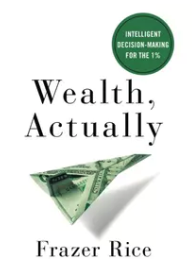
They say a fool and his money are soon parted, and, for the 1 percent, this is especially true. The more wealth one has, the more risks to their financial security. But with the right knowledge, planning, and guidance, the affluent can not only preserve their assets but enjoy them as well.
Private wealth manager Frazer Rice has seen every challenge and success that the well-off can face. In Wealth, Actually, he shares his holistic, adaptable approach to wealth management. Through a combination of philosophical discussion, practical advice, humor, and anecdotes, he shows how prosperous individuals can determine what they want their wealth to do; communicate with loved ones about their fortune; avoid overspending; handle wealth threats; evaluate, grow, and protect investments; and choose the best advisors.
Money shouldn’t be the dream—but, when it’s managed right, it can be the perfect tool to make dreams come true.