Get first access to deals with PreREO w/ AHP CEO Jorge Newbery


0:01
This is a story about a dude named Lane he moved to the mainland and bought one place to stay. And then one day he went try to rent them out. And then he became one real investor make

0:15
a simple passive cash flow listeners today we have George Newberry, owner and CEO of HP. A lot of you guys have been investing in that fun for the past couple years. But he is going here to talk about a new business that he has created called pre reo. But and we’re also gonna be talking about what’s happening with hp through the pandemic. We are welcome George, this is a third time on the podcast. I think at least I appreciate you having me back lane. Oh, hope to continue a run of continued appearances. And this is probably like the fourth time recorded because one of the times I forgot about pressing the record button, but it looks like it’s it’s good. So we’re good. Glad to hear it.

1:00
All right, George. So what is this pre Ario? Maybe maybe start the beginning, right? Because a lot of guys, you know, they may not be known investors. So what is sure? Are you absolutely right started? Yeah, absolutely. So pre aureo is a, it’s our term that we made up. But here’s here’s how we define it a pre aureo is a first mortgage that is in default, that is secured by a vacant property. And that property could be a house could be a condo could be apartment building, hotel, whatever it is, but those properties are vacant. So that’s what we described. So it’s likely to become an reo. Hence it’s a pre RTO.

1:36
And, you know, the reason we started this was because we often have as an example, a first mortgage secured by a vacant home in, let’s say, New York and New York, it can easily take two to three years to foreclose, even if no one’s fighting. The foreclosure is just such a slow process and if we have a vacant property that’s out there, it can suffer from deteriorate.

2:00
From vandalism people could break in someone has to cut the grass which is us shovel the snow neighbors can complain and say hey, you know the property kids broken over the weekend. So then the city comes to us and make sure that we do the work. So we do that, but it is a cost and there’s And meanwhile, we’re having to pay for property taxes for for insurance. So I always thought how do we there’s homes there and in some cases they’re rentable. In some cases with some repairs, they could be rentable. How do we make this into a generate some revenue while we complete the foreclosure process? So that that’s that was where the concept came from. So the when a lot of people will go after that’s just the regular Oreos again, that’s where somebody owns a home they’re good they fall behind on their mortgage, and I guess maybe maybe explain to us like what what what distinguishes just a regular Oreo in the pre Sure, sure. So an reo happens if we have a mortgage secured by a vacant or occupied

3:00
property and we go all the way through the foreclosure process. Then we will offer that a home as a reo we now own it, it’s real estate owned, is the where the RTO comes from, and that is offered and that’s typically reo is used when it’s owned by a lender or bank. HP any hedge fund. They always if you buy notes, you’re going to end up with Oreos, but the pre Oreo is is is trying to buy that note before it’s gone all the way through the foreclosure process. And because it’s vacant trying to generate revenue during that,

3:33
that interim process while while it’s being foreclosed upon, right, so once it hits foreclosure, then it’s reo. Then I guess once it once a foreclosure is complete, then it’s Oreo. Exactly. So we’re before the foreclosure is completed, but it’s already in default. So at what point like, is the person late? They’re late or maybe is it like 30 or 60 days and then before the bank

4:00
Or the audio kind of says it’s it’s in foreclosure. That’s when it’s in this kind of this bucket exactly most of the time, most of the banks won’t start foreclosure till it’s 60 days delinquent, sometimes even 90 or 120. Today with COVID, even later, we’d expect, but nevertheless, it’s it. It’s past that period and before the foreclosure is completed, and in some states in New York, Ohio, Illinois, Indiana, Florida, these states are just examples of judicial foreclosure states, we have to go to court and go, there you go, and go to court. And it’s just a long, slow process. In all these, in your example, here, the blue states, Pennsylvania on these states is just going to be slow and average, I’d say is a year and in some states, you know, can be two or three years and that’s that time. You know, time is money sounds cliche, but it is especially when you own a defaulted mortgage, and if you’re going to recover if you’re going to make 10,000

5:00
dollars from this asset and you hold it for two years, you have to pay a couple thousand in taxes and insurance that that will erode your returns. But if you were to collect $500 a month or $1,000 a month in rent in the over those two years that would offset those costs and sometimes even allow you to make money during the foreclosure while the foreclosure process is ongoing. What percentage of pre reo inventory is from judicial states where judicial is harder for the bank to collect? It’s more painful for them. The vast majority I use, most lenders and and funds like HP are going to think okay, well in California in normal times pre COVID. I can foreclose in six months in Texas in most cases, I can foreclose in 60 days or even less. So in those cases, why would I want to go through the extra step of appointing a receiver and collecting rent when the foreclosure will take about the same amount of time and that’s absolutely right. Now today, during COVID its cow

6:00
fornia foreclosures on hold many states across the country foreclosures on hold, in some cases, even if it’s a vacant property. And so you’re just stuck. But in normal times, it’s really much more appropriate for judicial states. And you’ll see you had a map a moment ago. And if you go to the pre our website, it has this map, which includes the entire country, and you’ll see that there’s a whole bunch of dots in the in the judicial foreclosure states, and then you go out west, and it becomes the concentrations become a lot less. Yeah, so we, if you guys are looking at the YouTube channel, have the map up of judicial and non judicial states. Most of us are on the west coast. So Washington, Oregon, California are non judicial states. So it’s it doesn’t have to go to that strenuous process and the courts that we’re talking about, but I think you have to overlay the political nature, right. Those are typically bluer states. So it is a lot more tenant friendly or

6:56
homeowner friendly. Absolutely. Absolutely. So it’s not really

7:00
It’s a republican state or a democratic state, nothing’s really to do with that. It’s just I don’t know, it’s kind of random, right? It is kind of it is kind of random. I mean, what East Coast, there’s more judicial states as you get to the west coast, you know, west of the Mississippi, many more that many more are non judicial states. And it’s a patchwork. I think it’s this is a good example of, you know, who cares about politics. It is what it is, is judicial or non judicial. That’s all right. Lester’s and I was excited to see that Hawaii, for some strange reason is a judicial state. And this is right, I got this crazy idea. Every time you see a Hawaii property, you kind of ping me and you’re like, Oh, this one? Yeah. Yeah. So even there are a couple of out. I mean, I’m pre Ario. A couple of vendors have listed assets in in Hawaii, which, over the years HPS bought a handful of loans in Hawaii. It’s not been a big market for us. And I’ll tell you, it is a slow, expensive foreclosure process in Hawaii. So for those

8:00
Have you in Hawaii ambassadors with all the distress that’s coming up? Yeah, there you go the couple in Hawaii It is something where lenders car it’s going to take me a while to get a foreclosure complete in Hawaii and and that’s when you get a foreclosure attorney in Hawaii sometimes the attorneys you know to pay them to fly between the different islands so it becomes expensive and a hassle. The way I thought about using this is that this is nice because you know I’m not big into like being a bur investor or being a remote investor unless you have a JV partner kind of doing your you know, skin in the game working on your behalf you always want to have go into a deal where you have some kind of advantage in in this case you want to go in with you being able to do physical due diligence on the property and feel it touch it be around it is probably the only case where I advocate for being local to the property. So I the way I thought about it, I mean, tell me some other good strategies, George but the way I thought about it like this would be a cool way for me to actually buy my primary residence. I think a lot of people know

9:00
I’m very against renting or buying a home to live in. It’s better to invest, especially if you live in a primary market like California, Washington, Hawaii, New York. But yeah, this would be a great way to pick up properties. If I wanted to get more hands on or maybe somebody might drop a two $4 million property I can get for a nice discount. Yeah, that’s absolutely right. There are there are some million dollar homes that are listed on the site. Those aren’t owned by HP, generally, they’re owned by other funds. And so there are other funds. So HP 2015. A plus is actually the owner of pre RTO. That’s where this concept was,

9:35
was conceived and but now we see the opportunity to market to other other funds and they’re doing it they’re listing properties and we simply make a $2,000 fee for every property that’s transacted on the site.

9:49
And you’re right it could be appropriate for us for future owner occupant be a big I’ll let you know though during that foreclosure period, receiver can be a

10:00
pointed to rent it to repair it and rent it to a third party they couldn’t. The investor could not move in during that period. But once it goes to the foreclosure is complete the the investor can direct whoever they want to sell it to. So it could be done that way. If you saw something you want to eventually live in as long as you you can allow some lead time and that could be done. This is a great opportunity for like, No, just one of our common characters of simple passive cash flow group is you know, your tech worker out in the Bay Area. You make over 200 grand a year, you’re pretty busy. So you’re out you’re investing in passive investments like syndications after you’ve gotten your taste and your fill of the turnkey rentals, and you’re doing a little HP but you see a property like this, and you might want to put in a bid and is that kind of like the at one of the avatars you’re thinking, George that this really will appeal towards someone who can be local to it. Yeah, it’s definitely something where the local investor has the advantage they can get better

11:00
Some repairs, they can get better. You know, we pay we’re in Chicago, somebody says it’s going to cost $2,000 to clean out, you know, home, we don’t know if that’s good or bad price. Some of you try to trust the people but it’s you never know they’re taking advantage of the fact that that were foreign, when you’re local and you can actually work with trusted contractors and see the work that they’re doing and make sure their bids are in line. The local person without a doubt has an advantage over HP over any bank or other hedge fund that is selling their assets here and that’s why they sell them because a local can execute this strategy of doing repairs and renting it out during the foreclosure process. Whereas we, you know, it’s it’s tough for us to do it remotely and you know, we’ve tried so we got a lot of Oreos here and there we said, if we only were selling these things, you know, usually in in knock re condition to a local Ambassador who then do some repairs and flip it to a home buyer who’s paying top dollar because it’s now a turnkey home that they can turn into move into and get FHA financing or some other other

12:00
Affordable financing. It’s always tough to execute that strategy remotely or at least it’s not area of expertise, the local guy always has the advantage. Local investor always has the advantage. And that’s I think what we’re trying to do with pre reo is put these during the foreclosure process in the under the control of a local investor, I think that’s a I’m a big advantage. The way to do that is with this receivership, so you can’t just because you buy the note, you can’t just go in and start fixing it up and renting it, you need to have a receiver which is appointed by the court. So this is the step you know, kind of the first step is identifying when you want buying it. And then buying the note is what you’re buying. And then you are working with a law firm to appoint a receiver which could be a local real estate agent, a property manager, who can then work with you to do the renovations and rent the property during the foreclosure process. But you get a court order that allows you to do that, you know, step back, you were in a on the one on Pleasant Hill a moment ago in California. You know, some of these that’s a, what I just described was a fairly active strategy in terms of acquiring these but

13:00
There are some like Pleasant Hill. This one is currently on the market for this is a fixin flip deal where somebody it’s took out a fix and flip loan, but they defaulted on the loan. But it looks like they’ve pretty much finished the property. And now it’s on the market for I think it’s in the 700,000 range. And so here they’re selling the mortgage holder, which isn’t HP is selling this mortgage, in all likelihood, using this one as example. That investor at some point is going to sell this for 707 5800, whatever number they sell it for, and then simply pay off the loan. Now they love they owe us looking at these numbers. Yeah, the estimated value is 796. But the

13:39
they owe considerably, you have to log in to see the amount of the debt it’s probably in the range of 650. So the current owner sells it for 750 you get paid off at at 650 you or you bought it for around 500 that that’s something that local investors is going to be better able to to understand those numbers.

14:00
First, the nuances in terms of what that value is, but they it’s something that would be a fairly passive strategy. And there’s a few like this and it’s very easy to determine which they are. You simply take the addresses which are available once you log in. And then you can go to Zillow and see which ones are currently for sale. There’s even some that are under contract. And that is a that is an interesting it’s in one of the Northern California ones I think was Pleasant Hill. But yeah, it’s a good example in terms of what has Pasadena

14:29
been investing with hp since 2017. Buy distressed mortgages and discounts offer struggling families sustainable solutions to stay in their homes. When homes were vacant. He recognized that lenders frequently struggled as they tried to limit their losses. That’s why owner George Newberry founded pre reo, a platform that gets these vacant properties into the hands of local investors like us during the foreclosure process, which mitigates losses to lenders and accelerates returns for investors. a win win

15:00
I’m very excited about this platform that connects local investors with board appointed receivers in their area to cost effectively repair, lease and maintain and rent vacant homes during the foreclosure process and ultimately make a profit. I’ve been checking out local properties here in Hawaii and I think it’s a great way finally pick up my home to live in. Even though I think homes the buyers aren’t probably the best, you can learn more about pre reo by going to simple passive cash flow calm slash re reo.

15:32
So, another question that comes up and most sophisticated investors will ask, and this is kind of what I always ask is like, how how are you guys making money? Why are you guys doing this? Why would you pass on a deal to me, lowly investor, what’s the catch? And I think if I was reading between the lines here, so HP, the fund that George runs, we’ll talk a little bit about that the end here of how that’s going HP is more of a cash flow.

16:00
type of they make money off cash flow and some of these properties like this one in particular, there’s a lot of value there. But I think it doesn’t really align with your guy’s strategy of, you know, quick, quick, small base hits specific, it’s going to take a while it might be painful. It just doesn’t fit the strike zone. It’s not your guys pitch, right? Is that yeah, that’s absolutely true. And we also have, we don’t have money to buy every loan out there. And what we want to do is we came up with this concept originally for some 2015, eight PLUS loans, but then we thought, hey, this could work for others, and we started talking to other funds about it and they started posting assets on there, we could simply make the $2,000 in the middle and that’s a would be a good

16:43
you know, $2,000 doesn’t sound that exciting, you know, on a one off, but if you’re selling you know, we have one fund that’s putting on, they’re talking about putting on almost 90 properties in the next couple of weeks, all across the country so that it can become a business on its own collecting the

17:00
2000 bar fees kind of like auction comm I think they charge a 20 $500 fee. So it’s modeled very similar to that we’re simply getting a transaction fee on every note that sold here, you know, good market bad market, there’s going to be an explosion in the amount of defaulted loans available over the next next year. And it would be naive for us to think that he could buy them all when I mean, or even some billion dollar hedge fund isn’t gonna buy them all there’s gonna be billions and billions and billions of this stuff. HP was going to be continued to be a buyer. But I think our relationships with a lot of these hedge funds gives us the opportunity to market it to local Ambassador who’s going to be willing to pay more than we would and probably more than anybody because a local investor would be the person who would eventually buy it as an reo. So think about the usual trajectory like we’ll use this one and pass it in as some hedge fund on wall street or buy this loan or currently owns this loan. They would go through the process, you know, in California foreclosures on hold so they’re not going to be able to foreclose for could easily be a year or more. And then they foreclose they list it with a real estate agent and

18:00
They pay him or her a 6% commission and they play other closing costs. And so and in the meantime that year or maybe even more they’ve paid taxes and insurance you know, this property could get broken into squatter could move in all kinds of things could happen, why not get 75% of what what they’re going to get eventually take it today so they’re going to get less, but they’re going to get it now and then put this in the control of a local investor and I think it’s a compelling sale to two different funds and I think we’re going to see a lot of assets put on the site as a result and a lot of invest a lot of funds are probably going to do better than they would if they held it to the ultimate disposition and a lot of local investors are going to buy these things at less than they would buy them as reo. So I think we’re we want to become the marketplace between those two parties. You mentioned auction calm I think people are familiar with that. That they are foreclosed properties this pre foreclosure. Yep, social absolutely big difference. So auction calm, so so we were kind of following the business model, which is they make

19:00
20 $500 an asset more or less, and but they will, as a buyer’s premium, they charge it to the buyer just like we charge $2,000 to the buyer, but they they usually only sell once it’s the foreclosure is completed, and they’re selling it as an reo. And so we’re trying to do it early in the process, so that the lenders can exit early and the local investors can buy an earlier at a greater discount. Let’s just kind of walk through this as a case study, George. Sure. I picked it because it’s a wrap. It’s a million dollars, and it just makes my life easy in terms of math. Yeah, make life harder. It looks like it’s pretty nice inside. You know, who knows, of course, there might be some things that fix up. So me as an investor, I see it on this site. And I’m like, Oh, yeah, this looks cool. You know, let me put in an offer bid and you know, pay my $2,000 program fee. Do I get access, I mean, all of a sudden kind of a walk around the block. Make sure this is not in the hood, but do I get access to the inside or really not. In some cases, they’re already listed and that there there’s access that we can get, but mostly

20:00
Time’s just like with any no purchase you can only drive by maybe get out of a car look to the windows if it’s vacant, but you can’t you can’t get inside and so that’s a risk that you’re taking. You know this one that luckily it was recently it looks like it was recently refurbished. Again this was a fix and flip loan that’s gone bad. But it looks like a lot of the work has already been done to the home but again in many most cases we will not have access to the interior of the property so that is a risk but I think the discount more than compensates for that potential risk right no risk no reward Yeah, it’s always the case let’s kind of walk through these the numbers here you guys can check this out at simple passive cash flow.com slash pre Arielle how the money works, right? The sure compensation or the fee structure. So here’s how we’re, it works. A big wall street funds typically don’t want to sell to one local investor they want to sell to Counterparty that’s been vetted and whatnot. So HP falls in that category. So what we’re doing is all these loans are being sold even though they may be sold to us.

21:00
Hundred as an example to 100 different investors, they are all in sold into hp. And then HP provides participation interest to the local investors. And we will finance at this point we’re financing at 75% of the of the purchase price and get a 12% return and then the local investor puts up 25% of the of the price and that gives them the right to get earn everything over and above the 12% annual return would go accrue to the ambassador. So they all the upside goes to the local investor, we get a $2,000 program fee, we also get the servicing so this you almost every state requires that a licensed mortgage servicer services alone and these are loans during the months before or even some cases years before it becomes reo than it needs to be serviced by a servicer so obviously HP servicing is more than happy to provide that service we charge for pre arias we just made it a flat $50 a month so we would service we also have an affiliated law firm which is called activist legal

22:00
Which can handle nationally they can facilitate both the foreclosures and the receiverships through a nationwide network of attorneys. So it’s pretty turnkey. It’s not like you’re gonna have to go to a let me find an attorney who’s going to understand how to do this. It’s something that’s fairly unique. And so we have attorneys that are familiar with with with the process. So here’s an example just to to to show how how the money flows. Let’s say you purchase a note for $100,000. And a year later, you sold it for 175. Once it became reo, you had put some money into it now you sold it and got 175. So it was held out for a year. Here’s how the money would flow when it was first purchase, then the local investor would put up 25,000. That’s 25% of the cost of the note when he or eventually is going to be pre IPO but right now it’s HP will put up 75,000 which 75% of the cost of the note the local Ambassador would not only pay the 25,000 that’s in the 20 they pay a $2,000 program fee.

23:00
At the outset, and then on a monthly basis, they pay the 12% return. So it’s kind of like you guys are you’re kind of servicing like a lender, right? Like a short term lender. Yep. At 12%. Some investors might think, well, that’s kind of high. But you know, Hey, guys, like you got to think of like, at the end here, the potential profit, right? I mean, every deal is different, actually. Yeah, build it into your process right now, eventually, I think we’ll have that money available cheaper. We’re trying to get another wall street fund to put up the money right now he is putting up the money to prove the concept, but eventually some Wall Street fund will probably go in there and offer the money at nine or 10%, probably 9.9%, or something like that. But I think you’re absolutely right. When people make the bids, they they factor in the program for you that 2000 and they factor in the the cost of the capital, which in this case is 12%. You know, if that cost drops to 9%, they’ll probably be able to pay a little bit more and if it were going to go up to 14% then they probably be willing to pay a little bit less. But in the end if it sells for 175,000 and they bought the note for us

24:00
Hundred, and they put in 25,000 in rehab $2,000 program fee $9,000 in in lending and lending costs, then they made Sep 39,000, which in a year is a pretty good return. And we’ve got, you know, our nine, our 9% back plus we earned the $2,000 program fee. So that that’s the model that we that we have. And I think it serves a purpose and getting these vacant properties or without this, you know, there’s a community benefit too, if any of you have lived next door to a vacant property, it’s not the ideal neighbor, probably the lot, the grass gets cut less frequently. The you know, something bad happens to the property gets broken into there’s a pipe burst or something like that, you know, this, someone has to call it in getting in touch with the owner come out and shut it off or do whatever needs to be done. So those are all things that having an occupant in there, even if it’s attended to this point, it’s going to be better than having it sitting there vacant. So and especially in some of the lower

25:00
low to moderate income areas where he works is definitely having an occupant is a huge advantage and benefit to the neighbors and the community in addition to the free area ambassador for the guys who are like what’s in it for me go to stay there and all that stuff and you can see it on the on the YouTube channel here but yeah, kind of like what, like a two x equity multiplier in a sample in one year or so. Yeah, exactly. It’s a significant return in a it’s a significant return now it is that in many cases it’s going to be active This is something where you could do a lot of it from behind the desk but you’d want to go out I mean, I think you’re the advantage is realized when you go out to the property and just like any any of your investors who work either you know owned apartment buildings or done fixing flip rehabs, there is some value to being right out there on the property and and seeing what’s going on, you know, on your own instead of relying on photos or reports from for employees. But if you buy these near, it’s easy to execute that and and you can be rewarded

26:00
hands away. And if you’re just like an accountant or dentist, you’ve never done construction work, maybe you you screw up and you two times pay the rehab work where there’s still profit probably profit for you, if you screw up and you kind of run out like an amateur. That’s the beauty of these things. And you have to learn if you say you really want to do and then I mean just in anything you do it you screw up, you learn, how can I do better and after a few times right now, now I’m doing pretty well. But the first few times, you know, you always end up paying a little bit more than you could and you figure out ways to to improve on subsequent tries. So what happens if you if I click the button I want to buy it I send you guys the money and then the guy in pre foreclosure actually pays what’s, what do we do? So? Yeah, no? Good, good question. So here’s what happens. All these are offered, I shouldn’t say recommend to the sellers of the offer these either at 75% of the reo value so they think the reo is worth 100 sell for 70 offer for 75,000 or 90% of the debt. of the total.

27:00
debt. So if if only $80,000 is due on the note, and it’s worth 100, then offer it for 70 70,000. I think that is. And so if the homeowner comes back in, you know, six months later, and says, Hey, I want to pay off my loan, I want to I want my host house back, or I win the lottery, I just inherited this money or whatever, however, they they came up with the money, they can do that. But they’re going to have to pay everything that’s due on the note, which is $80,000, when you started, when you bought it in that example, plus the legal fees, additional interest, any monies that you’ve put into the property that were used for by the receiver to preserve the property, those are all recoverable. And so that’s so you would, let’s say you ended up putting 20 into the property. So you would get the 80 that was due when you bought it for 72. You’d also get the 20 that you put in and there’s probably additional interest of six months which could be you know, another few thousand dollars. So you would get

28:00
All that, but that is something that is unlikely to happen because in, in most cases, I mean, there’s always or should always be vacant. And as a result, so most cases, the homeowners just just walked away. Now there are some like I pointed out where the homeowner where the property owner was an ambassador apparently ran out of money for whatever reason was unable to pay, but they’re still trying to sell the property. And so they’ll either sell it for more than enough to pay off the loan, in which case you get paid off in full in capturing that discount that was made when you bought the loan. Or, you know, they could come and say, hey, I want to do a short sale. So some of these are sold it for considerably less than what the what’s due on the note, but it’s also because the property values less and then they could come in, you could say Hey, I’ll take the short sale, not take the short sale, then it’s up to you. But the homeowner, so his property owner shows rights they do. But they are served with the receivership and the foreclosure documents and they can appear in court and say, hey, I want to do you know, I’m coming up with the money or whatnot. But if they don’t show up and they default, then the process continues and they’d have to come

29:00
Back at a later time and, and and have to come up with all the money that’s due it seems complicated but I mean you got activists legal on your side as and you’ll be their client probably the kind of take care of all this and kind of just walk you through the timeline and then absolutely Bob has come up you just kind of work your way through it between the servers here you’d always have a dedicated person at this at HP servicing another person at age activists legal in order to to answer your questions along the way. So if it sounds complicated, maybe because it is but it’s actually a

29:32
once you probably do it, I always I’m always learned by doing and we’ve done a few of these I you know, as kind of a test so they worked well. So I think the Learn by Doing and we’re gonna be there we’ve done it and we can guide you every step of the way. It’s like evictions. I mean, I don’t really know how to do them. I know it as like a black box. You know what comes out the other end I know how long it takes, but I don’t really exactly not

29:56
happy to do it for me. Yep. waxiness legal just as a

30:00
As a quick plug, they do evictions nationwide. They can certainly assist you no matter what state you’re in. Yeah. So yeah, if you guys need a eviction, let me know. And we’ll connect you with the right, folks. So let’s switch gears a little bit, George. And as we wrap up, you know, a lot of investors, they’ve known about HP servicing for quite a while I’ve invested with you guys since 2016. Ish, or something like that. 17 I got into first fun at 12% No, it’s at 10% paid monthly, which is cool. It pays my car payment. Never ever told you that? I think Yeah, that’s great. So how, how are things going through? COVID? You know, I know like, from what I hear about a lot of my investors is like a few of them. Were trying to you know, they had to rob Rob liquidity from certain places. And one of the places they tried to get it from was HP because you guys have a great liquidity type of caveat there. Yeah. What are you seeing from your end? What are investors out there doing? You can kind of make sense of the madness.

31:00
No good. I appreciate you bringing it up. So HP I mean, everybody had effects of COVID. And like you said, when when COVID hit, we had all time record redemptions in March and then April, those are the two biggest months, it’s now settled back down. But those redemption requests in March and April are very significant. We heard from people who need to pay payroll, hey, I need to pay, I need to cover a margin call. You know, my business is struggling I need I need the money for assorted reasons. And we were and historically in our documents that states that we will

31:36
offer we offer best efforts liquidity so if you request the money, we’re going to undertake our best efforts to return your investment within

31:44
30 days and historically, we’ve been able to do that COVID hit no longer able to do it. And we’re still digging out from that march april demand. And you know, I think in the last last week or so, we are the last week of the month, I think we returned about a quarter million dollars.

32:00
So we are making progress on these but it’s incremental progress and we’re balancing you know, we priority for us is to run the business number one. Number two is to make our monthly distributions which we haven’t missed any and numbers and we don’t expect to. And number three is to, is to do these redemptions. So we can’t you know, if we were to satisfy all the redemptions we don’t have any money for distributions that would be obviously problematic for everybody. So we I’m sorry, I you know, it’s unfortunate that people are waiting longer than they than they wanted for their for the redemptions. But it is something that you know, we are expecting to get through and expectations when COVID hit, you know, how this is going to be 60 days or something like that, because at the time, you know, when COVID we first had that first shutdown everyone saying well, this is two weeks, I you know, shelter in place for two weeks, then this then everything’s back to normal. At least that was how I think people interpreted including us because it was so early and then then it was extended and extended and

33:00
You know, now it’s, you know, several months into this going on five months into the COVID era and things still are back to normal I in many cases, there’s foreclosure holds across the country, there are states where we have foreclosed on properties in January of this year and we’re still waiting on the deed, they are situations where we foreclosed and or we’ve gotten a deed in lieu, we can’t complete an eviction and so these are all kind of slowing our ability to to move forward and realize gains and and, and revenue that we would normally have accessible. So I think those are challenges also, in some cases, you know, Sheriff’s Office closed can issue deeds can record or closed or working from home running behind, tough to record deeds in some situations. So it’s a it’s a slow process that’s getting better, but it is still creating challenges on the upside. I was a little bit nervous.

34:00
When when this all hit in terms of, you know, we had a lot of Oreos over 100, which is normal, you know, how does this impact are these prices going to, you know, is the value of our Oreos, our notes going to have a significant impact and post COVID in the last, it’s not post COVID. It’s mid COVID, I guess, or depends on your perspective. But in the last 30 or 40 days, days, arios the ones that are out on the market are selling better than pre COVID prices, which is great. And no, unfortunately, so accounts, closed them off because of assorted issues like county recorders or county offices being closed, but we’re getting them under contract at very strong prices and our inventory is shrinking. which is I think good for the moment because we are recapturing premium prices now fast forward six months or a year and all these foreclosure holds go off. There’s a significant inventory coming out of the market. I would anticipate that the pricing should go down just based on normal normal economic cycles. How

35:00
With the low interest rates, I think that’s kind of the wild card that keeps, that’s propping everything up strongly. So it’s hard to say what the future holds. And that’s why if you’re waiting on redemption, they are in process. We are processing some every, every few weeks, but it is something where it’s, it’s taking longer than expected. And hopefully that’ll return to normal soon. I pick up the old info page, simple passive cash flow.com slash HP, but there’s a little screenshot of Oh, sure. Activity back in this a couple years ago. I think I draw this is I withdrawn at one point in 2018 55 grand and I think I replaced it later before the fun closed. Yeah. I mean, what’s your mentality on how much percent cash reserves do you have in your your fund and with like, the mentality of like, all right, when you feel comfortable to go out and take some of that cash and buy more stuff when we’re buying I mean, we bought about $4 million worth of loans last week. And so we are actively buying loans again, the business a priority is running a successful business. That’s

36:00
Gonna be benefit all of our investors. So we did have a good opportunity last month, we’re working on a few opportunities pools for this month. But there are opportunities that we’re seeing that we are taking advantage of. So it’s a balance of, you know, new acquisitions, having new acquisitions and operating a profitable business. And then penguin distributions, which right now, I’m guessing. I mean, this is just over the all the companies we probably have, I don’t know the exact numbers, but we probably have 800,000, roughly, and cash available right now, at this very moment, but you know, we’re doing distributions in a couple days, that’ll be a considerable amount that goes out. But you know, there’s new payments that come in New arios that say that cell, that cell, so there’s always money coming in and money going out, but at any given time, we do have a decent amount of cash on hand. I try to keep it as low as possible, just because that money, we’re paying investors on that money, so I’d like it to be invested. So it’s a bit of a balancing act, right? Because I mean, the way it is like it’s 10 pref. Right. So yeah, you want to

37:00
Keep it most of you can make some money, right? Yeah, absolutely. Yeah, the money sits in.

37:04
We’re paying 10% on a million bucks that’s sitting in, in a bank account that’s paying us at best 2%, then we are, you know, that’s a negative negative 8%. So we want to keep that as little as low as possible. I think we’ve been doing that. I mean, it’s just as a point of reference. When I came in here a year ago, I came back into the CEO role. We had over $8 million in the bank, not a good, not a good situation. And so we’re, I was able to invest that it took a few months, though, because a year ago, the opportunities it was it was difficult to invest. And that’s why if you remember, a year ago, we had stopped accepting new investments because we had a lot of money come in, it was difficult for prior management to find opportunities and fairness it was when I came in, it was difficult to find good opportunities. Myself they were. The market was very heated in order to generate strong returns. We the offerings were few and far between, we’re able to buy stuff and

38:00
and deploy that money but it took several months. Fast forward a year, the markets now we see it opening up with these with great opportunities. And we think that’ll only increase over the next next six months to a year. So we’re getting we’re taking the best ones we can find now, and and we’ll continue to do that. So what’s uh, I got into the 12% fun right now the 10% fun is still open, where do you think you’re all heading? Right? Because the Fed funds rate is like zero for the past six months. It’s heading down.

38:29
And yeah, they’re getting more popular, right? Yeah, exactly. So the next so HP servicing this fund will close in, I believe it’s the first week of November. That’ll be the last investment that we can take and and it’s, it’s imposed by the SEC, we have two years to raise money. So that two year period ends at the beginning of November. At that point, we will close HP servicing no more 10% we will have a new find up then or hopefully shortly thereafter. That will happen

39:00
For a similar type of strategy, but we think the returns would be less. Right now it’s we’re working on the on the submission to the SEC, we think it’d be around 7%. And that sounds lower it well, it is lower. But compared to what the you know, the prime rate and the different indexes are, it’s still a very generous spread. We’ve we’ve we’ve we’ve toggled between, should it be seven? Should it be six? Should it be eight? I think in the end, it’ll be seven. But it could could end up we decided a little bit lower a little bit higher. But right now I’d say seven. Yeah. And so the challenge is out there for you guys. I’ll give you 100 bucks if you can find me something better that pays a better rate of return that has a better risk profile. And with the liquidity that’s the big thing here the ability to click this little redeem button and pull some money whenever you want. So there you go. There you go. bounty hunters out there. Let me know

39:56
anything else you think we missed, George? No, I think we covered a lot of ground

40:00
And hopefully that’s hopefully was helpful to your audience and they’d be interested either in pre audio or kept updated or interested for the first time maybe in hp. Certainly reach out to us. We’re here to help and answer any questions. There’s, there’s my book guy. Yeah, that’s me. That’s me when I was probably like 20 years old. Racing in Arizona.

40:21
That was a race. If anyone knows Arizona, it was it was called Yuma life Yuma. So it started in Yuma, Arizona. The race went up to blight, California and back down to Yuma was about 200 miles and as you can see, it was fairly hot. What in the desert? What does that one called? I don’t know. They do it anymore. But it was Yuma life Yuma. So just the three said the two cities, the three city names, one after another 200 plus mile bike race. Not that David Goggins the one he did in his book. I don’t know I don’t, I can get through Death Valley or something like that. Yeah, it’s not like it’s not was not in Death Valley, but it’s certainly

41:00
The terrain was probably pretty close. Right? There is a you may be thinking there’s a running race across Death Valley bad water, which is pretty awesome. I’ve never done that. That does sound like a lot of fun. Well does sound like quite a challenge. Yeah. Let me catch myself up fun. So if you guys want to learn more about HP go to simple passive cash flow.com slash hp. And if you guys are interested in playing around with pre reo go to simple passive cash flow.com slash pre reo and we did a little tutorial video going through the website earlier for you guys and you guys can kind of digest these numbers and how it all works. But yeah, great way for you know passive investors if you want to kind of invest from your desk, you know and do a little white glove investing. This is a way to do it. If not a lot of other passive investing ways turnkey rentals have set off and of course syndications and private placement.

42:00
Appreciate it. George. Thanks for joining us, man. Thanks lane. always appreciate it.

How to Decide to quit your high paid W2 day job w/ Kyle Jones

See our quitting guide here – Simplepassivecashflow.com/quit

0:00
Matt no amount of motivation is going to change the way you feel. But if you can commit to yourself and honor your commitments and doing whatever you need to do to make sure that you reach your goals financially, then you have to reverse engineer how to do that. And one of those things for me is on the physicality aspect of it and making sure that my health is in order. So

0:24
this is a story about a dude named Lane he moved to the mainland and bought one place to stay. And then one day he went try to rent them out. And then he became one real investor.

0:38
Simple passive cash flow listeners today I have Kyle Jones, one of my apartment partners. And if you guys haven’t heard of him before he was on episode 152. We, we talked about kind of getting started in apartment investing and but today we have a big he has a big announcement for

1:00
Folks, big, big announcement. Kyle, what’s that announcement? What’s the big one? Well, I am pulling a copy cat move like you and I quit my job, my corporate job that is, so I have exited the corporate world, left my position at IBM and I’m now a full time real estate investor and entrepreneur.

1:23
So maybe for those who will never go back and listen to Episode 152, why don’t you give a little little synopsis of what you’ve been up to the last, you know, decade of your life.

1:38
Take us back so computer can kind of get a little bit background and then I think what we’re going to do here so the value add is like for a lot of listeners is a lot of you guys are right on the cusp of quitting your day job. Right But a lot of us are high paid working professionals, where we make a lot of money and so total golden handcuffs.

2:00
So at what point what is the thought processes? What are the things that we didn’t think of before we kind of pulled the plug? But I’ll call watch it. Yeah. Give us a little background and context here. Sure. Yeah. So

2:14
I guess a little bit about me, I’m based in Houston. I been investing in real estate, when I started probably about eight years or so ago with single families,

2:27
but really didn’t start getting serious into multifamily until about five years ago, and then

2:35
kind of fast tracking through it. We started buying properties with our own dime, you know, through my earnings at IBM and, you know, in sales there and I was earning commissions and bonuses and things like that, and so was using those funds to purchase smaller multifamily before I realized that, at some point, you’re going to run out of capital and so I’d rather leverage the capital that I

3:00
had left that wasn’t tied up in equity to fund syndications and raising money and bringing investors to the table at that point so we could continue to scale the portfolio and ultimately creating enough cash flow so that I could eventually leave the corporate world or at least have the option. You know, my first goal was to just replace expenses. That was my first goal, you know, build up enough cash flow where if something happened and I was let go or you know, global pandemic happened or whatever, I could be

3:37
okay, because we at least had our expenses covered. And then when that really became a reality, then it was okay now let me really replace my w two income or get close to it, so that I could

3:51
you know, if I was getting closer to it, I could see light at the end of the tunnel where if I just focus more time and effort into

3:58
finding more deals and create

4:00
more cash flow than I can personally get to that comfort level to hit the eject button. But, you know, there’s a lot more in this in this space and podcast land and real estate guru land where it’s, you know, it’s really cool to quit your job and, and there’s like a war with it and everything else which I certainly agree with. But I also think there’s a The reality is a lot of the people that you might find that do this, you know, they weren’t like me and you were we are high paying high or we were high paid professionals, you know, they were somebody who had a entry level job, and they decided to go all in maybe they didn’t have a really high risk profile, I have a wife and three kids. So it just took me longer to get to a point to feel comfort in the fact that I had enough cash flow and everything else and so

4:56
you know, kind of going off on a tangent now, but those are some of the things that I think

5:00
Get lost. And just because somebody says they quit their job to focus on real estate investing, you know, sometimes there’s a reality behind the scenes that doesn’t, you know, it’s not a it’s not a meaningful thing necessarily versus somebody who’s leaving a corporate job. Yeah, I mean, I had a, I had like a info page on this a while ago, simple passive cash flow, calm slash quit. I don’t think I ever shared that with you. But people either fall in one side of this argument, right? Do you quit your day job to go after real estate? You know, I think you and I are aligned with that like, no. So if you make more than 80 100 grand a year, your highest and best use is likely at your day job. But we’re in this ethos where a lot of you know other people they make under 5060 grand a year. And for those people, it makes total sense. Yeah, quit your day job because you’re not making much there anyway, dude, right? You can, you could replace that through through probably two or three deals.

6:00
And be fine. And yeah, I mean, that’s that’s a that’s a predicament that I’ve always had. I mean, because we we raised capital and you know, we always had investors at least that would, you know, while you had quit your job, I think they would come and ask me Hey, when’s Kyle going to quit it a job. And I think there’s also an aspect of it where just because I’m still working full time doesn’t mean I haven’t set up the appropriate measures to put a strong team in place. I mean, that’s frankly, that’s the only way that I would have been able to even do this on the side and still work a full time job that, you know, a grant is it was flexible. You know, it was I worked from home for many years beyond pre COVID and everything else. I’ve been working from home for 10 years. So there’s flexibility in that. But there’s also you know, an element to where if you if you’re truly passionate about that, and you’re not there yet, you could go find a job that’s more flexible, because I get it not everybody can work from home. I mean, now it’s obviously different.

7:00
Because we’re in the pandemic times, but pre COVID and maybe, you know, 2021 when people are back in the office, they could tailor their job efforts towards finding remote capability or remote options, you know, work work from home options, if you will, to allow them that flexibility to be able to do some more things on the side, whether it’s real estate or another side hustle. One question that always comes up on you know, from from passive investors and it’s got a question asked is right, like, are the sponsors is their full time gig or not? On one side of the story, I have kind of tried to work with professionals, a lot of the partners that I choose to work with are 100 K and above people who, you know, kick butt at their day job as opposed to some random person. I don’t know. I mean, when you go on LinkedIn, and you see someone as an entrepreneur, and it’s the year 2020, that means you don’t have a job. You couldn’t find the job, right. So

7:59
this isn’t the 19

8:00
Anyway, we’re all we’re all tipped off to that. But, I mean, do you have any idea or thoughts on that? You know, I mean, there’s pros and cons both ways. Yeah. Well, I think there’s a lot of relatable skills that I took from my corporate job. I mean, I’ve always been in sales. So there’s obviously there’s a lot of transferable skills, which is being able to build rapport, being able to sell a deal, you know, not only I was selling technology to cut, like, you know, big corporations, but I was also now in selling deals to investors, and getting pepsin behind that. So, also just putting a team together, putting a strong team together project management skills, I mean, you have those, I have those from just the leadership skills that I developed in the corporate world, it’s still putting teams together and and then getting behind the team and making sure that you’re staying, staying in touch and providing oversight but you’re also not having to get into

9:00
To the nitty gritty details as well, like it kind of reminds me like when we have a deal that we closed, where there’s like three properties in there, and we’re splitting up the accounting and I’m like, oh, my goodness, this is this, like how at back at the day job where we kind of make things complicated on purpose just to confuse ourselves. It’s like, here we are doing it again. There’s probably a reason why and we’re comfortable with it, because we’re used to that complexity in a large corporation, respecting the chain of command, I think, you know, working with property managers and other professions, big thing. Yeah, it’s still a big difference between investing with somebody who current it worker, still working in the, you know, their day job, you don’t know how much of their bandwidth is going to their day job or running your deal, and being a steward of their money. Some people will say, Well, I’m all for funding people, you know, people going after their dreams. I don’t want to be the person putting in 50 hundred grand so somebody can feel it out to finally

10:00
You know, yeah,

10:02
right? Right, right now you can kind of fully come out and say that, exactly. It’s like the chicken in the egg thing. You’ve got to have a track record to be able to do that. But you also, you know, if you’re a high earning professional, and you’ve got a family, you can’t just jump ship. You know, it’s for me, too. It’s kind of scary. I mean, I’m doing it in the middle of this pandemic, when a lot of people are, unfortunately out of work. You know, whether the pandemic happened this year or not, I mean, nobody could have predicted it. But this was a year that I was coming into looking at, hey, this could be the year that I leave the corporate world. And that’s what I let’s let’s kind of unpack this because this is the you’ve been planning this for quite some time. You already mentioned you have a wife and three kids. So you’re not just another throw. Just goes to the gym a lot. You got responsibilities. Tell. Tell us about

11:00
Like, I know in the beginning of like your corporate life 1010 years ago, you are drinking the kool aid of climbing the corporate ladder, like, what was the mindset of Carl Jones? Early 2000? Well, I mean, Frank, are you still think you’re gonna make it to the Major Leagues? Yeah. Now, I mean, it got tempting here as of later in my career, because I finally did have some of that tenure at IBM and I was being looked at it, you know, even executive type positions. And there were other positions that I’ve actually even the last 10, two years, I had actually turned down that would have set me up to be, you know, Director VP type. Yeah, going back. I mean, yeah, I definitely wanted to move through the ranks. And,

11:46
you know, my first goal was to work for an organization like IBM, or Microsoft and Oracle, which I worked at all three of those corporations. These are large, high tech software organizations. I think that just

12:00
Mainly stemmed from my dad. So I kind of fell into the trap of just falling in line with the way that my dad did his career and handle that and went about, you know, raising his family. And there’s nothing wrong with that. I mean, I lived a good childhood. But for me, it ultimately came down to truly what freedom is. And it sounds kind of hokey. But I mean, you know, if you’re working in a corporate environment, you are working towards building somebody else’s goals and dreams versus just yours. I mean, obviously, you could, there’s a subset of that. And that’s kind of what we’re talking about. Now. You could develop this career path to get there. You know, I want to be a sales manager and then a director and then a VP. So you have the hierarchy. And that’s exactly what I wanted until I did see my dad get laid off, basically forced into early retirement from the company he was working for. Also

13:00
Still high tech software organization. And that’s really what kicked it into overdrive. And that is also the kind of read just that timing of it is what I needed to to just kind of get my wife on board as well. She was already supportive. But it didn’t really resonate with her until I said, hey, look over here, look what my dad’s going through. Like, we need to figure this out now, so that we never have to worry about this. And she got it, because she saw what my dad was going through. So that was kind of like the event that kick started, it really shifted me into overdrive and, and being way more intentional about my investing, the types of deals I was looking for and things like that.

13:44
It was always it’s always been about cash flow. You know, there’s now we’re getting to a point where we’re doing some, maybe some heavier lifting so there’s

13:53
more of an appreciation play in there but early on and even still looking for cash flow, producing deals.

14:00
Just about getting multiple streams of income. So if you can get, you know, 2030 k hits and just kind of stack those up on top of each other, before you know it, that’s that’s where you’re at. Your family is very similar to my family like we both have a bunch of poor dads right, that are still working, are still working crazy. Oh, we have kind of a friendly competition or when actually one of our dads is going to pull the trigger and actually invest in one of these deals. They just don’t get it right.

14:29
But so so what is it? Some people will say it’s either your family doesn’t really understand what you do like a lot of like, think my parents still think of like a real estate agent. They don’t understand they still think I should have been an engineer, or is it just like, you know, you spent all this time building this 10 year to kind of blow it away, right?

14:50
What is the bigger of the two? You know, I think the in my because I’ve had conversations with my dad and I think he’s always said

15:00
Especially later in his career, too, he’s encouraged me to go after this. And he said, If I had to do it over, that’s what I would have done. You know, so he’s been pretty transparent about that. So in a way, I think he is, you know, he’s proud of me and, you know, kind of stepping out and taking some risk early on. And I think he wishes he would have done some of that. So, you know, the appetite to actually invest now at his age. I mean, he’s at that he’s at that retirement age where he needs to watch where he’s putting his money, he can’t just go it his risk profile is much different than, you know, when it was in his 30s. But yeah, that’s kind of how it’s transitioned through the mindset and it’s given me more confidence and faith to go out and try to achieve this now. So we’ll get into a little bit of like, what were the things that they end that money tip, the skill for you

15:58
as you kind of build that runway.

16:00
But what are some tips to manage the workload while you’re doing W to get some ideas? Yeah, I definitely think I have a huge advantage just with the type of job that I had. And so that does come down to being able to work from home. And I think, you know, there’s one thing that the coronaviruses has done for a lot of corporations, and that’s shown them that a lot of the productivity can still be accomplished by working from home. And so I think we’re gonna see a lot of companies that are gonna allow that more often. So take advantage of it, especially right now, you know, if you’re still sitting and working at home, take advantage of the time, because that’s the only way that I was able to do it. And I had a job where, you know, my boss wasn’t breathing down my neck. As long as I was taking care of what I needed to do and staying on top of, you know, the things that were required of me. I was left alone. And so I had to stay extra diligent on the IBM stuff. So kind of

17:00
Build up and be able to take the time to work on the side investing. Stay off the radar, right? Yes, they have the radar. And that’s a that’s exactly right. I mean, you know, whereas usually, that’s a, I was having a conversation with one of my former colleagues,

17:16
just this week when I was kind of telling them what I was doing and everything else. And that’s one of the things that he mentioned. He was like, you know, you’ve always done what you needed to do, but you kind of stayed off the radar, you know, that allowed you to, you know, do these other things. And I had confided to him a little bit. He knew I was investing in real estate. I don’t think he knew to what extent but if you’re if you, you’ve got to pick, do you want to be a passive investor or an active investor? And I think you can achieve true financial freedom through passive investing, but it’s going to take working more hours at your day job to get the money to invest passively or on the active side. You’ve got to be able to

18:00
Work essentially to full time jobs and have some nights where you stay up a little bit later, or get up a little bit earlier to work on the side hustle. It’s just about committing, identifying what you want, but then committing to how you’re going to get it done.

18:18
Then investing with hp since 2017, to buy distressed mortgages and discounts to offer struggling families sustainable solutions to stay in their homes, or homes were vacant. He recognized that lenders frequently struggled as they tried to limit their losses. That’s why owner George Dewberry, founded pre reo, a platform that gets these vacant properties into the hands of local investors like us during the foreclosure process, which mitigates losses to lenders and accelerates returns for investors, the winwin I’m very excited about this platform that connects local investors with board appointed receivers in their area to cost effectively repair, lease and maintain and rent vacant homes during the foreclosure.

19:00
process and ultimately make a profit. I’ve been checking out local properties here in Hawaii and I think it’s a great way finally pick up my home to live in. Even though I think homes to buy upon all the best, you can learn more about pre reo by going to simple passive cash flow calm slash v. reo.

19:21
So I mean passive investing, if you’re spending more than a few hours a week, researching stuff, you’re doing it the wrong way. I mean, it really should be a few hours a month from a passive investor standpoint, you just don’t have the network or you’re just wasting your time on the wrong stuff. cause obviously more of an active investor. But you know, maybe maybe you kind of break down your day, a little bit like, especially in how did you spend all the time for your family, right, because you had to partition things. So people are a bad passive investors do spend too much time doing it. Maybe they can kind of emulate what you did. But yeah, how much I mean, how much hours to

20:00
The IDM think a typical, I mean, I was feeling safe to say now, right? Yeah, I mean, some days, it’d be a full eight hour Sundays, it’d be 10. Some days, it’d be four or five. I mean, it just depends on the day and the amount of customer calls that I had and the types of deals I was working. You know, it wasn’t always a rigid schedule. But I mean, for the most part, I stuck to my routine. And that was, I mean, one of the things that I did I get up at four o’clock in the morning. I know, you know, this, because, you know, we, we’ve been at some of those conferences we’ve buddied up and

20:37
my alarm goes off early, especially when your your body’s still on Hawaiian time. I know that’s super early for you. But I know I’m still sometimes I’m in the Dropbox and I see you getting out. Alright, I gotta go to sleep.

20:51
Yeah, so that’s one of the things that I that fit my schedule, rather than staying up late. You know, you’ve got to kind of pay

21:00
I mean, you still want to try to get some sleep where you can, but for me it was getting to bed a little bit earlier, but waking up at an extreme time, so that I could, you know, have the runway uninterrupted time to do the things that I did to catch up and then, you know, then sprinkle throughout the day. So I would spend, you know, the first parts of my morning, after I, you know, have a morning routine and everything else doing what I need to do on the real estate stuff and catching up and then, and then kind of shifting gears. So compartmentalising, shifting gears to IBM, and then usually have some calls in the morning around IBM, you know, for the most part, if I didn’t have any deals that I was underwriting that day or anything else, there might be a day where I’m not really doing anything real estate related, because the whole goal is to find a capable, efficient property manager to do the heavy lifting so that maybe you’re only spending a few hours a week, you know,

22:00
Reviewing financials reviewing your weekly reports. And yes, we have weekly calls with a property manager, but those are, you know, we, we would do ours, it’d be hour and a half on Monday and an hour on Friday. So that’s only really two and a half hours time. And then throughout the week, there were, you know, some live questions. So, you know, there’s really not a now tax time is more difficult. It’s much more involved. I’ve got to be more responsive with the accounting needs and things like that, because people need their k ones. And we need to be diligent with our investors. But looking at a time right now in August work, there’s not much going on, we have some rehabs going on. So there’s not a whole lot of day to day combat that I need to be involved with. I still get a random call every now and then from our property manager with a one off question is rarely an emergency situation that can’t wait for those calls. So I’m going to keep

23:00
Keep that structure in place. Because I want to continue to have more free time and really focus efforts in some other projects and things like that, you know, like finding more deals or you know, just taking the sophistication up another notch with the way that we operate our deals you know, there’s there’s little things little projects that I can take on now that I probably couldn’t before the power, how do you kind of do you know your kids name? And do they know you? Just next guy that wakes up one morning and crashes at 10, nine and comes down for dinner, grab some ready made food, things of all. How do you how do you bring that? Do you partition a search in time for that stuff? I do. I mean, it’s a little bit easier, you know, they’re around all day now. So there’s a lot of mix and match with

23:55
them being authentic school and

23:58
trying to take breaks

24:00
breaks throughout the day but also, I’m pretty rigid also on the back end of the day, I try to shut off between five and 530 and really just focus

24:10
my entire efforts towards my family try to put my phone away as much as I can. I’m not always successful

24:18
in the workplace behind you know, usually if I can schedule it out, you know, like we’ve done some calls and

24:26
you know, my goes to what works with you and I need to catch up and I’m going to catch up in the day. I don’t mind scheduling a call at eight o’clock my time except when we don’t.

24:40
You know, I can catch up real quick. I just try to keep the evenings open to my family and just be as efficient as possible throughout the day.

24:51
Frankly, I don’t take a lunch break.

24:55
And then they can get breaks throughout the day and I picked up a couple

25:00
Get up somewhere, it might have been the deep work guy where you don’t take too long for you to take

25:07
on now.

25:09
I think I’ve heard that too on some podcasts like four or five years ago like some like one of these like geniuses or like some kind of like, like a classical musical composer, he would go in his room for like, like 15 minutes or two hours, and then he would set the timer and then he would come back out and then just totally screw off for 20 or 30 minutes. And then like clockwork, he goes right back in there. It’s like the optimum like, it was optimal time. Are you got it? Everyone’s a little different, right? Yeah, no, that’s kind of worked out for me just making making it.

25:46
More regular, I guess, versus like taking a long extended break and we come back tired. I

25:52
don’t want to have a big deal because you don’t want to be dragging in the afternoon. You’ve got to make sure that sleep efficiently

26:00
There’s like some health components that I, I made sure to take care of my body and physical aspect of it too, just so I can have the energy. Yeah, sort of like a basketball player. He calls out, you know, middle of the third quarter. So you can come back, you know, 11 minutes in the fourth quarter. It’s like very nature very strategic.

26:19
For me,

26:21
see, I mean, you and I are a little different. I think when I was working, you seem to be a little more partitions. Right. Like you have phases throughout the day. Yeah, it’s not always perfect. But I think I was. I work maybe my last few, four or five years, four years of in my day job. I maybe only did about a couple hours of work a day and it was very steady. You seem to be all over the place with your W two job demands, but I was pretty steady. I could knock it out in a couple hours. And then it was just real estate all the time.

26:53
Yeah, we, you know, in my job, we’re still kind of at the mercy of another person’s schedule.

27:00
That’s a big part of it, you know, you’ve got trying to sell a customer and deal.

27:06
On the IBM side or sell more product, you’ve got to kind of work around their schedule, cater to them. So wasn’t always perfect. But I generally tried to have some free time in there every day that was allocated towards doing something around real estate, whether it was around the operational side of it or even just trying to find new deals. Any other tips for the W two working stiff out there?

27:31
You know, for me, I can’t. I kind of mentioned it just now. But I mean that it gets overlooked a lot. But the physical aspect of just taking care of your body and taking care of your health. There is no way that I couldn’t have done what I’ve been doing and operating with the amount of potential stress that could be there. So you just got to take care of your body. And that’s not just eating right. That’s exercise, but more importantly, that’s also sleep.

28:00
That’s what I’ve learned. It just all goes together. And if one thing is out of whack, it can really derail your day. I mean, you’re if you don’t have the energy, like we were just talking about, if you don’t have the energy, it’s not gonna happen. And if you don’t feel well, I mean, no matter, no amount of motivation is going to change the way you feel. But if you can commit to yourself and honor your commitments, and doing whatever you need to do to make sure that you reach your goals financially, then you have to reverse engineer how to do that. And one of those things for me is is on the physicality aspect of it and making sure that my health is in order. So how many hours of sleep Are you typically shooting for?

28:41
You know, waking up at four, I’m usually trying to go to bed between nine and 930. So it comes out to about six full hours of sleep. Not everybody can operate on six hours, but, you know, whatever you feel like your body needs. You’ve got to listen to your body and, you know, there’s certain

29:00
That’s, that’s one thing I’ve actually been, you know, had been reading up and studying sleep and you know, just trying to better my sleep habits and I think that’s where our our diet and our exercise all that will affect our sleep. And if that’s not an order, you’re not going to be able to sleep efficiently.

29:19
I I’ve been doing like a 2:30pm nap every day there was a book when I don’t know who wrote it, but that was the takeaway from the book.

29:31
you’re dragging ass anyway in a while so just not getting ahead and take a nap. Yeah, I I’ve actually tried that and experimented with that where it’s like, you know, they say like a 20 minute nap or a 30 minute nap. And I’ve tried them all. I’ve tried 20 minutes or 30 minutes of trying hour. They do not work for me. If I crash like I’m done. I’m toast like, I’ve taken nap. I’m done for the day. Yeah, I wake up I don’t want to do anything. Yeah, I’m sorry to see that too.

30:00
You know, it’s just I don’t like waking up so it’s like two times where I’m like God dang. Like

30:06
Yeah, you know, these are just ideas, guys, right? Like, I mean, Kyle’s early riser I kind of tend to stay up late.

30:14
From what I hear from you guys passive investors, I think most of you guys will put your kids down to sleep at what eight or nine

30:21
or a little bit more free range kids 10 1030 whenever they choose, but then you guys are up from like 1030 to one o’clock two o’clock, doing stuff on the computer on their own. So hey, I think the thing is just try it out. Right? Try it, see what works experiment. So let’s transition to what was the final like, you know, a couple things that had to change for you to finally quit the day job. You know, we had always it’s different for you. That’s why I didn’t understand why you didn’t quit much earlier. Whether it’s right or wrong, what were the things that you needed the metrics you needed to hit to be able to

31:00
pull the plug. And yeah, I think, Well, one of the things that was a little bit tougher to manage was, I was going to do it as long as I could meaning work, you know, stick with IBM and continue to do real estate to where I wasn’t like, super high stress, like feeling my anxiety at a high level, just like always feeling like I was just wired. And it this year more than ever, it was really starting to get to that point. I mean, we’re starting to do some bigger deals,

31:33
a lot more to manage, and things like that. And so that was starting to intrude in my, in my headspace. And so I knew that, you know, especially the, the first deal that you mentioned, the first deal this year where we did the three property portfolio.

31:53
I knew that was going to be a Kickstarter for me that could potentially make it happen. And so, and then we ended up and we’re just

32:00
Doing a development deal. And so, you know, the development deals, a heavier lift for me is ground up construction. So I knew that

32:11
in order for me to also be at my best from a steward of investor capital on that magnitude, it probably be good for me to go ahead and, and say goodbye. But like, I didn’t just go out and do a development deal. I mean, I had set up some of these components in place. I mean, every deal that we did, it was just like one step closer to, you know, getting to the to the freedom aspect of it. So, I guess the metrics that I had put, you know, I kind of mentioned earlier it’s number one, replacing expenses number two, getting close to or having line of sight into replacing my my income. Once I got to replacing my expenses, that’s when I really just knew that it could be accelerated and then you know, from there, we just

33:00
kept doing deals, I mean, you know that a part of it too, is just the, the work is really starting to pay off for what I have been able to do and developing relationships and some of these markets that we’re investing in. And so, you know, there’s plenty of deals to, to underwrite and analyze and see if they fit. And so I just think about how much more could we do, potentially, if I was able to operate full time on all cylinders, and have a headspace to just fully devote to real estate and growing the business there. One of the things you’ve mentioned to me was like, you know, we get paid off asset management fee like

33:38
usually one or 2% of income generated kind of like a property manager. And I think that the takeaway for other people is like that can be akin to your passive investments, right? Like when that gets up to be a certain amount that exceeds your your monthly spend. That is, that’s kind of what you’re that’s

34:00
The apex. Yeah, yeah, that’s definitely a part of it. So, you know, the way that we’re making money from our side is asset management fees, acquisition fees, which certainly helps, which is more, I see acquisition fees, you know, I don’t want to, I don’t want to develop a business based on acquisition fees. I don’t want to ever find myself where I have to go and do a deal. That’s more like bonus. But in my world, that’s like closing a deal at IBM, that’s your bonus, that’s not your base salary. And for a lot of larger institutional operators, that’s really the only way to keep the lights on like that one to $2 million payrolls, they need to charge three, four or 5% acquisition fees. Exactly. If they’re not doing deals, they can’t operate efficiently or they have to scale down and I just never wanted to build a business based purely on that so and then of course, the cash flow that spits off you know, we get the sweat equity in the in the general partnership and then anything else

35:00
top of that, that we invest in our own deals, but your monthly overhead is pretty low like me personally, I think. Yeah, I mean, now my rents really cheap.

35:11
Got a couple car payments. That’s about it. I’m under my, yeah, my wife’s a teacher. And I think I made it so all the monthly charges go to her account and her her paycheck pays at all. All the reoccurring expenses. I just like it because selfishly I just like to see my account. This

35:31
is what I

35:33
like. Part of a key is like a lower head. Right? Yeah, overhead. Totally, totally. I mean, it’s, it’s challenging. I mean, we take the joint account approach, my wife and I, but, you know, we did get on the same page about setting a budget and managing our expenses.

35:54
And just figuring out, you know, like, How many times are we going to eat out

36:00
You know, what are we going to set aside for just sludge money, you know, fun money? What are you know? And then, of course, we’ve got a regular repeating expenses, but we also live. And that’s the other thing, maybe it would take somebody moving. I mean, I know there’s a lot of people that are listening to this, and some of the areas of the country where real estate is just super expensive, whereas, I mean, I’m in Houston, Texas, we live in a 3000 square foot house and

36:29
where you could get a 3000 square foot house in another part of the country, it’d be a couple million bucks, and that’s nowhere near what we paid for our house. And so our mortgage is very small. I mean, very small compared to a lot of people that I know that live in Hawaii, or California or New York, that you know, are paying three $4,000 in rent, and they’re in 1000 Square Foot apartment of some sort or something like that. So we’ve made

37:00
See it all guys like we we approve all investor applications before we go out. And you and I see all the financial profiles, everybody we know how much you guys make. And we know how much your net worth is. I mean, in a way we have better oversight than CPAs investing in and there’s a stark contrast, you know who is doing it the right way in their financial budgets? And who is who’s overspending? Right who is a spendthrift spouse? Yeah, knighted there. Yeah, totally. I mean, it’s,

37:36
I mean, we not to scare anybody, but we have to review that. We got to make sure that, you know, the right people are coming into our deals, but, you know, you’re seeing it across the country, not just people who are trying to be a real estate professional, but you’re seeing a mass exodus and some of the coastal climates. I mean, people have been moving from California to Texas for years now. People are moving from New York down

38:00
In the southern states, like Florida, or they’re just moving into the suburbs. So it’s been happening for a while. But that might be what it takes. I mean, the property in the south and in the Midwest is cheaper than the coastal areas. That’s just the fact. And so, you know, that’s an easy way to, if you are looking at this and you don’t, maybe you don’t have a family, or maybe you don’t have a lot of maybe do have a family, but you don’t have a lot of commitments and your gross risk profile is pretty high. And you can work anywhere you want, why not look at living in a place that is just a lower cost of living and no state income tax and a lot of things like that that are set up for you to win versus the alternative, which doesn’t leave a whole lot left for you to put back to invest at the end of the day after you pay all your taxes and your high cost of living and all that other stuff. But at the same time, Kyle and I did not make over $300,000 at our day job. So what can we say?

38:57
Yeah, I think yes, that’s probably might be a good

39:00
problem to have on the one hand, but yeah, it’s gonna take you a lot of passive investing to be able to replace that income. I think like, at least my goal for a lot of you guys is especially if you’re a higher income earner like that is you get to a point in your mindset where you’re investing, you see the light at the end of the tunnel, it’s not a 2030 year tunnel. It might be a 510 or even 12 year tunnel. And you get to a place in your mindset where you’re good, like, yeah, you have to come to this job every day. Or maybe you go to part time, but you’re not there because out of fear, where you know, you’re afraid of getting fired or you need that job, right? And then it comes and you’re freaking out. That is cool. When did you kind of hit that point

39:46
in your investing career, that you maybe came over that Apex? So it really needed the job like yeah, you’re gonna keep it because it’s good money. It’s easy money, but it just wasn’t that you didn’t really

40:00
Nita, are you there more things are later. In terms of mindset. Yeah, I think

40:07
especially on the topic of really high earning professionals,

40:13
you know, it might be challenging to get out there and, and really try to drum up deals, and maybe they do have a really demanding job. And so they, frankly, might be better fits to invest passively for now, until something changes, maybe, maybe they get a new job later on, where they have a little bit more free time. Maybe they are required to be in an office right now, at the moment, but down the line, they go and they get another job or frankly, they decide the stress of the environment that they’re in is too much and they are willing to sacrifice a little bit financially and allows them to have more time to go find deals, but I mean, either way, I think it can be done. It’s just what is your stress tolerance, what’s your risk tolerance and what are you willing to

41:00
To commit to to, to get at what point at what point when in your investments, you kind of see the light that this was gonna be. Your days at IBM were numbered. Well, I mean, for me, I was thinking through it. I mean, obviously I had, I was coming into this year, knowing that this year could be the year just based on the pipeline that we had. And the deal volume that we had in front of us, you know, it wasn’t ever like I was running from IBM, and I still don’t feel that way. I feel like I’m running towards something real estate. Really, when we started finally closing a few of these deals that we have in the pipeline, that’s when it started becoming a better reality. And once we got through a big part of the due diligence process on this development deal that we have knew that this was probably it. And you know, I think I shared that with you when when we were doing our due diligence trip and in Huntsville and that this could be it And sure enough,

42:00
Here we are. In April and May were a little scary read it. We’ve never been through a pandemic, a little bit nursing was that what was that? Oh, you know, April and May little bit of you know, stress and anxiety. We have never been through a pandemic, but I’ve seen collections come through, sometimes even stronger in some places. Yes, that was also key to because I write I mean, okay, knowing what I know, and knew that this year could be the year and so like, I was having those thoughts in March, hey, maybe this will be delayed a little bit. Maybe it’s not this year, not knowing what collections would look like, over the next couple months. But yeah, right. collections have been where they need to be, if not better, in most cases. So that certainly helped give me more confidence that, hey, this is actually working. This is this is a good long asset class and it’s tested, and we’re testing it now. Maybe we’re not through the entirety of it, but it should be

43:00
Like, things are progressing and at least in our properties, so you know things happen for a reason.

43:08
most successful people when things happen, they don’t they understand things open another door opens up. So that can mean you know, in Kyle’s case, you know, a pandemic happens his stress test is his theories that workforce housing works or it could mean somebody loses their job and finds a different one that has a little bit more free time to go finally pick up pickups and single family homes or even sorry if you lost a whole bunch of money in the stock market, but I’m like well wake up you know, it’s all a bunch of fake money out there. He come easy, go and start investing in real assets. But yeah, let’s let’s wrap up here. Take us to the story. How’d you let him know was it just like a little, little handwritten note or

43:55
some people put like a bag of dicks is what some people tell.

44:00
Oh, no, no.

44:03
Yeah, I said I want to.

44:07
Well, I, you know, there’s always that what if it? What if fact, yes, you know, and if anybody and, and, you know, get out of there, but

44:18
I just thought, you know, it wasn’t anything special I just call my boss now I did have to I kind of rehearse what I was going to say before I call them for a few minutes but I mean, I’ve been rehearsing what I was going to say for for for a month, you know, just said, hey, it’s time for a new chapter in my life and I’m gonna

44:39
start focusing on real estate investing full time and I’m leaving the corporate world for now and just kind of left it

44:46
pretty casual and and just real politically correct, real neutral. And he said, No, that’s great. In fact,

44:55
he might be a potential investor because he said, Hey, I know

45:00
Learn more about that because I’ve got all this money. Because I’m your boss, I’m rich, and I need a place to put it. So who knows, he may or may not invest. You know, I mean, my boss and I had a good relationship. I think if there’s one takeaway that, you know, people can glean from this, it’s, you know, at least in my experience, you know, you go through work, you have some politics, you know, sometimes things tick you off, but you forget about that, right? When you’re outside the day job is just, you wonder why, like, when you were in it, it was such a big issue. And when you when it’s you don’t have to go to the day job, you don’t have to deal with all these people. It just seems a part of your life that

45:44
you didn’t need to do it. And now your life can really start now. Right? Well, yeah, Kyle, thanks for joining us. You want to get your contact information out there for people to get a hold of you.

45:56
Yeah, sure. I can post in the show notes, but my

46:00
Email is k Jones at true point cap.com My website is www dot truepoint cap calm or everybody will you know you have to keep working the day job that’s cool just just know that your days are numbered and you know enjoy it right whether you’re working a day job or not

46:20
life’s short

46:22
All right you guys

46:28
this website offers very general information concerning real estate for investment purposes every investor situation is unique always seek the services of licensed third party appraisers inspectors to verify the value and condition of any property you intend to purchase. Use the services of professional title and escrow companies and licensed tax investment and or legal adviser before relying on any information contained here and information is not guaranteed as an every investment there is risk. The content found here is just my opinion and things change and I reserve the right to change my mind above all else. Do your

47:00
own analysis and think for yourself because in the end, you’re the only person who is going to look out for your best interests.

Single Family Home Rentals: Do you self-manage or use property management?

single family home rentals question here, these self manage them, or do you outsource some? I mean, a lot of people, at least in this tribe or passive investors, your highest and best use is likely at your day job or doing something else. Or if you have enough money, go and enjoy life. The way I’m always going to skew is going to property management, kind of one of the things that got me started in this whole rental real estate thing was I saw my college landlord, he had the drive to the place that we stay that to unclog our toilets or, or do whatever fixes throughout the house that we lived in. And his poor wife had to like, wait in the Mercedes, as he did this for about like 45 minutes and then they could go out to dinner. And I was like, Man, that’s so dumb. I mean, I get it in Seattle, or like places primary markets. You don’t your numbers don’t work to be able to pay a professional property manager. You know, if your rent to value ratios are under 1%, you’re not going to use them. numbers aren’t going to work. And I would say it’s not that the property manager fees are too high. It’s just your your rental property isn’t working. It doesn’t the income is not sustained by the expenses, property managers, they’re going to get paid five to 10% of the income and 50 to 100% of the first month’s rent. That’s, that’s their market rate. I think what I urge most guys is to think more like an investor than a landlord, you own a bunch of properties and you get good at it, you enjoy it, then yeah, knock yourself out and be a self manager and do it all yourself. But I don’t really know anybody who really gets into the business of property management, it seems to me as is kind of like the lowest rung of management jobs out there. Most times what they’ll do is like their employment plan is to just try and get a college grad who couldn’t find a job and stick them in the seat pay up 3040 grand a year.

Section 280A – The Augusta Rule

Section 280A:

TAX CODE

(a) General rule: Except as otherwise provided in this section, in the case of a taxpayer who is an individual or an S corporation, no deduction otherwise allowable under this chapter shall be allowed with respect to the use of a dwelling unit which is used by the taxpay- er during the taxable year as a residence.

(b) Exception for interest, taxes, casualty losses, etc. Subsection (a) shall not apply to any deduction allowable to the taxpayer without regard to its connection with his trade or business (or with his income-producing activity).

(c) Exceptions for certain business or rental use; limitation on deductions for such use
(1) Certain business use: Subsection (a) shall not apply to any item to the extent such item is allocable to a portion of the dwell-

ing unit which is exclusively used on a regular basis.
(A) the principal place of business for any trade or business of the taxpayer.

(B) as a place of business which is used by patients, clients, or customers in meeting or dealing with the taxpayer in the nor- mal course of his trade or business, or

(C) in the case of a separate structure which is not attached to the dwelling unit, in connection with the taxpayer’s trade or business. In the case of an employee, the preceding sentence shall apply only if the exclusive use referred to in the preceding sentence is for the convenience of his employer.

(2) Certain storage use: Subsection (a) shall not apply to any item to the extent such item is allocable to space within the dwell- ing unit which is used on a regular basis as a storage unit for the inventory of the taxpayer held for use in the taxpayer’s trade or business of selling products at retail or wholesale, but only if the dwelling unit is the sole fixed location of such trade or busi- ness.

(3) Rental use: Subsection (a) shall not apply to any item which is attributable to the rental of the dwelling unit or portion there- of (determined after the application of subsection (e)).

(4) Use in providing day care services

(A) In general: Subsection (a) shall not apply to any item to the extent that such item is allocable to the use of any portion of the dwelling unit on a regular basis in the taxpayer’s trade or business of providing day care for children, for individuals who have attained age 65, or for individuals who are physically or mentally incapable of caring for themselves.

(B) Licensing, etc., requirement: Subparagraph (A) shall apply to items accruing for a period only if the owner or operator of the trade or business referred to in subparagraph (A) –

(i) has applied for (and such application has not been rejected), (ii) has been granted (and such granting has not been revoked), or

(iii) is exempt from having, a license, certification, registration, or approval as a day care center or as a family or group day care home under the provisions of any applicable State law. This subparagraph shall apply only to items accruing in periods beginning on or after the first day of the first month which begins more than 90 days after the date of the enactment of the Tax Reduction and Simplification Act of 1977.

(C) Allocation formula: If a portion of the taxpayer’s dwelling unit used for the purposes described in subparagraph (A) is not used exclusively for those purposes, the amount of the expenses attributable to that portion shall not exceed an amount which bears the same ratio to the total amount of the items allocable to such portion as the number of hours the portion is used for such purposes bears to the number of hours the portion is available for use.

(5) Limitation on deductions: In the case of a use described in paragraph (1), (2), or (4), and in the case of a use described in paragraph (3) where the dwelling unit is used by the taxpayer during the taxable year as a residence, the deductions allowed under this chapter for the taxable year by reason of being attributed to such use shall not exceed the excess of –

(A) the gross income derived from such use for the taxable year, over (B) the sum of –

(i) the deductions allocable to such use which are allowable under this chapter for the taxable year whether or not such unit (or portion thereof) was so used, and

(ii) the deductions allocable to the trade or business (or rental activity) in which such use occurs (but which are not allocable to such use) for such taxable year. Any amount not allowable as a deduction under this chapter by reason of the preceding sen- tence shall be taken into account as a deduction (allocable to such use) under this chapter for the succeeding taxable year. Any amount taken into account for any taxable year under the preceding sentence shall be subject to the limitation of the 1st sen- tence of this paragraph whether or not the dwelling unit is used as a residence during such taxable year.

(6) Treatment of rental to employer: Paragraphs (1) and (3) shall not apply to any item which is attributable to the rental of the dwelling unit (or any portion thereof) by the taxpayer to his employer during any period in

which the taxpayer uses the dwelling unit (or portion) in performing services as an employee of the employer. (d) Use as residence

(1) In general: For purposes of this section, a taxpayer uses a dwelling unit during the taxable year as a residence if he uses such unit (or portion thereof) for personal purposes for a number of days which exceeds the greater of –

(A) 14 days, or
(B) 10 percent of the number of days during such year for which such unit is rented at a fair rental. For purposes of subpara-

graph (B), a unit shall not be treated as rented at a fair rental for any day for which it is used for personal purposes.

(2) Personal use of unit: For purposes of this section, the taxpayer shall be deemed to have used a dwelling unit for personal purposes for a day if, for any part of such day, the unit is used –

(A) for personal purposes by the taxpayer or any other person who has an interest in such unit, or by any member of the fami- ly (as defined in section 267(c)(4)) of the taxpayer or such other person;

(B) by any individual who uses the unit under an arrangement which enables the taxpayer to use some other dwelling unit (whether or not a rental is charged for the use of such other unit); or

(C) by any individual (other than an employee with respect to whose use section 119 applies), unless for such day the dwelling unit is rented for a rental which, under the facts and circumstances, is fair rental. The Secretary shall prescribe regulations with respect to the circumstances under which use of the unit for repairs and annual maintenance will not constitute personal use under this paragraph, except that if the taxpayer is engaged in repair and maintenance on a substantially full time basis for any day, such authority shall not allow the Secretary to treat a dwelling unit as being used for personal use by the taxpayer on such day merely because other individuals who are on the premises on such day are not so engaged.

(3) Rental to family member, etc., for use as principal residence

(A) In general: A taxpayer shall not be treated as using a dwelling unit for personal purposes by reason of a rental arrange- ment for any period if for such period such dwelling unit is rented, at a fair rental, to any person for use as such person’s princi- pal residence.

(B) Special rules for rental to person having interest in unit
(i) Rental must be pursuant to shared equity financing agreement Subparagraph (A) shall apply to a rental to a person who

has an interest in the dwelling unit only if such rental is pursuant to a shared equity financing agreement.

(ii) Determination of fair rental: In the case of a rental pursuant to a shared equity financing agreement, fair rental shall be determined as of the time the agreement is entered into and by taking into account the occupant’s qualified ownership interest.

(C) Shared equity financing agreement: For purposes of this paragraph, the term ”shared equity financing agreement” means an agreement under which –

(i) 2 or more persons acquire qualified ownership interests in a dwelling unit, and
(ii) the person (or persons) holding 1 or more of such interests –
(I) is entitled to occupy the dwelling unit for use as a principal residence, and
(II) is required to pay rent to 1 or more other persons holding qualified ownership interests in the dwelling unit.

(D) Qualified ownership interest: For purposes of this paragraph, the term ”qualified ownership interest” means an undivided interest for more than 50 years in the entire dwelling unit and appurtenant land being acquired in the transaction to which the shared equity financing agreement relates.

(4) Rental of principal residence

(A) In general: For purposes of applying subsection (c)(5) to deductions allocable to a qualified rental period, a taxpayer shall not be considered to have used a dwelling unit for personal purposes for any day during the taxable year which occurs before or after a qualified rental period described in subparagraph (B)(i), or before a qualified rental period described in subparagraph (B) (ii), if with respect to such day such unit constitutes the principal residence (within the meaning of section 1034) of the taxpayer.

(B) Qualified rental period: For purposes of subparagraph (A), the term ”qualified rental period” means a consecutive peri- od of
(i) 12 or more months which begins or ends in such taxable year, or

(ii) less than 12 months which begins in such taxable year and at the end of which such dwelling unit is sold or exchanged, and for which such unit is rented, or is held for rental, at a fair rental.

(e) Expenses attributable to rental

(1) In general: In any case where a taxpayer who is an individual or an S corporation uses a dwelling unit for personal purposes on any day during the taxable year (whether or not he is treated under this section as using such unit as a residence), the amount deductible under this chapter with respect to expenses attributable to the rental of the unit (or portion thereof) for the taxable year shall not exceed an amount which bears the same relationship to such expenses as the number of days dur- ing each year that the unit (or portion thereof) is rented at a fair rental bears to the total number of days during such year that the unit (or portion thereof) is used.

(2) Exception for deductions otherwise allowable
This subsection shall not apply with respect to deductions which would be allowable under this chapter for the taxable year whether or not such unit (or portion thereof) was rented.

(f) Definitions and special rules
(1) Dwelling unit defined: For purposes of this section –

(A) In general: The term ”dwelling unit” includes a house, apartment, condominium, mobile home, boat, or similar property, and all structures or other property appurtenant to such dwelling unit.

(B) Exception: The term ”dwelling unit” does not include that portion of a unit which is used exclusively as a hotel, motel, inn, or similar establishment.

(2) Personal use by shareholders of S corporation: In the case of an S corporation, subparagraphs (A) and (B) of subsection (d) (2) shall be applied by substituting ”any shareholder of the S corporation” for ”the taxpayer” each place it appears.

(3) Coordination with section 183: If subsection (a) applies with respect to any dwelling unit (or portion thereof) for the taxa- ble year –

(A) section 183 (relating to activities not engaged in for profit) shall not apply to such unit (or portion thereof) for such year, but

(B) such year shall be taken into account as a taxable year for purposes of applying subsection (d) of section 183 (relating to 5-year presumption).

(4) Coordination with section 162(a)(2): Nothing in this section shall be construed to disallow any deduction allowable under section 162(a)(2) (or any deduction which meets the tests of section 162(a)(2) but is allowable under another provision of this title) by reason of the taxpayer’s being away from home in the pursuit of a trade or business (other than the trade or business of renting dwelling units).

(g) Special rule for certain rental use: Notwithstanding any other provision of this section or section 183, if a dwelling unit is used during the taxable year by the taxpayer as a residence and such dwelling unit is actually rented for less than 15 days during the taxable year, then –

(1) no deduction otherwise allowable under this chapter because of the rental use of such dwelling unit shall be allowed, and

(2) the income derived from such use for the taxable year shall not be included in the gross income of such taxpayer under section 61.

How the US Economy & Inflation Works w/ Russell Grey

You print too many dollars and people lose faith in the dollar. The only reason we’re able to pull this off is because we issue the world’s reserve currency and the whole world has to suck up all these dollars. The problem is if someone were to come along like a china and say, hey, we’ve got 20,000 tons of gold, not eight, and we have a big manufacturing economy, and we’re willing to back up our currency with gold, then everybody would move out of the dollar and into gold, and the dollar would collapse. All those excess dollars would come home, and we would end up in America with hyperinflation. And that’s the kicker, right? You hear all the stories about Zimbabwe and all these other countries have ever had hyperinflation, they don’t have that kicker that the United States has. Yeah, I mean, our exorbitant privilege is that we have the ability to print as many dollars as we want, spend as much money as we want, and the rest of the world has to provide it for us because there’s always a bid on the dollar just like there’s always a bid on goal.

Repo Market Using COVID as a Cover-up? w/ Russell Grey (Part 1 of 2)


0:00
Introducing the new remote investor, incubator and ecourse we had the mastermind and we are going to break off from that being mostly an accredited investor group. And I wanted to create something that was helping out the little guy get started guys getting their first properties. And we’re calling this the incubator group. Get More details at simple passive cash flow, comm slash incubator, but basically what we’re doing here is we’re getting a group of professionals looking to build your network with others starting this journey to financial freedom, the ecourse that’s going to accompany this group is going to have eight modules in a closed membership site plus two bonus modules and download kit all geared toward educating the remote investor in this group, we’re going to have biweekly zoom video calls. And if you join up, you’re gonna get all past turnkey rental recordings. Now these calls are designed to ask whatever questions you have and hear the other questions from other investors in your shoes and we’re going to run this like a boot camp style. This is going to be a five month program. We’re gonna walk you through the best practices for tax and legal as you acquire your first remote rental. We’re going to walk you through the due diligence and offer process we’re going to have staff membership coordinators for extra support to get you over the sticking points to connect you with

1:16
one of the biggest

1:23
you guys were basically spoon feeding this to you if you’ve been on the fence and it’s time to get your first rental property go to simple passive cash flow calm slash incubator and by the way for those accredited investors, we are looking for new members go to simple passive cash flow calm slash journey and join the flagship simple passive cash flow mastermind there after the pandemic to new world out there having a network around you is so much more important.

1:58
This is the story of About a dude named Lane he moved to the mainland and bought one place to stay. And then one day he went try to rent them out. And then he became one real investor.

2:12
Hey simple passive cash flow listeners today I have Russell gray one of my mentors that kind of got to me where I’m at today. How long has it been almost like four or five years now since we first met I listened to the real estate guys, podcasts. You guys check it out in iTunes, Google Play. It’s one of the few podcasts out there that wasn’t designed to put you into some syndicated deal. It’s more of an educational podcasts that I clicked on to a long, long time ago. And I eventually met up with these guys join their mastermind a few years back and things like there’s so many influences you guys had on kind of what I do today like interacting with my investors one on one phone calls, which I still do, but you guys can still go on the website and book that if we haven’t had a chance to talk but should you say Russell gray, how’s it going?

2:57
Good. Happy to be here. Excited to end Congratulations on your success. It’s always fun when people come into our world and then take the things they learn and act on them. You know, our motto is education for effective action.

3:08
Yeah. And the kids always come back right one of these years I got to come back to the goals seminar, which you guys do I think, what every January, February Yeah, I mean, I originally went to your guys secrets of successful syndication, which is a great precursor on how do you do bigger deals, but I think most people will say your guy’s goals seminar, people who come routinely say, that’s your guy’s best at that you guys put on, you know,

3:29
we don’t do a lot of events where we looked at the marketplace and looked at what people needed and what we felt like we were qualified to do, and we tried to stay in our lane. But you know, after the 2008 crisis, we just thought there was going to be a huge opportunity in private capital and syndication was going to be the way to go. And we didn’t see many people out there really teaching it or doing it and those that were were more interested in raising money than they were interested in and really seeing people become successful real estate entrepreneurs. So we did that course back from the time we were working with anybody Real estate investors and you know, we still do that or you know, encouraging people to be syndicators ultimately real estate, whether you’re doing it in your own account or you’re doing it on behalf of other investors as a business or whether you’re investing passively through a syndicator however, you’re approaching it. It’s just a vehicle to accomplish your goals which presupposes you know what those goals are. And so before you start investing, you need to have a team before you have a team, you need to have a market that you think has the right conditions to deliver the kind of financial program you’re looking for. And before you can pick that market, you have to have an idea what you need your money to do for you. So you need a personal investment philosophy and that personal investment philosophy grows out of your personal goals. So we do that. And then we do the annual summit, usually for 17 years in a row on a cruise ship this last year. We had to do it. We call it summit on screen or somebody in place because we did it virtually but it was great. We had Kiyosaki and Chris martenson and Adam Taggart, G, Edward Griffin and Peter Schiff. And Tom Hopkins, you know, a whole cast of the regular real estate thought leaders that we’ve had. So it was another great event. But those are primarily it. I teach a sales training class once a year that we cancelled this year because of COVID. And the rest of the stuff that we promote are really things that we see other people doing that we think they’re doing well.

5:17
So check out the real estate guys and subscribe to the newsletter, Russell writes it himself. And I thought I’d bring you on and kind of talk about some of these concepts that you’re talking about in your newsletter. And this is what frustrates me about mainstream media is nobody reads more than 500 words, right? Nobody has that capability to do stills it’s always on based on headline. And I guess the first topic I’d like to unpack for people is this repo market. And you know, if you haven’t heard about this before, I mean, I haven’t started to read your content, probably like what the heck is this? Right? Yeah. For people who have no idea what this is, maybe take us back to when this story first broke?

5:52
Yeah. So there’s a lot of components to the financial system. Think of it like an automobile or a big building. You know, there’s different systems. There’s different pieces of substructure that kind of put the whole thing together. And some of it is, you know, you see it, you understand it, there’s like if you get in a car, you see the steering wheel, you can see the controls, you operate the seats, there’s things you see. And there’s a whole lot of stuff going on under the hood and in the chassis that you don’t see. And so the financial system is like that after 2008 when things that were way off the radar of most people, even myself and I was in the mortgage business at the time, you know, these derivatives and mortgage backed securities and collateralized debt obligations, and all these structured investment vehicles and all this stuff that was happening in the bowels of the financial system under the Wall Street gamblers, operating all that machinery, I took a real interest in it and I started realizing like I if I start watching this stuff, I might not understand it. But at least if I see smoke coming out from under the hood, then I’ll know that I should call somebody smarter than me like you know, a financial system mechanic and go Hey, what the heck is this? Well, that’s what happened in September. I saw a headline that interest rates in the repo market had spiked to over 10%. Well, you know, anytime interest rates spike, it’s because people are charging a risk premium. It tells you there’s more risk in the system, you just look at what interest rates are, the lowest interest rates typically are treasuries because you’re borrowing and getting paid back in dollars, and you’re borrowing from the people who issued the dollars. And so they’re considered to be the safest investment you can make. And we could debate whether that’s true or not, but from an interest rate perspective, that’s the way it is. So anything that moves out the rings of risk from that center point of the riskless investment you add interest to as risk premium Think of it like an insurance premiums, that’s kind of way interest rates work. So spiking interest rate tells you that there’s more risk in the system. So it’s like okay, I looked at it so there’s there’s something going on, right because these interest rates are 10 times what they should be and they boomed and the feds response was to pump in 100 $200 billion a day. And of course, you know, we hear these big numbers all the time. And we think they just kind of go in one ear out the other. We don’t have any context to understand. But back at the height of the 2008 financial crisis when they were doing quantitative easing, which was basically papering over bad debt by printing money, they were printing at 5 billion a month, and in September way before COVID-19, way before economic shut down. The Fed was pumping in as much as a trillion dollars a week. clearly something was wrong. So I dug into what the repo market is and just to keep it super, super simple, it’s basically a pawn shop for banks. So imagine a pawn shop, you’re short on cash, and you’re like, Okay, what do I have, I got a, I got a watch or I got a gun or I got, you know, some old jewelry, and you go down to the pawn shop, and you basically sell it to the pawn shop operator, but you have the ability to redeem it in a certain period of time and they charge you interest for the use of the money but presumably, whatever you are Hawking your asset for is important enough that the premium you have to pay to get access to that is there. And of course, the interest or the rate that you pay is, you know, kind of based on the risk. So anyway, so banks are showing up in the repo market and they’re bringing in their treasuries and they’re Hawking them. They don’t want to sell their treasuries or they don’t want to be divested of them who have the right to get them back it basically seeing the banking system is low on cash. That’s what activity in the repo market is and just like maybe you’re not proud to tell all your friends Hey, I had to Hawk my watch, right? the banking system, they’re not like proud that they had to go Hawk their treasuries to raise cash, it’s an indication of dollar shortage in the system. And the Fed accommodated that by printing a lot of dollars, and

9:42
what did they need that liquidity for to pay off their notes? So why did things come to that? Do that

9:47
something’s going wrong. I mean, you don’t know it’s the smoke coming from under the hood? It’s like, Well, okay, nope, we don’t know. I called Chris martenson because he’s a smart guy. And he watches this stuff, too. And I said, Hey, Chris. In fact, I think we did a show on it with him. I know I wrote a couple of newsletters about it. We did a cruise in the news episode, but I’m pretty sure we did a radio show where we actually interviewed Chris martenson. From peak prosperity. We talked about it. And he was in the same place because yeah, clearly something’s wrong. We don’t know what it is. But there’s a lot of smoke coming from under the hood. So we all agreed, hey, this is something we should be watching the indication that there was a real problems when interest rates spiked to 10%. Because when interest rates went that high, that tells you that whoever is bringing the dollars in lending money that they’re fearing counterparty risk, they wanted 10 times the risk premium. That’s the concern is this person may not pay me back. Okay. So that’s where the concern was. And so why would these banks not trust each other? That’s a concern. So you know, nobody knows what the answer is, but they were pumping money into it right up until COVID-19. And then when COVID-19 hit, they pumped money into everything, and this whole repo thing just kind of faded away, but it was really like the canary in the coal mine and the post mortem on what is been going on in the banking system is probably not going to happen until we get to the other end of this just like a lot of what happened in 2008 didn’t come out into, you know, really a public understanding until people kind of sorted through all the rubble and reverse engineered what happened and explained it. And there were a lot of great books written about 2008. I think there’s gonna be a lot of great books written about 2020. But we’re not there yet. This COVID-19 could be and again, I don’t mean to be a purveyor of conspiracy theories, but there are smart people that I hang out with, as you know, and a couple of them are convinced that this is an overreaction to a real disease for the purpose of being able to take extreme economic measures, printing money, spending money in order to cover up a problem that pre existed and the symptom of that problem was what happened in the repo market. And that’s about the extent of it from my perspective.

11:50
If you’ve been following my journey, I’ve been selling my initial real property and transitioning into syndication deals lately. For more purely passive investment strategy. One critic Part of my portfolio is the American Home preservation fund, or what folks in the we call HP for short. George Newbery once apartment owner, operator and mentor to me, is now sponsoring the podcast is private fun, which by the way, also accepts non accredited investors cuts the middlemen out and allows you to invest directly with him to fight the mortgage crisis in America. join him by purchasing distressed mortgages while getting a double digit annual return paid monthly. Find something else better out there. Well, let me know. Feel good knowing that you are helping families stay in their home after buying their underwater note at a huge discount, invest as low as $100 by going to HP servicing comm slash investors. And if you want the free burns on book, please send me an email Lane at simple passive cash flow calm

12:54
Well, that’s your light bill.

13:01
Yeah, so when people say, you know, the Fed is printing money, right, where does the money flow into like bank stocks or

13:07
Yeah, so technically they don’t print money. There’s a fairly infamous or notorious interview Ben Bernanke on 60 minutes, probably back in 2009, or 2010. Trying to explain quantitative easing, and in the one breathy saying we don’t print money. And on the other breath, he’s saying it’s effectively like printing money. But what it is, is they just add digits to a computer screen. So it’s all digital. They just they conjure these numbers out of thin air. And the way they put the money into play is they purchase treasuries. So the US government needs to spend more than it brings in which it’s very good at so that it can issue new treasuries. And when those treasuries are issued, they’re sold on the open market through market makers and those market makers individual investors around the world sovereign wealth funds, governments, other central banks. All by treasuries for their reserves, the Federal Reserve manipulates interest rates by bidding on those bonds also through their FOMC, which is the feds Open Market Committee. And what they do is they set an interest rate target. So when the Fed comes out and saying, Hey, we’re we’re lowering the interest rate, what they’re doing is they’re lowering their interest rate or changing their interest rate target. And the target is what they’re aiming at doesn’t necessarily mean what they hit. And they certainly don’t dictate to private lenders what rates should be. But again, if you go back to my early explanation, that treasuries are at the center of the rings of risk for interest rates. If I raise that interest rate at the core, then everything else outside pushes out, and rates go up. So if that ring that the Treasury is in and the interest rates shrinks, then everything that has a risk premium built on it shrinks to and so mortgages are a ring of risk out from treasuries they’re considered To be very, very safe, but not as risk free as Treasury. So mortgage rates are higher than Treasury rates. And if Treasury rates go up, mortgage rates go up, if Treasury rates come down, mortgage rates come down, alright, so the Fed goes out and they they print money out of thin air actually conjure money onto their computer system, and they bid on the bonds in the open market. And in order to drive the rate down, they have to bid the price up. So it’s just like cap rates on apartment buildings. If your audience is primarily real estate investors as ours is, then they understand that right if I go buy a property, and it’s got a five cap, it’s listed as five cap and it sells for a four cap. It isn’t that the rent changed, it’s that the somebody bid the price up, they bid the price up higher, which means that the return on invested capital the purchase price went down. There’s an inverse relationship between yield net operating income and a cap rate. There’s an inverse relationship between the cap rate and the price of the apartment building, the higher the apartment building price, the lower the cap rate and vice versa. Same is true with treasuries. So the Fed creates interest rates by bidding on those bonds bid it up drives interest rates down. So that explains negative interest rates. Because you say, Well, why would anybody buy a bond at negative interest rate? Because they’re convinced that the Fed is going to come in and bid even more for it. They’re speculating on the price of the bond. They’re not buying the bond for the yield, there is no yield. They’re buying it knowing that the Fed is going to buy even more, and I could tell stories about that out of the news, but I’ll let that lay. Did that answer your question? Lee?

16:35
Yes. So manipulating, so when they create like a $2 trillion stimulus package? Is that their mechanism for putting cash into the system?

16:42
Yeah, well, they buy the treasuries and then the government spends the money. So there’s there’s what’s called a fiscal stimulus, which is when the government and the Federal Reserve and the government are not one in the same if you’re not sure about that read the creature from Jekyll Island G. Edward Griffin does a great job explaining it but the Federal Reserve A private banking cartel and they have a contract or a deal that’s baked into the 16th amendment that allows them to issue the currency instead of the Treasury. That’s why you have Federal Reserve Notes and not Treasury notes, or treasury bills. And they then manage the money supply theoretically, outside of political influence. They’re supposed to be independent. So this was what the system was set up in 1913. Of course, it’s like most systems changed quite a bit over time. And some could argue it’s become a bit corrupt and politicized, but be that as it may, the Federal Reserve prints the money and then they give it to the government by buying the bonds. And then the government puts it into circulation by spending the money. So monetary stimulus is the Federal Reserve, lowering interest rates, which is effectively meaning they’re going to print money to buy more bonds, but it has to be married to fiscal stimulus, which is where the government spends the money and puts it into circulation. And of course right now both of those things are happening. We have a thing Three and a half trillion dollar deficit. So we’re spending gobs and gobs and gobs of money. We’re injecting it directly into people’s bank accounts. And the Fed is printing trillions and trillions of dollars. In fact, I read an article the other day that the Fed has purchased 100% of all Treasury issuance, in other words, every IOU every bond, every borrowing that the federal government has done in 2020. The Fed has purchased China hasn’t purchased it. Japan hasn’t purchased it. private investors haven’t purchased it. Nobody’s purchased it. But the Fed net. I mean, there’s been trading for sure, but net net, the Fed has printed more money or as much money as bills have been issued or notes have been issued by the Treasury. So that’s it. That’s how the money gets in play. Now they’re buying ETFs you know, Bond ETFs are buying commercial mortgages. They’re putting money in through Fannie Freddie. So they do it by funding credit markets. The short answer, maybe I gave too big of an answer, but the short answer is they print money out of thin air, and they purchase debt instruments in the credit markets, primarily treasuries, but now money Other things, and then that money finds its way into circulation, we’re probably a hop skip and a jump before they start buying equities, stock ETFs and so on to prop up the stock market. It’s a full court press to prevent asset values from collapsing because that’s a natural reaction to a cessation of economic activity is asset prices collapse problems when asset prices collapse? It takes credit markets with it, because debt goes bad and that’s the big risk right now.

19:27
So when COVID hit and people lost a third of their portfolio in their stocks, and then it kind of bounce right back up. Is that a byproduct of just more money flooded into the system and not really what the headlines on Yahoo Finance says that, oh, people are sentiments getting better. What’s

19:45
the I mean, that’s ridiculous. I mean, get the Atlanta fed coming out going GDP is going to be negative 40 or 50%. They’re coming out with these unprecedented unbelievably horrible things. We got 40 million or whatever people unemployed, right? Unemployment rate. And then the Great Depression, there is no logical reason based on earnings for companies to stock to be going up. There’s nothing that looks good economically. The stock market though, has become a proxy or a barometer in many people’s minds for economic health. And it’s not true. And of course, it creates a huge amount of income or wealth inequality because the people who own stocks are the beneficiaries of the free money and the people who don’t are on the outside looking in just watching the cost of food and other things that they need go up. So there’s a reason why a lot of people are angry right now whether they understand the economics underneath the disparity or not, but this isn’t a left or right issue. This is a big government, big banking system, big corporation. It’s the big guys versus the little guys and the little guys get crushed when these types of games get played.

20:51
So right now we kind of establish that something’s happening. Something’s under the hood that’s smokin and I just want to kind of speak to little guy, the person listening on the podcast right? Now they’re going to hear that and they’re going to say, Oh my goodness, maybe I should put everything in gold or put cash under my mattress or dig a hole. Well, what’s the real play here, especially for guys who have less than a million dollars net worth, you can’t just buy gold, you got to grow your money to

21:15
well, gold is not an investment. And gold only preserves you against the failure of a currency. So I think the first thing is to understand the context and kind of the sequence of events as this thing rolls out. So we had a health crisis, whether it was real or perceived, whether it was overreacted to you can’t worry about that. The fact is, they shut the economy down worldwide and they’re opening it up very slowly, and maybe it’s going to be open it up a little bit and pull it back. The short of it is the health crisis led directly to an economic crisis and the economic crisis means businesses stop generating revenue, employees stop getting paychecks, which means that businesses and employees that have debts can’t To service those debts. So there’s been some temporary injections and some getting out in front with forbearance agreements and workouts and all this different stuff that’s been going on unlike how they handled 2008. But at the end of the day, those are temporary stopgap measures intended to keep the wheels on the bus until economic activity can restart. It’s kind of like being put on a heart lung machine until you can start breathing and your heart starts beating on its own. That’s where we’re at. We’re on life support, and that life support is coming directly from the Fed. So the economic crisis is the cessation of cash flow, think about having an economic heart attack currencies not flowing because people aren’t able to buy they’re not able to go out they’re hesitant to spend, they can’t make payments, right that that’s an economic heart attack. That’s where we’re at the next level is a financial system meltdown. And that happens when the banking system and the bond markets and credit markets begin to fail. There was some indication there were problems in those markets. For as we talked about in the repo market, they needed huge injections of cash. So there was already problems all COVID-19 was did was accelerate what was already happening and maybe provide cover for an extreme reaction that maybe they wouldn’t have been able to pull off outside of a very visceral, very visual, understandable crisis. People don’t understand financial crises. It’s all geek speak. But you can understand if you go out to the grocery store, and everybody has masks on and you can’t stand the six feet apart and all the restaurants are closed, all sudden, it’s like very conscious, hey, there’s a big problem here. And if you tend to believe the narrative, then you accept it and you accept whatever needs to be done to fix it. Again, I’m not saying that there’s a nefarious motive behind it, but I’m just saying people are a lot more forgiving. Of these extreme debts. Extreme spending measures extreme expansion of the Fed’s balance sheet because they are believed Meaning that we’re in the midst of an unprecedented crisis. And the idea is that extreme times, you know, require extreme measures. So health crisis to economic crisis to financial system crisis where the credit markets collapse, like we had a mini financial crisis in 2008. Here’s the next crisis in order to save the financial system. And to put the economy on life support, the Fed is printing and the government is spending trillions and trillions and trillions of dollars. So to give you kind of a historical perspective, in the entire history of the United States up until 2008, or the entire history of the Federal Reserve from 1913, up to 2008, almost 100 years, they grew their balance sheet to 800 billion after the financial crisis of 2008. By 2012 or so their balance sheet had grown from 800 billion to 4.5 trillion. They tried to taper and they tapered it down to 3.7. They raised it or tried to raise interest rates by 50 basis points half a percentage. And the result was the stock market started to retreat and the economy started to slow down. And so they realized that was going to be a problem. And so they lowered interest rates and they stopped tapering. Soon as COVID-19 hit their balance sheet has exploded to over 7 trillion. So it’s more than doubled since COVID-19. The last four months, the Federal Reserve has gone from 3.7 to over 7 trillion that’s all freshly printed money that is, is working its way into the system. It’s propping up the stock market. It’s keeping interest rates down when there’s tons of risk and people should be charging a risk premium, but you can’t because there’s too much debt in order to stop all that they’re printing dollars. Here’s the thing if you print too many dollars, and people lose faith in the dollar, now you’re Zimbabwe you’re Venezuela. Going back in history, you’re why Mar Germany, the only reason we’re able to pull this off is because we issue the world’s reserve currency and the whole world has to suck up. These dollars problem is if someone were to come along like a china and say, hey, we’ve got 20,000 tons of gold, not eight, or four, and we have a big manufacturing economy and we’re willing to back up our currency with gold, then everybody would move out of the dollar and into gold, and the dollar would collapse, all those excess dollars would come home and we would end up in America with hyperinflation.

26:25
And that’s the kicker, right? You hear all the stories about Zimbabwe and all these other countries have had hyperinflation. They don’t have that kicker that the United States has.

26:33
Yeah, I mean, our exorbitant privilege, if you will, is that we have the ability to print as many dollars as we want, spend as much money as we want. And the rest of the world has to provide it for us because there’s always a bid on the dollar just like there’s always a bid on gold. So people who are buying gold right now we’re buying it as an alternative to having something liquid that hedges against $1 collapse or Just a continuation of 113 year, a downward spiral of the dollar, right. That’s why people own gold, but you can’t gain purchasing power with gold, you only retain it which is worth doing. But when you pair gold with debt, now that’s different. Let’s say for example, I go pull a couple hundred thousand dollars out of a piece of real estate, and I take half of it and I put it into gold, and then the gold doubles in dollar price because of inflation. Now my gold will pay off all my debt and so the debt and the dollar go together. And the problem with going into debt to buy gold is you have to make the payments unless the thing that you go into debt with provides the payments. Now can you think of a vehicle that you can purchase with debt that actually provides the payments to make the payments can you think of one

27:45
of these couple of guys, they built their whole platform on real estate?

27:50
Real Estate and so what I found is that I’ve kind of crossed over and become this bridge between the gold community and the real estate community from a financial strategy. perspective and when you pair gold with debt and real estate, now you have a chance to outperform in an environment where the dollar is falling. And so that to me is the way to play this game right now because all of the pressure to support the entire global economy is landing squarely on the dollar

28:23
this website offers very general information concerning real estate for investment purposes every investor situation is unique. Always seek the services of licensed third party appraisers and inspectors to verify the value and condition of any property you intend to purchase. Use the services of professional title and escrow companies and licensed tax investment and or legal advisor before relying on any information contained here. Information is not guaranteed as an every investment there is risk. The content found here is just my opinion and things change and I reserve the right to change my mind. Above all else, do your own analysis and think for yourself because in the end, you’re the only person who is going to look out for have your best interests.

How can I use part of my Roth IRA to buy passive income property?


How can I use part of my Roth IRA to buy passive income property, what you’re going to need to do to investor author is you’re going to need to probably move over to a IRA custodian that allows you to self direct. Now, a lot of these guys like Vanguard or fidelity was at something America with these big firms that offer investment options. They have what I call a fake self directed IRA accounts. We’ll call it self directed IRA accounts, but all it really does is allow you to invest in dirt or other garbage mutual funds and stuff like that. They’re not true self directed IRA accounts, what you’re trying to find as a self directed IRA custodian, such as you know, a lot of our investors will use quests, I used to use IRA services, they’re pretty good, cheap option, but these guys they’re just custodians who just hold on to your money and they administer the money. Once you get the money to these guys, then you can invest it or where you want. Of course, there’s you know, you have to follow a prohibited transaction. rules you can Google that I think you can’t buy things like artwork, or there’s all this list of like things you can’t buy. But if you’re buying income property, you should be fine. Some things to know when you’re transferring from your current IRA company to the IRA, self directed IRA custodian, it’s going to be hard, these guys aren’t going to make it easy for you, you know, you’re breaking up with one company, the customer service on that end is not going to be as good as it was on the way and so it might take two or three months, or two or three weeks of you constantly kind of badgering them. But once you kind of get it out of there, and you have it in the account, some of them will set up like a checkbook IRA, where you can just easily make or write a check. The one I had, I had to do all this paper, you know, a couple pages without what I was investing in, and then the key is that they they’re sending money on your behalf and you’re kind of staying out of it so that you don’t blow up your IRA account. I personally am not a big believer in any retirement accounts, Roth IRAs or Any pre tax IRAs unless your net worth is over two to $4 million. At that point, maybe you should do a Roth, a lot of like syndication deals and just real estate in general, you get a lot of good tax benefits from depreciation that comes from the property. When you’re investing within a IRA account or retirement account, you do not get to partake in those advantages. Another reason why I don’t like IRA accounts is because you have to wait till you’re like 60 or 70 years old. I’m trying to live for today I want to, I’m trying to I’m buying income property so I can create mini pensions today and work backwards and create cash flow today that grows and grows and grows so I can buy more and more investments so I can grow more and more. I am probably going to reach retirement, the pinnacle of retirement what we all think, which is more of a financial freedom number well before I hit 60 now not saying that’s for everybody, but I think for a lot of us who are investing the right way, it usually takes five to 10 years of doing this method. To be out of the rat race, and at that point, you’re not going to want that money locked up in some Roth IRA account or IRA. So that’s why a few years ago, I made the conscious decision to never invest in that stuff ever again and I just invest out of my own liquidity out of cash accounts.

Sheltering Capital Gains Without Painful 1031 Exchanges

So I’m cashing out some of my real estate that was inherited because the net income is very low given the asset value considering cashing out on a property that I bought 30 years ago in Arizona even though the rent ratio is amazing the income to asset ratio is low thought is to hold on to cash and wait for a buying opportunity which seems to be coming however, we’ll end up with a 30% capital gains federal and state on 500 to 600 thousands of capital gains the first thing I always ask folks like this is like what’s the rent to value ratio fits under 1%? Well, it’s not going to cash flow so you should probably sell it It could appreciate but that’s just not what the kind of investor I am I want the Sure thing which is cash flow as opposed to hoping and praying and gambling that the property value is going to go up. Somebody might get lucky and rub it in my face but you know, I’m more about cash flow and and that type of stuff these days. Once you’ve determined that you got to sell the property

You got to figure out how much capital gain you’re going to have. And this person mentioned, they’re going to be looking at 500 to $600,000 in capital gain. Now you have a couple options. You can do a cash out, refinance, buy some other properties, maybe you go into some syndications. And then you build up some passive losses from those syndications and then sell the property and then realize those capital gains. But by doing that strategy, you’re able to build up the passive losses that kind of cushion your fall, there’s a 1031 exchange option, but I think 1031 exchanges are pretty horrible because think about like this analogy is like you’re kind of in a in a hot air balloon, you’ve been in this boom for 30 years, and you’re now you have to look at like a 500 to $600,000 capital gain or dropping of air balloon, you’ll probably break a bunch of legs at that point, but by doing a 1031 exchange, you’re kind of delaying the inevitable you’re going to be in the situation again, but unfortunately, you might be looking at a 1 million or a million and a half capital gain way. I think

Kind of kind of mentor my folks who’s like just cut bait Now jump out of the basket. And you might break a leg leg or sprained ankle, if you’re at a height of like 50 feet. $100,000 is a lot of capital gains. So likely, what you’re going to need to do is cushion your fall. And in this case, practical advice is to go into some deals, get some passive losses to cushion your fall, maybe you invest $100,000, and you get a $98,000 in passive losses that first year and you go into three deals like that to you now you’re almost the $300,000 cost of losses. Now you take that $500,000 long term capital gain, and you minus that passive losses, and now you’re only looking at a $200,000 capital gain. At that point, say your adjusted gross income was 100. You know, you add that to the 200 and you’re at 300. You’re not in a bad tax bracket at that point, if you kind of sheltered the big stuff out of the you know, $326,000 and above that, those are

A couple ways of doing it. Every situation is different but that’s the way I would think of it. You know, we talk a lot about this stuff in our in our mastermind group about, you know, strategizing specifics about this one piece of the puzzle I don’t have that this person didn’t put in here. It’s like, I want to know what your adjusted gross income because maybe you’re not working this year and your AGI is really low. Well take it out. Take just take the capital gain hit on the chin

How to invest proactively in a Pandemic?

Get more insider news and full webinars =>


See Investor Club Only Content

https://youtu.be/2Fs7CYzzGrMhttps://youtu.be/4eVAskRng9Q

Source: Richard Duncan

Our government is giving huge tax incentives for those who invest into our country.

https://youtu.be/aqPWoki-MP8https://youtu.be/FTj-nJEGi-4

What is making the stocks go back up?

The country effectively shutdown for half of 2020, unemployment is high (expectedly so with a slow ramp up), yet the stock market is on track to be at all time highs by the end of the year?!? WTF?!?
Call me crazy but this sounds fishy! 🐟

In case you missed it at least 3 Trillion dollars of economic stimulus has been flushed into the system.

Could this be what is pumping the stock market with fake money? 

When is the air going to be let out of the stock market again?

Do you remember how you felt back in March 2020 when stocks lost a third of it’s value? Don’t forget that.

The Cares Act now allows for a 100k withdrawal from your 401k or TSP penalty free till the end of 2020 and possibly till you file your taxes in 2021. This is the time to get out of frothy paper assets and into real hard assets.

Never forget! Do yourself a favor and get out of fake assets and into real assets that produce cashflow.

https://youtu.be/2t6t4Lw5Mu0https://youtu.be/UrSzupI0H28

Why real estate? Is this another 2008?

The great Recession of 2008 was a systemic failure in the real estate market caused by bad mortgages, rampant home flipping and speculation, and overbuilding all contributed to the last financial meltdown.

NINJAs (No income no job no asset) were being approved for multiple home loans on the belief that housing prices would just keep going up and these loans were packaged off and sold as Wall Street derivatives.

https://youtu.be/iDcbUAh731s

Today, it is difficult for even high paid professionals like you to qualify for Fannie Mae/Freddie Mac loans. Credit scores need to be higher, debt-to-income ratios need to be lower, and lenders verify incomes much more carefully. Join our Remote Investor Incubator and we can connect you with the lender that we use.

This time around, there is a growing demand for affordable rentals housing due to increasing population, less homeowners, and the constant separation of the haves and have-nots 🙁 the much-stronger housing market isn’t the driver of the crisis—it’s the effects from COVID-19 a medical crisis. It is a true Black Swan event.

What Could Cause the Stock Market to Fall?

  • A severe second wave of the Coronavirus
  • Insufficient additional Fiscal Stimulus (which would make the bad economic fundamentals even worse)
  • The possibility that the markets have already priced in all the impact that the Fed’s new money creation will have on stock prices
  • If the Fed signals it will create less than $120 billion a month, a new “taper tantrum” would be likely to cause stocks to plunge
  • A political crisis in the run up to or the aftermath of the November Presidential elections
  • Any number of other unforeseen developments

Is this a time to sight tight and not invest?

You could do this and make 0% on your money or load it into deals that make sense, tie up good long-term under 4% debt, and hedge against inflation as the country looks for revenue sources such as taxes or debt minimizers with inflation.

I have taken a “load and stabilize” approach to my investing where I…

  • Load into some good deals (one at a time or every few months)
  • See them stabilize (harden into recession-proof after a few months)
  • Repeat the Process

Some may even see this as the “dollar-cost-average” approach which is similar to what were taught in stock investing 101.

I have seen pricing on assets increase every year since 2009.

I felt what you are feeling back in 2012… if I would have stopped I would have missed out on another great run!

I felt what you are feeling back in 2015… if I would have stopped I would have missed out on another great run!

I felt what you are feeling back in 2018… if I would have stopped I would have missed out on another great run!

After seeing this phenomenon happen for a few times and seeing a lot of people who never got started, I realized and had proof of concept that as long as I go into conservatively underwritten deals that cashflow I am pretty much untouchable or going to do a lot better than waiting on the sidelines.


Accredited & LP Investors – Join the Mastermind

Collections Post-Covid in comparable Assets we operate:

COVID19 came and I was a little worried to see how April and May collections were. But collections remained strong and came down only 2-8% across the 3,500 unit portfolio. In some assets, collections improved! Commercial real estate pricing was pretty much unchanged and experts say that at most Cap rates went up only 0.25%. (Excluding commercial retail storefront and short term AirBNB type rental who got killed)

Now, you can see where I am coming from in my neutral-aggressive stance.

Combine that with the fact that I am around higher level Accredited investors these days who have seen the ups and downs and they say NOW we see the separation between the faint of heart and those who take their family’s  legacy to the next level.

Of course… don’t be silly and choose investments in good sub-markets and have sound underwriting to ensure cashflow.

Warren Buffet said “be fearful when others are greedy, and greedy when others are fearful.”

John D Rockefeller said “The way to make money is to buy when blood is running in the streets.”

The Fed has pretty much doubled down and planning for additional stimulus plans which is ensuring the nation moves past the current COVID crisis with Infinite Quantitative Easing commitments through the year 2022 and beyond. Get on this wave now!

Source: Richard Duncan

https://www.youtube.com/watch?v=M8jJ2iiDMes&feature=youtu.be

We were able to get a lot of interior footage on Harbor Village units on this last trip out to Huntsville!

Also included are drone shots of all recently acquired properties.

2nd half of video is Garden Place and upgraded and non upgraded units in Treehaven which are our other class C properties.

Now what?

Let’s reconnect, huddle up, and get a game plan for you as this is we start to build a legacy!

If we have not connected use this link to setup a time to chat that works best for you.


The population is still going up…

Between 2010 and 2017, population growth averaged 5.5% for the US as a whole. Delaware boasted the highest growth rate, 15.3%, over these years. A state with a relatively small population, however, needs fewer new residents to achieve such a high growth rate. The double-digit rates recorded by Texas (up 12.6%) and Florida (up 11.6%), both high-population states, are therefore that much more impressive. There were three states that posted population decline between 2010 and 2017: West Virginia (down 2.0%), Vermont (down 0.3%), and Illinois (down 0.2%). – ITR – 19.02.28 

Since I feel we are in the 9th inning of an 11 inning ball game, I decided to pass on a recent Class-A apartment deal in a secondary market.

Here is my thought process…

First off, Robert Kiyosaki has a saying: “There are three sides to a coin.”

People like to argue that it is either a good time to buy or a bad time to buy. For example, they say that “MFH” is overheated or commercial is getting killed by Amazon and e-commerce. I think these are mental justifications by tire-kickers who are scared to act. I mean really how many of these people are under the accredited status (not sophisticated) or have not obtained their “Simple Passive Cashflow number.”

Lane Kawaoka
Simplepassivecashflow.com
Sophisticated investors still trying to grow on the edge of the “coin.” They buy deals out of the reach of amateurs due to the amateurs’ lack of network/knowledge. These opportunities are undervalued, with undermarket rents, with value-add opportunity. Sophisticated investors are patient; they don’t stray from standards that force them to get crushed in a market correction. (Cashflow from other investments makes this possible.) They invest following the macro- and micro- trends and don’t gamble on gimmicks such as guessing where Amazon’s next HQ is going or where the hurricanes just drowned a market. The trouble is that an unsophisticated investor or an outsider (in terms of having a poor network) is figuring out which of these deals transcends the two sides of coin and is on the edge. Stating the obvious (though often ignored by many)… starting out as an investor is going to be slim-pickin’s due to the lack of network. But you have to push through this rough part. You are not able to decode the noise until after a few deals or having someone mentor you.
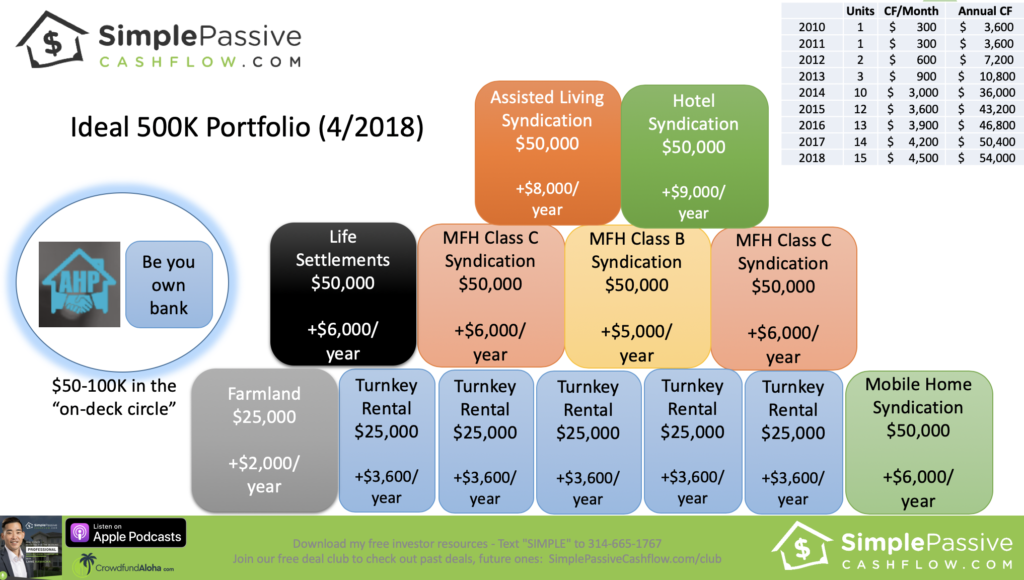
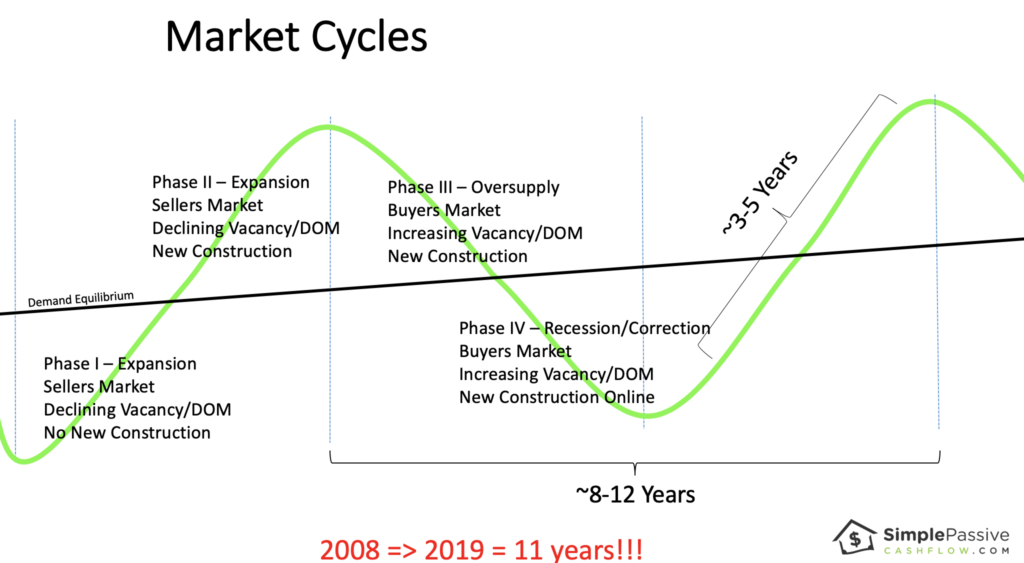
Get the Right Mentor – Join the Incubator


High Net Worth Investors – Join the Mastermind

With that out of the way let’s continue…

Real estate is one of the best risk-adjusted investments out there. In private placements or syndications, we are able to crowd-invest in larger & more stable assets while maintaining control with operators who are aligned in our best interests. By going into a project properly capitalized with adequate capital expenditure, budget, and cash reserves, you are able to remain steadfast through softness in the market where rents stagnate and vacancy decreases.

(If you are starting out you should start with turnkey rentals even though they are much more 🎥 volatile)


Pause there. In troubled times what happens?

People lose their jobs and there is a bit of shuffling, let’s take a look at different the different property classes:

Property Class 1
Property Class 2
Property Class 3

Previous
Next

Yea, people need housing, but there will be some vacancy as some people will lose their jobs and be displaced elsewhere.

Following this train of thought…

In a recession, the high end or class A will be hurt the most. It is Class A workers who fulfill much of he discretionary services.  We are already seeing softness in rent by rent decreases in class A of the high-end markets such as Seattle and San Francisco.

For example a once $1,700 one bedroom is now $1,625.

Most deals model for 1-5% in annual rent increases or escalators. Other than the Cap Rate to Reversion Cap Rate truck, this is the second most manipulated assumption in investment modeling.

In this unfortunate but natural event, the A-Class renters will fall to class B housing. Some homeowners will even lose their jobs creating foreclosed investments for smaller investors in the single-family home scale.

What’s happens to the B and C class renters?

It is likely that they will also lose their jobs at higher or lower rates, but that is up to debate. In the same fashion as the A-Class renters, the Class B/C renters will downgrade to make ends meet.

I imagine this similar to a game of musical chairs (where the chairs are getting crappier and crappier). Or it looks a lot like the natural housing shuffle in the summer near colleges with people moving in and out. The landlord/investor is likely to see increased vacancy.

Multifamily occupancy varies from 85-95% in stabilized buildings. Some markets are hotter and some are colder. It is important to use the correct assumptions depending on the markets. For example, Dallas typically sees 92% occupancy while Oklahoma City sees 89%.

One of the reasons we love multifamily is because of the decline of the middle class and the need for more scalable workforce housing. [And those millennials can’t save] The population is increasing too.

[I like to use this image cause I make fun of millennials… this is the millennial version… cause they can’t seem to afford (or want) to own anything]

When I travel to Asia (which I see as a more mature society, for better or worse) there is a much larger wealth gap than in the USA.  People are living in cramped apartments or very rare single-family homes. And they are driving a Mercedes on barely enough money to share a family moped. This is the trend that the USA is following.

As with many things, you need to look past the headlines and the general data. Instead of analyzing a whole asset class, as the media likes to do, let’s break down vacancy in terms of classes.

Here are some typical vacancy rates (notice the spread).

Class C 4.5%

Class B 5.0%

Class A 5.5%

Why? Because there is just more demand for the lower class properties because there is more demand than supply.

Many times the business plan is the be the “best in class.” For example, businesses want to be the best mobile home park or best high end remodel because you attract the richest customers in that niche.

I like to monitor the number of new units coming online because that is your downward pressure. It is rare that new builds are for Class C or Class B.

The micro-unit trend is an attempt to build for Class C and B tenants due to the need. But often the numbers don’t make sense when you have purchased the same building materials and mobilized the same crews to build a Class B asset as opposed to a class A asset.

Let’s go through that Armageddon example again.

Class A will have to drop rents severely and see great vacancy.

Class B and C will see vacancy come up too as people are losing their jobs but should see some absorption from ex-A Class tenants.

Mom and dad will also see some absorption as deadbeat son or daughter move back home.


Get that first Remote Rental – Join the Incubator


Build your net worth with other Accredited Investors

Note: one can argue that class A+ will not be affected at all which I believe is true. That’s why we are trying to invest right to enter that untouchable status.

I remember when I sat through the same economic presentation at work from 2010-2014. The sentiment at the time was that it was going to be an extremely slow recovery. It makes sense that the length between the 2008 recession and now is very long which is why I mentioned an 11-inning ball game.

RTV ratio 1
RTV ratio 2

Previous
Next

This is why I took a step back from some pretty Class A deals because I asked myself the following questions:

1) What will happen to the rents if IT should happen?

2) Is the modeled 90% vacancy rate going to get blown up?

Class B and C apartments in strong submarkets will perform best over the long term. If you ensure the loan term is long enough so you don’t get hurt then you should Outlast the bumpy ride ahead.

Beware of the self-destructive behavior of not investing. You know what I mean… are you someone who self-sabotages?

Understand the micro and proceed if the numbers make sense.

I have to admit Class C and B assets are boring but work especially in a seller’s market because 1) they cashflow and 2) have a forced appreciation value-add component to give you levers to pull in tough times.

Again going back to Mr. Kiyosaki’s three-sided coin quote, investors go through three stages:

Stage #1

Go into MFH… Duh (I did well at single-family rentals let me try apartments)

Stage #2

Be a contrarian investor so go into other asset classes most decent investors are afraid or don’t even know about

Stage #3

Do special projects such as Affordable house taking advantage of tax credits or specialized operators (ie take abandoned big-box space like movie theaters and convert to the latest consumer needs)

Experienced investors who were in the downturn in 2008 say its interesting that the sentiment in 2006 was exuberance that it was going to keep going up. Now in 2018 the sentiment is fear… This is a good thing. Remember that in this market we still have:

  1. Historically low-interest rates
  2. Historically high rent increases (not 8% anymore but still 2-4%)
  3. Historically low vacancies

Things to monitor if you really need to geek out on numbers:

  • 2 and 10 yield t curve. When that crosses you have just-a matter do time. Because its a measure of fear.
  • Automation and AI – huge shifts in jobs. People need to work but technology has been increasing since the beginning of time.
  • Wage growth
  • Bankers prospective: how deals are getting funded and by who (institutional or dumb capital)

There is a saying out there that real estate is location specific. However, when I invest in more stable asset classes it’s a National market based on the economy both USA and international. When you invest in a micro-economic fix and flips then it’s location specific. When you invest in commercial assets it’s with more stable tenants and based on the aforementioned larger economy. How affordable is rent really? – “During the same span, median effective rent nationally has risen by about 26%. That rent appreciation pushed the median monthly rent nationally to around $1,220 per unit to end 2018. With the US median household income being just over $62,000, this rent accounts for 24% of monthly income. Using the typical benchmark of monthly rent being 30% of monthly household income for affordability, a margin remains for renters.” – [If you stick to using 2% and under rent growths and stay away from Tier I or Primary markets you should be fine] – ALN 19.02.24 A lot of people point to the Yield-Curve as a big indicator. In the end, I do believe that real estate will go down because of consumer instability. But if you have stocks you should sell those before even thinking of lumping it into cash flow type rental real estate. 
“The guy not investing right now and hoarding cash (with net worth of under $1M… because if you can live off your cash flow then cool you can do what you want) is just afraid and lacks deal flow. Its like the person who complains that there is nothing to do during the weekend in LA (insert city with a vibrant scene) when in actuality they don’t have any friends (lack dealflow)… and by the no one likes (has a bad attitude and that person who makes excuses”

Lane Kawaoka
Simplepassivecashflow.com
 Doomsday theory: Everyone talks about national debt but we are far far behind debt to GDP ratio that of Japan. When Japan hits the wall lookout. Here is my theory… watch out post-Japan Olympics when they have to let loose the belt (after a holiday period of excess calories). Leading up to a period where Japan has to save face while they are in the Olympic spotlight (and I’m not being racist cause I am Japanese and it is a thing). I don’t have the latest data but Japan is at around 250% where the USA is at 100%. Household debt KPIs: student debt, car loans, housing debt. Which is why I like these assets that are used by the poor and middle class! #RenterForever Lane’s theory: I’d rather be in deals that cashflow today that do better in a recession like Class C and B assets. Say it cashflows a 8%.The guy who is stilling on the sidelines with the “hoarding cash” mindset will lose because they will make 0%. 


Use our Remote Rental Turnkey Rolodex


Start your own Family Office

I, on the other hand, might dip from 8% cashflow to 4% cashflow. On paper, I might be in a market with compressed cap rates but hopefully, I have forced appreciation potential if I really needed to sell – the counter move is to get 8-12 year debt to effectively bridge you to the next side of the market cycle. In the meantime you cashflow 4% which is 4% more than the “hoarding cash guy”. In addition, remember back in the 2008 crash. 2009-2012 people did not know if that was the bottom and it was so hard to close deals in that Phase IV (see below). “Hoarding cash guy” in 2009-2012 and the few years after the next recession will likely be in the same clueless situations. Wouldn’t you like to be in solid Class C and B assets that continued to cashflow?!? 4% x 4 years is still 16% ahead! Now if you are “hoarding cash guy” with no deal flow then I get it. Saving cash is the best thing to do for the guy with no deal flow or does not know how to run the numbers. I guess everything does suck. 

SPC returns
SPC returns 2

Previous
Next

[Investors are chasing for decreasing yield these days] – REI.com – 19.03.4

Cap Rates
Cap Rates 2

Previous
Next

[Sophisticated Investors know interest rates and caps go up and down together and their money is made in the delta between the two] – REI.com – 19.03.4

Of course, all the Pro-Apartment publications will say this: Get Ready: Recession-Proofing An Apartment Portfolio – National Apartment Association 19.03.7

But enough of this doom and gloom because most gurus out there call recession everyday just so they can have Tweetable content. And they make a living selling subcriptions to their $79/month newsletter. But we are better than the average investor! And understand that future softness could very well be slowdown before the next great bull market.

Take care of yourself!

August 2020 Market Update Investor – Investor Letter #16


All right, everybody, this is the August 2021 fi market update. I’m your host Lane Kawaoka. But before we get started the free easter egg giveaway, and we are going to be giving away a buy and hold analyzer for rentals. This is you can use it in Google and Excel for explanation of all expenses for you to make your own performance and vet your own rental properties. For check performance given to you performer means means toilet paper, French, just get rid of it, analyze it yourself, run your numbers yourself and allows you to perform some sensitivity analysis on your own You can get access to that by going to a group putting in the numbers on the Facebook posts, or you can shoot me an email at Lane at simple passive cash flow calm. And, you know, I’ll send it over to you. If you guys want to check out more content on our Facebook group and listen to my podcasts, which has been going on since 2016. found on Google music, Spotify, e to YouTube channel is getting pretty big and robust now. We’re also on iTunes and iHeartRadio. Alright, so first things first, a little bit of teaching points for everybody had demick proof investing. How do you invest in stuff that won’t get destroyed in a pandemic? Well, things that are probably going to remain strong, as we’ve seen through the last few months, do my 3500 units that I own workforce housing. These guys still PE so Class C and maybe try and stay away from class C stuff but definitely the class VNA tenants, their paint, garden style apartments so a garden style apartments are these are the two story or 123 story apartments where it’s sort of think of it like a motel where you drive up to, it is not a high rise apartment. It is sort of medium to light density. And for those people who are unable to afford a house, everybody says they want to you know, get away from other people and have their own house but very little people in America can afford houses to live in. garden style apartments are the best of all worlds you have your space. It’s pretty affordable for them and this is why I choose to invest in these type of card itself apartments and other medium dead suburban locations that would be not in the urban sprawl, urban area, the downtown area but mostly in the suburbs. Areas maybe right near the loop track you know 20 to 30 minutes outside the city center things that I stay away from our elevators you just can’t socially distance in an elevator that’s urban areas of things with no cash flow right because they think you’ve seen an epidemic that things that aren’t producing income to pay his expenses are going to get hurt a lower end tenants and this is where I said you know, maybe stay away from class C tenants definitely Class D and worse. That’s always been a fundamental that we followed a short term rentals are getting killed. Although I hear a little bit of resurgence and some of the some areas of Florida as people there’s some pent up demand coming back online but you know, if you live in Hawaii, you’re getting killed with these short term rentals and and that’s why I told you not to do them in the first place. Pro tenant states. So these are like the California these other places love blue states where there’s more tutorials on no evictions offered A space you know, a lot of tech workers and a lot of them are just told that they may not even come back to the BDM next year if if ever, a lot of people have just told their employees just to work remotely from now on San Francisco Bay Area’s getting killed. Again, this is why we chose not to invest in these type of primary markets. JOHN burns came up with a report and the question is, are you or do you know anybody else living with their parents? Well, they came up with this little stat that for those adults ages 23 to 30 living at home what’s your mom and dad has drastic be bingo going up 30,000 people in March, and then in April a million people and then may another million 1.1 folks moved in with the parents so that is on the rise. And that leads us to a read cafe article or the takeaway here was a quarter of renters now say they will never buy a home. So if you’re looking at This in the YouTube channel you’re seeing and that cool little chart where they surveyed about 7000 renters in May, you know a lot of people just don’t plan to buy a house, you know, I don’t, I don’t buy a house to live in. And if you’re living in a rent to value ratio under 1%, I would urge you to do not buy a place to live in, but instead, invest that money. Check out my article, simple passive cash flow, calm slash home talking all about this very controversial topic, but look at it this way, right? You don’t spend money on a big down payment, and you go out and invest that money and you make cash flow. And it’s basically an arbitrage and I know everybody teaches you otherwise. And I would say for most people, it makes sense because most people aren’t finance financially responsible. So home is sort of a forced savings account for them because if they didn’t put the money into a mortgage that got locked up, they probably spend it but you know, those of us who kind of follow our group are of our tribe, simple passive cash flow, folks, and we’re pretty responsible for our money. We don’t spend our money frivolously. So for those of us it probably makes sense to rent our primary residence, use that equity to go and buy assets and then you know, we don’t have that big mortgage payment, and then we can go out and buy more properties or syndications quicker. You can also probably live in a nicer place to the whole thing of homeownership, I think is a little overrated, but just to just hear giving ideas right, full map of estimated net worth of everybody who every person, each state who is the richest person, so Mark Zuckerberg is at 1 million billion dollars in California. Washington have just Jeff Bezos hundred 17 billion boy is pero dahmer. I don’t even know who that is. A Alice Walton 51 billion. We have a lot of Texas people. Some no We have with some people in Maryland in DC, Ted Lerner family. Ray Dalio is up there in Connecticut at 18 billion. Yeah, a lot of us in our group are California, Oregon and a lot of people in Oregon Phil Knight, and family 40 billion other folks on the west coast. It’s kind of a fun, a fun article. They’re most and least affordable cities from home ownership. It’s kind of a no brainer here but in graphical representation from NAR realty data, the West Coast is probably some of the most unaffordable areas but in there The worst is San Jose, California. And one of the better areas is Spokane, Washington. And I think we have actually a participant from the area of Spokane Washington, shout out to FM is listening. So we like to invest in the south and south east. Phoenix is one of the least affordable places in the south south Phoenix is actually pretty good market, in my opinion, and it’s not too expensive. A lot of people from California move out there. But in terms of the South, it’s one of the more expensive places. Amarillo, Texas is one of the most affordable ones. Kind of a nice little, little fun map to see where’s the nice places to live. And I took a screenshot of some of the chatter that’s been happening in our private Facebook group, or I’m seeing people move out of San Francisco Bay Area lower cost areas in Campbell, California since COVID has enabled them to work remotely. Real Estate seems to be picking up in those areas of Sacramento or El Dorado County, is you don’t get much more for your money while still being you get a little bit more for your money while still being relatively close to the epicenter that is San Francisco and San Jose. Another person commented rents on average in San Francisco are down 12% Because as much as 20% in some areas now, that’s just one person from the UI. But to be honest, I go, I use my network a lot. I mean, a lot of you folks are my eyes and ears out there. And hearing stuff like that is a lot more reliable than what you can find in the news a lot of times and you know, nothing beats going into Facebook marketplace and seeing what the rents are doing, especially for someone who’s been following up on it, and kind of watching it watching the needle. Like a lot of you guys have this data that we read from these news article, there’s quite a bit of lag, typically, where saving for a down payment is the slowest, Hawaii, District of Columbia and California. These are three places where the median home values in DC and Hawaii are a little over $700,000 That sounds about right. I mean, you can’t pick up a house here, away. I mean, yeah, you could pick up a house but it’s gonna be kind of crummy for 600 grand Hello. Foreigners just under $600,000 median home value, if you working with a down payment of 20% time to save for a down payment is 9.1 years for Hawaii, 8.7 years in DC and 7.8 years in California. So if you can save up enough money to buy a house, well, there’s only 3030 or 20 more years you have to work more than likely. So I asked the question why buy in these kind of places to be honest, this invests, but I’ve been told I need to be a little bit more less controversial. You know, if you can’t save your money, then please buy. If you can invest, I think I think you’re going to end up better off than the most. Both day housing news reports such senior housing occupancy slips to an all time low. Now a lot of you guys have mentioned to me that, you know, you see senior housing, the trends, they call it the silver wave. I totally agree with you guys. So, senior housing is going to be in a huge demand assisted living. But I don’t think the silver wave is quite here yet. And it’s a very hard operational asset class. And to me, it shouldn’t really be in the real estate category. I mean, it’s an operational business to me, definitely not for mom and pop investor to operate in a mom and pop operator could possibly invest in apartments and be okay, but definitely not senior housing. The occupancy fell 2.8 percentage points in the second quarter dropping to 87% to 84%. So yeah, this I mean, this is some of the fallout from Colvin, senior housing, I wouldn’t want the liability of that right now. Commercial Property executive reports that the top five secondary markets for self storage default, I’ve been looking into Self Storage lately. I haven’t jumped in quite yet. I originally, you know, one of my things I don’t quite like about self storage is to have You can develop this stuff so quickly and typically you don’t compete directly with what you’re doing. Yeah, there’s not really any class B or C till storage out there like how you buy Class B and C apartments and then when a Class A apartment or a house, a self storage company comes online, it’ll compete directly with you whereas like, you know, we’re buying Class B apartments and in a class A apartment gets split across the street. Well kind of competes with us but not really we’re you know, you’re in a different category for customers. But on this some of the top five secondary markets for self storage development, Augusta, Providence, Knoxville, Rochester, Rochester, Springville, self storage, I think the appeal there is you have no tenants in you know, they have no right it’s just stuff that you’re not going to have any it’s going to take a lot for there to be some laws against no evictions or kicking you out on the street for that. So that’s, that’s why it’s very in favor of the landlord or the operator. Not all markets have come down a little bit since COVID kind of cooled off the market and temporarily, co stars reporting the Huntsville apartment market rising remains resilient and dynamic. But little graph of the same store asking rent just keeps going up through what was called Mr. March in March. That went up from 93 cents to 95 cents or in that market. So I can fully attest to that, because it just keeps going up in the stronger markets. I think part of that is just job growth. On the contrary, Jacksonville found the multifamily Market Report is seeing a little bit of a slide 30 basis points in rents in the last three months. Well, some people you know, some of my peers that have deals in Jacksonville saying that their deals or aren’t seen this, but you know, this is just big data, right? We’re trying to share On a market, commercial property executive also reports construction costs decreased for the first time in a decade, the covid 19 pandemic, and increased competition among contractors are key factors behind the client. So you know, as, as a lot of operators are, are on contractors or developers builders are kind of taking their foot off the gas pedal in terms of future deals, they might also slow down into existing ones too, and, you know, less competition coming online and generally kind of slows down the pace of construction and that ultimately impacts the contractors I think you would have asked this about six months ago you know, one of another reasons why I don’t like doing that silly first strategy, which is too much effort at too much risk is because much of the last few years has been a contractors market, right contractors, any if you’re not a contractor and you’re not working, something’s wrong with you. It’s hard to find contractors up to this point because everybody to work in. It’s really hard for unsophisticated new investor, especially when you’re trying to do it remotely, to find people good people to work with. You know, you got a question, why is this person not working and want to work with me? Well, maybe you’re paying a stupid price to that could be another thing that’s very typical revolt. Investors. Now, now, it’s kind of a good news, right, generally, you know, things are kind of cooling off less competition. So now’s the time to go and build right. I think a lot of newer investors are scared, right? This is the time where you can go in and you can do get this work done a lot cheaper. You know, overall, unemployment is higher. Now these construction guys, the jobs have been absorbed. yardie came up with a report on multifamily and I’m just going to read some of the key findings here. The US multifamily rents decrease by $2 in June, you know, not that much falling to an average of four 1300 $57 and this is all inclusive of you know, ABC class average rents just continuing the four month trend of declines which makes a lot of sense right? I mean went to dang pandemic, you’re expected you know rents to retrace a little bit. Average us rents declined by point 8% in the first half of 2020. And then point 4% in the second quarter. This is a stark contrast from 2.6% rent growth in the first half of 2009 and 1.2. A most people will argue that on average 3% is annual rent increase per year. That’s kind of just follows a pace of inflation. If a market is super hot, like how Dallas was in 2013 and 14 or how Phoenix has been lately, you can see a big pop you know, a market you know, Mark get more of like a MSC, of like a spectral Five to 7% a year. So to see a rec growth of almost zero, that makes sense when this is going to happen from time to time. And this is why on those annual rent escalators, you don’t want to see something too high. I don’t be underwrite more than 2%. Typically when I’m looking at deals, you know, I’m assuming it’s going to go up a little bit, but I want to under pace inflation, which is typically thought of as 3%, where the losers will, it’s the West Coast and tech home markets, as we were saying, hit the hardest in the first half of 2020. That’s the beginning of the year, rents are down 4.6% in San Jose and 3.8%. In San Francisco. Our business online reports that us multifamily originations to decline 20 to 41% in 2020, says Freddie Mac, so all this is is less people are doing deals and yeah, I mean, the last three, four months haven’t really seen that. Very much come through the inbox, probably I would say, unscientifically, I would say maybe a 10th or, you know, 20% of what kind of volume of syndicated deals I see has been coming through. Part of that are that they think most, most investors are just freaked out and scared and people can’t raise the money for it. Part of another part is that, you know, Fannie Mae, Freddie Mac, and they kind of lead a lot of lenders. They’ve kind of restricted a lot of the exemptions they will give that makes these loans extra extra sweet for syndicators and investors. We are at all time, interest rate lows. If you haven’t been seeing this, probably been living under a rock. But yeah, we’re seeing in the multifamily space like 2.9% interest rate is obscene. It almost makes sense for people to buy lukewarm deals, right. I mean, Think about it like this, it’s not going to be a sub 3% forever. If your cash flying like you want to lock up all this good debt now, I mean, there’s all signs point to inflation, how else are you going to pay for this three, four or five $7 trillion of stimulus that’s coming. If you have a primary residence, you might be looking at refinancing your home, but I would be careful, right? Because these lenders are really tricky. They love to get these origination fees typically 1%. So they’re always trying to trick you guys into refinancing. I’d say be careful, right? If you already have a low percent mortgage under 4%, I mean, it may not make sense. Remember, like if you had a 30 year mortgage and you know a few years went by you have 27 years left by them refinancing you again, they put you into a new mortgage. So what you really want to do to compare apples to apples is to say, hey, run my run my numbers, I want to put it as a 27 year mortgage. So I can Compare it to the monthly payments, and I want you to make it a no Fee Loan. Now you these guys can play around with the points and fees. And a lot of times they’ll make it a no Fee Loan sitting. So yeah, see it’s no fees, but then what they’re doing is they’re increasing the percentage slightly. So if the base would be was like three and a half percent, they might increase it to 3.75 to make it to take out their fees there so they could get paid. These buggers are tricky. So do the math for yourself. And if you can’t do the math, find a network and you know, we talked about this stuff in our mastermind all the time. I would say if you’re looking to stay in your home for a long time, more than five or 10 years it might be make sense to refinance it but yeah, if you’re not make sense to just sell the asset now if it’s not a good rental property or and get the equity out now, or just let the mortgage ride for the time being and and I’m avoid pain those friction costs which are those loan origination fees

been investing with hp since 2017. By distressed mortgages and discounts to offer struggling families sustainable solutions to stay in their homes or homes were vacant. HP recognized that lenders frequently struggled as they tried to limit their losses. That’s why owner George Dewberry founded pre aureo, a platform that gets these vacant properties into the hands of local investors like us during the foreclosure process, which mitigates losses to lenders and accelerates returns for investors. Winwin I’m very excited about this platform that connects local investors with board appointed receivers in their area to cost effectively repair, lease and maintain and rent vacant homes during the foreclosure process and ultimately make a profit. I’ve been checking out local properties here in Hawaii and I think it’s a great way finally pick up my home to live in. Even though I think home’s the buyer on all the best you can live with About pre Rio by going to simple passive cash flow calm slash v. Rio.

Sam Zell, this is a smart guy. If you haven’t heard of him, you should probably Google him. But he’s kind of like a czar of investing. He’s less known than Warren Buffett. But he’s, he probably invests in more like more trends. So I think he’s one that a lot of people like to follow. But he’s kind of predicting a U shaped recovery likely beginning in the fall, saying we basically improve someone I think that we’re going to have some kind of slow period improving toward the end of the year. That’s very different from a radical Vshape. Again, he’s he’s kind of thing it’s going to be more of a U shape. So Sam cells, you know, he’s invested in I think he was one of the first guys to jump on the mobile home park bandwagon. But yeah, smart guy and a good person to kind of follow see what he’s doing. And, you know, I think a lot of people will say, Well, yeah, Sam’s They’ll says in the fall, start investing in the fall or shortly after like, no, that’s not, you can’t do that, like you kind of miss out on some of the best bull market. And that’s all I got to say about that. This take a little break here for another giveaway. The other second easter egg here is amortized mortgages suck. You want to use your key lock, if you’re looking to pay off your mortgage a fraction of the time do you want access to this shoemoney McClendon simple passive cash flow after joining the club, if you have not a part of our investor club, go and join that simple passive cash flow calm slash club, but this is the mortgage rate arbitration game where you’re using your healer and you’re paying, you’re paying down your amortized loan with simple interest. And trust me this works. You would say I read a little process here. You can probably read this on the YouTube channel or on the video version, but If you guys are listening in the podcast form, just go ahead and shoot me an email Lane at simple passive cash flow. I can give you all the tutorials and videos on this, but it works. You, you pay off your he lock, you replenish it with your cash flow, and then you magically your mortgages gone in like five to seven years. Sounds cool. But I would caution a lot of people like the strategy is not for everyone. And it is nothing compared to actually investing in good hard assets that pay cash flow. And I think this is where a lot of people get confused, right? They’re like, well, I want to pay off my debt. Well, paying off your debt is not aligned with financial freedom. In many respects, debt is the best part of this whole thing. Like I said earlier, inflation is going to be going up because we have all this free created money, especially in the last few months. What the government is going to do is just inflate the money supply to make their deaths. smaller portion. So what you want to be doing is grabbing as much hard assets that have good debt associated with them. So you can pay it off with future money, whether that is buying a rental property or going into a large syndicated deal at 2.9%. I mean, it’s a no brainer. Don’t take your money. Well, I’m not saying don’t. But if you want to be smart about it, and you want to do the best strategy, in my opinion, don’t take your money that you have in a HELOC and put it to pay off your debt. Again, the debt is is you want that you want to lock up but you don’t want to go pay it off. Instead, take that keylock money and go buy rental properties or go into leverage deals with that. I talk a lot about this in the tutorial. It’s somewhere on my YouTube channel. But if you guys can google it on there too. And a lot of people just don’t understand it. The thing they want to be debt free, which is you know, I guess that’s that’s One thing I think they’re getting it confused with consumer debt, right? Like, you definitely don’t want to be leveraged on your credit cards at 20%. But when you have to read a 5% interest rate on assets that produce income that’s you want to load up on that stuff as much as you can get. I wrote an article on Forbes on this, you can check out at simple passive cash flow calm slash debt. So it’s a very big paradigm shift. Of course, if you haven’t checked out we created a new spin off group for new investors looking to pick up their first few rental properties or remote rentals. turnkeys. We are starting that on August 15. Two if you want to join, go to simple passive cash flow.com slash incubator. If you’ve got any friends who’ve been bugging you, about how you’ve been investing in real estate, and tired of bugging you, and you just want them to work under our umbrella with the people that we’ve worked with in the past, they don’t have to go around and blind date a whole bunch of providers. brokers, this is the group for you. But if you’re more of an accredited investor looking to get associated with our, our close knit inner circle, check out the simple passive cash flow, passive investor etc and master mastermind simple passive cash flow calm slash journey to learn more about that we’re transitioning over into my personal section of the monthly report. And for those of you guys have are on watching, if you guys have any questions, feel free to type it into the question answer box and we’ll kind of get to at the end. But these are the six tenants that I kind of rolled through every month. First one is growth. I’ll be honest, I hadn’t really done much part of this month was me stuck at home because I had gone to Birmingham, Cleveland and Dallas. And boy still has this two week quarantine rule where they actually did text me to see if I was at home. So I got this basketball that’s connected I don’t know how it’s done as some kind of electrode in it, but it’s connected to this app. So I’m trying to get better at dribbling the basketball. sounds silly, but trying to play out these things. It’s fun to me trying to get some hobbies. How did I get a little bit of contribution to my life? Well, if you missed it last Saturday, I spent six and a half hours and I drank two coffees to educate a lot of investors who are looking to pick up their first few rental properties. Who is a no BS, no frills, all education, training. If you guys would like to get access that shoot me an email, I might package it up into the E course. Or actually we’ll go into the E course for remote investors. So if you guys want access to that, go to simple passive cash flow.com slash incubator two, you can just buy the course right there, or we’ll probably do as a package up these videos hopefully in a smaller product. Yeah, probably sell it for like 20 bucks or 50 bucks just enough for you guys to not just think it’s worth nothing and it’s free. Significant. So we closed 179 unit deal. Yeah, the second one this year not too many deals this year with all that’s going to be going on but we got 3.1% Freddie Mac non recourse debt. Amazing, amazing 3.1% this deal was more of a yield deal. Not too much value add, but in a great area of Irving, Texas. I mean you can’t go wrong with this thing. I mean, you know, again, it’s a yield play. So your plays are not a heavy value add. It’s just, it’s cash flying day one. And you know, it’s 97% occupied. Yet To me, this is kind of like blue chip stock in your stock portfolio, except I have no stock. So for me with my 100% alternative asset portfolio, this is some of my very conservative side of my portfolio. How did I create it? uncertainty in my life. Well, I don’t know, if we’re going to be doing a 2021 we mastermind in Hawaii. I still think we’re going to do it. But you know, with the whole second wave going on and everything, you know, we don’t know I’ll probably decide here in the next couple months. But uh, yeah, I mean, check out the video we did on the last year’s one simple passive cash flow calm slash, who we three if you guys have any feedback, you guys really want to have it? Let me know. Maybe we might even do like a smaller one. Maybe that’s a safer way of doing things. Just keep it small hundred I have searched at my life will workforce housing works. It works. I gotta admit, through April and May I was a little worried that people weren’t going to pay the rent, but Dang it, they paid they paid and now I’m even more like confident in this overall strategy of investing in workforce housing. What is workforce housing? Well, that’s Most of America, right? Dang it like doesn’t that makes total sense to invest in something where the majority of people in America need that product. So yeah, workforce housing, we’re pretty confident that and i’m actually going after more higher risk projects these days, because I’m pretty confident in the backbone of my portfolio. Again, I’ve talked a lot about this, you know, these days, you can either be in a more cash flow play and maybe see an equity multiple, two times your money in five to six years with cash flow with, you know, cash flow is great, but you know, it’s, it’s kind of slower, right? Cash Flow is cool, especially when you have a day job to leave your day job. But, you know, legacy wealth is created with no more risks for exponentially more return. Right? So that’s the, that’s where you take nothing, a raw piece of land, and you put a building on it, and you rent it up. These development plays and you know, this is where I’m learning that these accredited families. This is where they live. This is this is where they create that legacy wealth. They don’t need the cash flow, they could care less if they invest 50 or $100,000. And they got a couple grand every quarter. They don’t care, don’t care. In fact, it’s kind of a burden for them. They’re coming in wondering like, what’s this? So my direct deposit statement? And I think the reason why they like development deals is because it’s a shorter time horizon to they get sort of instant feedback, good or bad. Right, and then they can move the money into the next project very quickly. But yeah, I mean, as investors, you have choices, and you have to set a line with your investment philosophy, but me personally, I’ll probably still do a majority of my stuff in cash flowing plays workforce housing again, but trying to go after some nice home runs here and there. How do I get a little love and connection in my life? Well, last weekend we celebrated here in Hawaii. We did a little get together with a few of us here in Hawaii and celebrated the closing of the last deal. At some wine has Some food it’s nice to get around real people not that hang out with my wife every night wasn’t getting boring, but it’s nice to get some different players in the mix. People is all what makes a difference. And relationships is the currency of the rich, I would argue have the right people write some new podcasts and articles that I released this month we talked with mythic markets.com who allows you to invest in geek stuff like Spider Man comics magic cards. I’m waiting for Thor’s hammer to come out. Actually, I mean, like look like a lot of people say that when I bring out something on the podcast. I’m immediately vouching for them. I am not doing that. Just because I bring someone on the process does not mean i think that they are safe to work with. HP is different, right? HMP is a sponsor of the podcast and they brought out number two right here. The person reo service. I definitely believe in hp. You know, personally knowing the owner George Newbery there, if you guys want to, you haven’t got a copy of his book, let me know. I think you guys can get that. It’s simple passive cash flow, calm slash hp. And you can also learn about pre reo there at simple passive cash flow.com slash pre reo, but p o is kind of a cool thing I’ve been looking at there every month or so see what’s around my local area here in Hawaii that I can pick up pre reo, REO properties, if you don’t know our properties that someone has run in tough times and are in foreclosure. The pre reo are the properties that are owned on the bank that are typically in judicial states where it’s harder to collect in general. So the bank is just like Screw it, we’ll just sell it pre reo. So by going through the service, you’re able to jump over a lot of mom and pop investors and they have like a nice little feel There. So check it out, you know might not be for you, you might be a passive that actually you might be a passive investor. But this might be appealing because you wouldn’t buy something that you don’t live near that you can’t check that you don’t have a competitive advantage. So I would say it’s a great way to find a primary residence, political prop bets. predicted.org did a little review on that. This is a cool website. It’s kind of for fun, you can bet on the election. And I think you can only bet up to 1000 bucks. So it’s kind of play money. But I use this as a means to figure out who’s actually winning in the polls. Because the people it’s a very small sample size, but the people who are voting on you know, who they think is going to win is actually putting up money so it’s not like, you know, most office bets or opinions where Yeah, people have an opinion, but very few people put their money behind that. Check out the website, not saying that it’s safe or anything like that, but it’s a cool place to To see, you know, different election how things are tracking in one place. Number four here investing in fine wine so very much like the mythic markets.com company these guys invest in real lots of wine. Actually, this one’s more appealing to me. I think, to me, that’s kind of cool. Owning a winery or investing in fine wine. And it seems more cool to me. You think? I mean, whatever floats your boat, right? So people, it’s like sports cards that has been kind of on the uptick this past year, especially with the land stance and everybody’s stuck at home. I also wrote a article on due diligence again, you can get that at simple passive cash flow, calm due diligence, which is just a sample what’s in the passive investor accelerator. And we’re also putting together a lp guide syndication course. So we’ve collected all the notes over the past couple years, I’ve taught people and putting it all into Nice ecourse so if you’ve checked out the new remote investor ecourse that we launched last month, this is going to be in the very similar format. We also had a live coaching call with another credit investor lawyer. So if you’re a lawyer or you’re another credit investor, check that out. People like those. If you go to the YouTube channel, there’s a section there with all the past live webinars, a live coaching calls, that you can vicariously live through other investors in Hawaii, and self directed IRAs to invest your retirement funds. We kind of talked about, you know, when is it not good to use an IRA or a QR p? I’m not a big fan of retirement funds. I don’t have any. I work with clients that we kind of strategically withdraw to retirement accounts so that we’re keep one eye on our AGI level. So we don’t pay too much taxes because when you take out the money out of your retirement accounts, you it comes up as a active income generating They’re some of the issues I’ve been running into is not enough reading time. I’d like to read more books. Some cool doodads I’ve been buying I bought this like stream deck is a total geek item. But if you’re at your computer for more than six hours a day, you might want to think about getting this. So what it is you can it’s it goes next to your keyboard and it’s a hotkey pad. So you can program each of these buttons and each of these buttons is not just like I thought it was like a little sticker you put on there but it’s like an LED screen and each of these buttons you can program it based on what program you’re and and it’s pretty amazing. It’s pretty cool. Like I mean mines is super basic. I just have cut paste copy, reply to email, archive email, TV, email, close the window, trash this thing go to this website, play my music, undo but you know, time is money and this is really cool. This this got created by a bunch of like gamers if you guys haven’t heard of Twitch and the eSports revolution This is a byproduct of that. Some of the lessons learned here I be very careful not to offend anybody here. I don’t mean to but you know, with all this pandemic going on you were mastered, do not do when the country right, it’s very left versus right. And one thing one truth I understand is if you’re on the left, you can’t see the right if you’re on the right you can’t see the left. It’s It’s It’s amazing as I travel throughout the country as I go and travel and in Huntsville, and Cleveland, how different people are in places like California or the East Coast or Hawaii. It’s It’s amazing. People think that America is one united country, we are a country of 50 individual states, some states are very divided amongst themselves. And you know, I think we all see a little bit of like schools opening what do you do, right, I think I think this is the time where we all need to have a little bit more compassion towards everybody. I mean, nobody’s gone through a pandemic. I mean, we’re all trying our best. And you know, there’s no reason to get all emotional on each other. You know, it is what it is trying to be safe and don’t take things too personal. Join our book club, simple passive cash flow calm slash lien hack we are reading what would the Rockefellers do, which is an application on how to use infinite banking? If you haven’t heard of infinite banking go to simple passive cash flow, calm slash banking, but if anybody doesn’t have any questions into the channel, you guys can type it in. So someone asked here on the YouTube How do you invest in these apartments? Well, it’s just like buying a single family home rental, but add another couple zeros on to it. But a lot of these apartments are very big right inaccessible, most investors so popular method for purchasing apartments is a syndication model. So the analogy I like to use is an airplane. So in the airplane, you have a cockpit of general partners to operate or sponsors were these are the guys who find the apartment, they find the lending, they put the lending in their name, they operate the deal, they make distributions, they kind of do everything. And so passive investors are able to board the airplane, invest in the deal as a passive investor, LP investor, and typically just invest a small sum of money of anywhere from $25,000 to $100,000. As the minimum investment and buy in as a fractional share of this airplane or apartment building, of course, when that happens, securities laws are triggered. So it’s important to have a good lawyer to create documents so that passive investors are protected and general partners are protected to know as soon as you bring on a passive investor, you’ve triggered these securities laws, because why is the is the federal government involved in sec well You’re essentially taking an asset and you’re breaking it up into fractional shares at that point. It’s not like, you know, you have a property and then you know, you partner with a buddy. And you know, both of you guys have collateral. In this case, you’re handing out fractional percentages ownership of an LLC that owns a building. So in the other case, where it might be okay, because you have title to the property, when you do a syndication, passive investors, they don’t have title to the property. They own a fractional share of business, again, an LLC, in a lot of cases. So it triggers securities laws. So passive investors are able to invest, you know, typically around $50,000 and invest in a couple few dozen, you know, firstly stuff a few, but then they grow it to a few dozen properties and assets. And this is something that I learned a while back after I had 11 rental properties, you know, I realized that rental properties just aren’t scalable. You’re going to have a lot evictions, you’re gonna have a lot of things that happen, even if you have property management to deal with all your issues. So that this is where I joined different mastermind groups got around higher level and accredited investors. And I realized that this is how the wealthy invest as private equity investors. So they’re close. They’re, they’re aligned with the operator. They’re not just, you know, investing in retail investments. I think that’s the main thing, getting away from all these like mutual funds and other options that have huge, huge hidden fees involved and getting more closer and cutting out the middleman. And that’s what this is all about. But there’s no more questions. We’ll see you guys next month. And you guys can access all these paths, monthly updates at simple passive cash flow calm slash investor letter, and we’ll see you guys next time. Bye.

This website offers very general information concerning real estate for investment purposes every investor situation is unique. Always seek the services of licensed third party appraisers and inspectors to verify the value and condition of any property you intend to purchase. Use the services of professional title and escrow companies and licensed tax investment and or legal advisor before relying on any information contained here. Information is not guaranteed as an every investment there is risk. The content found here is just my opinion and things change and I reserve the right to change my mind. Above all else, do your own analysis and think for yourself because in the end, you’re the only person who is going to look out for your best interest