Podcast #19 – 1031 Tips and Tricks (Guest Appearance Podcast)

Link to ULTIMATE SPC 1031 GUIDE

Link to ULTIMATE SPC TAX GUIDE


11 Not So Obvious 1031 Exchange Strategies

My promise to my readers: No click bait here on SimplePassiveCashflow.com – all the tips will be provided on the SAME page, so relax! For real estate investors at some point, you are going to need to do a 1031 exchange.  Having just done two of them, I wanted to share my experience before I forget it (since its sort of a pain in the butt and people forget painful things). Hopefully, it will help you create a game plan going in.

So no investor is left behind, a 1031 exchange is a way to defer your capital gains from a sale of real property. This is one of the advantages of real estate as compared to stocks or other assets. I am no lawyer or CPA, but basically, you have 180 days from the sale of your first/subject property to exchange into “like kind” investments using the proceeds (sale price minus existing mortgage and sales costs). This transaction needs to be done via an intermediary/custodian who sets up an escrow to create the paper trail for your upcoming taxes. This process is something you don’t want to DIY because if you screw up, you are going have to pay taxes on the proceeds, plus all that depreciation (recapture) you benefited from. Oh and one more kicker… once you sell the subject property you have 45 days to create a list that identifies all potential replacement properties, but more on that in a bit.

So now that the newbies have caught up there are the tips:

1) Have properties ready to go:  This means having a purchase and sale agreement signed and having completed the negotiation before the subject property (the home you are exchanging/selling) closes. As the close date for the sale of your subject property gets closer (~2 weeks) and especially if it’s a slam-dunk transaction (i.e., the buyer is bringing cash to close/no financing), you might want to take the risk and execute those purchase and sale contracts sooner. Note that this is a bit shady to your agent because if complications do arise then you will have to cancel your contract and no one will like you L

2) Don’t screw around. Get your inspections done as a soon as possible. Knowing if you are going to move forward or abort the purchase of a property is super important. Remember other than the 180 day time limit the other properties on you 45-day list could be bought by other investors.

3) Work with a real estate attorney who has experience with a 1031 Exchange: Policies regarding 1031s will vary from year to year with changes in the Tax Code.  Once you sell your property, you will also need someone to hold your funds in escrow, because you are not able to take possession of the funds.  If you do take possession of the funds from the sale of your property, the 1031 exchange won’t work anymore. But good thing you found that lawyer that will do this all full service for you.

Rumor has it that the silly escrow rule was created when some guy took the proceeds from the sale of his property to Las Vegas and blew all his money on rocks and hookers.  After that, the Government was like, “These people are idiots, we can’t let this happen.” So that guy ruined it for everyone, and now we have to all follow this arduous process.

Pick that lawyer and have all of the contractual details worked out before the subject property goes under contract to sell. Expect to pay $500-$1200 plus additional fees for each property you acquire. Talk to your lawyer and get educated about all the rules, such as the 200% rule, 45-day list, 180-day rule, what is eligible to write off, and get them to sign off on your plan. Remember these guys know how to do 1031s, and it’s ultimately your job to get the big picture right.  That’s why you’re the boss.

4) The All-Important 45-Day Rule: As mentioned earlier you need to create a list of potential properties that you can acquire before the 45th day after the sale of your subject property. The rules change on these 1031s all the time (see disclaimer below) but I was only able to identify up to 200% of the subject property’s value which for me was eight properties for $800k, since the subject property sold for about $400k. (I don’t know where this rule came from, but it was probably conceived by Vegas, hookers, and rocks) What I would do about 10 days prior to the deadline of your 45-day list, send out an email blast to all your agents, turnkey providers, long lost wholesalers (you know the folks you exchange info and you never hear from again like an ex-college classmate) and basically do a roll call for all properties. This is a time to call (not email/text) to explain your situation. Set broad constraints, and specify that you need X properties from each provider that you will buy X of them. This will let the sellers know that you are serious, and they may move mountains for you and bump you up in the priority line. This may also eliminate the silly negotiation process and get you the best pricing. The beauty of doing this is that you are creating a competitive bid format and will ultimately fill up your 45-day-list with the best candidates.

5) Have a Backup Plan: When soliciting for your 45-day-list, you may also want to ask for properties that aren’t ready to be sold yet but “are in the pipeline.” For example, these are the properties that have just been picked up by the seller from an auction or those where a wholesaler is in discussion with the first seller, and the rehab has not begun. Fast forward a couple months, and suppose a few properties on your 45-day-list fall through due to a bad inspection, you are going to need to go back to your list and if you had properties that were ready to be sold at that time of the 45-day-list creation, a lot of them will be sold by then. In summary, this is where adding in the sleeper picks or prospects makes building your list complicated. You need to really meditate with a “Simple Passive Cashflow Latte” and think of every angle.

6) Your 1031 facilitator, gets paid when you do a 1031 exchange. Your lender gets paid when you refinance. Your Bank gets paid when you set up a HELOC. Each are a tool and every situation is unique. Is a 1031 really your best option? Sorry if this point is a bit late in the conversation, but I am assuming you are reading this article before showing up to the Toga Party with your loin cloth.

7) Do your own research on a “Reverse 1031 exchange”. It’s a bit more expensive but might be the right tool for the job, however, it is not for the situation where you are trading one property for many. Personally, I think it’s a tool for a really unique situation and it’s not worth discussing, but I’m sure a Lawyer will want to tell you all about it at their $300/per hour billable rate.

8) Get Everyone on the Same Page:  Have a good old-fashioned, conference call to get your lender and 1031 facilitator on the same page. Isn’t it great to be the leader of a conference call for something meaningful this time? Funny Video. But what is not funny is getting that call from the lender who uses the underwriter as an excuse for why you can’t get a loan a couple weeks before the close. That phone call is totally avoidable with proper communication upfront to ensure you can qualify for the loans with the proper debt to income (DTI) requirements and Cash Reserves. As of June 2016, you need six months of PITI for your first four loans, but loans #4-10 need six months for ALL properties. When I was trying to close loan #10, I needed about $33,000 dollars of cash reserves just sitting there ($550x6x10). This makes an optimizer like myself really irritated. Luckily you can use ~100% of 401k or Roth accounts.  Just a last month they allowed you to only count 70% so you can see how that rules change. Also in terms of cash reserves, make sure you have consulted with your lender about the required amount of time you need to season the funds in your bank account.

Also depending on your 1031 facilitator, you might be able to talk them into paying the appraisal fees out of the 1031 funds instead of out of pocket. I got my lender to reverse the charges and bill the appraisal fee at closing. Unfortunately, the home inspector will likely want to be paid via cold hard cash because he (Let’s be honest…it’s always a guy) is running a good old-fashioned cash business. Just kidding, he takes credit card too. Did I mention that you should relax through this 1031 ordeal? Now, is the time for yourself to enjoy an Old-Fashion or other alcoholic beverage, you are almost done.

9) Use It Or Lose It: As you are getting to the end of your 1031 timeline and utilizing most of the 1031 funds, you are going to have to decide to use it all or leave some money unutilized. Typically you will have to pay taxes on the remaining (this remaining is called “the boot”). You are going to be faced with decisions to pick up properties that are less than desirable or walk from the deal (and pay the taxes on the unutilized funds).  Case in point, say the last property needs $30K to close the deal but the seller is dragging their feet with final punch list repairs that came from the inspection. The seller is refusing to replace the roof because the roof is 15 years old and has a few good years left.  Therefore, the seller does not want to pay $10K to fix it per your request. Let’s do the math, if you walk from the deal you pay ~25% of the $30k due to tax implications of not utilizing the funds and pay the government almost $8k. Armed with this information, it would be logical to suggest that the seller pays half of the roof costs ($5k) as it is a good business decision for you to make this concession and not pay the taxes on the boot (5K<8K). This is a simple example, but this is how the decision needs to be analyzed. Also, keep in mind, information is power. If the seller knew that you were in the late stages of your 1031 and you did not have any other potential 1031 properties to go after on your 45-day-list or nearing the 180-day deadline you would be at their mercy. But that’s negotiation, which can be a fancy 52-card game of BS.

10) Just take it day by day: It is not easy, but it’s simple…LOL. This is where you are glad you picked an investor focused lender who has done these things before instead of the neighborhood big bank. Again make sure you keep the line of communication open with your lender (every few days) to avoid large surprises.

11) A 1031 Exchange is Not for Beginners: If you have not purchased a rental property before I would try to buy one outside of a 1031 to test the agent, lender, market, and especially yourself. The 1031 is going to require you to have many plates spinning at once. It is best to first figure out the nuances with a simple one-off transaction.


Which property class or property value range would be best to put on the buying list?

This is ultimately up to your investing strategy and criteria. For me to tell you what is the best is irresponsible and against what I believe, because you should understand the macro (not micro) concepts for yourself and make your own best individual strategy. With that disclaimer out of the way, I originally went (my personal strategy changes over time) after B/B+ properties that rented for at least $1000 per month and had at least 3 bed and 2 bath. This strategy evolves as my portfolio grows. #1stWorldInvestorProblems. Some things to think of when finding your strategy/criteria include:

  • Although I fully intend to hold on to these properties indefinitely for cashflow, I recognize that things change, and perhaps I might want to trade in one “goose that lays the golden egg” for two or three “geese that lay the golden egg” or one “big ass goose that yea you get the point.” To say, “My properties are generating cashflow” is a fallacy. Instead, you have to evaluate what the numbers say on the bottom of the spreadsheet and compare the two situations you are evaluating. You should always be making moves to optimize your return, assuming it warrants the transaction costs.
  • I was using Fannie Mae loans, which are those sweet government subsidized 30-year fixed loans. At the time of this writing (5/2016) the most one person can have is 10 to their name (If you are smart also 10 in your married partner’s name too). Your plan might be to only get one or two homes and sail off into the sunset, but your plan might change and you have to change your plan for the “if” in life. To acquire a conventional Fannie/Freddie non-owner occupied property requires 20-25% down payment. There are also lender costs, which I typically estimate at $5000 +/- $1000. Parts of the lender costs are variable, such as an origination loan (basically it’s their fee to have to deal with you and headaches you cause them). Origination fees are typically a certain percentage (~1%) of the final loan, but the rate varies from lender to lender, so this is something you are comparing. Other parts of the lender costs are fixed costs such as inspection costs, credit reports, and appraisal fees. It is these fixed costs that are the same whether you buy a $40K property or a $140K property. This is one reason I personally went after a more expensive property.
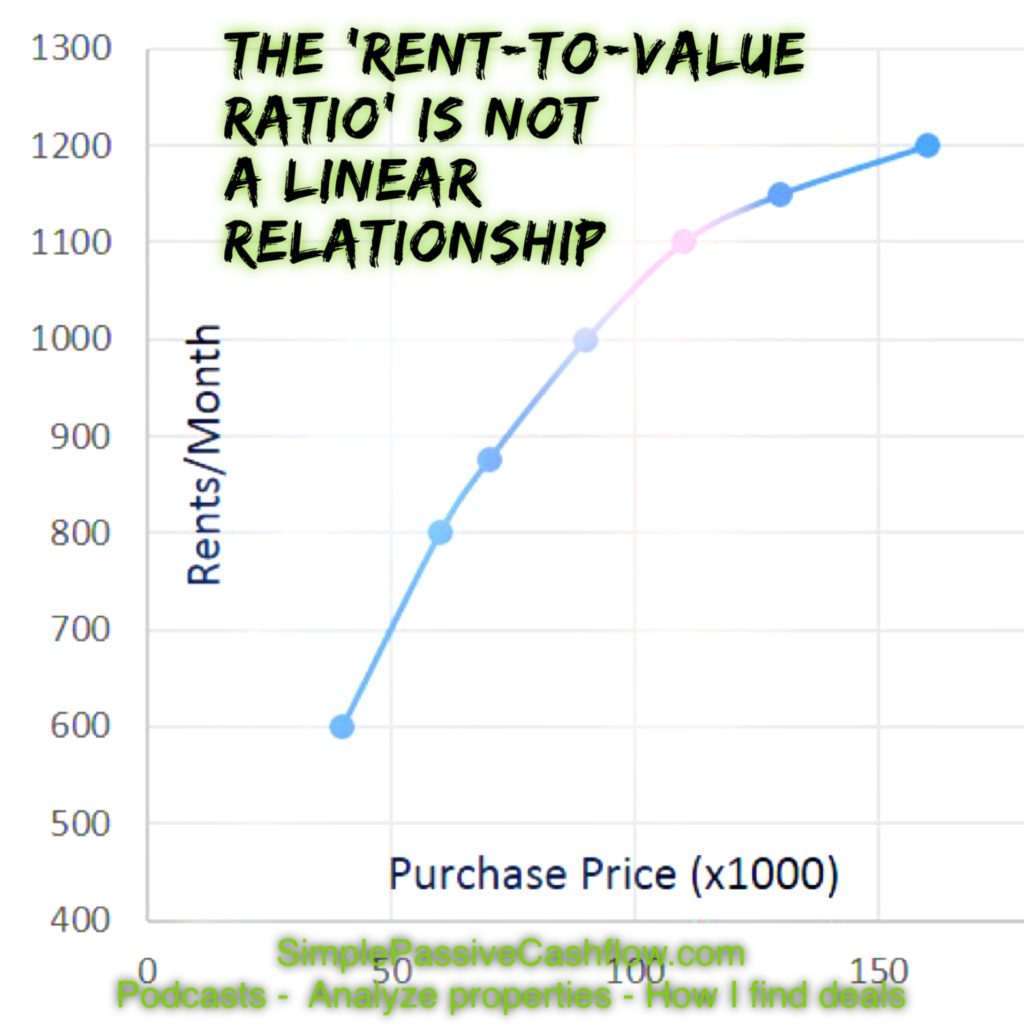
  • By buying 50K properties that rent for $800 you’re like “Hey that’s awesome that’s a 1.6+% Rent to Value Ratio”. But I suggest reading my article about the nuances of the RV Ratio and property classes. I promise you there is a graph and I’ll show you where I think where the cool kids are investing on the class spectrum. Remember the goal is to maximize the profit, which is the rent minus expenses (and the mortgage if you finance the property). Folks get wrapped around all these metrics, but do not forget the goal.
  • This is totally my strategy, but please think for yourself: When I was getting started I went for the higher priced properties (Not the A properties cause there is no cashflow in there). I went for properties that rent for 1100 that I could get for 100K. I would say these were B+ properties (Note: do not take the seller’s definition). My strategy was to find low hassle properties that had better tenants and properties that I could easily liquidate because they were close to the median home. There is a bit contradiction here because yes, they were safer in terms of tenant quality and exit strategy, but the cashflow buffer was less, so I had less ability to lower rents in a market downturn. Now that I have a stronger base in terms of teams, money, and knowledge I try to go for more C properties because I feel I have the experience and risk tolerance for it (although I stated that these could be safer in terms of the buffer in the cashflow).


Goal: I am selling my home for 600k, and I want to invest out of state for cash flow at $200/month per door.

I think that the per door $200 assumption is in line. There is a difference if you are buying $60K properties or $120K properties but either way, I think you will be beating the averages of the stock market, and that is why I do what I do. One day I will make a video showing the math on the hidden benefits of owning rental real estate.

This is how it is going to work if you choose to sell and do a 1031 exchange. First, you sell the home for $600k (~10% will go to commissions, etc.), so you are left with $540K. This is how much you have to acquire, or there are tax penalties.  Therefore, if you are looking at $90K properties, you are going to need to pick up 6 of them. Your cash in your 1031 will be $540k minus your remaining mortgage. You can bring cash out of pocket to make up any shortcomings. Check out this article for more info on some 1031 issues and strategies.

SPC Git Er’ Done Action Plan:

  • If you’re not doing a 1031… You will need to do one in the future or you are just being silly by hoarding that equity. Today think about the possibility of this exit strategy as you purchase properties. For example, a lot of people talk about buying duplexes, triplexes, and quads, but when it’s time to sell, there is a fraction of possible buyers. And those possible buyers are all investors who are looking to get a deal.

Podcast #012 – I Bought 9 Properties In 5 Months Via 1031 Exchange

Link to ULTIMATE SPC 1031 GUIDE

Link to ULTIMATE SPC TAX GUIDE

Learn how/why I got out my high priced Seattle (Appreciation) market and into 9 Properties In 5 Months Via 1031 Exchange

Today ends a 9 property, 5 month, buying spree that started back in October 2015 with the sale of my subject Seattle portfolio. I did not know what to call these shenanigans and simply calling it a 1031 did not do it justice. Therefore I will name this feat a “1031-O-Rama” which is inspired by the good old 2008 days where one could apply for a bunch of credit cards with 0% interest. All of you are Real Estate investors and sticking money into a high-interest rewards checking account is kiddie stuff so if you’re ready to go gangbusters here we go…

SimplePassiveCashflow.com Financial Freedom Independent Mentor Freedom~Number Value-Add NOI Teams Mortgage Integrity Charity Income Escape~the~Rat~Race Empowerment Equity Portfolio Legacy Entrepreneur Millionaire Ink~it~up Choose~Your~Path Prudent~Leverage Net-Worth Stabilized Appraisal Small~Deals E-Myth Pro-forma Network Turn-key Re-position QVD Appreciation=Icing~On~The~Cake Working~for~the~Man Stocks=Ponzi Who~needs~a~401k Cap-ex Assets Rates Cap-rate Syndication 9-to-5 JOB=just~over~broke Wisdom Risk/Reward Retirement~Now Work~On~Your~Business~Not~In~It No~Crystal~Ball Tax~Benefits Inflation~Hedge 1031 Manage~Team Leadership FYIFV Revenue DSCR IRR LLC S-Corp 1099 Schedule-E DTI FannieMae Good~Times Systems Reserves Note Rich Delegate Market Statistics Investing Strategic Proactive Bucket~System Frugal

From 2010-2015, my rentals in Seattle were cash flowing each with 400-600 a month (after vacancy/capex/repairs…), but it was because I bought these properties at the right time so when I tried to buy again in 2015 or early as 2012, prices would not cashflow with typical 20% down financing. My rentals were A+ class and were below the 0.5% Rent to Value Ratio… so amateur, I know. I think everyone would agree that like SF, Seattle has seen great appreciation over the past few years due to the influx of foreign money and tech companies. As a real estate investor you need to always be looking at the numbers and in this case the Return of Deployable Equity (ROE=your sales price minus commissions minus current mortgage balance). By sitting on so much “Lazy Money” in the form of equity I was making less than 5 percent in terms of ROE (The IRR metric is when you buy, the ROE is to evaluate the performance once you are in operation). If the ROE is less than 8 percent/year you are better off in the stock market even though I am not a fan of stocks/mutual funds. Let’s face it, rentals have some risks such as unexpected capital expenses, legal liability, and the low level of overall “PITA” (Pain in the butt). Since 5% < 8%, I needed to re-position my money. Now if this were a Las Vegas movie (funny how appreciation is like gambling) I would be grabbing my chips from the craps table, cashing out at the money cage, and retreating up to my room with my winnings and a beer/pizza.

In the end, I traded two properties via two 1031s that cash flowed a total of $1,000 a month for 10 properties that cash flowed over $3,000 a month (after expenses, vacancy, turn over, capital expenses, and property management). Now I beckon the recession to come because I have more than enough buffer in each individual rental to lower my rents by a couple hundred dollars and since pay the mortgage. A mentor of mine told me that the risk is not the interest rate or amount of debt but the lack of buffer in the spread between your rent, expenses, and mortgage.

Throughout the lending process, I know there must be clones of me with all the DNA samples the lenders/underwriters needed from me (well not really) but it’s a huge PITA to go through the Fannie Mae loan process and execute on multiple loans.You think Fannie loan #1-4 is tough, #5-10 is another level. At any one time I had parallel processes of purchases sale agreements pending, inspections, re-negotiation, inspection punch list, property management interviews and setup, contractor logistics, etc. What a mess. A lot of lenders will recommend that you cross-collateralize your investments so you can get more Fannie Mae loan (max as of now is 10) but I don’t think it should be used in all situations. Remember that loan guy gets paid whenever you originate a loan so of course they are going to recommend it. Also the Fannie Mae loans aren’t really that much better than a portfolio loan…just saying (I can expand on this later in a different article).

On a couple of the properties (#6 of 9 and #9 of 9) I actually didn’t really want them because of things I found in the due-diligence process but I had to close because they were on my “45-day Identified Property List”. I could walk from the deal, but I would have to pay taxes on my unused 1031 funds. The business decision was that it was better to overpay by $6,000 and get the property than have no property and pay the government 25% of $30,000. If you are considering this madness, try not to let your sellers know what you are doing because I got bamboozled by sellers since they knew I had nothing else on my 45-day list of potential properties and HAD to close.

All2016 wdistance

People say that the 180-day deadline is difficult but I would argue that only being able to purchase properties off your 45 day list (period after your subject property closes) is the biggest hurdle and should be really pondered over. A good best practice is to line up your purchase and sale agreement for new acquisition(s) when you are 1-2 weeks before your scheduled closing date so when that date comes…boom you have 5 purchase and sale agreements executed and you are off and running on 45 day closes.

Who did I buy from? I can write about this later in more detail on my site but I had to work with 4 agents/turnkey providers. But here is where I bought one in 2014 and basically had my proof of concept before I went balls to the wall on this stuff.

Now I am so relieved to be out of the roller coaster high appreciation Seattle market and in boring appreciation markets. I know that a few years from now someone will read this note that Seattle properties have gone up 2x in value. However, I’m totally content with my passive cashflow portfolio AKA just chillin’ with my yes… that beer and pizza back in the hotel room watching the movie “The Big Short”.

SimplePassiveCashflow.com Financial Freedom Independent Mentor Freedom~Number Value-Add NOI Teams Mortgage Integrity Charity Income Escape~the~Rat~Race Empowerment Equity Portfolio Legacy Entrepreneur Millionaire Ink~it~up Choose~Your~Path Prudent~Leverage Net-Worth Stabilized Appraisal Small~Deals E-Myth Pro-forma Network Turn-key Re-position QVD Appreciation=Icing~On~The~Cake Working~for~the~Man Stocks=Ponzi Who~needs~a~401k Cap-ex Assets Rates Cap-rate Syndication 9-to-5 JOB=just~over~broke Wisdom Risk/Reward Retirement~Now Work~On~Your~Business~Not~In~It No~Crystal~Ball Tax~Benefits Inflation~Hedge 1031 Manage~Team Leadership FYIFV Revenue DSCR IRR LLC S-Corp 1099 Schedule-E DTI FannieMae Good~Times Systems Reserves Note Rich Delegate Market Statistics Investing Strategic Proactive Bucket~System Frugal

PS: Now I know a lot of folks will say that I have bought lukewarm deals and yea I agree. But all I know is that it’s a lot better than the stock market and they were good deals for a passive investor/level of effort to obtain them not being an active investor. Other side notes.

SimplePassiveCashflow.com Financial Freedom Independent Mentor Freedom~Number Value-Add NOI Teams Mortgage Integrity Charity Income Escape~the~Rat~Race Empowerment Equity Portfolio Legacy Entrepreneur Millionaire Ink~it~up Choose~Your~Path Prudent~Leverage Net-Worth Stabilized Appraisal Small~Deals E-Myth Pro-forma Network Turn-key Re-position QVD Appreciation=Icing~On~The~Cake Working~for~the~Man Stocks=Ponzi Who~needs~a~401k Cap-ex Assets Rates Cap-rate Syndication 9-to-5 JOB=just~over~broke Wisdom Risk/Reward Retirement~Now Work~On~Your~Business~Not~In~It No~Crystal~Ball Tax~Benefits Inflation~Hedge 1031 Manage~Team Leadership FYIFV Revenue DSCR IRR LLC S-Corp 1099 Schedule-E DTI FannieMae Good~Times Systems Reserves Note Rich Delegate Market Statistics Investing Strategic Proactive Bucket~System Frugal

For more cool pics check out my website and for the kiddos out there with the attention span of 5 seconds or less there is Pinterest and Instagram.

Also a link to more 1031 exchange tips and tricks.

Podcast #6 – The Key Take Away From the Board Game “Settlers of Catan”

Why the heck are we talking about, a board game?

When people in the very final stages of their life were asked, “what they regretted,” the response that often came up was that they wished they ‘played’ more. (Also in the top responses was a regret of spending so much time at work) The point is, although we are making investments and working hard, we should not forget to ‘play’ or have fun. I had a friend that played hours of video game baseball. Other than the fact that nobody plays baseball on video games, I always gave him crap. Now a little wiser, I realize that he was right… it made him happy and that was important (Side note: I do not condone mindless World of Warcraft addictions). Read on for the second lesson from this board game.

For the past decade, one award-winning board game called Settlers of Catan, has built up a huge, cult-like following, garnering hundreds of 5-Star reviews on Amazon and played by normal people unlike the Magic Gathering Card game or Dungeons and Dragons. In other words, females play this game and guys, who could probably save their lives by throwing a football play it too. If you have not heard of this game then you probably have never heard of BiggerPockets.com and you live under a rock. The strategy-intensive game, is intended to last less than 45 minutes.  During that time, players collect resources and use them to build roads, settlements, and cities on their way to victory.

Check out this well made 4 minute documentary on the game.

The board game presents players with many decisions that parallel those facing many experienced real estate investors.  In Settlers of Catan, there are 5 resources which include sheep, lumber, ore, brick, and grain. In the beginning of the game, sheep and wood are sought after, whereas in the dramatic ending of the game, ore is needed to lock in a win. Side note – I actually have a t-shirt that says “Nobody wants your F-ing Sheep” because as a typical occurrence in every game there is always one unfortunate player who is lagging behind and still trying to peddle their surplus of sheep.

Settles of Catan

The life cycle of an investor starts with typical equity building with rentals that utilize leverage (sheep/wood) and progress to larger deals (brick/grain). As the investor reaches the second half of their progression and surpassed the “critical point” where they have amassed enough equity build-up to live off their “dividends,” the investor will look to convert their portfolio to a more cash flowing portfolio via de-leveraged rentals, private lending, or notes (ore in Settlers of Catan). This stage is often called the end-game strategy. So often I see newbie investors with low cashflow/low assets with shiny object syndrome and want to get into notes or land contracts because that happened to be what Guru seminar they attended.

So if you don’t care about this fricking game and skipped ahead to the conclusion here it is. Whatever path you take in investing keep the end in mind… the end game… the goal. Have a series of if/then exit strategies in mind with everything you invest in. A few examples:

  • A lot of people talk to me and say that they are tired of investing for appreciation and want to go for 100% cashflow to hold on to indefinitely. Having a few years of experience I realize that nothing is forever and things happen. Those investments that you bought, might have gone up in value 20% and it makes sense to cash out or you find another investment that is so much sweeter. But at the time of purchase, you did not think of these potential decisions when you bought the low 40k homes or a duplex/triplex/quad that are inherently harder to sell to a retail buyer as your exit strategy. Perhaps buying a higher price single family home would have been a better way to go (forgoing optimum cashflow).
  • You have that meeting with a lawyer who sells you on this elaborate corporate structure but it might be a bit overkill since your dreams of building a 50 home portfolio transitions to other investments.
  • You waste your time and money creating a small network of contractors to serve as part-time staff to service your 3 duplexes in the area. However, now it looks like you should sell and you wasted all that sweat equity in creating that system.
  • You heard about the wonders of the Self-Directed IRA from a local Real Estate meeting and rush out to make the conversion and deploy your cash into a Real Estate notes. Now you realize that you have lost your leveraging ability but more importantly you are unable to use your IRA as cash reserves to get Fannie Mae loans.

Analysis Paralysis

SPC Git Er’ Done Action Plan:

  • Don’t let this article give you an excuse for analysis paralysis, but inspire you to find that mentor who can help. You will never know all there needs to know by yourself.
  • If you have implemented your Real Estate plan and looking for something fun to do, go out and enjoy life and buy this game! (Help support the site buy via Amazon affiliate link)

Podcast #5 – Buying an Out of State Turn Key Investment Property

A lot of people have been asking for an expose’ of the turnkey investing world, so and here it is. Remember, buying the property is only part of the battle, but efficient operation and systems are what make it work. So please subscribe for good times and stories with SimplePassiveCashflow.com!

Passive Versus Active Investing

The real estate universe is split up into two camps, ‘passive’ and ‘active’ roles. Check out this overview article discussing this. And taking BiggerPockets with a Grain of Salt.

SimplePassiveCashflow.com Financial Freedom Independent Mentor Freedom~Number Value-Add NOI Teams Mortgage Integrity Charity Income Escape~the~Rat~Race Empowerment Equity Portfolio Legacy Entrepreneur Millionaire Ink~it~up Choose~Your~Path Prudent~Leverage Net-Worth Stabilized Appraisal Small~Deals E-Myth Pro-forma Network Turn-key Re-position QVD Appreciation=Icing~On~The~Cake Working~for~the~Man Stocks=Ponzi Who~needs~a~401k Cap-ex Assets Rates Cap-rate Syndication 9-to-5 JOB=just~over~broke Wisdom Risk/Reward Retirement~Now Work~On~Your~Business~Not~In~It No~Crystal~Ball Tax~Benefits Inflation~Hedge 1031 Manage~Team Leadership FYIFV Revenue DSCR IRR LLC S-Corp 1099 Schedule-E DTI FannieMae Good~Times Systems Reserves Note Rich Delegate Market Statistics Investing Strategic Proactive Bucket~System Frugal

Turnkey Investing Defined

Turnkey investing is a form of passive investing. The definition of turnkey (TK) investing at the very least is buying a property from a seller called the Turnkey Provider (TKP) that is rent ready. The TKP typically does a rehab of the major components (roof, floor, plumbing, electrical, paint with sturdy tenant grade materials, such as no carpet, no garbage disposals, laminate flooring. etc). The TKP may purchase these at a discount with a part of their company made up of wholesalers or auction buyers to buy the properties at a discount. Also, the TKP may have property management in-house to manage it for a fee after the sale is complete. The TKP may fill the property with a tenant prior to closing the sale – although this verifies the market rents, there is no safeguard that prevents the TKP to just sticking a warm body in there. A lot of buyers like the fact that the TKP is vertically integrated because if the property does not perform you know who to go after. I personally don’t see the advantage of having a vertically integrated TKP as a clear-cut benefit since it brings up the potential for conflicts of interest. For example, if the TKP has a property management side, the property management can cover up shortcomings in the rehab.

“Hey, property management Paul, why is my property getting these 100 dollar repairs like every month?”

“Well, I don’t know it was an excellent rehab (done by my company) so it must be that dang tenant again.” says Paul.

My opinion of “vertically integrated” is that they do everything but also suck at everything… Rather than having a jack of all trades, wouldn’t you want an ace at every position?

How Do I Buy?

In every market (say Birmingham) there are typically two TKPs who are perennial good outfits. And that third TKP seat is constantly being indicted by some sort of FBI investigation… I’m just being funny. But this is where things get tricky from an outsider’s perspective. Who are the good guys and who are the fly by night operations? Good question! My best answer is to use references of disinterested parties – which are different from the uninterested friends/family/negative Nancy’s/nervous Ned’s.

Out of this pain-point, a middle-man layer called the “marketers” have arisen. These are the guys who typically do not live in the local market (most likely California) but do a good job at finding most of the reputable sellers. The marketers put on Meet-ups, podcasts, webinars, troll BiggerPockets, and find buyers who are looking for real estate in their portfolio. The trouble is, they are not doing these services for free, and you as the buyer will pay for it via a markup to the property one way or another. But overall the system works well. The TKP (small company) is good at what they do and are able to focus on finding distressed property and rehabbing. The TKP utilizes the Marketer to sell the inventory and create a profitable business based on volume.

There are some very reputable TKPs out there, but the trouble is sometimes they have so much demand for their product they can charge their buyers (you) a premium price. Pair this with the marketers bringing in lazy money in the form of inexperienced investor itching to get into real estate creates a micro sellers market. Some TKPs have buyer queues where you wait for a property and you have a limited amount to time to buy it or it gets moved on (to the next sucker). These scarce sales tactics are not a place you want to be. Another trick is that a TKP may require you pay cash for a property which basically takes away your ability to do your due-diligence on the property. I always buy with an appraisal contingency and inspection contingency to protect myself. Some will offer guaranteed rents or warranties which are seemingly good but could also mean that the TKP is just buying a $500/year insurance policy so you buy their property and they plan on just using the outside insurance to pay your inevitable claim. I’m going to stop there before I scare folks too much, but these are some of the pitfalls of working directly with the TKP seller (after all Real Estate is their profession).

2016-05-05 11.01.57

A lot of folks jump on BiggerPockets and search or post on “Turnkey” and they will get bombarded by vendors being super helpful. I don’t know about you but I have never gone to the bar and been given free beers by other helpful patrons. Well if that’s the feeling you’re getting when you networking on BiggerPockets, make sure you background check who you’re direct messaging with. How are they getting paid? The folks you want to listen to (yes actually have rentals) and merely want to help out another Bro. I’ve used a marketer before but I did not get any value and I will not do it again, especially since it is not hard to find all the reputable sellers with a little bit of digging.

I mentioned two ways to buy a TK (TKP and Marketer) that both have their pros and cons. A third hybrid method that I have employed is to work with a licensed agent that helps you source properties and find your own construction crews to rehab the property. I have mixed opinions about this because it is a bit more work (especially being remote) and the agent is typically ignorant to what components make a good rental. An agent can find you a property that is priced well, however, they will not have the knowledge that an experienced rehabber or TKP will have (sturdy tenant grade materials such as no carpet, no garbage disposals, laminate flooring). So it’s a bit more risk/reward in the end if that’s your cup of tea or should I say Simple Passive Cashflow Latte. What has worked for me is not going with a marketer (due to absurd markup), but using a combination of off-market agents that have a Fiduciary responsibility to represent me and also working directly with the TKP for the best pricing once I had the experience of purchasing 3-5 properties and overpaying along the way.


Why the heck doesn’t the TKP just hold on to the property for themselves?

As stated earlier, the TKP does what they do well. They have the teams and market knowledge to do this efficiently. They could hold on the property but they have chosen to make profits on the volume business since they make their money by managing their multiple crews, essentially they are running a business. If you find a good TKP hopefully you get to partake in some of these efficiencies. But don’t be entitled as a TK buyer. You are not doing any work and frankly you deserve the market rate.

Which class, property value range, would be best to put on the buying list?

This is ultimately up to your investing strategy and criteria. For me to tell you what is the best is irresponsible and against what I believe because you should understand the macro (not micro) concepts for yourself and make your own best individual strategy. With that disclaimer out of the way, I personally went (my strategy changes per my overall portfolio) after B/B+ properties that rented for at least $1000 per month and had at least 3 bed and 2 bath. Some things to think of when finding your strategy/criteria:

  • Although I have full intention to hold on to these properties indefinitely for cashflow, recognize that things change and perhaps I might want to trade in 1 “goose that lays the golden egg” for 2 or 3 “geese that lay the golden egg” or 1 “big ass goose that yea you get the point”. To say “I’m making cashflow” is a fallacy… what do the numbers say on the bottom of the spreadsheet and compare the two situations you are evaluating. You should always be making moves to optimize your return assuming it warrants the transaction costs.
  • I was using Fannie Mae loans which are those sweet government subsidized 30-year fixed loans. At the time of this writing (5/2016) the most one person can have is 10 to their name. Your plan might be to only get one or two homes and sail off into the sunset but your plan might change and you have to change your plan for the “if” in life. To acquire a conventional Fannie/Freddie non-owner occupied property requires 20-25% down payment. There are also lender costs which I typically estimate at $5000 +/- $1000. Parts of the lender costs are variable such as an origination loan (basically it’s their fee to have to deal with you and headaches you cause them) that is a certain percentage (~1%) of the final loan that changes from lender to lender so this is something you are comparing. Other parts of the lender costs are fixed costs such as inspection costs, credit reports, and appraisal fees. It is these fixed costs that are the same whether you buy a $40K property or a $140K property. This is one reason I personally went after a more expensive property.
  • By buying 50K properties that rent for $800 you’re like “Hey that’s awesome that’s a 1.6+% Rent to Value Ratio”. But I suggest reading my article about the nuances of the RV Ratio and property classes2016-05-11 10.43.03
  • Remember the goal is to maximize the profit which is the rent minus expenses. Folks get wrapped around all these metrics but do not forget the goal.
  • This is totally my strategy but please think for yourself: When I was getting started I went for the higher priced properties (Not the A properties cause there is no cashflow in those). I went for properties that rent for 1100 that I could get for 100K. I would say these were B+ properties (Note: do not take the seller’s definition). My strategy was to find low hassle properties that had better tenants and properties that I could easily liquidate because they were close to the median home. There is a bit contradiction here because yes they were safer in terms of tenant quality and exit strategy but the cashflow buffer was less so I had less ability to lower rents in a market downturn. Now that I have a stronger base in terms of teams, money, and knowledge I try to go for more C properties because I feel I have the experience and risk tolerance for it (although I stated that these could be safer in terms of the buffer in the cashflow).


I am selling my home for 600k, I want to invest out of state for cash flow 200/month cash each door?

Before you do anything make sure TK investing is for you don’t just jump in cause I like it. However, I think that your per door $200 assumption is in line. There is a difference if you are buying $60K properties or $120K properties but either way, I think you will be beating the averages of the stock market and that is why I do what I do.

This is how it is going to work if you choose to sell and do a 1031 exchange. First, you sell the home for $600k (~10% will go to commissions etc) so you are left with $540K. This is how much you have to acquire or there are tax penalties so if you are looking at $90K properties you are going to need to pick up 6 of them. Your cash in your 1031 will be $540k minus your remaining mortgage. You can bring cash out of pocket to make up any shortcomings. Check out this article for more info on some 1031 issues and strategies.

Other Passive Investing options (REITS & Crowdfunding):

Passive turnkey (TK) investing is a slow way to building long term wealth. My track record in the macro sense is to put down $30K to control a $100K property that rents for a tad over $1000 a month. From that $30K down, I create about $200-300 a month in cashflow or $3000 a year per property. If those of you at home are plotting the day when you leave your job and take over the world, 20 homes would get you about $60K in passive income a year (tax-free) which would require about $300k of down payments.

A lot of smart people dabble in REITs or Crowdfunding deals, but typically it is the operator taking most of the profits off the top. Ideally, if you have the ability to, you want to be in control and be the operator if the numbers make sense.  REITs and Crowdfunding deals are just like stock/mutual funds- you do not own the hard asset, and you are at the mercy of the operator to run it like a business and not take business trips to Las Vegas “Conventions” as a business expense.  Moreover, most of the time, you also miss out on the tax benefits, such as depreciation. Isn’t this the reason why you want out of the stock/mutual funds in the first place? Plus who the heck knows how Stocks are priced?  As if that wasn’t enough, most crowdfunding platforms (at least for now) require that you be an accredited investor.  Most of you starting out won’t qualify.

Here are a few of links with actual portfolio analysis of these Crowdfunding methods in action:

https://www.biggerpockets.com/forums/520/topics/294382-i-put-2-million-into-20-crowd-fund-deals-posting-performance?page=2#p1916547

http://www.mymoneyblog.com/patch-of-land-real-estate-final.html

http://astudentoftherealestategame.com/real-estate-crowdfunding-opportunities-for-investors-explained/

Why go through all this trouble of a rental?

As in the above Crowdfunding links, the returns range from 6-12%. These returns suck. I mean it’s good for an institutional investor or someone with a gazillion dollars, however, I look for cash-on-cash returns of ~10% and total gains, or IRR (Internal Rate of Return), of ~20-40% per year.

For my info on total gains see this article: How We Make Money with Real Estate & the Hidden Returns

Here are some questions I often receive from readers:

  • Are you visiting these locations at any frequency and for the initial purchases, or are you able to have enough trust and working relationship with other professional resources at those locations?
  • I’m interested in a few out of state markets while trying to better understand what acquisition and management options are realistic. Ideally, I’d prefer not to travel.
  • Hey, can you help me get started? Can you give me your providers?

I could do that, but that would be doing you a huge disservice because you will not be properly educated. Use these people as your educators.

Here is what I would do:

Link to SPC014 – 22 Questions explained

Find at least 6-10 turnkey dealers via googling turnkey rentals.  You can also look online at Bigger Pockets, as many, though not all, turnkey companies have a presence there. Call each and every one of them, and get a dialogue going.  Then, ask them the following questions (but not all of them… don’t be a machine, build a relationship:

  1. Can you break down the structure of your company for me?
  2. Tell me how your process works from start to finish.
  3. What does “turnkey” mean with your company?
  4. Will there be a tenant in place before I close on the property?
  5. Can I use the financing to purchase the property?
  6. Do you own properties close to the one you’re selling to me?
  7. Is the home required to pass inspection and appraisal before I close?
  8. Can I hire my own appraiser before closing on the property?
  9. Do you use other companies to help you provide turnkey properties?
  10. What is your role in the sale of the turnkey properties?
  11. Who owns the homes?
  12. Who rehabs the homes?
  13. Am I expected to pay for the rehab?
  14. Who are the “boots on the ground” in these areas? Are you talking to the actual guy who manages the crews or just their sales person who never leaves the
  15. Who manages the properties after the sale?
  16. How long have you been in business for?
  17. Is their a warranty on the property after the sale?
  18. Can I see a scope of work with expenses for one of your rehabs?
  19. How many properties are generally in your inventory month by month? (The more properties means better economies of scale but can also mean more bloat and more competition from other buyers)
  20. What sets you apart from other turnkey companies?
  21. What are some mistakes you make when you started out, and how are you doing those things differently now?


Why Screw Around with Rental Real Estate when I can just do REITS and those really cool crowdfunding sites? Because these REITs are middle men. Work directly!

The Biggest Kept Secret – Hidden Returns of Rental Real Estate

SPC Git Er’ Done Action Plan:

  • Sit down, take 10 minutes, and create 60 day action plan.
  • If you are a bit overwhelmed I made a simple Excel Gantt chart showing the steps to purchase a property with all the due diligent checklists. I’d like to share it, so take a screenshot of your itunes review and email me with your 60 day action plan and “Gantt Chart” in the subject line. Lane@simplepassivecashflow.com

Save

Save

Save

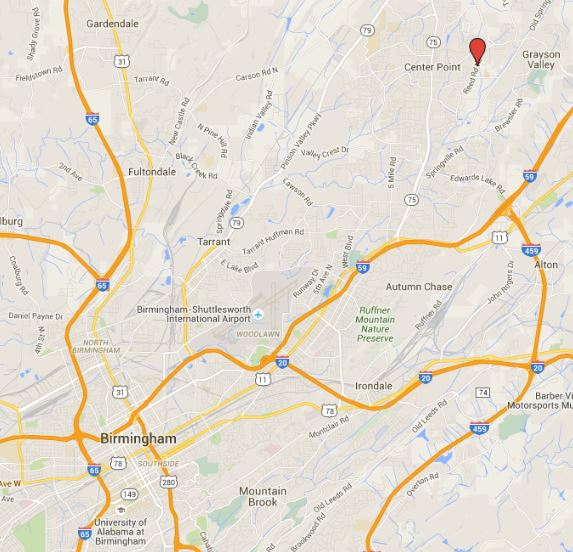
My Rental #4: Birmingham

I promised real life properties and updates and here is the first one. For obvious reasons, the address will not be released for the tenant’s privacy but I am renaming the properties with the city name (Birmingham, Alabama) and the corresponding number that it was acquired.

04AL

This property was put into service in September of 2014 and was the successful beta test to prove the concept of remote out-of-state investing. I acquired the property from a marketer that makes connections with the rehabbers in certain markets and finds buyers such as myself who are typically located in low price to value ratio locations (this does not necessarily mean high-priced locations) such as California, New York, Hawaii, Seattle, Portland, and basically the coastal areas that all the cool kids what to actually live. Marketers have their place if the buyer is totally clueless but once you purchase a few of these properties the marketer really does not offer much value. The only thing I see that they would offer would be someone to be the bad guy role in a negotiation but many of the marketers are buddy-buddy with the rehabber because of their business relationship and won’t stick their neck out for you. As the buyer, you need to take ownership of the due-diligence process and negotiations because that marketer is not a licenced agent and does not have a fiducial responsibility to you.

Continue reading “My Rental #4: Birmingham”

Mindset of the best Performers

Mental Mistakes of Investors w Marco Santarelli

SimplePassiveCashflow.com Financial Freedom Independent Mentor Freedom~Number Value-Add NOI Teams Mortgage Integrity Charity Income Escape~the~Rat~Race Empowerment Equity Portfolio Legacy Entrepreneur Millionaire Ink~it~up Choose~Your~Path Prudent~Leverage Net-Worth Stabilized Appraisal Small~Deals E-Myth Pro-forma Network Turn-key Re-position QVD Appreciation=Icing~On~The~Cake Working~for~the~Man Stocks=Ponzi Who~needs~a~401k Cap-ex Assets Rates Cap-rate Syndication 9-to-5 JOB=just~over~broke Wisdom Risk/Reward Retirement~Now Work~On~Your~Business~Not~In~It No~Crystal~Ball Tax~Benefits Inflation~Hedge 1031 Manage~Team Leadership FYIFV Revenue DSCR IRR LLC S-Corp 1099 Schedule-E DTI FannieMae Good~Times Systems Reserves Note Rich Delegate Market Statistics Investing Strategic Proactive Bucket~System Frugal

Warning – Paradigm shift ahead! In the old Caste System people were split up in ranks to keep lower class people from rising up and keep those in power where they are whereas today, money/mindset is the real separator of the masses.

When I first got started in Real Estate investing I was lucky to have a good job and was able to skip right over the wholeselling/birddogging roles and go right into a buy and hold rentals with the conventional 20% down payment. Little did I know that I had just vaulted over about 80% of my local REIA members who had little money and not making any deals. To be in that 80% group was a terrible place not because of the endless books, seminars, training for the wholeselling/birddogging strategy but competition was fierce – imagine the start of a triathlon as the athletes jump into the first stage of competition -the swim, even the best athletes struggle to distance themselves from the pack as the pack pulls and sabotages those who try to distance themselves.

Continue reading “Mindset of the best Performers”