What are any lessons learned to open up the spending money stuff? Because I think you’re a big inspiration and building your portfolio but I think people here they’re already doing that. They know it works but how do you take it and get from scarcity to abundance mindset.
Yeah. I think part of it is there’s two ways to go about something. You can try to figure something out on your own, and certainly you can do it. There’s a lot of free resources out there but you’re probably gonna make costly mistakes. It’s going to take you a lot longer. And this is a lesson I’ve had to learn. There is such a thing as being too cheap and too frugal. And if you’re not willing to invest in yourself or invest in a way that can help you grow and get ahead or just invest in the right things and not be cheap, then you’re really going to be holding yourself back.
A perfect example of this is when I first wanted to hire a property manager. I was trying to look for ways that I could do it frugally and not give up so much of our rent money. And we had these two people that have been working for us really hard workers. They did a lot of the cleaning and the maintenance at our properties.
They seemed really intelligent, always went above and beyond, and we decided to hire them as employees of our company and train them on how to be our property managers. Everything started out great but then six months in my husband went to the rentals to collect rent one day from the lockboxes. And he realized there was a lot missing and it wasn’t just the normal tenant paying late.
It was a significant amount. So we come to find out that the property managers stole $6,000 in rent that month and run away. We still don’t know where they are to this day. And we found out they’d been squatting in vacant rooms and units in our properties for almost a year. That was awful like such a violation of trust.
The huge moral of the story is there are certain places where you don’t be cheap. It doesn’t make sense to cut corners because being cheap can end up costing you a lot more in the long run. And we definitely should have hired a reputable, licensed, bonded insured property management company and then that wouldn’t have happened.
Yeah. I call it CFE cheap easy free. Anytime you try and do that, you get burn. And I started to adopt this maybe four years ago, maybe I think five or six years I was doing. I had a dozen rentals at lease. I don’t know what the hell I was doing, but like I was doing the dog sitting thing. I was watching other people’s dogs because I like dog.
But this one dog attacked me and I was like, what the hell am I trying to do? Trying to make a few hundred bucks every other week. And I have this scar on my leg that helped me understand that yeah,don’t be cheap, easy and free. And also, I think you’re seeing like the syndication world, like a lot of this building networks or other peer passive accredited investors. Accredited investors can smell cheapos from a mile away. They know for sure.
For sure. I think a big difference between non-accredited and accredited investors is that there’s different goals. I think when you’re first starting out, you don’t have any money, but you do have more time and you’re willing to hustle and work harder and maybe self-manage and do things that you wouldn’t be willing to do later.
But then when you get further into your realistic, investment journey it flips the other way. Where suddenly you have a lot more money and you don’t have a lot of time. That’s why we’re actually selling some of our rental properties right now and transitioning all of that money into syndications because I’m sick of dealing with him.
I’m sick of the liability. I’m sick of having tenants. I would rather make a little bit less money. You still make great money in syndications. I’d rather make a little bit less money and literally not have to do a thing. What we found is that investing in syndications aligns so much better with our passive income goals.
Another thing that accredited investors realize is relationships are the currency of the wealthy, but the right relationships with also abundance mindset at people and if you want to call it accredited investors too. Non accredited investors, not saying they’re bad people, but they just don’t have money and they run on a different operating system.
Yeah, and I used to be one and I totally see now how my mindset has changed over time. And it’s really fascinating. I just had different values and goals then, and definitely was more in this scarcity mindset. Now I’ve totally flipped in the opposite direction, but surroundingyourself with people you’re absolutely right.
Is the most important thing. And that’s another thing I’ve had to be okay with investing in is especially with growing my business with my books and my courses. I definitely hit a wall because I’ve been trying to figure it out all on my own. I was like, what do I do now? And I ended up investing into a mastermind that really helped me strategize and be clear on where to go.
In my opinion, I want to be the dumbest person in the room. I want to surround myself with people who are already five or 10 steps ahead of me so that I can mimic everything that they’re doing.
As of today, half of the year 2021 has passed. Though there is presence of COVID- 19 vaccine in the market, uncertainty in what things may come and in the real estate industry still never left. While we cannot eliminate the presence of uncertainty in our lives and what lies ahead, these two indicators drive real estate investors’ confidence: market history of real estate and how our country’s economy is slowly gaining its momentum back.
Can opportunity still exist in real estate with uncertainty at hand?
A big YES!
Imagine we just started with less than a hundred apartment units in 2018 in Huntsville, Alabama.
As in any other state where we diversify our real estate portfolio, let us appreciate and get to know more about Huntsville, Alabama.
Why Huntsville, Alabama?
Huntsville is located in the southeastern state of US, Alabama. Its population is approximately more than 450,000, almost grew by 12% and is one of the most heavily populated cities in Alabama. This growth is brought about by the growth in information technology, aerospace, and advanced manufacturing industries.
A switch from agriculture to industrial is the fundamental change causing their booming economy.
Main Qualities Leading Huntsville Real Estate Market
Huntsville Economic Framework
Who knew that Bama… of all places would house this aerospace and defense Mecca. We previously referenced NASA’s Marshall Space Flight Center and the U.S. Armed force Aviation and Missile Command and they are just two of the significant businesses in the city which blaze the trail for countless of other ancillary tech and hardware companies – more than 300 aviation, protection, and government workers for hire notwithstanding the many, numerous different organizations in the area.
A large number of these workers for hire have practical experience in IT and designing. Government contracts are normal. Redstone Arsenal (the U.S. government) is the top business in Huntsville for 37,000+ workers in the area. NASA comes in third spot with 6,500 representatives, surpassed by the Huntsville Hospital with 9,352 workers.
Moreover, Huntsville is a city with solid aviation, designing, and protection areas. Supporting these businesses in significant manners are data innovation, bioscience, progressed assembling, and medical services areas. Likewise, retail assumes an important part in Huntsville.
The strength of Huntsville’s monetary spine is plainly exhibited in the insights. In September 2019, Huntsville boasted a joblessness rate of 2.8 percent.
Job Opportunities
Occupation development hits 3.6 percent (2018-2019), showing a pattern that drives specialists to foresee future occupation development of 40%. Obviously, COVID-19 introduced critical difficulties as far as occupation development and work. In spite of this, the Huntsville region has kept on demonstrating itself to be hugely strong to a difficult, remarkable year. Across our 600+ units in the region we saw occupancy increase and rents go up even in 2020… and even more in 2021.
Notwithstanding a 8.3 percent drop in work among March and April 2020, Huntsville stayed well in front of public insights. Specialists anticipate that the economic recovery should require two years and three years for the GDP and vocations rates to get back to pre-pandemic levels, separately.
In the prior phases of the pandemic, generally March through June, Huntsville saw a year-over-year distinction of 7.5 percent in business – contrasted with the national drop of 13%.
https://www.youtube.com/watch?v=PgF9o3aekak
Consistently, from 2000 to 2020, we see that, all things considered, Huntsville experienced work development twice that of the United States all in all.
Living Wage
In addition to the fact that Huntsville stands out from the rest as far as joblessness rates.
Huntsville is home to altogether more workers with a yearly compensation of $75k – 200k+ than the remainder of the territory of Alabama. 40% of the populace in the Huntsville metro acquires in this reach, though just 29.6 percent of all Alabama occupants fall into this class. In other words, the workforce is highly skilled compared with most US cities.
Local Amenities & Conveniences
Here in Huntsville, Alabama, we appreciate and focus on open air spaces especially due to the COVID-19 pandemic. Let’s admit it, Huntsville isn’t simply home to a hotter, more lovely environment, yet it is home to numerous city conveniences and administrations that advance outside amusement.
Huntsville is home to various recreational areas , scenic routes, and trails.
As investors we can breath a sigh of relief that we don’t have to worry much about Hurricanes coming anywhere past Birmingham which is a couple hours south of Huntsville.
Obviously, there are business impetuses. The economy normally assumes a significant part in the strength of the housing market. Huntsville gives different motivators to draw in a developing, various economy. Given its achievement in work and pay development, it is protected to say these motivators are getting the job done!
Culture and Population
Like in any other area in Alabama, the real estate market in Huntsville is impacted by the economy, culture and population. The most recent U.S. Registration shows that Huntsville is en route to turning into the biggest city in Alabama which is not surprising at all. Additionally, they have had a development in population of a few thousand every year. In fact, individuals realize the region’s peculiarity is due to steady employment, great schools, a perfect local area, and delightful open country.
Let me guess, you might be wondering why we are “pushing” the Huntsville real estate market well in fact there are other regions such as Birmingham or Montgomery.
https://www.youtube.com/watch?v=MymYO40wx9s&t=3s
Believe it or not, Huntsville unmistakably has a strong establishment as a housing market. With its consistent development in population and a different yet specific economy, it just draws in more land interest as time passes. On the off chance that you plan to put resources into the Huntsville housing market, nonetheless, you need to know explicit land measurements alongside the remainder of the city’s economy and segment setting.
Factors Contributing to Huntsville Real Estate Market
Real Estate Statistics
What contributes to a solid housing market? There are many elements we could name, in any case, two are at the core of long haul wellbeing: solidness and reasonableness . Huntsville possesses all the necessary qualities. Studies show that Huntsville flaunts the best housing market in the entirety of Alabama. SmartAsset gave the city a 88.41 rating on the Healthiest Markets Index, which depends on four variables: reasonableness, dependability, smoothness, and hazard of misfortune.
On their rundown, Huntsville positioned 26th in the country. Despite the fact that Huntsville is a more well-off (and expensive) city than most other Alabama markets, homes just expense a normal of 17.2 percent of family pay. This is well inside the edges of reasonableness.
Likewise, Huntsville was remembered for the U.S. News and World Report ‘s rundown of best places to live in 2020. Lucrative positions joined with a minimal expense of living and an exceptionally instructed populace added to its positioning, among different components.
Value and Demand of Property
Huntsville is a moderate market by numerous different norms in the country, it isn’t pretty much as reasonable as it used to be. As indicated by Redfin, the middle deals cost in Huntsville was $270,000 in December 2020. Only four years prior, the middle deals cost was $199,000. And with this, 30.2 percent of homes are sold above list cost. This is more moderate compared with the public middle – $335,519 in 2020 contrasted with $254,093 in 2016.
There’s no question that the Huntsville market is appreciating. Twenty years prior, the middle home cost in Huntsville was an insignificant $98,000. Moreover, home estimations are on the ascent.
Note, in any case, that this development has been, over all things, stable. Once more, when we take a gander at the numbers, we see market flexibility in this information alone. Huntsville middle home costs scarcely recoiled through the 2008 Great Recession. With few special cases, the patterns in Huntsville have been consistent or up for as long as twenty years. All markers highlight this pattern proceeding later on, especially when we think about the splendid monetary viewpoint for the metro region.
Evidently, Huntsville has seen speeding up land interest for quite a while at this point. It appears to be like the COVID-19 blast just advanced this continuous pattern! Like in January until November 2020, Huntsville saw an aggregate of 8,223 home deals (748 deals each month).
Deals alone don’t disclose to us a full image of market interest. We should contrast these numbers and the quantity of properties recorded available. In contrast to different business sectors in the country, Huntsville didn’t encounter a critical stock in Spring 2020. Consistently, the Huntsville market has kept up approximately within the range of 1 and 1.8 long periods of supply without huge change in the quantity of properties recorded.
Month’s inventory is demonstrative of the connection amongst market interest in land. The fewer months (or long periods) of supply shows more grounded market interest, while additional time available (more long periods of supply) demonstrates lower interest. A lower number discloses to us that there are a bigger number of purchasers than merchants and in this way, there is greater action and contest inside the market.
In December 2020, Huntsville homes saw a middle of 44 days available as per Redfin. That is down almost 12% from a similar time last year. Multiple offers are genuinely normal, as are homes sold above list cost.
https://www.youtube.com/watch?v=gZoqxo9VH3w
Be that as it may, most homes sell for list cost inside just shy of two months.
Real Estate Rentals in Huntsville
Based on studies, 45% of Huntsville’s populace lease their homes, dominating the 32% Alabama state portion of rental occupants. By far most of the properties in Huntsville are single-family homes (64%) with three-to-four room homes being the standard. Rental occupants had a middle move-in year of 2015, where property holders moved in at the middle of 2006.
Thus, this focuses toward longer rental periods (subsequently, inhabitant maintenance), as the middle number of rental occupants have been leasing their homes for a middle of five years.
https://www.youtube.com/watch?v=nqln54QS5Ss&t=17s
Huntsville additionally experienced lower opening rates (at 4.49%) than that of Alabama (9.69%) and the United States (5.97%) overall in 2019. This has not generally been the situation, yet opening rates in Huntsville have forcefully dropped in the course of recent years.
Yet, shouldn’t something be said about the expense of leasing?
Rental Cost
Multifamily homes and single-family rentals comprise the real estate investment scene in Huntsville. Like the lease costs for multifamily units in Huntsville have been consistently on the ascent. Truth be told, consider that they have one of the quickest developing rates in the country. This measurement probably will not identify with our particular properties, it shows rental patterns that are important. With the developing Huntsville populace and tight home stock, rentals are popular.
Simultaneously, single-family rentals are more copious (and alluring) in Huntsville. This exhibits the excellent chance to put resources into Huntsville SFRs.
Yet, shouldn’t something be said about the expense?
Clearly, multifamily properties don’t lease for similar numbers as SFRs – they have a higher month to month lease installment and hold occupants for longer periods. So, a benefit as far as inhabitant maintenance can be found in the middle lease cost.
While in midtown Huntsville lease expenses can undoubtedly hit $1,200, the middle lease is at $858 – $866. This is higher than Alabama overall however lower than the United States middle and normal. This is a 9% year-over-year cost increment.
Rent payments takes an average tenant 15.33% percent of occupant pay – contrasted with 18% in Alabama and 20% across the country. This shows a degree of reasonableness that is empowering to purchase and-hold financial backers.
Presently, these numbers are not characteristic of our particular venture properties but signals that the overall market of renters can pay more!
Why Invest in Huntsville Real Estate?
Huntsville gives so many of the key pointers that make for an advantageous value market. We have seen consistent property appreciation for the past twenty years. Indeed, even after the Great Recession, we see a market that is still developing and amazingly versatile. With dependable government work (FBI headquarters coming in now) assuming a significant part in the area and financial development, financial backers can anticipate a consistently developing monetary base, low joblessness, and generally safe of an economy-based land slump.
Factors to consider in real estate investing (Huntsville, Alabama)
Even if lodging costs here are higher than in the remainder of Alabama, a more wealthy local area implies that these expanded costs just take a moderate level of pay, both as far as purchasing property and homeownership. Obviously, the costs here are as yet moderate comparative with other comparative business sectors in the United States. In a country experiencing where rents and costs have skyrocketed, Huntsville gives relief to proprietors and rental occupants.
Occupation Growth and Security
To sum up, Huntsville, alongside numerous other southern business sectors. This creates an ideal climate for rental occupants.
In a post-COVID world, we’re seeing needs moving to support reasonableness, open air spaces, and positive environments. Huntsville possesses all the necessary qualities.
Glad to share with you all Huntsville details… we have been here since 2018!
Houston, Texas is one of the hottest real estate markets in the country right now, luring droves of newcomers from California, the northeast, and other pricier real estate markets.
From 2017 to 2018, the Houston area saw an average of 250 people moving to the region every day, a trend that has stayed mostly on track since then. There is no shortage of reasons to move to Houston. The city boasts major league sports, popular theater and museum districts, world-class dining, and is located fifty miles from the Gulf of Mexico, offering plenty of outdoor recreation.
https://youtu.be/wCOPdZedPKY
On top of all that, Houston has a thriving job market. If Houston were its own country, it would rank as the world’s 27th largest economy. The city has more Fortune 500 headquarters than anywhere in the United States, second only to New York City.
Houston is known as the energy capital of the world, with 4600 energy-related companies in the city. Other major employers include Texas Medical Center, the Port of Houston, and NASA. In fact, NASA is such an important presence that Houston has been nicknamed “Space City.” Houston is a magnet for younger professionals especially, with the average age of Houstonians being 33 years old, making it one of the youngest cities in the US.
Along with its booming population, Houston has seen a booming real estate market. The Houston Association of Realtors reported a 24.4 percent jump in single-family sales last month, compared to the same time in 2020.
As Houston real estate agent Tiffany LaRose told Houston’s ABC 13, “We’re seeing things we’ve never seen before, multiple offers within an hour or two of properties being listed. People are waiving their rights to appraisals. They’re going 30, 40, $50,000 over the asking price and still losing out on those houses. It’s competitive out there.”
While that level of demand might dim prospective homeowners’ hopes, there’s an important silver lining: compared to the 20 most populous metro areas in the country, housing costs in Houston are 36.6 percent below average.
So while you’ll be competing with a lot of other potential buyers, the cost of buying in is far less than you’d see in other big cities.
From an investment standpoint, buying in Houston offers an opportunity to reap the rewards of rapid appreciation. Since 2012, the middle-priced tier of Houston’s homes has appreciated on average from $117,000 to $199,976, an increase of 71 percent, according to Zillow’s Home Value Index. Last year saw the eighth consecutive year of home price gains, and over the past year alone, prices rose by 5.2%. Zillow also projects a similar rise in home values over the next twelve months for Houston.
There are a couple of caveats to this robust market. Houston can be brutally hot and humid in the summer, and the region is vulnerable to hurricanes and flooding. Investors should mitigate this by checking the FEMA flood maps as well as getting adequate insurance. Of course, these drawbacks are offset by the opportunities Houston offers. In addition to the job market, affordability, and area attractions, Texans do not pay any state income tax. On top of that, the percentage of homeowners in Houston is only 42 percent, so investors will be able to tap into a huge market of renters.
So, if you can brave the hot summers and the hot competition, Houston is one of the best markets in the country to invest in right now.
Welcome everybody. This is the monthly market update for September, 2021. If you guys want to check out past episodes, you can go to simple passive cashflow.com/investor letter, and we are going to be going over some teaching points and some articles that I’ve stumbled across over the past. Some freebies for you guys, if you guys are interested in learning more about this thing, we’ve been talking about quite a bit, infinite banking from yourself.
What the heck is this? Why do the wealthy do this? Why does Lane say it’s not for people under a quarter million, half a million dollars net worth? Come and check it out on Saturday, September 4th from 9:00 AM to 11 Pacific time. If you can’t make it shoot me an email at lane@simplepassivecashflow.com. I will send you the recordings, but we’ll also be put a page for you guys together, which you guys can access@simplepassivecashflow.com slash banking.
And also my book is coming out. If you guys want to help me out with the review, should meet email and get you guys access to that. Just finished up the audio book. I know how you guys are, ” another book”. You can listen to it on two X speed and you can probably knock it out four to five hours.
What does infinite banking? Why do you do it? Well this is why we do it. Take an example somebody stuff’s a hundred grand in there. You create this phenomenal where you bake from yourself for infinite banking, where you now you’re able to take a pretty substantial loan against your policy.
Now you put that into other investments, such as syndications, private placements, rental properties should something happen in life you’re able to take the money out. That’s what that little cone comes in the middle of the road. You have your genuine income within the policy. The policy grows tax-free and that’s why we’re using the life insurance as a loophole here, guys. You also enjoy the benefits after asset protection with it being a life insurance.
And I, you stop worrying how to grow your wealth and worry about teaching the next generation, how to do all this stuff. If you guys haven’t met me before my name is Lane Kawaoka grew up in Hawaii, was in Seattle from 2003 to 2017. Got a couple of engineering degrees, but more importantly started investing in 2009.
2015, I had 11 rentals, but as of late, I’ve been more involved in private placements and syndication. Currently over 6,000 units now are working on our 37 38 project.
I also have a podcast, simple passive cashflow. And for those of you guys who like the shorter form quick tip podcasts can check that out. Quick tips. I think it’s quick financial tips from the rich uncle. If you wanna go on search that on iTunes, Google play.
But let’s have at it teaching points.
This is a chart of different cap rates in different markets. Now, of course, you could probably break down and take one market like Dallas in dozens of different sub markets and asset classes and different classes of assets, such as a, B and C D class . But this is just, comparing geographic locations San Francisco, New York, LA San Jose Portland, or have some of the lowest cap rates.
Which means is you don’t get the yields there, which also means that it’s a lot more stable. This is where a lot of the insurance companies will invest so they’re going more for capital preservation. But we as investors, we’re obviously not blind to the higher cap areas.
Some these are all major markets. If you’re in more of a tertiary market, that’s smaller, you’ll probably see caps on the five to 7% range. You’ll probably be talking to them for a pulled up ton at that point. These there’s different ranges of these markets the lower the cap, basically the means the more stable the market is.
But that doesn’t necessarily where the better returns are. Obviously, the places that we like to invest are in the middle of they’re good solid markets, but still good cap rates. So we can get yield.
For more information about this, check out, the guide at simple passivecashflow.com/vacation and we’ve got about 12 people checking in now, the live feed. This also gets put on the podcast form and the YouTube so you guys can enjoy all the pretty pictures and I have access to the comment feed.
If you guys want to ask live questions, as we go along, feel free to do so. Somebody told me this on one of our investor calls this past month Dunning Kruger effect. It’s a kind of starts off like this where you don’t know what you don’t know, and you realize that you don’t know, and then you start to hit a point and inflection point when you really start learning and eventually head office in a mastery.
Now, a lot of people, they still invest in their 401ks, Roth IRAs, and supposedly BofI ETS, that’s I say, you don’t know. This is like the 5 29. There’s just investment plans for the clueless, in my opinion. Get educated check out more of our content and here’s a text, the spade to be a joke.
You guys or gals are always trying to get your spouses to read that purple book. Rich dad, poor dad. Just tell them that, your ex stopped by your work today and then they’re going to get their attention. And then you hit them with she wanted you, or he wanted you to read rich dad, poor dad, happy face.
Anyway, moving on. The difference between sophisticated investors and accredited vestors really isn’t much. There’s a lot of accredited investors that don’t really know much. Typically sophisticated investors are more, but they have lower net worth . And that’s where we want to get everybody.
We want to get everybody to be speed semi-educated so that you can make the right investment decisions for them. Ultimately you guys own it. None of this in this presentation is supposed to be equal advice. If not, you’re an idiot, let’s face it. You’re going to take Eagle tax advice from some guy in the internet that happened to, use the tactics for his advantage.
You’re an idiot. This is just for entertainment. But sure you go pay a CPA lawyer, five, $600 per hour, most of those guys haven’t figured out how to leave their day jobs behind. One thing I wanted to point out this one when you have a lot of LLCs, you will get a lot of solicitations in the mail.
A lot of you guys will want rental properties are probably hit up with dozens and dozens of yellow letters, trying to get you to buy your house for pennies on the dollar, because they think you’re an idiot. I guess it works some of the time. Here are some correspondences I got from a LLC servicing company
and it’s confusing. I think when you first get your LLC set up, you get your registered agent and you’ve got the servicer, you’ve got the place your PO box goes to. It can be confusing and don’t forget the old people who solicit you to get those stupid posters that post the minimum wage that you don’t really need in my opinion. But who am I to say?
I think it’s important to check up on, where are these people saying any of these bills that do you need to pay these. One thing that tipped me off or what I got attention to was we see on this left side, typically spoof emails will not address you by your first and last name.
They’ll give you a generic name like you’re the same valued client. And then the first paragraph here is just scammy and they say, congratulations, it’s your company’s first. Our anniversary is time to pay your bill for your annual dues. I eventually found out that this invoice was legit, but I am going to use my other lawyer to just be my registered agent for me.
So instead of paying 350 bucks, I’m going to pay about $67 for LLC.
Another plug for learn how the wealthy bank from themselves go to simplepassivecashflow.com/banking to sign up for the free e-course and the live training this coming weekend. And you’re catching up this stuff late. Go ahead and sign up there so you can get you those videos.
Now, here is a flow chart that depicts when do you do a HELOC or cash out. Now, the reason why I put this in here is a lot of people realize that, yeah, I want to an alternative invest and get all that garbage in the 401k mutual funds. And maybe I’ve been doing some crypto, but that stuff is super risky at this point.
I want to invest in real estate and other alternative investing can take control over my financial picture. So you burn through your cash, right? Not many people have that much cash and I don’t, I’m smart. I have it in my infinite banking policy where I keep my dry powder, but for most people coming in, they don’t have that set up and they burn through their cash to invest.
Where do they go find their other, 30, 50, a hundred thousand dollars today? A lot of times it’s either going to be in their primary residence or the rentals or their retirement funds. Typically I would recommend people to go and rate the equity in their house. So their rentals first, before they go to the retirement fence, unless in some sense, some situations, the client will be like, I’m just freaked out about the stock market.
What you have good reason to be, because it’s all fake money in there. They’ve been pumping that into the system . We could probably debate this for quite a while. Now, this flow chart helps you choose whether it’s a HELOC from your home equity, which is cool because it’s reversible, right?
Should you not like to alternate invest? You can put it right back into the house. You don’t have to pay a lender that origination fee to get the cash out refinance, which is on the right side. The HELOC is sorta reversible the bad side of what the HELOC is that, if anything happens to the economy, the banks can pull those notes and pull the lines at any point where they cash out refinance you’ve pulled that equity.
They can’t come after it after that. Different circumstances. I tell people, Hey, do you want to live in that house for one and five to 10 years? If that’s the case, I would probably push it more towards this right side, getting the heat. Or sorry on this right side of getting the cash out refinance because it’s more of a long-term thing.
If they are going to be living in the house for just a little bit longer, I’d probably lean them towards getting the headlock and then just selling that house at some point. But if you don’t know, I would say maybe, default would be, he locked first just for a short. Until you get proof of concept, then you tap the equity more permanent via cash out refinance for more information about this HELOCs to go to simple passive cashflow.com/HELOC.
There’s full page on that type of content. I’m now getting into some of the headlines. Jobless claims reach the fresh pandemic era low of 348, 000 . Unemployment is definitely coming down weird. I’ve been seeing a lot of like commercials trying to get people or hire people, or looking for good people to work for us. I’ve never seen that in my lifetime where paid advertisement is going out to not for customers, but people that work at their freaking company. I don’t know. It’s weird. Perhaps that means companies want to burn up their PPP loans.
I don’t know, maybe that has to do with it, but I think people are looking for good people to hire at this point. Or I guess the other thread is, people will like to complain that, people are lazy sitting at all Belkin they’re on our plug checks, which we don’t want to get into that argument space.
Now this is the census here. This is discussing the demographics change in different ethnic groups and some of the biggest movers and shakers, Texas, Florida, California, Georgia Washington. And if I were to summarize this for the people listening in podcast land generally, all of these are five states.
The population is going up, California. Only going up by 6%. Texas, Florida, Georgia Washington are going up by low double digits. But the biggest differential I see is the Hispanic population. And those states are going up by 21 to 40%. White alone category here is staying pretty flat-line and actually decreasing by 8% in California.
You can see these other ethnic groups. I guess the message is minorities are taken over and that’s what’s happening?
Monthly report. This is from JP Morgan. The job tracker based on alternative data, this is the total employment. Overall the trend is strong.
It’s been four months since we had the disappointing 2 69 K report in the report in early September is close to a million. The fed could easily make the argument that goal of substantial, further progress has been achieved, which means, there isn’t much of a reason to keep putting in stimulus, but they still.
And the stuff that I’ve been hearing about quantitative easing pumping fake money into the system is probably going to be going on for at least another quarter or two. If I was a gambling, man, I’d probably say over a year, at least, but who knows? And I don’t invest in stocks.
I don’t really follow this stuff too much business or. Came up with the school map, with the best paint states for tech workers in 2021, a lot of you guys out there are computer programmers. Let’s see the top. I’m gonna read them out in terms of the top. Washington best I guess the average is 122 grand. Next is California at 116 brands.
Number three is DC. Number four is Virginia. Number five is Massachusetts. Six is Maryland seven, New Jersey, eight or nine Colorado. Those are your top 10. And for those you guys are just curious, Texas is at number 14, Georgia is number 19. Florida is kind in the middle of 27th . The ones that are bad or where are the non-tech areas?
Montana and North Dakota.
Mississippi. Wyoming is dead last.
Now this is a chart that we talk about quite often. It is modeling the cap rate in the deal. . Which has been slowly coming down over the last decade. This is where people come to complain about cap rate compression yields are lowering and this is what like drives me crazy.
Like people are like I’m not getting 130% return in five years. I’m only getting 110%. Dude because the yields are generally going to lower. This is marketwide. . The dark blue is the ten-year treasury rate, which moves around with the interest rates and for investors, they say this time and time again, it all is this teal minus the dark blue, which is the cap rate minus interest rate.
That is the Delta that investors make the spread. And of course they applied leverage onto that to leverage that yield. And that is what investing is. They move up and down together. If interest rates go down, cap rates go down and people always freak out that interest rates will go up.
Cap rates are going to go up and interest rates go up. The reason why they push it up or they let it go up is because the economy’s doing really well. And therefore, if you want rental real estate or any assets, you’ll probably be the beneficiary. Some of that flow into the market and good economy.
One thing I’d like to point out on this diagram, to me, cap rate compression is when you have a temporary squeeze where it comes off of the historical averages, where say in mid 2018, there was a bit of a squeeze right here in terms of how much delta there was, or in terms of investor returns. There were the times when you want to get involved or, around when there was a larger, healthier Delta, honestly you can’t really time.
That type of stuff, it is what it is. And by the time you’ve gone into a deal, the market has moved a little bit anyway, but I think one thing is for certain except the 2006 to 2008 era. Like you’re always going to have the cap rates higher than the interest rates.
I think that’s just a fact of life. That’s a basic fundamental
. Cap rates lowering . Now this is comparing the major markets that lower cap rate markets like your San Francisco Portland. Austin, Texas is like your, where you have your lower caps and your non-major markets where you typically have your higher caps, but overall they’re all coming down.
But I think one thing, like if you look at this as it’s coming down, I think you have good stable cap rates for the most. And then here was that other slide we showed earlier with the, the lower cap rates area were places like San Francisco, New York, Los Angeles, San Jose, Portland, Austin, Boston, Seattle, places like that.
Top five multi-family markets for red growth. This is from Yardi matrix. And in order it is Boise, Phoenix, Spokane, Tampa, Inland Empire. But then I started to look at this chart and I started to call it BS here because not all of these are major markets. And I put here in red, the population of these markets, everybody talks at it depends who you hang out with.
I would say unsophisticated investors always talk a lot about what because it’s jumping like crazy. But Boise is a really small market guys. It’s like a quarter of a million people. I think Hawaii is way bigger of a population thing. Whereas Phoenix is a major market.
61.6 million people live in Phoenix. Spokane Tampa are on this chart and Spokane is even smaller. And Boise yet 217,000 Tampa was a little bigger, but still under half a million population.
To me, a major market is going to be at least half a million or definitely getting over a million. I think this is a bogus chart here. Inland empire, shoot what’s inland empire. Do you like, do you call Rancho Cucamonga, inland empire? Do you call Ontario?
Ontario, California in an empire. I know certainly San Bernardino is in an empire, but they have about a quarter million population. why do you guys call it in an empire? It’s like a, this is a bad imagery, but it’s oh, you go to the barber.
And then like you tell the barbers like how far do you want me to cut down your neck? Like some people they got, yeah. They got the hair going all the way down to their neck or their butt. It’s the same thing. Where do you draw the line to get this data? But anyway, don’t want to offend anybody.
Of course, people get the offended these days. But here’s another chart, small and mid-sized that shows with the most economic growth in Read the small markets, mid-size markets and then the larger markets. The small markets, again, you gotta be careful investing in smaller markets because it’s not a stable.
Sure. You can get a lot of, yields there for the short-term, those would be Spartansburg South Carolina, quarter lane, Idaho, Sebastian bureau beach, Florida, Winchester, Wyoming. . Those are your small markets now, your mid-sized markets. Number one, Huntsville, Alabama. Number two, north port Sarasota, Florida, three port St.
Lucie, Florida, four Boise city, Idaho five over Utah. And then your major markets. Number one, Nashville Davidson Franklin, Tennessee. Number two Raleigh, North Carolina, number three, Austin Roundrock Georgetown, Texas for Jacksonville, Florida, five Orlando. Those are your top five for your large Mitchells.
I don’t know how they came up with this composite score. It has to do with percent change in total employment, unemployment rate average monthly building permits per a hundred thousand and average monthly home sales per 100,000 did we talk a lot about the south and Midwest? They’re landlord friendly states, good economic growth.
But what are some of the Western markets? I’m not a big fan of investing in Western markets because they’re typically more bluer states, a little tougher for landlords out there. But, Western states getting beat up in the pandemic. Maybe the current intuitive thing is from an stoic investor is to go in now, right?
Maybe it’s the time to go and do a development in New York city just saying. Those top Western markets for growth is Boise, Phoenix, Las Vegas, Tucson, Colorado Springs, Reno, Albuquerque, salt lake city.
All with huge rent growth, you could probably make the argument that all the tide raises all boats Arbor released their quarter to 2021 single family rental investment trends reports. This is not apartments this is more single family homes. Some of the key findings were occupancy rose to 95.3% highest level since 1994.
They can do occupied rent growth, accelerated 12.7%, a record high and cap rates dip to 5.8% of its rising asset valuations.
There’s a chart here showing single family loan to value ratios. Now, my takeaway on this is I think everybody’s like thinking what is the bubble going to happen? And, typically people who raised that question up on internet forums, BiggerPockets. People who’s only been around for one and a half years in a freaked out because the prices went up in the last 12 months.
One thing I look at is, like the loan to value are people like over their head of debt? They’re still in this band that they typically been in between 63 and 68% loan to value. Granted, you could probably make the argument that the home equity values went up.
So their loan to value was down. At least we’re not saying like that this thing’s spike. Cause the scary thing is like when the loan to value spikes, that’s when you know that people are using debt, like the unsophisticated people that don’t invest for cashflow are going after debt.
I think of the big shore where the taxi drivers and the strippers are buying rental properties or just banking on appreciation. Now, one thing that’s interesting here this chart investor percentage share of single family home purchases. This is showing how much mom and pop investors are buying the stock out there versus the institutions.
And this is going to be a story of moving forward, that the institutions are starting to get to the game of residential real estate. Why? Perhaps it’s something good to invest in whether it is, that’s what the smart money is doing. So in 2000, investor share was a little lower than a three to 4% range that has peaked in 2011.
Where I went all the way up to 9%, but since 2011, it’s been steadily declining, which is saying that it’s probably the institutions are buying more of the stock. That’s coming out,
Freddie Mac release. This is their interest rates. You can get Freddie Mac Fannie Mae loans, but I think this is just a good indicator of what’s out there or how historic rates are trending. These might not be the rates you’re personally looking at, especially if you’re working with a Daisy chain lender that marks it up, whatever the heck they want.
This is like the relatively how interest rates have been tracking, earlier in the year we hit a low and then things came back up, but we’ve been kinda summing back to those old time goals. Once again. Newer investors, they really freak out about interest rates going up by a 10th of a point.
But like I said, if you will look at that chart with the cap rates versus interest rates go up, stoic investors like cool, man, that means that the economy is doing well at my rents are going to be going up. And my cap rates are probably going to be going up to a, this is a chart showing the employment, rebounding across all industries.
the takeaway is the leisure here got absolutely killed and is about, I want to say 60 to 70% of where it was pre pandemic,
whereas, government workers on scale healthcare education. A lot of these. In information, financial professional services. Most of these definitely took a hit. But nothing like the leisure sector,
This is the stuff that you have to deal with when you’re a rental property owner. Most of the accredited investors are like, why the heck would you want to own a rental property? It’s a pain in the ass. I don’t like legal liability, just give me a syndication.
And these are the exact reasons why, this is what changed. That was a big occurrence for investors were rent, extension, having to do rent, forgiveness, nonsense. They had to decrease their rents, miss payments. The decreasing rents that’s all like it’s all the commercial professional property managers that are just killing these tenants in my opinions with five to 10% rent growth, the mom and pa investors
to me, they just don’t have the or the market data to raise the rents where it should be another reason why the mom and pa investor gets left behind. Deferred maintenance is a big thing. The only things that went down as a common currency were charging rent fees. They stopped doing that because they were desperate for renters and increasing rents, which is the
inverse of decreasing rents. Fun things here from shopping center business taco bell is releasing a new concept of drive thru lanes here. It’s a cool, it’s got this light pink or purple pink hue to it. New concept. It’s a two-story restaurant where you drive underneath it, and then it’s Jack in the Box
they’re going to build 64 new restaurants as part of the 16 franchise development agreements across Arizona, California, Idaho, Texas, and Utah. The goal Jack. Another thing that you guys might’ve seen is only fans. They’re not going to allow sexually explicit content anymore their the entire business model was gone. And this is the way I feel about short-term rentals, right? Everybody’s like I’m making a killing with this stuff, but short-term rentals are discretionary items. It’s what people spend their money on in good times. And when in bad times are pandemics where you can’t travel, it goes kaput
and just like how the government got rid of only fans sexually explicit material. The government can just remove and create some kind of law that takes them away. Do I think that is right? No, because they ultimately feel like it’s the big hotel industry and the big players lobbying against Airbnb and VRVO people at the end of the day, but it is what it is.
This is why I like to invest boring workforce style house. You guys want to get more into our inner circle check out our family office, Ohana mastermind to learn more about a simple passive cashflow.com/journey. It’s all about who you know, and building your peer network of other peer passive accredited investors.
And again, if you guys want to check out my book, go to simple passive cashflow.com/book, you guys can help me out. We’ll get you guys a copy when comes up, but I need some help. People who want to give me some views, go ahead and sign up there, shoot me an email.
And this is the point where you guys can put in some questions into the chat box, but there’s some personal stuff I’ve been going on.
So in terms of growth, yeah, I think everybody’s got goals they’re working on. I think things that like the way this year has been going it’s with the whole Delta pandemic and everything. It’s just been a little slow. I’ve been forced to stay at home lately, so it’s it’s been a bummer.
I want to see all you guys how I’ve been making contribution back in the world. One little thing at a time you guys asked for the infinite banking I-Corps. Here it is. We’ll get it for free, simple classic castle.com/banking. For those you guys who make under 50, 60 grand a year and network under a quarter million, this is not for you.
Do not waste your time with this stuff, right? This is more for the people with a little bit more dry powder and the higher net worth folks. But you can still get it for free. And I know you guys like free stuff. Three significance here. If you guys haven’t checked out. Our Facebook groups, which are mostly on invite.
I used to have calls with everybody. When I first started to do these things, slightly opened it up a bit. A lot of people are inviting their friends, but you guys can join our Facebook group, the Cooley passive real estate investor, Ohana for sophisticated and credit investors there.
And if you’re in Hawaii, we’ve got aria. They’ll have that. Oh for you guys to join up there. We’ve also got the subgroups. I think you guys can get these links and simple pass a capsule.com/networking. And if you haven’t lately go to simple passive cashflow.com and check out all the little links at the top and go handle on that stuff.
There’s all that stuff is for free, right? The whole point is that you guys don’t spend your money on some stupid guru charging 10, 20, 30, $50,000 of charge after upcharge. In terms of uncertainty? I’m a little worried that we may, I think we will, but we may not have the the January retreat in 2022 of you guys want to get the latest on that.
Go to simple passive cashflow.com/ 28 22 retreat. I just had a call today. Unfortunately we can’t have it at Bishop museum. That would’ve been cool. They’re already booked. But here in Hawaii, there’s a big Delta, we’re getting our kind of our first wave in terms of COVID with the, that the Delta variant.
But, my outlook is that the stoic philosophy of the obstacles were right when you have uncertainty, you, and you’re uncomfortable. That is typically when you’re going to be hitting gold pretty soon. So suck it up, but then good days are right. One thing I liked that has uncertainty in my life is the one thing I can count on is whether interest rates go up or down or even go up, which is some people think is bad.
The cap rates usually bounce along with it. And as investors, the cap rate is usually higher than interest rate is which you borrow. And then you apply leverage via good leverage. That is how we make money folks. It is simple as that. And that allows me to have some certainty in this crazy world. I’ve been hearing a lot of you guys.
Most of ha I guess, half of the people coming into our tribe these days are off of referrals. So I really appreciate you guys telling your friends about simple passive cash flow. I think a lot of you guys feel my pain where, people think you’re crazy and. I call them muggles. If you watched the, not the Lord of the rings, but Harry Potter muggles are like the non magic wizard people right there.
The people, the regular people, they’re the non-believers in a way. So don’t worry about the muggles. A lot of my friends are muggles. That’s cool. But if you guys realize that there’s a better way of doing this without the high fee. A lot of middleman, 401k, each fund, give your money to a financial planner who doesn’t really know anything like it just gets paid off permission.
Join our tribe and join our club@simplepassivecashflow.com slash club. Some things I’ve been buying for two dads about this, like both sleep buds. I tried out for our one night. I think I might return this thing. I don’t think it’s the greatest. I got desperate. I got a three month year old. I don’t get much sleep.
I got desperate. I bought it like when I was like, probably be returning it. But anyway, if you guys want to get the I released a free, basic financial, e-course probably better for the kids. If you guys got basic financial skills, this thing would probably be pretty basic for you guys.
But if you guys want to go text the word BASIC to 3 1 4 6 6 5 1 7 6 7. And for those of you guys want to get access to the free remote investor light course can text the word you guessed it. REMOTE to 3 1 4 6 6 5 1 7 6 7. Tell your friends. Again, none of this was made to be legal advice.
If your net worth, income minus expenses is under $300,000, or you’re barely able to save $30,000, look, syndications are not for you stick with these turnkey rentals or even do these BRRRS that we’re kind of against in this whole video. And you’re going to have a little more gains that way. What you’re doing is you’re essentially trading your sweat equity for that extra equity at the end.
0:00 Then the reversing cap rate that we’re using is 6.25, using a 6.25. But what are assets trading here with low fives,
0:10 yeah, five, and even under five, depending on where it is,
0:13 we’ll get into that in a bit.
0:21 Going back to the reversing cap rate, we’re using a 6.25, or version cap rate. I’ve kind of got to this a lot of times, but it’s still good worth repeating, took me a long time to find a grasp this concept. But this number that we plug in here at 6.25, is one of the biggest factors in coming up with all these projections. this number right here is the assumption of what kind of market we’re going to sell in, say, five years. So now, we want to assume that, you know, when you’re being conservative, you want to assume that you’re selling in a worst market. So we’re going to expand the version cap rate higher. So 6.25, is what we’re using. And that is how we you know, we put in 6.25 like how we are that’s how we’re getting the projected onto 2% return in five years. Now the question is like, well, what did you guys are less conservative or don’t expand your version Capri as much? Well, if we went to five and a half percent reversion cap rate, you know, we’ll be we would be putting this deal out at onto 58% return in five years, which would look awesome. But no, we like to over promise under develop under deliver. Poppy raised a lot of money and fill up this deal really quickly. But
1:41 yeah, no, that’s a that’s a good education point for people who, you know, if they are looking at other deals by other operators, you know, that’s a common that’s a that’s an easy change to make that really makes the returns go one way or the other, as you can see here. So if you if you ever see something that looks too good to be true in that range, you know, may dig a little deeper and ask what their assume reversion cap rate is that they’re using for the deal.
2:10 Right, and you know, the 6.25 con, I kind of go back and forth several days deciding on this number plus or minus a quarter point to have a point where we’re about what we’re going to use. If this this is again, a more of a Class B type of asset in a good area, a minus area. So that’s why you 6.25 but say it was more of a class C 1960s 1970s build, we probably would have used what like a 6.5% reversion cap. So you can’t just you can’t just compare the reversion cap rates for two deals, because the assets might be different, the locations might be different. The geographic locations might be different. I think we’ve used like for Huntsville, we’ve use 6.25
2:57 Also give us 6.25 to six and a half. And even on some of our earlier deals, we use seven but we use a little bit too conservative.
3:06 But the thought there was you know, Houston is a little bit more major market. You know if you compare that with your cap rates out in like Los Angeles or San Francisco, which is in the twos and threes, that’s kind of where we come up with some educated guesses and you know, if there were if the cap rates stay the same Tibet it is today at 5.25. You know, that means this deals looking like it’s gonna be 180% return in five years. But let’s keep expectations low because life is hard enough.
0:02 On question seven here, investor asks, you know, these Gulf states are always getting hit with storms. I think we were just reminded about that. A couple few weeks ago, we’ve actually got some properties in Biloxi. Kyle and I are in some projects not with each other. So we have bring a wide range of responses to this question. And we let you talk about garden place to let you take that one. But, sure, as far as like insurance goes, you know, this is why it’s nice to not be a little landlord, what’s your little State Farm Allstate Insurance, right, we have big kid insurance here, for commercial assets were insured for the loss rents. And when we have a claim, we hire a claims person to fight on our behalf. And they get compensated based on how much the claim is.
So a lot of times, I’ve actually had like two fires, and we’re full building has burned down twice. And the initial settlement that they gave us was like a third of what we actually ended up with, which goes the show why these claims adjuster guys are just totally worth it. And on a bigger project like this, we have the scales and the means to, you know, the working capital or pay them to get them going to fight or claim for us to get everything that we’re worth. I feel like, yeah, there’s administrative headache, for sure, we may have to pull some money out of our reserve capital.
But at the end of the day, most times and not like, come out ahead. I’ve gotten like a brand new roof, put on a apartment building one time, which I thought was totally unfair, but hey, I’m gonna take it, I’m gonna take that I got a brand new building built on that one, we negotiated just a lump sum payment to go build something entirely new. I think the only problem is like, it just takes a while. Maybe Carl, you can talk about the garden, place the treat and submit to just kind of work. Yeah.
1:59 Well,
2:00 Unfortunately, you’re working with these big insurance companies. But at the end of the day, you’re also still working with people in human error can still creep in every now and then, which is what happened to us at garden place. So it, you know, we had a big tree that fell. Fortunately, nobody was hurt. There were some high winds in the area, and the tree just fell down. And this is Huntsville. So it’s not like near the Gulf or anything else, you know, they might have, you know, some tornadoes every now and then. But it’s definitely not in Tornado Alley, like in Dallas, or Oklahoma or Kansas or something like that.
But anyways, it took this was almost a year ago, now we are we are about to finally took 11 units offline, we are finally wrapping up the last four units, but it took forever because the insurance company, just something so simple. They were sending the check. The first the first check, which is where we pay the contractor deposit, they were sending it to the wrong address. So how it was a never changed on their part, I don’t know. But they sent the check three different times over the course of like, you know, three months. And we were just at a loss. But But I do you know, I live here in the Gulf states. Hurricanes is just something that we deal with. You know, it’s not any different than if you’re in California, excuse me, California, and you have to deal with with wildfires. Or if you’re in, you know, Tornado Alley, like I just mentioned, you know, there’s a ton of obviously great assets in the Dallas area. Dallas sees tornadoes on, you know, annual basis, you know, every now and then there’s at least two or three big tornado storms that come through the Dallas area, you know, between the spring and the summer, it’s not uncommon there. And same thing with Oklahoma and Kansas.
So you know, and then a way up north, you’ve got these crazy blizzards and everything else that can just, you know, take a toll on your property itself, just from the the bitter winters that they have up north. So, you know, it’s like anything else, we each area of the country has their own natural disaster.
So you just make sure you have the right insurance that is going to cover you like Lane said we have lost rents, which means that for every month, that goes by that, you know, in our case, those 11 units are offline, we’re actually getting paid by the insurance company, the average of those rents, you know, the average for like, I think it was like the last six or nine months, whatever the average rent was for that specific unit. That’s the amount that they give us. So we’re covered there. So yes, it’s never a good situation. I would say to have to file a claim, especially on you know, when you’re talking about fires, I mean, because, you know, at the end of day we are talking about displacing people and having the final alternative housing for them. And then a lot of cases when we have a fire or down units in general. So, you know, we’re certainly sensitive to that.
But to not, you know, we don’t want to downplay it by any means. But from an investor perspective and a risk profile, we’re covered. And we’re going to take the right amount of insurance out there, you know, I think people often forget that our our number one biggest investor on every single deal is our lender. Our lender is going to have certain parameters and certain guidelines and certain requirements from an insurance perspective that they’re going to require us to do. And Fannie and Freddie is notorious for that. And just having you know, additional coverages and things like that, that, you know, a normal traditional insurance agent is going to say, hey, look, you know, yes, you can take that type of coverage. It’s, it’s cost more, it’s just more of conservative, you know, it’s I’ve had multiple insurance brokers tell me that type of make those type of comments. So you know, they’re gonna require us, so we’re going to be fully covered there.
6:09 Yeah. And, and all that debacle is happening, we’re collecting loss rents. And the beauty of that is like, now these assets aren’t decaying on us. They’re not incurring expenses. We’re not having property management of these on top of that, and there’s a bit of a nice little Delta in there that we come out ahead.
0:00
So if you didn’t use a home office in your home exclusively for business, and then you don’t want to have to face the capital gain consequences when you sell, you would need to stop using that home office for business purposes for at least two years.
0:28
Hey simple passive cash flow listeners. Today we are going to talk about cost segregation and not for those looking to cost sick. They’re 200 unit 300 unit apartment complex. But how can we use this for our single family home rentals, smaller rentals or possibly even our primary residence? Again, this is the passive investing show simple passive cash flow, where we are trying to a lot of our highest and best use is that our date our day jobs, but how do we optimize things are investing so we can get out of the rat race and a lot of times I can see you guys getting out of it in less than five or 10 years. So today I have a cost segregation expert David Britten soul on the line. Thanks for joining us, David.
1:13
Thank you.
1:15
Yeah, so in the past year, I’ve kind of found that cost segregation studies are a little bit of a racket, a lot of companies and firms will do it out there typically charged around the same price. But there’s a difference between a legitimate cost segregation study. And one of those big things is actually having a site fitted visit, which David has actually flies out there himself, and he does these things. But yeah, can you expand on? I mean, there’s a lot of companies doing this, right, David?
1:47
Yes, there are in the last, I’d say 12 to 15 years is when a lot of them popped up. I’ve been doing this for 20 years. And in the first five years I was doing it, there was practically no one west of the Mississippi River that was doing it.
2:04
Yeah. And also on the smaller end, I mean, on our apartment projects, where it makes total sense with economies of scale and 100 200 300 unit apartment complex. But when you start to get into a single family home, like a lot of you guys will have $100,000 turnkey, it may not make sense. So there are some options out there that you might want, you can pay, you know, 400 500 bucks, and they do a little desk review. But David, can you talk a little bit to the legitimacy of those cost segregation studies and how those guys operate,
2:38
what they tend to do is they will ask you for the measurements of certain things that they want to segregate. And so essentially, you have to do it. And then you give it to them, and they’ll put it into a report. That’s the way I understand how they do it. We don’t do it that way. I actually go to the site and do the engineering myself, when it comes to these smaller projects, especially if there are new architectural drawings that we can use for the engineering.
3:08
And is there some kind of checkbox when you submit the cost segregation study to the CPA? Where, yeah, I actually did a sidewalk? Or is there any kind of designation that you need to do on your end?
3:21
Well, I do put it in the report that we visited the site. When I say we, it’s essentially it’s me, but I have an engineer who does the pricing on the value pricing of the assets that I bought segregated from studies where we don’t have blueprints. And also I photos, document everything. So when I’m on site, I’m taking pictures of all the components of the property that I want segregated, which obviously cannot be done if I don’t visit the site.
3:52
So you had out there, travel costs are included.
3:57
Do actually I did I build those separately on top of the stated fee? Right?
4:01
So you touchdown and what actually do you do on these trips to so people can get a sense of what goes into a cost segregation study?
4:12
Well, I mean, I have to look at the entire property both inside and outside. And so I photograph everything that I want to segregate. I measure everything I want to segregate in the case of situations where there are no drawings to work from. And that’s both inside and outside the house. And I have measuring equipment that assists me in doing that, such as the laser beam for the interior stuff and surveyors wheel for the exterior
4:38
stuff. If we kind of left people at the dock there what a case, cost segregation study is, but in a very high level, it’s a report that allows the CPA to now aggressively right off the property. Most single family homes you can write off a property and 27 years so 127 of the depreciate Over 27 years old, she called straight line depreciation row with a cost segregation able to aggressively write it off. Oftentimes, you can take one third of the entire building value in year one.
5:12
That sounds about right. In most cases, yeah,
5:14
you guys can check out simple passive cash flow.com slash cost sag, also embed this video in there too. But that’s pretty much the the guide to what cost segregations are. If you want to see how that ties into your own personal taxes, go to simple passive cash flow calm, slash tax. But let’s get into the good stuff, David. And before we do is throw down the disclaimer that you and I are not CPAs
5:41
I am a CPA.
5:43
Okay, you are? Yeah, cool. Well, I’m not one, and I’m not a tax attorney either. But we are just giving out infotainment here, right. We’re not giving any professional advice based on your personal situation, but just some ideas that have David has seen some of his clients do. And so let’s start off with the top right, like, can you cost segregate out and aggressively extract the depreciation on a primary residence that you want to live in? Let’s talk about that, that you cannot do,
6:16
you’re not allowed to depreciate your own home. The exception to that would be if you have certain areas that are used exclusively for business. But even then it may not be advisable to do that. Because if you are segregating out a certain portion of your home for business, a home that you own, because then when it comes time to sell the home, if you sell it again, you will actually have to deal with a capital gain on that portion of the home which might more than offset any deductions that you would have gotten for that area of of your home. That’s the one thing in the tax code is actually more of an advantage to renters and into homeowners, where a renter may use a bedroom in the two bedroom apartments. And we’re using exclusively for business, they can take all those deductions that are allowed and don’t have to deal with recapturing any depreciation because they didn’t take any depreciation because they don’t own it.
7:18
Now, what are some of your clients doing to do they turn it into a rental property or commercial property first, and then they move on after let’s talk about like, what are some folks that you’re seeing doing?
7:30
Yeah, you can do that. And what’s the way the law works is that as long as you lived in the home for at least two of the last five years that you’ve owned it, then it’s considered your principal residence. So if you did use a home office, in your home exclusively for business, and then you don’t want to have to face the capital gain consequences when you sell, you would need to stop using that home office for business purposes for at least two years.
8:00
So how did they get around? Like, I mean, can they move back in? What’s kind of the trick there?
8:04
Oh, well, if you’re talking about a separate rental property, then yes, if you have a, let’s say you live in one home and you have another one that is a rental property, and you’re facing a large capital gain, then what you want to do is move back into that other homes that was your rental property and live there for two years, and then you avoid the capital gains.
8:26
So let’s just say you you bought a house to live in actually, this was my case, for my first rental I bought back in 2009. I lived in there for a year. I rented it out for the next I think two or three years. But you’re saying if I would have just moved in for one more year, I would have been able to not have to pay the capital gain on the whole thing.
8:48
Right, you need to do live in it for another year for some stonework to have the last five, right now you still would be facing depreciation recapture. But you wouldn’t be facing capital gains.
8:59
Okay. So let’s talk about this other idea you and I were talking about so they have a larger home like maybe a million dollar property that they own. And you’re saying that they are renting it out for a year turning it into a quote unquote, commercial property, in that time costs, egging it out, pulling out the passive losses or the depreciation as and putting in their back pocket for passive losses. So when they do have a different real estate capital event, they can use that, but then they’re moving bright back into the property. unpack that for us how that’s possible.
9:38
Yeah, especially with the new rule laws that came out two and a half years ago. It allows for 100% immediate write off, technically, it’s depreciation, but you can take 100% of the value of everything we segregate and write it off in the first year. And then as long as you Don’t dispose of the property. So let’s say you rent it out for a year, and then you’re and then after that you move into it. You don’t have to recapture the depreciation until you sell. And let’s say you don’t sell it for 20 to 20 years. So you’ll have depreciation recapture in 20 years. And that assumes anyone even remembers what happened 20 years ago, but technically, that would be the way it would be recaptured. And certainly, it’s nice to get the deduction Now, while you’re in a high tax bracket, sell it 20 years down the road, when you may not be in the same high tax bracket. And on top of that, you have the time value of money of 20 years.
10:42
And for a lot of people that might be building their retirement home, right, they’re gonna plan to be in there for the rest of their life. But that’s kind of an ideal scenario.
10:51
Right. So then you never end up recapturing that depreciation. Yeah,
10:57
I’ve heard of like the I’ve gotten some legal advice, which I think is a little too aggressive, where they say, well, you just need to have the intention to rent it out or turn it into a commercial property. But you’re being a little more conservative here, you’re kind of guidances rented out for an entire year. Yeah. What’s your thoughts on that?
11:18
Well, most leases are going to be for a year. So typically, you rent it out, it’s going to be for a year, and then at that time you decide I think I want to live in it. And I don’t see how the IRS can really argue against it. Unless it was very, very obvious prior to you buying it or prior to you renting it out that that was your intention. And even then I don’t know if it matters, the fact of the matter is you did turn it into a rental by actually renting it out. Now, if you rent it out for only a week, then I would say no, but if you rent it for a whole year, I don’t see how they can argue against it. Right. And
11:57
a lot of this stuff isn’t tax evasion, right? I mean, you’re following the letter of the tax code.
12:03
Correct?
12:05
So kind of going back to some people have a lot of single family homes like turnkey rentals, they typically cost $100,000. Yes. How much does it cost segregation cost? And does it make sense to do it on a smaller property? Is there a certain rule of thumb that you have on
12:22
in general, it’s hard to say that there’s an exact rule of thumb, but I have done studies on single family dwellings that were purchased for under $100,000. And actually, they work and one of the reasons is because we’re able to do those studies, generally for under $2,000. And the benefit that will be realized from a cost segregation study will exceed the cost of doing it by enough of a margin to make it worthwhile.
12:53
And that’s in a situation where the owner is looking to own that property for the longer time horizon 510 years plus,
13:02
yeah, that’s true. If you’re planning on disposing of the property a year or two later, it’s probably not worth doing the study on
13:11
on a couple of our Mississippi assets. We’re not super bullish on the market, we elected not to do the cost segregation, because I mean, the way that the projects are going, they’re going well, so we’re trying to unload them in the first few years. And yeah, our attorney or tax attorney kind of advises the general rule of thumb from there and is if you’re, if you’re looking to hold on to the property for more than three years, it makes sense to do it, but it’s less, it probably doesn’t make sense. But of course, that’s on a larger hundred 20 unit apartment or the cost segregation study might be $5,000. You know, that’s peanuts compared to the hundred thousand dollar this case? And we’re talking about, right? Yeah, that’s true, I would say three or four year time horizon. Sounds about right. And also what you want to take take into account is your expected tax bracket. So if you’re in a high tax bracket this year, but you think you’re not going to be in high tax bracket, even next year or the year after, then it may be worth doing because you get deductions in the higher tax year, tax bracket year and then you’re recapturing the depreciation in a lower tax bracket here. So in a way, it’s a little bit of a form of arbitrage. Right right. So let me kind of break this down for folks an idea that I had recently. Yeah, I guess maybe one day I’ll own my own house. I’m not a big fan of owning houses here in Hawaii or California especially where the rent to value ratios are nothing good. Right. Maybe one day all this investing will pan out and I can actually buy my wife a house instead of just renting. But if I were to buy a you know $3 million house which isn’t is probably the equivalent of somebody. A million dollar house in Alabama here in Hawaii. Just use a round number $3 million. Sharon Hawaii, I mean, I think that the land values are our majority of the price. So right, I would say one third of the $3 million is actual the building value, which you could depreciate two thirds of it being land. So that means a million dollars is possible to depreciate and going by the general rule of one third of the building value is depreciable. In the first year, with a cost, say, if I brought you out to Hawaii, which I’m sure you would like, and I don’t spend too much time here, and I’m not doing a study, you have to you have to tell me that you can’t tell me that. But um, yeah, pay, pay a few thousand bucks, do a cost segregation study, and then get a third of that million dollars. So $300,000 of passive losses in my pocket to use whenever I want.
15:51
So it’s always whenever you want, it’s wherever you can go, that’s the thing about passive losses is you have to be able to use them. Otherwise, sometimes, you can get caught in a situation where they’ll be suspended and carry forward until you can use them. Now, speaking of Hawaii, real estate, one thing that I have noticed, because I’ve done studies in two islands there, and that is the big island real estate tends to be less expensive than the other islands. So that can be something to consider. Yeah, well,
16:23
I don’t want to live there.
16:26
There’s nothing it’s a very rural area, right?
16:28
Well, no, Kailua Kona is, is barely happening. And I did a study of a five bedroom Airbnb that also had two other residential rental units attached to it, they only paid I think $700,000 for the property, and it was only maybe a 10 minute drive from downtown Chicago.
16:50
Yeah, out there, I would, you know, just kind of shooting numbers out there, I would say it probably be half half the price of the land to the building value. I kind of did a lot of research about this back in the day when I was a city engineer where we had to make offers to property owners to buy little slivers of land. And it just seemed like if you’re in a high priced area, the general rule is one third of the property is the land or the building value two thirds is the land value. And then when I look at my, my rentals in Georgia or Alabama, it’s the opposite.
17:27
Maybe actually, even less, what’s common here in the mainland, with the exception of maybe areas that are high price, like New York City or San Francisco, is that most accountants will will assign a value of about 20% of two of the purchase price to land. And that even includes where I am here, and it never seems to get challenged. So that’s why even where you are, I would imagine if you talk to your accountant, if you bought a $3 million house, they might assign 40% to the land value, even though in reality, it may be more of like two thirds, like you were saying
18:06
any last kind of tax tricks you kind of seen lately, that’s been maybe not talked as much.
18:13
Well, one thing is if you’re if you’re looking at all into commercial property, one thing that that came about within the recent passage of the cares act back in March, is that if you have a commercial property, or let’s say you buy one, and then you renovate it, the renovation of an existing building now qualifies as instead of 39 year property, which is for commercial property, it now qualifies as 15 year property and is eligible for the bonus depreciation, which allows you to write off 100% of your tenant improvement in the first year with the exception of certain things that would be considered structural, which would essentially amount to the four walls around the building the concrete floor and the roof. Any stairwells, elevators and escalators or anything that’s load bearing. Otherwise 100% of the tenant improvement will qualify as it can be completely written off in the first year.
19:21
Awesome. David, you want to get your contact information out there. We will also put it in the show notes. We’ll put this on simple passive cash flow calm slash cost sag. For you guys pull this video and want to
19:35
do my phone number here at the office is 480-963-2872. And we have done studies in 39 states. So we’re at some point we’re hoping to get the other 11 But anyway, one thing I’d like to add if I can is to kind of go into what exactly we are doing what what cost segregation entails. And what it entails is the identification and segregation of the value of various assets that are contained in the building as well as outside of the building that qualify for accelerated depreciation. And in a nutshell, everything outside qualifies because everything outside is considered a land improvement. So we’re talking concrete sidewalks, driveways, porches, patios, curving asphalt, landscaping, fencing, all that stuff qualifies for cost segregation. For accelerated depreciation inside, most flooring will qualify such as carpeting, vinyl, tile, vinyl sheet vinyl, laminate flooring, what will not qualify is wood flooring, or ceramic tile or any other kind of hard, titled, kitchen cabinetry will qualify the power to the appliances in the follow fi the the appliances themselves, the baseboards, and just ceiling fans, the whole host of things qualified to be accelerated outside segregated and outs from cost of the building and then accelerated depreciation.
21:17
And the reason why bring guys like David on the show is he’s the actual guy doing the work. And this is all small businesses, right? We are kind of the anti institutional investing world where there’s just middlemen upon middlemen upon middlemen, most cost segregation firms is just a bunch of salesmen, affiliate marketers, or David’s actually got going on to it. And if he has like a project in Nashville, and he’s going to do my go to Huntsville, and do your rental property. He’ll bill accordingly. And he’ll he’ll split the travel costs. I’m sure he’d love the Hawaii to.
21:52
Yeah, yeah, I guess I’ve done one there. Big Island and one in Maui. And yeah, so it’s and yes, I don’t I don’t stay for an extra week in June before. Right. I’ll do that.
22:05
Right. So yeah, I mean, a lot of the simple passive casual brand is kind of going off of value and getting the highest quality. Again, a lot of tough things we talked about today had to do with taxes, and we’re not giving any tax or legal advice here if you guys need a CPA referral and shoot me an email Layne at simple passive cash flow.com and if you haven’t connected before, let’s get on the phone and connect man looking forward to talking with all the investors out there. Thanks David. Thank you very much. This website offers very general information concerning real estate for investment purposes every investor situation is unique always seek the services of licensed third party appraisers inspectors to verify the value and condition of any property you intend to purchase. Use the services of professional title and escrow companies and licensed tax investment and or legal adviser before relying on any information contained here in information is not guaranteed as an every investment there is risk. The content found here is just my opinion and things change and I reserve the right to change my mind. Above all else, do your own analysis and think for yourself because in the end, you’re the only person who is going to look out for your best interests.
The country effectively shutdown for half of 2020, unemployment is high (expectedly so with a slow ramp up), yet the stock market is on track to be at all time highs by the end of the year?!? WTF?!? Call me crazy but this sounds fishy!
In case you missed it at least 3 Trillion dollars of economic stimulus has been flushed into the system.
Could this be what is pumping the stock market with fake money?
When is the air going to be let out of the stock market again?
Do you remember how you felt back in March 2020 when stocks lost a third of it’s value? Don’t forget that.
The Cares Act now allows for a 100k withdrawal from your 401k or TSP penalty free till the end of 2020 and possibly till you file your taxes in 2021. This is the time to get out of frothy paper assets and into real hard assets.
Never forget! Do yourself a favor and get out of fake assets and into real assets that produce cashflow.
The great Recession of 2008 was a systemic failure in the real estate market caused by bad mortgages, rampant home flipping and speculation, and overbuilding all contributed to the last financial meltdown.
NINJAs (No income no job no asset) were being approved for multiple home loans on the belief that housing prices would just keep going up and these loans were packaged off and sold as Wall Street derivatives.
https://youtu.be/iDcbUAh731s
Today, it is difficult for even high paid professionals like you to qualify for Fannie Mae/Freddie Mac loans. Credit scores need to be higher, debt-to-income ratios need to be lower, and lenders verify incomes much more carefully. Join our Remote Investor Incubator and we can connect you with the lender that we use.
This time around, there is a growing demand for affordable rentals housing due to increasing population, less homeowners, and the constant separation of the haves and have-nots 🙁 the much-stronger housing market isn’t the driver of the crisis—it’s the effects from COVID-19 a medical crisis. It is a true Black Swan event.
What Could Cause the Stock Market to Fall?
A severe second wave of the Coronavirus
Insufficient additional Fiscal Stimulus (which would make the bad economic fundamentals even worse)
The possibility that the markets have already priced in all the impact that the Fed’s new money creation will have on stock prices
If the Fed signals it will create less than $120 billion a month, a new “taper tantrum” would be likely to cause stocks to plunge
A political crisis in the run up to or the aftermath of the November Presidential elections
Any number of other unforeseen developments
Is this a time to sight tight and not invest?
You could do this and make 0% on your money or load it into deals that make sense, tie up good long-term under 4% debt, and hedge against inflation as the country looks for revenue sources such as taxes or debt minimizers with inflation.
I have taken a “load and stabilize” approach to my investing where I…
Load into some good deals (one at a time or every few months)
See them stabilize (harden into recession-proof after a few months)
Repeat the Process
Some may even see this as the “dollar-cost-average” approach which is similar to what were taught in stock investing 101.
I have seen pricing on assets increase every year since 2009.
I felt what you are feeling back in 2012… if I would have stopped I would have missed out on another great run!
I felt what you are feeling back in 2015… if I would have stopped I would have missed out on another great run!
I felt what you are feeling back in 2018… if I would have stopped I would have missed out on another great run!
After seeing this phenomenon happen for a few times and seeing a lot of people who never got started, I realized and had proof of concept that as long as I go into conservatively underwritten deals that cashflow I am pretty much untouchable or going to do a lot better than waiting on the sidelines.
COVID19 came and I was a little worried to see how April and May collections were. But collections remained strong and came down only 2-8% across the 3,500 unit portfolio. In some assets, collections improved! Commercial real estate pricing was pretty much unchanged and experts say that at most Cap rates went up only 0.25%. (Excluding commercial retail storefront and short term AirBNB type rental who got killed)
Now, you can see where I am coming from in my neutral-aggressive stance.
Combine that with the fact that I am around higher level Accredited investors these days who have seen the ups and downs and they say NOW we see the separation between the faint of heart and those who take their family’s legacy to the next level.
Of course… don’t be silly and choose investments in good sub-markets and have sound underwriting to ensure cashflow.
Warren Buffet said “be fearful when others are greedy, and greedy when others are fearful.”
John D Rockefeller said “The way to make money is to buy when blood is running in the streets.”
The Fed has pretty much doubled down and planning for additional stimulus plans which is ensuring the nation moves past the current COVID crisis with Infinite Quantitative Easing commitments through the year 2022 and beyond. Get on this wave now!
We were able to get a lot of interior footage on Harbor Village units on this last trip out to Huntsville!
Also included are drone shots of all recently acquired properties.
2nd half of video is Garden Place and upgraded and non upgraded units in Treehaven which are our other class C properties.
Now what?
Let’s reconnect, huddle up, and get a game plan for you as this is we start to build a legacy!
If we have not connected use this link to setup a time to chat that works best for you.
The population is still going up…
Between 2010 and 2017, population growth averaged 5.5% for the US as a whole. Delaware boasted the highest growth rate, 15.3%, over these years. A state with a relatively small population, however, needs fewer new residents to achieve such a high growth rate. The double-digit rates recorded by Texas (up 12.6%) and Florida (up 11.6%), both high-population states, are therefore that much more impressive. There were three states that posted population decline between 2010 and 2017: West Virginia (down 2.0%), Vermont (down 0.3%), and Illinois (down 0.2%). – ITR – 19.02.28
Since I feel we are in the 9th inning of an 11 inning ball game, I decided to pass on a recent Class-A apartment deal in a secondary market.
Here is my thought process…
First off, Robert Kiyosaki has a saying: “There are three sides to a coin.”
People like to argue that it is either a good time to buy or a bad time to buy. For example, they say that “MFH” is overheated or commercial is getting killed by Amazon and e-commerce. I think these are mental justifications by tire-kickers who are scared to act. I mean really how many of these people are under the accredited status (not sophisticated) or have not obtained their “Simple Passive Cashflow number.”
Lane Kawaoka
Simplepassivecashflow.com Sophisticated investors still trying to grow on the edge of the “coin.” They buy deals out of the reach of amateurs due to the amateurs’ lack of network/knowledge. These opportunities are undervalued, with undermarket rents, with value-add opportunity. Sophisticated investors are patient; they don’t stray from standards that force them to get crushed in a market correction. (Cashflow from other investments makes this possible.) They invest following the macro- and micro- trends and don’t gamble on gimmicks such as guessing where Amazon’s next HQ is going or where the hurricanes just drowned a market.The trouble is that an unsophisticated investor or an outsider (in terms of having a poor network) is figuring out which of these deals transcends the two sides of coin and is on the edge. Stating the obvious (though often ignored by many)… starting out as an investor is going to be slim-pickin’s due to the lack of network. But you have to push through this rough part. You are not able to decode the noise until after a few deals or having someone mentor you.
Get the Right Mentor – Join the Incubator
Real estate is one of the best risk-adjusted investments out there. In private placements or syndications, we are able to crowd-invest in larger & more stable assets while maintaining control with operators who are aligned in our best interests. By going into a project properly capitalized with adequate capital expenditure, budget, and cash reserves, you are able to remain steadfast through softness in the market where rents stagnate and vacancy decreases.
(If you are starting out you should start with turnkey rentals even though they are much more 🎥 volatile)
Pause there. In troubled times what happens?
People lose their jobs and there is a bit of shuffling, let’s take a look at different the different property classes:
Previous
Next
Yea, people need housing, but there will be some vacancy as some people will lose their jobs and be displaced elsewhere.
Following this train of thought…
In a recession, the high end or class A will be hurt the most. It is Class A workers who fulfill much of he discretionary services. We are already seeing softness in rent by rent decreases in class A of the high-end markets such as Seattle and San Francisco.
For example a once $1,700 one bedroom is now $1,625.
Most deals model for 1-5% in annual rent increases or escalators. Other than the Cap Rate to Reversion Cap Rate truck, this is the second most manipulated assumption in investment modeling.
In this unfortunate but natural event, the A-Class renters will fall to class B housing. Some homeowners will even lose their jobs creating foreclosed investments for smaller investors in the single-family home scale.
What’s happens to the B and C class renters?
It is likely that they will also lose their jobs at higher or lower rates, but that is up to debate. In the same fashion as the A-Class renters, the Class B/C renters will downgrade to make ends meet.
I imagine this similar to a game of musical chairs (where the chairs are getting crappier and crappier). Or it looks a lot like the natural housing shuffle in the summer near colleges with people moving in and out. The landlord/investor is likely to see increased vacancy.
Multifamily occupancy varies from 85-95% in stabilized buildings. Some markets are hotter and some are colder. It is important to use the correct assumptions depending on the markets. For example, Dallas typically sees 92% occupancy while Oklahoma City sees 89%.
One of the reasons we love multifamily is because of the decline of the middle class and the need for more scalable workforce housing. [And those millennials can’t save] The population is increasing too.
[I like to use this image cause I make fun of millennials… this is the millennial version… cause they can’t seem to afford (or want) to own anything]
When I travel to Asia (which I see as a more mature society, for better or worse) there is a much larger wealth gap than in the USA. People are living in cramped apartments or very rare single-family homes. And they are driving a Mercedes on barely enough money to share a family moped. This is the trend that the USA is following.
As with many things, you need to look past the headlines and the general data. Instead of analyzing a whole asset class, as the media likes to do, let’s break down vacancy in terms of classes.
Here are some typical vacancy rates (notice the spread).
Class C 4.5%
Class B 5.0%
Class A 5.5%
Why? Because there is just more demand for the lower class properties because there is more demand than supply.
Many times the business plan is the be the “best in class.” For example, businesses want to be the best mobile home park or best high end remodel because you attract the richest customers in that niche.
I like to monitor the number of new units coming online because that is your downward pressure. It is rare that new builds are for Class C or Class B.
The micro-unit trend is an attempt to build for Class C and B tenants due to the need. But often the numbers don’t make sense when you have purchased the same building materials and mobilized the same crews to build a Class B asset as opposed to a class A asset.
Let’s go through that Armageddon example again.
Class A will have to drop rents severely and see great vacancy.
Class B and C will see vacancy come up too as people are losing their jobs but should see some absorption from ex-A Class tenants.
Mom and dad will also see some absorption as deadbeat son or daughter move back home.
Note: one can argue that class A+ will not be affected at all which I believe is true. That’s why we are trying to invest right to enter that untouchable status.
I remember when I sat through the same economic presentation at work from 2010-2014. The sentiment at the time was that it was going to be an extremely slow recovery. It makes sense that the length between the 2008 recession and now is very long which is why I mentioned an 11-inning ball game.
Previous
Next
This is why I took a step back from some pretty Class A deals because I asked myself the following questions:
1) What will happen to the rents if IT should happen?
2) Is the modeled 90% vacancy rate going to get blown up?
Class B and C apartments in strong submarkets will perform best over the long term. If you ensure the loan term is long enough so you don’t get hurt then you should Outlast the bumpy ride ahead.
Beware of the self-destructive behavior of not investing. You know what I mean… are you someone who self-sabotages?
Understand the micro and proceed if the numbers make sense.
I have to admit Class C and B assets are boring but work especially in a seller’s market because 1) they cashflow and 2) have a forced appreciation value-add component to give you levers to pull in tough times.
Again going back to Mr. Kiyosaki’s three-sided coin quote, investors go through three stages:
Do special projects such as Affordable house taking advantage of tax credits or specialized operators (ie take abandoned big-box space like movie theaters and convert to the latest consumer needs)
Experienced investors who were in the downturn in 2008 say its interesting that the sentiment in 2006 was exuberance that it was going to keep going up. Now in 2018 the sentiment is fear… This is a good thing. Remember that in this market we still have:
Historically low-interest rates
Historically high rent increases (not 8% anymore but still 2-4%)
Historically low vacancies
Things to monitor if you really need to geek out on numbers:
2 and 10 yield t curve. When that crosses you have just-a matter do time. Because its a measure of fear.
Automation and AI – huge shifts in jobs. People need to work but technology has been increasing since the beginning of time.
Wage growth
Bankers prospective: how deals are getting funded and by who (institutional or dumb capital)
There is a saying out there that real estate is location specific. However, when I invest in more stable asset classes it’s a National market based on the economy both USA and international. When you invest in a micro-economic fix and flips then it’s location specific. When you invest in commercial assets it’s with more stable tenants and based on the aforementioned larger economy. How affordable is rent really? – “During the same span, median effective rent nationally has risen by about 26%. That rent appreciation pushed the median monthly rent nationally to around $1,220 per unit to end 2018. With the US median household income being just over $62,000, this rent accounts for 24% of monthly income. Using the typical benchmark of monthly rent being 30% of monthly household income for affordability, a margin remains for renters.” – [If you stick to using 2% and under rent growths and stay away from Tier I or Primary markets you should be fine] – ALN 19.02.24 A lot of people point to the Yield-Curve as a big indicator. In the end, I do believe that real estate will go down because of consumer instability. But if you have stocks you should sell those before even thinking of lumping it into cash flow type rental real estate.
“The guy not investing right now and hoarding cash (with net worth of under $1M… because if you can live off your cash flow then cool you can do what you want) is just afraid and lacks deal flow. Its like the person who complains that there is nothing to do during the weekend in LA (insert city with a vibrant scene) when in actuality they don’t have any friends (lack dealflow)… and by the no one likes (has a bad attitude and that person who makes excuses”
Lane Kawaoka
Simplepassivecashflow.com
Doomsday theory: Everyone talks about national debt but we are far far behind debt to GDP ratio that of Japan. When Japan hits the wall lookout. Here is my theory… watch out post-Japan Olympics when they have to let loose the belt (after a holiday period of excess calories). Leading up to a period where Japan has to save face while they are in the Olympic spotlight (and I’m not being racist cause I am Japanese and it is a thing). I don’t have the latest data but Japan is at around 250% where the USA is at 100%. Household debt KPIs: student debt, car loans, housing debt. Which is why I like these assets that are used by the poor and middle class! #RenterForever Lane’s theory: I’d rather be in deals that cashflow today that do better in a recession like Class C and B assets. Say it cashflows a 8%.The guy who is stilling on the sidelines with the “hoarding cash” mindset will lose because they will make 0%.
Use our Remote Rental Turnkey Rolodex
I, on the other hand, might dip from 8% cashflow to 4% cashflow. On paper, I might be in a market with compressed cap rates but hopefully, I have forced appreciation potential if I really needed to sell – the counter move is to get 8-12 year debt to effectively bridge you to the next side of the market cycle. In the meantime you cashflow 4% which is 4% more than the “hoarding cash guy”. In addition, remember back in the 2008 crash. 2009-2012 people did not know if that was the bottom and it was so hard to close deals in that Phase IV (see below). “Hoarding cash guy” in 2009-2012 and the few years after the next recession will likely be in the same clueless situations. Wouldn’t you like to be in solid Class C and B assets that continued to cashflow?!? 4% x 4 years is still 16% ahead! Now if you are “hoarding cash guy” with no deal flow then I get it. Saving cash is the best thing to do for the guy with no deal flow or does not know how to run the numbers. I guess everything does suck.
Previous
Next
[Investors are chasing for decreasing yield these days] – REI.com – 19.03.4
Previous
Next
[Sophisticated Investors know interest rates and caps go up and down together and their money is made in the delta between the two] – REI.com – 19.03.4
Of course, all the Pro-Apartment publications will say this: Get Ready: Recession-Proofing An Apartment Portfolio – National Apartment Association 19.03.7
But enough of this doom and gloom because most gurus out there call recession everyday just so they can have Tweetable content. And they make a living selling subcriptions to their $79/month newsletter. But we are better than the average investor! And understand that future softness could very well be slowdown before the next great bull market.
-Professionals looking to build your network with others on starting this journey to financial freedom
-11 modules in a closed membership site plus 2 bonus modules and download kit
-Bi-weekly Zoom Video calls (Plus all past turnkey rental recordings)
-We walk you through best practices for Tax and legal so you acquire your first remote rental in our 5 month program
-Staffed membership coordinators for extra support to get over the sticking points and to connect you with the right people in the group (if you are shy)
-Access to our ever-changing rolodex of top turnkey companies, brokers, property managers, and insurance companies
0:41
So tell us a little bit about yourself. Um, we met like about a year, year and a half ago, but you know, just just sort of people listening out there. Maybe cut them just give them a sense of you know where you’re at. So when we go through your personal financial sheet and your mindset went through this coaching call they can kind of, you know, certain people will resonate with this. Yeah, sure. So thanks for having me on. So yeah, we did meet about a year ago at the time, I was just so I’m a lawyer by trade. So at the time, I was switching jobs from, like a big law firm, so more like intense work to house positions. So that kind of after law school, I did, like five years at a big law firm and that’s like a very intense 80 hour a week job. So you don’t see much of friends, family and all that. So trading your time and and all that it gets it gets that, you know, brings you down. And so I started listening to podcasts maybe three years ago, and then I came upon yours probably two years ago, on six months before we met, and then so just educating myself and why don’t I get kind of out of the rat race, that whole mentality like everybody does, and reading rich dad and all that, like it’s not but I knew I couldn’t really I didn’t have the time to spend on investing other than listening to podcasts and reading books. There, but eventually I found once I made this switch, job wise, it freed up a lot of my time. And then kind of alongside with that I on the family fun I like, you know, had a kid and started to settle down more. So then it’s starting to be mobile, you know, sustainable environment like I’m not. I wasn’t like, you know, stuck chained to my desk per se, but I still wanted to pursue investing more seriously, you know, about a year ago. So then I’ve been since then we’ve been kind of talking about getting my first turnkey property. That’s something we’ll probably talk about today. And so that’s kind of my background, you know, having the high wage, but, you know, now time constraints with family and then also just having to grow my portfolio organically. That’s, you know, that’s my position.
2:45
So when we first started, you had written like little Memoirs of a lawyer thing for me. What were some of the I thought that was pretty powerful. I didn’t know that’s how it really was in a lawyer. My journey was You know, being a construction supervisor, that’s how usually engineers start out, work some of the best stories that we can throw a teaser in there, and they’ll link up the article that you put together for me kind of here.
3:12
Yeah, so it was, I mean, it’s when you get to law school, you can go a couple different routes, and one of the more popular routes to pay off like yours, you know, we have like, at least 160 in debt is a common number, like 60,000. So and, you know, for me, like it was even more than that. So, you know, you try to get high paying job and they call like, a big wall job. And these are the firms that you know, it’s kind of like the equivalent of you know, high finance type thing. So, for me, it was like representing like, these big m&a guys private equity guys who you know, they’re working also 80 to 100 hours a week grinding and but you’re like, even you know, you’re servicing their needs. So you’re on call all the time you don’t see your friends and family and you can’t really make plans, you know, so it becomes frustrating on a personal front but also like, you can See the partner track. And that was something that really just to satisfy me, you know, you see guys who kind of get the golden handcuffs mentality you come in, you’re making, like I think starting now is even higher, but it was something like, I think currently is like 180,000 to start so you can imagine like, they’re paying you that money much money with zero experience other than going to law school like they’re gonna pretty much only own you, right? So like, you’re sitting there like Friday night, you know having dinner with a family that, hey, this weekend, we got a deal coming in, you’re done like you had come in. And it’s like that for like, you know, and then you don’t know when it ends, you know, I’ve taken multiple trips where, you know, I just go like on a four day binge, like up to another office and you’re just working 24 hours a day, and it’s really high stress. It’s not just like being there and like turning paper. It’s like, it’s very high stress. Like, I’ve never actually had to go through that kind of like
4:51
stress. Do they ever like I mean, when I was at my job, like, I was telling my wife the other day, like, you know, they would tell us Oh, that’s pretty poor planning, they will literally say stuff like that and they just like be super mean to you. And yeah, that’s that’s horrible leadership. Right on the farm Lucius was initially just talking to me like that. But yeah, no, that’s not
5:13
you know you can imagine like a stressful environment that’s exactly the stuff that happens to you right like not only dealing with like the work itself and then like not being able to see your friends family then once a while like people get like testy, right. Like, I was fortunate not to have too much of that, but like, there was some times where you’re like, you know, there’s some clashing and then you’re just like, dude, like, now you just hate your life, right? Pretty much just miserable. And like, I can’t leave you feel the sense of like, I can’t leave, right. So it’s like, I have this deal that’s there. Like it’s gonna lead me to my desk for the next two months, right? And it’s like, Oh, great. And and now I’m like feuding with somebody on the team. It’s kind of you know, that happens. So, I mean, it’s, it’s tough, like emotional. I mean, just talking about in the abstract, it seems like okay, it’s fine. But like, one of the things I think I mentioned, that article was like, we were dealing with a closing or something for a deal that didn’t work out for like Two months. And then the night before, like, the, the partner I was working with, and he’s like 20 years old. I mean, like, and he’s just like, you know, how can you like we’re like the smartest. Like, we think we’re the smartest guys in the room, but there’s like a client there who’s like, he slept like four hours ago. And it’s like, 2am now and he’s gonna wake up in the morning get paid like 10 million. And like, I’m gonna have to close another deal tomorrow night. And he’s like, this is like, not the best career to get into. But like just hearing that from somebody who like you think made it right. He’s making probably like, one 2 million a year or something, which is great, but he’s like, he’s working 100 hours a week all the time. And I always go into that stress. I was like, Why? Why not beat the client? Right? That’s, that’s just something everyone would probably think about. But it’s not easy to do that, of course, but sometimes, like I had the opportunity to think outside the box because I’m younger, you know, I don’t want to get down that road where like 20 years from now I regret everything.
6:50
Right, right. So I’ve got your your personal financial sheet for those of you listening in, or watching on YouTube little follow On the visual aid, I got the personal financial sheet. So currently you’re making about 13,000 a month, which, but how much was it back in the day when you’re at that crappy job much higher?
7:14
It was higher. So it was, um, it’s probably and see, this is like 140. Yes. I think it was like, like 16,000. So,
7:25
yeah, see some 16,000 to high 12 Do you notice the difference? I mean, yeah,
7:34
yeah, you do. Okay.
7:37
Yeah, I do. I mean, like, back then you’d like used to seeing like a big paycheck and you’re like, oh, man, like, Great. I’ll use that someday, you know, but now it’s like, oh, I want to use it for investing. It’s like, Oh, well, it’s not that much. I have to save some of it for you know, the kid and the wife and then you know, the rest of it. I guess I have to try to figure out how to best it.
7:56
There it is on on cue in the background. And that’s the other big thing right? You lost the secondary income to win. Yeah,
8:04
that’s another thing. Like my, my wife was in the same profession as me. And then once we have kids by a year and a half ago like she stopped and so you can imagine we were saving putting away a lot of money and then we end up getting you know, house here in California, which is expensive real estate to live in. We can talk about that some more. But that was all planning to have a kid and then she stopped working. So now we’re kind of like, in a more, you know, stable environment, just my job. But yeah, there’s not a lot being saved. So it’s tough.
8:35
Yeah, so dual income, no kids instagramming traveling all over the world went to single income. And then the student loans stayed the same. So yeah, let me see where that is. It’s under page three here. Somewhere in here. You’ve got about 2300 Hundred in loans per month? Yeah, what’s the principal on that thing? Or the total?
9:08
I think it’s the total. I’m not saying balance, right. It’s like, still got 170 left to pay. Okay. Okay. So the first thing, you know, I think we got this done when we just put this on the format, right? Or not different, but just the least as possible, which is a lot. Now we tried. Yeah, so that’s something that we started out talking like, immediately, a year ago, you said try to negotiate and see if I could get a longer term on it. Like for me, unfortunately, I was already like, in a weird spot with my loan where there wasn’t technically qualified as a student loan, like in terms of the government, they wouldn’t let you refinance into another student loan. So even if I found a better rate, I have a really good rate, right? Like, although you say that doesn’t matter. Like that’s what drew me in three years ago, when I refinanced it, I gotta get a rate and then then I tried to refinance it last year. It’s a personal loan now. So but a lot of other guys out there who listen We’re trying to do this, like if you if you can refinance it like, I’ve talked to a lot of the major like student, student loan like lenders, and I think the best you could get is like 15 year term. So like, I’m still like, on, I like six and a half years left. So it started originally like 10 years. But I think like you were saying spread it out as long as you can. So that 2400 a month becomes like 1200. If you can, that’s feasible, our cash flow.
10:27
Yeah, most people will be focused on getting rid of debt. But that’s maybe not the best thing to do. Right, the cash flow for you to save to buy properties is probably more important. Yeah. Because right now, yeah, you’re making a ton, but you’re also spending a ton. Your net cash flow is you’re barely able to save 20 grand a year. Right. And you go on vacation that wipes that out? Yeah. Yeah.
10:57
So I guess one last question on the whole students thing is that
11:02
is that why, like you hear all these guys like refinancing and stuff like that? Is that the the new answer that if they’re refinancing from like a government subsidized loan to a private loan? Yeah, that’s right. Yeah. And that’s why there’s like, I don’t know my wife came out yesterday and one of her boneheaded friends was like, Oh, the, we will refinance all this this student debt and now it’s 3.5. And I was like, it doesn’t seem right to me. something going on here is that so that’s the thing that’s going on, right? Well, no. So
11:38
I think now like if you did it, I think that is right. It sounds like too good to be true type thing, right? Like something real is happening. So it starts at 7% thing around for government when you put all those different loans together. Yeah, a lot of these guys they’re getting it for like 3.5 for 10 years, or whatever it is. And that’s obviously to anybody seems great, right? But like again, like I didn’t realize that I should choose a longer term if possible, and you can always pay more. Right? Like, that’s something that I learned from you. Okay. Okay.
12:06
So that the ammeter ization schedule a lot shorter.
12:10
Yeah, as long as a 10 year, right. And that’s, that’s the problem. So it’s 10 year or something like you can go to as long as five years. Some people do that, like, they think like, Oh, I’m gonna go through residency in med school, I’m gonna get out and make 200 grand, I’m gonna pay it off in five years, but like, that five years, not guaranteed, right? You know, that’s the problem. And same with my job, right? When I got out of default five years was like, barely able to do it. And so that’s the thing, if you could, right, you would try to do a 15 year and I think they used to do even 30 year that’s like, that was pre recession now. But I think now 15 point along as you can get, and like, okay,
12:45
okay, now No, no, I see exactly what’s happening and I can rebuttal. But yeah, nobody, none of those guys ever listened to me.
12:53
Yeah, they go on to the rain, I thought was what I went to, like, chase the rain, because great I could pay it off. But that’s like you You’re paying still $2,000 a month. That’s like a whole?
13:03
Yeah, no. Yeah, I mean, the, for those of you guys, I mean, go check out my article, simple, passive, casual, calm slash debt. So it was in my articles in Forbes. And I wanted to get in Forbes because nobody listens to me, but they just have Forbes. But it’s not all about debt or interest rate. sophisticated investors don’t look at interest rate or debt, they look at your impact in your network. So in this case, if he can go for a longer amortization schedule, for free up more cash flow to invest in more assets, like rental properties, that will have a bigger, positive impact on his network at the end of the day. So also looking at this, you know, why is your cash flow so low? I mean, obviously, it’s here. It’s living expenses. So you live in California, and you own your own home. We can talk about that. A little bit here, I think. So I was like, dude, you gotta get why you read Why you bought bought a home? And so why did you buy a home? This like,
14:06
it’s probably half cultural and half. More than that. I mean, culturally like everyone around here like that’s kind of like all my friends and family that’s like what you do right when you get to this point in life, like so there’s that brainwashing aspect of it and then like, there’s like for me personally, it was like having a kid that was a big part of it. So once we knew I’d be like starving for a house. I think a lot of my friends and colleagues are doing that too. Like, no matter what you say, like renting is better type thing. Everyone has a sense of like, Oh, god, oh, my own home, right. So it’s kind of hard to convince anyone otherwise. You know, it’s weird. It’s just at least for where I’m at. And the people are like, my friends who are high pay professionals, whatever. That’s kind of what everyone’s thinking.
14:49
Yeah, yeah. I mean, you guys the article there simple passive, casual, calm slash home. If you guys want to take a look at that it’s better to rent in primary markets, like California, Hawaii, Seattle, all east coast. But you guys, you know, do the numbers yourself because numbers don’t lie. But one thing I did ask john here was like, one observation I’ve been having is the spouse whether the spouse is male or female doesn’t even matter if they have come from a place of financial scarcity, like they didn’t have too much money growing up. A lot of times what I noticed is the house is super. They cling on to that. Yeah. But I remember for you is kind of the opposite, right? I mean, but yes, I don’t know if that’s right. Right. A lot of this is like pseudoscience and I kind of am been at this for too long, but just a little observation of why that is. Because people want security and safety.
15:54
Yeah, I think that’s what it is. And I mean, it’s for some people, like some of our friends are good majority of them. They think that it’s like your California and appreciating markets. So they think that’s investing too, right? Obviously, we’re not like, trying to get in for the appreciation, but like, some people think oh, it’s like I’m putting money in a piggy bank growing at a greater percentage than my savings. And I think it’s safer that way. Right.
16:17
Majority think that way. So yeah,
16:18
and then they talked about like, the tax deductions and all that and like yet, you’re still paying 65% of that. Yeah. So But yeah, I think like still like, yeah, it’s more comfortable living for sure. But it’s like, you know, like, it’s a it’s definitely an expense in my eyes, like, you see, like, it’s a liability. It’s but for some people still think of it as like, Oh, I’m gonna buy this great asset.
16:40
So that’s another
16:42
mistake. I guess a lot of people make in my age in this area, at least. Yeah,
16:46
but what’s done is done. And you know, you got the kids so you can’t really move around. You got to mobile, but there’s enough breathing room here that we can, we can move around a little bit. Yeah. So that’s where we are, you’re able to save about 20 grand a year at most. But hopefully once you start to get going, you know, you can definitely put a turbo charge in the savings and maybe your pay will go up a little bit and your you might tighten the belt and expenses. So that’ll be that’ll be helpful. All right, so where are we at today? You know, your assets, how much liquidity do you have on hand? You’ve probably got like, right about 40 I told you to save like 30,000 for is like a down payment on a good B C class property. That’s like 100 grand. And then you’ve got a little breathing room 10 grand for other cash reserves. So you’re ready to go there. Let me see how I mean so your home is 920,000 and your current mortgage on that is six 600,000 about you got to lock in that you you go check that out.
17:56
I did I put that somewhere down below and I’m continuing liabilities are something I think maybe it’s not reflected. It’s on the it’s the extra hundred on my, on top of my student loan payment that’s 2460 under under uses of cash but down below, see 2460 above that? Yeah, right there. So that’s like I think it’s like 140 or so month in terms of healing payments, it’s like outstanding balance of 16,000 is it was a $20,000 healing because I got it right as soon as I bought the house so they were like, you can only afford $20,000 healing you know, at the time. Okay, okay. I used it I maxed it out for me like no, we renovated house we went all in and
18:39
you went all in and then some
18:41
Yeah, and then so Exactly. So very happy with real living but paying for it now. Right. But yeah, the he likes it interestingly 10 year loan. So like, that’s not something I’m worried too much about, you know, like 10 years from now student loan will be gone. I’ll have a lot more to pay it off. All that it’s not that much. But it doesn’t really give me much flexibility there. Right. It’s not like an open line of credit it’s I got three four grand on that I could use if I need to for emergencies, but I’m slowly paying down like $100 a month.
19:08
So that’s 2020 grand of this $900,000 house is just barely 5% Yeah, I mean what have you thought about going out and getting like one of these teaser long teaser rates for like 80% LTV? No I haven’t and then going out and because how much did you take out for the HELOC? 20 grand yesterday? Did you actually use I think we use all that at first but now it’s down to 16 days outstanding. Okay, I mean effect is that still the 20 but like you could probably you’ve got $300,000 here. They, they’ll usually give you 80% I mean, you could probably get a HELOC for like 150 200 I guess guessing and then you pay off the 1617 grand you check out that the site simple password Cash Flow calm slash key lock. Okay. But here in Hawaii, there’s like three or four banks that because we only have six banks here there’s three or four banks that are always competing for HELOC business. So they’ll give you like these one or two year. Key locks at like, like one or 2%. And what you do, it’s a little game and I have sort of the instructions there like you can hop from one to the other to the other. Yeah,
20:30
they have like the minimum hold periods. And that’s mine was at least, like minimum periods in which it has to be open or something.
20:37
Yeah, but I mean, you’re a lawyer figure it out. It’s not too hard. But the whole point is not not so much the rate, right? Because like I said, sophisticated vessels don’t care about the interest rate as much, but it’s now you have access to like, $200,000. Yeah, you just a fraction of that extinguishes. 17 grand. That’s a lot You got another big chunk to use to go out and buy? Let’s just see a 200 you could buy 12348 rentals to create $2,000 a passive cash flow a month. Yeah, I think that’s the that’s one of the next steps after buying this first rental because you can use your liquidity right now. That’s no problem. But yeah, put that on your action item list for sure. Okay, cool. Because there’s gotta be like the teaser rates in California, just look around for them or Screw it, just pay the 5% or whatever it is, whatever the market rent rate is. But the important thing is you’re getting on the 80% of the value of the available budget balance, right. I know I’m saying it wrong. But yeah,
21:46
so that is like if I took a HELOC, let’s say let’s just say for example, $150,000, he lock and then I use, let’s say 30,000. Next property, I’d be paying interest on a 30,000, let’s say a 5%, or whatever right? And then I just had to make sure the numbers work where when I run the numbers through my rental property calculator that at the end of the day, the cash flow can service that as well. So it’s positive. That’s the whole idea.
22:10
Yeah, I mean, you can even put like the 100 200, grand and HP and you’re making 5% still netted out, right? Obviously, I don’t really want you to do that, because that’s kind of putting too much eggs in one basket. But that’s just a theory. Right? That’s actually a good idea. Because you can, you can find find the sweet spot, like you’re saying, right, like, get a good chunk that you know, is gonna pay off in those nodes. It’s guaranteed and the rest of it is deployed. And just make sure it’s positive cash flow on these turnkeys. Right, right. So I mean, what kind of transition more granular stuff right now but you know, once you get your first rental, now you’re dead in the water right. So the next step would be to get the HELOC going. Just English that that first mon $17 in the current keylock. And then now you have way more money to play with Right at $20,000 one, it was like a sucker deal that’s like then giving you a free appetizer where you got to pay for two freakin entrees. I know. Yeah,
23:10
yeah, that was the same bank to that my mortgage with. So they’re like, we don’t care, you know like,
23:16
yeah, yeah. So the banks will actually the other banks are more than willing to walk you walk you by the hand and how to do this? Yeah, yeah.
23:28
Cool. That’s great man. I mean, I knew there’s a ton of equity going to be stuck in this place because it’s part of the deal. But I just didn’t know how to access it. I was like, I don’t know what they’re gonna do that he walked in. I didn’t really think too much about either too much hassle to refinance or whatever it might be called, where you get a HELOC to extinguish this.
23:47
Yeah, yeah. So that that’ll be I would start that in the next month. But right now the task on hand and what we’ll kind of talk about now is you’ve been doing some work on you know, calling around to some turnkey providers. I gave you a list of some guys I’ve worked with. And then yeah, maybe give us an idea where we’re at now and then we can kind of roll through this sheet.
24:10
Yeah. So I’m, I’m looking in the, in Alabama in Birmingham, that’s one of the two places that you mentioned. There, Atlanta, so I just kind of focused on this one from cash flow. And so then, I don’t know, this is probably over six months ago, I started calling some of your providers and and people you’ve worked with in the past just to get just to, you know, make a relationship. And then they started sending me properties, you know, and then I put them at analyzing money, your deal analyzer spreadsheet, which I think you have somewhere. And that was super helpful, like that thing allowed me to create data points and like, start to compare, right? Because until you start doing the analysis you like, you don’t know that 1% of the whole like with any of these properties look like? So I started doing that a while back and then I kept a log of maybe 4050 properties over time. time that I started looking at and just most of them just didn’t really make sense they didn’t cash flow under your at least your setup at least like in terms of they didn’t get the red minus more you know pie and then also minus all the reserves they just didn’t have positive cash flow so there’s only a handful that did and so now I’m at the point where and I was able to network with some people that you that you knew too and and you connect to me with it so one of the investors uses this current provider I’m pursuing their property under in Alabama and that’s where I’m hoping to lock down the next week or so.
25:39
Yeah, and that and that’s like one thing I tell every investor that books a call with me that like you got your job is to go find other passive investors where they’re, you’re buying turnkey rentals or looking for syndication deals. I mean, the the network is the most critical thing in your network work is your net worth is the same and I mean, I can only help you so far. But it’s the other relationship with other people that are gonna be there doing the same thing. And on the same level as you are critical.
26:07
Yeah, it’s really cool to invalidates everything, right? Because like, of course, like one success story when you’re telling other people it’s like, you know, you think like, oh, maybe Lane just got lucky or something, you know, like, people who listen to you probably don’t think that but like, if you’re new to the game, you might think, Oh, it’s just somewhere I lucky. But then once you start networking with these people, like, man, there’s a lot of people out there who are doing exactly what I want to do and what Lena said to do. And they’re doing really well apparently, because they’re just still chugging along, right, then find their fifth sixth property. So that really helped to like just kind of, just to sell it to me, you know, and then also now I can sell to others if I can do it, right. But
26:42
yeah, yeah. And sometimes I’ll try and find this guy who’s pretty. He seems really dumb just to make you guys feel better.
26:53
I mean, that’s what I got. When I got started. I was kind of like, Man, this guy can do it. Yeah, I can do I can be okay. Yeah, yeah, no. I think that’s, you know, whatever. It doesn’t get you motivated, right?
27:05
Yeah. For sure. Like people who like you think like, Oh, you gotta have a lot of money or whatever it is, like, a lot of it’s hustle, right? That’s what I’m learning like, I just need that’s a lot of it’s like having the time to hustle on the side like and do this. That’s the hardest part.
27:20
Yeah, I mean that part of it. I mean, that’s the guys signing up for like the one on one coaching. It’s like, like, for example that he loved we just talked about right, like, at the end of the day, sometimes it’s just accountability. And it’s just like, john Did you freakin go and like get that talk to the bank for five minutes? No, man, I didn’t you know, why not? You know, would you rather like work for another six years at 20 grand positive cash flow a year to get that hundred 20 grand. Would you rather spend 10 freakin minutes to go get that he locked and get 120 grand that way? Yeah, that’s great.
27:58
Yeah, I think people like It’s like, it’s the lack of Yeah, like we just don’t know, right? Obviously, you don’t know what you don’t know. And then also, like, you don’t think about it the way that you might write, you’re like, oh, man, that’s like getting another loan. I’m not ready for another loan, but you don’t realize that that’s a good debt. Right? Like in the scheme of things at least. So until you said it 10 minutes ago to me on the call. I didn’t you didn’t click with me because I’m still pointing into the hole. You know, like always thinking?
28:22
Yeah, I mean, that’s why the personal financial sheet is is so powerful, right? Because I can see the whole picture. Yeah. Yeah. It’s really cool. So yeah, so the first thing here, the purchase and sale agreement. What’s up here?
28:40
Yeah, so I can give a little Do you want me to give a little background on this? Yeah, sure. So um, so pretty much I talked to this specific provider and they have this pretty short form purchase and sale agreement. And I think you mentioned laying that like for you, there’s MLS deals and there’s not in last deal. So unless there’s a form right, that’s already like everyone’s It agrees to I guess if you bought the MLS so it’s more mutual here, if you’re going to the turnkey providers on learning is that they provide their phones, which makes sense to the seller. And it’s gonna be probably more favorable than in terms of being like skinny. So they have less reps or, or whatever representations or whatever they are saying that you’re gonna get with the deal. So it’s kind of like, I’m gonna, like I’m in the wild west, I need to figure out what I need to include in here that doesn’t look overly oily either, right? Like, I can’t just add on 20 pages to this thing.
29:31
Yeah, yeah. And it’s good that, you know, this is why I bring you guys on because a lot of the stuff I forgot about, but Yeah, it is. I remember talking about this in one of the first podcasts, the first 20 podcasts are all about turnkey rentals and this kind of stuff. And I mentioned, you know, you can buy properties three ways versus through the turnkey provider. And it is sort of the Wild Wild West you’re buying it. It’s so I don’t know if it’s MLS transaction. You know, I don’t know I’m not a licensed real estate guy. So I can’t advise on that. is not legal advice, but you know, you’re signing these like, kind of wild wild west one page documents that are probably more. They’re not very neutral, I’m guessing. But, you know, like I said, if you’re working with good people, you know, you don’t need contracts my opinion. Yeah, right.
30:21
And so long as I’m learning to like from, from this, like, it’s hard for me because the lawyer I’m gonna if I were representing me, you know, in this deal I would probably go harder on this but like knowing kind of the relationship that stay here and like, a lot of goodwill between the investor friend that you that’s a mutual friend who referred me to this provider, like that’s, you know, I can’t really rock the boat too much. You can only ask for the bare minimum like what I actually need economic terms.
30:48
Yeah, and I’ll kind of correct myself real quickly because I’m sure someone’s like head exploded on that one. Like, I do contracts. Don’t get me wrong. But like you said, it’s the relationship right? Because the thought is You’re going to be working with the sky into the future. And hopefully that person wants you to work with them that, you know you have a contract, but it’s like, hey, let’s treat each other fairly. And let’s go in with, you know, good faith that, you know, this is what I think we’re going to buy, what kind of property we’re going to buy, and this is how we’re going to work through the transaction to both come to a mutually agreements. Yeah, yeah. Yeah, so the other couple ways of buying a rental is going through the MLS, or getting a like kind of like a, you know, just going to getting a broker and then also the other way is like, kind of finding a more turnkey property yourself and getting another broker to represent you on it. In both cases, you’re typically doing that MLS transaction, we’re using the Moore’s this, whether it’s the state’s forms, very neutral document a lot longer, maybe even seven pages or something like that. But I mean, I In the beginning, I felt more comfortable with the MLS stuff.
32:03
Yeah, I mean, when I bought my primary residence is like 810 pages and my agent walked me through and I was like, Okay, I didn’t even try it. I didn’t negotiate any of it other than like, maybe the price stuff but, you know, that’s like when you’re a piano I guess primary residence you that’s what you expect, right? But here it’s like okay, now no one’s gonna protect me when I’m buying from the provider. So I really got to think about how this works around this issue, like I’m trying to figure out what’s, what are some things that absolutely should ask for, like I know about contingencies? Maybe we could talk about that a little bit.
32:38
Yeah, yeah. So some of the contingencies I like to use our our roll running down here. inspection, contingency appraisal, contingency and financing contingency. If you don’t, you don’t know what that is. I mean, I’m not a lawyer. So I really want to stay neutral here. But these are ways of kind of giving yourself an out out of the trend transaction. Obviously, you want to know that you’re financially solvent to get a loan. So you don’t have to pull that financing contingency because that’s not cool, right to go into the cycle, but we’re talking about when to go on good faith. You know, some some turnkey providers will will make you sign something saying hey, if this property comes up not appraising, which means like, let’s say you buy a property at $100,000, but the appraisal comes back at 90 grand. And there’s a difference there. So sometimes you write it the right you can back out but the turnkey provider may may have something well if you’re within 5% too bad, so sad, your stop. Yeah, or they may make you waive it altogether. And then you know, the inspection you a big part of this is going through the inspection, getting an inspector in there and making sure you’re not buying a lemon. And then that gives you an out, but also you gotta you know, on top of this, the big the big, overarching thing is like as a turnkey provider, you’re very you got turnkey providers lining up around the block. And I’ll tell you, like, when I started doing this in like 2014, going out of state, there, there were a lot of us, but now it’s ridiculous how many people are like, like, I can’t find cash flow in California? Well, duh. And everybody’s figured that out. It’s been a bull market in real estate for the last dozen years. And everybody wants real estate now. So I mean, some turnkey providers have like lists of people. And you don’t get to see a single property until you come up on up in the queue like three, four months later. And then they’re like, Alright, you have two hours to decide if you want this. Yeah, you know, I really recommend that that type, but, you know, that’s that kind of is how the game is.
34:52
Yeah. Yeah. So I find myself kind of fortunate with this one, like, I mean, a lot of goodwill obviously between the investor And this turnkey provider, I think she has like over five, six properties with this, this provider. But But yeah, like so on top of just like the trust part of it this, you know, I think they didn’t ask so this contract just like getting into the nitty gritty, they didn’t really ask for like an earnest money deposit like, just that that’s non refundable anything is actually there’s nothing like that in there. So I could technically walk away after signing this contract. You don’t want it to right. Of course, I’ve burned that bridge if I did it for no reason, right? Yeah. So I guess I just want to see like, what kinds of things I should try to push in now I’m trying to finalize the contract before I take on leaving, like traveling soon. So I’m trying to finalize before I leave so that I can get my inspector.
35:46
I think you will always be traveling when a transaction is happening. So that’s just how life it is. Yeah. But so I would do the instance inspection and the financing and I mean, the appraisal was up to But I think those those two are very common. Okay? But you know you’ve built you’ve built a rapport with the seller and in you know, he, your your fair guy that’s why I like you. Like you know, as long as things don’t come up too ridiculous I’m sure you’ll just go through the transaction or maybe even get like a little concession work on a concession but just you know that’ll just grease the transaction and that’s where I think if there’s only there’s one place in the whole process where one on one coaching or just signing up an hour of my time is super critical is during once you get that inspection report or even a little bit before getting an inspection report to coaching council then spectrum what you want. That’s that’s where experience comes in. Yeah, um, yeah, I was trying to try to write up like an inspection tutorial in the mastermind page, paid coaching page the other night and I’m like, I just can’t do this. This is more experience and feeling out the relationship and how much you can push. Right? Yeah. Um, so But that said, I don’t think that you can really get, you know, these turnkey providers will, will have a list price. And that’s pretty much the price Dude, you might be able to get $500 off, if they’re desperate, maybe even 1000 if they’re really desperate, but the price is the price, but you just have to go into the transaction and spend your $500 and getting an inspector to get you some evidence that the property is not up to par. And then you work the way through the transaction. One just one aspect is like, let’s say the roof, right? Say the roof has. It’s like a 15 year old roof and there’s only like, the inspector says, well, it’s kind of in bad shape. It’s only gonna last for a few more years. A remedial action could be replacing the whole thing or two Putting up shingles and spending like, you know, a couple thousand dollars on that. Right? I think in that case the you know these turnkey properties it’s not to say that you’re going to have a new roof right but you’re going to you should have a roof that should last you maybe about at least 10 years. So whatever it gets you up to that length of lifespan. So that may mean this situation that a couple thousand dollars of repairs and crews afternoon of work to get it up to that standard is fair game. That’s what you should ask on your inspection report. Or you know, when you come back to then go negotiation tape, I think that is fair. You don’t want to be one of these terms, providers that are turnkey buyers who think that that’s you owe them the world and the moon because you’re gonna get fired as a customer you know, and never want to work with you again. You want to be fair and reasonable, but But yeah, then again, you’ve never done this before. You don’t know what fair and reasonable is.
38:58
So like the way I approached it. Without knowing I mean, just learning through what you provided, like those resources you have on your page and stuff. What I kind of saw I further down there when they sent me, I asked for the scope of work on what he did to rehab this property. And then I thought to myself, like probably like when you have that initial conversation with the inspector, it’s probably like, mixture of these items are what they say they are. Is that is that the right approach? Like Like they say they have a new roof New Age back, I think like refinish floors and all this stuff. Like those are the high like, I think you have somewhere in your page. And those are the biggest capex expenditures.
39:33
Right, right. Like plumbing. Electrical. Is it the right electrical? Yeah. All that kind of stuff. Right? Yeah.
39:40
Big, big dollar issues that might like screw you over in the long run when the cap x time hits you. Like those are the kinds of things I figured I would ask the inspector to focus on. Right?
39:50
Is that am I thinking about that the right way? Right and and this is super critical. When you’re talking to the inspector. You want to build up a rapport with that guy. Because it usually is a dude. And he’s usually want to find the older ones because I mean, that’s that’s in my opinion, like you can’t really tell who is the good ones are the bad ones. Yeah, you can go on Yelp and whatever. But years of experience, unfortunately reign supreme in that industry. But the more important thing is that you can talk to the guy. And he’s not just like, he understands that you’re just not another residential owner occupied owner, right, which are 99% of the characters. He works out there. You want to tell him say save the space of the report and don’t put any others garbage like, Oh, this concrete panel for the sidewalk is not level with this concrete panel or this point, still dangerous. You know, like you want the big stuff so that you can he can build up ammo for you to go to the negotiation table. But if he fills up that report with all a bunch of noise and junk, now you look like an idiot at the negotiation table. Right? Right. Yes. So he needs to be on The same page as you and I know you’re like, Oh, you know, john, I know exactly what you want, right? Like, you want the big stuff. And now I can focus in on that for you. And then, you know, maybe build the rapport enough to be like, Hey, you know, like if you were buying this as a owner on non owner occupied rental, like, what would the big things you would ask for? Like, would you buy this property? Now this is kind of on par with whatever you’re selling out there.
41:24
Alright. Cool. That’s good. That’s a good approach. Yeah. So I guess I should send that to him. Right, like the scope of work that the turnkey providers sent me like, send that to him, and then have a call and say, Hey, before you get in there, this is like, what I’m focused on, and then ask him that question, like, what would you focus on and see what he says? Make sure he’s thinking about it that way, right.
41:44
Yeah, yeah. And then, you know, we’ve talked in you saw that mastermind call where, you know, different nuances like, you don’t connect the turnkey provider with Inspector, right. You want to play the quarterback. A lot of guys, they’ll just say it Here, Inspector, here’s the phone and contact for the provider, right? Like not to say people aren’t going to do, you know, are not dishonest, but you know, that’s a good situation where you have conclusion behind your back. So try and, you know, tell the turnkey provider say, hey, when are you busy? All right, Tuesday at eight o’clock it is and then you call your Inspector, right? Tuesday, eight o’clock, be at this place, talk to this person. And then minimize all that. This is how you do this without ever flying. They’re just doing it smart. But again, at the end of day, you got to trust professionals. Right? And you know, it’s kind of a shame that this this guy is so critical. You’re only paying like 300 500 bucks, right?
42:45
Yeah, yeah. So yeah, that thing that was really important I think this guy was I end up choosing someone on the on a list of one of your like, referred providers had to, like send me their vendor list. When I had a call with them, I don’t know eight months ago, I haven’t found a good property through them yet but this guy was on that list and then the investor friend refer this inspector and same with this provider. So it’s like I got enough objectivity that I’m not worried that it’s just someone this providers paying off right? So I was able to book discounts and more confidence and then I just need to talk to him.
43:22
Yeah, talk to the man right? relationships is important.
43:26
If you’ve been following my journey, I’ve been selling my initial real property and transitioning into syndication deals lately for more purely passive investment strategy. One critical part of my portfolio is the American Home preservation fund, or what folks in the we call HP for short. George Newberry once apartment owner, operator and mentor to me is now sponsoring the podcast is private fun, which by the way, also accepts non accredited investors cuts the middlemen out and allows you to invest directly with him to fight the mortgage crisis in America. join him by purchasing distressed mortgages while getting a double digit annual return paid monthly. Find something else better out there. Well let me know. Feel good knowing that you are helping families stay in their home after buying their underwater note at a huge discount, invest as low as $100 by going to HP servicing.com slash investors. And if you want the free burns on book, please send me an email Lane at simple passive cash flow calm.
44:30
Well, that’s a light bill.
44:37
All right, so moving on to item four here property management, right.
44:43
This one was you want me to jump into this one?
44:47
Yeah, sure.
44:48
So this one’s a little tricky for me because I think a lot of
44:53
a lot of the providers, you know, if someone’s been looking out for providers, a lot of them do in house, right? And so there’s that whole argument like is Are the incentives aligned or not? They’re selling you something just to get the property management on it or versus are they selling you something? And they want to make sure it does well, right. So then in my case, so that’s like the whole, like, it’d be in house property management or not for turnkey. In my specific case, this provider doesn’t have in house per se, but they have a relationship with two property managers. That’s kind of like part of their system is what I’m understanding as I talk to them more about into the investor fan. I’m learning that it’s it’s kind of like this provided uses two different managers puts a lot of his clients investors like, properties with them and his own portfolio, and then kind of was able to play them off each other and be like, hey, not playing law, per se, with the Hey, this guy’s doing it this way. Maybe you should try it like this just to get the best out of each of his two property managers. And he’s selling that as part of the system to me, so I didn’t understand that at first, I think I talked to you earlier about in the process about bringing your property managers that you had recommended. But then as I raised it to him on the call, I think that kind of got the sense that he was saying, and then I talked to the investor friend later, like, you don’t get his guarantees and his work product, his stamp of approval and hand holding afterwards, if I go with someone outside of that his world, the property manager, so he can’t really like, he’s like a cost control is a big part of what I’m selling you. So like, if I sell you a good property as it is today, I stand behind that work. And then I’ll continue to service it with my teams at a cheaper rate than you would get if you went with someone else outside other property managers, because I guess he’s saying to flex a little bit of muscle, because he has so much, you know, at stake with these property managers. So that’s kind of where I’m leaving, like, okay, I should probably use who he recommended as opposed to going with your guy, but it’s still like, I want to make sure that seems to be the right choice for me at this point. But I kinda want to get your thoughts on like this whole how this whole thing works, and maybe it’s helpful for listeners to because I feel like there’s different ways that this property management stuff works with turnkey providers, like they’ll have it in house. They’ll have it way, my situation is where they outsource it, but like having some kind of control over, and then they can go a completely third party like I just pick my own like I like if I went with yours, and then there’s like levels of accountability there, right?
47:12
So this guy, he’s referring to a couple people are those people in his company or? No, they’re they’re outside his
47:19
company, but he owns he says he owns a large portfolio of properties. And he like splits it 5050 with each of those guys. So he’s able to say like, he has some power over them, and he refers to each of those two. So he’s kind of like saying, like, hey, they’ll listen to what I say type thing. And also, like he says something about like, having his own crews like being able to do like smaller things, right? Like, if AC goes out, for example, here’s like, if an AC goes out, instead of a property manager, just calling an AC repair guys. 150 bucks says come and look at it. He can get his own crew to be like, because I copy him on work orders I have to the property manager, right. And then, and then this tracking provider would copy and he’d be like, wait a minute, let me see. Just go send my guys out there, I pay him like 25 bucks an hour anyways, they’re on my payroll. So they can look at it and they’re on my rental team so they can look at it and fix it if they need to in like an hour and then also spot other things on the property that might be wrong. And then like that way he can keep a pulse on the properties. And from what I understand, the investor friend said that system worked really well for her like she has, like over six properties with him. And he’s, you know, it’s been working really well that way.
48:27
Well, I guess one thing, like the turnkey providers, I don’t like using their property manager, I feel like it’s too much power conflict of interest. Because what if that property is a piece of junk? Well, that that in house property management is going to kind of hide the dust under the rug for you, right? Because you want to be able to have a third party person being telling you when you want to buy another property from this guy. You want to ask your property manager like Hey, is this a good area is even good property right? So that relationship is is key, and then the asset to you and you kind of for gold that when you kind of work with these collusion type of I’m not saying it in a bad way but and of course, there’s I’m sure there’s kickbacks and all that kind of stuff happening to you. But at the end of the day, if these guys give you the level of service you’re you’re wanting that’s, you know, I have no problem with that. That’s just it is what it is. I don’t know. I haven’t been in the conversations you’ve had, but based on what you tell me, I would maybe it sounds like I’ll just try them out. I mean, right. Yeah, that’s, that’s how I’ve done it. Like, just try them out and sort of what makes me fire them is like when I get these ridiculous like $800 Plumbing Repair, that’s just a freakin leak. And what I can and on is like, what is the hours of the work order? If it’s 12 hours to fix a toilet leak? Goodness gracious, like, what do you guys doing? Like watch a TV on my couch and like there’s tool you know, What the heck was patty cake all day long, you know, trying to get my toilet unplugged. And sometimes it’s ridiculous, right? And that’s when I move. And that’s when your network is so critical that then you can ask your your buddy, like, Who are you using at that point? Okay, yeah, that’s it. I mean, I would say, I would just say just try him out, please kind of put you in a hard position, right? He’s like, hey, john, like, Look, man, I really suggest using these guys. And you know, just to kind of grease the transaction a little better. Kind of like, Alright, well, we’ll see how it goes, you know? Yeah, that’s true. But then I again, I did have my guy go check out the property for you. So, you know, obviously, that’s time out of his schedule. I know. Right? So yeah, but he gets it. You know, my, my guy gets it. He does it for a lot of my clients too. So it’s, you know, a lot of my guys will go with him too. Yeah, but
51:01
Yeah, so that’s why I figured like I didn’t that was the sensitivity to where I like after I talked to your guy who’s a good guy, like I didn’t, I can, you know, it’s just tough to be like, I took someone’s time, and he did me a favor to look and say, you know, this looks good. This property looks good to buy, you know, give me a thumbs up there. So like, I think I’ll have to have a conversation with him probably, and just let him know, like, this is how the system is working with this provider. And then just let him know, like, hey, you’re like, anything else has provided your online top of my list? I want to work with you. Right?
51:31
So yeah, yeah, I mean, I guess I think with 70% certainty, you will be calling my guy in the next three years. For something else, right. I don’t know. Maybe, maybe send them like $100 gift card or something like that. Yeah. You know, if anything, maybe in the next property, he could, like, you know, do a drive by for you. Yeah,
51:56
that’s something anything outside of this kind of arrangement. That’s what I’m learning, right. I’m obviously My first time like even doing this out of state thing, so it’s like, you it’s it’s you’re juggling a lot of different pieces. And I’m like, man, I, like have too many wheels in motion. I just don’t want to like be wasting people’s time. So that’s a good idea like I should. I should you know anything outside of this system. I feel like, obviously, he’s the one to work with. But also like, I should probably talk to him and let him know how much
52:23
another idea I had, like when you actually head down to this place because you’d never you’d never been to Birmingham, right? Yeah, you don’t need to and there’s not much to see out there. But, I mean, if you ever went down there, I was gonna say, well, maybe you take them out to lunch. But you know what, like, a lot of us guys in real estate, we don’t want to have frickin lunch. I guess time is more important as like the father us, you know,
52:47
he’s gonna take that as a more of an offensive. And I’m not gonna,
52:50
you know, like, I mean, I’ll say here, right? Like, you know, people come to Hawaii. And I’m like, Look, yeah, you sign up for the hoodoo pipeline come with DeGeneres. Invest with me. Lunch at you, you know, we’ll have a call, well, I can wash my dishes and like, you know, pick up after my dog in the meantime and do something else. So we have a 15 minute conversation, but the time is valuable, right. So that’s why my idea is like giving like a gift card or something like that. Yeah, that’s good. I think a lot of people are just like, I don’t know what, where they get their manners from, but they’re just like, Oh, it’s a favor that I get to take them to lunch.
53:30
I can buy my own lunch, you know? Yeah.
53:36
Nice, but just, yeah. So it sounds like a good idea. And then I got a Yeah. To see what the property management agreement was with my turnkey guy. So
53:48
cool. So insurance is an excellent what’s
53:50
going on there. So I haven’t started on this road. yet. The investor friend mentioned that she could give me her contact. But I also wanted to know if you had someone and like at what stage Right like I know you obviously have someone but like what stage do I when I’m dealing with all this other stuff exciting the contract game Inspector? And when do you engage the insurance person?
54:08
Well, you might want to do it right after the purchase and sale agreement is done because then you give them the address and then they you know, that spreadsheet, that analysis spreadsheet, right? That’s when you start those are all guesses still, right? Like I can get like a certain percentage of the purchase price right? Now you go to the address to the insurance guy and say, Hey, give me a quote. So I can fill in that with an actual right I’ve got kind of some podcasts on that and you know, the the you know, in the Facebook group I really shy away from giving recommendations for tax legal and whatever because it changes from time to time. Yeah, I’ll leave it at that make sense? Yeah, there there are that you know, there’s there’s companies out there that definitely be watching out for their what they do. This is like this master lease. trick, or mass not massively master policy lists. So they’ll they’ll ensure all the small claims and like 25,000. But on the bigger one, they’ll kind of like, I don’t know what the word is, like subcontract the claim out to somebody else. So that’s something nasty you should watch out for. And that’s why they’re cheaper. Right? They’re gonna fight you extra hard on the bigger stuff, because it’s not you and them. It’s you, them and another third party. That’s really the one showing you, right? And then just
55:30
since I’m like totally new to this, maybe this is a question for me to ask the insurance person, right? is it and why is this going to be the same type of insurance that we’ll talk about like instead of doing an LLC, whatever to protect your savings, getting brella insurance to protect yourself if you’re starting out and it’s not worth? For me California paying $800 a month for an LLC out of state then maybe it’s better to just get a bigger policy. Is this the same? policy I’m negotiating? No, this is not an umbrella umbrella is on top of This one. So this one ensures this one property then if you would like, Oh, I don’t know, one recommendation, I do think it was nice to have on top of this, right? It’d be the same person giving me that quote, or
56:14
same or different. Okay. And then same thing with the tax to write because you’ve got it now you just have a placeholder for the taxes. Yeah, I had another mastermind member, he did all this calculations on what the taxes would be. And I’m like, you know, I’m not going to start to tell you what it is. Every city, every state, every county has a different calculation and it changes all the time. There’s no way of knowing, right, really, and then a lot of times, what you really got to watch out for is these properties, especially if it’s turnkey. Like this property might be worth 50 grand on Zillow. Right? And that’s why I say never look at Zillow, because it was a piece of junk a year ago, it was a crack house potentially. Right. And now when you buy it in two years, the market value could Double, or triple. And that is what the property texts are based on.
57:05
Yeah. And what and what I learned, like looking at this property specifically and trying to dig into how they got their tax them, that provider gave out, it’s like, you go on the county assessor’s website for this specific property right in whatever county in Alabama, and then you look, when you read the numbers, and they show you like property taxes over the years, it’s only like a certain assessed value that gets taxed. And I don’t even know how to come up with that number. It’s like some percentages, like it was something like 5% of the total purchase price. And then they tax that assessed value, like at point 05, or whatever it is, I can’t remember, but then they get their tax from there. And so you kind of see the trend over time, but those those percentages change, right? Like over time, it used to be 5%. And now it’s 5.5%. And then the assessment changes. So it’s like, it’s hard to tell by looking at Zillow and be like, it’s double the value. Like, you know, it’s gonna be double the value when I buy it. But then that doesn’t mean that the assessed value is going to double Right. Yeah.
57:57
And what what I mean, like the calculations get like are really coming Using sometimes like 27% of the 15% of this state or like, of this of the land value 5% of the land value, but 95% of the property value, you know, it’s like all these weird things. Yeah, that but on the analysis spreadsheet, I think it’s like set like two to 3% or something like that a purchase price is usually what it is. But when you’re looking from like, like Chicago, I think it’s a big tax state for Alabama is very lower taxes, I think it’s mean on my properties, like hundred thousand dollar properties. I think I might even pay on like, 1500 a year or something like that. So yeah, this is all like the detective work, right? That you have to do while you’re in due diligence on the side of doing the inspection. So there’s a lot of parallel paths going on. Right? Um, but it is forgiving, right? I mean, yeah, you totally screw it up. And you know, maybe that’s just an extra thousand dollars a year right? Not gonna. It’s not gonna make not gonna ruin everyone’s day. At the end of the decade, yeah, to chillax about it, just know that it’s a head and shoulders above the stock market, right?
59:09
Yeah, for sure. So, financing, well, maybe for financing, it’s pretty plain right? Like I talked you, you had some lenders I talked to them got my dog Sam got pre approved. And then one thing I wanted to ask you is like, I think something on a podcast, you’re done with the lender talking about, there’s like this 2% cap for seller credits, closing credits. And so that’s something I was thinking about earlier on in the purchase agreement thinking about negotiating in because it doesn’t do anything to the turnkey providers. So for the example is like let’s say it’s $100,000 property, and I want to do I want to get the lender to finance the part of that closing costs up to 2%. I mean, I’m not saying that right, but pretty much I can get $2,000 that they can raise it right 102,000 now the turnkey providers Getting an extra $2,000 but now I’m only paying 20% of that, and then on the back end refund me 2000 of those dollars to my closing credits. And so I’m wondering like, what, that’s probably something that’s not even a big deal to the turnkey provider. Right. So if I asked for it, should I be able to get it?
1:00:17
Yeah, yeah. So you gotta, you know, like cuz this seller pay we’re talking about seller played, paid closing costs based if you’re getting a Fannie Mae Freddie Mac loan, there’s different restrictions where they they have a cap on it. So for example, your primary residence it’s a really big cap. Yeah, I think you can put like four to 6% in it. So with non owner occupied I think right now it’s 2%. But this changes all the time. So talk to your lender. So the game here is like let’s just say you close on a property and or not, you have to purchase a sale contract for 100. You both both sides. Agree to 100 and then you spend like two minutes on the phone explaining what you’re doing here and saying, Hey, mister turnkey provider or Mr. seller, can you bump up the price by to, you know, two grand or 2%. And then just right in there, that seller pay seller will pay 2% closing costs for buyer. And most times, it’s a lot very logical and they’ll be like, Alright, cool, whatever for them. It really doesn’t make any difference. I think as long as it appraises, right?
1:01:29
I guess that’s the only Yeah,
1:01:30
and that’s where you have to have the understanding, right? Because now you’re running more risk of it not appraising right by 2%. They may want something in writing to maybe even waive the financing contingency because you’re doing that but I mean, this works wonders on primary residence, right? Because if you can, like say, let’s say the cap is 5%. Now, if you bought like a $100,000 home and now you Can credit back 5% you just raise the price to 105 and get back 5% and especially if like you’re going in with like a 5% down payment, like this is how you get in with like zero money. Right? And I don’t know if that’s exactly how it works for primary residence, but that’s, you know, that’s how it starts, the conversation starts. Yeah. And most lenders You know, this is where it’s important to work with the right lender because most lenders will just be like, What? Oh, man, you know, I don’t understand what you’re doing and this is seems like fraud to me, you know, they just they just don’t know how to do this stuff and they’re just confused. That’s why you never it’s like a big bang work with people who are competent. But that’s just you know, that’s helps a little bit right because especially when, you know that’s that may be the difference from you know, you got like I said, we have $40,000 of liquidity to go at this. You buy the first one maybe you squeak out at just $25,000 out of pocket, right where would have been like 27 or 28? Yeah, now might need a difference between of few months of buying a property earlier on the next one. Exactly. Yeah,
1:03:09
that’s a figure that’s important to ask like, why not? It’s easier to get if I can get them to agree, right?
1:03:14
Yeah, yeah, of course, this stuff all changes all the time, right? The lending requirements, and you know, what you can, what you can do with this stuff changes.
1:03:23
So I guess the idea is, if I could talk to the provider, or get into the contract, and then get it signed, and send it to the lender, then they could tell me, Hey, you can’t do this, then I can go back to the cell and say, Hey, they changed the rules. I can’t do this right and get it out early, rather than later when they’re already underwriting it.
1:03:38
Yeah, yeah. But any other questions from here that we skipped over?
1:03:45
No, I think you you hit them all. pretty helpful. So I just needed some action items. Obviously, I got to do but it’s all like in parallel. So
1:03:55
yeah, I think you know, kind of going back to the bigger picture. Got this closing on a property? that’s a that’s a big one. And then that key lock Dude, that’s a big one. Yeah. Yeah, we did a nice thing. The nice thing about key locks are like you can set it up, but you don’t have to use it right away.
1:04:17
Does it affect?
1:04:18
Just at a high level? Does it affect your credit? The bigger the? I mean, maybe not so much at all. Like, I don’t think so. Because you’re not tapping it.
1:04:26
Right. Okay. But I don’t know. I mean, like, if your credit score, as long as you have like a 650 or 680, you’re getting the best score. Yeah.
1:04:38
Because it kind of just caps out after that
1:04:40
tapers off. Yeah, yeah. And if you if you’re like at 620. I mean, you can do like these things called tradelines and just become an authorized user at somebody’s account and I think that bumps your score up 50 points or even 100 points. You can usually like, pay like three to 500 That’s a little trick to kind of get you over the dotted line. But you know, I don’t recommend holding on to these properties for more than three to seven years. So it may not even matter. But that definitely helps somebody like who is not qualified to get qualified for that credit score requirement. All right, you guys can learn more about that simple passive cash flow, calm slash trade lines, which is more for, like, if you were at like 500 or something like that, I think you need a credit score 620 or so let’s just say at 620. And you are like 590, I could put you as an authorized user on my credit card. All the state charge you, right? Because it’s like, there’s always a fee for stuff that you would pay about $500 right, but this is what I’m doing. Like, I let people go on my credit card, I use a third party. So they make it all clean and stuff like that and kind of protect people’s privacy a little bit, but you would pay the company $500 and they would pay me 300 to do that.
1:05:58
That’s cool. Get people over the bumpers Nice.
1:06:02
Yeah, well, I mean, that’s, you should actually, that’s actually a good thing that you might want to look into. You got a whole bunch of credit cards. Mm hmm. Like if you were one of those guys in your 20s doing all that travel hacking garbage. Now you got a lot of credit cards, but now you can like harvest a lot of money from you’re basically renting out your credit. Wow. And I mean, I can make like 1020 grand a year doing that kind of stuff. And that, you know, when your cash flow is no right on the bubble at, what, 20,000 a year, that’s, that might be the difference. That’s huge. Yeah.
1:06:37
That’s really cool. I never heard of that, does it? I mean, is there any risk to you, like privacy wise are these companies protect
1:06:44
as well, so they send you the credit card of the authorized user. And suppose that never gets sent out to the authorized user. So I’m always kind of thinking Alright, if I was authorized user and I really want to scam this other guy. Maybe I could call the clinic In a car company, but you never have the card number, so you can’t really get access to it. So maybe if they hacked something and got the card number, or find out where you live, then intercepted it. Yeah. I’ve also heard that, you know, if you go to the bank that somebody, this is why your network is so important. Somebody actually called the bank and asked them like, they went into the, you know, somebody went into the branch, you know, at chase or whatever, and tried to do this, like they they’re not gonna let them do it. Yeah. You know, because you’re the master on the line. I think it’s pretty smart. I think it freaks most people out. But you know, hey, that’s, that’s like anything in life, right? If it freaks people out, it must be something you might want to look into. Right? Like buying properties out of state that you never seen before. That’s crazy. Yeah. Who would want to do that or put 50 grand into a syndication deal. And don’t get any like certificate back or whatever. That’s crazy. Who would want to do that? That’s interesting.
1:08:02
I gotta look into that. Yeah. You said there’s a link somewhere now.
1:08:05
Yeah. And I and I post, like, all the money I make doing it. And it’s like really fun because I’ll get these emails and be like, Oh, you got you got you got somebody wants to buy your trade line. Like it’s kind of fun.
1:08:17
Yeah, it’s like getting a referral. Like, it’s that’s pretty cool.
1:08:21
Yeah, I mean from one you get, the more longer the age of the line. And the bigger the credit line sit needs to be a credit card or than two years. Like so like, if you have a credit line that’s like $5,000. And like a couple years old, you can get like 100 bucks every month. Wow. You can have two of these authorized users. But they have to stay on there for two months, and then you cycle them out and you can do it again. But like I have like cards like 2007 that’s like 20,000 $30,000 a credit those I can get like almost $400 Wow her So it’s to to authorize users at a time. Again that cycles out but you can make you know, just from a one card you can make like three $400 a month and that’s like a turnkey rental. Right. That’s a really good you know, with no money down. Yeah, that’s like a turnkey rental. Yeah, you don’t get the mortgage pay down appreciation or taxman is from it, and it is active income. Your thing I haven’t got I haven’t got any tax forms yet, because I just started doing it. But cool, you know, a lot better than driving Uber. Yeah.
1:09:30
Cool. Yeah. Any anything else you wanted to chat about before we get going here?
1:09:34
I’m just moving really quickly. I mean, this by benefits others but we’ve talked about in the past, your ideas on tapping the 401k right, like we talked about the past like that’s the second after the HELOC is probably the next big liquidity piece I have. So that’s like obviously take the 10% penalty and then the tax hit but drawing that over time would be another source for future turnkey rentals, right. Buy it.
1:10:00
Yeah, let me see where you have that. It’s a page. Usually, the first comp, right? Is this Oh, here, here, here here. Right? So the first question is, is this from an old employer? I know it is right? Because you left this guy a while ago. I mean, when I did it, I had about the same thing a little less, but I just thought it was better to just take it out and pay the taxes. But here’s the game that’s being played. And I’ve done this before on another coaching call, because you’re trying to stay above that next tax bracket, right? So you figure out where your AGI falls. And if you take this all at one year, you’re obviously going to go above that, that next tax bracket climb. So it’s a game of just taking enough out to stay under it. So I think for you, I don’t know figure out where you are in the tax brackets married filing jointly, or Because maybe if you you have your order of operations is to use this 40 grand first and then use the healer next the healer is going to keep you burning for a long time that that likely will get you do 2020 21 maybe. So you technically don’t need to take this out but I would rather take use this money to invest then the keylock if that makes sense because I feel I personally feel in my humble opinion that this is more of a wrist at this point of going down I don’t know what you have it in my life
1:11:45
expands I think.
1:11:46
Yeah.
1:11:48
But most people if you just turn into the the coaching call now and you’re not you haven’t been into this tribe for a while. You think taking money out of your deferred comp retirement. Plan is absolute sin. And we should shut down this YouTube channel and I should never be allowed to talk ever again. No. I mean, it’s like,
1:12:12
I talk to people about and they’re like, You’re crazy, but I even found it like it’s in like Tom wheelwrights book, right? Like, it’s there. Just
1:12:20
it’s in a book. It must be true, right? It’s on the internet. It must be true.
1:12:25
Yeah, well, it’s a free country, I can say what I want. So here’s what I how I would play it. If you kind of trust me here, I would take money out of the deferred comp first. Right that’d be the order operation for the next rental property. But I let’s just say I don’t know. I would be strategic and high. Take that out. Because right now your AGI is somewhere in that hundred hundred 50 range. Yeah, so let’s just say the next tax bracket is starts at 200 right? I don’t Know what it is you got to figure it out on your own and get your tax guy on board. That’s where I stopped I help you with the strategy but those exact numbers where you get your guys involve your team. So there’s this hurdle here right 200,000 in your like 150 or whatever, you have 50,000 of delta between there so of the hundred 38,000 of deferred comp, just to say in 2019 you take 50 out to get you right up to that amount no more and then 2020 you take another whatever to to get to that level again. So may take you three years, four years to take this whole hundred 38 out. Right But if you want if you if you’re not doing anything, you want to pick up another property or going to a syndication deal. Screw it maybe just take it all out or take it all in two chunks. Right. So that this is the game that’s been playing. Yeah, yeah. I mean like the
1:13:59
the worst The worst thing that could happen once you get into the next bracket, I guess it’s all incremental anyways, right? I just guess this depends on the percentage, john. So it goes from like 30 to. I don’t know, I don’t know the numbers right now. But let’s say it goes from 25 to 30%. Yeah, you’re paying 5% more tax on the incremental dollars above that bracket. Right. But you’re not that’s like the risk. That’s the worst that could happen.
1:14:23
Yeah, yeah. But But like, I think what it’s gonna be, it’s gonna be like, there’s no black and white way of doing it, you’re gonna have to get up to that amount, right? Say it’s 50 grand gets you to that amount and then take money from the headlock. Because that’s, you know, paying taxes on it. You’re just taking a loan from herself. Right? Right. If you need more money, yeah. So if there’s five deals that come up, now you’re taking from the HELOC after that, but then come 3020 now you can start seeing from when the deferred comp taking the withdrawals from there up to that the next tax bracket, right or doing or taking a Hilo? Yeah, well, let’s just say you exhausted all the Hilo, which is I don’t know how you’re going to do that that’s a lot of money. Then you just say Screw it. Let’s just take it all out go on the next tax break. It’s not the end of the world, like you said. But there’s a strategic way of doing this to optimize it. Right. Right. That’s what we’re all about being smart. Not working hard. Right. So cool. Yeah. I mean, you know, what hard work is this is only 10 minutes of hard work and thought going about it. So this is this is easy and simple. Compared to other stuff you do. But yeah, thanks for doing this. If you guys like that, more of this. Jon’s in our mastermind group mastermind. So if you guys like this stuff, we have calls on this every other week and get to meet cool people like him and build your tribe that way. But yeah, thanks, john, for joining us, man.
1:15:56
Yeah, absolutely. Thanks, Lee. Thanks for all the help so far. And this is hopefully this is helpful to someone it definitely is for me so cool man
1:16:03
Talk to you later. All right take care
1:16:09
this website offers very general information concerning real estate for investment purposes every investor situation is unique always seek the services of licensed third party appraisers inspectors to verify the value and condition of any property you intend to purchase. Use the services of professional title and escrow companies and licensed tax investment and or legal adviser before relying on any information contained here and information is not guaranteed as an every investment there is risk. The content found here is just my opinion and things change and I reserve the right to change my mind. Above all else, do your own analysis and think for yourself because in the end, you’re the only person who is going to look out for your best interests.


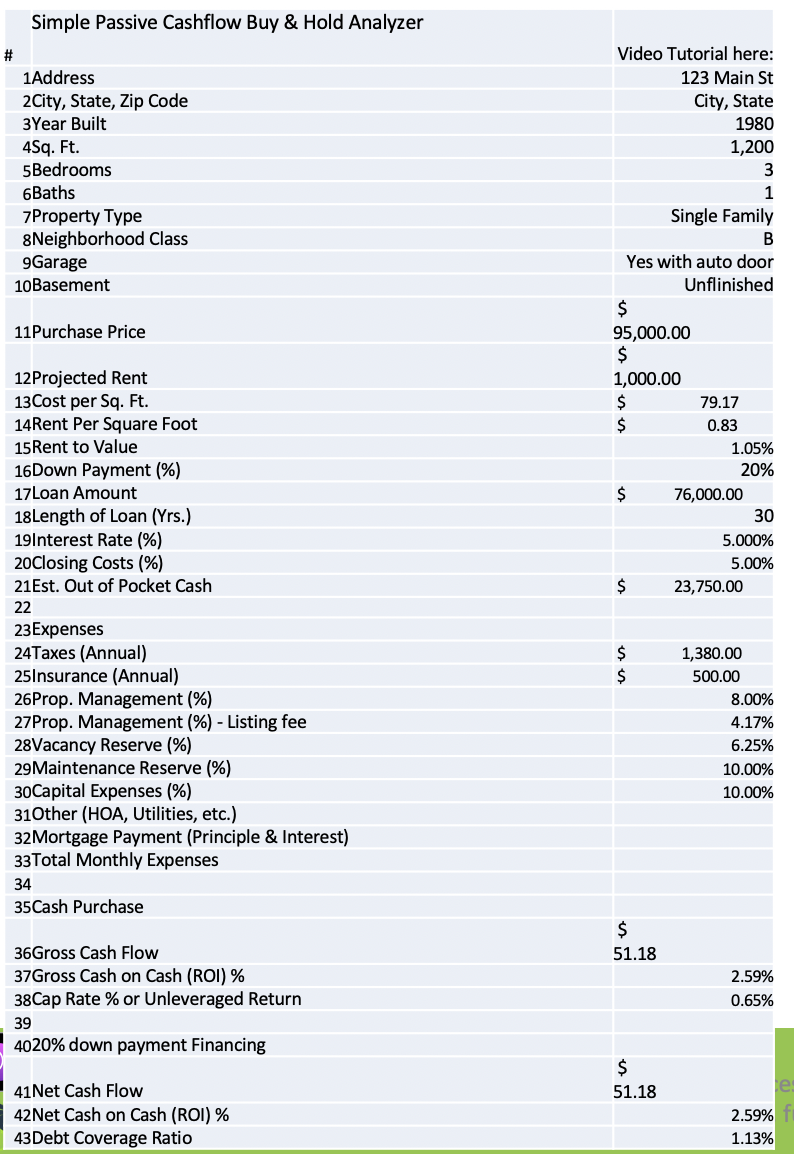 The trouble is that an unsophisticated investor or an outsider (in terms of having a poor network) is figuring out which of these deals transcends the two sides of coin and is on the edge. Stating the obvious (though often ignored by many)… starting out as an investor is going to be slim-pickin’s due to the lack of network. But you have to push through this rough part. You are not able to decode the noise until after a few deals or having someone mentor you.