Time is the Most Important thing!
Time is short we are limited in the number of days we have. The other day I need to scrub rebt rolls and get Zillow… perfect job for a VA.
Pull alll vendors and email for Atlanta Indy Birmingham.
Use the VAs I use with 10 hours for free.
Sep Bekam is a full time real estate investor and was able to get out of the rat race when he was 31 years old. He currently invests in 4 states and has acquired a portfolio of 50 houses and 80 apartments with his investors. Sep has been interviewed twice on the Real Estate Guys Radio Show and recently co-founded a real estate crowdfunding company. He enjoys helping other investors avoid making the same mistakes he did when he first started.
Quitting your job frees up so much time to progress business
2009 came around and getting fired was the best thing!
Oh no investing is stocks like Washington Mutual
1) How much simple passive Cashflow are you making today and how are you doing it?
(You don’t need to give a number if you would like privacy. You can be vague such as halfway to quitting my job, cover my mortgage, Make 25% of my expenses, over $10k, although people like when people open up the kimono.)
• Six figure range
2) What is your Han Solo moment – Han Solo and his buddy Chewbacca from Star Wars were cruising around the galaxy as lowlife smugglers but then cross paths with Luke and Leia and his life took a pivot point. Describe the resistance that was the catalyst for change. Did you “burn the boats” or did you let it happen naturally – was there an internal (you decided to make a change on own – what was thought process?) or external (you got fired) trigger?
1. Live in Orange County, California
2. Love to travel, paintball, attend seminars
2. Went to school for electrical engineering because that’s what I was taught
4. Started working and felt like Office Space
5. Was very stressful, 2008. Recession hit, I had a nasty, egotistical boss (also an engineer)
6. I was told when to go to work, when I could take a break, when I could eat, and when I could see my friends and family.
7. And then I was laid off after 4 months. I go to school for 26 years to be laid off after 4 months
8. Then went on to pursue masters in robotics
9. Cousin introduced me to Robert Kiyosaki’s book called Conspiracy of the Rich
10. Fell in love with real estate investing. Found podcasts
11. Big influencers: Real Estate Guys (Robert Helms & Russell Gray), J Massey, David Lindahl, Ken McElroy
12. Got the cash flow bug. I wanted to own apartment buildings. I thought it would give me freedom so I could stop trading time for money.
13. Tried investing in OC but nothing cash flowed. Then I began searching for markets that had properties with better cash flow. Everyone told me I was crazy and I should invest locally
14. Bought my first 2 properties in Phoenix. Two 4-plexes.
15. Evictions, broken windows, bleach on the carpets, management excuses, etc. while working full time job
16. When I started investing, I made virtually every mistake possible: overpaid for properties that appraised low, meth labs,
Robert Helms: “Live where you want to live, invest where the numbers make sense”
• Investor Identity – Why does it matter?
• Marketplace: How to find good emerging real estate markets
• Team: Team includes: Property Manager, brokers, leasing agents, evictions Attorney, contract review attorney, Mastermind, insurance brokers, public insurance claims adjusters, CPA, tax attorney, securities Attorney if you are raising capital, etc.
• Deal:
-Self managing vs.hiring a property manager. Managing the Manager
-If I fail, it’s my fault. If I succeed, it’s because of my Team.
Why I am focusing more on single family rental portfolios than apartments?
• When the crowd is going one way, there is a lot of opportunity in the opposite direction
• Gurus often compare owning 1,000 apartments to self-managing 1 house
• Why not manage your houses like an apartment complex?
3) Worst life/business moment what did you do after? Lesson learned?
-When a bank tried foreclosing on one of my apartment complexes…even though we never missed a mortgage payment.
4) A mark of a high performer is to put your ego aside and accept the help of others and mastermind. 2 week experiment and 6 month project? (90-180 day goal) Perhaps people can help you out? Any secret habit to share?
Secret Habit #1: Fast way to underwrite deals: 1.5% rule
Secret Habit #2: Surround yourself with investors that are ahead of you. Not the talkers.
Secret Habit #3: Investor Identity
5) What is your simple passive Cashflow number? Now imagine you had 2x that amount… Describe your ideal day, detailed routine, and what projects you are working on.
• Simple Passive Cashflow number: $50,000/month.
• Double that: $100,000/month
• Travel to Europe 6 times a year. Underwrite deals while living in Lake Como, Italy for 3 months.
6) Something that you have recently or thought about “burning your cash” on for time savings or an improvement in quality of life.
• I could hire more employees, expand the team, invest in additional marketing to be able to help, teach, and create 1,000 millionaires per year.
7) Tony Robbins identifies two large concepts that we are continually struggling to gain perfection at: #1-Art of Fulfillment and #2-Science of Achievement. If you died tomorrow and this was your final words of wisdom, what is your secret to the “Science of Achievement?” And “Art of Fulfillment?” How you do contribute back?
At the Unleash the Power Within seminar, Tony talked about the importance of measuring all of the important aspects of life to ensure fulfillment:
Draw a wheel (circle) on piece of paper and divide it up into 7 or 8 spokes. In each spoke, write the following:
1. Finances
2. Relationships
3. Time
4. Body
5. Emotion
6. Mission
7. Contribution
Then shade each spoke from the center on a scale of 1 to 5. 1 being awful and 5 being excellent. When you’re done shading each wheel, you’ll notice that some areas might be a little bit off balance. Just like the tires on your car, if they are off balance then your car can’t go as fast or run as efficient. It’s important to make sure that the wheel is balanced.
8) Anything we missed and contact info if you would like anyone to get a hold of you. URL?
Facebook: Sepehr Bekam
Like Our Facebook: Real Estate Investing Quotes
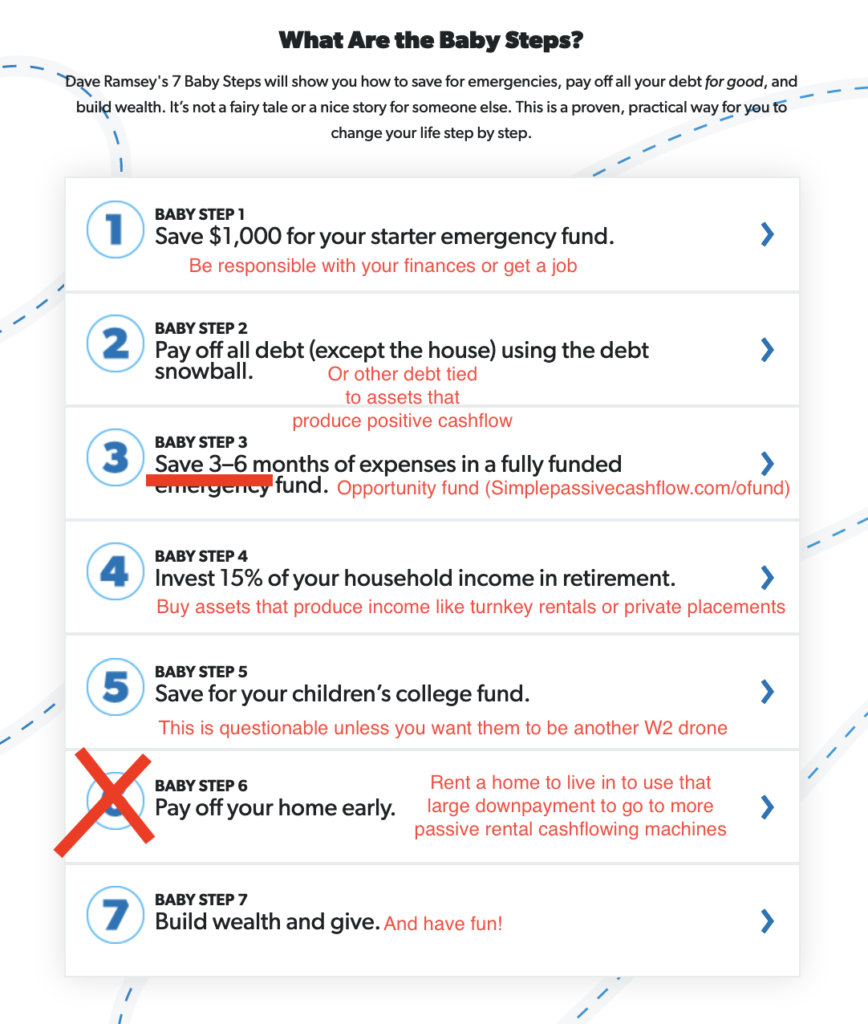
When you start out investing in Single Family Homes or Multi-family Class C/B… optimizing every single fee dollar (emergency fund of course) into down payments for more assets that put cash into your pocket, things are simple!
Now when you start to add things into the mix like your mother lives in your home, you want to househack your brother, your wife will only let you get two homes per year, or you can sell a condo for some random reason things get really hard.
Personally, I don’t really have any restrictions of the sort but every situation is different especially if you have one of the aforementioned constraints.
One of these examples is to sell properties when the total return on investment decreases to a point to where the total returns (cashflow, tax benefits, appreciation, and mortgage paydown) get below ~15% or less than the next best thing. Now some people can’t sell these properties to property optimize the equity into other investments and for those people cash-out refis and Helocs are an option.
I will say one bad thing about Helocs is that you can’t get a loan for the entire amount. There is always 10-15% of the equity you are never going to get at – like the last few cups of water in my Brita filter dispenser… errrr! I see people try to quantify Helocs with interest rates but I feel that’s the bad way to argue its usage because it does not take into account the 10-15% left over in equity.
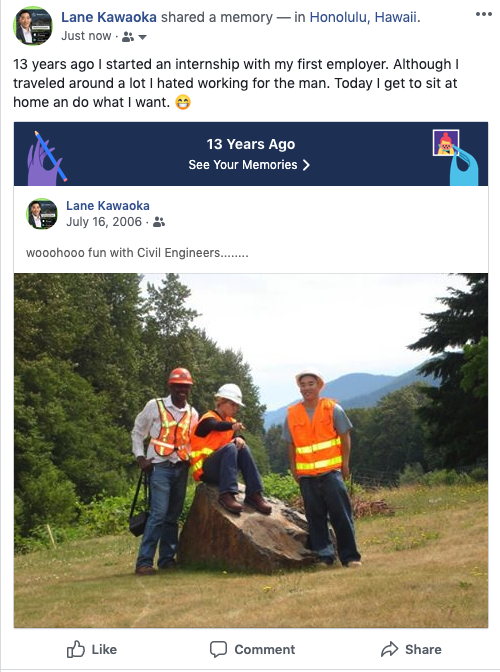
After 12 years working as an employee I finally pulled the plug on my W2 engineering job!
Although it took a decade, Passive real estate investing gave me the security to leave a steady pay check behind. Or as I called it “white collar welfare.”
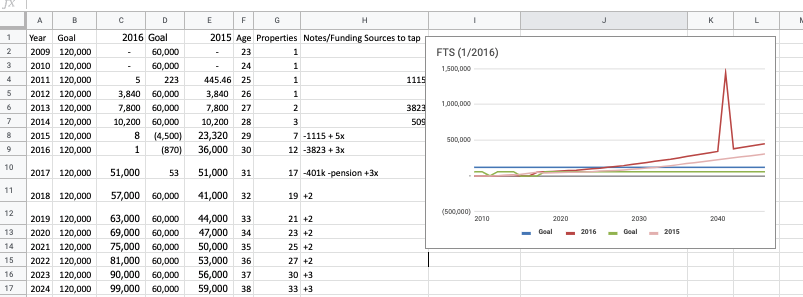
My “FTS or Forget this Stuff” Chart I used to plan my escape (Circa 2009)
As I transition from a world of Obligation (a job) and enter ‘a whole new world’ of Choices…
I am uncertain of the future (and going to miss 100k of salary) but excited about the energy I get to focus to my current passion projects:
1) Hunting for deals and do proper due diligence
2) Travel and new hobbies3) Group Coaching4) Starting a mission to teach basic money stuff5) Get absolutely ripped! Like Fight Club Jacked! …I guess I have to go back to Crossfit :/ No More SUNDAY BLUES! If you are thinking of leaving your job or we have never chatted before feel free to setup a time to talk story (after all helping people along on the journey to financial freedom is what I am really passionate about and this is what I Choose to do). Consider joining the rest of those in the group coaching group following this path.
No more looking over your shoulder as you try to analyze that deal
Where my head was at 2015-2019
Because of my podcast, I have a space to book appointments. (BTW use that Calanderly app allows people to book times on your calendar only when you are free so you don’t have to use 3 emails back and forth to schedule a meeting)
About every other day I talk with a new person who is on the verge or able to leave the rat race. We talk about how much passive income is required some it’s 3000 to travel around Asia and some with families it’s 8000.
I want to highlight that the natural inclination is to leave your job. As for us, all high achievers know what is easy and the beaten path should be questioned. You should stay at your job and keep doing this as a side gig… People always want to jump into entrepreneurship And it’s really not a good idea or even needed.
When we mean entrepreneurship… I mean not dip your toes in but going all in. Like Gary V sleep 4 hours, Grant Cardone x10 stop being a bitch, Burn the boats all in. A lot of motivational gurus will tell you to dream big, commit and go all it – buy that fancy car now so you set that bar high and force yourself to achieve it. They don’t know your situation and often times these gurus are outliers and often they themselves did not follow the same advice.
Don’t buy into survivorship bias. For every entrepreneur who goes all-in and even does it as a side gig only the minority succeeds. To focus only on those successes is a logical fallacy. Despite a superior product and optimal skill set so many things can still go wrong.
You are not going to give your business what it NEEDS when you are worried about putting food on the table and paying rent. This frenzied survival causes two things: First, you are less creative in this survival mode. Outsource yourself as much as possible first. Hire the help first or you will be drowning in manuchia. You will not be leveraging your time or your skills. This will require you to create lean and efficient systems which is what building a business is all about at its core.
As Robert Kiyosaki differentiates in his book “Cashflow Quadrant” an entrepreneur builds a system that they can be removed and scaled where as an entrepreneur who does not build a system is just a glorified self-employee. The second when you are in this survival mode you are taking unneeded risks and making mistakes such as forcing the wrong deal or giving up excessive equity for taking on VC capital.
As a side note a big part of a business is negotiation and in negotiation, the biggest component is the ability to walk away.
Things that make me question putting life energy (time) into learning at my day job: understanding what side railroad turnout is needed on a 2 degree curve, the process of repainting street markings, the working internal relationship in a workplace with people who just don’t want to get fired or want that bonus, learning the in’s of human resources to hire someone due to some bureaucracy. All these a complete waste of time in terms of bettering myself or adding value to the world.
Not having a job and supplemental income source or cash buffer torpedoes your pillar to negotiate. You are effectively the Emperor with no clothes and everyone you deal with and your customers know it. Just as ask any women… they can smell desperation in a potential suitor. You should only quit your job once you can scale. And YOU should be the last part of the business that can’t scale because you have a job and business needs more of you to scale. You have to be the bottleneck. Don’t dilute yourself into thinking you are the bottleneck because you just want to quit your job because it is a badge of honor when it comes to running a business or quitting your job. A lot of entrepreneurs just want to quit their job because they just want to tell all their friends and family they the told the Man to F off, they don’t want a boss, and they have escaped the 9-5 rat race.
It’s cool to be like I’m all-in, I don’t have a JOB. That is an ego thing and we need to be conscious when our ego is leading and not logic.
I spent a decade working my way up through junior level jobs, being a first level supervisor, and managing professional and learned a lot of how a mature business works and interpersonal. I wish I would have had this mindset earlier but I realized recently that working for someone else is a privilege to try things out (FSU) on someone else’s dime. You don’t want to be trying some new marketing scheme or leadership technique the first time when you get your one shot to swing the bat. It is not the time to be “finding your management style” when you step up to the batter’s box with your own capital at risk.
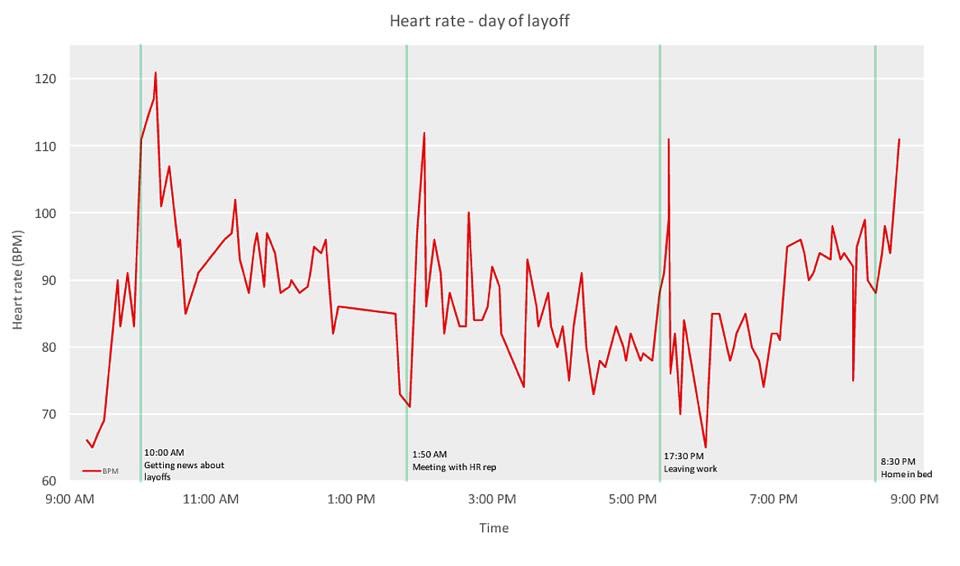
High paid W2 professionals know that any day you can be let go. Here is AppleWatch heart rate data from a Bay Area tech employee who was given a pink slip in the morning.
Here a joke… when at your day job rub off the labels of the letters on the keyboard to use work as a time to master no look typing. Or just try something different because it might work for you in large ventures… you own ventures. In conclusion, ask yourself why am I wanting to leave? Is it because of ego or necessary? And have I acquired both the skills, proof of concept, and starting capital to create this “runway” for my business to thrive.
Here are some tips to just get by when your heart isin’t in it but you have to put food on the table.
Fun Factoid:
65% had 3 or more streams of income.
45% had 4 or more streams of income.
29% had 5 or more streams of income.
A W2 income is one stream of income.
Update 19.03.19… I changed my mind!
In the past few months when I was interviewed on other podcasts and asked me am I still at my day job I would say that I did not mind the (boring) work and liked the people. I joked that if I stayed at home that I would eat junk food all day and never change out of my sleeping clothes (although everyone wears boardshorts and walks around the house without a shirt in Hawaii anyway).
During the 2019 Tony Robbins Unleash the Power Within seminar an idea of quitting my job finally started to grow. Even on day 1 this idea was not there. Then on day two as that Mclendon guy was talking through the process of taking action I started to think to myself about this goal.
It made me uncomfortable… and that’s how you know you are onto something. Some people in life pee in their pants and retract when they get out of there comfort zone and some people move forward knowing they are “3-feet from gold.” Just like how some people sign the back of the checks and some people sign the front of them.
Burn-out is a syndrome conceptualized as resulting from chronic workplace stress that has not been successfully managed. It is characterized by three dimensions: 1) feelings of energy depletion or exhaustion; 2) increased mental distance from one’s job, or feelings of negativism or cynicism related to one’s job; and 3) reduced professional efficacy. Burn-out refers specifically to phenomena in the occupational context and should not be applied to describe experiences in other areas of life.
Despite a $100k a year salary (Easy Money) with minimal effort here are the reasons that I jotted down why I need to leave: 1) My marriage will not work working 6am to 11pm. No vacations after going to 3-4 deal/conference trips. 2) I’m not able to start other ancillary business such as residential real estate or basic financial education program. Don’t have time to start these new businesses. 3) Avoid crowds in everyday errands and vacations
4) 50+ people please depend on me in my Mastermind to find best people and deals (spend time finding providers and professional). It’s irresponsible for me to do this as a side gig. Increase pricing and value. 5) Get to go vacations (5/year) whenever on top of deal trips (4/year) 6) Start family office consulting 7) Time is the most important resource especially time when you are healthy. Someone wise (ex-addict) told me drugs is like trading time for a good time but it can also be linked with stress and doing things that de-energize you.
9) I was not a good engineer anyway. It was not something I was particularly talented at. As opposed to Andrew Luck who could spin a football pretty well and I was not compensated like him too.
And I ran out of these ribbons to pass out at work…
“Fears are good. Dance with it. It means it matters to you.” – Tony Robbins
If you are nervous about making the jump or simply putting it off out of fear of the unknown, here is your antidote. Write down your answers, and keep in mind that thinking a lot will not prove as fruitfulor as prolific as simply brain vomiting on the page. Write and do not edit—aim for volume. Spend a few minutes on each answer.
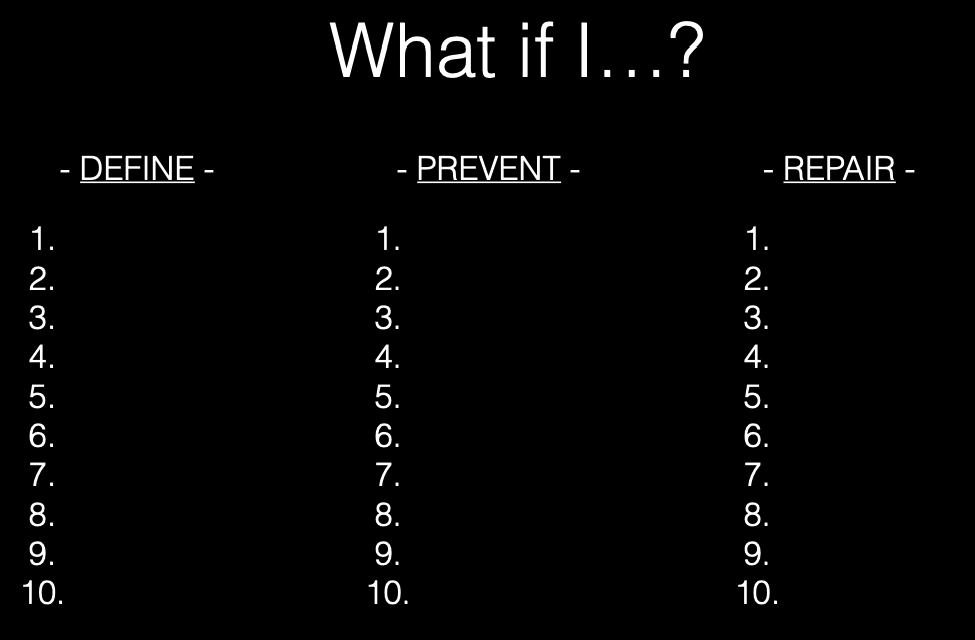
Define your nightmare, the absolute worst that could happen if you did what you are considering. What doubt, fears, and “what-ifs” pop up as you consider the big changes you can—or need—to make? Envision them in painstaking detail. Would it be the end of your life? What would be the permanent impact, if any, on a scale of 1–10? Are these things really permanent? How likely do you think it is that they would actually happen?
What steps could you take to repair the damage or get things back on the upswing, even if temporarily? Chances are, it’s easier than you imagine. How could you get things back under control?
What are the outcomes or benefits, both temporary and permanent, of more probable scenarios? Now that you’ve defined the nightmare, what are the more probable or definite positive outcomes, whether internal (confidence, self-esteem, etc.) or external? What would the impact of these more likely outcomes be on a scale of 1–10? How likely is it that you could produce at least a moderately good outcome? Have less intelligent people done this before and pulled it off?
If you were fired from your job today, what would you do to get things under financial control? Imagine this scenario and run through questions 1–3 above. If you quit your job to test other options, how could you later get back on the same career track if you absolutely had to?
What are you putting off out of fear? Usually, what we most fear doing is what we most need to do. That phone call, that conversation, whatever the action might be—it is fear of unknown outcomes that prevents us from doing what we need to do. Define the worst case, accept it, and do it. I’ll repeat something you might consider tattooing on your forehead: What we fear doing most is usually what we most need to do. As I have heard said, a person’s success in life can usually be measured by the number of uncomfortable conversations he or she is willing to have. Resolve to do one thing every day that you fear. I got into this habit by attempting to contact celebrities and famous business people for advice.
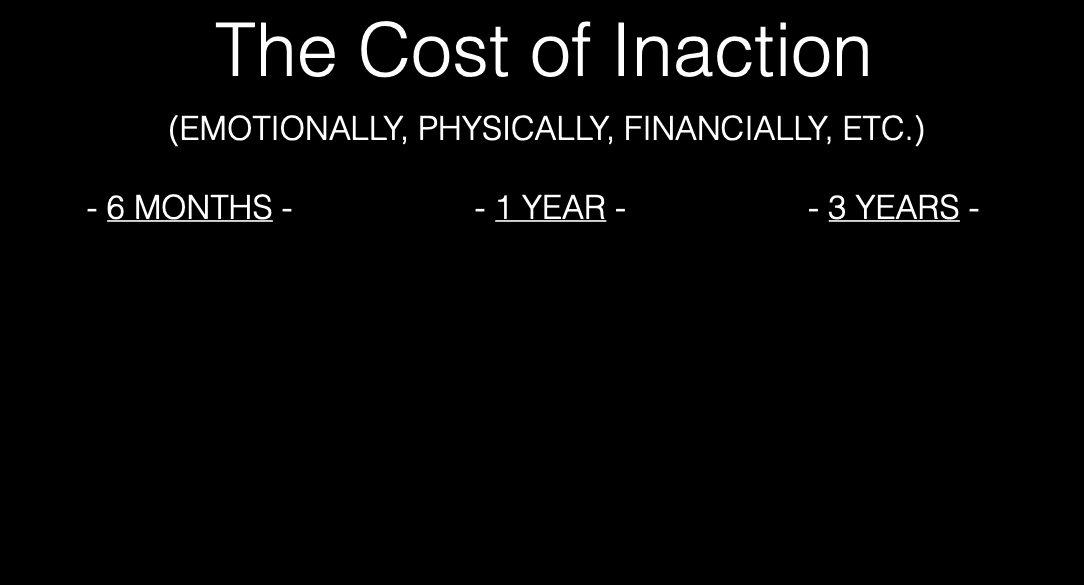
What is it costing you—financially, emotionally, and physically—to postpone action? Don’t only evaluate the potential downside of action. It is equally important to measure the atrocious cost of inaction. If you don’t pursue those things that excite you, where will you be in one year, five years, and ten years? How will you feel having allowed circumstance to impose itself upon you and having allowed ten more years of your finite life to pass doing what you know will not fulfill you? If you telescope out 10 years and know with 100% certainty that it is a path of disappointment and regret, and if we define risk as “the likelihood of an irreversible negative outcome,” inaction is the greatest risk of all.
What are you waiting for? If you cannot answer this without resorting to the previously rejected concept of good timing, the answer is simple: You’re afraid, just like the rest of the world. Measure the cost of inaction, realize the unlikelihood and repairability of most missteps, and develop the most important habit of those who excel and enjoy doing so: action.
Define – Prevent – Repair 1) I don’t have enough Contacts to make more income – call them and align with them and create more opportunities together 2) I don’t have enough Contacts do more deal – this is false in fact my time to build stronger partnerships and going to quarterly events will keep my deal flow healthy and I should just find less people to work consistently with anyway 3) I run out of Cash – get cashflow from deals, use reserves in life insurance to be able to renovate remaining single family rentals to re-leverage into bigger syndications at a few a year for a couple more years. 4) What if I Stall out – hire coaches to keep me accountable and communicate with my Inner Circle 5) What is the worse that can happen? I go back to find another job and use my Professional Engineering designation to find another job in an archaic workforce. I lose some savings and worse slowdown my investing but I already have a size-able amount of holdings to pay normal expenses. Can I live with it? YES!
Strategic action items after:
Daily plan:
Not waste time commuting or putting on clothes to impress people! Look how much time we waste:
Initiatives:
Tips:
In preparation for the big leap I have compiled a list of tips from others who have made their MOVE and never looked back:
Create a Schedule For Yourself – Unlike a W2 job no one is going to harass you from doing things you need to. Write down your to-do lists everyday and if you need to create an hour-by-hour schedule.
Creating a schedule for yourself should also means creating a routine. It’s easy to stay in your sleepy clothes, forget to brush your teeth, or forget to flush to toilet because its only you there and you are likely to go back. Creating this routine will help prepare you for the day and keep you on task longer. It will also help you feel like you have your sh*t together.
Know What Setting is Best For You
Work best on your couch? Cool. If not create your space you will feel comfortableand motivated in. That may be a home office, a stand-up desk, or just the kitchen table.
Learn to change up your settings. Work from home then go to a coffee shop to work, then grab lunch, and then hit up another coffee shop before heading home to finish up a little more work. Breaking up the day!
Minimize Distractions
If you know you are easily distracted by TV – you should not quit your job cause in my observations its not a mark of a high performing non W2 worker.
If your kids need to be watch or dog is needy send them to daycare.
Be aware of what distracts you and how to remove those interruptions and be proactive on removing them.
Add in Breaks
Add in a break for lunch, a workout, walking the dog, appointments, etc.
Feel like I’m part of a community and stay away from getting cabin fever. This may apply to even introverts like me.
Know When To Stop
Decide what time your day will end and try to finish up everything before that time. This could be the time when your kids get home from work or spouse comes back from the gym.
Setting a cut off time could be what keeps your marriage together!
Parting Words (if you are on the fence)
“It will be like going away to college and having no restrictions on your time. This time there won’t be as many parties but there is Netflix this time. Don’t drown in freedom but enjoy living like how 99% dream”
“Finally taking that leap on your own will bring out the best and worse of you.”
Prioritize and list your “life bucket list” and is working your 9-5 contributing significantly or providing the means to achieve your goals.
Maximizing your highest and best use…while in your “prime”. There is a shelf-life for NFL running back when they are “over the hill” at the age of ~30. Software engineers, programmers, investment bankers, etc. can only work the demanding ~60 hour weeks until maybe 35 -40. I would submit, Entrepreneurs and business owners are operating in a challenging environment similar to professional sports. Something like 95%+ of entrepreneurs fail and this is ridiculous failure rate. If you are not putting your all into an already stacked deck, this is not an ideal situation unless you come from money and have a golden parachute to fall back on.
Need time for deep thought and critical thinking…stop and look at the forest and big picture…putting out day to day fires and running from one activity to another 24/7 (building someone elses business) is difficult to leave time for anything else.
You may be in the “sandwich generation” squished between taking care of kids, a demanding career, and aging parents. This leaves almost no time to develop yourself and knock off some of your personal bucket list items. All too often complacency sets in after a decade of two and you don’t develop. We all know if you are not moving forward you are going backward.
https://youtu.be/_o4ZikHkjdY
Another unintended of leaving the W2 for me is a new sense of urgency. It is make it or die time (well go back to a W2 job).
An affordable medical insurance option especially for those who just quit their W2 job.
Insights from less than 100 days from quitting
I typically think of larger projects where were these ventures were once out of reach because I had a day job and limited bandwidth to power the venture forward. Not its uncomfortable that in order for me to make it without that W2 salary that I need to follow through on these ideas. It is frankly a little scary because I have to actually put them in motion. Dare I say… get out of my comfort zone.
It feel absolutely amazing not having to go to work everyday. I don’t want to back to that type of life that I am motivated out of pure fear to make it! I won’t tell people how great it is because I don’t want to go red pill on folks.
I get to plan all sorts of trips to visit deals. Someone gets a deal under contract? I’m on a plane the next week!
1 month after – The only bad thing I have experienced is my post mid-day workout showers are not too hot because I can’t seem to figure out how to turn off the energy-saver mode on my hot water heater. Also lesson learned is just because you can take a nap whenever does not mean you should.
5. Remember that one of the reasons I gave up my easy pay check was to create a work of art on this website and to see those in my group coaching mastermind hit success. This resonated with me:
https://youtu.be/cDfi8BwdGvY
6. 19.05.31 – First couple of months I am very “anxious” about making up the steady income. I wake up thinking how the heck am I going to make a few hundred dollars today… as I fire up the computer and take some Rocket Fuel Latte and work on 7 projects in a few hours. I am still working 7am to 10pm with a little break to do what’s on the board at Crossfit class. People who have walked this path say this “anxious” feeling will pass and I will accept the fact that the reason I am in this position I have the skills/work ethic to create enough whatever so called value to monetize to $100,000 easy. So as I self diagnose its a limiting belief. Hopefully that advice is true that from months 2-6 I will start to find what one thing I need to work on to grow to seven-figures.
https://youtu.be/hMv0Pg1AxFc
So two things will happen: 1) I will stop doing 7 things when I wake up and focus on 1 or 2 and 2) I will start to live a more abundance mindset free of this aforementioned limiting belief where I will say no to high leverage projects and this will lead to more success.
Henry Ford’s Story
Heroes are not born but they are created out of circumstances. Unfortunately what we never think of are those who crumble under circumstances. Quitting your job puts you in the right circumstance to make things happen!
The great thing about entrepreneurship is you don’t have to go to college but you do have to pay tuition through repeated failure and broken hearts & shattered dreams. Of course all that money you lose on your first few ventures. It’s all part of this tuition. Some call it UHK University of Hard Knocks.
We all know the ford motor company’s legendary founder Henry Ford. He to went through these “college years” so to speak. Ford spent 8 successful years at the Edison Company and in 1899. He was offered a big promotion to a supervisor position (with large annual salary of $1,900 dollars a month at the time) but Ford turn the offer down and instead decided to become an entrepreneur and start his own company.
https://youtu.be/gK6q4JqHhok
It seemed like a really bad decision because instead of earning $1,900 dollars a month he was having to figure out how to live on a 150 dollars a month. Within a year he was out of business.
Ford started another company making racing cars that soon failed too. Then Ford started another company and that third company was the Ford motor company in 1908. It took him 8 years after getting rid of the easy W2 job and enrolling in entrepreneur school.
“Your world is changing from a life of Obligations to a life of Choices”
SPC040 – Fundamentals – Damion Lupo – QRPs, SDIRA, Morbid backdoor accounts, wall street issues, solo 401ks, precious metals, in service roll over & negative interest rates
To sign up for a QRP or a FREE book – www.totalcontrolfinancial.com/spc
Jorge Newbery, Founder and CEO, American Homeowner Preservation. On a mission to help Americans crushed by unaffordable debt. This Ex-Apartment investor talks about going $28 million dollars into the hole. This is quite honestly the most authentic and insightful interviews I have had this 2016… editing the podcast was like watching a freaking drama movie.
1) How much simple passive Cashflow are you making today and how are you doing it?
(You don’t need to give a number if you would like privacy. You can be vague such as halfway to quitting my job, cover my mortgage, Make 25% of my expenses, over $10k, although people like when people open up the kimono.)
My wife and I put extra money in AHP. It’s in the low seven figures.
2) What is your Han Solo moment – Han Solo and his buddy Chewbacca from Star Wars were cruising around the galaxy as lowlife smugglers but then cross paths with Luke and Leia and his life took a pivot point. Describe the resistance that was the catalyst for change.
Always been an entrepreneur. My last regular job was 25 years ago as branch manager of a mortgage company. Even then, most of my earnings came from commission, so the smarter I worked, the more I made.
Did you “burn the boats” or did you let it happen naturally – was there an internal (you decided to make a change on own – what was thought process?) or external trigger (ie got fired from your job)?
3) Worst life/business moment what did you do after? Lesson learned?
Shutdown of Woodland Meadows (my largest holding at 1100-units) and my subsequent financial collapse.
Lessons:
The positive impact you can have on other lives is more important than accumulating cash. I use my Woodland Meadows experience to aid families struggling to avoid foreclosure. The best part is that AHP and our investors can also generate strong financial returns by doing so, which makes the effort sustainable and scalable.
Some risks you cannot anticipate.
4) Current 2-week experiment and 6-month project? (90-180 day goal) A mark of a high performer is to put your ego aside and accept the help of others and mastermind maybe folks can help you by you asking.
Next two weeks: complete improvements to ahpfund site in order to make investment process as easy and fast as possible.
Next six months: execute marketing campaign to raise 50MM on ahpfund.com.
5) What is your simple passive Cashflow number? Now imagine you had 2x that amount… Describe your ideal day, detailed routine, and what projects you are working on.
Workout, work on higher-level growth of AHP (i.e. avoid getting involved in individual cases), spend time with friends and family.
6) Something that you have recently or thought about “burning your cash” on for time savings or an improvement in quantity of life.
Outsource/delegate more of what I do to experts, so I can focus on what I do best and free up my most precious possession: time.
7) Tony Robbins identifies two large concepts that we are continually struggling to gain perfection at: #1-Art of Fulfillment and #2-Science of Achievement. If you died tomorrow and I were to email this to your kids a couple decades later… this is what they would hear.
What is your secret/hack for the “Science of Achievement?” How you do contribute back?
Stay positive and upbeat even during challenging times. Embrace difficult periods and endure – the effort often gets easier. Greatness is typically preceded by surviving difficult times.
What is your secret/hack for the “Art of Fulfillment?” Any secret habits to share?
Strive for what you want, but allow yourself to be happy with what you have.
1) Listen to the first 8 podcasts. These were recorded back in 2016, and since I have moved on to syndications but was created as a foundation to help people get started with rentals like I did in 2009 when I was straight out of college.
4) Join our club and get access to private opportunities. We only work with people we trust so let’s start building a personal relationship. Lets jump on a phone call!
https://www.youtube.com/watch?v=PKLrtUeCAIc&t=37s
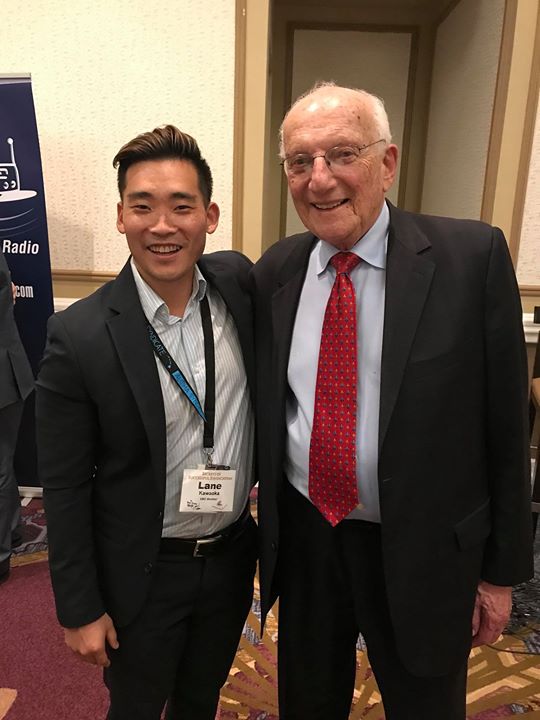
Aloha! I’m Lane!
Welcome to the SimplePassiveCashflow.com podcast community!
I used to be an Engineer at a day job I did not like and I thought there was more to life as many of us high paid professionalsthink in our tribe. I used rental real estate as my means to financial freedom and I’m curating the content on this website and our eCourse so others can do the same.
Glad that you have joined us on this journey and hope you can help us with our Mission.
From 2009-2013, as I was buying rentals on my own I definitely made my share of mistakes. One of these was to paying down my mortgage (debt). Here is one of those checks where I paid down my debt. Little did I know that sophisticated investors don’t do this.
“My wife is officially is quitting her job at the end of this year. Thanks for helping us be able to do that. One of her friends had to go back to work 10-weeks after having their second kid because they need her income to pay the mortgage. It makes me cringe just thinking about that.” –Hui Deal Pipeline Club Member
https://youtu.be/2yvR4h9thos
The Top SimplePassiveCashflow Posts:
This website has been going through daily improvements everyday since 2016. I admit things are a bit all over the place as I learn about these investments and wealth tactics. The following are the top posts on this website and a good starting place.
I know I was beating the drum of the Turnkey rental a few years ago but now investing in Syndications. (Turnkey rentals are not passive and still a PITA) I am admittedly a work in progress and this website/podcast is my journey.
Mainstream investing (401K, stocks, mutual funds, 529, IRA, or anything retail) is based on investing for appreciation. You know buy-low-sell-high …. usually based on factors wholly outside an investor’s control.
Then one day (when you are grey and immobile) retire and live off your nest egg at 4% withdrawal rate.
We (us sophisticated investors) call this gambling not investing.
in·vest / verb
to put money to use in something offering potential profitable returns, as interest, income, or appreciation in value.
Buy-low-sell-high trading mentality encourages the churning of holdings … which generates commissions and short-term capital gain taxes. Which is another reason why we do not like commission based Financial Planners or Registered Agents. Some of these guys use hard-selling techniques. If they make enough phone calls, eventually they get someone to purchase a stock and make their commission.
“Wall Street is the only place that people ride to in a Rolls-Royce to get advice from those who take the subway” -Warren Buffet
In case you have not seen this whole financial world is an engineered system by Wall Street firms and the government which protects them, to prevent Main Street investors from building enough passive retirement income in your 30s/40s as opposed to your 70’s. The mainstream financial news never talks about yields coming from cashflow (income minus expenses). Discussions focus in the context of share prices. It’s pattering you to think buy-low-sell-high. Churn and cha-ching for those executing transitions in the industry. And for most people who are confused and freeze that’s why there is a hidden asset management fee which is an above the line expense to you.
http://www.cfiresim.com/
“We know what is going to happen if you keep investing in the same old stocks/mutual funds/bonds… you will keep working at your job with a lackluster retirement in 40-50 years. Invest in real estate for cashflow is a proven way that I created my pension today and allowed me to retire before I hit the age of 34. Do the math… the numbers don’t lie… people do” – Lane Kawaoka
The secret… Is not about appreciation but cashflow. Creating multiple mini-pensions today as opposed to hoping and praying you have enough to deplete from during your dying days.
How do we ensure not losing money?
Buying assets where the Rent-to-Value Ratio is more than 1%, is needed to be able to cashflow after expenses. You find the Rent-to-Value Ratio by taking the monthly rent dividing by the purchase price. When I am looking at potential investment properties the rent-to-value ratio is the very first metric I look at with evaluating an investment. To calculate this metric you take the monthlyrent divided by the purchase price/value. For example a home that rents for $1000/month that costs $100,000 has a rent to value ratio of 1% (1,000/100,000=1%). The higher the better. I typically look at a huge list of properties so using excel to make this calculation is the best practice.
It’s sort of like using the dating app Tinder… but with a filter…. I’ll stop there… to learn more click here.
One of those things were… “We’re going to rebuild our infrastructure, which will become, by the way, second to none. And we will put millions of our people to work as we rebuild it,” The speculation is $550 billion in new infrastructure projects across the country was a central theme in his campaign.
Here is the meat of this post – maps of major infrastructure.




 No More SUNDAY BLUES! If you are thinking of leaving your job or we have never chatted before feel free to setup a time to talk story (after all helping people along on the journey to financial freedom is what I am really passionate about and this is what I Choose to do). Consider joining the rest of those in the