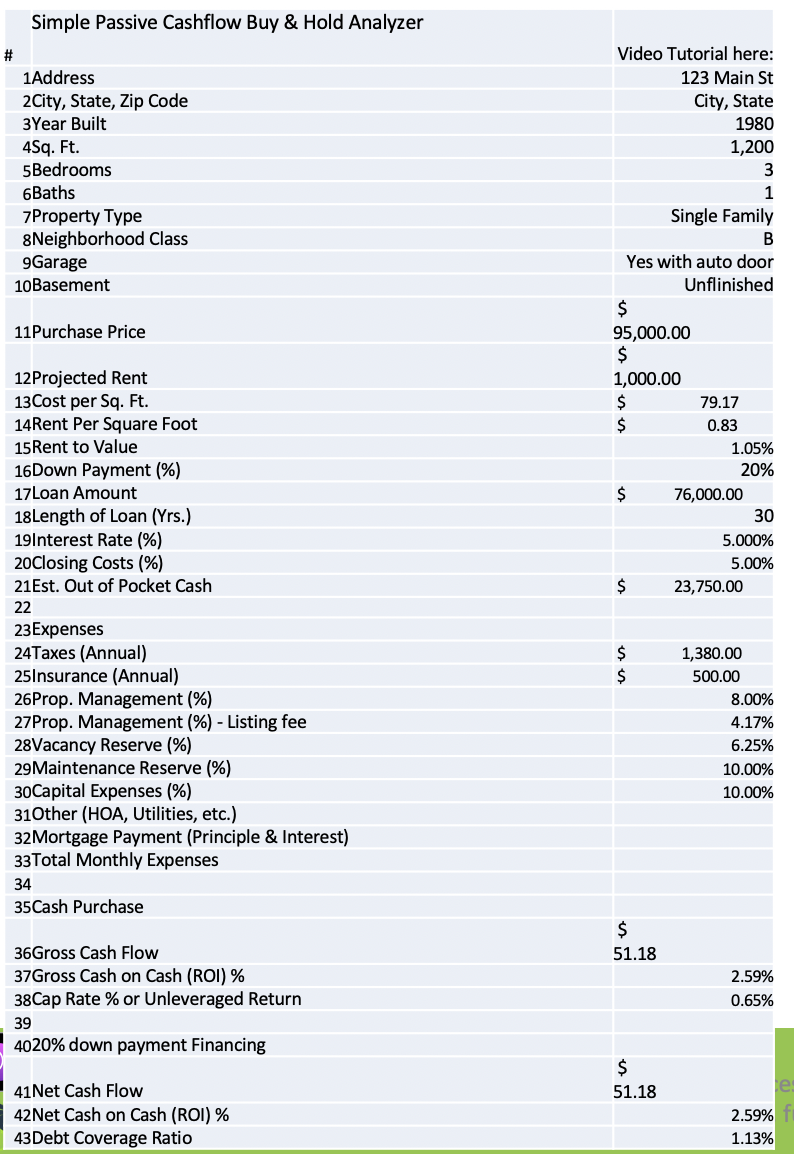
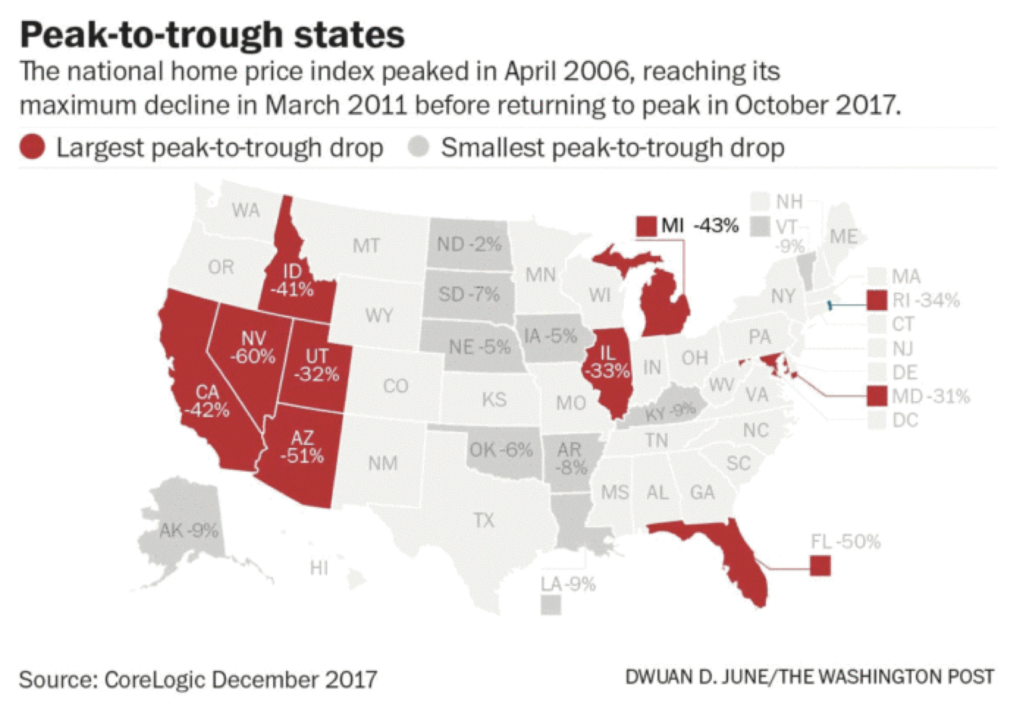
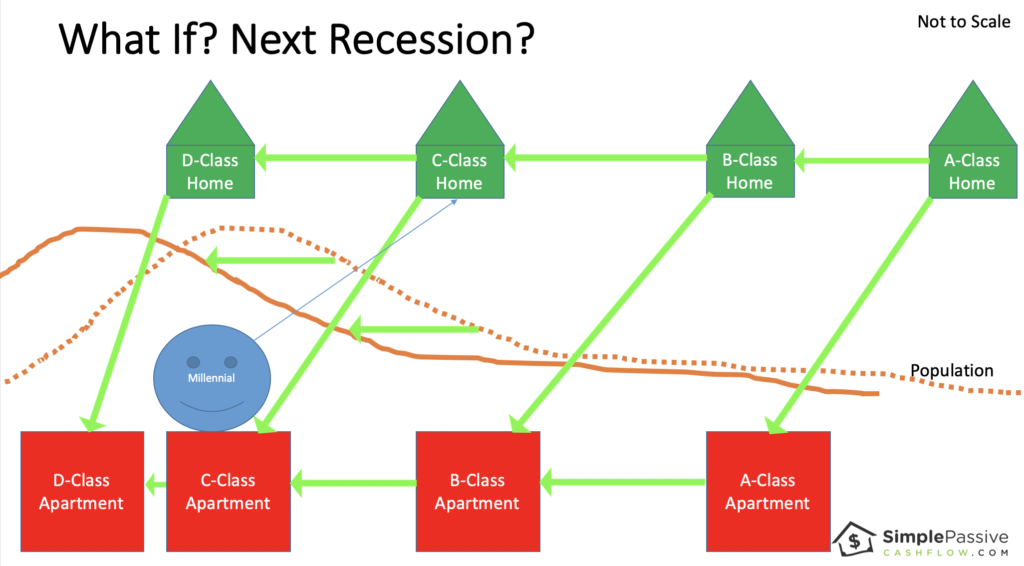
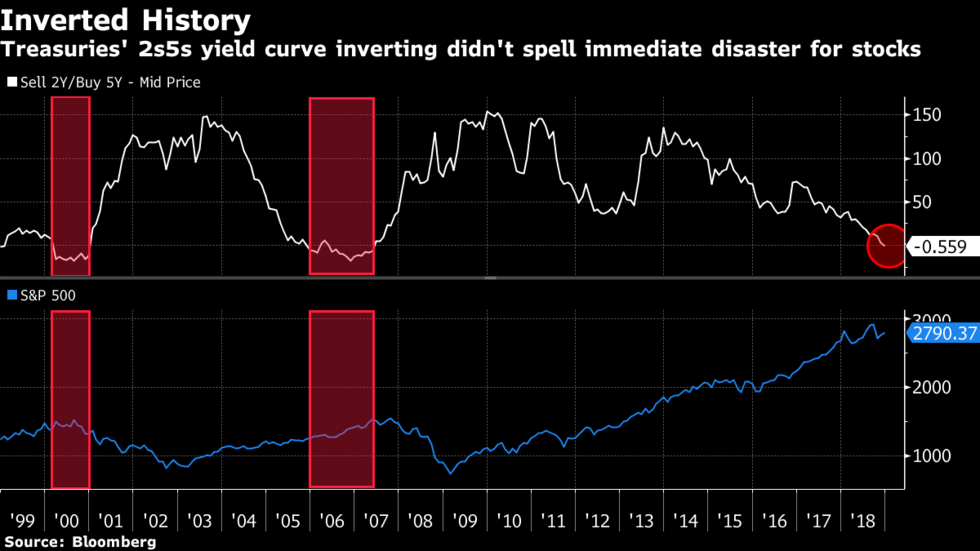
Understanding Return on Equity – Example

https://youtu.be/6VcYyrUevlM

To get FREE Anaylzer go to simplepassivecashflow.com/roe

0:00
Investors sent in their property lists. And we are going to figure out which ones to unload first based on my rules of return on equity. So for those of you guys don’t know what return on equity is, it is a metric that not a lot of investors go by. But I and a lot of other sophisticated investors monitor very closely as we’re always pruning our investments, a big misnomer out there that people talk about a lot is buy never sell, which I think is half true. investors need to look at return on equity and figure out which assets to sell, refinance, or maybe use a HELOC on, basically you’re trying to find her dead are lazy equity, that’s not doing anything. And we are going to go down this list, I’m going to show you how to do this in this little example. 

But like when you first buy a turnkey rental, you’re making around 30%. At least I’m thinking, you can check my math here at school passive cash flow, calm slash returns. And I walked through a little whiteboard example showing everybody exactly how I come up with that with cash flow, mortgage, paid down tax benefits, and any bit of appreciation. Let’s go through this list right here. And let me show you how you manipulate this spreadsheet. Again, this is one of the cardinal sins that most investors make is they never sell and they have a huge equity position, which tends to happen over time. But they need to get that equity moving. One of the biggest mistakes I always hear is like well up cash line, it’s like, well, yeah, your cash flowing a lot. But your return on equity sucks. So you got to do something about it. 

So this investors very smart, they realize that they need to get this equity working hard, certainly harder than that at their day job. And we’re going to help them do that. So first formula I’m going to do here is just setting the status, all right, the value of the property is $1.1 million, what I’m going to do is I’m going to apply a 90% multiplier, just assuming that maybe this is just a little bit too high, and to account for closing costs and commissions. From there, we are going to subtract the debt service, so they currently own $352,000 on this property. And that is how we come up with a rough estimate of how much Lacey debt equity. So I’m going to cascade that down a spreadsheet.

2:17
Just cut and paste that down. And I’m just gonna sub this up to see how much of a problem we have here.

2:24
So about $2.3 million in equity. And on some kind of one to see a high level what we’re we’re at, actually, I have to figure out the some of the values of the property minus the some of the bolts course I’m missing out the Commission’s but I just kind of want to see where we’re at. So that’s 2.8. So that’s how much those loans and commissions and closing costs, whether or not that loans but the commission closing costs are what I call friction costs, are taking out almost half a million dollars right there. 

Maybe one day, I’ll be one of those douchey luxury real estate brokers and only work with clients selling two to $3 million houses, maybe I don’t want to do that with my life. But anyway, figuring out, let me sell them. This is the amount of equity and this is the amount of purchase price. So I’m gonna go this number divided by this. And currently there are right about on average 57% equity, which is not good. Usually, at full power, you’re going to be at 80%, just to typically be the max leverage, but it’s definitely getting to the side where I mean, it’s a good thing, you got a lot of equity, but it’s a lot of debt equity. So next process is like alright, figuring out which of these properties that we need to go first. So what I’m going to do is figure out what the how much money we’re making money we are paying

3:55
for via let’s just go by that. So on this first one, we make money with the rent. So that’s the primary residence to start off with.

4:06
This one’s bringing in 5000 bucks a month. And I’m also going to subtract these he wastes they put it down. And this is the reason why we don’t like conference. So you always have to pay these things. I don’t know exactly what this means by extra costs here, I’ll just add subtracted and also subtract out the Buffy mortgage peanuts, I would run these numbers a little bit differently. But that’s good enough for government work is what I say. That is how much money they are making believe on a must be on a monthly basis. So let’s multiply that by 12. So they’re making 30 grand. So you want to take that their return on equity is calculated by how much money you’re making, divided by how much equity you have in the deal. So if your denominator which is the number at the bottom goes up, which in this case, it’s the $475,000 this number gets smaller. It’s

5:00
smaller, so they’re making about 7% on this property right now, that’s not good. So as we cascade this stuff down, there were a ton of equity on the primary residence is obviously zero, because not making any money, you’re probably losing money, that is a liability, right? They’re not an asset for these properties actually losing money. But to the pier, here’s kind of where the art comes into play, you can either look at it from perspective, all right, which property has the worst return. And so that is obviously this one and this one here, but we’re humans, and this is art. 

So obviously, like, there’s some utility to having a primary residence because that’s where your, your house resides. And that’s where you live. So maybe you don’t want to sell that one. First. Again, we’re trying to find the border operations border that we got load, so or refi. The next thing I’ve kind of take into account secondly, after the return on equity is how much equity requires you to extract out of it. So if you know say, this one, we’re losing the most amount of money, this is probably first on the chopping block. But because it’s so small, it’s not may not be worth the effort. And likely, what we want to do is we want to list multiple properties on the market. And kind of the attitude of you know, some of them were more in a hurry to sell some we might fold out for even better price. So the way I would do this kind of spot checking this is the first time I’ve seen this, the first two that stick up in my head are this one. And just I want to highlight the lowest three from a return equity perspective, but I want to highlight the big ones, which ones are going to really move the needle. And that is, which ones are the ones with the biggest bang for our buck, which is definitely these three. So fortunately, there’s no overlap here, other than the primary residence as a primary residence, that’s probably have to go but I don’t want to upset mama bear. 

So we’re just gonna leave that one on gone, we’ve got plenty of equity to play with here. So there’s no obvious winners, which ones to put on the chopping block, but just kind of I’ve done this buttock a zillion times. And what I would recommend selling would be this one first may not be the lowest return on equity, but it’s certainly a nice little pop there. And I would sell this one, but then I would sell this one, and I would sell this one, this one, these are all kind of the same. And then at some point, when a boss says, Okay, I guess or what do you take maybe one of these rentals, take the money and buy a bigger house, right? So this is where you buy a mansion does a good job up to this point, right? I mean, this is where people say, Well, you shouldn’t buy all this like do dads or like expensive stuff, but man like you earned it, you did a good job here, go out and buy a big ass house for all I care. Next, what I’m looking at is an act. This is probably where we got to get the investor on the line. I don’t know the full story on these properties. I don’t know what all these are, to be honest, these duplexes and fourplexes, maybe stick on the market owner occupied. Now even though I list them as five, knowing that these gonna, these are going to be four times as hard to sell as these other single family holds. And this is why for higher net worth investors, I don’t recommend getting a two to five unit. I just say if you’re going to do single family homes, it’s great because you have great exit strategy. As a high net worth investor you’re going to go to syndications very quickly. So you don’t want to be screwing around with this stuff. Because the the duplexes and triplexes fourplexes huge send it selling it to the cheapskate investor who wants to find the deal and their pain, you’re just gonna bang your head on the wall, especially when you get to one of these guys who are like think that they’re a pro, but they’re just a douchebag, who wants to retreat you for all these little nitpicky stuff. So I would list even though I haven’t listed as five, I probably list it like soon just and not be too motivated to sell it. Somebody wants to pay your crazy price for B and that’d be my general consensus with all these properties right here. Just put them all on the market, see what happens. 

But generally, you’re trying to go make a go at this order. This is really your motivation. Whereas when I’m saying like these guys, they just want to sell it, or they want a little bit of a price concession do Just do it. Or as these other ones you might want to stick to your guns or stick to your price that you think that it’s valued out here. The other side of this is like alright, where as you start to extract this money out this money right here, it’s $2.3 million. You can’t it’s got to be hard to invest that in the beginning, especially if you have no contacts. You don’t know who to trust, but you’re basically you’re trying to do is build a appointment schedule right here and I’m just doing it very simplistically, you know, you got 2020 2021 2022 for most investors under one to $2 million dollars net worth. I’ve never done any rental properties never syndication before. I would say no stick to like a few deals at first, right? That’s 15 grand minimums, and maybe deploy to

10:00
hundred thousand dollars in the first year. But after that, hold the horses a little bit right pump the brakes. Of course, if you have if your net worth is higher than that for $5 million plus this, the other side of you got money sitting in the bank doing nothing, right. So you may want to push it a little bit harder being more aggressive. Now this is a just in time exercise here, you want to sell these acids and hot potato them into deals, minimizing the full period or the time it just sits in a bank not doing anything. So I would imagine selling these properties probably in a period of two to three years. It’s taken a while. 

So I’m just gonna run the rental value ratios real quick on these properties to say I probably should have done this earlier. But this also helps determine another way of determining which properties to model first. She besides the probably the best right here. These other ones are well under 1%. Yeah, on both of them should unload him yesterday, people always ask like, Well, I have a rental property in California. And I’m like, Alright, stop right there. rents value ratios, California ain’t gonna work unless you’re in a war zone. To get more nitty gritty here, it’s if it’s under 1% to value ratio on load, unload that thing, it’s just not even worth it. Especially when a lot of you know other properties that we’re buying, like, you know, one well over 1% of the value ratios in broad markets with force appreciation. So I guess for this client, this client is pretty high net worth. So I would probably make this deployment schedule a little bit aggressive. So assuming that a cash saw half a million dollars every year on this. And so all the assets by the time 2024 comes around, I probably do something like 500 grand, that’s roughly kind of like the how you would patient deployment schedule. 

And this is where other more advanced concepts come into play. And like, you know, to lower your bid put me not making anything like infinite banking, which users will life insurance in a tax free via goal. Yeah, this just shows an example on figuring out your return on equity. What are you trying to sell first? And then what are you trying to deploy it into? Another piece of this is where I help clients all the time, and where I kind of empower people in the mastermind. And you can learn more about that it’s simple passive cash flow.com slash Johnny. But it’s like you know, you don’t want to sell these assets, you got to be mindful where number one your adjusted gross income is, you don’t want to be looking up into the next tax bracket. And guys, if you’re under 200 $300,000 AGI, don’t freak out about it. Most of my clients are well above that, that’s when you have to seriously think about no BGG con when you sell these assets and kind of take the capital gains slowly over time. And then also, if you’re, you know me, you may be taking money out of your retirement accounts too. That’s another thing to think about. So when you take money out your retirement accounts, it also shows up as ordinary income. So another thing that’s at play here is you have a portfolio like this, you would likely have a good amount of passive losses from the depreciation of these. 

But you also have to, as I go into this, it’s complicated, right? But it’s just something is what I do, right, this is what I do for folks and help them understand it so they can make their own game plan. But as they start to deploy into these deals, hopefully they’re doing cost segregations. In these deals, where they’re getting at least half of what they put in to inject brand, they load up 200 grand in deals that hey, Bobby should be getting more than $100,000 of passive losses, which they can add to their current passive loss, a stock fold to then use to offset these capital gains, but they do happen to that’s kind of getting three layers deep there. But these are the things to be aware of. And I think every investor needs to understand that. I don’t think that this is the responsibility of your CPA, like the CPAs job is to do your taxes for you. Not plan this stuff. This is your job guys, family offices, on millionaire families and above, people that do this for you. But look, when you’re under 10 million bucks, you got to do it all yourself. And fortunately, most CPAs out there just don’t know how to do it because that’s why the CPA has a day job off. their net worth is not over 123 $9 they don’t do this stuff. 

And that’s where we can kind of help but for free freebie go to simplepassivecashflow.com/ROE to download a spreadsheet very similar to this is more of a worksheet that you can plug your investments in and see where you have your lazing equity at to help you determine which properties to sell. What’s the poop down here what needs to go? It’s an unlock sheets the spreadsheet you guys can have. So you can again search out that debt equity and don’t be an unsophisticated investor that just buys properties and holds it till it’s paid off. I think that’s one of the worst things you can do especially from like a liability standpoint. I mean, if you have a paid off property, everybody knows where to see. Yeah. And that gives me

15:00
Tax any legal advice here this whole video but just giving you guys good information and yeah check out what we have to offer it simple passive cash flow calm. See you guys later bye!

Is Gold a Good Investment?

https://youtu.be/z4SyyVMIo04

0:00
But what’s the real play here, especially for guys who have less than a million dollars net worth. So people who are buying gold right now or buying it as an alternative to having something liquid that hedges against $1 collapse, right. 

That’s why people own gold, but you can’t gain purchasing power with gold, you only retain it which is worth doing. But when you pair gold with debt, now that’s different. 

Let’s say for example, I go pull a couple hundred thousand dollars out of a piece of real estate and I take half of it, I put it into gold, and then the gold doubles in dollar price because of inflation. Now my gold will pay off all my debt and so the debt and the dollar go together. 

And the problem with going into debt to buy gold is you have to make the payments unless the thing that you go into debt with provides the payments then when you pair gold with debt, and real estate, now you have a chance to outperform in an environment where the dollar is falling. 

And so that to me is the way to play this game right now because all of the pressure to support the entire global economy is landing squarely on the dollar.

2020 Real Estate Crash – Save Money or Invest Now?

https://youtu.be/Dp5O508bTys

0:00
It seems like everyone is talking about the market being at peak right now. And personally, I think things rings true for multifamily, even more so than other asset classes, given the situation, how do you personally decide how much to invest in opportunities today versus staying liquid to invest potentially greater opportunities in one or two years, my investment philosophy is when I have liquidity, I’m going to invest it again, some of the rules that I follow is I don’t invest more than five or 10% of my network into any one thing to get diversification that way.

I’m spreading around my portfolio in two big ways. The first way is different geographic areas. And then the second is different asset classes. I mean, most of my holdings are in apartment complexes and some mobile home parks. But I haven’t really branched out too much into self storage or some different asset classes, I definitely have done a bunch of development. And getting more into that. 

But diversifying into different opportunities is is a good way, I think for anybody. And that’s what I’m doing for myself. As far as A, B and C class properties. I think I’m kind of moving on from class C and Class C, I think everybody gets a little blue eyed over there, you can get 10 plus percent cash flows, but it’s a hard clientele like classy tenants, they’re hard because they don’t have too much cash savings and collections is very difficult for that type and often new trading a lot of sweat equity, especially as offered Of course, for that, but even as an LP investor investing in C class deals, cash flow is very hiddenness. 

One way I balanced staying liquid, I use infinite banking. So if you guys want to learn more about that go to simple passive cash flow, calm slash banking, but it’s a technique that a lot of wealthy families will do to use life insurance as a means to not pay taxes because it’s a little tax loophole. You don’t pay taxes on life insurance, and when it is life insurance, it is very hard to get sued for that money.

Should I Get a 15 vs 30 Year Mortgage

People always ask like, well, should I do a 15 year mortgage or a 30? I’m like, well, you take as much debt as you can, because that’s the whole point of why you’re doing this with the lowest required payment possible.

Because you can always accelerate if you want to, but you just you lose control of the property, if you lose control of the cash flow, and the bigger the payment, the harder the cash flow is. And this is why we’ve been brainwashed that you know, that’s bad.

And actually, if you want to hedge yourself or something that’s coming in the future, you want to take as much debt now so that when inflation’s happens, it’s worth barely nothing. Yeah, banks want you to stay in debt because that’s how they acquire streams of income. Right? investing isn’t about buying low and selling high investing is about acquiring streams of income, what I call acquiring the efforts of others.

When you go to invest in real estate, I’m not interested in owning a property that goes from 100,000 to 200,000. I’m more interested in having two $100,000 houses that have two tenants instead of one because now I have twice as many people working for me

Repo Market Using COVID as a Cover-up? w/ Russell Grey (Part 1 of 2)


0:00
Introducing the new remote investor, incubator and ecourse we had the mastermind and we are going to break off from that being mostly an accredited investor group. And I wanted to create something that was helping out the little guy get started guys getting their first properties. And we’re calling this the incubator group. Get More details at simple passive cash flow, comm slash incubator, but basically what we’re doing here is we’re getting a group of professionals looking to build your network with others starting this journey to financial freedom, the ecourse that’s going to accompany this group is going to have eight modules in a closed membership site plus two bonus modules and download kit all geared toward educating the remote investor in this group, we’re going to have biweekly zoom video calls. And if you join up, you’re gonna get all past turnkey rental recordings. Now these calls are designed to ask whatever questions you have and hear the other questions from other investors in your shoes and we’re going to run this like a boot camp style. This is going to be a five month program. We’re gonna walk you through the best practices for tax and legal as you acquire your first remote rental. We’re going to walk you through the due diligence and offer process we’re going to have staff membership coordinators for extra support to get you over the sticking points to connect you with

1:16
one of the biggest

1:23
you guys were basically spoon feeding this to you if you’ve been on the fence and it’s time to get your first rental property go to simple passive cash flow calm slash incubator and by the way for those accredited investors, we are looking for new members go to simple passive cash flow calm slash journey and join the flagship simple passive cash flow mastermind there after the pandemic to new world out there having a network around you is so much more important.

1:58
This is the story of About a dude named Lane he moved to the mainland and bought one place to stay. And then one day he went try to rent them out. And then he became one real investor.

2:12
Hey simple passive cash flow listeners today I have Russell gray one of my mentors that kind of got to me where I’m at today. How long has it been almost like four or five years now since we first met I listened to the real estate guys, podcasts. You guys check it out in iTunes, Google Play. It’s one of the few podcasts out there that wasn’t designed to put you into some syndicated deal. It’s more of an educational podcasts that I clicked on to a long, long time ago. And I eventually met up with these guys join their mastermind a few years back and things like there’s so many influences you guys had on kind of what I do today like interacting with my investors one on one phone calls, which I still do, but you guys can still go on the website and book that if we haven’t had a chance to talk but should you say Russell gray, how’s it going?

2:57
Good. Happy to be here. Excited to end Congratulations on your success. It’s always fun when people come into our world and then take the things they learn and act on them. You know, our motto is education for effective action.

3:08
Yeah. And the kids always come back right one of these years I got to come back to the goals seminar, which you guys do I think, what every January, February Yeah, I mean, I originally went to your guys secrets of successful syndication, which is a great precursor on how do you do bigger deals, but I think most people will say your guy’s goals seminar, people who come routinely say, that’s your guy’s best at that you guys put on, you know,

3:29
we don’t do a lot of events where we looked at the marketplace and looked at what people needed and what we felt like we were qualified to do, and we tried to stay in our lane. But you know, after the 2008 crisis, we just thought there was going to be a huge opportunity in private capital and syndication was going to be the way to go. And we didn’t see many people out there really teaching it or doing it and those that were were more interested in raising money than they were interested in and really seeing people become successful real estate entrepreneurs. So we did that course back from the time we were working with anybody Real estate investors and you know, we still do that or you know, encouraging people to be syndicators ultimately real estate, whether you’re doing it in your own account or you’re doing it on behalf of other investors as a business or whether you’re investing passively through a syndicator however, you’re approaching it. It’s just a vehicle to accomplish your goals which presupposes you know what those goals are. And so before you start investing, you need to have a team before you have a team, you need to have a market that you think has the right conditions to deliver the kind of financial program you’re looking for. And before you can pick that market, you have to have an idea what you need your money to do for you. So you need a personal investment philosophy and that personal investment philosophy grows out of your personal goals. So we do that. And then we do the annual summit, usually for 17 years in a row on a cruise ship this last year. We had to do it. We call it summit on screen or somebody in place because we did it virtually but it was great. We had Kiyosaki and Chris martenson and Adam Taggart, G, Edward Griffin and Peter Schiff. And Tom Hopkins, you know, a whole cast of the regular real estate thought leaders that we’ve had. So it was another great event. But those are primarily it. I teach a sales training class once a year that we cancelled this year because of COVID. And the rest of the stuff that we promote are really things that we see other people doing that we think they’re doing well.

5:17
So check out the real estate guys and subscribe to the newsletter, Russell writes it himself. And I thought I’d bring you on and kind of talk about some of these concepts that you’re talking about in your newsletter. And this is what frustrates me about mainstream media is nobody reads more than 500 words, right? Nobody has that capability to do stills it’s always on based on headline. And I guess the first topic I’d like to unpack for people is this repo market. And you know, if you haven’t heard about this before, I mean, I haven’t started to read your content, probably like what the heck is this? Right? Yeah. For people who have no idea what this is, maybe take us back to when this story first broke?

5:52
Yeah. So there’s a lot of components to the financial system. Think of it like an automobile or a big building. You know, there’s different systems. There’s different pieces of substructure that kind of put the whole thing together. And some of it is, you know, you see it, you understand it, there’s like if you get in a car, you see the steering wheel, you can see the controls, you operate the seats, there’s things you see. And there’s a whole lot of stuff going on under the hood and in the chassis that you don’t see. And so the financial system is like that after 2008 when things that were way off the radar of most people, even myself and I was in the mortgage business at the time, you know, these derivatives and mortgage backed securities and collateralized debt obligations, and all these structured investment vehicles and all this stuff that was happening in the bowels of the financial system under the Wall Street gamblers, operating all that machinery, I took a real interest in it and I started realizing like I if I start watching this stuff, I might not understand it. But at least if I see smoke coming out from under the hood, then I’ll know that I should call somebody smarter than me like you know, a financial system mechanic and go Hey, what the heck is this? Well, that’s what happened in September. I saw a headline that interest rates in the repo market had spiked to over 10%. Well, you know, anytime interest rates spike, it’s because people are charging a risk premium. It tells you there’s more risk in the system, you just look at what interest rates are, the lowest interest rates typically are treasuries because you’re borrowing and getting paid back in dollars, and you’re borrowing from the people who issued the dollars. And so they’re considered to be the safest investment you can make. And we could debate whether that’s true or not, but from an interest rate perspective, that’s the way it is. So anything that moves out the rings of risk from that center point of the riskless investment you add interest to as risk premium Think of it like an insurance premiums, that’s kind of way interest rates work. So spiking interest rate tells you that there’s more risk in the system. So it’s like okay, I looked at it so there’s there’s something going on, right because these interest rates are 10 times what they should be and they boomed and the feds response was to pump in 100 $200 billion a day. And of course, you know, we hear these big numbers all the time. And we think they just kind of go in one ear out the other. We don’t have any context to understand. But back at the height of the 2008 financial crisis when they were doing quantitative easing, which was basically papering over bad debt by printing money, they were printing at 5 billion a month, and in September way before COVID-19, way before economic shut down. The Fed was pumping in as much as a trillion dollars a week. clearly something was wrong. So I dug into what the repo market is and just to keep it super, super simple, it’s basically a pawn shop for banks. So imagine a pawn shop, you’re short on cash, and you’re like, Okay, what do I have, I got a, I got a watch or I got a gun or I got, you know, some old jewelry, and you go down to the pawn shop, and you basically sell it to the pawn shop operator, but you have the ability to redeem it in a certain period of time and they charge you interest for the use of the money but presumably, whatever you are Hawking your asset for is important enough that the premium you have to pay to get access to that is there. And of course, the interest or the rate that you pay is, you know, kind of based on the risk. So anyway, so banks are showing up in the repo market and they’re bringing in their treasuries and they’re Hawking them. They don’t want to sell their treasuries or they don’t want to be divested of them who have the right to get them back it basically seeing the banking system is low on cash. That’s what activity in the repo market is and just like maybe you’re not proud to tell all your friends Hey, I had to Hawk my watch, right? the banking system, they’re not like proud that they had to go Hawk their treasuries to raise cash, it’s an indication of dollar shortage in the system. And the Fed accommodated that by printing a lot of dollars, and

9:42
what did they need that liquidity for to pay off their notes? So why did things come to that? Do that

9:47
something’s going wrong. I mean, you don’t know it’s the smoke coming from under the hood? It’s like, Well, okay, nope, we don’t know. I called Chris martenson because he’s a smart guy. And he watches this stuff, too. And I said, Hey, Chris. In fact, I think we did a show on it with him. I know I wrote a couple of newsletters about it. We did a cruise in the news episode, but I’m pretty sure we did a radio show where we actually interviewed Chris martenson. From peak prosperity. We talked about it. And he was in the same place because yeah, clearly something’s wrong. We don’t know what it is. But there’s a lot of smoke coming from under the hood. So we all agreed, hey, this is something we should be watching the indication that there was a real problems when interest rates spiked to 10%. Because when interest rates went that high, that tells you that whoever is bringing the dollars in lending money that they’re fearing counterparty risk, they wanted 10 times the risk premium. That’s the concern is this person may not pay me back. Okay. So that’s where the concern was. And so why would these banks not trust each other? That’s a concern. So you know, nobody knows what the answer is, but they were pumping money into it right up until COVID-19. And then when COVID-19 hit, they pumped money into everything, and this whole repo thing just kind of faded away, but it was really like the canary in the coal mine and the post mortem on what is been going on in the banking system is probably not going to happen until we get to the other end of this just like a lot of what happened in 2008 didn’t come out into, you know, really a public understanding until people kind of sorted through all the rubble and reverse engineered what happened and explained it. And there were a lot of great books written about 2008. I think there’s gonna be a lot of great books written about 2020. But we’re not there yet. This COVID-19 could be and again, I don’t mean to be a purveyor of conspiracy theories, but there are smart people that I hang out with, as you know, and a couple of them are convinced that this is an overreaction to a real disease for the purpose of being able to take extreme economic measures, printing money, spending money in order to cover up a problem that pre existed and the symptom of that problem was what happened in the repo market. And that’s about the extent of it from my perspective.

11:50
If you’ve been following my journey, I’ve been selling my initial real property and transitioning into syndication deals lately. For more purely passive investment strategy. One critic Part of my portfolio is the American Home preservation fund, or what folks in the we call HP for short. George Newbery once apartment owner, operator and mentor to me, is now sponsoring the podcast is private fun, which by the way, also accepts non accredited investors cuts the middlemen out and allows you to invest directly with him to fight the mortgage crisis in America. join him by purchasing distressed mortgages while getting a double digit annual return paid monthly. Find something else better out there. Well, let me know. Feel good knowing that you are helping families stay in their home after buying their underwater note at a huge discount, invest as low as $100 by going to HP servicing comm slash investors. And if you want the free burns on book, please send me an email Lane at simple passive cash flow calm

12:54
Well, that’s your light bill.

13:01
Yeah, so when people say, you know, the Fed is printing money, right, where does the money flow into like bank stocks or

13:07
Yeah, so technically they don’t print money. There’s a fairly infamous or notorious interview Ben Bernanke on 60 minutes, probably back in 2009, or 2010. Trying to explain quantitative easing, and in the one breathy saying we don’t print money. And on the other breath, he’s saying it’s effectively like printing money. But what it is, is they just add digits to a computer screen. So it’s all digital. They just they conjure these numbers out of thin air. And the way they put the money into play is they purchase treasuries. So the US government needs to spend more than it brings in which it’s very good at so that it can issue new treasuries. And when those treasuries are issued, they’re sold on the open market through market makers and those market makers individual investors around the world sovereign wealth funds, governments, other central banks. All by treasuries for their reserves, the Federal Reserve manipulates interest rates by bidding on those bonds also through their FOMC, which is the feds Open Market Committee. And what they do is they set an interest rate target. So when the Fed comes out and saying, Hey, we’re we’re lowering the interest rate, what they’re doing is they’re lowering their interest rate or changing their interest rate target. And the target is what they’re aiming at doesn’t necessarily mean what they hit. And they certainly don’t dictate to private lenders what rates should be. But again, if you go back to my early explanation, that treasuries are at the center of the rings of risk for interest rates. If I raise that interest rate at the core, then everything else outside pushes out, and rates go up. So if that ring that the Treasury is in and the interest rates shrinks, then everything that has a risk premium built on it shrinks to and so mortgages are a ring of risk out from treasuries they’re considered To be very, very safe, but not as risk free as Treasury. So mortgage rates are higher than Treasury rates. And if Treasury rates go up, mortgage rates go up, if Treasury rates come down, mortgage rates come down, alright, so the Fed goes out and they they print money out of thin air actually conjure money onto their computer system, and they bid on the bonds in the open market. And in order to drive the rate down, they have to bid the price up. So it’s just like cap rates on apartment buildings. If your audience is primarily real estate investors as ours is, then they understand that right if I go buy a property, and it’s got a five cap, it’s listed as five cap and it sells for a four cap. It isn’t that the rent changed, it’s that the somebody bid the price up, they bid the price up higher, which means that the return on invested capital the purchase price went down. There’s an inverse relationship between yield net operating income and a cap rate. There’s an inverse relationship between the cap rate and the price of the apartment building, the higher the apartment building price, the lower the cap rate and vice versa. Same is true with treasuries. So the Fed creates interest rates by bidding on those bonds bid it up drives interest rates down. So that explains negative interest rates. Because you say, Well, why would anybody buy a bond at negative interest rate? Because they’re convinced that the Fed is going to come in and bid even more for it. They’re speculating on the price of the bond. They’re not buying the bond for the yield, there is no yield. They’re buying it knowing that the Fed is going to buy even more, and I could tell stories about that out of the news, but I’ll let that lay. Did that answer your question? Lee?

16:35
Yes. So manipulating, so when they create like a $2 trillion stimulus package? Is that their mechanism for putting cash into the system?

16:42
Yeah, well, they buy the treasuries and then the government spends the money. So there’s there’s what’s called a fiscal stimulus, which is when the government and the Federal Reserve and the government are not one in the same if you’re not sure about that read the creature from Jekyll Island G. Edward Griffin does a great job explaining it but the Federal Reserve A private banking cartel and they have a contract or a deal that’s baked into the 16th amendment that allows them to issue the currency instead of the Treasury. That’s why you have Federal Reserve Notes and not Treasury notes, or treasury bills. And they then manage the money supply theoretically, outside of political influence. They’re supposed to be independent. So this was what the system was set up in 1913. Of course, it’s like most systems changed quite a bit over time. And some could argue it’s become a bit corrupt and politicized, but be that as it may, the Federal Reserve prints the money and then they give it to the government by buying the bonds. And then the government puts it into circulation by spending the money. So monetary stimulus is the Federal Reserve, lowering interest rates, which is effectively meaning they’re going to print money to buy more bonds, but it has to be married to fiscal stimulus, which is where the government spends the money and puts it into circulation. And of course right now both of those things are happening. We have a thing Three and a half trillion dollar deficit. So we’re spending gobs and gobs and gobs of money. We’re injecting it directly into people’s bank accounts. And the Fed is printing trillions and trillions of dollars. In fact, I read an article the other day that the Fed has purchased 100% of all Treasury issuance, in other words, every IOU every bond, every borrowing that the federal government has done in 2020. The Fed has purchased China hasn’t purchased it. Japan hasn’t purchased it. private investors haven’t purchased it. Nobody’s purchased it. But the Fed net. I mean, there’s been trading for sure, but net net, the Fed has printed more money or as much money as bills have been issued or notes have been issued by the Treasury. So that’s it. That’s how the money gets in play. Now they’re buying ETFs you know, Bond ETFs are buying commercial mortgages. They’re putting money in through Fannie Freddie. So they do it by funding credit markets. The short answer, maybe I gave too big of an answer, but the short answer is they print money out of thin air, and they purchase debt instruments in the credit markets, primarily treasuries, but now money Other things, and then that money finds its way into circulation, we’re probably a hop skip and a jump before they start buying equities, stock ETFs and so on to prop up the stock market. It’s a full court press to prevent asset values from collapsing because that’s a natural reaction to a cessation of economic activity is asset prices collapse problems when asset prices collapse? It takes credit markets with it, because debt goes bad and that’s the big risk right now.

19:27
So when COVID hit and people lost a third of their portfolio in their stocks, and then it kind of bounce right back up. Is that a byproduct of just more money flooded into the system and not really what the headlines on Yahoo Finance says that, oh, people are sentiments getting better. What’s

19:45
the I mean, that’s ridiculous. I mean, get the Atlanta fed coming out going GDP is going to be negative 40 or 50%. They’re coming out with these unprecedented unbelievably horrible things. We got 40 million or whatever people unemployed, right? Unemployment rate. And then the Great Depression, there is no logical reason based on earnings for companies to stock to be going up. There’s nothing that looks good economically. The stock market though, has become a proxy or a barometer in many people’s minds for economic health. And it’s not true. And of course, it creates a huge amount of income or wealth inequality because the people who own stocks are the beneficiaries of the free money and the people who don’t are on the outside looking in just watching the cost of food and other things that they need go up. So there’s a reason why a lot of people are angry right now whether they understand the economics underneath the disparity or not, but this isn’t a left or right issue. This is a big government, big banking system, big corporation. It’s the big guys versus the little guys and the little guys get crushed when these types of games get played.

20:51
So right now we kind of establish that something’s happening. Something’s under the hood that’s smokin and I just want to kind of speak to little guy, the person listening on the podcast right? Now they’re going to hear that and they’re going to say, Oh my goodness, maybe I should put everything in gold or put cash under my mattress or dig a hole. Well, what’s the real play here, especially for guys who have less than a million dollars net worth, you can’t just buy gold, you got to grow your money to

21:15
well, gold is not an investment. And gold only preserves you against the failure of a currency. So I think the first thing is to understand the context and kind of the sequence of events as this thing rolls out. So we had a health crisis, whether it was real or perceived, whether it was overreacted to you can’t worry about that. The fact is, they shut the economy down worldwide and they’re opening it up very slowly, and maybe it’s going to be open it up a little bit and pull it back. The short of it is the health crisis led directly to an economic crisis and the economic crisis means businesses stop generating revenue, employees stop getting paychecks, which means that businesses and employees that have debts can’t To service those debts. So there’s been some temporary injections and some getting out in front with forbearance agreements and workouts and all this different stuff that’s been going on unlike how they handled 2008. But at the end of the day, those are temporary stopgap measures intended to keep the wheels on the bus until economic activity can restart. It’s kind of like being put on a heart lung machine until you can start breathing and your heart starts beating on its own. That’s where we’re at. We’re on life support, and that life support is coming directly from the Fed. So the economic crisis is the cessation of cash flow, think about having an economic heart attack currencies not flowing because people aren’t able to buy they’re not able to go out they’re hesitant to spend, they can’t make payments, right that that’s an economic heart attack. That’s where we’re at the next level is a financial system meltdown. And that happens when the banking system and the bond markets and credit markets begin to fail. There was some indication there were problems in those markets. For as we talked about in the repo market, they needed huge injections of cash. So there was already problems all COVID-19 was did was accelerate what was already happening and maybe provide cover for an extreme reaction that maybe they wouldn’t have been able to pull off outside of a very visceral, very visual, understandable crisis. People don’t understand financial crises. It’s all geek speak. But you can understand if you go out to the grocery store, and everybody has masks on and you can’t stand the six feet apart and all the restaurants are closed, all sudden, it’s like very conscious, hey, there’s a big problem here. And if you tend to believe the narrative, then you accept it and you accept whatever needs to be done to fix it. Again, I’m not saying that there’s a nefarious motive behind it, but I’m just saying people are a lot more forgiving. Of these extreme debts. Extreme spending measures extreme expansion of the Fed’s balance sheet because they are believed Meaning that we’re in the midst of an unprecedented crisis. And the idea is that extreme times, you know, require extreme measures. So health crisis to economic crisis to financial system crisis where the credit markets collapse, like we had a mini financial crisis in 2008. Here’s the next crisis in order to save the financial system. And to put the economy on life support, the Fed is printing and the government is spending trillions and trillions and trillions of dollars. So to give you kind of a historical perspective, in the entire history of the United States up until 2008, or the entire history of the Federal Reserve from 1913, up to 2008, almost 100 years, they grew their balance sheet to 800 billion after the financial crisis of 2008. By 2012 or so their balance sheet had grown from 800 billion to 4.5 trillion. They tried to taper and they tapered it down to 3.7. They raised it or tried to raise interest rates by 50 basis points half a percentage. And the result was the stock market started to retreat and the economy started to slow down. And so they realized that was going to be a problem. And so they lowered interest rates and they stopped tapering. Soon as COVID-19 hit their balance sheet has exploded to over 7 trillion. So it’s more than doubled since COVID-19. The last four months, the Federal Reserve has gone from 3.7 to over 7 trillion that’s all freshly printed money that is, is working its way into the system. It’s propping up the stock market. It’s keeping interest rates down when there’s tons of risk and people should be charging a risk premium, but you can’t because there’s too much debt in order to stop all that they’re printing dollars. Here’s the thing if you print too many dollars, and people lose faith in the dollar, now you’re Zimbabwe you’re Venezuela. Going back in history, you’re why Mar Germany, the only reason we’re able to pull this off is because we issue the world’s reserve currency and the whole world has to suck up. These dollars problem is if someone were to come along like a china and say, hey, we’ve got 20,000 tons of gold, not eight, or four, and we have a big manufacturing economy and we’re willing to back up our currency with gold, then everybody would move out of the dollar and into gold, and the dollar would collapse, all those excess dollars would come home and we would end up in America with hyperinflation.

26:25
And that’s the kicker, right? You hear all the stories about Zimbabwe and all these other countries have had hyperinflation. They don’t have that kicker that the United States has.

26:33
Yeah, I mean, our exorbitant privilege, if you will, is that we have the ability to print as many dollars as we want, spend as much money as we want. And the rest of the world has to provide it for us because there’s always a bid on the dollar just like there’s always a bid on gold. So people who are buying gold right now we’re buying it as an alternative to having something liquid that hedges against $1 collapse or Just a continuation of 113 year, a downward spiral of the dollar, right. That’s why people own gold, but you can’t gain purchasing power with gold, you only retain it which is worth doing. But when you pair gold with debt, now that’s different. Let’s say for example, I go pull a couple hundred thousand dollars out of a piece of real estate, and I take half of it and I put it into gold, and then the gold doubles in dollar price because of inflation. Now my gold will pay off all my debt and so the debt and the dollar go together. And the problem with going into debt to buy gold is you have to make the payments unless the thing that you go into debt with provides the payments. Now can you think of a vehicle that you can purchase with debt that actually provides the payments to make the payments can you think of one

27:45
of these couple of guys, they built their whole platform on real estate?

27:50
Real Estate and so what I found is that I’ve kind of crossed over and become this bridge between the gold community and the real estate community from a financial strategy. perspective and when you pair gold with debt and real estate, now you have a chance to outperform in an environment where the dollar is falling. And so that to me is the way to play this game right now because all of the pressure to support the entire global economy is landing squarely on the dollar

28:23
this website offers very general information concerning real estate for investment purposes every investor situation is unique. Always seek the services of licensed third party appraisers and inspectors to verify the value and condition of any property you intend to purchase. Use the services of professional title and escrow companies and licensed tax investment and or legal advisor before relying on any information contained here. Information is not guaranteed as an every investment there is risk. The content found here is just my opinion and things change and I reserve the right to change my mind. Above all else, do your own analysis and think for yourself because in the end, you’re the only person who is going to look out for have your best interests.

How can I use part of my Roth IRA to buy passive income property?


How can I use part of my Roth IRA to buy passive income property, what you’re going to need to do to investor author is you’re going to need to probably move over to a IRA custodian that allows you to self direct. Now, a lot of these guys like Vanguard or fidelity was at something America with these big firms that offer investment options. They have what I call a fake self directed IRA accounts. We’ll call it self directed IRA accounts, but all it really does is allow you to invest in dirt or other garbage mutual funds and stuff like that. They’re not true self directed IRA accounts, what you’re trying to find as a self directed IRA custodian, such as you know, a lot of our investors will use quests, I used to use IRA services, they’re pretty good, cheap option, but these guys they’re just custodians who just hold on to your money and they administer the money. Once you get the money to these guys, then you can invest it or where you want. Of course, there’s you know, you have to follow a prohibited transaction. rules you can Google that I think you can’t buy things like artwork, or there’s all this list of like things you can’t buy. But if you’re buying income property, you should be fine. Some things to know when you’re transferring from your current IRA company to the IRA, self directed IRA custodian, it’s going to be hard, these guys aren’t going to make it easy for you, you know, you’re breaking up with one company, the customer service on that end is not going to be as good as it was on the way and so it might take two or three months, or two or three weeks of you constantly kind of badgering them. But once you kind of get it out of there, and you have it in the account, some of them will set up like a checkbook IRA, where you can just easily make or write a check. The one I had, I had to do all this paper, you know, a couple pages without what I was investing in, and then the key is that they they’re sending money on your behalf and you’re kind of staying out of it so that you don’t blow up your IRA account. I personally am not a big believer in any retirement accounts, Roth IRAs or Any pre tax IRAs unless your net worth is over two to $4 million. At that point, maybe you should do a Roth, a lot of like syndication deals and just real estate in general, you get a lot of good tax benefits from depreciation that comes from the property. When you’re investing within a IRA account or retirement account, you do not get to partake in those advantages. Another reason why I don’t like IRA accounts is because you have to wait till you’re like 60 or 70 years old. I’m trying to live for today I want to, I’m trying to I’m buying income property so I can create mini pensions today and work backwards and create cash flow today that grows and grows and grows so I can buy more and more investments so I can grow more and more. I am probably going to reach retirement, the pinnacle of retirement what we all think, which is more of a financial freedom number well before I hit 60 now not saying that’s for everybody, but I think for a lot of us who are investing the right way, it usually takes five to 10 years of doing this method. To be out of the rat race, and at that point, you’re not going to want that money locked up in some Roth IRA account or IRA. So that’s why a few years ago, I made the conscious decision to never invest in that stuff ever again and I just invest out of my own liquidity out of cash accounts.

Sheltering Capital Gains Without Painful 1031 Exchanges

So I’m cashing out some of my real estate that was inherited because the net income is very low given the asset value considering cashing out on a property that I bought 30 years ago in Arizona even though the rent ratio is amazing the income to asset ratio is low thought is to hold on to cash and wait for a buying opportunity which seems to be coming however, we’ll end up with a 30% capital gains federal and state on 500 to 600 thousands of capital gains the first thing I always ask folks like this is like what’s the rent to value ratio fits under 1%? Well, it’s not going to cash flow so you should probably sell it It could appreciate but that’s just not what the kind of investor I am I want the Sure thing which is cash flow as opposed to hoping and praying and gambling that the property value is going to go up. Somebody might get lucky and rub it in my face but you know, I’m more about cash flow and and that type of stuff these days. Once you’ve determined that you got to sell the property

You got to figure out how much capital gain you’re going to have. And this person mentioned, they’re going to be looking at 500 to $600,000 in capital gain. Now you have a couple options. You can do a cash out, refinance, buy some other properties, maybe you go into some syndications. And then you build up some passive losses from those syndications and then sell the property and then realize those capital gains. But by doing that strategy, you’re able to build up the passive losses that kind of cushion your fall, there’s a 1031 exchange option, but I think 1031 exchanges are pretty horrible because think about like this analogy is like you’re kind of in a in a hot air balloon, you’ve been in this boom for 30 years, and you’re now you have to look at like a 500 to $600,000 capital gain or dropping of air balloon, you’ll probably break a bunch of legs at that point, but by doing a 1031 exchange, you’re kind of delaying the inevitable you’re going to be in the situation again, but unfortunately, you might be looking at a 1 million or a million and a half capital gain way. I think

Kind of kind of mentor my folks who’s like just cut bait Now jump out of the basket. And you might break a leg leg or sprained ankle, if you’re at a height of like 50 feet. $100,000 is a lot of capital gains. So likely, what you’re going to need to do is cushion your fall. And in this case, practical advice is to go into some deals, get some passive losses to cushion your fall, maybe you invest $100,000, and you get a $98,000 in passive losses that first year and you go into three deals like that to you now you’re almost the $300,000 cost of losses. Now you take that $500,000 long term capital gain, and you minus that passive losses, and now you’re only looking at a $200,000 capital gain. At that point, say your adjusted gross income was 100. You know, you add that to the 200 and you’re at 300. You’re not in a bad tax bracket at that point, if you kind of sheltered the big stuff out of the you know, $326,000 and above that, those are

A couple ways of doing it. Every situation is different but that’s the way I would think of it. You know, we talk a lot about this stuff in our in our mastermind group about, you know, strategizing specifics about this one piece of the puzzle I don’t have that this person didn’t put in here. It’s like, I want to know what your adjusted gross income because maybe you’re not working this year and your AGI is really low. Well take it out. Take just take the capital gain hit on the chin

How to invest proactively in a Pandemic?

Get more insider news and full webinars =>


See Investor Club Only Content

https://youtu.be/2Fs7CYzzGrMhttps://youtu.be/4eVAskRng9Q

Source: Richard Duncan

Our government is giving huge tax incentives for those who invest into our country.

https://youtu.be/aqPWoki-MP8https://youtu.be/FTj-nJEGi-4

What is making the stocks go back up?

The country effectively shutdown for half of 2020, unemployment is high (expectedly so with a slow ramp up), yet the stock market is on track to be at all time highs by the end of the year?!? WTF?!?
Call me crazy but this sounds fishy! 🐟

In case you missed it at least 3 Trillion dollars of economic stimulus has been flushed into the system.

Could this be what is pumping the stock market with fake money? 

When is the air going to be let out of the stock market again?

Do you remember how you felt back in March 2020 when stocks lost a third of it’s value? Don’t forget that.

The Cares Act now allows for a 100k withdrawal from your 401k or TSP penalty free till the end of 2020 and possibly till you file your taxes in 2021. This is the time to get out of frothy paper assets and into real hard assets.

Never forget! Do yourself a favor and get out of fake assets and into real assets that produce cashflow.

https://youtu.be/2t6t4Lw5Mu0https://youtu.be/UrSzupI0H28

Why real estate? Is this another 2008?

The great Recession of 2008 was a systemic failure in the real estate market caused by bad mortgages, rampant home flipping and speculation, and overbuilding all contributed to the last financial meltdown.

NINJAs (No income no job no asset) were being approved for multiple home loans on the belief that housing prices would just keep going up and these loans were packaged off and sold as Wall Street derivatives.

https://youtu.be/iDcbUAh731s

Today, it is difficult for even high paid professionals like you to qualify for Fannie Mae/Freddie Mac loans. Credit scores need to be higher, debt-to-income ratios need to be lower, and lenders verify incomes much more carefully. Join our Remote Investor Incubator and we can connect you with the lender that we use.

This time around, there is a growing demand for affordable rentals housing due to increasing population, less homeowners, and the constant separation of the haves and have-nots 🙁 the much-stronger housing market isn’t the driver of the crisis—it’s the effects from COVID-19 a medical crisis. It is a true Black Swan event.

What Could Cause the Stock Market to Fall?

  • A severe second wave of the Coronavirus
  • Insufficient additional Fiscal Stimulus (which would make the bad economic fundamentals even worse)
  • The possibility that the markets have already priced in all the impact that the Fed’s new money creation will have on stock prices
  • If the Fed signals it will create less than $120 billion a month, a new “taper tantrum” would be likely to cause stocks to plunge
  • A political crisis in the run up to or the aftermath of the November Presidential elections
  • Any number of other unforeseen developments

Is this a time to sight tight and not invest?

You could do this and make 0% on your money or load it into deals that make sense, tie up good long-term under 4% debt, and hedge against inflation as the country looks for revenue sources such as taxes or debt minimizers with inflation.

I have taken a “load and stabilize” approach to my investing where I…

  • Load into some good deals (one at a time or every few months)
  • See them stabilize (harden into recession-proof after a few months)
  • Repeat the Process

Some may even see this as the “dollar-cost-average” approach which is similar to what were taught in stock investing 101.

I have seen pricing on assets increase every year since 2009.

I felt what you are feeling back in 2012… if I would have stopped I would have missed out on another great run!

I felt what you are feeling back in 2015… if I would have stopped I would have missed out on another great run!

I felt what you are feeling back in 2018… if I would have stopped I would have missed out on another great run!

After seeing this phenomenon happen for a few times and seeing a lot of people who never got started, I realized and had proof of concept that as long as I go into conservatively underwritten deals that cashflow I am pretty much untouchable or going to do a lot better than waiting on the sidelines.


Accredited & LP Investors – Join the Mastermind

Collections Post-Covid in comparable Assets we operate:

COVID19 came and I was a little worried to see how April and May collections were. But collections remained strong and came down only 2-8% across the 3,500 unit portfolio. In some assets, collections improved! Commercial real estate pricing was pretty much unchanged and experts say that at most Cap rates went up only 0.25%. (Excluding commercial retail storefront and short term AirBNB type rental who got killed)

Now, you can see where I am coming from in my neutral-aggressive stance.

Combine that with the fact that I am around higher level Accredited investors these days who have seen the ups and downs and they say NOW we see the separation between the faint of heart and those who take their family’s  legacy to the next level.

Of course… don’t be silly and choose investments in good sub-markets and have sound underwriting to ensure cashflow.

Warren Buffet said “be fearful when others are greedy, and greedy when others are fearful.”

John D Rockefeller said “The way to make money is to buy when blood is running in the streets.”

The Fed has pretty much doubled down and planning for additional stimulus plans which is ensuring the nation moves past the current COVID crisis with Infinite Quantitative Easing commitments through the year 2022 and beyond. Get on this wave now!

Source: Richard Duncan

https://www.youtube.com/watch?v=M8jJ2iiDMes&feature=youtu.be

We were able to get a lot of interior footage on Harbor Village units on this last trip out to Huntsville!

Also included are drone shots of all recently acquired properties.

2nd half of video is Garden Place and upgraded and non upgraded units in Treehaven which are our other class C properties.

Now what?

Let’s reconnect, huddle up, and get a game plan for you as this is we start to build a legacy!

If we have not connected use this link to setup a time to chat that works best for you.


The population is still going up…

Between 2010 and 2017, population growth averaged 5.5% for the US as a whole. Delaware boasted the highest growth rate, 15.3%, over these years. A state with a relatively small population, however, needs fewer new residents to achieve such a high growth rate. The double-digit rates recorded by Texas (up 12.6%) and Florida (up 11.6%), both high-population states, are therefore that much more impressive. There were three states that posted population decline between 2010 and 2017: West Virginia (down 2.0%), Vermont (down 0.3%), and Illinois (down 0.2%). – ITR – 19.02.28 

Since I feel we are in the 9th inning of an 11 inning ball game, I decided to pass on a recent Class-A apartment deal in a secondary market.

Here is my thought process…

First off, Robert Kiyosaki has a saying: “There are three sides to a coin.”

People like to argue that it is either a good time to buy or a bad time to buy. For example, they say that “MFH” is overheated or commercial is getting killed by Amazon and e-commerce. I think these are mental justifications by tire-kickers who are scared to act. I mean really how many of these people are under the accredited status (not sophisticated) or have not obtained their “Simple Passive Cashflow number.”

Lane Kawaoka
Simplepassivecashflow.com
Sophisticated investors still trying to grow on the edge of the “coin.” They buy deals out of the reach of amateurs due to the amateurs’ lack of network/knowledge. These opportunities are undervalued, with undermarket rents, with value-add opportunity. Sophisticated investors are patient; they don’t stray from standards that force them to get crushed in a market correction. (Cashflow from other investments makes this possible.) They invest following the macro- and micro- trends and don’t gamble on gimmicks such as guessing where Amazon’s next HQ is going or where the hurricanes just drowned a market. The trouble is that an unsophisticated investor or an outsider (in terms of having a poor network) is figuring out which of these deals transcends the two sides of coin and is on the edge. Stating the obvious (though often ignored by many)… starting out as an investor is going to be slim-pickin’s due to the lack of network. But you have to push through this rough part. You are not able to decode the noise until after a few deals or having someone mentor you.

Get the Right Mentor – Join the Incubator


High Net Worth Investors – Join the Mastermind

With that out of the way let’s continue…

Real estate is one of the best risk-adjusted investments out there. In private placements or syndications, we are able to crowd-invest in larger & more stable assets while maintaining control with operators who are aligned in our best interests. By going into a project properly capitalized with adequate capital expenditure, budget, and cash reserves, you are able to remain steadfast through softness in the market where rents stagnate and vacancy decreases.

(If you are starting out you should start with turnkey rentals even though they are much more 🎥 volatile)


Pause there. In troubled times what happens?

People lose their jobs and there is a bit of shuffling, let’s take a look at different the different property classes:

Property Class 1
Property Class 2
Property Class 3

Previous
Next

Yea, people need housing, but there will be some vacancy as some people will lose their jobs and be displaced elsewhere.

Following this train of thought…

In a recession, the high end or class A will be hurt the most. It is Class A workers who fulfill much of he discretionary services.  We are already seeing softness in rent by rent decreases in class A of the high-end markets such as Seattle and San Francisco.

For example a once $1,700 one bedroom is now $1,625.

Most deals model for 1-5% in annual rent increases or escalators. Other than the Cap Rate to Reversion Cap Rate truck, this is the second most manipulated assumption in investment modeling.

In this unfortunate but natural event, the A-Class renters will fall to class B housing. Some homeowners will even lose their jobs creating foreclosed investments for smaller investors in the single-family home scale.

What’s happens to the B and C class renters?

It is likely that they will also lose their jobs at higher or lower rates, but that is up to debate. In the same fashion as the A-Class renters, the Class B/C renters will downgrade to make ends meet.

I imagine this similar to a game of musical chairs (where the chairs are getting crappier and crappier). Or it looks a lot like the natural housing shuffle in the summer near colleges with people moving in and out. The landlord/investor is likely to see increased vacancy.

Multifamily occupancy varies from 85-95% in stabilized buildings. Some markets are hotter and some are colder. It is important to use the correct assumptions depending on the markets. For example, Dallas typically sees 92% occupancy while Oklahoma City sees 89%.

One of the reasons we love multifamily is because of the decline of the middle class and the need for more scalable workforce housing. [And those millennials can’t save] The population is increasing too.

[I like to use this image cause I make fun of millennials… this is the millennial version… cause they can’t seem to afford (or want) to own anything]

When I travel to Asia (which I see as a more mature society, for better or worse) there is a much larger wealth gap than in the USA.  People are living in cramped apartments or very rare single-family homes. And they are driving a Mercedes on barely enough money to share a family moped. This is the trend that the USA is following.

As with many things, you need to look past the headlines and the general data. Instead of analyzing a whole asset class, as the media likes to do, let’s break down vacancy in terms of classes.

Here are some typical vacancy rates (notice the spread).

Class C 4.5%

Class B 5.0%

Class A 5.5%

Why? Because there is just more demand for the lower class properties because there is more demand than supply.

Many times the business plan is the be the “best in class.” For example, businesses want to be the best mobile home park or best high end remodel because you attract the richest customers in that niche.

I like to monitor the number of new units coming online because that is your downward pressure. It is rare that new builds are for Class C or Class B.

The micro-unit trend is an attempt to build for Class C and B tenants due to the need. But often the numbers don’t make sense when you have purchased the same building materials and mobilized the same crews to build a Class B asset as opposed to a class A asset.

Let’s go through that Armageddon example again.

Class A will have to drop rents severely and see great vacancy.

Class B and C will see vacancy come up too as people are losing their jobs but should see some absorption from ex-A Class tenants.

Mom and dad will also see some absorption as deadbeat son or daughter move back home.


Get that first Remote Rental – Join the Incubator


Build your net worth with other Accredited Investors

Note: one can argue that class A+ will not be affected at all which I believe is true. That’s why we are trying to invest right to enter that untouchable status.

I remember when I sat through the same economic presentation at work from 2010-2014. The sentiment at the time was that it was going to be an extremely slow recovery. It makes sense that the length between the 2008 recession and now is very long which is why I mentioned an 11-inning ball game.

RTV ratio 1
RTV ratio 2

Previous
Next

This is why I took a step back from some pretty Class A deals because I asked myself the following questions:

1) What will happen to the rents if IT should happen?

2) Is the modeled 90% vacancy rate going to get blown up?

Class B and C apartments in strong submarkets will perform best over the long term. If you ensure the loan term is long enough so you don’t get hurt then you should Outlast the bumpy ride ahead.

Beware of the self-destructive behavior of not investing. You know what I mean… are you someone who self-sabotages?

Understand the micro and proceed if the numbers make sense.

I have to admit Class C and B assets are boring but work especially in a seller’s market because 1) they cashflow and 2) have a forced appreciation value-add component to give you levers to pull in tough times.

Again going back to Mr. Kiyosaki’s three-sided coin quote, investors go through three stages:

Stage #1

Go into MFH… Duh (I did well at single-family rentals let me try apartments)

Stage #2

Be a contrarian investor so go into other asset classes most decent investors are afraid or don’t even know about

Stage #3

Do special projects such as Affordable house taking advantage of tax credits or specialized operators (ie take abandoned big-box space like movie theaters and convert to the latest consumer needs)

Experienced investors who were in the downturn in 2008 say its interesting that the sentiment in 2006 was exuberance that it was going to keep going up. Now in 2018 the sentiment is fear… This is a good thing. Remember that in this market we still have:

  1. Historically low-interest rates
  2. Historically high rent increases (not 8% anymore but still 2-4%)
  3. Historically low vacancies

Things to monitor if you really need to geek out on numbers:

  • 2 and 10 yield t curve. When that crosses you have just-a matter do time. Because its a measure of fear.
  • Automation and AI – huge shifts in jobs. People need to work but technology has been increasing since the beginning of time.
  • Wage growth
  • Bankers prospective: how deals are getting funded and by who (institutional or dumb capital)

There is a saying out there that real estate is location specific. However, when I invest in more stable asset classes it’s a National market based on the economy both USA and international. When you invest in a micro-economic fix and flips then it’s location specific. When you invest in commercial assets it’s with more stable tenants and based on the aforementioned larger economy. How affordable is rent really? – “During the same span, median effective rent nationally has risen by about 26%. That rent appreciation pushed the median monthly rent nationally to around $1,220 per unit to end 2018. With the US median household income being just over $62,000, this rent accounts for 24% of monthly income. Using the typical benchmark of monthly rent being 30% of monthly household income for affordability, a margin remains for renters.” – [If you stick to using 2% and under rent growths and stay away from Tier I or Primary markets you should be fine] – ALN 19.02.24 A lot of people point to the Yield-Curve as a big indicator. In the end, I do believe that real estate will go down because of consumer instability. But if you have stocks you should sell those before even thinking of lumping it into cash flow type rental real estate. 
“The guy not investing right now and hoarding cash (with net worth of under $1M… because if you can live off your cash flow then cool you can do what you want) is just afraid and lacks deal flow. Its like the person who complains that there is nothing to do during the weekend in LA (insert city with a vibrant scene) when in actuality they don’t have any friends (lack dealflow)… and by the no one likes (has a bad attitude and that person who makes excuses”

Lane Kawaoka
Simplepassivecashflow.com
 Doomsday theory: Everyone talks about national debt but we are far far behind debt to GDP ratio that of Japan. When Japan hits the wall lookout. Here is my theory… watch out post-Japan Olympics when they have to let loose the belt (after a holiday period of excess calories). Leading up to a period where Japan has to save face while they are in the Olympic spotlight (and I’m not being racist cause I am Japanese and it is a thing). I don’t have the latest data but Japan is at around 250% where the USA is at 100%. Household debt KPIs: student debt, car loans, housing debt. Which is why I like these assets that are used by the poor and middle class! #RenterForever Lane’s theory: I’d rather be in deals that cashflow today that do better in a recession like Class C and B assets. Say it cashflows a 8%.The guy who is stilling on the sidelines with the “hoarding cash” mindset will lose because they will make 0%. 


Use our Remote Rental Turnkey Rolodex


Start your own Family Office

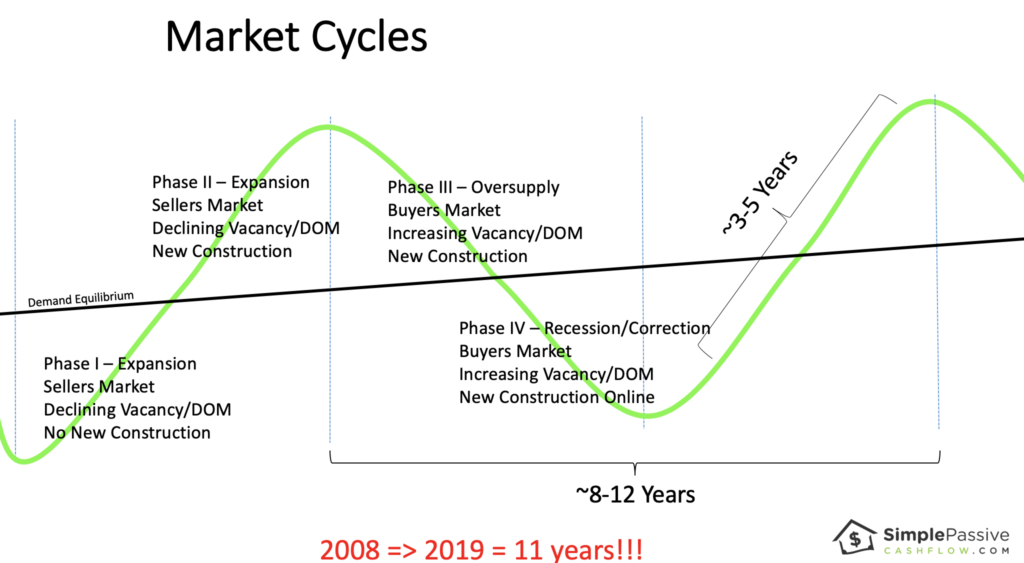
I, on the other hand, might dip from 8% cashflow to 4% cashflow. On paper, I might be in a market with compressed cap rates but hopefully, I have forced appreciation potential if I really needed to sell – the counter move is to get 8-12 year debt to effectively bridge you to the next side of the market cycle. In the meantime you cashflow 4% which is 4% more than the “hoarding cash guy”. In addition, remember back in the 2008 crash. 2009-2012 people did not know if that was the bottom and it was so hard to close deals in that Phase IV (see below). “Hoarding cash guy” in 2009-2012 and the few years after the next recession will likely be in the same clueless situations. Wouldn’t you like to be in solid Class C and B assets that continued to cashflow?!? 4% x 4 years is still 16% ahead! Now if you are “hoarding cash guy” with no deal flow then I get it. Saving cash is the best thing to do for the guy with no deal flow or does not know how to run the numbers. I guess everything does suck. 

SPC returns
SPC returns 2

Previous
Next

[Investors are chasing for decreasing yield these days] – REI.com – 19.03.4

Cap Rates
Cap Rates 2

Previous
Next

[Sophisticated Investors know interest rates and caps go up and down together and their money is made in the delta between the two] – REI.com – 19.03.4

Of course, all the Pro-Apartment publications will say this: Get Ready: Recession-Proofing An Apartment Portfolio – National Apartment Association 19.03.7

But enough of this doom and gloom because most gurus out there call recession everyday just so they can have Tweetable content. And they make a living selling subcriptions to their $79/month newsletter. But we are better than the average investor! And understand that future softness could very well be slowdown before the next great bull market.

Take care of yourself!

Investing in Fine Wine🍷


Try Wine Spies – Get $10 Credit

https://youtu.be/Nmj5Hc7MJ6I

https://www.vinovest.co/


Unknown Speaker 0:00
Introducing the new remote investor, incubator and ecourse we had the mastermind and we are going to break off from that being mostly an accredited investor group. And I wanted to create something that was helping out the little guy get started guys getting their first properties. And we’re calling this the incubator group. Get More details at simple passive cash flow, comm slash incubator, but basically what we’re doing here is we’re getting a group of professionals looking to build your network with others starting this journey to financial freedom, the ecourse that’s going to accompany this group is going to have eight modules in a closed membership site plus two bonus modules and download kit all geared toward educating the remote investor in this group. We’re going to have biweekly zoom video calls and if you join up, you’re going to get all past turnkey rental recordings. Now these calls are designed to ask whatever questions you have and hear the other questions from other investors in your shoes. And we’re going to run this like a bootcamp style. This is going to be five month program, we’re going to walk you through the best practices for tax and legal as you acquire your first remote rental. We’re even walk you through the due diligence and offer process we’re going to have staff membership coordinators for extra support to get you over the sticking points and to connect you with the right people in the group. Even if you’re shy. One of the biggest reasons for join is access to our ever changing Rolodex of top turnkey companies, brokers, property managers, insurance companies. Hey guys, we’re basically spoon feeding this to you if you’ve been on the fence and it’s time to get your first rental property go to simple passive cash flow calm slash incubator and by the way, for those accredited investors, we are looking for new members go to simple passive cash flow calm slash journey and join the flagship simple passive cash flow mastermind there. After the pandemic to new world out there having a network around you is so much more important. shoot me an email Lane at simple passive cash flow if you’re unsure if the incubator or if the credited mastermind group is for you, but let’s get you connected with other people and don’t go it alone Hey simple passive cash flow listeners. Today we are going to talk about investing in wine now not the securitized crowdfunding way, but the actual owning the actual bottles, the real assets. So today I have Anthony’s on. Thanks for Thanks for joining us, man. Thanks for having me. We’re happy to be on beyond here. So you guys want to Google this at the same time, you guys can Google their company, venal vest, but this is something that I’m personally interested in. I like that kms wine the cab, it’s like 100 bucks.

Unknown Speaker 2:35
That’s a good one a go to you know, it’s a good with a nice barbecue or steak.

Unknown Speaker 2:40
Yeah, but you guys are buying a lot more better ones and your guys system,

Unknown Speaker 2:45
I would say better from an investment potential, you know, tastes objective, but, you know, we’re looking for wines that are going to be bringing, you know, a solid double digit annual return over the next few years.

Unknown Speaker 2:57
Cool. So yeah, let’s get into this. I also have this displayed on the YouTube channel if you guys want to get access to that and I have a big menu of all kinds of things in the world you can invest in I’ll put the section probably at simple passive cash flow calm slash wine, you guys want to check this out in the future and and you can the root folder for this is simple passive cash flow comm slash menu which has all the different things out there that you can invest in now once you kind of take away anthon will kind of go through this deck.

Unknown Speaker 3:27
Yeah. So I’m Anthony, I’m one of the cofounders and CEO Urbino best. And you know, I first learned about investing in wine a few years ago, I sold I sold my first company so I was looking to invest and didn’t want to put it on the stock market. So I had some in real estate and actually stumbled upon a report talking about the historical returns of fine wine which you can see here. You know, 12% annualized returns actually has beaten out the s&p and relatively low volatility too. So that really just piqued my interest. I really dove into this space. And, you know, I had the general concept that wine gets better with age probably more expensive as well. And as I dove into it, I realized that even though it’s getting good returns, it was pretty tough to manage. There’s not too much info out there about which wines to invest in. I didn’t have a massive wine cellar. So handling third party storage, shipping all around the world was pretty cumbersome. And then finally, real liquidity standpoint, there’s a ton of places where you can buy and sell wine today, but how do you know that you’re interacting with someone who’s trusted? How do you know you’re not getting ripped off with a price there’s really no you know, index for wine that is globally recognized. So those are kind of all the problems I saw on the space that I thought could really be improved and that’s why I started this company.

Unknown Speaker 4:46
I bought a four pack of key messes in from eBay that were like some normally that’s what 100 bucks 90 bucks he I bought it for like 70 bucks, but when I got it I it seemed a little fishy to me.

Unknown Speaker 5:01
Tastes wasn’t exactly what I thought it was.

Unknown Speaker 5:03
It was a lot of fake wine out there.

Unknown Speaker 5:06
Yeah, maybe I bought that. But what, you know, as we’re talking earlier, what from your background kind of brought you into this? Because you’re the co founder of this company. What was I mean, everybody’s interested in wine. Right. But what what from your background and kind of gave you the ins to kind of start this?

Unknown Speaker 5:23
Yeah, so I really just grew up with it. I have some extended family in the wine importing industry. I grew up in Beijing. So during the entire craze in the mid mid 2000s, of lot of Chinese people just kind of getting to know about French wine, Bordeaux, burgundy. You know, part of that kind of being a part of a wine importing family. Just really, I think piqued my interest in it. I always thought owning wine was really really cool. And was just was a pretty dormant passion of mine, I’d say until I read that report and kind of just ignited everything again. Cool. Cool. So,

Unknown Speaker 6:00
you know, like you guys are able to get connections from the suppliers that a big kind of leg up as a group from your network.

Unknown Speaker 6:08
Yeah, I think something about, especially like, the high end like top, you know, top couple percent of wine is that it’s very, very hard to get, you know, it’s always in globe, you know, globally, demand is always going to be outstripping the supply. And it’s very hard to get to so access to the big thing, you know, even if you can get it, it’s probably marked up hundred 200%. And you’re not actually getting it for its true value. So, you know, we, with our connections, and, you know, with our team, which has, you know, members who are masters, Somalis, writers, directors at three Michelin starred restaurants, been in the industry, they have great relationships with some of the top wineries in the world, we’re able to get that insider access, that traditionally is not available to the public wanted to kind of look at some of the factors so as I mentioned, with having knowledge to once again Pick out, being able to store the wine properly and make sure that it’s actually aging in the right conditions. And then finding liquidity when you actually want to exit your investment. It’s a big issue. So, you know, we can go on to the next slide, and I can talk about what we do at the end of last.

Unknown Speaker 7:15
So is there was your family kind of, are you like the Asian Gary Vaynerchuk, then or is that similar? What

Unknown Speaker 7:20
was on that level? Yeah, much, much smaller time. But he’s, you know, I was he he really popularized, I think people just becoming more educated about

Unknown Speaker 7:30
wine. So that’s something that’s a question that came up right when I saw this as like, Alright, where’s this wine stored? It’s not like in your house that you get to impress all your buddies.

Unknown Speaker 7:39
Yeah, so we have six storage facilities globally, strategically located in and near to the biggest wine growing region in the world. So we want to know that in California, we got one in the UK, a couple in France, one in Italy, one in Denmark, and we want to make sure that the wind moves the minimal distance as possible. to not disturb it and make sure that we’re able to make sure its condition is as like kind of pristine as possible. So after we buy it for you, we’re able to have a temperature controlled humidity controlled, actually one of our warehouses, the British Royal Family stores, they’re one in the same spot as us. So it’s really just kind of top notch storage facilities. And with the V Nova solution, you don’t need to know anything about wine investing, to get started, the inputs that we take are like, you know, how long are you looking to hold this asset? Or how much are you looking to invest? What’s your risk appetite like, and we’ve developed an algorithm and also portfolio advisors that can then automatically construct a portfolio for you based on those practices, deploy your capital for you, and also actively manage that portfolio of lines on your behalf. And for the, for the end client. It’s a fully digital experience, you know, like you see in that screenshot. It’s a dashboard that you can track your wind price over time. There are updated in real time, and you can see exactly what you own kind of like a, you know, like a robin hood or like a Schwab brokerage account.

Unknown Speaker 9:07
So when they when you buy a bottle you’re not like buying like a half a bottle you got to buy in increments of the bottle than that.

Unknown Speaker 9:14
Yeah, so usually buy it in cases of six or 12 because that’s what the most kind of liquid unit of measurement is, you know, it’s it’s tough to just buy and sell individual bottles because you don’t really know what condition they are but when they’re in the case, they’re kind of packaged the right way. It’s like kind of the industry standard in terms of what people like to buy in and the quantities that they buy it as well.

Unknown Speaker 9:38
So the normally if you’re buying at a case at 12 at 100 bucks per you’re looking at least a grand

Unknown Speaker 9:45
Yeah, so it’s a grand to get started on our platform.

Unknown Speaker 9:48
And then what what are what is kind of the average is like we see like on here they commence I’ve never heard of that 500 bucks a bottle is I mean, what’s the kind of the median and what’s kind of the higher end price per bottle

Unknown Speaker 10:00
I think it really depends on how much you put in. Because, you know, there’s bottles that can range up to thousands, even 10s of thousands. And some of our higher level clients, you know that the bigger portfolio sizes, it opens you up to more of the wine universe available to purchase. But our average consumer goes around like six $7,000 worth of wine, you know, that’s 5060 bottles, you know, things you know, things that are ranging from 100 something bucks to up to 500 bucks a bottle.

Unknown Speaker 10:28
So when you’re starting this company in the early stages, were you like walking around with like, 10 bucks 10 grand bottles of wine? I mean, what was

Unknown Speaker 10:38
in your hands?

Unknown Speaker 10:39
I mean, I mean, some of these bottles are Yeah, they’re 10 grand, they’re 2020 grand, you know, it’s uh, it’s pretty surreal, but just so treated as an investment, right? Like you hold you hold the bar gold, it’s gonna be pretty, pretty pricey as well.

Unknown Speaker 10:53
Yeah. Do you drink your own supply? Or what’s the average

Unknown Speaker 10:57
of my I think that’s also a good thing about having the storage out of sight out of mind is you know you have some friends over and you have a couple bottles have a good time. It’s really easy to just like reach into the back of your cellar and accidentally pop something back could be thousands to thousands of dollars. So what I drink is much cheaper than that. Okay, what do you drink by the way? I mean I love I love serraj so either from like northern road or from like Santa Barbara I think that’s like my my go to bridal. Yeah, that’s that’s kind of what I’ve been drinking now.

Unknown Speaker 11:34
You want to find deals on real estate before they’re on anyone else’s radar. I recently came across pre aureo a new opportunity from one of my mentors George Newbery founder at HP. On this new platform, real estate investors can partner with pre reo on the purchase of delinquent first mortgages secured by vacant properties directly from lenders. This is huge because normally mom and pop investors like us only have access to REO properties. Usually investors are not able to access these pre foreclosed properties and have to wait until they are foreclosed. But with the help of pre reo investors can easily search and bid on pre Oreos offered at a sizable discount. Connect with experts that are familiar with the P reo process and generate financial returns while making positive impact in their communities. Take advantage of this unique opportunity to expand your real estate portfolio. You can learn more about fi reo by going to simple passive cash flow calm slash pre reo. Cool so so kind of getting back into the storage correct me if I’m wrong, but my my assumption is like that’s like a commodity, right? There’s a lot of storage facilities out there. It’s a totally legit operation very secure is just you guys have built a contract to kind of support your whole operation.

Unknown Speaker 12:55
Exactly. Because you know why people have been storing wine for decades, even centuries. The biggest thing Like, you can’t really do it profitably unless you get economies of scale. So by working with a platform like Coronavirus, we’re able to pass along those savings at scale so that it actually becomes profitable for you to store and manage and invest in wine.

Unknown Speaker 13:14
So if you have like a 500 Well, I guess it wouldn’t be a $500 bottle, but it’d be a $5,000 case, how much would it be per year? Or how do they charge you to store that

Unknown Speaker 13:25
in the so cars like an annual annual management fee based on the value, so with our fees on vino bus, we charge consumers 2.85% annually to manage the asset. So that includes everything from sourcing to fraud detection, to storage insurance, as well as the active managers, all that’s kind of included in ours in our fee structure.

Unknown Speaker 13:49
So these are the questions as an investor you guys want to ask, you know first, like the fraud detection, that’s like when you buy a piece of real estate, you have the title, search and you make sure that the title Clean, you know, I’m assuming if you want to talk to that at the end, like what’s the what is the procedure for the wind to get legitimized? Yeah, cuz like,

Unknown Speaker 14:07
like you mentioned, like there’s a lot of fake wine out there, right? There’s a lot of fake everything. First we have our team be able to inspect that a, it’s authentic, it actually came from the winery, not some, not some person who have remodeled it, and that it is in excellent condition, because, you know, wine is a living thing, right? If you leave in the sun, it’s going to be turning into vinegar and be worthless. So we inspect the condition inspect that it’s authentic. And then when we put in our, in our storage, we actually have an insurance policy that then covers it against all sort of future damage breakage, and it’s insured at its full market value. So you know, we don’t have FDIC in the wine industry, but this is like pretty much, you know, the next best thing

Unknown Speaker 14:48
Yeah, and that and that insurance thing, just like you insure real estate or your cars, that’s a big thing for investors. You know, there was an investment going around last year was like buying some kind of citrus fruit. In different country or you know, any kind of crops, right, you want to, you want to be able to know that if there’s a fire Well, no big deal, you know, it’s insurance not for you’re not gonna be a total loss.

Unknown Speaker 15:11
Exactly. Exactly. Awesome. So, you know, wanted to kind of talk about portfolio construction, right? Because if you’re more on the aggressive side, just like stocks, there’s going to be emerging markets, there’s going to be newer wineries that have potential to outperform the index. And if you’re more on the conservative side, there’s more like your equivalent of blue chips, right. So in this case, it’d be usually wines from from France and from Europe. So Bordeaux, Burgundy, champagne, those are definitely like wine growing regions that have been growing wine for centuries. So we have hundreds of years of historical pricing data we can predict with our AI model with a very high degree of confidence what future returns will be and then there are kind of emerging markets you know, whether it be Australia ci, lay some newer parts of California in Italy or the road and So that’s kind of how we look at portfolio construction making sure that people stay within their risk ranges and that we can give them the right sort of expected returns when you’re looking at this holistically as an alternative asset within their entire portfolio.

Unknown Speaker 16:15
So we had another similar investment on the podcasts of art, I think the the URL was masterclass.io. But you know, the blue chips are like the I mean, if you can get your hands on like the Picasso’s or like all the classical guys but the the new up and comers are like the Andy Warhol I didn’t know who that is apparently, he’s pretty famous, but what are what are some of the like the new I mean, do people even know I mean, I mean, you’re you probably like land you dude, you don’t even know these, these kind of why? Even why even tell you? But I mean, what are some like names or brands that are examples of the two

Unknown Speaker 16:51
so I can give you a good example. So there’s someone called Erickson so he came from one of the most famous wineries in America called screaming Eagle, those bottles retail thousands of dollars, and he loves to go start his own winery. So that’s an example of an emerging kind of winery to look at because it’s someone coming from, you know, a top top winery leaving to start his own brands even though there’s no historical track record per se. You know, it’s someone who’s very very well regarded like say, if you know, the CEO of Apple loves to go start his own new company, people are gonna think it’s hot. Yeah,

Unknown Speaker 17:28
I was thinking like David Beckham coming to the LA Galaxy.

Unknown Speaker 17:32
Yeah, that’s, that’s exactly like that, right, like newer, smaller market unestablished. But, you know, there’s gonna be a following

Unknown Speaker 17:38
so what is like what is the the typical returns that people can kind of expect from you know, doing like more of a blue chip kind of a classical portfolio or more up and coming a little more riskier? What’s

Unknown Speaker 17:51
Yeah, so I’d say with like, our kind of, like, if you’re just tracking the index, you’re gonna get 12% annualized returns, you know, that’s, that’s over the course of decades. That’s what we are. been seeing over the past few years, more aggressive portfolio is going to be ranging up, you know, 16 18% annualized returns. And then if you want to go like super, super conservative, I think our conservative investors have averaged closer to like 8% annual returns.

Unknown Speaker 18:14
And that’s all inclusive of like what you said at 2.8%. About that’s, that’s how you guys make your money. Yeah, so those numbers I’m quoting are before your fees, you take off the fees on top of those returns. Okay, so if you’re if you’re saying 12% analyze returns, they’re sitting at what a nine point something percent per year. Exactly. Okay. I mean, it’s, it’s a hard asset. It doesn’t cash flow, but it’s really cool. So I think I mean, I think that’s the appeal. Right? You say you own these these bottles somewhere? I mean, are what are clients doing? Like they want to show it off? Right? Do they get to see hold the bottle or get to visit it at the safe?

Unknown Speaker 18:57
Yeah. So if they want to visit it, they can can do it anytime they want to take it out, drink it, they can do that anytime. So I think that’s one of the benefits of not securitizing or not owning fractional shares that represent an asset, actually owning the asset is that at the end of the day, you have the direct benefit of owning that physical asset and you can do whatever you want with it at the end of the day. So a lot of our investors like maybe they want to know more about wine or maybe they want to get something for like their, their kids birth year to share on their wedding day, right? So they’ll buy 10 cases and you know, 10 years later they’ll sell off five and then use the profits generated from that five to basically drink nice wine for free with the other five

Unknown Speaker 19:40
Yeah, I’ve thought of like you know, a lot of the deals that we’ll do are like five to seven years, you know, go and buy a bottle case right now and then have it just sit in your safe for five years without turning into vinegar at my house. So guys, um, you know, a couple takeaways that are very similar. Are these the reason why I kind of bring these kind of off the wall investments is it kind of it helps us as passive investors kind of understand and value these type of investments. So for example, Anthony was talking about, you know, legitimising the wine and and I don’t know if it’s some kind of barcode or you know some certified inspection process but you know, like I was looking at life settlements which is you know, you’re you’re kind of buying the asset is a piece of paper a contract with the individual so on their passing but the when I was looking into this one particular one I wasn’t able to get it verified yet so the Emeritus or Northwest feature on the top but I didn’t know if it was just like a fraudulent piece of paper and that’s what made me uncomfortable, but in this case, anti right like these things are some some third party is backing them. Is that how it’s done?

Unknown Speaker 20:54
Exactly. So you can independently audit your ownership every single investor when They come onto a platform and they buy a bottle, you know, there is a paper trail so you can see, and you can visit and you can actually touch your actual asset, you know, we try to make it as as direct as possible in terms of adding you have the kind of confidence you need to invest in something new that you may not be familiar with.

Unknown Speaker 21:17
And another thing that Anthony mentioned was, you know, I forgot who was that that guy that had the wiring that was moving wineries?

Unknown Speaker 21:25
Well,

Unknown Speaker 21:26
yeah, and Eric’s and he’s kind of like the, I would call them the brains of the operation. So I was looking at oil and gas investment and I actually went down there and I met the in the oil and gas investment, it’s, you know, just putting holes in the ground, but the geologists is kind of the the guru, the brains of the operation. So I met him and his dog down there in Texas, and that person is the person that you kind of bet your money on. And in this case, that’s the brains and I guess you could call it similar with you know, apartment vesting, which would be like the owner operator. In that case, but, you know, when you’re investing, you need to figure out where’s that, where’s the brains of the operation, the intellectual firepower of the investment, because that’s, you know, you’re trying to pick the winners here. And, you know, a lot of times you have very little, you may not know too much about the investment. But in some cases, it’s better to go with the proven folks even though past performance does not indicate future success. But in this case, it’s just what sugar and water I don’t know what makes wine grapes or something like that, just grapes. And anything else that you know, that kind of takeaways that investors can take from this or anything else we missed?

Unknown Speaker 22:38
Um, I think the interesting about wine is that it’s, it’s pretty uncorrelated to the market. In good times and bad times people can be drinking wine. And what really drives wine value is that it needs time to age and get better than the bottle. And as it gets better in the bottle, people are drinking from that annual supply, right? So supply dwindles crops up demand. And you know, we’ve seen it even this year with the stock market volatility. In the first quarter when the s&p was down, I think like 20 something percent. You know, our investors are up, and they’re up on this year too. So, you know, it’s not going to be something that’s like Bitcoin or hot tech stock where you’re getting, you know, 50% in a year, although there are some like that, but it is something that’s steady. It is something that is new that, you know, hasn’t really been available unless you’re ultra, ultra wealthy or ultra well connected. And we’re just looking to give this access to more people.

Unknown Speaker 23:35
Now. I’m actually happy I’m in the opposite seat because most times I’m in your seat people are pegging me with hard questions. So here’s a card question these days with the whole rise of of craft beer, because people are cheap, don’t have much money. You know, people are moving more towards that as an also marijuana. You know, eating brownies is probably a lot Well, I don’t know I don’t want to say if it’s healthy or not, but healthier than drinking alcohol, I mean has is that impacting wine prices as a whole,

Unknown Speaker 24:09
I think on the lower level, so like, you know, grocery store wines, definitely, I think as technology has gotten better, they’ve been able to create wine more cheaply and sell it for more cheaply. But this segment that we’re looking at is like, you know, pretty much the top top like 5%, and that is going to be still very, very much so untouched, you know, it’s a luxury segment, people are still going to be wanting these brands, you know, like the equivalent of like, the Ferraris and blue buttons in the wine world. And I don’t think, you know, something that is happening on kind of the lower segments will really affect what we’re doing here.

Unknown Speaker 24:47
And then, you know, as an investor, you know, you always want to be looking at the exit strategy. You know, don’t buy anything that you can unload at any point, even though you know, you got to assume these things are illiquid for the most part, but what’s the what’s the Like if somebody wanted to unload their their case, is that really easy? Is there like a steady supply of buyers? And then, you know, do you guys, do you guys make money off of the commission off that sale? Or is it all encompassing the asset management fee?

Unknown Speaker 25:15
Yeah, good question. So we don’t charge anything extra to liquidate. We don’t have any sort of like minimum lockup periods or anything like that. Because we’re working with wine. And you know, it is a consumable. So if you want to exit, we’re not only selling to other wine investors on our platform, but think about all the retailers distributors, hotel restaurant chains that are all looking to buy wine and consume it. So because of that the liquidity is a lot better the way we’re the way that we’re doing it than a lot of other alternatives. Well,

Unknown Speaker 25:46
so Anthony, once you get your contact information for people to get ahold of you, if not, I can put it at simple passive cash flow calm slash wine Are you guys should know.

Unknown Speaker 25:57
Just feel free to email me directly. If you have any questions. It’s Anthony vino best CO and you know you can browse our website and make an investment directly on there. Cool.

Unknown Speaker 26:08
Well, yeah, thanks everybody for joining us again check out all different types of investments it’s simple passive cash flow.com slash menu you know, I think there were like musicals and all kinds of things you can invest in. Maybe one day I’ll buy like the Backstreet Boys I wanted that way royalties, and a bottle of 12 pack of one of these fancy wines. But if you guys haven’t done so check out our investor clubs both passive cash flow calm slash club, and you’ll get access to the first three trial ecourse sections there.

Unknown Speaker 26:46
This website

Unknown Speaker 26:47
offers very general information concerning real estate for investment purposes every investor situation is unique. Always seek the services of licensed third party appraisers inspectors to verify the value and condition of any property you intend to purchase. Use the services of professional title and escrow companies and licensed tax investment and or legal advisor before relying on any information contained here and information is not guaranteed as an every investment there is risk. The content found here is just my opinion and things change and I reserve the right to change my mind. Above all else, do your own analysis and think for yourself because in the end, you’re the only person who is going to look out for your best interests.

David McAlvany: Who wins election? Pre-Covid – Part 2 of 2


https://mcalvanyica.com/

China/India, macro economic trends, w/ David McAlvany 

Explain your business and clientele


Where do you think this economy is going


China growth is slowing

2.9% projected growth – 2.5% is technically in a recession

Corona virus is impacting growth

Europe lacking main growth indicators

US markets have never been better


Why gold?


How is gold better than mix commodities such as real estate?


TRANSCRIPTION:

0:00
So significant issues, significant issues for us to address for our policymakers to address. And as far as I’m concerned, this is not a time to put a tremendous amount of faith in a few guys and gals with PhDs, I think they think they know more than they do. This is

0:16
a story about a dude named Lane, he moved to the mainland and bought one place to stay. And then one day he went to try to rent them out. And then he became one

0:27
that still makes

0:30
us in China, or what the the kind of the leading indicators, right are the big folks in the boat that can potentially tip us over? What are some of the trends domestically that you’re kind of looking at or following?

0:41
Yeah, you know, one of the things you know, where we met, one of the things I wanted to highlight in the presentation that I gave you a month ago, is that we’re doing pretty well in the US. In fact, in some respects, by some measures, we’ve never done better. And so what does that mean when you’ve never done better you’ve got household net worth here in the United States at 113 trillion dollars, it’s never been better. I can tell you in the past when things have never been better, that’s usually been the end of a trend, not the beginning of a trend. If you just look at sort of, again, going back to that idea of business cycle, moves from sort of low levels to high levels and kind of oscillating back and forth, you go from employment, like what we have now, if 50 year, records of low employment, this is fantastic. Everybody’s at work, everybody’s being paid more. But it’s important to keep in mind that these things tend to ebb and flow. And it’s been 50 years since things have been this good. What happens generally, when you get to these kinds of points is that they are in fact inflection points where it hadn’t been this good and 50 years networth hasn’t been this good ever and you start seeing reason actually for mean reversion. mean reversion is just a fancy way of saying, We operate according to a law of averages and if things are great, now they’re not always great and They’re they’re typically pretty good. But if they’re super great now, the law of averages and mean reversion suggests that we we’ve got some downside downside in the stock market downside and bonds, you know real estate’s tricky because real estate is tied to interest rates. In many respects, if you follow a real estate portfolio, it’s it’s very similar to a bond portfolio where the cost of capital, the rate of interest is one of the key defining factors in value. If you look at cap rates, we could never have compressed cap rates like we have today, if interest rates weren’t on the floor globally and here in the United States, with rising interest rates comes rising cap rates. And yeah, I think we know what that means in terms of value for the asset as well. So the real challenge in the Americas is will the investor today benefit from Central Bank intervention in the market in order to extend these trends? keep interest rates low not because of a normal natural market? function. But just because by policy edict we want rates low, we’re going to sit on them. You know, when I went to school, the idea was that interest rates were determined by buyers and sellers not by policy edict. Right? This is the nature of the free markets correct. Where interest is is is a component, and it reflects risk, and it reflects the solidity of the borrower. And if you’re not a good borrower, you pay more if you’re a very good borrower, you pay less. Well, today, interest rates are being crushed down to very low levels across the board, by policy edict. So we have a scenario unfolding, where you could see pressure on stocks, bonds and real estate, except that real estate is in this weird category. Where if they’re able to effectively hold interest rates low indefinitely, who knows what happens to the value of real estate, people are clamoring for income people have to have income, our demographic thick, sort of big in the Python so to say is this move of baby boomers towards retirement is you probably know the numbers at least 10,000 a day, who are retiring and guess what they want, they want their retirement assets working for them paying them for something, right. And it used to be that if you had a million dollars and you’re earning 5%, you can have a laddered cd portfolio at the bank, take very little risk, never go into principal and have $50,000 a year supplementing your Social Security income, you can’t do that anymore. Today, if you’ve got a million dollars sitting at the bank, you can buy a few cups of Starbucks throughout the year. That’s it. That’s it. So you know, real estate as it is a very interesting thing. I think there’s some vulnerabilities there. But, you know, as you said, this gets very specific. We’ve talking very macro to do well in real estate, I think is to hone in on the property and try to adjust many of the risk variables by preference preference. For a certain style of property, a certain place for that property, it doesn’t come back to the three words that you think everyone knows about real estate, location, location, location.

5:12
I think and, you know, kind of going back to what you’re saying, I think there was a statistic that somebody threw throughout that, that mastermind were very soon there’s gonna be more like 60, people turning 65 and babies born. And they’re going to want to convert their assets that they that they accumulated to this accumulation mentality, which I think is wrong. And finally transition into cash flow, the stuff that we aspire to now, and then kind of going back to your earlier point, in like, as an investor, I don’t care what the interest rates are. Because as an investor, I make money off of the delta between interest rates and cap rates. I think I think you kind of mentioned they kind of float based on one another. They kind of track the same way. I’ll throw out a recommendation For folks listening, and maybe you can do one to David, but, you know, I’ll say like, Look, don’t don’t just stop investing. But if you have equity not doing anything that just went up with the tide, like like that $500,000 in your primary residence not doing anything, I think it’s time to get that out or cash it out or get a new loan and lock in those long term interest rates, especially if you’re going to retire soon and lose that w two documented income. But any other ways you see playing this?

6:31
I think in in the years ahead, I would encourage kind of a low debt approach. And, you know, the strongest position to be going into a period of mean reversion is having lots of liquidity and low debt. Right, that gives you lots of opportunity where others are hamstrung and have to play the patient’s game, seeing cap rates at these levels. Again, the cycles run from double digit cap rates down to low single digits, and we’re met the low single digit into the range. We just saw Simon properties gobble up Topman, for, you know, a fairly significant price paid. And it was in the high fours. This is this is retail property, retail property in the high fours in terms of cap rates, in my opinion is paying through the nose that was a good property portfolio. And Simon’s no no slouch when it comes to knowing how to extract more value out of a property. But nevertheless, these are probably some of the lowest cap rates Simon properties ever, ever paid. And I think that’s that’s worth keeping in mind. Maybe they can turn a four and a half into something higher by the magic that they work internally. To me one of the best things that an investor could do today is hedge some of their bets. We like gold, not just because we’ve been in the business for 50 years, but because we see some macro factors which are going to drive more interest in that direction. So both from a game perspective, it’s attractive goals. silver, platinum palladium. These are areas of interest, particularly gold and silver. And so from a growth perspective, very intriguing. You’ve got so many people on one side of the boat, dow and NASDAQ and s&p hitting all time highs in the month of February 2020. And who knows where we go March, April, May. But typically you have a strong run in equities up through April. And this is where you’ve got investors who are contributing to their IRAs and their 401 K’s they’ve got the tax deadline in mind. So there’s a little bit of a push an extra push into the capital markets. And then after April there’s there’s there’s less capital flowing into the stock market. I would guess that after April, we might discover some significant weakness in the stock market. And when you begin to see that mood shift, and there’s not just easy money to be made you buy Tesla today and tomorrow it’s up another $300. I mean, this is this is increasing. Val at this point with some stocks, if that’s not the case, then the whole mindset the whole mood shifts, and this is where gold benefits tremendously when there is any inkling of fear or need to hedge positions in the marketplace people go for the gold so we launched a program called vaulted a year and a half ago. It’s a savings program with the Royal Canadian Mint where you can own physical gold you can buy $5 increments, $5,000 increments $5 million increments and you own kilo bars at the Royal Canadian Mint. If you want them delivered, you can have them delivered to your door. If you want to keep them there, you can buy it and sell it on your computer screen very inexpensively. Best counterparty risk you’ll find Royal Canadian Mint and it’s a very easy to use App takes less than 60 seconds to open an account@vaulted.com. To me that’s an entry way to sort of test the waters with gold get to know the market begin to watch the price and be able to dollar cost average into position in the metals. I do see a significant mood shift beginning to occur and again, we will at something like the Coronavirus, maybe it passes. Maybe by the time you’ve published this, it’s a non issue. Maybe by the time you publish this, it’s five times the issue. I think what I look at on a bigger scale is effect that we’re already in a declining trend in terms of global growth, in part because we’re having a harder and harder time servicing the debts that are already outstanding 250 trillion dollars. trillion with a T is our global stock of debt that’s 320% of global GDP. We don’t have an engine, a global engine and big enough to service this debt, with even a minor uptick in interest rates. So significant issues, significant issues for us to address for our policymakers to address. And as far as I’m concerned, this is not a time to put a tremendous amount of faith in a few guys and gals with PhDs. I think they think they know more than they do. And so the guys at the ECB the pboc the boj All of the acronyms that are for your world central banks, they really think they’re smart stuff. And they are smart stuff. But you have to recognize what you know and what you don’t know. And they don’t know everything. But they pretend to and that’s their policy seem to reflect. We know everything and we’ve got it under control. If they miss even a little bit, and there’s a repricing even a little bit on 250 trillion dollars in debt, you’re talking about making the global financial crisis of 2008 and 2009 look like shot look like look like child’s play. So I would hedge bets I would certainly continue to invest in income producing property. I’m very interested in that myself but make sure that you have a balanced asset something that is very safe, very stable, under any circumstances. I think gold deserves a place in the portfolio vault it’s a great way to get to get that process started.

11:49
Yeah, something I’m kind of looking into also, you know, I think for guys that are it’s it’s a little difficult, right, like these podcasts are free, right? And all kinds of people download these things. I mean, the folks that I kind of work with, and I’m sure you kind of work with, you know, there are mostly accredited investors. And I think, you know, the hard metals definitely have a place in it. But the trouble is when you get these, like 22 year old kids with no money, and they think that they buy gold, and it’s like, dude, like you should go buy a rental property, you know, you don’t have any money to protect, you got to grow it. That’s kind of that that paradigm shift or that paradigm that I think people need to be aware of when you listen to different different folks, you know, I think David and I would kind of cater to the more of the higher net worth folks these days.

12:33
Yeah, I mean, I will say that I’ve benefited personally from the real estate market over the last 20 years, but I personally have benefited more from the gold market over the last 20 years. I’ve seen five times increase in my gold position 500% gain, which far outstrips anything you could have had in the s&p or the Dow or the NASDAQ over the last two decades. I think the only place you might have done better is if you’re compounding at a high double digit rate, you know, 15 to 20% a year because you owned the right kind of passive income property. So they’re their places to go off the market. So to say off the publicly traded markets, I think one of the approaches that we take with the precious metals is a growth oriented approach where you know, certain products, gold versus silver, for instance, trade in a historic ratio, a relationship between each other. And today, that ratio is at an extreme at 88. To one the highest it ever gets is 100. The lowest it gets to is 15. If you play this ratio back and forth, you can take a few ounces and multiply those ounces, you know, over a course of time to turn 1000 ounces into 10,000 ounces that can be done that can be done. And so that’s one of the ways that we approach the metals market through our advisory service is to compound ounces. So if any of your listeners are interested, we actually have a great write up on compounding ounces. It’s a very smart way to approach the gold market for someone who wants a long term allocations, either gold or silver may not add any more money to that segment in their portfolio, but still want to see the number of ounces that they control grow. If you could compound square feet, if you could compound acres, we’re doing the same thing with ounces. You just it’s it’s something that’s easy for us to do, because been doing it for 48, almost 50 years love to love to help anybody and for us, it doesn’t matter if people are working to $5,000 or $50 million. I’ll be quite frank, it’s it’s a lot more enjoyable to work with people who don’t have that much money because they don’t think highly of themselves. We have billionaire clients, and generally speaking, they’re a pain in the butt because they do think that they’re like one step away from God, and they’ve forgotten where they came from. Oftentimes, they’ve forgotten what it took to make the money and pride dominates and just as human beings sometimes money doesn’t make you a better person. I have no preference. I have no preference. I like to help people. That’s why with the vaulted program, we Put no minimums on it. I mean, I had my kids in mind if they want to put $5 into gold they can. Zero respecter of persons or net worth in that respect. Don’t get me wrong. It’s it’s not it’s not an unfortunate thing to to write a trade for 50 or 100 million dollars. As a firm, we don’t have to cater to just the superwealthy.

15:19
That’s the nice thing about working with private equity folks. And for those who don’t know, private equity is I would call it like, you know, net worth 500,000 to 5 million I guess, but when you get above that 1020 hundred million, you’re more into the family office world and that’s exactly what David’s mentioning, they’re kind of a pain in the butt. Yeah, they can write a check but if they’re all skiing, you’re not doing any deals, whereas the private equity guys are kind of just working professionals get a little bit net worth and you know, they’re most most of my investors pretty appreciative, you know, kind of the work we do so some don’t, and then we, we don’t work with them anymore. But for the most part, got a good working hard folks doing this stuff. And you mentioned earlier, I’m April what’s what’s going on there? For people who aren’t aware,

16:03
we’re talking about April and kind of seasonality within the stock market, it’s not uncommon to see your best six months of stock market performance leading into April, there’s been an old phrase on Wall Street, if you’re looking at the stock traders Almanac sell in May and go away is is the phrase, because you’ve got your best six months of growth, which end in April. And again, a part of that dynamic seasonally is because you’ve got a lot of retirement dollars that are being automatically allocated to stocks when money comes into 401, KS and IRAs and whatnot. And it’s just automatically put into the stock market through mutual funds or exchange traded funds or what have you. It ends in April, with that priority being April 15. And the tax deadline you have to make your contribution by April 15. So that’s that’s the way people act. That’s the way people behave and there’s a benefit to those who are on the growth side, but it’s also worth mentioning And I mentioned April, because typically your worst six months began in May. And if you looked at a 10 year period or a 50 year period, or 100 year period, if you were a stock investor, and you just invested in the best six months, and then were in cash for the worst six months or sitting in gold, for the worst six months, your returns would be tenfold better if you just avoided the worst six months and got out of the stock market for the six months. So what is very interesting to me, is we have that timeframe, matching up with non resolution with the Chinese economy. Keep Keep in mind, when we talk about the Chinese economy earlier, this is one of those critical things. You know how important Christmas is for us. If you’re a retailer in the United States, how much of your business is done between Thanksgiving and Christmas 60% 70% of annual sales happen in a short period of time? Well, you have a huge amount of consumption and economic activity that happens around the Chinese Lunar calendar. The new year is when people are giving gifts you actually see a boost in the price of gold every year around the Chinese calendar because people are traveling giving gifts. It’s it’s like our Christmas, okay? It’s it’s a very fascinating thing to see happen this year. Everyone was was acting like a shut in. They didn’t go out for meals, they weren’t buying gifts. They weren’t traveling. They weren’t buying gold. They weren’t doing anything. So again, we factor this into 1.5 billion people who are not spending for one week or two weeks or three weeks duration is a big deal here. The Coronavirus is a big deal or not a big deal as it relates to economic growth in China and for the world based on duration. If people are not getting out and spending and it’s only for a one week period, it’s just no big deal. No big deal. I mean, I’m not I’m not trying to minimize the loss of lives. That is a big deal. But I’m just saying from an economic perspective, the longer this carries on, there’s hesitation to spend, there’s hesitation to buy real estate in China. To buy a new car to go out and eat, and this is going to have a major impact on the global economy and the mood that we have coming into year end 2020

19:11
it’s simple passive casual listeners I’m wearing my sleep shirt here because we make our money in our sleep one of those things that I’ve been playing around with this tradeline hacking and if you haven’t heard of that, it’s a great way to make some side cash hundred a bunch of books off each credit card every month to learn more go to simple passive cash flow comm slash trade lines and check out our E course to learn all about this cool way to make some money on the side balance take it out look for the gold section in the the investing menu at simple passive cash flow calm slash menu. And for those of you guys haven’t checked out that page, that’s kind of the starting point to check out any of these types of you know, all these different asset classes you can invest in whatever you want out there. So check that out. But before you go, David real quickly not to get political or anything like that. Who’s gonna win election and what does that mean? is another four years of good times ahead?

20:07
Yeah. So many times, you know, we have this idea in the stock market of the there being an efficiency, where prices are reflecting all the knowledge that you can have at a certain point in time. If you look at the stock market today, we are, you know, in the 29,000 range at this recording, and that doesn’t seem to be much of a concern for change. The stock market and its pricing would tell you Trump’s a shoo in Trump, Trump wins. Maybe he introduces even more tax benefits. Maybe he does some major infrastructure spending and taps the fiscal side. While he continues to pressure Jerome Powell on the monetary policy side, to sort of boost the system a little bit into the election and after the election, but today, the stock market would signal to you that Trumps Trump’s gonna win if Bernie Sanders gets the nomination. Elizabeth Warren gets the nomination, then I think you could see the stock market begin to sell off considerably. And if they win, then you’re talking about a 40 to 50%. decline in equities, a total bloodbath, a total bloodbath, because you’ve got some personalities in the Democratic Party, that prize the idea of redistribution of wealth. It’s not about economic growth. It’s about taking a static pie and making sure that some people get a larger slice of it. But I think Trump, generally speaking would say, let’s grow the pie. Let’s grow the size of the pie overall, and then see how it shakes out. Whereas particularly with Sanders and Warren, I don’t get the same impression with a Budaj edge, or I mean, there’s, and certainly with Mike Bloomberg, there’s a more moderate position who gets the nomination I would watch the stock market like a hawk because again, the stock markets going to give you almost like a litmus test of status quo is okay as far as the stock market is concerned, if it’s been good for four years, let’s get another four years just like this. Right? That’s that’s what you see in the state. Stock Market being 29,000 plus the nomination on the Democratic side and ultimately if the democrats do in the only hope that stock investors have of, of being okay is if a Bloomberg is is is the winner. There’s a whole bunch of people in there that between reckless fiscal spending well, frankly, the republicans are just as reckless on the fiscal spending side, they just choose different projects. But in terms of the tax side, the markets will get very, very concerned. And it’s been interesting. It’s been interesting if you’ve if you’ve watched the headway that Sanders is making. He has a lot of grassroots support. A lot of grassroots support. DNC doesn’t like him. the DNC would much rather have a moderate DNC, I don’t think knows what to do with Budaj edge quite yet. Maybe a little young. Sanders is like in his like an animal off the leash as far as the DNC is concerned. They can’t control him enough. He’s too much of an idealist. He’s too much of maybe even a radical, unmolested side who ends I still think Trump wins? Can that extend the growth trends for another four years, we’ve already extended the growth trends to 11. We’re already long in the tooth in terms of what would be normal and expected for the next recession. On a normal timeframe, we should have a recession or should have had a recession over the last year, two years, three years hasn’t happened, doesn’t mean it won’t happen. But what has allowed us to go this far? Certainly, money printing has been a part of that. You know, I’ll just leave you with this thought because the fourth quarter of 2018 was very critical. We had the stock market selling off major pressure, if you’re looking at the way insurance was treated against default on some of your large banks like JP Morgan, Goldman Sachs, tremendous amount of pressure fourth quarter of 2018. Jerome Powell comes out and says, No, no, no, no, we are not going to raise interest rates anymore. We’re going to lower interest rates. So major U turn in the first quarter of 2019. And then of course, they start started their their asset purchase program in September of 2019, which is also a very big deal, expanding their balance sheet. Okay? There’s a reason why there’s peace and calm in the market today. And it’s called excess or ample liquidity from the world central banks. This is not a good position to be in, it really isn’t because the strength we have is artificial strength. It’s like thinking that if I have a 15th cup of coffee, somehow I’m going to go and exercise that much stronger. Come on takes more than caffeine to be nutritious, nutritious and fit and feel good, right? But that’s the way we’re operating on on an intoxicated level in the markets. And it’s on the basis of way too much liquidity flowing from the world central banks, including the Fed all that to say, I don’t know, even if Trump wins, I don’t know that he can hold it together. Maybe more business friendly policies. Maybe in the end, it’s less destruction that occurs in a market correction. But, I mean, I still believe in the business cycle where you have abin flow Have good times and bad times. I think this is one of the reasons why I love what you’re doing with whether it’s the mobile home syndication or the apartments, where you have, you know, assets that are not priced every day in the marketplace, like a stock or a bond, but where you do have consistent and predictable cash flow, that’s beautiful. That’s beautiful. It allows you to take a long, longer term perspective and and that short termism for stock and bond investors is sometimes how they end up hurting themselves overreacting to the market volatility. volatility is normal. volatility is normal. Not afraid of it, but most investors don’t know how to handle it. long winded answer to the Trump question. There is more to the story in terms of economic success, even if he wins.

25:48
I’ll tell you how I’m playing the game these days. I mean, I kind of space out when I go into deals and then I go into cash flow deals and I have no stocks, no equity, so I don’t really care. That stuff, but you know, the tide rises all boats and I go into deals that are cash flowing from the get go and when you take over a project, your occupancy will normally dip from like 90%, maybe down to 70 or 80% in the most of the worst cases. So it usually takes about three to six months to get it back up to stabilized. So in that period I try and only have one or two of those out at a time. And then I go into the next one. So that’s kind of been my operating procedure up until the election comes and I don’t know, I mean, what’s your thoughts on this? I think if Trump gets in I might be going in Tuesdays at a time I mean especially because I I’m in dozens of dozens of deals at this point already have that base of stabilized cash flowing class bc assets. That’s just my situation, right like lanes not saying go all in if Trump wins, lane saying that is what I’m doing based on my situation based on my portfolio. What is your thoughts on that? Should I should I Going on chip. Oh, could you fall once he wins?

27:02
No, I wouldn’t. Because again, I think my primary concern is that your financial markets are, they’ve got a lot of internal weakness. You know, prices look good. But sometimes just on the surface doesn’t tell you everything. If you put lipstick on a pig, it’s still a pig. And so that’s basically what we’ve had the world’s central banks putting a lot of lipstick on the financial markets, and I think it looks a little bit better than it actually is. So to go into a recessionary period, I would suggest still sort of some caution. I still like liquidity, I think having cash having metals, you know, these are this this is not so that you are, you know, saying no to deals so that you can say more to deals that are priced even better. There’s this normal thing. I’ve had friends and family friends going back decades, being in the financial world as long as our family has. We’ve had real estate Developers as good friends for a long time, every one of our real estate friends, real estate developers goes broke three, four or five times in their career, because they’re always getting too far out over their skis. They always get too far out over their skis and they hit a minor bump and it’s just a catastrophe total yardsale lose everything start over again. The smartest guy ever knew in real estate was a guy who was selling homes for three to $4,000 a piece in 1935 36 and 37. He took his single family home fortune moved to California, bought 1000 acres in Napa Valley, and ended up building an apartment complex portfolio in San Francisco in the Bay Area, have read about 1000 units as an operator. He’s not reusing anyone else’s cash. This is just him, but he never had any debt. He never had any debt on his real estate. And he go through an economic cycle where you have a recession, and all of a sudden everybody who’s over leveraged and barely cash flowing, their occupancy rates drop and they lose their properties. Guess who was there to buy those properties for 70 cents on the dollar 60 cents on the dollar. What do you think his internal rates of return were on those purchases? When he ultimately as you described, it stabilizes the property. He’s got no debt on it. He had the ability. See, this was his advantage. He had the ability to cut his rents in half in a market downturn, stay 100% occupied and wait for his neighbor to go broke position, a strength baby position of strength. Amazing. There’s a guy who built multiple fortunes. And you know, ultimately, before he passed away, he lived up in Spokane, Washington, and his kids always wanted to know real estate, real estate, real estate, what should we be doing in the year 2000? You know, when he told him go all in on 100% of your assets in gold, that’s what I’ve done. He was completely out of real estate and stayed there until the day he died. Now, I’m not suggesting that that is the ultimate solution. But this is a guy who could see trends, macro trends and said, Yeah, you know what, things were a little crazy. He thought the real estate market It was crazy in 2003, and four and five before it went really crazy and five, six and seven, but he would have been the guy to take several hundred million dollars and put it to work in 2009 10 and 11. And his several hundred billion dollars would be a couple billion dollars today. Again, he he missed that cycle because he died. But he would not have missed that cycle on a strategic basis. He would have been reserved, he would have he would have had cash and been able to buy things for pennies on the dollar. And I again, it’s just 11 years growth, it’s great. Net Worth household that worth has never been this good. It’s beautiful hundred and $13 trillion. That’s amazing. I’m not complaining. We shouldn’t complain. If it bigger if it goes to 120 trillion. That’s great. But these things are cyclical, easy, come, easy go. So if we if we get too enthusiastic on the momentum slide up, then you don’t have enough as much flexibility to do Deal with a normal downside volatility move. And that’s where I think at this point, given the time factor, this is where we should be, we should be adding to cash adding to gold, be a little patient. And wait not on the basis of the election but wait on the basis of value being in front of you saying yes, that’s a great deal, then I would be putting all in I wouldn’t be doubling and tripling quadrupling. I would be, I’m with you. I’m with you. My time sequence might be a little different and it’s not tied to Trump. Now because Trump hasn’t done a decent job with some things in the four years that he’s had. But I think this is a bigger thing is bigger than him. The global markets and the US markets are more than one man.

31:44
All right, so if you guys got your Tesla stock, sell that and maybe consider putting into gold, check out the show notes. Simple passive cash flow calm slash menu. Look on that menu for the good section. And thanks for jumping on David be shaded. Yeah, we’ll split this up in a couple of episodes for people.

32:02
Tech the later man. Okay great thanks

32:10
this website offers very general information concerning real estate for investment purposes every investor situation is unique. Always seek the services of licensed third party appraisers inspectors to verify the value and condition of any property you intend to purchase. Use the services of professional title and escrow companies and licensed tax investment or legal adviser before relying on any information contained here and information is not guaranteed as an every investment there is risk. The content found here is just my opinion and things change and I reserve the right to change my mind. Above all else, do your own analysis and think for yourself because in the end, you’re the only person who is going to look out for your best interests.