Start Here

Newbies:
looking for buy & hold rentals

1) Listen to the first 8 podcasts. These were recorded back in 2016, and since I have moved on to syndications but was created as a foundation to help people get started with rentals like I did in 2009 when I was straight out of college.

2) Review the Turnkey Remote Rental guide here.

3) Interact with others in our SPC Tribe!

4) Join our club and get turnkey deals I like.

Accredited Investors &
High Paid Professionals

1) Check out the recent podcasts which is made for high paid professionals and especially these days… higher net-worth investors.  

2) Review the Syndication/Private Placement LP guide here.

3) Interact with others in our SPC Tribe! Your network is your net-worth.

4) Join our club and get access to private opportunities. We only work with people we trust so let’s start building a personal relationship. Lets jump on a phone call!

https://www.youtube.com/watch?v=PKLrtUeCAIc&t=37s

Aloha! I’m Lane!

Welcome to the SimplePassiveCashflow.com podcast community!

I used to be an Engineer at a day job I did not like and I thought there was more to life as many of us high paid professionals think in our tribe. I used rental real estate as my means to financial freedom and I’m curating the content on this website and our eCourse so others can do the same. 

Glad that you have joined us on this journey and hope you can help us with our Mission.

Join our private investor club too!


Learn more about me

https://youtu.be/ABOMTJrGuHU

Join our network on the journey to financial freedom!

From 2009-2013, as I was buying rentals on my own I definitely made my share of mistakes. One of these was to paying down my mortgage (debt). Here is one of those checks where I paid down my debt. Little did I know that sophisticated investors don’t do this.

“My wife is officially is quitting her job at the end of this year. Thanks for helping us be able to do that. One of her friends had to go back to work 10-weeks after having their second kid because they need her income to pay the mortgage. It makes me cringe just thinking about that.”  –Hui Deal Pipeline Club Member

https://youtu.be/2yvR4h9thos


The Top SimplePassiveCashflow Posts:

This website has been going through daily improvements everyday since 2016. I admit things are a bit all over the place as I learn about these investments and wealth tactics. The following are the top posts on this website and a good starting place.

Updated version here

The typical SimplePassiveCashflow tribe member asks a lot of questions..

Why do I have to work 40 years at my JOB?

Why do the wealthy always get ahead?

Why do I stay up late at night reading Quora?

Alexa, why does Dave Ramsey think I’m dumb?

Below are some revisions I made to Dave Ramsey’s steps to save and build wealth.

 

Are you broke? Don’t have $20,000 to start buying a rental – learn here.

I know I was beating the drum of the Turnkey rental a few years ago but now investing in Syndications. (Turnkey rentals are not passive and still a PITA) I am admittedly a work in progress and this website/podcast is my journey.

Mainstream investing (401K, stocks, mutual funds, 529, IRA, or anything retail) is based on investing for appreciation. You know buy-low-sell-high …. usually based on factors wholly outside an investor’s control.

Then one day (when you are grey and immobile) retire and live off your nest egg at 4% withdrawal rate.

We (us sophisticated investors) call this gambling not investing.

in·vest / verb

to put money to use in something offering potential profitable returns, as interest, income, or appreciation in value.

gam·ble / verb

1. play games of chance for money; bet.

Our private investor group invests off the following:

  • Proven Operators.
  • Proven Markets.
  • Proven Demand.
  • Invest for Income.
  • Invest for Growth.
  • Tangible Asset.
  • Low Correlation to Wall Street.

Buy-low-sell-high trading mentality encourages the churning of holdings … which generates commissions and short-term capital gain taxes. Which is another reason why we do not like commission based Financial Planners or Registered Agents. Some of these guys use hard-selling techniques. If they make enough phone calls, eventually they get someone to purchase a stock and make their commission.

“Wall Street is the only place that people ride to in a Rolls-Royce to get advice from those who take the subway” -Warren Buffet

In case you have not seen this whole financial world is an engineered system by Wall Street firms and the government which protects them, to prevent Main Street investors from building enough passive retirement income in your 30s/40s as opposed to your 70’s. The mainstream financial news never talks about yields coming from cashflow (income minus expenses). Discussions focus in the context of share prices.  It’s pattering you to think buy-low-sell-high. Churn and cha-ching for those executing transitions in the industry. And for most people who are confused and freeze that’s why there is a hidden asset management fee which is an above the line expense to you.

http://www.cfiresim.com/

“We know what is going to happen if you keep investing in the same old stocks/mutual funds/bonds… you will keep working at your job with a lackluster retirement in 40-50 years. Invest in real estate for cashflow is a proven way that I created my pension today and allowed me to retire before I hit the age of 34. Do the math… the numbers don’t lie… people do” – Lane Kawaoka

The secret… Is not about appreciation but cashflow. Creating multiple mini-pensions today as opposed to hoping and praying you have enough to deplete from during your dying days.

How do we ensure not losing money?

Buying assets where the Rent-to-Value Ratio is more than 1%, is needed to be able to cashflow after expenses. You find the Rent-to-Value Ratio by taking the monthly rent dividing by the purchase price. When I am looking at potential investment properties the rent-to-value ratio is the very first metric I look at with evaluating an investment. To calculate this metric you take the monthly rent divided by the purchase price/value. For example a home that rents for $1000/month that costs $100,000 has a rent to value ratio of 1% (1,000/100,000=1%). The higher the better. I typically look at a huge list of properties so using excel to make this calculation is the best practice.

It’s sort of like using the dating app Tinder… but with a filter…. I’ll stop there… to learn more click here.

Continue reading “Start Here”

Podcast #15 – 9 Turnkey listener questions Part 1

I hope I’m not typecasting myself into just the turnkey or out-of-state hybrid (with agent assistance) dude. I see myself as an improving investor who does not know everything and building my network and experience to do bigger and better investments.

Questions from the Hopper:

  • Are you visiting these locations at any frequency and for the initial purchases, or are you able to have enough trust and working relationship with other professional resources at those locations?
    1. I visited the team a year later in Birmingham and Atlanta
    2. I felt really comfortable and was nice to see that they were a legit business
    3. Is it really needed from a business perspective? $2-$4k is what you make a year and you’re going to spend $1000 on travel/time?
    4. Do it, if you need the warm and fuzzy feeling or going to buy a bunch of them. Do you go to New York and shake hands with the executives of your mutual fund and stock companies?
  • Do you have any TK recommendations?
    1. Really? How lazy can you be, you need other to do your own due-diligence? You need to build a minimal level of People who ask these questions never follow through anyway. If you are that lazy find a referral person who will lead you to the “cave” and ditch your butt once they collect their referral fee.
    2. I don’t want to be held liable, things change
    3. I don’t care about the silly referral commission. I am looking to build investing peers to kick it in the future.
  • Well I need to narrow down my markets and look at the data
    1. I see this as an excuse to dumpster dive in “technical-Hell”
    2. There are about 8 markets that have good robust economies (not Detroit) and Rent to Value ratios that support viable cashflowing investments. Here are some in no particular order:
      1. Chicago
      2. Memphis
  • Indianapolis
  1. Birmingham
  2. Atlanta
  3. Carolinas
  • Jacksonville
  • Kansas City
  1. Ohio
  2. Questionable on Dallas (lacks cashflow and more of appreciation play but I like it for apartments)
  3. NOT Arizona/Las Vegas (too volatile IMHO)
  1. Stand on the shoulders of giants!
  2. I don’t see much difference in Birmingham vs Atlanta other than $20 per month cashflow. Atlanta being more of an appreciation potential.
  3. I had a conversation with another investor the other day and he was really into optimizing the data to find the best market. The response I gave was it is like raising young kids
    1. picking the right market = deciding what the kids wear
    2. picking the right vendor/rehabber = help your kid pick the right friendships

Send you kid with some decent clothes and emphasize on picking the right friends. I don’t have kids so what do I know about anything.

  1. I update a little heat chart outlining what I think how markets perform with cashflow & appreciation. Email me Lane@dev.simplepassivecashflow.com with “You name – TK Heat Chart Quadrant” in the subject line and screenshot of your iTunes review.
  • Tenant grade materials. I hear you mention this a lot, no garbage disposal, laminate floors, etc.
    1. No garbage disposal (number one annoying fix I see)
    2. laminate floors
    3. no carpet
    4. no garage door
    5. no washing machine/dishwasher
    6. We want happy tenants but the Goal is the rent (use a 20% IRR rule as a starting point)


  • I initially thought about Indy but wasn’t comfortable with the responsiveness of the TK I was talking to… so I backed off.


Remember these guys primarily rehab homes. It does not mean they are bad. Do you want to be paying for the extra bloat/overhead of someone to do sales all day long in the office?


  • Wow, the proformas/Rent-to-value ratios in Chicago and Florida are off the charts!
    1. Always use your detailed spreadsheet to account for all costs and verify each line item
    2. Chicago has 3x taxes and anti-landlord
    3. Florida had 2x insurance
    4. 2% investor tax upcharge in Indy
    5. In my opinion, when you add these market nuances, it really normalizes all the markets. To me, they are all the same… it’s the team in place that means more (KPIs for you computer programmers out there).


  • You talk about buying turnkeys three ways. Marketer, Hybrid w/ agent, and direct from the Turnkey Provider? What is the best?


Depends on your situation. A greener investor should go with a marketer or work with a mentor/agent. A more experienced investor can work directly. I personally switch between direct and with an agent.


  • Do you prefer to stay with newer homes say 1990+ or 2000+ or are you ok with old homes 70’s 60’s as long as they are in good neighborhoods and have been rehabbed?


I prefer newer because that means you will have a newer curb appeal however those come with a bit higher price. So it’s unclear if it makes sense in terms of value (utility/cost). I don’t discriminate older homes (granted they are not functionally obsolete such as hallway type kitchens cause people today like open floor plans). Renters can’t be choosy but if you have an option in the beginning, choose well.


There is something to be said about an older home that is time tested and has got the kinks out. Don’t forget about capital expenditures. I have heard that certain eras (I am making this up but 1980-1985) have used superior materials than today and vice versa. I think it’s too tough to know this for a passive level because the differences vary so much between the decades and individual markets that it’s not worth creating a thesis on it.


  • How do you manage your out of state properties? What kind of challenges are you facing there?
    1. All about managing via phone/email and keeping those accountable. Just like corporate America.
    2. Be firm and your leverage is to fire them and get someone new.
    3. I know I pay markups and could run it better myself because after all, “no one waxes your car better than yourself”
    4. Too many people have this old school mentality that they need to live near the rental and do everything. Read the E-Myth book and open your eyes. Don’t be a landlord, be an investor.

I bought my first Turnkey in 2013. Today with more and more stock market refugees the margins are getting smaller and smaller.

Just one HVAC going out guarantees that you will lose money (cashflow wise) that year for that property.

Review my article on the hidden ways you are making money with real estate. The cashflow is just the tip of the iceberg. Remember there are other ways you are making money and that is why it is worth the extra effort overstocks/mutual funds. But its not worth the extra stress if you are just flat out bad at this stuff.

I did not figure out how to do things until I got three or four of these things (overpaid by a few thousand each time) because I just did not know what the heck to do. But you cannot read your way through it. 70-20-10 rule where 70% is doing, 20 % is by peers/mentorship, and 10% is reading like this blog/podcasts.

Podcast #11 – BiggerPockets Forums Warning

When I first got started in rental real estate in 2009, finding like minded people to get me motivated to invest out of my home state and referrals to be able to know who to work with was critical. I did use the Bigger Pockets forums back them and found a lot of folks in my Hui network and friends. I also was introduced to shady people who took my money 🙁

The BiggerPockets forum is a great recourse but I like many higher net worth investors eventually find them tiring and mostly lower net worth wholesellers, flippers, or much more active investors.

Today I have over 4,200 rental units but when I started had no real relationship. Here is more about me.

https://www.youtube.com/watch?v=qDdD9HHXTn4


That brings up the *Time-Money-Experience* triangle. I know that there are a lot more experienced folks who have the ability to find 2-3% rent to value deals and do magical things. Again I have a full-time job that I make a good salary and I enjoy going to for the most part (I get free coffee there).

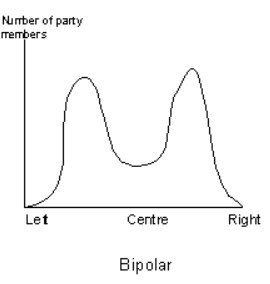
BiggerPockets is a great resource tool, however there is a nuance on the forums that I call the #BPBP Syndrome (the BiggerPockets Bi-Polar Syndrome). What I mean is that the vocal folks on the forums are very active saying and they can do much better deals. Real Estate is their job and they are damn good at it. I am a passive investor who has limited time to source screaming deals and just needs to place my money and quit screwing around on the sidelines. I believe folks like myself who are passive investors like myself are actually the (quiet) majority of folks on BiggerPockets.

#BPBP Syndrome

What active and passive investors can all agree is that real estate is the best investment vehicle out there.  What I love about it is that even when I buy these “lukewarm” deals I still reach my goals (4x) faster than the stock market.

#BPBP Syndrome

Here is what got me fired up so much.

Save

Save

Essential Real Estate Investing Books And Business Books (Podcast #9)

Would you like to join our Book Club? Join here

See all real estate books here

If I were starting out investing here are the Fab Four Books and Trifecta of Business Books that everyone should read before making a purchase:

Books – In this order
1) Rich Dad Poor Dad
2) Millionaire Real Estate Investor
3) Cashflow Quadrant
4) Equity Happens

Business Books
1) 4-hour workweek
2) E-Myth
3) Think And Grow Rich (read this again and again, all the Gurus such as Tony Robbins and Jim Rohn regurgitate ideas in this book)

It’s important to note that reading anymore is just overkill. Don’t be that ‘Shelf’-help guy or use the crux “oh I need to read and get more educated”. You need to step up and take action how many freaking books are you going to read? Many Fortune-500 Human Resources departments use the theory of 70-20-10 in developing employees which apply here. 70% is learned by doing, 20% learned from peers, and 10% is academic/book/classroom training.

Link to my favorite Business Books:


Link to my favorite Real Estate Books:

Below is another rendition of the same theory. This also explains why after a few years of doing this podcast and helping others get started by modeling the way has accelerated my own growth.

Tim Ferris talks about the $100,000 MBA, where you don’t really go to school but you jump right in with your business/investment. This method may lead you to operate at a loss but you will have far more experience than getting that silly $100,000+ MBA degree from some brick and mortar school.

And a word on real estate training: Why would someone want to spend $20-30K on training when that alone is a down payment on a cashflowing property that you can learn through doing and make 300-400 a month cashflow. Heck, you could even buy an overpriced 2nd tier turnkey property and get your education that way too.

SPC GET ‘ER DONE PLAN:

  1. Read these books
  2. Keep yourself accountable. As Arnold says, “stop being a whiny baby [and Do IT]”.

Link to original BiggerPockets Forum post

Please note that some of the links found on this website are affiliate links. And at no additional cost to you, paid by the seller, I will earn a commission if you decide to purchase which helps pays for the various costs of running this website. Please understand that I have previously used these products. Do not feel the need to purchase these products but if you do please use these links. If you have any additional questions on how I optimize the use of these products please let me know.


Podcast #8 – Three Ways To Calculate Cap – Expenditures… So You Don’t Get Screwed A Year Into The Future

Are you aware of Cap-Ex or Capital Expenses the big unknown in your deal analysis spreadsheet. Learn 3 ways to calculate Cap-Ex… So You Don’t Get Screwed a Year Into The Future

Blog article with all the charts. Sign up for the e-newsletter with your email to get the Cap-Ex spreadsheet.

Podcast #5 – Buying an Out of State Turn Key Investment Property

A lot of people have been asking for an expose’ of the turnkey investing world, so and here it is. Remember, buying the property is only part of the battle, but efficient operation and systems are what make it work. So please subscribe for good times and stories with SimplePassiveCashflow.com!

Passive Versus Active Investing

The real estate universe is split up into two camps, ‘passive’ and ‘active’ roles. Check out this overview article discussing this. And taking BiggerPockets with a Grain of Salt.

SimplePassiveCashflow.com Financial Freedom Independent Mentor Freedom~Number Value-Add NOI Teams Mortgage Integrity Charity Income Escape~the~Rat~Race Empowerment Equity Portfolio Legacy Entrepreneur Millionaire Ink~it~up Choose~Your~Path Prudent~Leverage Net-Worth Stabilized Appraisal Small~Deals E-Myth Pro-forma Network Turn-key Re-position QVD Appreciation=Icing~On~The~Cake Working~for~the~Man Stocks=Ponzi Who~needs~a~401k Cap-ex Assets Rates Cap-rate Syndication 9-to-5 JOB=just~over~broke Wisdom Risk/Reward Retirement~Now Work~On~Your~Business~Not~In~It No~Crystal~Ball Tax~Benefits Inflation~Hedge 1031 Manage~Team Leadership FYIFV Revenue DSCR IRR LLC S-Corp 1099 Schedule-E DTI FannieMae Good~Times Systems Reserves Note Rich Delegate Market Statistics Investing Strategic Proactive Bucket~System Frugal

Turnkey Investing Defined

Turnkey investing is a form of passive investing. The definition of turnkey (TK) investing at the very least is buying a property from a seller called the Turnkey Provider (TKP) that is rent ready. The TKP typically does a rehab of the major components (roof, floor, plumbing, electrical, paint with sturdy tenant grade materials, such as no carpet, no garbage disposals, laminate flooring. etc). The TKP may purchase these at a discount with a part of their company made up of wholesalers or auction buyers to buy the properties at a discount. Also, the TKP may have property management in-house to manage it for a fee after the sale is complete. The TKP may fill the property with a tenant prior to closing the sale – although this verifies the market rents, there is no safeguard that prevents the TKP to just sticking a warm body in there. A lot of buyers like the fact that the TKP is vertically integrated because if the property does not perform you know who to go after. I personally don’t see the advantage of having a vertically integrated TKP as a clear-cut benefit since it brings up the potential for conflicts of interest. For example, if the TKP has a property management side, the property management can cover up shortcomings in the rehab.

“Hey, property management Paul, why is my property getting these 100 dollar repairs like every month?”

“Well, I don’t know it was an excellent rehab (done by my company) so it must be that dang tenant again.” says Paul.

My opinion of “vertically integrated” is that they do everything but also suck at everything… Rather than having a jack of all trades, wouldn’t you want an ace at every position?

How Do I Buy?

In every market (say Birmingham) there are typically two TKPs who are perennial good outfits. And that third TKP seat is constantly being indicted by some sort of FBI investigation… I’m just being funny. But this is where things get tricky from an outsider’s perspective. Who are the good guys and who are the fly by night operations? Good question! My best answer is to use references of disinterested parties – which are different from the uninterested friends/family/negative Nancy’s/nervous Ned’s.

Out of this pain-point, a middle-man layer called the “marketers” have arisen. These are the guys who typically do not live in the local market (most likely California) but do a good job at finding most of the reputable sellers. The marketers put on Meet-ups, podcasts, webinars, troll BiggerPockets, and find buyers who are looking for real estate in their portfolio. The trouble is, they are not doing these services for free, and you as the buyer will pay for it via a markup to the property one way or another. But overall the system works well. The TKP (small company) is good at what they do and are able to focus on finding distressed property and rehabbing. The TKP utilizes the Marketer to sell the inventory and create a profitable business based on volume.

There are some very reputable TKPs out there, but the trouble is sometimes they have so much demand for their product they can charge their buyers (you) a premium price. Pair this with the marketers bringing in lazy money in the form of inexperienced investor itching to get into real estate creates a micro sellers market. Some TKPs have buyer queues where you wait for a property and you have a limited amount to time to buy it or it gets moved on (to the next sucker). These scarce sales tactics are not a place you want to be. Another trick is that a TKP may require you pay cash for a property which basically takes away your ability to do your due-diligence on the property. I always buy with an appraisal contingency and inspection contingency to protect myself. Some will offer guaranteed rents or warranties which are seemingly good but could also mean that the TKP is just buying a $500/year insurance policy so you buy their property and they plan on just using the outside insurance to pay your inevitable claim. I’m going to stop there before I scare folks too much, but these are some of the pitfalls of working directly with the TKP seller (after all Real Estate is their profession).

2016-05-05 11.01.57

A lot of folks jump on BiggerPockets and search or post on “Turnkey” and they will get bombarded by vendors being super helpful. I don’t know about you but I have never gone to the bar and been given free beers by other helpful patrons. Well if that’s the feeling you’re getting when you networking on BiggerPockets, make sure you background check who you’re direct messaging with. How are they getting paid? The folks you want to listen to (yes actually have rentals) and merely want to help out another Bro. I’ve used a marketer before but I did not get any value and I will not do it again, especially since it is not hard to find all the reputable sellers with a little bit of digging.

I mentioned two ways to buy a TK (TKP and Marketer) that both have their pros and cons. A third hybrid method that I have employed is to work with a licensed agent that helps you source properties and find your own construction crews to rehab the property. I have mixed opinions about this because it is a bit more work (especially being remote) and the agent is typically ignorant to what components make a good rental. An agent can find you a property that is priced well, however, they will not have the knowledge that an experienced rehabber or TKP will have (sturdy tenant grade materials such as no carpet, no garbage disposals, laminate flooring). So it’s a bit more risk/reward in the end if that’s your cup of tea or should I say Simple Passive Cashflow Latte. What has worked for me is not going with a marketer (due to absurd markup), but using a combination of off-market agents that have a Fiduciary responsibility to represent me and also working directly with the TKP for the best pricing once I had the experience of purchasing 3-5 properties and overpaying along the way.


Why the heck doesn’t the TKP just hold on to the property for themselves?

As stated earlier, the TKP does what they do well. They have the teams and market knowledge to do this efficiently. They could hold on the property but they have chosen to make profits on the volume business since they make their money by managing their multiple crews, essentially they are running a business. If you find a good TKP hopefully you get to partake in some of these efficiencies. But don’t be entitled as a TK buyer. You are not doing any work and frankly you deserve the market rate.

Which class, property value range, would be best to put on the buying list?

This is ultimately up to your investing strategy and criteria. For me to tell you what is the best is irresponsible and against what I believe because you should understand the macro (not micro) concepts for yourself and make your own best individual strategy. With that disclaimer out of the way, I personally went (my strategy changes per my overall portfolio) after B/B+ properties that rented for at least $1000 per month and had at least 3 bed and 2 bath. Some things to think of when finding your strategy/criteria:

  • Although I have full intention to hold on to these properties indefinitely for cashflow, recognize that things change and perhaps I might want to trade in 1 “goose that lays the golden egg” for 2 or 3 “geese that lay the golden egg” or 1 “big ass goose that yea you get the point”. To say “I’m making cashflow” is a fallacy… what do the numbers say on the bottom of the spreadsheet and compare the two situations you are evaluating. You should always be making moves to optimize your return assuming it warrants the transaction costs.
  • I was using Fannie Mae loans which are those sweet government subsidized 30-year fixed loans. At the time of this writing (5/2016) the most one person can have is 10 to their name. Your plan might be to only get one or two homes and sail off into the sunset but your plan might change and you have to change your plan for the “if” in life. To acquire a conventional Fannie/Freddie non-owner occupied property requires 20-25% down payment. There are also lender costs which I typically estimate at $5000 +/- $1000. Parts of the lender costs are variable such as an origination loan (basically it’s their fee to have to deal with you and headaches you cause them) that is a certain percentage (~1%) of the final loan that changes from lender to lender so this is something you are comparing. Other parts of the lender costs are fixed costs such as inspection costs, credit reports, and appraisal fees. It is these fixed costs that are the same whether you buy a $40K property or a $140K property. This is one reason I personally went after a more expensive property.
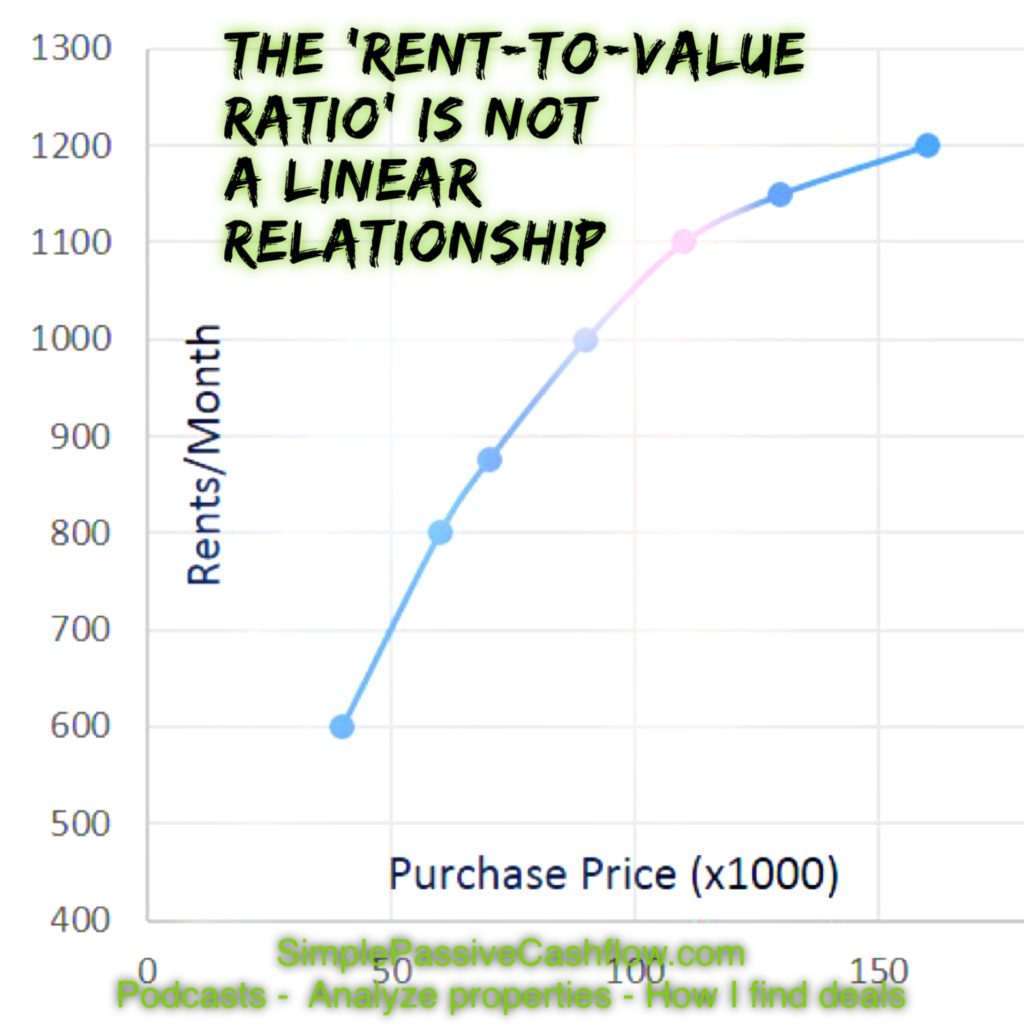
  • By buying 50K properties that rent for $800 you’re like “Hey that’s awesome that’s a 1.6+% Rent to Value Ratio”. But I suggest reading my article about the nuances of the RV Ratio and property classes2016-05-11 10.43.03
  • Remember the goal is to maximize the profit which is the rent minus expenses. Folks get wrapped around all these metrics but do not forget the goal.
  • This is totally my strategy but please think for yourself: When I was getting started I went for the higher priced properties (Not the A properties cause there is no cashflow in those). I went for properties that rent for 1100 that I could get for 100K. I would say these were B+ properties (Note: do not take the seller’s definition). My strategy was to find low hassle properties that had better tenants and properties that I could easily liquidate because they were close to the median home. There is a bit contradiction here because yes they were safer in terms of tenant quality and exit strategy but the cashflow buffer was less so I had less ability to lower rents in a market downturn. Now that I have a stronger base in terms of teams, money, and knowledge I try to go for more C properties because I feel I have the experience and risk tolerance for it (although I stated that these could be safer in terms of the buffer in the cashflow).


I am selling my home for 600k, I want to invest out of state for cash flow 200/month cash each door?

Before you do anything make sure TK investing is for you don’t just jump in cause I like it. However, I think that your per door $200 assumption is in line. There is a difference if you are buying $60K properties or $120K properties but either way, I think you will be beating the averages of the stock market and that is why I do what I do.

This is how it is going to work if you choose to sell and do a 1031 exchange. First, you sell the home for $600k (~10% will go to commissions etc) so you are left with $540K. This is how much you have to acquire or there are tax penalties so if you are looking at $90K properties you are going to need to pick up 6 of them. Your cash in your 1031 will be $540k minus your remaining mortgage. You can bring cash out of pocket to make up any shortcomings. Check out this article for more info on some 1031 issues and strategies.

Other Passive Investing options (REITS & Crowdfunding):

Passive turnkey (TK) investing is a slow way to building long term wealth. My track record in the macro sense is to put down $30K to control a $100K property that rents for a tad over $1000 a month. From that $30K down, I create about $200-300 a month in cashflow or $3000 a year per property. If those of you at home are plotting the day when you leave your job and take over the world, 20 homes would get you about $60K in passive income a year (tax-free) which would require about $300k of down payments.

A lot of smart people dabble in REITs or Crowdfunding deals, but typically it is the operator taking most of the profits off the top. Ideally, if you have the ability to, you want to be in control and be the operator if the numbers make sense.  REITs and Crowdfunding deals are just like stock/mutual funds- you do not own the hard asset, and you are at the mercy of the operator to run it like a business and not take business trips to Las Vegas “Conventions” as a business expense.  Moreover, most of the time, you also miss out on the tax benefits, such as depreciation. Isn’t this the reason why you want out of the stock/mutual funds in the first place? Plus who the heck knows how Stocks are priced?  As if that wasn’t enough, most crowdfunding platforms (at least for now) require that you be an accredited investor.  Most of you starting out won’t qualify.

Here are a few of links with actual portfolio analysis of these Crowdfunding methods in action:

https://www.biggerpockets.com/forums/520/topics/294382-i-put-2-million-into-20-crowd-fund-deals-posting-performance?page=2#p1916547

http://www.mymoneyblog.com/patch-of-land-real-estate-final.html

http://astudentoftherealestategame.com/real-estate-crowdfunding-opportunities-for-investors-explained/

Why go through all this trouble of a rental?

As in the above Crowdfunding links, the returns range from 6-12%. These returns suck. I mean it’s good for an institutional investor or someone with a gazillion dollars, however, I look for cash-on-cash returns of ~10% and total gains, or IRR (Internal Rate of Return), of ~20-40% per year.

For my info on total gains see this article: How We Make Money with Real Estate & the Hidden Returns

Here are some questions I often receive from readers:

  • Are you visiting these locations at any frequency and for the initial purchases, or are you able to have enough trust and working relationship with other professional resources at those locations?
  • I’m interested in a few out of state markets while trying to better understand what acquisition and management options are realistic. Ideally, I’d prefer not to travel.
  • Hey, can you help me get started? Can you give me your providers?

I could do that, but that would be doing you a huge disservice because you will not be properly educated. Use these people as your educators.

Here is what I would do:

Link to SPC014 – 22 Questions explained

Find at least 6-10 turnkey dealers via googling turnkey rentals.  You can also look online at Bigger Pockets, as many, though not all, turnkey companies have a presence there. Call each and every one of them, and get a dialogue going.  Then, ask them the following questions (but not all of them… don’t be a machine, build a relationship:

  1. Can you break down the structure of your company for me?
  2. Tell me how your process works from start to finish.
  3. What does “turnkey” mean with your company?
  4. Will there be a tenant in place before I close on the property?
  5. Can I use the financing to purchase the property?
  6. Do you own properties close to the one you’re selling to me?
  7. Is the home required to pass inspection and appraisal before I close?
  8. Can I hire my own appraiser before closing on the property?
  9. Do you use other companies to help you provide turnkey properties?
  10. What is your role in the sale of the turnkey properties?
  11. Who owns the homes?
  12. Who rehabs the homes?
  13. Am I expected to pay for the rehab?
  14. Who are the “boots on the ground” in these areas? Are you talking to the actual guy who manages the crews or just their sales person who never leaves the
  15. Who manages the properties after the sale?
  16. How long have you been in business for?
  17. Is their a warranty on the property after the sale?
  18. Can I see a scope of work with expenses for one of your rehabs?
  19. How many properties are generally in your inventory month by month? (The more properties means better economies of scale but can also mean more bloat and more competition from other buyers)
  20. What sets you apart from other turnkey companies?
  21. What are some mistakes you make when you started out, and how are you doing those things differently now?


Why Screw Around with Rental Real Estate when I can just do REITS and those really cool crowdfunding sites? Because these REITs are middle men. Work directly!

The Biggest Kept Secret – Hidden Returns of Rental Real Estate

SPC Git Er’ Done Action Plan:

  • Sit down, take 10 minutes, and create 60 day action plan.
  • If you are a bit overwhelmed I made a simple Excel Gantt chart showing the steps to purchase a property with all the due diligent checklists. I’d like to share it, so take a screenshot of your itunes review and email me with your 60 day action plan and “Gantt Chart” in the subject line. Lane@simplepassivecashflow.com

Save

Save

Save