Dec 2020 Monthly Market Update

https://youtu.be/a1jxul2pPZw

All right. let’s get going here. so starting off with a few teaching points and I diving into the news to wrap out 2020.

So the teaching bike here is now, this is the time to invest is what this chart is showing because as investors we invest off of the spread between the interest rates. And the cap rates. So the cap rates is the light blue. The interest rates are the dark blue right now. The interest rates are so low. The cap rates have come down a little bit, but the interest rates have come way down as of the last couple orders and you know what everybody’s afraid and everything I’m like, this is the time to invest right now.

The spread between the interest rates and the cap rates is larger than what it normally is. see this kind of moving up and down, when it’s like this, when the spread is smaller, that’s when ideally you don’t want to be investing as investors. We make money off of the Delta between cap rates and interest rates.

And of course we apply a, usually a four to one, five to one leverage, and that’s how you make money as investors.

who are our renters? John Barnes broke it down and we’ll charge here. Most of which are 25 to 34 years old, broke down their house. So income over 50 and under 50 K I rent, I think it’s a good idea, especially if you live in a high priced area like California, Hawaii, Washington, New York.

Maybe, I don’t think it makes sense to buy. Of course the caveat is most, I guess most people fall into this caveat, like mostly bar irresponsible with their money. They can’t seem to save it effectively. So houses have forced savings account. but if you’re listening to this podcast, YouTube channel, you’re probably a little bit better than the average cat would saving their money.

These conscious of it. That’s why it’s a, just take the money and invest.

No, this is just a little diagram of which States are the most restrictive on the COVID

constraints. Not making any political statements here. But, Hawaii is down there. One of the most restrictive and on the other side is how much, is it working, right? , currently hospitalized per a hundred thousand? So if you want to see your state, you see where they fall.

so starting off with the news here, this is something that’s going to be slowly developing in 2021, but the library , which is what a lot of interest rates are governed offered. you might get a commercial loan based on, quarter point higher than lie bore, but they’re going to be changing it to Sofer, I think is what they’re called.

S O F R. And that transition is going to be happening throughout the year. The reason why they’re changing it is because , I think it has something to do with the library being so low or things are already so low. They need to fix it to something else. That’s a little lower. and supposedly the library is a little bit more erratic, but I don’t think it makes that much of a difference.

It is what it is. And it’s changing guys. That’s the takeaway, John Malone, reported by CNBC is, buying hard assets like housing to bet on currency, devaluation, or inflation, which is coming. yeah, this is why buy real estate. It’s fixed art assets like housing, and it’s a commodity.

We need more of it. And he sees substantial interest in multifamily housing. We’ll get into that a little bit here in this Alna article, where through the first 10 months of 2020, the only price class to lose ground in average occupancy among stabilized properties were class a. So those are the luxury type of properties that we stay away from.

these are like the build 19 or. Probably built after 2005, 2010, in my opinion, it’s hard to save by date, but that’s probably the best numerical differentiator of class. A, with a 1.3% decline to 92%, average occupancy. This is not an alarming little figure, but it is a few percentage points below the other three pricing classes, B, C and D, which all finished between 94% and 95%.

Class C actually went, improve. So a lot of the culprit was negative demand or, new properties coming online that Warren white absorbed, which makes sense. people are staying put through the first half of the year and even plead a second. So takeaways stick the class VC.

Out. This is, development that’s, the state of California, which you may or may not care, but I think it’s, sets precedence to what’s coming down the pipeline to California had these two big statutes, prop five and prop 19. The presidential race. Wasn’t the only thing here. It was like B that they had to, the state was split on

so California proposition 15 , which would raise taxes for commercial real estate failed. So top 15 would put further downward pressure in real estate during an already difficult time for real estate in that state. Contrary though prop 19 would allow former 55 and older, disabled or victims of natural disasters to transfer a portion of their property tax base when they sell their home and buy a new one.

And that looks like that will probably be passing at 51%. So very close, proposition would offset. By closing other people’s specifically, it eliminates unfair tax beholds used by East coast, investors, celebrities, wealthy non-California residents and trust fund hairs. yeah, I think it’s, it shows like what’s coming down the pipeline in there.

You just can’t inherit the lower tax spaces. a lot of people in California that have inherited houses in their family, the one to sell and yeah, they’re getting killed on taxes, but they might be sitting on a one to $5 million estate and a real estate, and they just don’t want to give up that good tax.

So prop 19. kind of gives up that incentive in a way. if anything’s, it takes a while for the California’s to go through it and then, think of like marijuana, right? So the rest of the country gets impacted by this, or we see it in our backyard, but it’s, coming down the pipeline.

Star Wars would read by $645 million of affordable housing. They are getting into the affordable housing workforce space and I think to get into alarm, but, I watch what the big guys are doing. Like the Blackstone’s. And I follow them closely. So 950 units in Jacksonville, Florida, and 28 communities with a total of 3,600 units, primarily in Virginia and North Carolina.

And they’re buying this stuff because it’s stable, occupancy and rents didn’t change too much of all things to a pandemic. John Burns came up with the chart, a us single family rent index. So they modeled and you can see the recession periods where it went through in 2007, eight, nine in the trough.

It’s peaked. but demand is still very strong for single family home rents based on this chart. Again, if you guys are checking this out on the YouTube or on the podcast channel, you can take it on the YouTube and all the nice graphs and graphics. Read this stuff for yourself that I put on the screen.

commercial property, executive reports that the pandemic accelerates rather than starts commercial real estate trends.

so one of the big trends is this live work play concept one question that came in, is there going to be a recession in 2021? I don’t think so. Madly, chillax, they’ve been S people say that every single six months doesn’t mean crazy

I think that you got to be careful people saying that because likely they’re trying to sell you both collect their commissions on that and you offer the gold salesman. It’s easier to sell doom and gloom than to prudently, be buying cashflow that’s for sure. so what are the trends live?

Work, play concept were, people want to be able to live in less central areas, more of the suburban areas. there’s a urban suburban divide , mostly gateway cities, high costs. Areas like New York, San Francisco, Chicago, any of these people have lost occupants during the pandemic, the evolution of cities.

So the inner ring suburbs have also grown a bit by the desire for people to work and live in places with city like features, but not in the urban core district. maybe like 20, 40 minutes outside of the downtown area. So the pandemic didn’t really start in trends, but just accelerated all of these trends, commercial property, executive reports that, construction has launched on a Houston Hyatt hotel that is associated with the Houston’s Texas medical center.

So it’s their first hospitality brand. Very interesting that a hospital that was getting involved with this type of housing, but I guess they’re seeing it as a lot of the people that come for their care, like cancer, Shimon, or whatnot, need to stay in a place. So why not, double dip.

Some trends that are coming, that I think are cool or a Chipotle like plans, their first digital restaurant, their online sales tripled in the third quarter. So they’re some of the are winners as reported by shopping center business. some of the losers are just the general shopping balls.

So while owners see VL and associates falls for chapter 11, bankruptcy, does it mean that those. Shopping malls are going anywhere. Although I do think shopping malls are not as popular, especially like the not high-end ones or the middle range ones as popular multi-housing news reports at senior housing, occupancy drops, inventory increases.

So a lot of people, they all get excited and new investors get excited by like trends like the silver Wade, people are going. Need places to live when they’re gold. I want to invest in the city living developments. All right, buddy. I’ll tell you, I haven’t found a one really good reliable operator quite yet.

even though all the trends point that way, I wouldn’t be messing as a passive and I sure as heck, wouldn’t be investing as an operator in assisted living. That’s where you get these doctors or nurses. They think that they know medical stuff. Assisted living. It’s not really medical stuff. You just hire a doctor to do that stuff for you.

It’s more of a facility management and a marketing and sales thing than a technical medical thing.

so we take a break here. The Easter egg this month is. Check out the newly branded family office, Ohana mastermind. So this is the group with the, a credit investors in, or if you would like to be a credit investor, this is the way to get around. A lot of you guys are asking, how do I find syndication deals?

How do I find like good people to work with? you got to build your network with the right people. If you’re tired of screwing around at the local Rhea. Or going to the free Facebook groups or the other free forums out there with just a bunch of folks under a quarter million dollars net worth all day long.

now’s the time to step up, see what we have to offer simple passive castro.com/journey. And we are about ending our first incubator group, which is the little mini group coaching group, where we help people get their first remote investment. that one should be wrapping up this next couple of months.

And, we’ll be looking to do another one early in 2021. So if you guys are interested in that, please let me know. But, yeah, transitioning to some of my personal stuff that I’ve been working on. if you guys have any ideas, some things you’re working on. Let me know. My email isLane@civilpassivecashflow.com, but, first is growth.

So we changed the mastermind to a more of a virtual mastermind. last year we did it in Hawaii for a few days, but with everything that’s going on, I’m moving this virtually. So we’re calling this the bubble. If you going to get more details of this, go to simple, pass a castle.com/bubble, and it’s gonna be awesome.

it’s going to be primarily networking with other participants instead of just death by PowerPoint or death buys, random sweepers pitching their product. Yeah, trust me. If you’re not happy, I’ll refund your money. I’m super confident with this. Like I got some tricks up my sleeves. You guys will see those.

You guys do attend over the weekend. It’s going to be a half day on a Saturday and Sunday. Martin Luther King weekend in January of 2021, contribution, yeah, rebranding the family office , mastermind to be more of a collaborative thing. We’ve got some new initiatives there to keep older investors around.

they might’ve learned everything, but they just want to meet new people, grow their network with new high quality working professionals. and then this I added just a little while ago about. having some success for the shade line hackers. If you guys haven’t tried this, I’ve got a simple pass, a castle.com/ straight-line.

But yeah, we had an investor that tried it out since, began in may 15, 20, 20 great thing to do when you’re stuck at home, you get your credit cards together and start renting out authorized user slots. He made. $1,800 and just over a few months, and he’s got $750 left in pending commissions.

So it’s coming back to him. Awesome. significance, it makes me more proud of, what we’re doing as a group is that we are not letting fear get in a way, and we’re seeing the data for what it is. And this is what it is. I started at the talk with the teaching point. Of the same slide investors make their money on the Delta between the interest rates and the Tapper.

It’s simple as that. Of course there’s outliers, right? You want to pick up properties that are already under market that exceed the cap rate here and have multiple opportunities for value add. But yeah, if you’re picking up existing cashflow and even in tough times, you still cashflow. a lot of the deals, the stabilized assets, you can stay above 50, 60% occupancy are still in the black, a lot of the assets that we had through the pandemic for 200 units.

we’re still making money on all of those. none of them came down to the red level, out of probably like 25 projects, maybe one or two of them kinda got close, but. I think that’s pretty good. All things considered being a pandemic. some things I’m dealing with in terms of uncertainty because in search needs not necessarily a bad thing, but, yeah, just investing when everyone is waiting for COVID or the election to be over.

I get it from one perspective, but you got to keep moving forward at the tenants are cash flows, the cash flows, and you can do your sensitivity analysis, still cash flows through tough times then just to keep buying cashflow dollar cost average. and then a lot of the uncertainty is what’s going to happen next year.

I’m seeing it as I want to get traveling. I want to have some fun. when’s Pfizer going to come up with their vaccine, is it they’re saying it’s here, it’s 90% effective. Of course this is from the fires or websites that you can’t really believe, but they, it says, but, yeah, , hopefully this thing works right.

So we can get back out there. Let’s get stuck in our homes all day long. how did I, my creating certainty in my life while I’m creating another infinite banking policy for myself. I probably had four or five deals, went full circle and cashing out, and I’m going to take some of those profits, put it into an internet banking policy and pull it right on and start investing next year.

I like this because it adds life insurance, but that’s not the reason why I’m getting it, but it makes a nice little yield four or 5% tax-free because it’s life insurance and. Because it’s life insurance, it’s often table creditors or litigators. So that makes me feel a little bit better from an asset protection perspective.

if you guys, haven’t learned about this, go to simple, passive castle.com/banking and, on the last 10 years, love and connection, you know what things slowing down here in December and, things will definitely pick up in January. I, got an invitation out to your folks.

If we haven’t connected, let’s get on the phone. let’s do your onboarding call to the week club, put it simple past castro.com/gift. And for those of you guys who I have connected with and our current investors or of, in our deals, if you haven’t connected in the last year, let’s get on the phone.

let’s talk star, let’s see what’s going on and see how I can help, see what’s coming on the horizon. some of the resistance and verus distraction noise that I’ve been working with is pushing out larger projects in time. I got the syndication eCourse coming out soon. Hopefully it’ll be out during Christmas time.

I was trying to get you guys some kind of cool like promotion for black Friday instead. I didn’t get it done. So I think the, probably the next couple of weeks we’ll see the eCourse for the syndication and it’s going to be amazing. I’m still confident in this one, again, that. I got that money back guarantee on it.

the fun stuff here. So do dads, I bought two dishwashers cause I want to take all this stuff out of one. And when I make dirty dishes, I’ve put in the other, so they never have to put my dishes away. these things are big and they’re a little annoying, but that’s just an idea.

You guys to create your lifestyle. That’s it simple, passive cashflow is all about. Now. Let’s go to these questions. interest rates for the next two years at interest rates have popped up a little bit. I would say maybe a 10th of a point, but. I’ll ask the question to you.

Like, why do you care? what does it really matter if the cap rates are going to come back up and interest rates will go back up and again, as an investor, you’re just making money on the Delta work difference doesn’t matter. but, and I don’t know what interest rates are going to go, but if you were asking me everything I’m reading and everything I’m hearing, I think interest rates are going to be probably both for the next couple years.

It might come up. No slightly border point half a point during that time. But I don’t think they’re going to see interest rates on commercial debt in the five, 6% range for quite a while. But I do think inflation is coming. how else I’m going to pay for all this trillions of dollars stimulus and then the last stimulus plan is definitely coming.

Okay. It’s for sure. It’s coming. We need it. And I think for sure. It’s coming. Just like how you joke about the government shut down. I guess it’s not a joke that the government did shut down, but we all know it’s a joke because they’ll just create some kind of bill that extends the obligation.

Isn’t often rolling again. It’s just like the stimulus plan. it’ll come. and then when it is. Also as investors are going to be the ones who benefit the most on it. I guess what I’m seeing, I was reading an article yesterday about Fannie Mae and Freddie Mac on the commercial side for the large non-recourse the agency loans that we get.

They’re creating their quotas for next year and it looks good, man. they didn’t hit their quarters this year, obviously because volumes of sales transactions were down, which is why they did a lot of refinances. The refinances were awesome. They’re being very lenient on refinances. because they needed to have that quote, but yeah, next year is when things start to open up.

it’s probably going to, because a lot of that ending is it’s very free and flowing. when is a good time to buy REITs, never, it’s a good time to buy, reach beats, or retail investments you didn’t killed. And something I learned recently. we did a , three hour webinars and there was like the one tidbit in it that I learned was like REITs.

, they have a timeline where they have to crystallize, so return and exit and everybody else. So they don’t make good decisions. They don’t make long-term decisions and they have to pay 90% of their revenue or their income to investors, which sounds good. Wait, what if it wasn’t, it made more sense to put the money back into the assets so that the acid is more secure and so you can bump rents and do that type of stuff.

And that’s just the one way, like the reeds are confined there and read such as retail investments. You’ve got good stealing because the only and middlemen they’re not touching her, she feeds I’m not a retail investor. that’s for the average Joe out there by investments. All about share market performance.

I don’t understand that. Or shouldn’t be tied to that. any promising markets if 2021 when compared to 2020 and not really. there’s some places in Tennessee, like Chad and Duka the Carolinas always keep coming up. Florida, Jacksonville, but, I’m a little scared that I think Huntsville is finally coming on the map.

A lot of people are finding out about Alabama. but yeah, mostly it’s the stain big storylines, Texas. Everybody’s getting the heck out of California, Chicago, New York, all these high price, postal markets going to places that make more sense. this was always happening and again, had the pendant.

I did not create new trends that accelerated trends such as people getting the heck out of those overprice areas and into more like the secondary tertiary markets. but that’s, doesn’t mean that you can’t find a deal in Jackson, Mississippi. I don’t want to, not Jackson knows if he’s not a good bike and I don’t think it is, but that doesn’t mean that I wouldn’t invest there and deal with that undervalued breakfast is what I’m saying.

If you invest at Jackson, Mississippi, I’m sorry. , last question here. Can we expect a foreclosure due to vendor random thinks of anything silly? I’m sure. I just personally don’t buy. Unstabilized assets. So if a property is going through foreclosure apartment, then I wouldn’t be buying it in the first place.

So I don’t care. I’m sure it is, but it’s at one point it’s just Biden’s going to kill people. That’s making over $400,000 taxes, but I don’t care because I don’t, I’m not going to make my HCI that high. I’m going to put away lower. so it’s a moot point to me. I don’t care. that makes sense.

I don’t care if there’s foreclosures coming. I don’t really, I wouldn’t buy those properties. I don’t buy problem properties. I buy properties with sellers, we have problems. and maybe a foreclosure does expedite that, but yeah, the occupancy would probably did and I wouldn’t buy it, but if you’re a single family home investor, Number one.

And what the heck? Why are you doing that? yeah, if your net worth is under half a million, that’s fine. But you got to build your net worth and putting your sweat equity to doing that. But if you’re a credit investor, like most of us in our group, that’s just not a good use of your time, in my opinion.

but for some of the younger kids that are listening, yeah, I’m sure there’s going to be a lot of single family home foreclosures coming out. I’m sure. just. As there always is nothing new. I don’t think they’re sending any new, and like some kind of housing crisis. I think that’s just like people like celebrities trying to sell you two views and stuff like that.

I just don’t really see it happening. again, there’s always people trying to sell, like on fear, like the world is coming to the ad, these human forms, or, what’s worse is the people on Facebook. They always just relayed this. Long, like texts about the world is coming to an end. then you look back at that was from like 2012 or 2016, or whenever it had never happens.

I just buy for cash though, and just . Don’t get ahead of your skis and they’ll be all right. That makes sense. but yeah, if you’re house flipping, I don’t do that, but I would be afraid potentially. I don’t know. But hope that helps. thanks for, questions and, we will see you guys next time and check out the mastermind bubble@simplepassivecashflow.com slash bubble.

And thanks everybody. Bye.

Investing in Fine Wine🍷


Try Wine Spies – Get $10 Credit

https://youtu.be/Nmj5Hc7MJ6I

https://www.vinovest.co/


Unknown Speaker 0:00
Introducing the new remote investor, incubator and ecourse we had the mastermind and we are going to break off from that being mostly an accredited investor group. And I wanted to create something that was helping out the little guy get started guys getting their first properties. And we’re calling this the incubator group. Get More details at simple passive cash flow, comm slash incubator, but basically what we’re doing here is we’re getting a group of professionals looking to build your network with others starting this journey to financial freedom, the ecourse that’s going to accompany this group is going to have eight modules in a closed membership site plus two bonus modules and download kit all geared toward educating the remote investor in this group. We’re going to have biweekly zoom video calls and if you join up, you’re going to get all past turnkey rental recordings. Now these calls are designed to ask whatever questions you have and hear the other questions from other investors in your shoes. And we’re going to run this like a bootcamp style. This is going to be five month program, we’re going to walk you through the best practices for tax and legal as you acquire your first remote rental. We’re even walk you through the due diligence and offer process we’re going to have staff membership coordinators for extra support to get you over the sticking points and to connect you with the right people in the group. Even if you’re shy. One of the biggest reasons for join is access to our ever changing Rolodex of top turnkey companies, brokers, property managers, insurance companies. Hey guys, we’re basically spoon feeding this to you if you’ve been on the fence and it’s time to get your first rental property go to simple passive cash flow calm slash incubator and by the way, for those accredited investors, we are looking for new members go to simple passive cash flow calm slash journey and join the flagship simple passive cash flow mastermind there. After the pandemic to new world out there having a network around you is so much more important. shoot me an email Lane at simple passive cash flow if you’re unsure if the incubator or if the credited mastermind group is for you, but let’s get you connected with other people and don’t go it alone Hey simple passive cash flow listeners. Today we are going to talk about investing in wine now not the securitized crowdfunding way, but the actual owning the actual bottles, the real assets. So today I have Anthony’s on. Thanks for Thanks for joining us, man. Thanks for having me. We’re happy to be on beyond here. So you guys want to Google this at the same time, you guys can Google their company, venal vest, but this is something that I’m personally interested in. I like that kms wine the cab, it’s like 100 bucks.

Unknown Speaker 2:35
That’s a good one a go to you know, it’s a good with a nice barbecue or steak.

Unknown Speaker 2:40
Yeah, but you guys are buying a lot more better ones and your guys system,

Unknown Speaker 2:45
I would say better from an investment potential, you know, tastes objective, but, you know, we’re looking for wines that are going to be bringing, you know, a solid double digit annual return over the next few years.

Unknown Speaker 2:57
Cool. So yeah, let’s get into this. I also have this displayed on the YouTube channel if you guys want to get access to that and I have a big menu of all kinds of things in the world you can invest in I’ll put the section probably at simple passive cash flow calm slash wine, you guys want to check this out in the future and and you can the root folder for this is simple passive cash flow comm slash menu which has all the different things out there that you can invest in now once you kind of take away anthon will kind of go through this deck.

Unknown Speaker 3:27
Yeah. So I’m Anthony, I’m one of the cofounders and CEO Urbino best. And you know, I first learned about investing in wine a few years ago, I sold I sold my first company so I was looking to invest and didn’t want to put it on the stock market. So I had some in real estate and actually stumbled upon a report talking about the historical returns of fine wine which you can see here. You know, 12% annualized returns actually has beaten out the s&p and relatively low volatility too. So that really just piqued my interest. I really dove into this space. And, you know, I had the general concept that wine gets better with age probably more expensive as well. And as I dove into it, I realized that even though it’s getting good returns, it was pretty tough to manage. There’s not too much info out there about which wines to invest in. I didn’t have a massive wine cellar. So handling third party storage, shipping all around the world was pretty cumbersome. And then finally, real liquidity standpoint, there’s a ton of places where you can buy and sell wine today, but how do you know that you’re interacting with someone who’s trusted? How do you know you’re not getting ripped off with a price there’s really no you know, index for wine that is globally recognized. So those are kind of all the problems I saw on the space that I thought could really be improved and that’s why I started this company.

Unknown Speaker 4:46
I bought a four pack of key messes in from eBay that were like some normally that’s what 100 bucks 90 bucks he I bought it for like 70 bucks, but when I got it I it seemed a little fishy to me.

Unknown Speaker 5:01
Tastes wasn’t exactly what I thought it was.

Unknown Speaker 5:03
It was a lot of fake wine out there.

Unknown Speaker 5:06
Yeah, maybe I bought that. But what, you know, as we’re talking earlier, what from your background kind of brought you into this? Because you’re the co founder of this company. What was I mean, everybody’s interested in wine. Right. But what what from your background and kind of gave you the ins to kind of start this?

Unknown Speaker 5:23
Yeah, so I really just grew up with it. I have some extended family in the wine importing industry. I grew up in Beijing. So during the entire craze in the mid mid 2000s, of lot of Chinese people just kind of getting to know about French wine, Bordeaux, burgundy. You know, part of that kind of being a part of a wine importing family. Just really, I think piqued my interest in it. I always thought owning wine was really really cool. And was just was a pretty dormant passion of mine, I’d say until I read that report and kind of just ignited everything again. Cool. Cool. So,

Unknown Speaker 6:00
you know, like you guys are able to get connections from the suppliers that a big kind of leg up as a group from your network.

Unknown Speaker 6:08
Yeah, I think something about, especially like, the high end like top, you know, top couple percent of wine is that it’s very, very hard to get, you know, it’s always in globe, you know, globally, demand is always going to be outstripping the supply. And it’s very hard to get to so access to the big thing, you know, even if you can get it, it’s probably marked up hundred 200%. And you’re not actually getting it for its true value. So, you know, we, with our connections, and, you know, with our team, which has, you know, members who are masters, Somalis, writers, directors at three Michelin starred restaurants, been in the industry, they have great relationships with some of the top wineries in the world, we’re able to get that insider access, that traditionally is not available to the public wanted to kind of look at some of the factors so as I mentioned, with having knowledge to once again Pick out, being able to store the wine properly and make sure that it’s actually aging in the right conditions. And then finding liquidity when you actually want to exit your investment. It’s a big issue. So, you know, we can go on to the next slide, and I can talk about what we do at the end of last.

Unknown Speaker 7:15
So is there was your family kind of, are you like the Asian Gary Vaynerchuk, then or is that similar? What

Unknown Speaker 7:20
was on that level? Yeah, much, much smaller time. But he’s, you know, I was he he really popularized, I think people just becoming more educated about

Unknown Speaker 7:30
wine. So that’s something that’s a question that came up right when I saw this as like, Alright, where’s this wine stored? It’s not like in your house that you get to impress all your buddies.

Unknown Speaker 7:39
Yeah, so we have six storage facilities globally, strategically located in and near to the biggest wine growing region in the world. So we want to know that in California, we got one in the UK, a couple in France, one in Italy, one in Denmark, and we want to make sure that the wind moves the minimal distance as possible. to not disturb it and make sure that we’re able to make sure its condition is as like kind of pristine as possible. So after we buy it for you, we’re able to have a temperature controlled humidity controlled, actually one of our warehouses, the British Royal Family stores, they’re one in the same spot as us. So it’s really just kind of top notch storage facilities. And with the V Nova solution, you don’t need to know anything about wine investing, to get started, the inputs that we take are like, you know, how long are you looking to hold this asset? Or how much are you looking to invest? What’s your risk appetite like, and we’ve developed an algorithm and also portfolio advisors that can then automatically construct a portfolio for you based on those practices, deploy your capital for you, and also actively manage that portfolio of lines on your behalf. And for the, for the end client. It’s a fully digital experience, you know, like you see in that screenshot. It’s a dashboard that you can track your wind price over time. There are updated in real time, and you can see exactly what you own kind of like a, you know, like a robin hood or like a Schwab brokerage account.

Unknown Speaker 9:07
So when they when you buy a bottle you’re not like buying like a half a bottle you got to buy in increments of the bottle than that.

Unknown Speaker 9:14
Yeah, so usually buy it in cases of six or 12 because that’s what the most kind of liquid unit of measurement is, you know, it’s it’s tough to just buy and sell individual bottles because you don’t really know what condition they are but when they’re in the case, they’re kind of packaged the right way. It’s like kind of the industry standard in terms of what people like to buy in and the quantities that they buy it as well.

Unknown Speaker 9:38
So the normally if you’re buying at a case at 12 at 100 bucks per you’re looking at least a grand

Unknown Speaker 9:45
Yeah, so it’s a grand to get started on our platform.

Unknown Speaker 9:48
And then what what are what is kind of the average is like we see like on here they commence I’ve never heard of that 500 bucks a bottle is I mean, what’s the kind of the median and what’s kind of the higher end price per bottle

Unknown Speaker 10:00
I think it really depends on how much you put in. Because, you know, there’s bottles that can range up to thousands, even 10s of thousands. And some of our higher level clients, you know that the bigger portfolio sizes, it opens you up to more of the wine universe available to purchase. But our average consumer goes around like six $7,000 worth of wine, you know, that’s 5060 bottles, you know, things you know, things that are ranging from 100 something bucks to up to 500 bucks a bottle.

Unknown Speaker 10:28
So when you’re starting this company in the early stages, were you like walking around with like, 10 bucks 10 grand bottles of wine? I mean, what was

Unknown Speaker 10:38
in your hands?

Unknown Speaker 10:39
I mean, I mean, some of these bottles are Yeah, they’re 10 grand, they’re 2020 grand, you know, it’s uh, it’s pretty surreal, but just so treated as an investment, right? Like you hold you hold the bar gold, it’s gonna be pretty, pretty pricey as well.

Unknown Speaker 10:53
Yeah. Do you drink your own supply? Or what’s the average

Unknown Speaker 10:57
of my I think that’s also a good thing about having the storage out of sight out of mind is you know you have some friends over and you have a couple bottles have a good time. It’s really easy to just like reach into the back of your cellar and accidentally pop something back could be thousands to thousands of dollars. So what I drink is much cheaper than that. Okay, what do you drink by the way? I mean I love I love serraj so either from like northern road or from like Santa Barbara I think that’s like my my go to bridal. Yeah, that’s that’s kind of what I’ve been drinking now.

Unknown Speaker 11:34
You want to find deals on real estate before they’re on anyone else’s radar. I recently came across pre aureo a new opportunity from one of my mentors George Newbery founder at HP. On this new platform, real estate investors can partner with pre reo on the purchase of delinquent first mortgages secured by vacant properties directly from lenders. This is huge because normally mom and pop investors like us only have access to REO properties. Usually investors are not able to access these pre foreclosed properties and have to wait until they are foreclosed. But with the help of pre reo investors can easily search and bid on pre Oreos offered at a sizable discount. Connect with experts that are familiar with the P reo process and generate financial returns while making positive impact in their communities. Take advantage of this unique opportunity to expand your real estate portfolio. You can learn more about fi reo by going to simple passive cash flow calm slash pre reo. Cool so so kind of getting back into the storage correct me if I’m wrong, but my my assumption is like that’s like a commodity, right? There’s a lot of storage facilities out there. It’s a totally legit operation very secure is just you guys have built a contract to kind of support your whole operation.

Unknown Speaker 12:55
Exactly. Because you know why people have been storing wine for decades, even centuries. The biggest thing Like, you can’t really do it profitably unless you get economies of scale. So by working with a platform like Coronavirus, we’re able to pass along those savings at scale so that it actually becomes profitable for you to store and manage and invest in wine.

Unknown Speaker 13:14
So if you have like a 500 Well, I guess it wouldn’t be a $500 bottle, but it’d be a $5,000 case, how much would it be per year? Or how do they charge you to store that

Unknown Speaker 13:25
in the so cars like an annual annual management fee based on the value, so with our fees on vino bus, we charge consumers 2.85% annually to manage the asset. So that includes everything from sourcing to fraud detection, to storage insurance, as well as the active managers, all that’s kind of included in ours in our fee structure.

Unknown Speaker 13:49
So these are the questions as an investor you guys want to ask, you know first, like the fraud detection, that’s like when you buy a piece of real estate, you have the title, search and you make sure that the title Clean, you know, I’m assuming if you want to talk to that at the end, like what’s the what is the procedure for the wind to get legitimized? Yeah, cuz like,

Unknown Speaker 14:07
like you mentioned, like there’s a lot of fake wine out there, right? There’s a lot of fake everything. First we have our team be able to inspect that a, it’s authentic, it actually came from the winery, not some, not some person who have remodeled it, and that it is in excellent condition, because, you know, wine is a living thing, right? If you leave in the sun, it’s going to be turning into vinegar and be worthless. So we inspect the condition inspect that it’s authentic. And then when we put in our, in our storage, we actually have an insurance policy that then covers it against all sort of future damage breakage, and it’s insured at its full market value. So you know, we don’t have FDIC in the wine industry, but this is like pretty much, you know, the next best thing

Unknown Speaker 14:48
Yeah, and that and that insurance thing, just like you insure real estate or your cars, that’s a big thing for investors. You know, there was an investment going around last year was like buying some kind of citrus fruit. In different country or you know, any kind of crops, right, you want to, you want to be able to know that if there’s a fire Well, no big deal, you know, it’s insurance not for you’re not gonna be a total loss.

Unknown Speaker 15:11
Exactly. Exactly. Awesome. So, you know, wanted to kind of talk about portfolio construction, right? Because if you’re more on the aggressive side, just like stocks, there’s going to be emerging markets, there’s going to be newer wineries that have potential to outperform the index. And if you’re more on the conservative side, there’s more like your equivalent of blue chips, right. So in this case, it’d be usually wines from from France and from Europe. So Bordeaux, Burgundy, champagne, those are definitely like wine growing regions that have been growing wine for centuries. So we have hundreds of years of historical pricing data we can predict with our AI model with a very high degree of confidence what future returns will be and then there are kind of emerging markets you know, whether it be Australia ci, lay some newer parts of California in Italy or the road and So that’s kind of how we look at portfolio construction making sure that people stay within their risk ranges and that we can give them the right sort of expected returns when you’re looking at this holistically as an alternative asset within their entire portfolio.

Unknown Speaker 16:15
So we had another similar investment on the podcasts of art, I think the the URL was masterclass.io. But you know, the blue chips are like the I mean, if you can get your hands on like the Picasso’s or like all the classical guys but the the new up and comers are like the Andy Warhol I didn’t know who that is apparently, he’s pretty famous, but what are what are some of the like the new I mean, do people even know I mean, I mean, you’re you probably like land you dude, you don’t even know these, these kind of why? Even why even tell you? But I mean, what are some like names or brands that are examples of the two

Unknown Speaker 16:51
so I can give you a good example. So there’s someone called Erickson so he came from one of the most famous wineries in America called screaming Eagle, those bottles retail thousands of dollars, and he loves to go start his own winery. So that’s an example of an emerging kind of winery to look at because it’s someone coming from, you know, a top top winery leaving to start his own brands even though there’s no historical track record per se. You know, it’s someone who’s very very well regarded like say, if you know, the CEO of Apple loves to go start his own new company, people are gonna think it’s hot. Yeah,

Unknown Speaker 17:28
I was thinking like David Beckham coming to the LA Galaxy.

Unknown Speaker 17:32
Yeah, that’s, that’s exactly like that, right, like newer, smaller market unestablished. But, you know, there’s gonna be a following

Unknown Speaker 17:38
so what is like what is the the typical returns that people can kind of expect from you know, doing like more of a blue chip kind of a classical portfolio or more up and coming a little more riskier? What’s

Unknown Speaker 17:51
Yeah, so I’d say with like, our kind of, like, if you’re just tracking the index, you’re gonna get 12% annualized returns, you know, that’s, that’s over the course of decades. That’s what we are. been seeing over the past few years, more aggressive portfolio is going to be ranging up, you know, 16 18% annualized returns. And then if you want to go like super, super conservative, I think our conservative investors have averaged closer to like 8% annual returns.

Unknown Speaker 18:14
And that’s all inclusive of like what you said at 2.8%. About that’s, that’s how you guys make your money. Yeah, so those numbers I’m quoting are before your fees, you take off the fees on top of those returns. Okay, so if you’re if you’re saying 12% analyze returns, they’re sitting at what a nine point something percent per year. Exactly. Okay. I mean, it’s, it’s a hard asset. It doesn’t cash flow, but it’s really cool. So I think I mean, I think that’s the appeal. Right? You say you own these these bottles somewhere? I mean, are what are clients doing? Like they want to show it off? Right? Do they get to see hold the bottle or get to visit it at the safe?

Unknown Speaker 18:57
Yeah. So if they want to visit it, they can can do it anytime they want to take it out, drink it, they can do that anytime. So I think that’s one of the benefits of not securitizing or not owning fractional shares that represent an asset, actually owning the asset is that at the end of the day, you have the direct benefit of owning that physical asset and you can do whatever you want with it at the end of the day. So a lot of our investors like maybe they want to know more about wine or maybe they want to get something for like their, their kids birth year to share on their wedding day, right? So they’ll buy 10 cases and you know, 10 years later they’ll sell off five and then use the profits generated from that five to basically drink nice wine for free with the other five

Unknown Speaker 19:40
Yeah, I’ve thought of like you know, a lot of the deals that we’ll do are like five to seven years, you know, go and buy a bottle case right now and then have it just sit in your safe for five years without turning into vinegar at my house. So guys, um, you know, a couple takeaways that are very similar. Are these the reason why I kind of bring these kind of off the wall investments is it kind of it helps us as passive investors kind of understand and value these type of investments. So for example, Anthony was talking about, you know, legitimising the wine and and I don’t know if it’s some kind of barcode or you know some certified inspection process but you know, like I was looking at life settlements which is you know, you’re you’re kind of buying the asset is a piece of paper a contract with the individual so on their passing but the when I was looking into this one particular one I wasn’t able to get it verified yet so the Emeritus or Northwest feature on the top but I didn’t know if it was just like a fraudulent piece of paper and that’s what made me uncomfortable, but in this case, anti right like these things are some some third party is backing them. Is that how it’s done?

Unknown Speaker 20:54
Exactly. So you can independently audit your ownership every single investor when They come onto a platform and they buy a bottle, you know, there is a paper trail so you can see, and you can visit and you can actually touch your actual asset, you know, we try to make it as as direct as possible in terms of adding you have the kind of confidence you need to invest in something new that you may not be familiar with.

Unknown Speaker 21:17
And another thing that Anthony mentioned was, you know, I forgot who was that that guy that had the wiring that was moving wineries?

Unknown Speaker 21:25
Well,

Unknown Speaker 21:26
yeah, and Eric’s and he’s kind of like the, I would call them the brains of the operation. So I was looking at oil and gas investment and I actually went down there and I met the in the oil and gas investment, it’s, you know, just putting holes in the ground, but the geologists is kind of the the guru, the brains of the operation. So I met him and his dog down there in Texas, and that person is the person that you kind of bet your money on. And in this case, that’s the brains and I guess you could call it similar with you know, apartment vesting, which would be like the owner operator. In that case, but, you know, when you’re investing, you need to figure out where’s that, where’s the brains of the operation, the intellectual firepower of the investment, because that’s, you know, you’re trying to pick the winners here. And, you know, a lot of times you have very little, you may not know too much about the investment. But in some cases, it’s better to go with the proven folks even though past performance does not indicate future success. But in this case, it’s just what sugar and water I don’t know what makes wine grapes or something like that, just grapes. And anything else that you know, that kind of takeaways that investors can take from this or anything else we missed?

Unknown Speaker 22:38
Um, I think the interesting about wine is that it’s, it’s pretty uncorrelated to the market. In good times and bad times people can be drinking wine. And what really drives wine value is that it needs time to age and get better than the bottle. And as it gets better in the bottle, people are drinking from that annual supply, right? So supply dwindles crops up demand. And you know, we’ve seen it even this year with the stock market volatility. In the first quarter when the s&p was down, I think like 20 something percent. You know, our investors are up, and they’re up on this year too. So, you know, it’s not going to be something that’s like Bitcoin or hot tech stock where you’re getting, you know, 50% in a year, although there are some like that, but it is something that’s steady. It is something that is new that, you know, hasn’t really been available unless you’re ultra, ultra wealthy or ultra well connected. And we’re just looking to give this access to more people.

Unknown Speaker 23:35
Now. I’m actually happy I’m in the opposite seat because most times I’m in your seat people are pegging me with hard questions. So here’s a card question these days with the whole rise of of craft beer, because people are cheap, don’t have much money. You know, people are moving more towards that as an also marijuana. You know, eating brownies is probably a lot Well, I don’t know I don’t want to say if it’s healthy or not, but healthier than drinking alcohol, I mean has is that impacting wine prices as a whole,

Unknown Speaker 24:09
I think on the lower level, so like, you know, grocery store wines, definitely, I think as technology has gotten better, they’ve been able to create wine more cheaply and sell it for more cheaply. But this segment that we’re looking at is like, you know, pretty much the top top like 5%, and that is going to be still very, very much so untouched, you know, it’s a luxury segment, people are still going to be wanting these brands, you know, like the equivalent of like, the Ferraris and blue buttons in the wine world. And I don’t think, you know, something that is happening on kind of the lower segments will really affect what we’re doing here.

Unknown Speaker 24:47
And then, you know, as an investor, you know, you always want to be looking at the exit strategy. You know, don’t buy anything that you can unload at any point, even though you know, you got to assume these things are illiquid for the most part, but what’s the what’s the Like if somebody wanted to unload their their case, is that really easy? Is there like a steady supply of buyers? And then, you know, do you guys, do you guys make money off of the commission off that sale? Or is it all encompassing the asset management fee?

Unknown Speaker 25:15
Yeah, good question. So we don’t charge anything extra to liquidate. We don’t have any sort of like minimum lockup periods or anything like that. Because we’re working with wine. And you know, it is a consumable. So if you want to exit, we’re not only selling to other wine investors on our platform, but think about all the retailers distributors, hotel restaurant chains that are all looking to buy wine and consume it. So because of that the liquidity is a lot better the way we’re the way that we’re doing it than a lot of other alternatives. Well,

Unknown Speaker 25:46
so Anthony, once you get your contact information for people to get ahold of you, if not, I can put it at simple passive cash flow calm slash wine Are you guys should know.

Unknown Speaker 25:57
Just feel free to email me directly. If you have any questions. It’s Anthony vino best CO and you know you can browse our website and make an investment directly on there. Cool.

Unknown Speaker 26:08
Well, yeah, thanks everybody for joining us again check out all different types of investments it’s simple passive cash flow.com slash menu you know, I think there were like musicals and all kinds of things you can invest in. Maybe one day I’ll buy like the Backstreet Boys I wanted that way royalties, and a bottle of 12 pack of one of these fancy wines. But if you guys haven’t done so check out our investor clubs both passive cash flow calm slash club, and you’ll get access to the first three trial ecourse sections there.

Unknown Speaker 26:46
This website

Unknown Speaker 26:47
offers very general information concerning real estate for investment purposes every investor situation is unique. Always seek the services of licensed third party appraisers inspectors to verify the value and condition of any property you intend to purchase. Use the services of professional title and escrow companies and licensed tax investment and or legal advisor before relying on any information contained here and information is not guaranteed as an every investment there is risk. The content found here is just my opinion and things change and I reserve the right to change my mind. Above all else, do your own analysis and think for yourself because in the end, you’re the only person who is going to look out for your best interests.

Backward Engineering Happiness

How much useful/engaged time I have left…

Days Hours Minutes Seconds

Life is funny, about the time you achieve something you realize that there is something else to go after.

“Obviously I’m a few years older than you but the writing is absolutely on the wall, I was at work last night and had a critical care where I was having to intubate and put central lines in anyhow my aunt was actively having a stroke at the same time and my cousins were asking for guidance on what to do and how far to push the limits, I made the right decision cutting back no question, family first” – Hui Member

When I was going after that magic number “10” single family homes I was all consumed by the chase. Then when I got there the next goal was 1,000 units. Got there and it was the same result. Taking a step back I realized that happiness was not about getting to a magic number or properties or money (although it is a great way to keep score).

I wanted to get back home to Hawaii after 14 years of living in Seattle. Done! (And you can see why by visiting)

For a long time, I have written down my “I would be happy when…” or IWBHW’s and they always change and I am always chasing the next thing. Not until recently did I realize that it was not about the chase to the next goal but embracing and enjoying or the Journey… Follow along on mine.

We all have heard about the Gallup article that said that once someone has $75,000 of income a year their happiness does not grow by leaps and bounds. I’m not here to debunk it but to ask why and more importantly how can I apply it? [I personally thing 75/k a year does not cut it in Hawaii/California/Seattle – most of us are shooting to that magic critical mass number of 4.5M net worth because at that point you can pass the trust off to clueless offspring and it can still grow]

After quitting my job in 2019, and transitioning to a life of working on what I want to instead of working for someone else (obligation) I discovered that everyone will always work. If you think retirement is just golfing… well that’s fine but many people SPC investors find that their life energy is better served to go into something bigger. But it does not have to be a structured 40-80 hour work week. As little as 8 hours a week is all this study says we need to achieve autonomy. However I find I still work 10 hours everyday on building the SPC community and adding more content.

I have built up a large network of other investors who have enough “simple passive cashflow” and the common thought pattern switches from making money to getting back time and living a more fulfilled life.

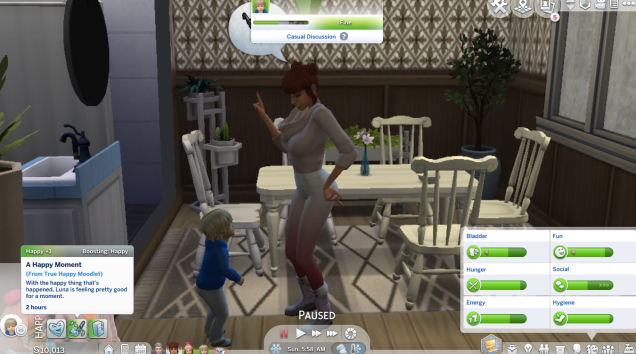
Unfortunately, happiness is not as easy as in a video game

These days I ponder… how I can hack happiness? After all, more money won’t make that much difference. (Although I would like a Mercedes Tesla Convertible Porshe/Corvette since its safer than my electric bike.

I tried using Maslow’s hierarchy as a framework to dissect happiness but I have found it to be a little too bit “basic” as it applies more to those in third world countries and people with real problems in life. I don’t want to sound basic I mostly have “first world problems” which I am very grateful for.

In 2016, I went down to Texas to attend a Tony Robbins seminar and discovered my current framework to backward engineer happiness.

Mr. Robbins outlines six human needs:

1)         Growth

2)         Contribution

3)         Significance

4)         Uncertainty

5)         Certainty

6)         Love and Connection

The lowest on the spectrum of human needs is to be Loved/Connection. I talk to so many people in my free investor calls and it is very apparent who are givers and who are takers. Why do people act so selfishly and so seriously? Perhaps it takes an old soul to realize it but in the end relationship that we build on the journey are what really matter and what we will cherish. (per Ray Dalio)

Action item: How can I get more Love/Connection? Schedule it? Attract more people of that nature? Create a podcast and network of other like-minded investors.

This $6.2M home in Hawaii looks pretty lame when you focus on the fact that is not filled with people and without meaningful relationships.

Certainty and Uncertainty are complete opposites. Certainty is having a reliable and safe life but at some point, we thirst for spontaneity.

Action item: How can I get more Certainty/Uncertainty? How do I build a routine? How do I put myself in places to get lucky? How do I free myself to go on more controlled impulses?

Significance is about feeling special.

Action item: What do I do that is my competitive advantage? Where can I get praise?

Contribution is about aligning your life’s work for the benefit of others. A mission. Apparently, Mr. Robbins did not endorse the mission of sitting on a beach with an unlimited supply of piña coladas and taking food porn pictures while gallivanting the world as a tourist. Nor did he support playing it safe with a bunch of passive investments.

Action item: What has been your biggest pain point growing up and maybe you can help others? What pisses you off most in this world? Realize that you might have to take a bit of monetary risk here to make a bigger impact.

Why do you think I accept non-accredited investors into my projects? Not because I love being super careful to follow SEC regulations. Certainly not because I have to expend so much energy to educate non-accredited investor and they invest all their money in just a couple deals. I do it because the middle-class non-accredited investors who go to work every day need these types of investments the most and damn it, I’m going to do that because it’s the right thing to do.

And the final need is Growth. Improving as a person.

Action item: Think about the different aspects of you life (physical, relationships, money, spiritual, to name a few), which ones need work? Many call this the wheel. I call it a stool (four pillars: health, relationships, spiritual, money/business) because I try to make things simple.

Tony Robbins six needs is a great starting point to see how we can increase our happiness. If you really think about these are the things that really make us happy. Lets us put focus on what makes us happy because in the end, that is what really matters. And the score of the game 😉

In another study, researchers asked 10,000 people to list 10 happy moments. This generated a corpus of 100,000 happy moments called HappyDB.

Here are the patterns that came up.

Here is where the team/comradary componet came into play…

Complete study write up.

Too often passive cashflow is associated with scammy multi-level marketing ploys to get people who don’t have the money in the first place to buy into expensive education systems. If the goal was to just make money and not to create value there are many things you could do such as sell drugs or sell a testicle.

“Hey man… let me tell you about passive cashflow and how you can get rich with little to no effort… do you feel that… its called entropy man!” (In a sleazy tone)

As mentioned before SPC-1.0 is getting into the rental property game and getting your mindset out of the Dave Ramsey/Millionaire Next Door lizard brain where you are just focused on putting food on the table and making ends meet. As you build up your cashflow you move from more scarcity mindset to abundance mindset.

“It is unlikely for someone to transform from a scarcity mindset to an abundance mindset (without a life altering experience ie. life-death experience, LSD, tribal drugs, or passing of loved one) without reaching or getting on the path to financial freedom. On my journey to financial freedom, I was cheap with my money and time. Somewhere along the way my outlooked changed but it is a process… you cannot just meditate or recite mantras to and obtain an abundant mindset. Perhaps scarcity mindset is the fire under your ass to do something.  And beware of “Cheap Easy Free people” (CEF) along the journey because it typically a sign for a scarce mindset. CEFs are usually 1) not very much fun, 2) have lame relationships and friends, 3) looking out for themself first.”

SPC-2.0 is turning into more of a passive investors as I have traded my single family home rentals to more scalable limit partnership positions in syndications, and now after I have cashflow (food on the table) I can take some risks and go after SPC-3.0 which is Simple Passion Income.

Being a working W2 professional I have a soft spot for those in my position… It makes no sense for a computer engineer who has a family and working 50 hours a week at a $200K W2 job to do what is required to become an operational lead on an apartment deal. Doing such would require 12-18 months of relentless work without monetary gain and little success to build relationships with brokers, travel to the markets.. and put up hard money to close the deal.. I have tried to make a team atmosphere where talented professionals can dip their toes in to “scratch their entrepreneur itch” yet keep their regular salaries.

“Entrepreneurship is all about you! A job is more about sucking up and politics.”

All too often the entrepreneurs out there reaching success are not those who possess the skillsets but they just went after it and got lucky. Don’t get me wrong they deserve it because of all the sacrifices but imagine if you combined that grit with talent?

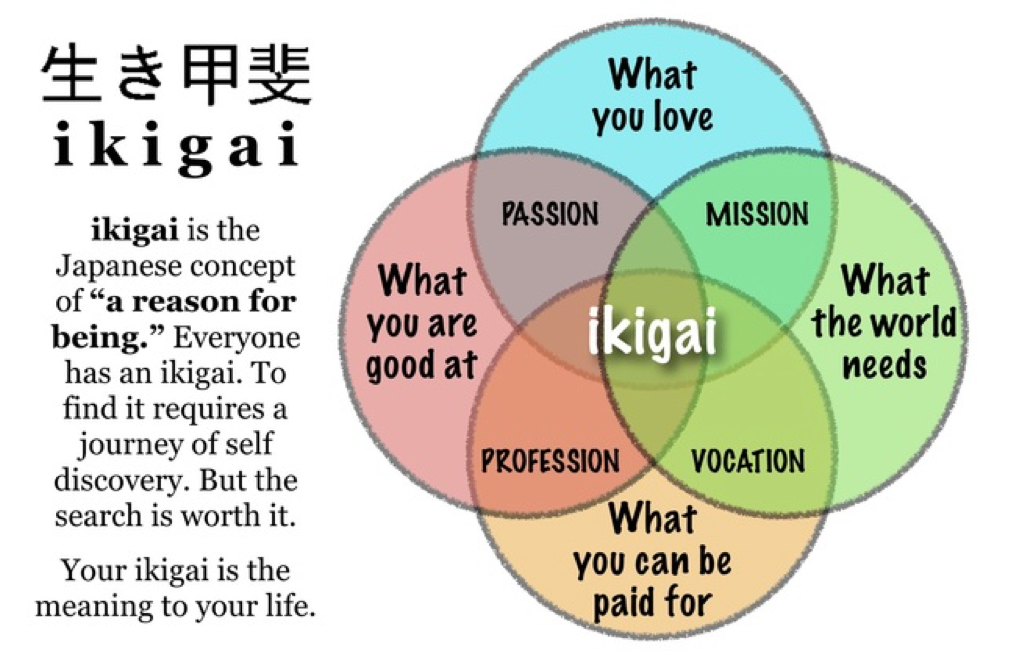
Ikigai is the alignment of doing something that is 1) you passion, 2) makes money, 3) you are good at and 4) good for the world. When you get this it is like arranging the Infinity Stones on the gauntlet and a higher level of achievement and happiness.

What is SPC-4.0? Maybe mentoring the next generation but at that point, we are playing with house money!

SPC followers are typically younger than 30 or older than 35. My observation is that when people have kids, that takes all precedence.

“What do I love to do and get paid to do it” Russell Grey or the Real Estate Guys Radio show.

The pursuit of an entrepreneur dream is not for everyone.

It requires an investment in time and money. And whenever you make an investment, you take on risk. In this case its taking time and energy away from a day job that already makes a lot of money.

In order to get enough critical mass behind an idea to turn into a thriving business, you must devote time, often many years. There are no guarantees that your efforts will be rewarded a lot of time luck is required. This Time Risk is that all of your time will be for nothing.

The saying “good is the enemy of great” comes to mind here. For many high paid working professional, you make enough money to be happy but part of what we are going for is not the extra wealth but “passion income.” Feeding that entrepreneur itch or as Buck Joffrey says that primal to our core instincts.

Below are some money ideas that I have come to adopt. If there are any that do not make sense to you please feel free to reach out.

1) Money is not everything… but it sure makes life easier

2) Define the Rules of the Game

On my calls with people, I often talk about defining the monthly cashflow goal (5k-20k for most) where they will create the lifestyle that they want. Only fools work past that point. The exception is unless they find that the act of creating value as sport and fun.

3) Time is interchangeable with Money. You can trade your time for money all day. But you cannot buy time! But you can buy freedom!

4) Experiences are the currency of Happiness, Social capital trumps monetary capital

5) Unproportionate wealth comes to those who create value. Trading things buy low sell high is a gimmick.

Ben-Shahar shares four archetypes in his book called Happier outlines how we fall into these four “the happiness archetypes”:

  1. Rat Racer – enjoy the idea of a future destination, but neglect the present
  2. Hedonist – enjoy the journey (right now), but neglect the future
  3. Nihilist  enjoy reliving the past, but neglect the present & future (because it’s hopeless)
  4. Happiness – enjoy the experience of climbing toward the peak

The happiness archetype is the ideal.

Except from the 12+ Time Best Selling Book:

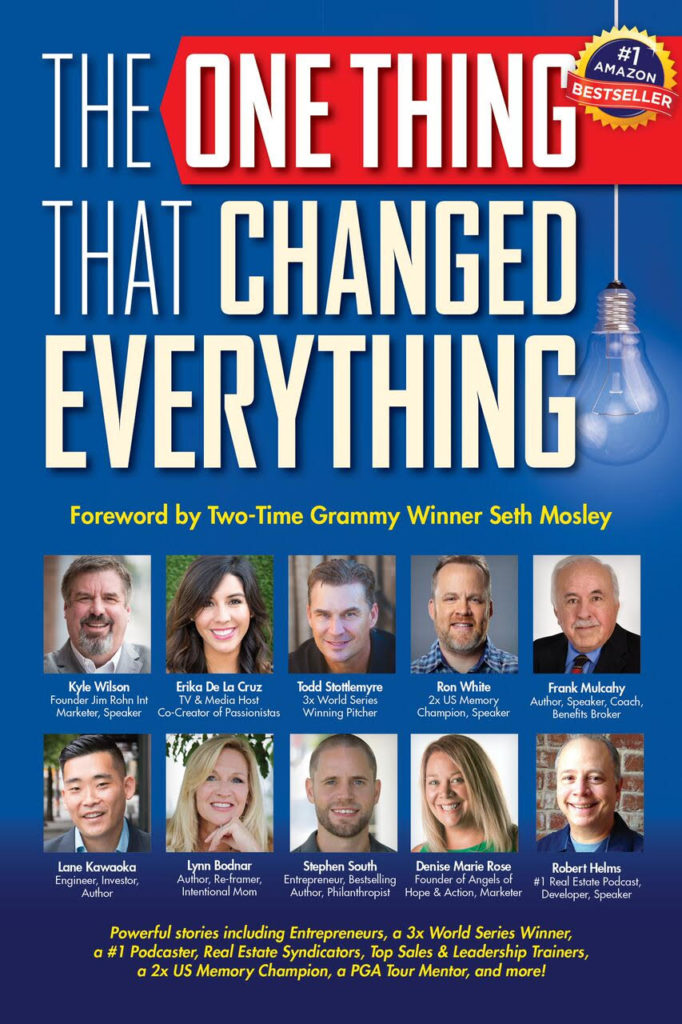
The One Thing That Changed Everything: The Engineer Who Escaped the Rat Race and Achieved Escape Velocity

I walked the linear path for much of my life. Raised as part of the disappearing “middle-class” programmed me to study hard in school, checking the boxes on extracurricular activities, cramming for the SATs, and getting a high GPA to get into college, all to live a “practical” life.

Growing up, we were told to “waste nothing” and turn off the lights every time you leave a room. I still feel guilty to order a soft drink at a restaurant as opposed to tap water.

In college, while other cohorts were playing Frisbee in the quad, I was stuck in the basement of the industrial engineering lab. Why was I not playing the sun? Because Google told me what the highest paid undergraduate professions were. Driving on autopilot for much of my early twenties, I went for a higher-level master’s degree and tested to become professionally licensed as an engineer for the job security.

Upon entering corporate America, I spent my first five years of my career working for a for-profit, private company as a construction supervisor managing a bunch of entitled journeymen who were older than my parents. Facing the rigors of junior level employment, I played my role as the young guy, traveling 100% of the time for my company, sacrificing quality of life, as I navigated the operational clusters, toxic management, and other backstabbing pawns in the company.

I have a lot of scar tissue from that decade of working for the man not to mention building someone else’s dream. You tell me how engaged you would be if meeting protocol was to sit next to your superior and not speak unless directly instructed to or if you were asked to address a director two levels up by mister or misses!

One day an internal company email went out notifying of a friend/ex-direct report had died in a work accident. My boss was uncompassionate about the situation, looking out for the big bad machine first (mostly his annual bonus and agenda). This really put things into perspective for me.

As a corporate road warrior, it was novel being on company expenses all the time and maxing out on airline and hotel points, but you can only have steak and lobster so many times… The only people who cared about my platinum status were the other suckers in first class who were working for the paycheck or an acceptable quarterly review. Although I am grateful that I had a well-paying job post-2008 recession, I traded the most important resource, time, for money.

The linear path instilled delayed gratification, living below my means, and an overall scarcity mentality of saving money instead of earning more, being more. I was entranced by the pervasive Wall Street marketing to blindly put money into a company sponsored 401K plan only to “hope and pray” that compound interest would carry me to a secure retirement.

Let’s not even talk about the student loans I had…

I knew where this path was going…I mean I did the math and it told me so. This is my story of how I freed myself financially, how I took ownership of my life’s direction, and the series of events that allowed me to find my calling.


Seeing the (Economic) Matrix

A steady diet of ramen noodles and a free birthday latte per year made it possible in 2009 to purchase my own home to live in. Being a bachelor who was only home on the weekends, I realized that having this large home was a waste of money. I made a decision to rent it out and became a real real estate investor. You might be thinking that this was the big change, but at the time it was simply a lot of beer money after collecting the rents and paying the mortgage.

I don’t know if it was the beer or being love drunk with cash flow, but I opted out of the linear path in my early twenties.

From that point on I devoured podcasts, books, and online forums on every keyword iteration of passive real estate investing. At a few hundred dollars of passive cash flow per home, the process was simple, buy a rental property where the income exceeded the expenses and mortgage, then rinse, wash, and repeat. Like a space shuttle that accelerates through gravity and escapes the atmosphere into Zero-G, this was my way to financial freedom. Up to that point, the biggest breakthrough in my life was discovering the .MP3 format that compressed and played music digitally in my teens. Using this intellectual technology, I progressed intentionally to eleven rentals in 2016.

At that time, a few of my friends wondered why my ramen noodle diet was being replaced by Starbucks coffee and yummy double bacon and egg breakfast sandwiches. They wanted a piece of the action too. Duh, it was about time seven years later, said the little red hen who did all the work by herself…. As much as I liked helping people, I got tired of answering the same questions. So what does any other late Gen-X/Millennial do but start a blog? Unfortunately, the words I write, even if spelled correctly do not usually make proper statements in English, so I uploaded my Simple Passive Cashflow podcast to iTunes where I could ramble and honestly talk about what I was going through as an investor.

I began living more consciously, opting into more meaningful engagements with people and projects, and searching for meaning and purpose. I was beginning to ask myself, “after sitting on a beach with my unlimited supply of piña coladas and time…then what!?” Needless to say, my motivation for working in the hostile work environment that I once tolerated dwindled, so I switched to work in the non-profit public sector. I started to see the economic “matrix” where people essentially trade time for money and the rich let others build their dreams.

Being an introvert, it was paradoxically energizing to see my audience grow as I began in-person meetings and online groups I sponsored. I provided hundreds of free coaching sessions to guide newbie investors. With my engineering background and a little “bro-science,” I saw patterns arise in the stories from well-paid professionals who were led into an unfulfilling lifestyle unaligned with their passions. Abolitionist Henry David Thoreau said, “The mass of men lead lives of quiet desperation and go to the grave with the song still in them.” People do not have any time to look inwards and are constantly living with anxiety and self-doubts because they are working like machines in order to meet their basic needs without the freedom to find their true passion.

Why did so much hard-work lead to financial scarcity and lack of fulfillment?

This self-selecting group of hard-working professionals searching for more all had a common thread. A moment that pushed them over the edge and made them realize that the path they were on was unacceptable.

These are some of those tipping points:

  • Seeing younger, less experienced workers being “red-circled” as future management and advanced through the company “fast-track”
  • Being fired to cover up shortcomings in a budget
  • Internal theft by upper management
  • An affair by a superior lead to bankruptcy of a startup company affecting many innocent employees
  • Chronic drain of working with deadbeats
  • Getting lost in the office politics of getting your objectives completed when they do not align with your boss’ objectives
  • A retirement party for a coworker is catered with crappy Chinese noodles due to the cost control
  • When you don’t get the job because you do not have enough grey hair
  • Because you have too much grey hair
  • Being criticized for not being business savvy from those who live paycheck to paycheck (when you have a personal portfolio of a few hundred rental units)
  • Sitting through endless meetings that should have been sufficed with an email
  • Circle jerk meetings where the boss’ dumb ideas are exalted by their minions
  • When your boss with no technical experience misuses terms like artificial intelligence, big data, machine learning, and deep learning
  • Being enslaved with the “golden handcuffs”
  • Seeing an ambulance come to the office routinely during layoff season
  • Being around the negative W2 worker speak and adopting the prevailing victim mentality
  • The road warrior gets an early quit on Friday only to see the spouse at home with the pool boy
  • Watching your friends receive the Seiko stainless-steel watch retirement gift

If you have found a calling in something you are good at and truly love doing it…clap, clap, good for you. Keep doing what you are doing and consider yourself lucky. If you relate to any of the moments above, read on.

This is ME today January 2023…

https://youtu.be/HThWJmOupCQ

The One Idea

My online journal resulted in many emails of gratitude and acknowledgment because I was empowering people with the “how to” and inspiring them to take a leap of faith to change their financial life forever. I suspect the most effective part of my message was showing people that if little, awkward engineer me could do it, how bad could it be?

I started up-leveling my peer group, and through osmosis, this brought me to a Tony Robbins event where I literally walked on burning coals! There were a multitude of top-down and bottom-up techniques Tony Robbins spoke about during the intensive four-day event. One of those lessons was “things happen for a reason,” and boy, was I glad I did not leave to use the restroom when he outlined the six human needs:

1)         Growth

2)         Contribution

3)         Significance

4)         Uncertainty

5)         Certainty

6)         Love and Connection

Here was the game-changing moment…. Tony Robbins said, “The most important thing is contribution because the secret to living is giving. If you catch onto that, you start realizing that there’s nothing you can get that comes close to what you can give. Life is calling all of us to be more than just about ourselves and that is when we get that spiritual hit.”

Apparently, Mr. Robbins did not endorse the mission of sitting on a beach with an unlimited supply of piña coladas and taking food porn pictures while gallivanting the world as a tourist. Nor did he support playing it safe with a bunch of passive investments.

Later that Easter, I was baptized, and the message there too was “go forth” and help others.

Then another of my mentors, real estate legend Robert Helms, said, “When you are successful you have an obligation to send the elevator back down.” I made it to my penthouse and now I and this elevator are heading back down to get folks!

We all have a finite time on Earth and an empty canvas to create a legacy. This was my one shot! Opting out of the linear path was not about getting financially free and sailing off into the sunset, but it was about standing up for change and creating the greatest impact!

The fan mail all followed a common thread of pain. Many hard-working professionals who are busting their butt on the linear path are being misled down a comfortable life of un-fulfillment. Many of them were enslaved by the “golden handcuffs,” running in the hamster wheel of the day job working for someone else. Some, like doctors, lawyers, dentists, accountants, and engineers make more money to get the big house and nice car, but in the end, they are just a bigger hamster. The dogma of the Wall Street “buy and pray” method is a cover up to insidiously steal investment returns from the people who are doing all the work.

Life is a three-phase screw job:

Phase 1: You enter the workforce with the worst jobs with the lowest pay. Time is abundant.

Phase 2: When marriage and kids enter the picture (and ailing grandparents) this is the time when one should be excelling at their time- consuming career. Money is abundant.

Phase 3: Your teenage kids hate your guts and your health starts to fail. Time is abundant.

The Next Chapter

My mission is to teach and empower good people to realize the powerful wealth-building effects of real estate so they can spend their time on more important ventures and passions instead of working long hours and worrying about their financial troubles.

https://youtu.be/azOtb5zY7J4

For the parents and the next generation: Sports help children (and people in general) to have a healthy lifestyle early on. Not only that, sports teach them discipline, grit, confidence, persistence, and teamwork.

SimplePassiveCashflow.com seeks to educate those looking for diversification and better returns outside of traditional investments such as mutual funds and stocks. This is part of a large effort to redirect billions of dollars going to the corrupt Wall Street roller coaster and help the shrinking middle-class find safer and more profitable investments in projects that benefit Main Street such as affordable workforce housing rather than luxury housing for the rich.

The true meaning of wealth is having the freedom to do what you want, when you want, and with whom you want. Building cash flow via real estate is the simple part. The difficult part occurs after you are free financially to find your calling and fulfillment. But that’s a great problem to have 😉