What’s up folks? On today’s podcast, we are gonna be doing a coaching call where we go over the beginner questions on transitioning. Maybe you’ve owned some rental properties and you may be thinking you’re gonna 10 31 into a syndication or into a bigger deal. Guess what? , as far as I’m concerned, 1031s make absolutely no sense unless you’re going to 10 31, like something bigger than a two or 3 million capital gain and depreciation recapture.
So what we’re gonna be going into in detail today on this call is, how do you use the passive losses or how do you go into deals to get enough passive losses to totally offset the capital gain and depreciate, recapture on everything that you’re selling previously? Just experience sharing here, 2015 when I realized the old turnkey rentals wasn’t all what it was said it was going to be. And yeah, back then the pricing on that stuff was a lot better than it is today. I saw the light and I sold pretty much all my. Turnkey rental rentals in 2015. I think I sold six or seven out of the 11 of ’em that year, and I had a big capital gain in depreciation, recapture about $250,000.
But since I was investing in syndication deals prior, I had a lot of suspended passive losses built up. And I believe the form is the 82 85 form. All you guys should have that. Take a look at there and see how much suspended passive losses you have. Great exercise for you to do every single year. And also I just uploaded in the syndication e-course a video where I go through my K one tracker on how do I keep track of my suspended passive losses in this year, and then go look at my 85 82 form for previous years.
But anyway, Hope you guys enjoy the show. Make sure you sign up for the club at simple passive cash flow.com/club. We just recorded the quarterly kimono report and we’re going to be releasing that to you folks. The part one and part two. Part two goes out to the investors in actual deals. We go over all the deals that we’re in in a very transparent form, right?
There’s a lot of people out there. They say they’re in a lot of deals, but they never really, you never really hear. This stuff, nor can you really interact with other investors within the group to figure out if it’s all true or not. And this is what’s hard about being a private investor in these private syndications.
It’s really hard to do your own due diligence, which is why I have always said the. . The only way to really do this and make sure you don’t step on any landmines, and I’ve stepped on the landmines myself working with, dishonest people and people who just are faking it till they make it.
The only way to really figure out who’s legit in this business is to surround yourself with other purely passive accredited investors. Not these, fake it to you make it general partner wannabe groups, but real accredit investor, purely passive groups. I truly believe that our group is the, really, the only one out there with kind of that already have infrastructure in place.
Our family office group, we’ve started it, I believe around 2018 and really got it going 2019 and into the pandemic. I think we’re well over a hundred members in that group right now. . But if you guys wanna get more information about that, just come in, join the group@simplepastacastle.com slash club.
That form will take you maybe about a minute or two, but then we’ll set up that onboarding call with myself to get to know each other. That gives me the opportunity to see what you’ve got going on and maybe do a little bit call, like how we’re gonna be showing today on today’s podcast. But anyway, enjoy the show.
All right, folks. We’ll probably going to add this to the e-course at some point, but we have, we’ll just call them. Bob, and Amy, if I can remember that name right there, names real names so will remain private. But Bob and Amy have been investing a little bit and have some great questions.
And I think these questions are. Going to be very indicative of somebody. Who’s been through a lot of the initial education. So I’m very excited about this what we’re going to be talking about today. Hey guys let’s get this kicked off, have a good conversation here.
Hopefully other people can learn something.
Where do you want to start? You bring the questions I got I’ll try and break down some ants. Okay we’re in our later career years, put it that way. And we’ve been doing, buy and hold and we’ve been doing deeds and we’ve done some hard money loans and. And we finally got into one of your syndications.
So we were actually getting into that now also. But we’re trying to get out of our nine to five, but it’s never nine to five anymore. It’s more like six to four jobs. And so we’re looking more at investing for. More like replacing that income. Yeah. So in other words, we’re approximately is your guys’ adjusted gross income. And let me pause this.
So yeah, just profile, I move on just real quickly. A lot of it just breaks out the numbers. Where’s your adjusted gross income at today. And what is your net worth approximately? Yeah. Let’s see. What is our adjusted? Gross is like a one 70, like about 170. Okay. Approximate net worth approximate net worth is. What about. To, to something that’s went to probably about what somewhere between two and a half and 3 million. Okay. So from adjusting girls skate com side, just before we move on, you guys are not in the highest tax bracket. You’re not both below this red line of 340,000, like some of the investors, therefore, a lot of the cost segregation bonus appreciation stuff lead doesn’t really pertain to you guys too much unless you guys are selling other assets.
If that’s the case, we can talk about that later on. But but yeah, so I know you’ve got some syndication related questions, so let’s let’s start going down the list. Yeah. So we’re, know your specialty is syndications and so we’re looking for some information possibly on what type of syndication would be best for.
Someone at the stage of retiring and getting out of their normal career job into more just doing investing. Yeah. At this you can syndicate anything, right? You can sit indicate a pizza franchise, a burger, join a real estate. Real estate, you can develop properties. You can. Bye in the hope and pray property, you can do value, add, you can do different degrees of value add, right? So you can syndicate whatever you want. I think the essence of your question is what type of risks for bore profile, or it makes more sense for you guys is the question.
And the way I look at your guys’ profile, two to 3 million can mean different things to different people, right? If you guys want. In your forties or fifties, two to $3 million, isn’t too much money and you still have to grow your net worth. But it sounds very morbid, but if you guys were in the late later stages of life, two to $3 million is perfectly fine and you’re already at end game already. So when approximately were you guys at age wise, which you say We’re not quite 60 yet.
So plenty years ahead. Yeah. So for the most part, you guys still have to grow your network. Cause two to $3 million isn’t much see states, right? That said you’ve got more than most people out there that doesn’t say much. But two to three minutes to take $2 million at 10%. What does that 200 grand of passive income a year at 10% that said you would need to get fests that tire $2 million, right?
10% stuff, which isn’t going to be the case most times. And what it’s going to come down to is I’m sure you guys are familiar with asset allocation picks, right? The essence of your guys’ question is like what kind of reward risk reward profile you’re going for? Are you looking for something that’s 10%, 12%, 13%.
20 to 25% a year. Maybe we start there, right? Like I think for most people you guys probably fit this mode, investing in deals where it’s stabilized from the get go, or it’s at least, if the economy takes a tumble backwards, you at least hold onto the asset. So deals that are more, what I call the chocolate type of deals.
If you saw that other. Article that I wrote the other a few weeks ago. Those are more higher risk, higher return. Doubling, tripling your money in maybe two or three years, you don’t really eat to do that at this point. Maybe if your guys wasn’t like a million to $2 million net worth or less, that would be more lined up your ad.
Put, if you could consistently grow your money yet 10 to 14%. Conservative fee is stack winning. Is that sound okay to you guys? Or do you guys want to be more returns? No, that sounds good because we have been, we had several condos. And self-managing and the return there, all the condos were in Hawaii.
So their return wasn’t that great. It’s only five to 7%, but part of that problem was like, you paid a down, right? Your equity position was large, is what this image is pretty much displaying. A, you should have read, leverage it, got that return equity up higher, but that just happens over.
Yeah we’ve gone through the hilar process and the views that for more, investing, using the equity on the properties, but we’re now, we’re now, going through the process of selling those off and investing in, in, better returns. You guys are still, probably in the simple passive cashflow 2.0 stage strangest thing from the rental properties, which are high risk, high liability, big pain in the butt for Paul cheat returns and going to be more of the passive investor.
And maybe in five years, you’ll be transitioning more to this simple passive cashflow 3.0 side, where at your guys’ age, if you guys were. Three and a half to 5 million. Then I would say you were there and then you could probably just invest some equity type of positions and be totally fine.
But just to get a sense, like personal finance point of view, do you guys have kids or just you guys just us and. Out of the what’d you, your guys, you said your AGI is about 1 50, 1 70. What do you guys save every year? I’m just trying to get a sense of your price burn rate or how much money you guys spend on fun stuff.
Yeah. Expenses wise, like you guys say 50 grand a year or 80 grand a year, or are you guys pretty cheap and able to save a hundred?
We’re pretty cheap. You gotta be when you’re investing as a private money lender. That sucks. I guess you could say. Yeah. So 60, 70 about is that believe me, I’ve seen very many levels of cheapness, so I’m looking it up.
But yeah, I don’t know if we have our, I don’t know if we have it written down anywhere. Yeah, but just gut feeling like every year you save more than 50 or 66.
Is that, what does that says last year?
Oh yeah, probably around. Probably right around. Yeah, right around 50. Let’s say wait. That’s how much we spent. Oh, okay. So we’re saving we’re saving 120 a year. Geez. Wow. You guys are pretty cheap. Isn’t that? The that’s what you got, I’m looking at I’m checking the most of the money you guys make, you guys say is basically you’re telling me over half. Yes. Okay. You guys are just really typical white Nepal sabers.
Oh yeah. Yeah. Okay. And in that case, have you heard me talk about this concept of ed game? Like four to $5 million network? don’t know if I’ve seen any I talk a lot about this and the family office group that we had we talk about this concept of getting ourselves to financial independence and then so that your money can grow and you can pass your wealth off to a couple kids who live like trust fund kids, essentially dwindle away, but long after year old dad so you guys are there in a way.
You’re not two, four or $5 million, but number one, you don’t have kids. Number two, our group is a bunch of pretty like frugal people. You guys are definitely more frugal than the average person. Oh yeah. I don’t know if that’s a compliment or not, but maybe it is in our group, but so th.
When I say most people in our group are making 200, 300 plus a year, they live in California, much more higher expenses. For them I say four or $5 million net worth. But for you guys that might be a tad under there. You may be on the bottom limits of this concept called end game. So for you guys might be to this guy wearing the green shirt.
And you might be in this position to just invest in more conservative type of deals and you don’t need to double your money every three to three years in development deals or riskier deals. So I would say at the most just focus on the vanilla deals where it stabilize cashflow line, or maybe do some private equity.
But the tricky part is. And again, telling you where to be centered around, but it’s up to you to create your portfolio. So you get that on your weighted average, if that makes sense.
Me personally, like I’ve got all, I’ve got a lot of, bit different deals. This is where, in my opinion, where I want to personally be like, I want to invest in more or. Value add type of deals that are a little bit cleaner class B acids. So that’d be centered around where my cursor is, but all of a sudden, a lot of deals are in that, right?
They’re all over here on the outside of that bullseye target, but the weighted averages, there is the point I’m trying to make for you guys, you might want to have in this. Mindset as me like same B class. Like definitely not C class assets. Cause they’re just a headache. Although you’re just passive investors, you don’t have to deal with that, but they’re still from a passive investor perspective.
Cashflow is more sporadic in class C properties because tenants, they just don’t pay with a higher frequency we’ll figure. But maybe you guys might work. I’m more of a here. Maybe we see the same way, right? We want better cleaner assets, 1960 seventies and 1980s, which is right here where my cursor’s moving back and forth.
But maybe we’re, I’m up here and I’m wanting to grow my money at the stage of my life. You guys might be a shy under here, so maybe more what we call a deep field type of deal. Or it could be, you just invest near, but you do some private equity down here and the weighted average is right here.
That makes sense. Yeah. Yeah.
But yeah. Does that kind of solve that and then give you some food for thought or the other oh yeah. Confirmation. Yeah. You guys don’t, you guys aren’t really like this, but like some of my investors they’re like, all right, I need the class to beat less class assets in that are little bit at more than value add or like value add.
And they get very precise with this and just know that nothing will ever just hit your box. You got to expand the strict. And you have to invest, especially if you have lazy dead equity it’s so that B S equity in your home that should be put to work and grew in your rental properties. I know you guys have that there or equity is if you have stocks mutual funds, that type of stuff with bonds.
I don’t know why you’d want to hold bonds at this stage.
That’s the biggest thing, right? I think that’s the biggest problem that most people have is they think that this is their strike zone and they’re very patient looking for what’s there, but they got a million dollars, not think Jack for them, that’s where the low-hanging fruit for them. So that’s where we come up with.
Deployment plan where it’d be put the years up on the top. Then we hear like the four sources of money, for you guys are saving, let’s just say you’re saving $50,000 a year, right? This is what your money is coming through. And maybe you quit in 2025 is what this is saying. And then cash may, you may not have too much cash, but you want to deploy that at some point.
And then the other two sources of capital is your home equity, which you can tap via hilar where you finance or selling the assets. I would suggest with it being polite properties with a, just speak, generally bad rental properties through states where you have bad laws and it’s more an appreciation play, which doesn’t help you at the stage of your guys’ life for qualified retirement plan money, which isn’t your retirement.
Self-directed IRAs, 401ks, et cetera. So you start to build this plan where you draw it out and you’re taking money out, not so that your AGI blows up by taking out the IRA money out prematurely. But you leaking it out slowly as the general idea, but this is the name of game you’ve got to deploy it.
Cause I’ve had investors. Say I’m in a dozen deals, but it’s still a while to being to financial freedom. I don’t like, yeah. A dozen deals at $50,000. It’s just like half a million dollars, half a million dollars deployed. Isn’t going to get you anywhere at this know, especially from a cashflow standpoint, you can do the math on that five, 8% on I went to grant is nothing.
What do you got? We got there. You got questions.
Oh so we’ve got a bit in the self-directed IRAs and the 401ks. We’ve got some money in there and I know you’ve gone over. Starting to pull money out of there, but we’re at the 59 and a half, so we can start pulling money out. Yeah. Let’s kinda talk about this cause like how much money would you say you had in the foam equity out of your let’s just call it $3 million net worth.
How much is like as home equity in your rentals and your primary residence. 625. Okay. And then your retirement funds, how much would you say? I’ve got
three to 400,000. Okay. Perfect. It just like the last guy. And it’s more than one. We’ve got a couple of, yeah, but you’re not working at those companies anymore, so it’s fair game to take them out. One of them yeah, I’ve got an ESOP that I’m still working, so that’s still growing.
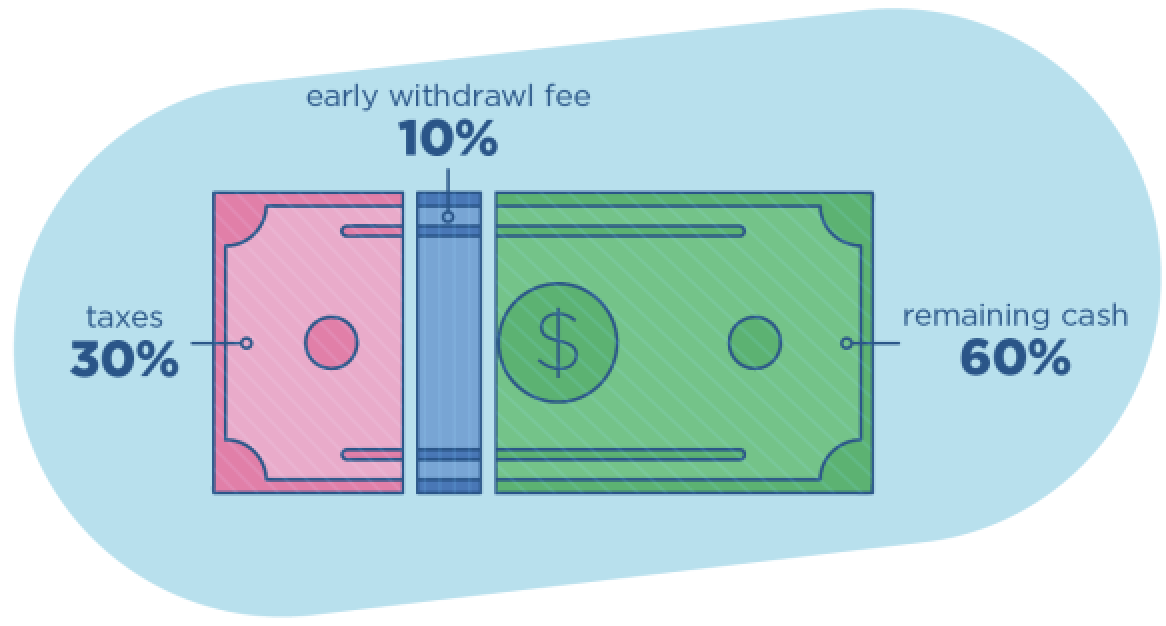
Okay. But yeah, the result of you taking money out of your IRA. You’re at art you’re I think you’re at that age where you’re not going to hit get the penalty, which is fine, which isn’t much anyway, 10% who really cares about that. The biggest thing is when you take the money out, your AGI will go up and that may push you into the 22% into the 24.
Or what we don’t want to happen is to go over the 32%. So let’s just say your age has one 50. If you take out a hundred grand, it’ll push you to two 50, which is still cool. It’s no big deal. So 24%, but if he pushed you to take, if you take out an additional hundred, which is 200,000 a year, go from one 50 to three 40.
Now it’s starting to hurt a little bit more. This is subjective, right? Most of our clients are in your guys’ situation of that AGI between one 50 to three 50. So that’s the general thought, of course this is personal finance, right? This is you guys need understand how this works and make the best decision and surround yourself with other like-minded individuals.
I don’t understand that stuff too, to ultimately get the best decision for you guys, but let’s just let’s just let’s just go with this right. And see where it takes us. So if we take out. A hundred. What I say a hundred, say we go 150 in the first year. That’ll take you. You’re still under that three 40 line.
And then maybe you would do 150 or 150, or, maybe you just play it out like this. I would rather see you take the money out of your home equity first quicker, because to me, this is the money not. It’s the boss most, yes, there, basically. If you’ve heard the analogy of the wartime general, the, all these dollars right here, you have, or think of them like sold shoes, you’re trying to fight the war. You got 600 of them right here. These guys aren’t doing jacks. Neither of these guys much, but at least they’re like sharpen and pencils are cleaning their guns.
They’re doing something. We know we got to get them out, doing something, they don’t need to be doing kamikaze runs or shooting on the front lines because you guys are already at end game, like you said, but we got to get them out doing something at least harvesting, passive losses for you, but let’s just not do this out of haste.
Do it too quickly. Where your AGI goes up, but I guess just to throw something out there and I’d like to hear your thoughts on this, what I would do is I would go heavy on the hilar first, and I’m just going to do some kind of cascading numbers here to get to your 600. The reason why I’m leaving this at 1 5100, 100, 100, or I really, maybe it shouldn’t be 1 50, 1 50, 1 50 to get it all out in a few years.
I’m just trying to stay under that three 40 AGI, just so that when you play around with these numbers yourselves, you know why I’m playing it. But then this is to me is the biggest thing here.
Yeah, we try to use our Wheelock for investments. That’s what we do now. We’ve got some hard money loans at 12%. So the hard money loans, I would be very cautious of those number one that is ordinary income. You do not want. And number two, you don’t get past losses, private money, and number three, be very careful who you lend money to because there are a lot of people out there that act as marketers too.
And they run these like lending platforms where they act as a conduit to put your money with lower grade operators. People that really should be charging. You should be getting for the level of their expertise or track record. You really should be getting 15 to 20% return on your money, but the middleman was marketing you, that loan is taking the Delta.
That’s very common. But I think just for the sheer ability of getting passive losses and it being not the board is why you’re trying to get away from the private money. Plus all your money is tied up in one deal too, but yeah as you phase out of that, the idea is you’ve got to sell the rental properties.
Cause most of your stuff is in a vocab area, right?
Yeah. No mainland metals, no. We have a property on the mainland, but, and we Airbnb it. Yeah. That’d be the last set I sell. Yeah, that one’s right. That one’s been handed down in the family. That one won’t be going anywhere. Oh, why you say that? Bush? No attachment. Amy’s dad built it.
They want to sell it.
And I think about it when people start to see you, cause they trip and fall. Maybe you might want to reconsider that one, but Hey, I’m okay with it. We can decide in 20, 26, but it’s working and that’s all I’m happy. What to me is the biggest thing is. For hardworking folks.
Like you guys work hard more, especially you guys saved really hard. What your money’s not working for. You’re working harder than your money. Yup. So let’s go off the low hanging fruit first. So that’s the home equity in the local rentals and the primary residents get a hilar, but at some point you have to make the decision to sell those assets.
Unless you think that there are good investments, which are there in our hall, either not put at best, they’re just right. Yeah. We’ve sold two of the four already. And of course there, 10 31 exchanges oh, we don’t want to do those. Yeah. We don’t do any of those type of stuff.
We. Had somebody help us out. We did some I dunno, outside the box workings with those properties. So you used to own property, so that’s the hard part. And in the next three to five years, you’ll be in the same predicament. Yeah no, we don’t, yes. With the the remaining amount, which is.
What less than half, about half the value of the property was yeah, the we there in DSTs. Oh, no, you did a DST and those DST guys get paid so well with all the fees with that stuff. Unless you’re take kicking a capital gain of over a million or $2 million, those types of things are complete scams.
Should be able to offset those, that tax school gain with passive losses.
We might not be doing, don’t be doing it again, shoot. I did it too. I did a 10 31 back in 2000 and well. 14. I don’t know. I got, been there, done that I made the same mistake. Just don’t make the same mistake again. The analogy I use for the 10 31 or DSCs is it’s like a hot air balloon, right?
The hot air balloon goes up when you buy the property, it starts to go up and you can sell it and take a lot and pay your taxes and jump out of the hotter. And in the beginning, the higher balloon necessarily it’s four feet under. You jump out. Ideally you start to get on the passive investing bandwagon.
You start to get these passive losses piling up through normal depreciation bonus depreciation. You’re going to start to accumulate excess suspended, passive losses so that when your hot air balloon goes up and you jump out, you have a pillow of passive activity losses. So that’s what happened to me back in 2000 and.
17. So that’s down here. I had a $200,000 on Jeanette, $8,000 capital gain depreciated capture, but because I was investing into vacations and private placements, which did a lot of cost segregations, I had several hundred thousand dollars of passive losses and I strategically views 200 of it to offset that gate.
And thus. Allowed me to not to have to do a 10 31 exchange, which again, going back to the higher balloons, it’s like the hotter blade continued. When you go into the next property, you go into this hotter bunny Eagle higher. So the next time when you have this debt equity in the asset and you want to get it out or solely.
Instead of four feet up in the air. Now you’re 20 feet up in there. You jump out of that hot air balloon. You’re going to break a leg at the very least, not even hit your head a die. And that’s essentially what the 10 31 it’s ESTs do they see you’re stuck in a spotter for me, and it makes it harder, harder for you to accumulate for more passive activity losses that we can have you jump out and get to more of a portfolio where it’s all broken up into little pieces at a time.
Then these bigger chunks and that’s what we don’t want. We don’t want our portfolio for any one of our, any one asset to have more than five to 10% of our net worth into one thing. That’s not diversification, you’ve done the T the DST I, the psycho I did the 10 31 exchange. The best thing you can do right now is to start keeping passive losses because you’re in this.
You should’ve got out when it was four feet, you’re eight feet, 10 feet in the air, but there’s still a chance Bob and Amy, you get a much passive losses. You can offset it. Just like how I personally did it right here when I finally got out of that. But it was one of those things. Like you have to get around other high net worth investors and get away from the salesmen selling these DSTs these sub 10 30 ones.
It from a high, from like a marketing perspective, the layer taxes. Yeah. Yeah, that’s right. But they’re just trying to sell their product. And the product is not really the right tool for the job. And in most cases, the situation where a DST 10 31 exchange makes sense is say like a client is selling a dentist franchise that they started for $10,000.
And now they are selling it for three to $4 million. At that point, it’s pretty hard to accumulate that much passive losses. So the option that a lot of high net worth people will do at that point is the DST or monetize stall. So something like that, because it’s just such a huge capital gain depreciation recapture.
But if it’s less than like a quarter million, certainly even less than half a million, sometimes even a million dollars. I’ve seen people get a million dollars plus a passive activity loss. It can’t be done to get you or that hotter, but just food for thought now. Okay. Yeah. But a lot of this is simple.
But the hard thing is that there’s all these kinds of products out there. Like DSTs qualified retirement plans. Is that a lot of my huge fan of everybody just trying to sell you stuff right. I think it for me, I don’t give a shit what you do. Like I just tell you what makes sense to me and what other people I’ve learned from do I don’t care what you do, I just don’t like this.
You spend $4,000 on something that only is really good for the person selling you at and not the best for your situation, but I’m not getting financial advice. Of course. Not at all,
but yeah. Yeah. But I think, like I said, man, like I did the same thing. So welcome to the club. I, after a while you stopped listening to these, get salesmens in suits. All right, what’s next? What’s next? You guys got a good one.
Got a you hit it a little bit tax questions though, but go ahead.
Yeah, Amy’s got some tax questions, but I’m not a CPA or a tax attorney, but try my best their job is really just to do the forms. Yeah. I think you hit on it already with the accumulated passive losses. Yeah. Go look at your I think it’s 80 to 8,500. I think it’s on the taxpayers of opacity, castle.com/tax, but that form will have the breakdown of how much it passed suspended, passive losses you guys have because you guys have been investing for quite a while.
So you should have most cases. People have more than they think they have put it that way, but a little trick of the trade, like CPAs, don’t really, don’t like to give that to you because they want to know when you’re shopping and. So most cases you won’t have that form in your documents. You certainly won’t have all the backend computer calculations.
It’ll just be the PDF printout, which is useless for our planning purposes. It’s useful. If you have the numbers there. To go elsewhere to portable or go to a better CPA. That’s actually good. Which in our world, 95% of my clients, they typically change their CPA.
What do you got there?
As you guys have seen the syndicator or the investment side, right? The three steps of simple passive cashflow first step invest with honest people that aren’t going to steal your money or use money, right? That’s the simple part. But that’s the part that unlocks all this other stuff, which is part two, the taxes.
You can’t really do this unless you have the passive activity losses to start to maybe implement real sick professional status to. So you have to go into the deals, unfortunately, which is I think the hardest part, who do you trust? Because anybody can do deals these days, right? Like not most people, they, if they’re new, if they’re under a half, a million dollars for half a billion dollars, $500 million of assets, and we’re well over a billion dollars at this point in 2022, But trying to find reputable operators that kind of give your money to, to be good stewards with your investment capital.
But then they’re really like, it’s simple, right? From the investment side, what you’re looking for. The biggest, low hanging fruit is the taxes. And then the, like the infinite banking too. We can talk about that also, but those that’s like 1, 2, 3 step. All this other stuff, DSTs cure pure BS, all these other products out there that to me are extraneous and in certain situations it makes sense.
And that’s my job is, based on your guys’ situation, it doesn’t make sense. Like for example, I think a cure appeal only makes sense. If you will have an extremely high income adjusted gross income of over 3 43 50, plus which you guys don’t. So does it make sense to use it? Okay.
So step one, you’re saying, they deal with the honest people. So you’d have to basically you’re building your your team basically. Yeah. But you’ve got to go about it a little bit roundabout way, right? Like eight, I think going on the internet, going through the podcast logs, finding people to work with is the wrong way to do it because you’re just finding the people who are good at.
Yeah, this is where it’s. There’s a kind of my spin on it. You have to find other colleagues and peers and credit investors around you that are already investing in this stuff and build long time relationships. I don’t know if you guys have ever come out to us, we’ll pass a cashflow event, but that’s the stuff you need to be.
You need to come out, break bread with people, build organic real relationships because. That’s where you’re going to find out the goods, who to invest with who to stay away from in the initially. The networking and social capital is really the currency of the wealthy. And like you said, you guys are already there to engage.
It was just it’d be good to find people on the same trajectory as your guys’ selves, this blind. Do you have another meetup in Hawaii? No. I would suggest joining the family office Ana it’s a pay to play program, but it’s hard and while you’re right, there’s barely any people, they only meet up groups or like the free ones, which are a bunch of broke guys trying to flip houses or wholesale houses, or do a bunch of birds.
Which in my opinion, what you do is when your network is under half a billion dollars, but that’s beta play, man. That’s what I mean. I went from 2009 to 2015, trying to do it all myself and I never wanted to pay for anything, but then I hit the wall and until I started to pay for mastermind groups to get around other higher network investors, just look at my unit count, didn’t really tick up. That’s why I started to do that. That’s you can try and do it on your own. But I think in Hawaii, it’s impossible to find other people, this type of stuff is you can’t go to wildlife country club because it’s just a bunch of rich trust fund kids there, or high-paid executives who do things differently with their money, not investing in workforce, boring investments, such as we do.
Okay. But yeah, you guys are investing far. The part of the club just know that the network is not completed.
Network is a separate part, a mastermind group, family office salon, a simple passive castro.com/journey for more details. But I think that’s the next step. If you’re investing more than a quarter million, I think it’s a no brainer at that point.
But yeah. You guys have been progressing pretty nicely, right? That’s good question. That seems like a lot of these concepts it’s it’s hard because it talks about this type of stuff.
Your 401k. Who talks about even private money lending on house flips. And we’re like 10 levels above that at that point. Yeah. When you talk to friends and family and you say, oh yeah, I’m going to syndication. They’re like, you’re in the mop. Yeah. That’s what I said. In 2013, I was like, isn’t that look like on this games?
Come on.
Yeah, but now nowadays, that’s where all my money is scattered amongst other people
still sounds, seems a little crazy to me still though, but I think that’s when you find other people that kinda, this is all the way they invest and you start to realize it is a very small community of. Passive investors. It is a lot more comfortable, but I think the hard part where you guys are at, and you just need to have a handful of close compadres, organic relationships around you, that also are starting with you guys.
And that’s the next step. Yeah. Yeah, any other final question, syndication, personal finance tax legal in front of banking.
This is kinda your, this was your guys. This was your guys slide, have you ever had to try and get a hilar on. LLC owned property, rental business property. It shouldn’t matter. He locks are always difficult to get on non owner, occupied properties, regardless if it’s an LLC or not.
If you’re working with the Hawaii banks, the blade banks are very bureaucratic and logical. And if you think they do, because they have no competition here, so they don’t have to. Do anything that’s outside the little box. So that might be the reason why you’re running into that problem. I would just go to a maintenance thing for that type of stuff.
Better rates or competition there. Yeah. But what is this for? Hawaii rental? Yeah. Yeah, just dude, just sell it. What is the, what is it worth today? We’ve got two different condos yet. One one’s about
2 65, the other one’s about 400, 400.
What is that moment? Is it.
Yeah, dude, it’s less than half a percent method evaluation and you having it backed up the eight. What is the HOA is on that thing?
No, it wasn’t that much. Oh, it’s 600. Yeah. So you’re making like 1500 on a $400,000. You take that money and you buy the equivalent, you could be buying for eight minus units on the main land, each writ running for a thousand bucks. No, but Hey, it’s your life? Just don’t complain when you don’t feel like you’re at financial freedom with your buddies, not for you.
And that’s a clear indicator that you must not working for your $400,000. It’s only $1,500 of revenue when you can get it to the mainland and make $4,000 and you could also be doing value add rental.
Yup. So yeah we’re getting there. Yeah, you’re getting there. And part of this is it’s a slow thing too, right? It takes a couple years to get to the swing of things cause it’s to get it. But I think it sounds like you’re heading the right direction. Like you’re thinking about what’s the next, I got my herd of cattle here, which was just the next set of tickets to the slaughter house and having nearby with, I would say that’s $400,000 or you can look at it two different ways.
First is. Which of those remaining combos are boy rentals is the most pain in the butt for you. I would probably do that. Or then just look at it from a pure numbers perspective and the pure numbers perspective. It’d be like, what trend do I have the most debt equity yet? Like the $400,000 one, or which one has the highest or the lowest loan to value would be the numbers, but looking at it.
Those are the two lens you can look through to figure out what kind of rebel you’re adding to that night. Yeah. Yeah. They probably have Hawaiian dates, right? These continents or these cattle?
No, neither one of them. Yeah.
Or they say never be here, farmer that’s right. If you want to eat them or one of the condos we actually bought in the foreclosure. Yeah. Then you should have said she should sell it. Cause you have some good equity and it was just like, people ask us like What do you guys sell these prop?
What are your exit early? If we, hit our business plan, we get hit, more than 20% a year. We can exit early. We’re going to do that because some of the property, like you guys in terrible jokes, maybe you guys are in that, but like Terra Oaks, we picked up a bat, a pretty good price.
That’s why I’m earmarking that with, to exit. Like the same situation, you guys picked up that foreclosure at a good price for us. Like we were still going to the value add process. And then when that callous factored up or take it right.
Hello simple passive cashflow listeners. Welcome to another show. Now we’re going to be answering a very common question , should I be doing a 10 31, exchanging my property for another property? Quick announcements: we are going to be doing the 2022 mastermind retreat, open to past investors, family office members, and select you.
We members out there now to learn more, go to simple passive cashflow.com/ 2022 retreat.
This is going to be January 14th to the 17th. We have a pretty packed weekend. A lot of happy hours on a time for you guys to get together, meet at the bar over a meal, over a long day of masterminding, especially on Sunday, which is the workshop day, and fun stuff like hiking.
We’ll definitely be doing a luau, but really getting the group of mostly accredited investors around the table and interacting and building those organic relationships, which is critical to being a passive investor. Finding where to invest, where to stay away from, tax, legal, infinite banking, and a lot of those more softer conversations about legacy planning, building your family office.
A lot of those are the conversations that’s going to be coming out in Hawaii for those who come. Again, check out the website, simplepassivecashflow.com/ 2022 retreat to you there.
Now what I’ve been up to this past month I’ve been freaked out with Biden changing the regulations on the estate taxes. Now I’ve been looking at ways to get money out of my own personal estate by doing an irrevocable trust. Now, there are a couple ones that I’m looking at either it’s called the HYCET, you have your cake and eat it too, or this BDIT.
No, I’m not an attorney and I’m still learning this stuff, but this is the thing with, high net worth investors is first to go talk it out with other people. Of course you have your estate attorney helping you along the way, but a lot of these ideas, you need to work out with other people in your similar net worth range.
We’ll say a accredited investors, of course, discuss what is going to be the best fit for you. A lot of this stuff can be very expensive, but sometimes it’s just finding them loopholes of the system. It’s what the wealthy do.
Cool idea that I heard lately was making BDIT where you’re making an irrevocable trust . Putting all your investments in it, creating that trust into a suit, a real estate professional status. For some of you super smart people out there who understand that once you’re a real estate professional status.
You’re going to have your passive losses offset your ordinary income by doing a few things on your taxes. But what’s really going on is when your real estate professionals status, all your passive income, passive losses is ordinary income, ordinary losses. So follow me on this. If you have your BDIT trust a real estate professional status.
Therefore shouldn’t all the income and the passive losses coming from it be ordinary income, ordinary losses. Get your head scratching there. Coming over to Hawaii, we’ll have that great conversation with amongst other financial fanatic friends out in Hawaii. And I will talk about brainstorming ideas like this so we can take it to our tax and estate attorneys, professionals to put and implement because to me the best practices come from folks just like ourselves.
And then, be educated and take these ideas and then put them into reality with the right professionals. But again thanks to guys for a listing and hope to see you in Honolulu, Hawaii, January 14th to the 17th and enjoy the show.
All right, so you guys are jumping into a live coaching call here, and this question comes up quite frequently. As most people out there are running around thinking about these 1031 exchanges, which I don’t know why anybody does this stuff because you’re at this 45 day rule where you have to identify properties.
And I don’t know who the heck can find a good deal in 45 days unless they blindly trust real estate agent and they just go into lukewarm crappy deals. But anyway we love 1031 buyers and sellers because they’re desperate and we know we sell it for a stupid price to them because they’re desperate.
But anyway, we have our friend Steve Vollmer here from state of Washington, I’m going to be talking about their situation and we’re going to walk through the pros and cons and how it works for taxes. As I prefaced all this stuff here, I’m not a CPA, not a lawyer, but this is what I did with all my properties.
In 2017, when I sold, seven or eight of my turnkey rentals, I had a capital gain and I had a depreciation recapture, and we’re going to go to these numbers in this example of $200,000. But I had been going into syndication deals that did cost segregation. I had maybe a few hundred thousand or maybe even more of passive losses.
So I just brought over $200,000 to suspended, passive losses, offset the gain. And now I was able to diversify instead of being like trapped into one or two deals, which breaks the Cardinal sin of mine never go into a deal with more than five or 10% of your net worth depending on what your net worth is. Hey Steve are you there?
I’m here.
I really appreciate it and we’ll get into the whole analogy with the hot air balloon. In case you still want to go down this route to at the end, but why don’t you give us some round numbers on what the situation you’re in so you’re going to sell this property. What did you buy it for? And what do you think you can sell it?
Sure. So I bought a couple properties and since I’m Steve Ballmer let’s say that I bought them for about a $1.7 billion sold them for $2.5 billion. Is this really 1.7 million? Or can we go with that 1.7?
Okay. So would you say 2.5 minus 1.7 is the capital gain.
Sorry. What was it again? 2.5 minus 1.7 so we’re talking about a capital gain of 800 grand.
Yup. Now, there were some sales costs, of course, but there’s also about a 200,000 of depreciation that I’ve claimed.
So we have to add on top of that point, do you know? And so that puts us up to $1 million.
It might be a little bit less than this because all the commissions and stuff like that can be deducted too. But let’s just go with a million dollars because this is a great round example. Let’s not try and create any brain damage for ourselves during this recording.
So we have a million dollars of depreciation capture and capital gain that we have to offset, which on the one hand is good job there, Steve. But how are we going to offset this so that it’s not a huge capital gain? A million dollars is a lot of money to offset. Most people are looking at maybe a hundred to a few hundred thousand dollars of capital gain and that’s what I was then in.
But, are these like kind of the true numbers, are you really looking at a capital gain depreciation recapture about million dollars or is it really less?
I hadn’t run them by a CPA.
You don’t need a CPA. This is ain’t rocket science here.
It actually is 200,000 a depreciation and it was 790 as capital gains.
Okay, so let’s just call it a million.
I’ve got 170 in deferred passive losses.
Okay. So that’s on whether 280 or 285 form.
Exactly, I look at it earlier.
For you, those you guys listing what that form is Steve has accumulated passive losses from previous years that he wasn’t able to use. So they stay on his books as suspended, passive losses and they’re very deep within this was an 280 or 285 form. Is that the right one?
Yeah that sounds right.
So most likely your CPA will not give this to you because they want to know when you’re trying to shop around. But you’re entitled to this as a client and you want to know what this is as an investor. If you dump out that bucket, you’re looking at what you had what 200 grand and of 80, under 80 to 85 as suspended, passive losses.
I said 170 but we can be round.
Yeah, let’s go around and let’s just call it 200, you got to fill the gap of 800 grand, not impossible. And it is, this is just one property, right? There’s another?
Yeah, they were two properties that sold as one part of one deal separately.
If you wanted to offset this via cost segregation, by going into syndication deals, of course, this is the big disclaimer: Every deal is different, varying amounts of cost segregation or deals, different ages of properties, different geographic locations, many factors. But for the most part, like in multifamily value add class B, class C, I see whatever investors put in, assuming that there’s prudent, leverage, 80,70% of the value maybe you see 50% to 80% of what you put in as first year losses. I’ve seen it come back over a hundred percent too, there’s this run with 60% just to be conservative.
Oh, wow. Yeah, that was one of the big numbers that I was wondering if I bought into a syndication that did cost segregation with X dollars. What percent of X might I get back in losses?
In theory, you could go invest like 1.2, 1.4 million and knocked this 800 grand out. I wouldn’t suggest that. That’s a little ballsy to just go and you didn’t call me, I guess so. And you’re a high roller there. I was actually behind you in Starbucks, one of these days in Bellevue back at the thing before you bought the Clippers.
But anyway, so yeah, like you could go onto you could deploy that much money and do that. Not recommended, I have people in my mastermind group, they’ve done it because they armed self with the right investor group and go off of referrals and deploy very quickly. Personally, what I see a lot of people do and what I would do is just go in to a few deals at the minimum. Test the relationship out. Unfortunately, that means maybe if you do a hundred grand a few times, that’s 300 grand, that’s not going to get you anywhere $800,000 of passive losses, maybe by investing 300, you get 200,000. Does that kind of make sense? In theory you can, but let’s be real here, right? You don’t take me as I just jumped into the abyss type of guy.
No, I’ve never seen on any of your other coaching calls. You give that advice to anyone.
Have you sold the subject property yet?
You’re going to love this one. All the proceeds are sitting in QI accounts as part of a 1031 exchange.
And these 10 31 guys drive me insane because like a lot of these things, like all these self-directed retirement accounts, these other solo 401k accounts that people tout as all these snake oil type of products. They’re good in the right situation. They’re all tools. Same thing with 10 31 exchanges in the right situation. They make sense. You have until the end of the year to accumulate $800,000 of passive losses.
Yeah. That’s the challenge.
This is just for the viewers, right? I don’t want you to get down on yourself, but if you would’ve done it, like the way I would have preferred, it was like, all right, let’s wait until like January, February of 2022 and that way we have all of the remaining of this year and next year to build up 800 grand of passive activity losses.
How do you turn that kind of a sale? So it turns out that it was actually in about January that I went to my real estate agent and said, “Hey, I’d love to talk about what these would be valued with” and by the time that conversation resolved and as a buyer was found and three or four months dragged out. We got to June before closing actually.
You haven’t sold this thing have you yet?
Yeah, I have started the process in January, but it took six months to sell. So you were trying to time it a sale to land in January. How would that even be possible? You seems like selling it.
You sell it that you sell at the end of the year, right? Or you delay it or you you lead with, let’s just start off getting passive activity losses as much as we can first. And then we go and sell the asset, ideally in the beginning of the following year.
Okay. So you put it on the market in November, October, so that closing happens in January?
Yeah or you just wait until middle of quarter one. If you wanted to do this the smart way, you don’t do this until you’re at the end of your quest for $800,000 of passive activity losses.
So you know what it might sell for, and then you build up the passive losses ahead of time?
Yeah. It’s not a guessing game, right? You don’t need CPA to do that. You and I just did that right here. Maybe it’ll come plus or minus 15 grand. But go get close to $800,000 then let’s get our calculator. It’s all water in the rich now, right now. Let’s not worry about it. But in case this happens again, you don’t have another one of these types of properties. Do you just got everything locked down?
No, I had all my real estate portfolio in those two properties.
This is the analogy why I don’t like these 1031 exchanges in it. I don’t like the strategy of putting all your eggs into one basket, like how you have. The obvious thing is you want to diversify, which is why my rule for 5 to 10% at most of your net worth and to any one asset, because things happen, locations changed.
I don’t think would find a nuclear bomb and Tacoma or whatever Pascoe who knows right. Things happen. This is why I like to diversify over a few major markets and stay away from a complete tertiary market portfolio. But nevertheless, it’s like the analogy I use is like a hot air balloon.
So maybe 5, 10 years ago, you got it. You bought the asset, you bought the beginning assets that started this. And the hot air balloon goes up and up. Maybe when you had a hundred, few hundred thousand dollars of capital gain, the hot air balloon was like eight feet up in the ground. You could probably jump out and you’d be okay. The real Steve bomber probably, twist an ankle.
You’re pretty energetic guy.
That’s what I did. Like when I sold my seven rentals, I had a $200,000 capital gain depreciates recapture. So maybe I was 10 feet up in the air but by having all these suspended, passive losses built up in my 280, 285 form, it was I took a bunch of pillows in the ground. I have 300,000- $400,000 of passive activity losses pillows. Then when I jumped out 10 feet out of there, the hot air balloon, I just land on a bunch of pillows in a pool.
In this case, you’re rolled that hot air balloon up. I know you want to call like 70 feet up. Nah, I don’t know 40 feet up there. It’s going to hurt but you’re probably going to live and this is why I like this analogy. Here’s what I really suggest real time, look I’m not a big fan of like easily investing but you got to get going right.
You’re going to get some damn pillows under you, because if you fall out of this hot air balloon at 40 feet up in the air, there’s a good chance that you’re going to die. We know for a fact, you’re going to pay a boatload of both taxes on $800,000 capital gain, most likely 50 cents on every dollar that you don’t put to protect yourself when you fall out.
For the next six months, you need to be running out there and at least trying to go into deals with get a lot of cost segregations that get bonus depreciation to save you 50 cents on every dollar we know for a fact you’re gonna pay for that. Obviously, you don’t go into bad deals with bad people, in a way it makes sense. This is why a lot of my guys will use like conservation easements is another exotic thing that you might want to consider in this situation? Cause you’re screwed. There’s a lot of scrutiny over conservation easements. When you Google it, you’ll get red-flagged all over the place.
A lot of my guys do this. A lot of my doctors, they do this kind of every year, they make $700,000 and they each bring their AGI down to 400 to save. They spend money but to get that tax break and it’s like they spend a dollar to make $4 in a way. And that’s what you might have to do here.
You may have to take an extra chance to save money on taxes, which you know is going to evaporate.
Would it make sense to focus or to go look for development deals or something that would have a higher loss up front? I don’t know if development has a loss of higher loss up front.
Good question. So you cannot take depreciation until your asset makes a dollar. If you’re talking ground up development, you can’t take the depreciation from that until that thing gets built and making money. So that’s typically that might put you in 2020 to 2023.
Or higher value ad plays? If there’s currently a break even but there’s 60% occupancy and they’ve got to do a major reno to convert a motel into apartments.
At the end of the day, essentially, what you’re discussing about is stretching your dollar and getting more leverage on it by going into these crappier more distressed deals, which in theory it works. So to answer your question, yes. Another option might be the opportunity zone funds type of deals and they’re both good ways of mitigating the tax. But personally, I wouldn’t do either hairy deals.
I don’t want to go into hairy deals, especially if you’re an accredited investor already. Like you want capital preservation, you want to be going into good deals and solid locations and opportunity funds. The reason why the government gives you such a perk there is because it’s in a really crappy area so you have to ask yourself. I had another guy in my group
he still a franchise and he hit them both load of capital gains. We’re talking like millions. So he’s desperate. Instead of you looking forward to feet down this, guy’s looking at 200 feet down on the hot air balloon. He’s screwed. He’s going to die, jumps up. So he was looking for all kinds of things.
And I advise some, don’t do the opportunity zone fund thing, because you’re not an operator. You hadn’t really owned properties out of state for goodness sake. I think you, Mr. Steve Ballmer, based on your experience, you said I think you have at the aptitude to do that but this particular guy had no real estate operation experience.
So that’s why I was so strongly against it. Now a year and a half later, the person’s like, this is the pain in the butt there’s a reason to why. So the lesson learned is don’t let the tax tail wag the dog. What do you think of that? Those are options.
It sounds like I got to sit down and do some math and decide whether, like maybe you break a leg jumping, but weight heals and you can run from there versus, if there’s some amount of risk to take upfront. I guess another question would be since the proceeds are currently in 10 31 accounts, if I can find 10 31 deals, if I could like for a third or half that money, then I’m only talking about half the amount of capital gains that I have to pay taxes on.
And going back to the analogy, this is you’re 40 feet up in the air. Let’s just throw 20 feet of pillows in there 10 feet of pillows. It’s better than nothing.
So I could be a little bit of a distressed buyer and a little bit of a smart investor. And then next time I roll things over try to be smart about how I do that.
Or you just get out of that stuff all freaking together, right?
I guess the question is how much pillows to throw under versus how much pain to take now?
If you want take a blended approach, maybe you try and go into a few hundred thousand dollars of syndicated deals and you get like a couple of hundred grand of passive activity losses there.
Maybe you do a 1031 but do 1031 to a smaller property and maybe you do some opportunities zone and some distress stuff. If it were me, I would do the land conservation easements, take the gamble there, the tax gamble on the audit, and also try and do as much syndications as possible.
That makes sense. Plus I love running around outside so land conservation easement sounds like something that would support that community.
There you go. It can feed the ducks. Of course I will say this is recorded in 2021. There’s a lot of scrutiny around this. There are some simple types of arrangements where they’re supposedly less audits, but, we go into this very in detail with my mastermind people along with the right people to work with, which is the most important thing.
If somebody is just listening to this on the YouTube channel and not paying anything. That’s where the danger comes in when you’re just blindly start to jump into these types of things. Maybe here’s what I would do a little bit about your situations Steve.
What I would do is try and go into a few deals, before the end of the year, try and put, maybe you get a couple of hundred thousand dollars of passive losses. And then if you find a good property and the next is your 45 day period over?
No, I’ve got about 20 more days.
You’re screwed man.
Let’s just say you find something or maybe you find something and you’re like, dang it, like this thing sucks, but whatever. I’d rather go onto a crappy investment that paid the government, which some people believe, believe maybe you shelter a little bit there and maybe you throw in 50 grand into a land conservation easement to get that 5X multiplier to get $250,000 of losses and you break it up a third.
Or worst comes to worst maybe you don’t get that property in the middle and you don’t do a 10 31 exchange and you just suck it up 50% on $300,000, $150,000 tax bill. It’s not the end of the world right. That’s how I would do it.
I think I’m seeing a lot of the mom and pop mistakes, come out here.
I will just discuss, people say, oh, can you 10 31 into a syndication? The lawyers will always say, yeah, you can, but they’ll never give you the details of the details as you can go into a deal with what’s called a tenant in common, but it’s nobody does it because it’s super complicated and it’s a real pain in the butt.
No syndicator in their right mind, who is not desperate for money will let you end for less than like a million or 2 million bucks.
Okay, that’s interesting because, my real estate agent that I’ve worked with is setting up a fund and he’s accepting tenant in common to partner alongside the fund. Just the fact that he’s accepting tenant in common, like a little bit of a red flag.
How many deals have he done? What’s this track record with his experience?
He’s been in real estate for about the last 10 years.
That doesn’t mean anything, right?
I know of two or three other large properties that he’s acquired and one that he’s closed. As far as I know, this is one of his larger renovation deals and he’s also offering this on a less of a renovation, more of just buying below market deal in a fly over state.
It’s a wild plan with a really good dumb money investor such as yourself. Let’s just say it’s a good deal, right? I’m actually looking at a 10 unit and Ballard right now. That actually is a good deal.
You found a unit in Ballard that’s a good deal?
Yeah. 10 unit, because Seattle is actually a little distressed at the moment right now.
Let’s just say it is a good deal and you make a bunch of money, but you’re going to be in the same dang predicament when you sell and this is where it’s stop doing the crazy chain. Get off of the stuff. You say you want to move to the more passive thing anyway. And like all these BRRRRs and flips, it’s all ordinary income.
You want to get away from that stuff. That’s like going out partying at 2:00 AM in the morning, every Friday and Saturday you want to get away from that stuff. It’s tiring. It’s not tax efficient.
That’s exactly why I’m looking to get into syndications. I was tired. Being liable for loans and insurance, especially when the property manager sometimes didn’t pay taxes or the post-service slowed down.
And so the property manager that was still using mail and not direct deposit was late to the bank. So yeah, I would love to get into some of these indications exactly. Because I’m looking to be passive. Yeah. Yeah. But I guess to round out this example, Steve is there any, did that kind of capture everything for you?
Just play at all scenarios or anything you’ll want talk through on this tender day? Yeah, I think I’ve been looking for someone to give me a straight answer about how difficult this is going to be to deal with the tax situation and. Cause the, the real estate agent that I was talking to is oh, just 10 31 it and the 10 31, guy’s just send me the property replacement properties.
Here’s some ideas. Yeah. And this is why I fight so hard for you guys. Cause it’s like sophisticated investors don’t do that type of stuff. The people that do the 10 31 exchanges to me are like the really dumb money that like trust fund kids who like inherited. All this money, which I know in your case is not the case.
You actually did a good value to the property and it went up in the right place. But like normally it’s like big families that they pass down a 40 unit or, big assets to their kids paid all paid off. And so I guess the closing question is because my real estate experience has just been through this one agent pretty much he’s.
The deals he’s found in the past have doubled twice over the past 10 years. So I’ve made plenty of money with him. And I’ve got one friend who’s also in real estate. I just don’t have much of a network. I found you because I was two, three weeks ago. And all of a sudden I had money in a forty-five days to do something with it.
I started going through podcasts and you were in interviewed on one of those podcasts. How do you build that out? So do you find deal for, what do I do you make a podcast and started in 2016 where you helped people to get turnkeys? And people think you’re a legit person and they attract them and you have two or three calls with guys like yourself every day, but that’s not practical advice because every makes so podcasts these days.
And it becomes very disingenuous. I think. But I, the only advice I have is don’t go to the local REIA and I know where you’re at, Steve, all these ones are just for broke. Guys are flipping a house, flippers and sharks and wholesalers. It’s not your crowd. It’s not the million-dollar accredited investor.
It’s not the guy for the guys making over 80 grand a year. I was in this case back in 2012 and I felt super out of place. And that’s why I went to out of state turnkeys back in 2012. Yeah. 2012. And it’s, I think this is a point where you got to play the pay to play and this is where, like in 2015, I’ve had 11 rentals and I didn’t start to get into the big stuff.
And so I started to get into these higher level groups and often you have to pay or travel to go and find these other pure passive accredited investors. But sorry for the, I’m not really giving you any advice here, right? Maybe the only other thing is some people say we’ll go to places where rich people hang.
Like the country club or the cigar room, but unfortunately, a lot of those people are just like high paid, like corporate guys or trust fund kids, second generation, third generation wealth, who just invest a little bit differently than folks like you and me who are the people that made their first million dollar in their family.
I guess closing question then is going through your website. There’s lots of, it seems like there’s lots of. Opportunities and educational offerings and meetup things. What’s the difference between a mastermind and a mastermind family office. And it seems like you mentioned potentially doing something, in Portland.
What are those the same? Are they different? I’m a little confused about what all of the networking opportunities related to simple passive cashflow. Yeah, good question. And it’s changed over the years and then probably haven’t updated the website at all. But first, when I first started to do this thing back in two weeks, it doesn’t like 16.
Like it was cool just to meet investors, but then simple passive castle became a thing. We have over 600 investors that have actually thrown in at least 50, a hundred grand into deals thus far. And it has been a huge target on our backs that we are a legit investor group with people would love to infiltrate the group and we’ve had people in the past.
So all the little fun, free things that happy hours, I’ve cut that out. And at this point it’s only people that have invested in past deals. Or in the family office mastermind group. So you got to put up some money to invest, to be in the invited in a way, because I protect the identity and privacy of my group and the members for their own purpose.
And I don’t want a bunch of douchebags coming in and just reading email addresses and phone numbers. I’ll be honest. Cool. I am sure everyone appreciates that. We’ll have to follow up on how to get it. Yeah. But that’s why we do these calls, to get to know each other, build relationships and just see what I can do to help out and see where you’re at and see if you’re a good fit.
Like I kinda ch I see my role as being just that good Stewart that the gatekeepers. Bringing in the right people filtering the right people, especially for mindset, right? There’s some people that are super cheap out there that are just a little weird and they just don’t give back to others and they don’t, they’re not just good community members.
Maybe they’ll get there at some point, but, Yeah. That’s what I wanted, because we joke and laugh about this in all our calls. Our mastermind group calls is who the heck do we talk about this stuff? Our parents still do it. Our coworkers think, we can’t tell our coworkers that we’re gonna pull 50 grand from her 401k, friends and family.
Like I don’t talk to this stuff about my friends either. I’ve always joked that I’ve said Thanksgiving is one of the loneliest times because everybody thinks that like a real estate agent or they just don’t understand. Nobody understands me, but you guys understand me and, figuring out these little hacks for financial freedom, but tax the legal, infinite banking, that’s where it gets all pulled together.
Yeah. It’s like a club for financial fanatics, but yeah. I think that addresses most of the curiosity I had at the start of the call I appreciate the honest feedback. Yeah. And I think thanks for breaking down the 10 31 exchange thing, because I think this is a good call where we finally talk all options. This is a very common question that comes up.
We’ve got our first question here. Other ways you can defer capital gains from real estate, besides 10 31 exchange as an opportunity fund. I’m not a few 10 of either of these opportunity funds or this. You can Google all about it. But the thing about the opportunity fund is you’re investing in crappy areas.
Why the heck would you want to invest in crappy areas that the government has deemed an opportunity fund where they want to help funnel money? Because the area sucks. That’s just not the way I want to invest. I want to invest in good, solid stable area, whether there might be a problem with the management of the property or the management is distress, not any particular issue with the property and especially not an issue with the area, which is what the opportunity zone is all about.
For some times you can find an opportunity zone with a Starbucks in it. That’s an outlier of the map. Not a big fan of those. And then 10 30, 1 exchanges. Again, I don’t know why anybody really does. 10 31 exchanges that 31 exchanges. you got this timeline, you got to have 45 days identify all your properties.
You’re buying like lukewarm crappy deals then. Yeah, you can go into whatever you want, but if not, you’re a distress buyer and when we’re selling our parts, We love when we have a 10 31 buyer, because we know that they’re distressed and they’re typically unsophisticated, most 10 31 exchange. People just have a lot of money and they don’t really understand how taxes work.
How do you defer capital gains or how I do it? I go into a lot of syndication deals that do cost segregations. Not all of them. But if you go into those in a moment like, oh, I do, you’re gonna kick up these. You’re gonna pick up several hundred thousand dollars of passive activity losses, and you’re going to be able to hold them and Curt, and they’re going to be suspended, passive losses to a, you use them to offset ordinary income.
I probably should stop and say that I’m not a CPA . But look, I don’t pay too much taxes. You can go to simple, passive, casual.com/tab. And I put up my tax returns there and you can check out how much taxes I’ve been paying these last several years. And in 2019 advantage drove up my adjusted gross income down to 25 grand.
And part of it. By driving by creating more passive income instead of ordinary income. So I can use my passive losses to offset that if you have, the hard part is transitioning from the traditional way of investing on the only 401ks mutual funds with traditional way of real estate investing and into the more passive tax advantage way that we like to teach your folks.
And so the transition is the hard part, and that’s really where the family office, a Honda mastermind comes into play. That’s where we source the best practices to do that. But in a nutshell, what you’re trying to do is you’re trying to build up enough passive activity losses. So you, when you do sell your property and you can offset that, pull down your suspended, passive losses, offset those gains, right?
In that one transaction case. In point, I did this back in 2017. When I sold off, I believe seven off my rent. And it had a $200,000 capital gain day, which would have sucked, right? That’s a capital gain and also had to pay back the depreciation capture on that because I had owned those properties for several years, depreciating the properties over that time.
But I had been going into syndication deals prior and I had built up $700,000 of passive activity losses, which are used to offset it. If you look at again, go back to that websites that will pass the cash.com/tab. You can actually see where there’s a little emoji that says thumbs down to 10 31 exchanges.
Exactly because of this being able to use passive to be losses in this fashion. And the reason I don’t like 10 30, 1 exchanges, you’re just. Seller. Everybody knows you’re a sucker because of do one of these things and you’re going to get abused. And a lot of times you’re going to be abused on the buying end.
When you’re exchanging the property, everybody knows you need to buy, and now you’re going to pay the government Volvo the taxes. So you’re usually going to pay 10% over market price. If you don’t think you are, you’re probably the senescent isn’t aware. And then sophisticated investors. They don’t want to put all their eggs in one basket.
And this is what’s very typical. When you see these people running around with large capital gains in a hundred thousand dollars to a couple million dollars, a capital gain, likely they have a huge chunk of their net worth. I’m a big advocate that you don’t want to have any more than five or 10% of your net worth of any one deal because.
And it’s good to be diversify another, you want to spread your eights all over all around and not be to leverage things right there. Thanks, Bruce.
This is the February, 2021 monthly market update where I go over the news and what’s been impacting the economy and our real estate investing Easter egg just to start out. So I put together all the recordings for the turnkey rentals. In a little turnkey download tab for we guys that’s all past the cashflow.com/turn key slash download.
The reason why I did this because a lot of the stuff I’ve forgotten yeah, we have the incubator group and we have the remote investor eCourse for new investors, but now I’m moving off to syndication deals and more accredited investing type stuff. So I thought I would try and archive this all in one place before I forget it all.
So if you guys are starting out low on the net worth side, check this out, but let’s get into it. If you guys don’t know who I am. My name is lane I still have my PT license. I don’t find it. Go back to the day job. So habit, because it took so long to get , if you guys want to check out my podcast, find it on iTunes, Google play, and also the YouTube channel.
All right. First thing here, we’ll start with a few teaching points for folks. First thing first, Biden’s in charge now and some of these tax changes might be coming down the pipeline. Currently corporate rates are at 21%. Biden’s looking to push set up with about 28%. They always talk about removing the 10 31 exchanges.
Frankly, I don’t really care, 10 31 exchanges. Doesn’t really impact us sophisticated investors who invest as private places in syndications and diversify. It only hurts the sucker buyers who are distressed buyers. I love 10 31 buyers because they’re distressed and they pay a hundred, five, 110% of asking price because they’re distressed.
They have to move. So you don’t want to be that person don’t say no to 10 31. And so two might be taken away. Which is fine. So other things that’s going on is, the other than the corporate tax rate possibly going up is he’s he looks looking like he’s going to whack those people over $400,000 AGI.
But for a lot of us, we’re able to use these passive losses and manipulate her AGI to fly under the radar with that type of stuff. You don’t know how to do that. Check on my tax guide. It’s simple. Pastor cashflow.com/tax. Okay. But yeah, a lot of cool charts here. I got this Ernst and young report that they put out.
You guys want to see some of the visuals here, check this out on the YouTube channel or I have all the investor letter, all the monthly reports on my website@simplepassivecashflow.com slash investor letter. And you guys, can I catch up on plus individual form? So other things he’s going to be looking to do is it’s going to create like a maiden America credit, 10% towards revitalizing and between manufacturing facilities and bringing production back to the U S I’ve definitely looking at some industrial vestments.
Dean stays, did diversify myself. I still like what they found. They still like mobile parks. And office space, but yeah, I’m always looking to diversify my personal portfolio. Nope,
of course. Biden is a big greeny guys. So you’re going to possibly see a lot of the solar credits maybe restore the full electronic vehicle tax credits for, in terms of housing, looking like that they might bring back the $50,000. First time home buyer credits. Everybody freaks out every time, something like that comes out saying that it’s actually going to impact a lot of things to me.
Like I stopped caring about all of that stuff. Cause it’s a drop in the bucket really. Yeah, some people might be buying a house and it might make things go up for a month or two, but even big $15,000 tax credits for first time home buyers. I just seen it, not really move the needle, the longterm.
But if you are like me and you rent, Hey, it might be a cool way to pick up $50,000. But if you’re buying a one to $3 million house, what’s 15 grand. That’s not much as far as childcare 8,000 tax credit for childcare, 5,000 tax credit for informal care givers aimed at elder care. Most of the stuff is still in the works and I’m sure it will change, but when we figure out what’s going on, I won’t let you guys know.
Of course we strategize best practices behind closed doors in the family office for Honda mastermind. If you don’t know what you’re missing, like you guys don’t want you to miss them, but it’s good stuff in there. All accredited investors and it is what exactly what it is. Mastermind of multiple family offices coming together that are under our umbrella.
So learn more, go@simplepasscashflow.com slash journey, but enough for the commercial. So more teaching points here. I was working through the development deal that we have going on in Huntsville, and we just signed our guaranteed maximum price contract on that. And for those of you guys still doing the birth strategy and flipping houses.
The way we did it. This is a $20 million project we’re working on. We’re trying to build 200 multi-family class a units. So workforce housing, class A’s kind of synonymous with new builds. We are put in place a guaranteed maximum price contract to shelter. The movement on the price where.
We’re also incentivizing the contractor to find us cost savings. So I pulled this out of the wash dot standards when I used to be an engineer up in the Washington state. So back then, or if you followed the wash dot standards, there’s a former like year. Saying that if the contractor finds a cheaper way to do it you could split the cost savings with them.
So it’s a way of incentivizing them to be a good steward of your money and find cheaper ways to do it in the private sector. We use a 25% profits split, but yeah, just a few ideas for you guys doing the birds. Take some tips from us. We want to be aligned with our contractors as much as possible, even though it’s very hard, if I’m going to do a construction project, it’s going to be on the bigger scale with these bigger, more professional construction firms.
If you guys hadn’t heard, the whole game stop thing, I’m not gonna beat this to death and show you’ve read about it in every single publication out there, but. If you haven’t, basically a bunch of folks on Reddit banded together and manipulate the price of gain stuff. And look, this is what I personally don’t have any paper assets.
This is what happens when a bunch of kids have access to an asset. And this is why I’m out of something that everybody has access to. There’s a reason why we’re like real estate. Not everybody can save up 20 grand to go buy a hundred thousand dollar house. Certainly not many people can go and buy a 10, $20 million apart.
There is limited access. There is a barrier to entry. That is why I like it. And I try not to do anything where I don’t have that unfair advantage. But if you guys are on the rollercoaster of stocks, mutual funds, that type of stuff. It took me a long time to get off of that bandwagon, but I’m so glad I did getting into real assets, especially that cash flow,
On this chart is 30 or 40 things that can go wrong. Ranging from weapons of mass destruction, price, instability, digital inequality. Some of these, I don’t even know what they are likely of a crisis, infectious diseases, climate action, failure, human, environmental damage, extreme weather in it.
Ranks everything on a chart, which if you guys go to the YouTube channel, you guys can take a look at what I’m looking at, but. Frank it on the chart between how much impactful it is to the global outlook and how likely it is. I’m sure we have about half of these on the private placement memorandum of in capital letters, but in this life, there’s risks, right?
You’re always going to have risks. But I think if you figure out ways to mitigate that risk is the important thing. And I think diversification is that will personally the way I do it. And going into things that perform well in recessions. Not hospitality, not restaurants, not those things like travel and leisure.
We touched upon this earlier, potentially impact the Biden’s 15,000 home buyer tax credit out of the list. This is the, probably the one that’s likely to go through is what I’m reading. It’d be cool. The residential real estate market is very hot right now because of the whole supply.
Not necessarily, I think there’s super high demand, but it’s more because of low supply, but maybe when this gets put into the money supplier or out there, people start to get, see this. Maybe it might take the real estate market even further.
John Burns we just had him on the podcast a month and a half ago, but he points out some cool things, developments that are happening migration from urban to suburban locations, people are seeking less density, larger floor plans or outdoor space. The low mortgage rates, relative affordability and shifting from working and schooling from home supports the suburban migration.
So examples of that are Bay area. Worker’s going to Stockton or Sacramento Seattle folks moving out to Tacoma or, like to the East sides. If you’re familiar with that site, Bellevue. Migration from gateway cities to secondary markets continues to be on the rise, such as Boise Spokane, Charleston, I don’t necessarily like those specific markets, but this is just what John Burns is saying as a general training.
And they advise to a lot of institutional investors. Another development is luxury and second home sales sword. In locations drivable from nature, coastal markets. So those people run away from those high price areas, such as Seattle and San Francisco, Los Angeles. You’re seeing new home sales peaking in places where people are trying to pick up that second home or that nice luxury home
just outside where the populated areas. So places like Naples Lake Nolan, I in Orlando salt Lake city and Las Vegas, or people in salt Lake city and Las Vegas are benefiting in daybreak. In Summerland. For example, you have home sales in the top 50 master plan communities. Now these are like the big suburban development.
So track homes. Largest year of your growth. You’ve seen in nearly a decade, we expect lower mortgage rates and buyers since urgency improved living situations. And John Burns will advise for a lot of those types of clients, the big home builders out there. They’ll use their data to make the right picks of where to go.
I’d be telling you this guys, because these are the smartest minds of the business and we are lucky we get insight in what their information is, so we can make decisions as a mama thought investor or a syndication, private placement investor, and follow where the smart money is going.
Not where the dumb money, which is typically in these primary markets, just the flipping houses locally, because they need to feel it, touch it and see it. New home prices Rose 8% year of year, according to the proprietor builder survey, I will bust the man in limited supply at driving prices up and up.
And they say that they do not see this forecast really changing any taxing, but are some of the barriers to be on the lookout for. Should they come to fruition? Finished inventory per community remains low are restricting sales at 28% other communities, nationally three align with production capacity and lots of supplies.
So they’re still moving forward, but it’s going a little bit slower. Finished lot supply runs, low builders are scrambling to find new land deals and develop additional lots after selling far ahead of expectations. Some of the new lots of pipe, won’t be ready until the second half of 2021, especially in markets with difficult approving processes, building product delays, and shortages, continue to play the builders such as appliances, or, we’ve been facing a little higher than normal lumber.
So we’ve been forced to buy lumber as we need it. Resale home supply remains though in most metros. So this is encouraging even more consumers to consider the homes.
Yeah. Joint center for housing studies of Harvard university. Real next findings. That’s definitely not an article that you would scroll through on social media feed here. So I didn’t put it on the Instagram channel. There’s no one who would read this, but I started reading this article and I was actually.
It’s actually pretty good. So they’re saying, during the downturns, the expectation is that the housing prices with the client not increase and certainly not increase as such extraordinary high rates as it has. Some of the causes is the tight labor markets. The unemployment rate after peaking at 4.7% in April, we came down to a still weak level and 6.7% in November.
So some room to improve, but. You got to remember before this whole thing was not an economic issue was a health crisis before the health crisis that threw everything out of whack. We were at a super low level, 3.5% unemployment high inflation that consumer price index has been running for years, but only up 1.1% in 12 months ending November, 2020.
Therefore strong housing prices increases are not simply reflection of inflation. They’re extraordinary high on real inflation adjusted basis. So what is it like four to $6 trillion when I dunno if that’s true, but it’s somewhere on that magnitude. At least two to $3 trillion got pumped into the money supply, which is likely causing the stocks to stay at these all time highs despite.
Going to 14.7% and not 6.7% unemployment. People will say likely what’s happening next is inflation. But if some of the readings that I’ve been doing through Richard Duncan and other economists out there, what they’re saying is a lot of the inflation is not tied to the money supply these days.
Essentially America can print whatever money they wanted and nip delay the interest rates and. Can do this all by not precinct inflation. Not yet. That is there was still a loose lending mortgage bubble. The average national lending of a single family of whole mortgage debt divided by the market value of the whole is still an extremely low at 34%.
There’s no mobile skies. People are paying down debt, especially in this 12 months. If you have a job consumer debt is on the decline. So it’s not a repeat of 2008, that’s for sure. It’s a couple with ultra low interest rates. The fed pushed down interest rates to very low levels in early 20, 20, and promises to keep it they’re ultra low for years to come.
As a result, Walter’s rates have dropped to a record low level of 2.7% 400 points bait lower than it was a year ago. Housing production shortfall prior to 2008, housing production was cyclical with volumes that went significantly above long-term growth, but that’s not happening today. And bill we’re building as we need it. It’s what’s going on. Fewer houses for sale. The pandemic has been noted for the bowl level of houses for sale. Like I said, Low supply potential sellers do not want to risk inflection with buyers, wandering through their houses for showing and open houses.
That’s what these guys say. I don’t know if I wiped by it. If, to me, , if you need a house, so you don’t care, if you were walking through it, you need it soul. But in recent years, as an evidence that the baby boomer generation supporting onto their homes longer than their predecessors, it’s creating that log jam.
There is no more fundamental economic rationale for prices to go up. Shift and family spending moving towards housing, everyone’s stuck in their house. And this is all the, see why people are rehabbing their houses, de Paul renovations. People are nesting. They’re less traveling.
They’re stuck in their house, putting more money and more percentage of their net worth into their house.
Maybe because people can’t have house guests now, maybe the whole keeping up with the Joneses isn’t around anymore, but there’s certainly data is showing that they’re certainly putting more money into their houses. A pandemic induce acceleration in the purchase of second homes. So this is a lot of the wealthier guys, they’re trying to. Buy other properties in other areas like we mentioned from the John Burns study this is a list of the top 50 master plan communities of John Burns. The takeaway here guys is you look at the list, , what are the States that keep coming off Florida? There’s one big one.
The Howard Hughes in Summerland, Las Vegas, Utah, South Carolina, Florida, Texas, Florida, Texas, Florida, Texas. I mean it’s and then Phoenix. There’s a couple in California. There’s one Houston, Texas, but it’s always the big three, right? Florida, Texas, South Carolina, that these are the places where people are moving.
Do you have notes? Top 10 emerging markets. If you are a multi-family general partner apartment buyer, please cover your ears because the top three are Huntsville, Alabama, Pensacola, Colorado Springs. These are the top emerging markets and these are the smaller markets. So these are not secondary markets like a Dallas or a Phoenix, Arizona.
Those are that. I thought the mid tier in terms of population we’re talking about is emerging markets. So a lot of these are considered tertiary markets. So again, in order it’s funds for Alabama, Pensacola, Florida, Colorado Springs, Omaha, Rena, Savannah, the points you Orleans, Birmingham and Knoxville, Tennessee.
Maybe that whole Huntsville, Alabama growth is spurred on, or actually this got released pretty recently in the last month that the secretary of the air force has selected Huntsville, Alabama as the preferred location to post the us based con. No, I don’t know what the heck this is. Back in the day, these guys would launch the V2 rockets.
I don’t know what they’re doing all in space, but whatever they’re doing, it probably costs a heck of a lot of money and it was all the smart people and everybody else and a lot of tech stuff. So that’s going on in Redstone arsenal in Huntsville, Alabama. Why I liked Huntsville a lot. Patty may release a press release economic growth, expected to accelerate as vaccine deployment quickens, and one brother approaches like a dog here, but they’re saying the U S economy is expected to grow 5.3% in 2021 is substantial improvement from the currently projected 2.7% contradiction in 2020.
So they’re saying it’s a green light. Commercial property executive also echoes that to their headline on January 11th was vaccine to trigger order three CRE recovery with an economic turnaround expected to begin around mid 20, 21. I gotta say, guys is what were you doing when that Bicheno was about to burst here’s fatty maids right out of the report.
That’s their GDP estimation. So exactly what they’re saying to hit 4.8% in Q2, 2021, 7.5% in Q3 and 6.1 in Q4, and then the kind of re level off in 2022. Yeah, a lot of action. Prices are still low for large commercial assets. And , I don’t think that . The prices are better RV.
No, that long a Freddie Mac C’s improving multi-family sector for 20 and 21. So this is Fannie Mae’s brother or sister or whatever you want to call it. The other pseudo government agency predicts rents to increase in most markets and originations to rebound after a very slow year, 2020 for obvious reasons.
So the U-Haul report has come out guys so that you have all report is something I really liked to follow, which you guys haven’t used. The U-Haul in awhile. You’re probably too rich to use it, right? The you haul is what all the blue collar folks or the broke college kids use to move themselves.
So this is a great indicator where the blue collar workforce are moving and the top. 12 migration growth is in this order, Tennessee, Texas, Florida, Ohio, Arizona, Colorado, Missouri, Nevada, North Carolina, Georgia, like in saws in Indiana. That border Texas is always on the top here. It’s always a dog.
Like a Texas has been like the top, like the last half a decade at least, but a surprise or one is Tennessee. And I think a lot, a few slides ago we had Knoxville. If you’ve been up there, so there’s something going on, but yeah, Tennessee used to be 12th on the list. Now it is shown to be number one of Florida was number one, but it’s down to number three in Texas is number two.
Like I said, I, Joe Biden just passed his $1.9 trillion relief bill. It’s like stimulus three or stimulus four. I don’t know which one we’re on now. But this one went into effect in right as he took office January 15. What is it? How does it impact multifamily investors will of that big bill? What it did was it extended the eviction and foreclosure memorandum student end of September 30 billion in emergency rental and utility assistance, $1,400 similar checks for qualifying adults.
Increasing federal weekly unemployment balance. And it’s two, $400 through the end of September at 5 billion in emergency assistance for people experiencing homelessness. And it’s, people are like, before this happened, they’re like, Oh my God what’s going to happen.
We’re going to fall off the cliff. People’s welfare checks are going to be running out. And this happens all the time. Guys. Like the government has shown us time and time again that they are just going to print money. that’s just what they do.
Some of the biggest surprises of 2020, where the rapid innovation safe in the housing industry via virtual tours, exploded private appointments, drove conversion rates to levels of federal stimulus. They’re saying that’s a big surprise to me. It was no surprise. People were repairing and remodeling their houses.
Single family home rental operators competing for land. A lot of these guys are building with the build to rent model which included amazing 8% in the South East surprise of rocks. And.
The midway point here, guys, just take a little break here. If you guys haven’t checked out our offerings of what we have in our ecosystem and simple passive castle.com. Check out the website and our two groups of masterminds are the family office. Ohana mastermind the phone for short, simple, passive casel.com/journey.
If you want to learn more. Probably in the next couple of months, we’ll kick off another key beta group. Now this is the group for newer investors under Porter, mainline under half a million dollar net worth. You’re trying to pick up that first single family home rental. And that’s what I did back was 10 years ago, myself.
And that’s what started this whole journey. If you want to learn more about the equity simple passive cashflow.com/incubator, check out the revolt investor. E-course. If you want to buy that, and when you sign up for the incubator, we can be funding for their purchase there. That way you can get a headstart on the e-course, the academic learning.
And then when the group starts up, you can jump right in everybody, but a little bit of a personal updates on my side, as I always try and break things up in the six eats. But Tony Robbins first growth. Like we had our virtual bubble. I thought it was awesome event. I was pooped after two full days of this.
We had about a hundred attendees virtually. It was a paid event, so it was awesome. People who were there were serious about connecting with others. It was not a death by group PowerPoint. It was, I would say 60 to 70% was breakout room times. Building organic relationships with other passive investors.
So I’m saying it was great for me because I’d never done one or I never hosted one. So it took me a few hours, but I really got the hang of the virtual breakout rooms. And I think a lot of people were able to navigate on their own. So that was cool contribution, new members that came to the bubble.
I didn’t realize how many people I guess they don’t listen to every single podcast or they read every single article I have@simpleclassiccastle.com, people say, Oh yeah, I’ve seen that infinite banking thing. I didn’t realize it was such a thing everybody’s doing it here. Or, yeah, let me see it was really cool to see people seeing the light on some of these wealth building strategies of the wealthy and how supple they are, but how counterintuitive they are to what you normally see out there.
Again, it seems like we’re heading off in life is to create a contribution to the world to create more of a cheek. I was watching a YouTube video today of what’s the difference between McDonald’s in and out burger. And McDonald’s when they conquered the world to do this big business.
Whereas in and out burger, they’ve kept things small and a boutique, and that’s my vision for simple passive cashflow. Hopefully you guys will stay a part of it. I do I get a little significance in my knife? We close this sucker. The Jacksonville’s tallest building in the bank of America tower.
I was built in 1990 and we just bought it as a group. It was a $75 million deal on an appraise the next week for like low eights. So we just made a few million, at least right there. And it’s a biggest and skylight, who doesn’t like to be the biggest. How do I get a little uncertainty in my life?
This has been the theme for the last six months, right? What is the world going to open up again? Then we just showed you like three articles of how everybody’s saying what are two quarter three, 20, 21 is going to go like gangbusters, but it hasn’t happened yet. We’re still waiting.
I’m seeing a lot of listings go up by brokers. A lot of these brokers are finally getting the sellers to say, yep, now’s the time let’s put it on the market. Let’s move it. We held back in 2020, but let’s get it moving. We know that the world’s not okay,
but we don’t know if we have another six months at prices at this level. Which is why we’re pretty active and which is why it was great that we were still active last year, because all these other guys who just sat with their bare hands under the butts, they don’t have the broker relationships at this point.
How do I get a little bit certainty into my life? We sold three deals in the past month. One in Atlanta that one we a hundred percent return investors’ money in two and a half years. Sorry guys. The first checks in that are going on, I think in a week two on that. And then we’ve got to wait for some, the final bills that come in, but we should get that out shortly.
Another class C in Huntsville. So 60% return for investors in three years, that’s like a 33% time. And then another one, a hundred percent return in three years on another Huntsville property. But yeah. It’s done certain how do we build a little loving connection in my life? In the bubble, it was a cool thing.
On Saturday night . Some people were invited their spouses and we have those spouses panel. My wife was there. A few other of the investor wives were there and we demo dive into, how do we work as a couple to make financial decisions. So I want the testaments to go.
And how do you run your family household? And the finding was everybody’s lives a little bit differently, you’re not going to have the ideal, we make decisions and tent and maybe that’s how it happens, but that doesn’t happen in my family. So it was great to get people together and it was really appreciate the spouses for coming out to that.
The spouses and somehow, or listing. Such good sports, listening to this book, passive cashflow podcasts, as they are driving around, or maybe reluctant Nicholas thing. Cause their spouse is making you listen to it. But let me know. I don’t like that’s shortage.
If you guys came to the Saturday night thing, I got shirts for you guys as a prize and thank you for coming. Cause not many spouses come most don’t so if you guys truthfully came, let me know. We’ll get you a shirt. Some fun things I bought because what’s money for it and to buy some cool stuff.
So I bought a workout bench and I bought this cool punching Bay, but not like the punching bag you fill with towels or sand that like ribs for hands up. This one’s like you put water in and, punching water is still can break your hand. But so there’s a column of air. And so it’s like just soft enough, you get that snap, but it’s just soft enough.
But, that can be found on Amazon. A couple of cool things I bought this month. Yeah, the, again, the Easter egg guys, if you guys want to download all the audio trainings for surrounding single-family home, remote rentals, turnkey rentals, hopefully you can use this to get ready for the incubator.
If you want to join us on that and get Rolodex access to the people that we work with, go to simple passive cashflow.com/turnkey dash. Download. Or share this with your friend, right? I think that’s the common theme I hear all the time is that my friend does it. I tell him about this all the time and I just waste my time.
In fact, that’s how I created this podcast. So my friends would ask me how I buy all these rental properties and they never do anything. Some of these guys still never done it. But, you can lead a horse to water, but you can’t force them to drink something like that.
But for those of you who jumped on live, thank you. If you guys have any questions on typing in the question, answer box, we’ll try and get to it, but I here’s the legal disclaimer and not, we will see you guys next month.
Hey, simple passive cashflow listeners. Today. We have Toby Mathis here, a partner at Anderson advisors, the guys who got me to pay no taxes. Thanks again, Toby for that. although I was the one putting in a whole bunch of money into deals, par in economy through the pandemic. So I can say I earned it.
We didn’t do anything. We just point you to where they incentivize you to invest in real estate. Exactly. So today we are coming to you post election and things are pretty early still, but we’re going to be looking into the crystal ball here and make some speculations on where some of the tax laws are going.
And maybe what strategies you guys can be looking towards to maybe even we’ve got to pull the trigger before the end of the year, right? Possibly. the presidential election is looking like it’s going to be Biden. but tell us what really matters here. Is it the president or is it the Senate or the house? Yeah, Congress writes the laws, but the Senate, but the president can always, veto. So you have to be able to get over you basically, you have to have a certain alignment. Otherwise it’s going to keep you from being able to pass certain laws.
The house right now is going to stay Democrat. The Senate is a little bit up, we’re going to be at a deadlock. I think you’re putting it up right now. There’s two more runoffs. I believe in Georgia that might impact things, but it’s either going to be a standstill. if you end up with 50 50, then the vice-president decide.
So if the Biden inheritance are in the white house, then, Harris could pass a deciding vote and you could have changes if there’s not that scenario, it’s really difficult to pass anything without you’re gonna have to get the Senate on board, which means it’s gonna be hard to. Move really dramatically in any one direction.
What we know is what Biden has said he’d like to accomplish. So PRI prior to 2020, this a little bit of a history lesson for folks. so bill gets passed or tax law gets changed. it is. Birthed here in the house, primarily Democrats. So this is where, like the stimulus bill comes out, what is it like 10 million?
And then it goes to the Senate, they chop it down. prior to this, the Republicans had the edge, but it looks like it’s going to be more of a gridlock more than yeah. They both put out their own bills and then they decide that kind of goes through a committee and they decide which pieces they’re going to.
Are going to get an app. That’s where they all negotiated. So that’s why you never really know what’s going to be done until they actually pass it. Holy moly. What did you guys do? What’s the old famous one, you’ll know what’s in it when, after we pass it. So it’s kinda, or sometimes like they’ll write a bill, a Republican bill, and then all the Democrats will veto it, but then they write the same exact bill.
And then they’ll pass it. But it’d be originated from the Democrat side. Yeah. Always they call it the pork, this is what I want in order to allow you to get what you want, man. It’s usually not so good for the taxpayer. Yeah. so let’s just kinda, from what we know of the Biden, what Byron was saying prior to the election and campaigning, where are things heading in terms of taxes?
What do people need to be aware of? So the first thing to know is that the tax cut and jobs act, which they called the Trump tax cuts. A lot of it phases out in 2025 and there’s portions of it that start to phase out even now. there’s a little bits and pieces of things that are set to slowly go away like accelerated depreciation.
After next year will start to drip down. You have other things like your solar credits that are already going down, you have things like. the estate tax exclusion, that’s sitting over $11 million right now. And that’ll revert back to the pre tax cut and jobs act, level, which should somewhere in the five, five to $6 million range, depending on inflation.
So there’s things that no matter what, they’re still going to move, then you have the, Hey, these are the things I want to change. comments from the Biden team and the big one was anybody making over $400,000. They want you to be in the highest tax bracket and they want to move that highest tax bracket to 39.6.
Then they also say, Hey, if you make over a million dollars in capital gains or dividends or the combination of those two, then we want you to pay 39.6 on your capital gains, which would be almost a doubling of the capital gains rates. They also say, Hey, we don’t like this 21% tax rate on C corporations.
We want to make it a flat 28%. And if you remember prior to the tax cut and jobs act, it was graduated. it would be as low as 15. And then it would go up to 39 and back down to 35. It was this bizarre, and they’d just put flat 21%. So for a really small C Corp, it was a little bit worse, but for big companies, it was better.
That was the sort of pre page tries the big guys, right to come back. that was the push for it. There was that what they want to be is more competitive on the international, attracting companies, but their headquarters in the United States, as opposed to incentivizing them to go elsewhere.
We were not competitive as a taxi. They also had the, Hey, we’re going to cut the repatriation of your profits down significantly. I think it was 15%. I don’t know the number off the top of my head, but I know that. They reduced it, so that companies like Apple or Amazon, or some of these companies that have a lot of earnings off shore would bring them back in the United States and perhaps do local investment.
So let’s go back through these and I’m going to ask it from my own selfish perspective, which I hope that listeners are in that same situation too. But like the 2018. Jobs tax and jobs ag, I don’t know what that’s called, but it allowed for a bonus depreciation and whole bunch of passive losses that you could extract from deals that do cost segregations.
Right? That’s the one, whatever that one is. actually you don’t have to worry about the, real estate professional that was actually changed back in. I think it was 90. it’s four 69 seats. Seven, if I’m not mistaken, but that’s carved into the code already. That’s you don’t have to worry about that.
The bonus depreciation was, Hey, if you have five, seven, 15 year property, anything less than 20 years, you could choose to accelerate the depreciation. assume that you have, let’s say you have a carpeting and you put a hundred thousand dollars of carpeting into an apartment building. Normally you’d get to write off $20,000 a year as a deduction because the whole carpet will last five years.
So you’d take $20,000 each year. What accelerated depreciation allows you to do is just boom, taking them one year in order to know what portion of your property is carpet versus cabinets versus fencing versus driveway, all these different, Lifetime, of those particular assets you have to do.
What’s called a cost segregation. There’s always been cost segregation. You’ve always been able to do that, but now all of a sudden we have this huge incentive because about 30% of most buildings are five, seven, 15 year property. So all of a sudden you can accelerate your depreciation at any particular time.
You can just, you can choose five years after owning a building. Boom, I’m going to take it. And you have this acceleration, where you can really accelerate what you’re able to do. Sometimes it’s 50. Sometimes it’s a hundred percent. It depends on when you put the building into service, but you can do the acceleration and all you’re doing.
there’s nothing crazy about it. You’re just writing it off early. You’re still going to write it off over time, but it’s almost like getting a loan from uncle Sam for no interest saying, Hey, I know I’m going to get the tax benefit. Over the next 20 years. How about you? Just give it to me now, early Christmas present.
So if you guys miss it, the rule of thumb is about a third of the building gets written off in the first year, but to simplify it even more, a lot of these deals, you’re trying to max out the leverage 70, 80% loan to value. So what I’ve seen is, passive investors that put in a hundred grand, they’re getting anywhere from 60 cents to almost a dollar.
Back in that first year bonus appreciation, 60 grand or 80 grand back. depending on the deal and yeah, and it offsets not to interrupt you, but it offsets passive income. Unless you qualify as a real estate professional, there is one other one active real estate, but most people make too much. that’s the one that I’m really worried about, right? Like these, the passive loss gravy chain. Getting these super just mean that ain’t going away, that ain’t going away, what you might see as the accelerated depreciation. I think in 2023. So in three years, two years really, will start to go down to 80% and I’ll drop to 60% and then, go down from there.
I’m not certain, but I may, I haven’t looked at it so long lane. It’s probably. If it goes away completely, I’d be shocked. But sometimes it goes down to 50%, which is still pretty good. not w we do a lot of cost segregations where clients, where we will direct them to have them done. Not always do we accelerate the depreciation, especially not on the five-year property.
Sometimes you just let it spread because unlike you like, w you’re a real estate professional, you had massive amounts of deduction. But it doesn’t help you to get really dizzy zero because the lower tax rates are pretty low. Like I’m okay. Paying 12%. I’m okay. Paying 22%. What? I’m not. Okay.
Is paying 39.6% on rents. I’m not okay. Paying 37%. I’m not okay. Paying 32%. Like it’s getting too high plus by state. So sometimes it’s just about making sure that you’re hitting that number. So I tend to look at 200,000, And say, if I can keep people around $200,000 a year, that tax, it’s not going to be so extreme, you get up into the half, a million, 600,000 range, every dollar.
So much of it is being taken away from you. for every dollar you make, let’s say we had the Biden one. For every dollar you made after a million bucks, if somebody was taking 60% of it and that’s really what it gets up to, if somebody is taking that much away from you, you’re probably don’t have much incentive to make money and it’s hurting.
Cause it’s not always cash that you’re receiving. Sometimes it’s profit, that’s blowing down via K one or your investment. You don’t have the cash. Now you have to liquidate assets to pay the tax bill. And that’s what we want to make sure that you’re never in that situation. Yeah. so sometimes I think just to summarize what Toby saying, you have to be strategic on how you use those passive losses.
You don’t want to burry burn your AGI down to zero. Sometimes it’s good to pay a little bit taxes. you can’t help it because you’re the sponsor and you have, you’re leveraging up. So you’re going to get these massive. Deductions, not everybody gets that. A lot of folks that are just, they’re not going to pay any tax on rents the next 10 years, because they got a huge deduction and they may be making, $50,000 a year with rental that they’re putting in their pocket, but they don’t have to pay any tax on it.
Yeah. so like I talked to my tax guy and he burned up all my passive losses and I asked, he told me, he said, I should pay some taxes. But the conversation that we had that I got on board on was like, he was like, you’re probably better off paying no taxes and investing the money and just kick it forward.
But it depends on your situation, right? if you have a W2 job, you’re going to be okay. and if you need loans on a home or something, you need to have some income. If you don’t need that, like you’re leveraging on the asset, you don’t need the income. So you may as well not pay it, use that money to continue to invest.
Yeah. so the tax cut jobs act tax that’s phasing out the pass of losses, the accelerated bonus depreciation in the year 20, 22 and beyond. So yeah, look at that, I think 20, 22 years safe, I think it’s after 2020, I think you’re right. It, we’ve probably got a couple more years of where the getting’s good.
And that’s plenty of time for me, but what is, what are you thinking it’s coming up in the future is like the Biden clan going to be putting, getting rid of that, or I’m thinking that hopefully they can just focus on that 10 31 exchange and leave me alone and they want to get rid of the 10 31 exchange.
They want to get rid of step up in basis and that’s going to affect all of us. that’s huge. That’s huge for anybody who has substantial amount of real estate, that could be really painful. It’s going to force you to have to get rid of your real estate during your lifetime, because it’s not going to step up, which means if you’ve depreciated it accelerated the depreciation, then, you’re going to have some substantial recapture when somebody, if somebody sells it after you’ve passed.
so I’m not too pleased about that. that one, that all, isn’t the game plan. They’re like, all right, the Democrats have it. Now, if you’re a 40 years old, surely in the next 30 years, some more tax friendly leadership will get in there and swing the state taxes the other way. And that’s what you do.
Yeah. that’s the ideas right now. The law is what it is and I tell people don’t make dramatic switches until the law actually looks inevitably going to be changed. Cause even when you think, somebody gets in as president and they said, this is what I’m going to do. good luck.
Getting that through. Especially if you don’t have the, the, the house and Senate. Good luck. if you have the house and Senate fantastic. They might be able to get some things through, but even then, it’s not used to be, you can filibuster in towns, but the, It’s still not a, it’s not a guaranteed and people oftentimes campaign on things and then do something else as well.
So I tend not to make dramatic switches until I actually see laws being drafted or changed and they have support. and even if we, Biden’s Binance has won now, he’s even in the first hundred days, it’s going to take what another year, 18 months for that law to go into effect for the previous tax year, too.
So there’s. Probably about a couple of years of, turnover time I’m thinking. Yeah, good. If they could get something through in the first year. And again, the way that, the way it works is they can’t go back and change something, but they can say going forward. So if you pass away or if you remember this, but I think it was, the owner of the gang.
He was passed away during a year where there was no estate tax at all. We didn’t even have the $11 million cap Steinbrenner. This is not that long ago. Yeah. So he avoided billions of dollars. Like he, he, the joke we all had was people are going to snuff out their parents, like on December 31st, if they’re on their death, there’ll be like, let me help you along here because the, the taxes can be so extreme the following day.
it’s we’re going to have a new year’s Eve party with a bunch of pillows. It’s horrible. But that we were there was actually concerned about that and Oh boy, if somebody is on life support, they’re going to have a real incentive to pull the plug. It’s morbid, but it actually was discussed in the tax world.
There were many discussions on it. what would you do? And, So it’s not always, we think like these things have been debated for years. I remember when I first became an attorney, the estate tax exclusion was 600,000 wasn’t, was not very high in a lot of people got hit by it. And then it went up to a million and then it would defy a million.
Now it’s over 11 million and then they said, portability, most spouses can use it. It used to be way to have a, we had to use a trust to double it up. But that’s still on the table and Biden is shown all indications that he wants that to go back to the way it was before the tax cut and jobs act.
But he also wants to eliminate that step up in basis. And the step up in basis in English just means if I have a building that I’ve depreciated or a piece of real estate or stock say I’ve owned stock for 20 years. And it’s gone up in value. The day I pass my, the value steps up, or the basis steps up to the fair market value on the date that I pass.
So if I have a building that I’ve depreciated in my basis might be a little bit of land, maybe it’s a hundred thousand it’s million dollar building. Right now, if I pass the base, that steps up to a million dollars, I live in a community property state. So even my spouse could sell it the day after I die and pay zero tax, no recapture.
If that goes away, then assuming that, somebody had to sell an asset after somebody passes or wants to cause they don’t want to manage it and they sell it. no they’re going to pay recapture in capital gains. On that. So they’re going to pay up to 25% on the recapture and up to a underbite and it could be 39.6% on the capital gains.
So it’s a pretty big hit. Now the other side to that is if it’s real estate, not only does the patient have stepped up, but you can read deep, read deep, appreciate it. You know you, so you can go back and write it off again, and you lose that. So that’s flying under the radar. And that’s the one that I focus on saying that’s the one that’s going to have the biggest impact on our clients is people who aren’t investors are going to get punished.
And under that plan, and I don’t like it because before the strategy was just die and pass it off. And then your kids get the step up basis and you go wash the asset strategy was accumulate real estate and stock in capital assets. 10 31 exchange you’re real estate into more real estate leverage. Use those, use the proceeds, if you need to, for other things, and then pass away and you don’t have to worry about any tax that you could either.
depreciate it. So they’re not going to pay any tax on it in the wrench for a long time. so you’re going to have to appreciate it again after they’ve passed at that higher amount. And all of a sudden they’re getting huge tax benefits. or they sell it and they pay no tax. And so there was always that kind of, the silver lining, especially in community property States where the first spouse, everything steps up.
dad passes and mom can sell the stock and not have to worry about getting hit with capital gains. Now mom could be getting hit with as much as 39.6% federal plus the net investment income tax, which is 3.8. Plus their state taxes, which can be as high as 13%. So you could be in a scenario where you’re paying, 50, some odd percent it get, it gets a little ridiculous.
So is the solution either to wait until a different party is in there and changes the login or some kind of dynasty trust or a trust irrevocable trust that owns the assets. So it never. Ever does a step up. Yeah, it’s, that’s a tough one because yeah, because no matter what if I put it into trust, the basis is the basis I’m done.
So when they there’s really not much of a strategy on the step-up you can do, what’s called a deferred sales trust on substantial assets, or you’re spread it out over time and you allow a installment sale essentially. and then step up the basis and you sell it and avoid the tax immediately, but you spread it out over, let’s say 20 or 30 years.
So there’s still some strategies that you can do to lessen it. realistically, under those circumstances, it’s just, you’re sitting down going option a, B, C at the time. I’ve seen people make changes where they were scared to death. So I’ll give you a good example. I had a client, it was siblings.
So there was five siblings and the dad had a office building and this particular office building was in Ohio, but it has substantial value. So they were worried about the estate tax. So he started giving away interest and that building wasn’t eliminated partnership. So this is back in the day when limited partnerships ruled the world and not LLCs.
And he would give his kids these interest. So he transferred the entire building to his children before he passed. he’d own that building for going on 40 years, the basis was tiny. And then when he passed, it was in the year that they had unlimited, the unlimited, the state tax exclusion. So there wouldn’t have been an estate tax at all.
And he would’ve still been underneath the threshold. it was multimillion dollar building, but he’d given it all onto his kids. So his kids said, Hey, we’re going to sell it now. their basis was his basis, which was almost zero. So they got hit with this huge tax bill that would have been avoided, completely had he just done nothing.
And so I tend to look at attorneys that are, pushing people to do huge gifts. make big changes and I’d say, don’t do that. You don’t know what the future is going to be. You could make, you could really hurt yourself. And those kids that hurt them. They were like, there was a little bit of a dispute over whether they wanted to keep it and operate it, but it was like they didn’t have the depreciation.
So they actually had income coming in off this thing. And they were like, Oh my gosh, they had to do some fix up on it. There was some capital call issues. And so they decided they wanted to sell it. And instead of getting a dollar, they were getting, 60 cents. And, because it’s not cheap to sell a building, you’re paying the commission, you’re paying the real estate tax, the closing costs and all these things that eats away.
Plus you’re paying long-term capital gains on that thing. and you have a lot of recapture on the original building and in the improvements that they had done thereafter. it ended up really hurting and it was shocking to look at it. And, and I’m talking to the accountant who advised him the whole time.
And I could tell, he was like, Oh, that was what the dad wanted to do. And they overreacted to. Yes. Long changes, similar. you never know, right? Like a lot of this is the art form. You never know what’s going to happen. You got to play you to stand there and play goalie and you don’t know which way they’re going to kick it.
in this situation, it’s makes sense to procrastinate. And it reminds me of one of my biggest pet peeves is like my clients. They always want to file their taxes in April. what are you doing? Just wait until October. That’s when it’s really due. Sit back and wait, as long as you can.
I had a guy yell at me. He wanted one of us to file the S-corp in March and he goes, I’ve never been late. And I said, you’re not late. You’re entitled to an automatic extension. That’ll take us out to September. And he goes, I’ve never used that. I’ve never been late. And I kept saying, look, your tax payment is due on April 15th.
You had probably some quarterly taxes due, like as long as you pay in that. We’re not worried about penalties or interest, right? Their tax return itself has an initial due date of March 15th that you can automatically extend. You don’t have to ask for permission. You just say, I’m going to use my extension.
he forced us to do it. And then it goes close to September and he had made more than he realized. And he had a 401k and he had taken a really substantial salary. And I said, The sad part is we could make a pretty sizable contribution to your 401k for last year, but we can’t do that. Now. He goes, why can’t we do that now?
Because you’ve forced me, this idiot came in and told us to do this, from that point forward, we didn’t have to have that conversation anymore. Yeah. Fishy the eighth students that then thank you on it. Do that. There’s a few that sometimes you beat your head against the wall. The other one was, they’ll change K ones.
So you know, your syndicator, sometimes things change during the summer. You start finding out are their expenses and you’re going through your books and you’re sitting there and you’re like, you have a couple of choices. Like I can either fix the K one and give everybody a new K one. The problem is if they filed their taxes off the first K one that came out now they’re going to have to amend.
And so I always tell people like, wait till the last minute, so that your investments have a chance to make any changes. th the fun one was, the year that the, option reporting or the basis reporting, in brokerage houses came out and then they all use the same software and it was all incorrect.
So they sent out all these tax forms to their clients who ran out and filed their taxes. And then they corrected them about a month later after the tax deadline. And it’s you can either get audited or you can fix it. And now you’re gonna have to amend your return and you’re gonna pay to basically do your return again.
I always, I, we always try and get it out and March before the April the deadline, but I always feel like at least half the little. Probably less than half, still file it in April anyway, but there’s no reason. There’s no reason to file just, even if your return is done, just don’t file it.
Just file the extension, pay the taxes and you don’t have to worry about anything. And it gives them the opportunity to go back and revisit issues because you do have until the tax deadline. To make contribution, company contributions to retirement plans. So you never want to take that off the table.
You also have, you could be doing a cost segregation election all the way up until October 15th. So you don’t want to, that one, we could actually go back and amend, but why, like, why would you put yourself in a situation where you’re paying twice for something when you could just wait and do it once?
So going back to the whole, simple basis might be going away. And this is a bigger strategy that I’ve always said, it’s like, why would you want to own your own properties? That issue, especially if you’re not a professional operator, be a passive investor, split your net stake up into 50, a hundred thousand dollars increments and just bankroll a big Bon of passive losses and gains, never have to worry about any of these types of things one way or the other.
Yeah. th there’s something that you can do no matter what they do, because you still have exempt entities and exempt entities are like your 401k, your IRA, your Roth, IRA, Roth, 401k, but also five Oh one C3. And, Len you’ve known me enough that this comes up quite often with anybody who has substantial wealth.
That five Oh one C3 is your best friend because it gets it out of your estate when you get a tax deduction. Now. So worst case scenario, let’s just say that by, in the Senate and the house conspired to take away 10 30, one exchanges and the step-up in basis, they, increased capital gains rates.
They, they create a 39.6% top tax bracket that your dividends and capital gains can be taxed at. If you make over a million bucks, itemized deductions already gone, but w they were talking about bringing it in, but having a it’s basically, it’s only for people making less than 400,000, they have a kind of a funky calculation.
If you make over 400,000 where it goes away, I can still give things away. I can still take a charitable deduction for it, even if it’s a capital asset. And I can write a lot of that stuff off at my fair market value. Once it’s in a five Oh one C3, I’m not worried about step up or estate tax or anything again, because it’s not mine and my heirs still have access to it.
So those types of strategies will become even more important. which just means. There’s only so much stuff I need to own personally and have access to personally. Sometimes it’s better to get it into a vehicle where we never have to have these conversations ever again, the vehicle doesn’t pay tax.
And I love those because the only conversation I have with people then is how much do you want your kids to be able to take out of the business? And we know it has to be a reasonable amount, so nobody’s going to be buying Lamborghini’s off of your estate. nobody’s going to be able to go in there and just rape and pillage your estate.
The best scenario is they’re operating something that’s in your, that you created, and they’re able to take a salary for the rest of their lives. And then that can go to the next generation. So what Sylvia is talking about is creating a nonprofit. Creating that estate and being able to, what if the guy wants maybe not elaborate beanie, but he wants to take a $200,000 salary for his kids buy a Camry in the process, does that now you have to pay taxes on that.
Yeah. They pay taxes. It comes out. and I’m not talking about private foundations either here guys. there’s a lot of things that qualify as real estate, excuse me, as a charitable activity in real estate. Veterans housing, low income housing, HUD housing, moderate income, housing, housing for, you fill in the blank.
If it’s a disadvantaged group, single moms, we’ve seen it all residential assisted living. you can own a substantial amount of real estate, or if you’re actually operating a charity, doing something else it’s allowed to own passive real estate. So like the California teachers’ union owns a ton of like lots of buildings.
That’s their problem. Like they have a lot of investments and things, but what is it? Therefore, it is a retirement plan for teachers. It’s an exempt organization. So there’s lots of those. And there’s a misnomer that somehow that money is never for your benefit. Now you can take a salary, you just can’t take the profit out.
there’s a, it’s called private a newer minute. Can’t go to the benefit of any private individual, the profits. So I can’t just take it. What I can do is continue to operate it for what I set it up for. And it can, it’s going to grow and it’s going to grow extensively. And then you pay people, a reasonable salary is very subjective, depending on how much you want to do.
Yeah. Then they pay taxes. They take that out. But if they don’t need the money, which is what I see, I’ll tell you, because we’ve done over 4,000 of these it’s a one-way road. People tend to put money into the charities. They take very little out. and most of the kids that I’ve seen as we transition, because I’ve been doing this, over two decades, you start seeing a situation where the kids actually get behind it, and then they’re using it to lower their tax brackets as well.
I haven’t seen it where people are taking ridiculous amounts of money or trying to get access to money because they’re investing through that vehicle. And I like it because all of these conversations become moot. As I say, how much tax am I going to be paying none. You want to give it a house?
You’re going to write off the value of the house against your gesture, gross income. What? I’ve owned this house for 20 years and I only paid a hundred thousand for it. Now it’s worth half a million. Yeah. You get to write off the half a million. There’s an adjusted gross income limit of 30%. So maybe you’re gonna write it off over three or four years, but you’re still going to get a pretty sizable deduction.
People have a hard time getting their head around that. And then that asset is in there and it never pays tax. You don’t have to worry about who dies or any of that stuff. I just find it for again, for the affluent people that have a lot of money, that is something that they definitely should be looking at.
when you’re in real estate, like the type of real estate you do lane, the tax benefits are so ridiculously good right now. You don’t need to. But after you’ve, after you used a lot of the tax benefits for you, if they take them away, then you still have an alternative without doing anything crazy.
So I’m cashing out some of my real estate that was inherited because the net income is very low given the asset value considering cashing out on a property that I bought 30 years ago in Arizona even though the rent ratio is amazing the income to asset ratio is low thought is to hold on to cash and wait for a buying opportunity which seems to be coming however, we’ll end up with a 30% capital gains federal and state on 500 to 600 thousands of capital gains the first thing I always ask folks like this is like what’s the rent to value ratio fits under 1%? Well, it’s not going to cash flow so you should probably sell it It could appreciate but that’s just not what the kind of investor I am I want the Sure thing which is cash flow as opposed to hoping and praying and gambling that the property value is going to go up. Somebody might get lucky and rub it in my face but you know, I’m more about cash flow and and that type of stuff these days. Once you’ve determined that you got to sell the property
You got to figure out how much capital gain you’re going to have. And this person mentioned, they’re going to be looking at 500 to $600,000 in capital gain. Now you have a couple options. You can do a cash out, refinance, buy some other properties, maybe you go into some syndications. And then you build up some passive losses from those syndications and then sell the property and then realize those capital gains. But by doing that strategy, you’re able to build up the passive losses that kind of cushion your fall, there’s a 1031 exchange option, but I think 1031 exchanges are pretty horrible because think about like this analogy is like you’re kind of in a in a hot air balloon, you’ve been in this boom for 30 years, and you’re now you have to look at like a 500 to $600,000 capital gain or dropping of air balloon, you’ll probably break a bunch of legs at that point, but by doing a 1031 exchange, you’re kind of delaying the inevitable you’re going to be in the situation again, but unfortunately, you might be looking at a 1 million or a million and a half capital gain way. I think
Kind of kind of mentor my folks who’s like just cut bait Now jump out of the basket. And you might break a leg leg or sprained ankle, if you’re at a height of like 50 feet. $100,000 is a lot of capital gains. So likely, what you’re going to need to do is cushion your fall. And in this case, practical advice is to go into some deals, get some passive losses to cushion your fall, maybe you invest $100,000, and you get a $98,000 in passive losses that first year and you go into three deals like that to you now you’re almost the $300,000 cost of losses. Now you take that $500,000 long term capital gain, and you minus that passive losses, and now you’re only looking at a $200,000 capital gain. At that point, say your adjusted gross income was 100. You know, you add that to the 200 and you’re at 300. You’re not in a bad tax bracket at that point, if you kind of sheltered the big stuff out of the you know, $326,000 and above that, those are
A couple ways of doing it. Every situation is different but that’s the way I would think of it. You know, we talk a lot about this stuff in our in our mastermind group about, you know, strategizing specifics about this one piece of the puzzle I don’t have that this person didn’t put in here. It’s like, I want to know what your adjusted gross income because maybe you’re not working this year and your AGI is really low. Well take it out. Take just take the capital gain hit on the chin
“Retirement accounts (with so-called tax benefits) only make sense if your AGI is over 340k AND you have a substantial amount in your IRA already (400k+). The wealthy people I meet don’t use these things as a primary wealth building too because it does not help them on their taxes today. These retirement accounts are tools to be used in certain situations, read on to see when it makes sense for you.”
“If you income is under 340K and/or your IRA/QRP/Retirement funds is under 500k and/or you are less than 55 years old I think dumping your IRA/QRP money (in a controlled manner managing your AGI not going too high) is the way to go.”
Like these coaching calls? Get access to dozens of them for free when you opt in to our community here.
I agree that retirement plans are bad. When you contribute to a 401K, IRA or other deferred compensation plan, you are voluntarily giving the IRS a tax lien on all of the retirement money and the growth on that money. Also, with tax rates likely to be higher in the future, the amount of the tax lien will increase.
Hui Members – please reach out via email for the current vendor we are using these days
0:01 This is a story about a dude named Lane he moved to the mainland and bought one place to stay. And then one day he went try to rent them
0:10 out, and then he became one. That’s still me.
0:15 Hey everybody, this is Lane with the simple passive casual podcast. Today we are going to talk about self directed IRAs. If you guys didn’t know you guys can take your retirement account and roll it into a self directed IRA, either a Roth form or a regular IRA form, but you’re going to need to get it out of the hands of those who can say the names that the Vanguard’s fidelity’s all those like big brokerages that you know they got in cahoots with the government way back when in the 80s in the 70s. I don’t know if this is true American history here but it created this thing called the mutual fund to keep your money locked up so they could extract a gazillion hidden fees. Those of you guys listening on the podcast will also have a nice presentation slides. Hear that? If you guys want to go to the YouTube channel you guys can check out there or I will put this up on our retirement fund account page at simple passive cash flow calm slash q Rp. So again, that’s slash q RP if you guys want to check out the video there, but I got a special guest today, Jason from new view trusts. How’s it going, Jason?
1:20 Hey, Lane. How are you? Thanks for having me.
1:22 All right, so we’ve got about nine slides here. Less than 10 so people don’t go to sleep. But yeah, let’s quickly go over what the heck is a self directed IRA? And, you know, how can we use this to turbocharge our investing
1:37 share? Well, you know, you kind of hit on something. And I don’t know if it’s an old wives tale or if it is reality in terms of American history and the origin of the mutual fund. But I think we’d all agree, the financial markets as a whole are just not designed for the average retail investor unless they happen to get in and get out at the right time. And, you know, I think we’re seeing that out in the market today, you know, as we see it going up and going down and I read an article that you’ve got three different companies that are in the process of filing for bankruptcy that are up over 30% you know, which conventional wisdom would tell you you get out of a stock before they file bankruptcy, not get into them. And so what do we know is just individual investors, right? We’re all unfortunately left holding the bag. But as you mentioned, kind of the Vanguard’s the Schwab’s the fidelity’s, they’re in the business of providing retirement account custody, right, just like we are, but their business is to hold investments that are traditional stocks, bonds, mutual funds, Navy just exist in the same manner to hold investments that are not stocks, bonds, mutual funds, so we’re here to provide the same level of custody, but we’re allowing you as a client to pick your own investments to include things like real property or mortgage notes, private equity, right? All the passive investments, you know, that Lane talks to you guys about all the time. All of those can be done in an IRA and for those that are looking Looking at the screen, you know, we one of the things that we make clear from the get go is we’re not advisors, we’re not tax accountants, we’re not, you know, legal professionals, we’re custodians, we’re just here to hold your account, take your direction and hold the assets that you want. Self direction, gives you control. So the self and self direction means you find your own investments, you evaluate them, you do your own due diligence, and we go by and when you’re ready. So that’s really the role we play the role you play in the value, you know, to some degree of a self directed account. That’s right. We are here here for giving information and what do I know, right? I mean, I just bought some rental properties and quit my day job about 12 years later. And that’s what really upsets me about all that retirement funds stuck in these mutual funds. Like when I had a rental property, I was making like 30% a year when I was, you know, my leverage position was good, but then you look at my like the stocks and mutual funds like you’re making, what, seven 8% a year. It’s like where the heck did all my money go? And you look at these expense ratios and doesn’t it’s not all inclusive of all the He’s certainly right. I think what what is such a challenge for so many people and we hear it all the time is, you know, you charge me account fees, you know, fidelity doesn’t charge me account fees. And I think to myself, and I’ll sometimes say depending on the customer, you know, do you really think fidelity advertises on every possible television channel with all big buildings in town? Because they don’t charge you anything. You know, just because you go and you get a, a water for free or your drinks included, doesn’t mean you’re not paying for it somewhere, right? You’re paying a higher price on something. So you’re absolutely right. Mutual funds are notorious for for hidden fees and a lot of money gets raked out of those before an investor ever sees $1 in both good times, and bad.
4:45 Don’t get me started with financial planners, you guys can check out all the big rant page at simple passive cash flow calm slash. FP is one of those HBO comedy special videos in there too. If you guys think poking fun at financial planners, let’s kind of go through Some of this slide deck, Jason and then chime in with questions here. They’re the listener
5:05 perfect. Well, yeah, this is a slide that that I think really helps underscore. And it’s probably the thing that the story I like to tell the most in this. And if you can just leave that first one up for a second lane, and we’ll we’ll get to the kind of the grand finale here if, if it doesn’t pop up, but, you know, one of the things that so many people get focused on is they focus on investments, right. And, and naturally, we all do that, obviously, you’re, you know, you spend a lot of time talking about it. And and it’s so mission critical. Unfortunately, in the world that we occupy, what a lot of people step over is, can I buy the same investment in a different vehicle and yield better results? And that’s really what this slide is going to illustrate for you. I’ll kind of tell you the story. And so one of the things that happens right is as investors we look for the best investments, right? We assume that if we can just buy good investments, we can win the game. And I think it’s really two parts prior to that, and, and laying your story is so fascinating to me because you know, you didn’t have to go in and syndicate deals because you save the money. So you could be a passive investor, right. So you’re more successful as an investor because you had money to invest. And that gives people a big leg up. So we’re going to talk about the value of saving, and the value of saving in the right vehicle. So if you were to go out, and I’m just going to use a simplistic example. And again, those if you’re not, if you don’t have the slides that encourage you to go to the website and grab them, because it illustrates a little bit better, but just to illustrate how much taxes impact our investments, so if you said I want to go out and become an investor, and I’ve got $1, right, I’ve got $1 to invest and I’m going to invest it every year and it’s going to double year after year. So I’m going to invest $1, it’s going to become two I’m going to invest two, it’s going to become four, four becomes eight becomes 16. You get the idea. If you double that dollar for 20 years, right? 20 years $1 if you do that in a time taxable account, assuming there’s a 25% annual tax on your profits, you’re going to end up turning $1 into 72,000 bucks right now at face value, right? If you were to talk to anyone that turned $1 into 72,000 bucks, they look like a financial genius, right? And we’d all celebrate and we’d say that’s awesome. But what people overstep is what if I took that same dollar made the same investments that doubled every year for 20 years. But instead of having Uncle Sam partnering with me for 25%, or a little bit more or less, depending on your tax bracket, what if I simply put that money into a retirement account? First, let’s just say a Roth IRA. I paid tax on $1. Right, so if the tax rate was 25%, it cost me a quarter. And then I invested that money the same way I did outside of my IRA, doubling it every years, every year for 20 years, instead of $72,000. I’m going to end up with Just over a million dollars, right? So if everyone can kind of let that sink in for a second, same investor, same investment, same amount of time, one person made the investment with their personal money, the other person put it into a Roth IRA from the get go and then made all the same investments. One investor has $1,048,000 and the other investor has $72,000. Now, when I asked you what type of investor Do you want to be? The answer is so painfully obvious. And that’s what self directed IRAs do, is they allow you to take the investments that you’re making with your personal money today, and simply duplicated them into your IRA tax free. And obviously, the slide speaks for itself but the amount of money that you can make as a result is staggering. Not because you were a better investor, because you put it in the right vehicle and this is the exact reason
9:00 How we’re gonna pay for this all these stimulus packages, right? This is how the government makes money.
9:06 That’s exactly right. And the beauty of IRAs is it is a it is a tax free, tax advantaged account from the get go, meaning they’ve been designed this way since inception. So this isn’t a loophole that if you’ve got a good enough CPA or you’re wealthy enough to understand this is every single run of the mill investor can participate in this program, and it’s perfectly permissible and perfectly legal.
9:36 Well, it’s kind of a loophole, right? It’s the guys in Congress make these programs so they themselves can take advantage of them.
9:42 Well, this one’s interesting, right? Because, you know, what were the challenges is, it’s not whether or not you can do it, it’s whether or not you come across the opportunity and so many investors, you know, they just never learned that this is an option. Right? And, you know, we’ve been added I personally have been in this This business for 15 years, and we’ve been telling the story, and I can tell you 15 years ago, that people were telling the story to, you know, then is much different than today, right? 15 years ago, one out of 100, people even knew what this looked like, let alone how to do it. And now, probably 50 out of 100, people I talked to are at least familiar with it. So the message is getting out more and more people are turning to this opportunity, because it doesn’t make any sense to own an investment in your personal account, if you could own it in your retirement account and never pay tax on it. Right. I mean, that’s the beauty of, of setting up a self directed account. So when we talk about, you know, accounts, you know, I’ll just quickly highlight kind of how these plans work and the different types of plans that exist and I won’t get necessarily too deep in the weeds here. But, you know, a lot of times people kind of view retirement accounts as a one size fits. All right, there’s one plan, maybe two, and the reality is there’s not. There’s four different types of IRAs. So all of which you can park money into a traditional Roth IRAs Sep and as simple as Sep kind of being the unique one because it’s for those that are self employed HSA, for those that are on high deductible insurance plans, you can actually have an HSA and go self directed into passive investments, educational savings accounts. So for those with kids and grandkids, you can actually contribute to an ESA just like a Roth for your kids or grandkids and that money can all grow into whatever investments you choose completely tax free. And then you can use it to pay your your your kids, grandkids, etc. You can use it to pay their qualifying educational expenses. So not only can you use it to build retirement wealth, right, you can also use it to build tax free wealth for health expenses, and you can use it to build tax free wealth for educational expenses. And then the last plan the solo 401k the QR p if you will, that plan allows people to utilize the N q RP simply stands for qualified retirement plan. The q RP allows people to To take all the benefits of a so of a 401k plan, right, much higher contribution limits a lot more investor flexibility, etc. And you can do all of that inside a solo 401k plan and buy whatever investments that you want. So for those that are listening today are joining us, if you’re self employed, that tool is fantastic. Those that aren’t self employed yet, right? Maybe you’re taking kind of Lane’s approach, right, which is, you know, get some investments and give yourself enough passive income to to, to quit your day job. While you’re still employed. You may want to utilize some of these other tools that traditional the Roth solo, or sorry, the HSA, the ESA, we can walk you through that process and talk you through that. But key key takeaway here, everybody, is it, you there’s lots of different vehicles to save money. And if I go back to that slide of Dublin for $1, right? Well, what if you put $1 into a Roth $1 into an HSA and $1 in it to an ESA and you went out invested all three of those right and You doubled it $1 every every year, and you ended up with a million dollars in three different accounts, it sure beats a million dollars in just one account. So, lots to think about there. I don’t want to belabor it, and I don’t want to bore you with it. But I always want to share the value that that there are different plant types and a lot that have different levels of value for you.
13:18 And just for example, I’ve got it had an HSA account, and I put a coffee farm parcel in there. So I think what we’ll talk about some of the more exotic things you can invest in and then the a lot of a lot of my guys are doing a solo 401k is grps these days, and you know, they don’t necessarily run a traditional business. But, you know, there’s some ways around that. Of course, we’re not giving legal advice here. We’re just telling what other people are doing they’re kind of Thrive kicking butt.
13:45 So I you know, this this is kind of the the part where we talk about what are the rules, right? I mean, obviously the the government is not going to hand out tax free accounts without having some limitations and that makes sense. The biggest concern The government has really is, are you going to use this money to try to funnel or get money in or out either above the limits or without penalty. And so the IRS really has two sets of rules they enforce. Number one, you can’t buy life insurance and you can’t buy collectibles. Pretty straightforward and pretty easy, right? No Life Insurance, no collectibles. So this isn’t a tool to go buy artwork or you know, metals or gems unless they’re bought for their intrinsic value. But if you’re buying numismatics or you’re buying, you know, a painting or something, the IRS simply doesn’t let you do that in an IRA. There’s just too much stuff to try to manage market value in that. The second rule that they have is really less geared around what you buy and it’s more geared around who the IRA is tax free or tax advantaged entity does business with and in the case of a retirement account, they don’t want that that account doing business with you, your spouse, most of your close family members, certainly people above you and below you from a family tree. Right, your ancestors, parents, grandparents, your descendants, children and grandchildren. And business is owned by those parties. So what it says is my IRA could go invest with Lane, right? We’re not related as it as it as it is compared to this list. So my IRA could go do business with Lane tomorrow. So I could invest passively in a deal that that Lane was sponsoring, or I could I could buy a property that Lane was selling or whatever the deal was, but I couldn’t go do that. If Lane, you know, if I invested into with Lane and Lane was a child of mine, right? Because the IRS says that’s too close to the flame, we’re not certain that you’re going to be able to behave yourself in a in a, you know, parental with a child type transaction. So it’s not the deal that’s prohibited. It’s the fact that that our relation crosses the line, so smallest to people, right? The beauty of passive investing and what we’re really spending most of our time talking about is it’s exactly that right? It is passive If it is with unrelated parties, it’s mailbox money. And all of those deals, which we’re going to talk about here in a second are perfectly permissible in an IRA.
16:07 And what Jason is talking about is what we call the prohibited transaction. So we kind of self deal with ourselves. And what you’re kind of alluding to is pretty is it is actually pretty cool advanced technique that a lot of people in my mastermind do. what they’ll do is they’ll You know, they’re active investors but they’ll invest in their buddies deal with their self directed IRA. A lot of people will do that within the syndications to other sponsors and just can’t you got to make sure that like, you know, nobody gets married in the family right with it’s kind of like brothers in law. I don’t, I don’t know if you can do that or not, but maybe be careful may not be worth it. But you can’t actively be in you’re adding value to your your investment, right. Like if you own a rental property, you can’t be the property manager. You can’t trim the hedge, you can’t paint the property. You can’t fix anything. You have to be armed. Link transaction.
17:01 Yeah. And if you think about this in the stock world, right, it would be like, you know, the IRS doesn’t want Bill Gates buying Microsoft stock in his IRA, because they don’t want him having tax advantaged opportunities to grow money of a business that he controls, right. But there would be nothing that would prevent Bill Gates from investing into apple. Right? Because there’s no related party there. Even if he is great friends with Tim Cook and understands everything about Apple’s business model. It makes him a good investor. And there’s nothing prohibited about that. They just don’t want him investing into his own business or doing anything that gives him that sweat equity as you kind of alluded to. So you know, this isn’t necessary. This is far from a deal breaker. In fact, I would suggest if this catches you up, you’re probably kind of missing the true intent of really passive investing. But this is a you know, we got to follow the rules. And if we want to have the tax benefits, we gotta follow a real small set of rules.
17:57 Yeah, some some of the more fun techniques I hear about whether it’s legal or not, is, you know, like, note investors, they like peel off though, you know, they they make it like they’re investing $1 they peel off all the future payments is, you know, added value, and that’s how they turbocharge their self directed IRA. I mean, that’s how like, was it Nick and Romney had like a gazillion dollars in this self directed Roth, and like, you know, how the heck did he do that when you can only put in $6,000 a year right, either doing tricky things like that. But you don’t have to comment on that. Jason. I mean, that’s what we’ll have to come
18:34 to Hawaii. Best. I I don’t I think the way that I will. I will, I will. Just and you know, the beauty is of a self directed account is you are limited by your own creativity. And, you know, certainly that creativity should fall within the bounds but there’s a lot of strategies to turbocharge investments and, and find ways to really have some high profit, especially as a percentage type investments inside accounts. And as long as you’re not, you know, breaking either these rules that we just talked about, you’ve got an infinite opportunity. And you know, I love hearing stories like that, assuming they all fall within the legal realm because it’s exactly it and people like Mitt Romney don’t have to be the ones that can you know, it’s not meant for wealthy people like meant to be able to, you know, turbocharged the average mom and pop investor has that ability through an account with new view.
19:29 Jason just sells the motorcycle and it needs all
19:33 regulations, but do you want to go do some wheelies? That’s on you.
19:39 Are you a non accredited investor looking for opportunities to invest passively? How about a newer investor looking to get a bit of a track record and confidence from your spouse
19:47 who’s a little bit skeptic of what you’ve been listened to the last few months and could use the reinforcement of double digit returns paid like clockwork in the form of monthly dividends, the American Home preservation fund or a SP is currently open again, and it’s looking to bring new investors with them. I have been investing with them since 2016. And originally I use it as a means to pay for my regular expenses. I started with $60,000 as my initial investment and that paid my car payment completely for me every single month, he collaborates with existing homeowners to keep them in their homes via restructuring or selling the depths. Unlike their competitors, it’s a way to make great returns while feeling good about making a social impact. After investing myself in the fun, it was awesome when owner George Newberry saw the impact simple passive cash flow was making and eventually approached me to become a spokesperson for the company. You can start investing with as little as hundred bucks. And if you want a fee burdensome book, please send me an email at Lane at simple passive cash flow calm. For more information about investing with hp, go to HP servicing.com slash investors That’s like, going back to that what your IRA cannot invest in? Does wine fall in that category?
21:09 Believe it or not, alcoholic beverages is actually a line item under collectibles and IRS code. So, yep, wine in any other alcoholic beverages for the same reason you can’t hold a painting. Okay.
21:23 You can’t directly on artwork, but there are operators out there that will syndicate it. And but I know you can do it that way. But I think that’s where if you’re getting enjoyment out of the actual painting in your gallery or in your house or a wine that you could potentially tap and fill with purple water. That’s where they draw the line, right.
21:46 You know, that as the custodian who gets to hold all the assets right on behalf of the accounts. You know, it’s a bit disappointing that we can’t hold the artwork and wine and alcohol on behalf of our clients. And you know, I I think we all have a little experience when we were younger, figuring out how to refill the liquor bottles, at least certainly I know me and my friends did in our respective, you know, parents liquor cabinets. But yeah, it’s prohibited and you know, really laid what what, what their biggest concern is candidly is it has to do with market value and investing into a fund is investing into a business, right, and the fund managers are responsible to oversee the activity. And it’s a little bit different. If you own a Picasso in your IRA, how would the IRS ever know what your tax liability is? Right? So if if you decided to withdraw that Picasso painting from your account, which is perfectly permissible? How would they know if that’s valued at 1,000,002 million 10 million or 100 million and obviously, as a taxpayer, you’re going to try to get that valued at the lowest amount possible to limit your tax. So that was really their intention from the get go is, is obviously a personal use and personal consumption and that’s certainly a large country. Reading factor, but it also goes a step further into the behavior of the the account holder. And from a tax liability standpoint,
23:08 that’s always kind of playfully push the limits on this because it helps you understand, right? What is the intention and essentially Congress there, you know, they got to keep all US monkeys in line, so they got to draw the line somewhere. That’s right. But what about gold Boolean is that Can you can you own that in your IRA
23:27 IRA. So any precious metal, right, whether it be gold, silver, platinum, palladium, they can all be held as long as they are above purity levels. So for all metals, except for gold, because it’s a little bit softer, more malleable. The requirement of purity is point 995 for gold and point 999 for all other metals. So if you wanted to invest into Golden Eagles, let’s just say, as long as it in a golden eagle does meet the criteria to Treasury, you know, it’s a government issued and it’s not domestic, you can buy Canadian Maple Leafs and other things. But as long as the coin that you’re buying, even if it’s unmarked, has to meet certain refinery guidelines and be above the purity level. So what you can’t do is you can’t go buy a piece of gold from the Titanic, because you’re buying it for its numismatic value or its collectible value that’s prohibited. But if you bought a just, you know, one ounce gold coin that was met the refinery requirements and was point 995 percent pure above that it would be perfectly permissible.
24:35 Again, it comes back to Mike Kennedy, the market value be verified. You got it on it.
24:41 Yep. All right.
24:43 What about Bitcoin?
24:44 Yeah, Bitcoin can be held. There’s a few different ways to access it but cryptocurrencies of all different types can be held and, you know, we can set help you set up your account where you can actually go designate your own storage. Find your own, you know, Whatever crypto you want to buy, whatever the platform you’re using to buy it, whatever platform you want to use to hold it, and you can manage all of that, on behalf of the IRA.
25:10 I’m not a big fan of crypto unless you got a lot of money more than half a million dollars to play around with it. Nor am I big fan of precious metals I just think that’s what all like the Guru’s out there trying to scare people that the world is ending so they can get their Commission’s on both gold and silver Booleans. But hey, who do I know? I mean, might work. I just don’t do it. But let’s, you know, also my folks are interested in like the real estate side, whether it’s a syndication or LLC, if you can kind of expand on what people are using for that.
25:43 Sure. So So I’ve got two slides on that. And you know, before we talk about kind of the the passive approach, you know, your your IRA can own really anything that’s not prohibited. Well, what are the most common things our clients own Really it boils down into three asset classes. And all three are pretty close to the same in terms of percentage of assets. So, real estate, and this is all different types of real estate. As you can imagine, mortgages and notes, right performing non performing, it doesn’t matter, they all fall under that mortgage note, basically a loan of some sort. And then private equity and private equity covers a pretty big range, if you will, but that’s partnership deals, whether they’re, you know, whether they’re, they’re just straight passive investments or whether or not it’s private stock investment, like an active business. All of those can be held LLCs, obviously, and then we have the other category, right? And that’s the probably 10 or 15% of what we do, or what our clients do. Precious Metals falls into that cryptocurrency, tax liens, tax deeds, tax certificates. You know, we’ve we’ve got clients that have invested in race horses. We’ve had You know we’ve seen it if you can imagine it I think as it farmers it says we know a thing or two because we’ve seen a thing or two. Man we we’ve seen a thing or two, that’s for sure.
27:12 Now hands down, it’s kind of inspiring. What if I wanted to buy like one of those five or $10,000 like purebred Eagles or something like that, or like one of those like exotic cats that celebrities own like a, like a hybrid Lynx?
27:28 Sure, I mean, so long as you there’s really a couple key things. Number one is your clear ownership paperwork, right? And for a lot of these including a racehorse, yes, you cannot store it yourself. Right. So you can’t bring it to your property. And you know, for the racehorse, for example, it needs to be stored somewhere. You have to be hands off. So in the example of the racehorse or in your example of we’ll call you lane exotic you know, for free You’re some sort of Tiger, right? You could you could do it, your IRA would buy it, your IRA would pay whomever housed it. If there was training or anything that went in, you know, that that was involved, all of that would be paid for out of the IRA. And you could get this to a point where it was ready to be sold, and you could turn and go sell it, and the profit would go right back into your IRA.
28:22 What if I just want it for a lifelong friend?
28:26 That’s prohibited that’s prohibited, it’s prohibited you cannot take physical possession of anything in your IRA. So you you got to have it held somewhere else you can FaceTime it, I suppose.
28:37 Even me out of jail.
28:41 So, you know, I one of the things I wanted to just maybe kind of wrap up on is really the the passive investment side and, you know, when we say the passive investment, right, I mean, it’s the key difference between active and passive, at least the way I try to kind of view it is active means I’m going to go out and actively find the deal. So If I want to go buy a rental property, I’m gonna go find the rental property. If I want to go right alone, I’m gonna go right alone, right? passive investments say, you know what, maybe I’ll rely on someone else’s expertise here. I will let someone else that that knows how to find the right rental properties, go build a portfolio of rental properties and all invest into that. And, and what I’m getting is two big things, right? I’m getting knowledge and experience from the person that’s creating the opportunity, but to I’m getting some diversity, right, because I don’t have enough money in my IRA to go buy 30 investment properties, I can go buy one or two. And then, you know, if one doesn’t read, obviously, I’ve I’ve lost some real diversity there. But if I own 2% of a pool of 30 properties, now I’ve gotten some real diversity in my investments. So passive investments are something we see our clients do. Really probably the most common thing our clients do. When we talk about, you know, passive real estate, obviously you have multifamily funds, you’ve got rental funds, you’ve got You know, low income housing funds, you’ve got affordable housing funds trailer park, mobile home, you know, type funds syndications. So you know, anything that’s that’s syndicated and syndications is doesn’t always have to be real estate, right? We see all kinds of things that are syndicated from an investment standpoint, you know, all the way down to ATM machines, right? as something that could be syndicated mortgage and note funds. So you may not want to be in the business of going out and figuring out who needs to borrow money, but you like the passive income that alone offers and so you can go out in the marketplace and find people that will write the loans for you and find the borrowers and negotiate all the terms. crowdfunding, you know, this is something that is becoming increasingly popular and, you know, crowdfunding gives you the ability to hop onto websites, right and take a look at at some of those offerings right on a website. You know, Which, which is really was created by the JOBS Act, you know, some years ago, and it’s really made a major impact because it’s allowed a lot more, it’s allowed a lot more access to private investors, you know, to access some of these true private investments. Because in the past a lot of the investments we’re talking about, we’re really only available for the wealthy, right? It’s why mitt romney’s you know, investment funds delivered such great results to his wealthy friends. Whereas, you know, crowdfunding gives Joe sixpack right the ability to kind of log on to the website, they got to do their own due diligence, but it gives them access to some of these more attractive, fun level deals. And then private equity and other investment funds. So, you know, the the world of private equity is huge. I mean, you know, Uber Lyft grubhub. You know, if you look at all these companies that we all know of, every single one of them started as a private equity company before it became public. And a lot of these private companies raised money and so There’s, you know, obviously the, we’re not getting calls to invest in Uber, but you’d be amazed how many businesses that that people, you know, maybe operating or starting and sometimes just asking around will give you some insight into some of these products. And so all of those opportunities present themselves.
32:17 So, you know, Jason works for new view, their self directed IRA company, and something I’ve heard lately from investors, I’m talking on the phone, which I still do these days if you guys are new investor to or if we do a pipeline club, go ahead and book a call and we’ll get to know each other a little bit better. But you know, people are like, well, I got it. I got I’m in the self directed IRA account with fidelity or Vanguard. I’m like, Great, that’s a fake self directed IRA. It’s this self directed term has sort of become a little buzzword. I feel like this past year. And the Vanguard’s and all these big brokerages are just calling it that but it’s, you’re still trapped. It’s like you’re in a prison. You just get privileges to go walk around the field but just make no mistake you’re still stuck in the in jail. Guys like Jason with a new view IRA, they are outside of the the jail cell or the jail community. And they are truly self directing accounts. And then if you want to add on to that, Jason but
33:24 yeah, and I gotta I gotta say publicly I love the the prison example because it’s so true. And, you know, if you’ve never been outside the prison walls, you think you’ve got it really good, right? You know, I typically analogize it to imagine if, if the only fast food available was burger chains, right? Yeah, you didn’t know there was such thing as Taco Bell or or chick fil a or, you know any of the other myriad of choices. And so you may think, yeah, because I got Burger King and Wendy’s and McDonald’s, man. I’ve got a lot of real choice here and each menus got a bunch of different things on it and all of a sudden Well, and then you step foot in into a taco bell or something else and realize, well, gosh, you know, this is a whole different menu with a whole different set of opportunities and self directed accounts. You’re right. It’s a term that’s gotten, you know, really kind of used over utilized because it was designed originally to say, Hey, we’re giving you the ability to make your own investments into investments that that you get to choose whereas, unfortunately, we’ve seen you know, a lot of the large brokerage houses that said, Hey, wait a minute, we offer self directed IRAs to you can pick whatever stock bond or mutual fund you want, right? And
34:36 in our in our amongst some crappy options that we That’s exactly right.
34:39 And, you know, so so new trust is is really designed to give people choice and freedom. We are a passive custodian, as I mentioned at the beginning of a city about a billion and a half dollars of assets, over 17 years of business, and people call on us and ask us and trust us to simply provide a similar role that fidelity would provide or Schwab would provide, but they do it under the auspice that they’re going to go find their own investment, do their own due diligence and not be forced into the stock market. I mean, that’s really why people come to new view.
35:12 And I thought you’re gonna go a different direction with that now and see and talk about the shower scene with the soap. How you’re getting out of paying all those fees, right.
35:22 Oh, man, you know, and we may have to talk offline on how to build on that prison analogy. There’s this sounds like there’s some opportunity there.
35:29 Yeah. Well, I’m with the final minutes here that I have with you. Can you talk about UDF fi and, you know, those are going into investments utilizing leverage?
35:40 Sure. Yeah. So one of the things that that, you know, we tell the story about tax free growth, right. And we tell the story about not having to pay tax on an annual basis. But there is an instance where the IRS may impose a tax on your IRA and I use the word May. The most common one is when you take on debt, right, the IRS Rest says if you’re going to take on debt, whether directly, you know, meaning the IRA gets the loan or indirectly through some sort of passive investment fun. The IRS says, you know, if you have 50% debt, meaning 50% of the property is leveraged, then we’re going to look at potentially taxing 50% of your game. It’s called UDF. I unrelated debt financed income. The other tax that is similar, it’s called EBIT, unrelated business income tax. And it says if you invest into an operating business that doesn’t pay tax, we pay tax on that as well. And a lot of people get scared of that. And I want to kind of share a couple of things. Number one, if you invest into Microsoft, Microsoft pays tax, they pay corporate tax, and then whatever they earn right is where you earn your money as an investor. If you invest it into a private company like Microsoft that didn’t pay tax, then the IRS says you still have to pay the tax somebody does. So you’re not getting taxed twice. Right people Realize that every publicly traded stock is a C Corp, there are, they’re all paying tax. So you’re just getting less profit because it’s after tax whereas in an IRA, you may have the opportunity to invest into a private company and get pre tax earnings, right. So you get more money and then you got to give a little bit of that back in the form of tax. Same thing on the loan side, if you take an IRA, and you take $50,000 and you go buy stock, the most stock you can buy with that IRA is $50,000. So your ROI will never exceed, right the the the maximum amount of your your the dollars that you can put in because you can’t use leverage. But in an IRA that’s self directed outside the stock market, there are banks all day long, that will take your 50 grand and lend you 50 grand and let you go buy $100,000 property. So even though you may incur a tax as a result, think about the difference. In one case you invested 50 grand right and the other case, you Put up 50, but actually invested 100 grand. So if the investment makes 10%, right? In the $50,000 example, I made five grand. In the example with leverage, I made 10 grand. So even if I pay two or $3,000 in tax, which is way more than it would be my net return, if I paid $3,000 of taxes seven grand, well, how much did I invest 50,000 bucks. If I invested 50,000 bucks and made 10%, I only made five grand. So what would I rather make 10% on the levered hundred and pay a little tax, or 10% on just the 50, right and go for cash on cash. So, levered returns make tremendous sense. Don’t let anyone out there, regardless of their sales tactics or scare tactics, tell you that you bid is is something you shouldn’t do. It should be considered it should be evaluated. But I can draw up examples all day long, where a good investment that’s levered will yield you far better results even after tax. So and I’ll end with this If you if you are buying real estate specifically levered and you qualify for the self directed solo 401k, which we can help you do, that tax doesn’t even apply to you. Right? It’s not applicable in a solo 401k, which is awesome.
39:16 You know, the funny thing is like, I think most CPAs and accountants don’t have a clue what EFI is. I’ll even know if they would put it on your tax form.
39:26 No, we have a good handful of accountants that we refer, you know, clients to, because clients will ask and we’ll tell them, you know, go do the math, right. I just got it.
39:35 This is how it’s supposed to be done. But hey, man, if your professional doesn’t do it the right way. That’s on down. That’s right. But yeah, I mean, you know, you got to work with the right people. But help me understand this. So like, if I go invest in Microsoft, Microsoft is has I’m sure they’re levered, right? They have debt, to some extent to probably a great extent. How’s that different than if somebody invests in a 75% levered deal? And then, you know, why is there a difference? It’s the same thing. I feel like I live in unfair world.
40:14 Well, you won’t hear me say this very often lame, but but it actually is fair. And I’ll all kind of help you understand why. If I go invest into Microsoft, yes, Microsoft is levered. But all of those profits, including the levered profits are subject to tax at the corporate level. Microsoft will pay a corporate tax on levered profits. So the government is getting their, you know, proverbial hand in the cookie jar on it. If I go invest into a passive fund that has 75% lever, there is no corporate tax at the fun level. So the money itself, there’s levered profits that are not being taxed. If they passively give those to lane, an individual. You got to pay tax on your levered profits as a whole. Whole, right because you bought it personally, if Lane’s IRA invest, they’re not going to tax lien on all the profits, they’re only going to tax lien on levered profits. So if there’s been this world that’s built up out there that would suggest that that leverage in an IRA is scary. And I turn around and say leverage in an IRA is the best thing. And I’ll give you kind of a quick example. If you took an investment lane, and let’s just use 50% leverage, because it’s math I can do in my head, if that’s fair, but if you put $100,000 into an investment, and let’s just say it doubled, right, you made $100,000. When you get that return, personally, right. You don’t have to pay tax on anything but your profit, your profit was 100,000 bucks. If you’re in a 25% tax bracket using all round numbers, right? That would cost you 25 grand. So you invested 100 made 100 pay 25 in tax and ended up in theory with 75 grand right? So you’re you’re rich Turn on investment was 75%.
42:03 After tax
42:05 after tax, if you did the same investment, right, and instead of using your personal money for that hundred grand used your IRA, you put in the same hundred got out the same hundred in profit. In this case, instead of the whole hundred being subject to tax, only the levered portion is, so if it’s 50% leverage, only 50% of your profit in this case is taxable. And again, I’m using round numbers. If you take the 50% and let’s assume that the tax is 30% that cost you $15,000 or a little over like $16,000 in taxes. So if you take the hundred that you made, subtract out the $17,000 rounding up, right, you you would now have a profit of $83,000. Well, if you compare that to doing it with your personal money, you have 83% return instead of 75. percent return, you’re actually coming out ahead. Yet there’s people out there that would say you shouldn’t do it in your IRA because the tax is bad. And I’m making a worst case scenario. You know case you’re saying the tax Yes, it sucks to pay tax. But what it what it sucks is not to take advantage of levered gains, because the power of leverage is so great. And the beauty is, if you qualify, we can set you up in a solo 401k where you can put in 100 make 100 and not pay a penny of tax even though it was levered because 401k plans are exempt from UDF phi. So three different scenarios all paint the picture that doing this in your personal money is the least efficient, the IRA is the second most efficient and the solo one 401k is the most efficient in that Tax Scenario. A few
43:51 you guys might be thoroughly confused, which is great, which is on the path of progress. And then this is what we do in Are you know our coaching our journey program you guys can take a look at that it’s simple passive casual comm slash journey which is our accelerator mastermind. And you know if you guys want to get fine tuning coaching on this go to simple passive cash flow comm slash coaching for more of the family office offering services but if you guys want to replay this webinar and take a look at the slides go to simple passive cash flow calm slash q Rp. shoot me an email if you want to get connected with Jason. Yeah, this is a good stuff good stuff. Oh, if you want to get the cool ideas, the fun ideas like you know, Jason’s lightning, the bottle technique. You’re gonna have to come out to Hawaii at the next mastermind in January. But appreciate Jason for coming out, man.
44:49 Hey, thanks for having me. It was a good time for sure. And I don’t know if that was an open invite to me, but maybe I’ll see out there in January. It sounds fantastic.
44:58 Yeah. And now you want to come all the way out here to hold Florida well we’ll get you out there on this
45:04 awesome thanks les
45:10 this website offers
45:11 very general information concerning real estate for investment purposes every investor situation is unique always seek the services of licensed third party appraisers inspectors to verify the value and condition of any property you intend to purchase. Use the services of professional title and escrow companies and licensed tax investment and or legal adviser before relying on any information contained here and information is not guarantee as an every investment there is risk. The content found here is just my opinion and things change and I reserve the right to change my mind. Above all else, do your own analysis and think for yourself because in the end, you’re the only person who is going to look out for your best interests.
How can I use part of my Roth IRA to buy passive income property, what you’re going to need to do to investor author is you’re going to need to probably move over to a IRA custodian that allows you to self direct. Now, a lot of these guys like Vanguard or fidelity was at something America with these big firms that offer investment options. They have what I call a fake self directed IRA accounts. We’ll call it self directed IRA accounts, but all it really does is allow you to invest in dirt or other garbage mutual funds and stuff like that. They’re not true self directed IRA accounts, what you’re trying to find as a self directed IRA custodian, such as you know, a lot of our investors will use quests, I used to use IRA services, they’re pretty good, cheap option, but these guys they’re just custodians who just hold on to your money and they administer the money. Once you get the money to these guys, then you can invest it or where you want. Of course, there’s you know, you have to follow a prohibited transaction. rules you can Google that I think you can’t buy things like artwork, or there’s all this list of like things you can’t buy. But if you’re buying income property, you should be fine. Some things to know when you’re transferring from your current IRA company to the IRA, self directed IRA custodian, it’s going to be hard, these guys aren’t going to make it easy for you, you know, you’re breaking up with one company, the customer service on that end is not going to be as good as it was on the way and so it might take two or three months, or two or three weeks of you constantly kind of badgering them. But once you kind of get it out of there, and you have it in the account, some of them will set up like a checkbook IRA, where you can just easily make or write a check. The one I had, I had to do all this paper, you know, a couple pages without what I was investing in, and then the key is that they they’re sending money on your behalf and you’re kind of staying out of it so that you don’t blow up your IRA account. I personally am not a big believer in any retirement accounts, Roth IRAs or Any pre tax IRAs unless your net worth is over two to $4 million. At that point, maybe you should do a Roth, a lot of like syndication deals and just real estate in general, you get a lot of good tax benefits from depreciation that comes from the property. When you’re investing within a IRA account or retirement account, you do not get to partake in those advantages. Another reason why I don’t like IRA accounts is because you have to wait till you’re like 60 or 70 years old. I’m trying to live for today I want to, I’m trying to I’m buying income property so I can create mini pensions today and work backwards and create cash flow today that grows and grows and grows so I can buy more and more investments so I can grow more and more. I am probably going to reach retirement, the pinnacle of retirement what we all think, which is more of a financial freedom number well before I hit 60 now not saying that’s for everybody, but I think for a lot of us who are investing the right way, it usually takes five to 10 years of doing this method. To be out of the rat race, and at that point, you’re not going to want that money locked up in some Roth IRA account or IRA. So that’s why a few years ago, I made the conscious decision to never invest in that stuff ever again and I just invest out of my own liquidity out of cash accounts.
“A couple weeks ago I created a couple LLC’s for my IRAs (one traditional and one Roth) for investments in syndications. I talked briefly to my CPA today and I think I’m throwing in the towel and canceling all investments using debt (all of them) with my IRA’s. The cost of money (LLC’s annual fees, XYZ of SDIRA Custodian annual investment fees, the 990-T income tax returns) and time and energy eat up too much of the profit and are too time consuming to make the syndications in SDIRAs make sense for me.
I’m still trying to think if there are other investments I can make with this cash that does not involve the leverage, but I will most likely just suck it up and put it back at Vanguard in crappy index funds and try to pull it out as I can over the next few years without getting into too high of a tax bracket.
Hui Investor
Over it with QRPs
Brace yourself!
I am very against 401Ks because you can only choose from crappy option that have heavy fees.
I don’t really like Self Directed Roths or any tax sheltered retirement accounts either because you are subject to UDFI (more details below) and cannot leverage your investment which is a pillar in real estate investing. If you want to do one here is a big list of them. Knock yourself out but I cashed out mine a while ago because I plan to live off my cashflow and retire well before the Government allows you to tap into your retirement account.
If you have distrust on where this country is going you need to expect that taxes will go up in the future. How else will we pay out for all these bank bailouts and quantitative easing.
Why cash out your retirement and use it to invest
You will pay taxes now or later and you will likely to pay more taxes in the future because you will make more money… so pay it now. Most people think they will be in a lower tax bracket in the future because they plan to downgrade their lifestyle… this is again incorrect money myths that are so prevalent.
By taking you money out early you will incur a 10% penalty but if you understand how you can easily get 20-30%+ returns in real estate a year that 10% penalty is nothing. You can recoup that in 6-18 months.
It’s a no brainer… the numbers don’t lie. Do the math.
But my family will disown me!
Yes taking money out of your retirement account is a sin for most people.
Just make sure you don’t buy jet skis and put it in cash flowing assets like rentals or syndications. Or start a business if your are exceptional at business.
In-Service Withdrawals (401k)
Unless you are age 59.5, fired, die, or leave your current employer you company sponsored/owned 401(k) are stuck where they are.
In-service withdrawals can be made as a hardship withdrawals if the plan allows if there is a “immediate and heavy financial need” per the IRS. Straight forward examples of these are medical care expenses, or educational costs and payments needed to prevent eviction from a principal residence. You just need to be able to explain how you exhausted all other distributions or nontaxable loans under the plan. You can only take our the employee’s elective contributions. The income or the money that you made can’t be taken as a hardship withdrawal. If the plan allows, the employer’s matching and discretionary contributions can be factored into a hardship calculation.
Most withdrawals will have a 10% early withdrawal penalty however, the 10% premature penalty tax can be waved if the in-service withdrawal or hardship distribution is used to cover medical expenses that exceed 7.5% of adjusted gross income (AGI) or if it is used to make a court-ordered payment to a divorced spouse, child or dependent. Other exemptions are defined by the IRS.
Read up on the IRS website, ask your HR department, and make sure you talk to some who gets it.
The Silver Bullet
QRPs or qualified retirement plans (Solo 401ks, checkbook IRAs, etc) are the answer to that person with a bunch of money in their existing 401K or IRA.
It’s pretty typical that someone listens to the Simple Passive Cashflow podcast, signs up for the investor club, and books a free intro call has 200k-600k locked up in garbage retail investments AKA 401K.
Stop whatever you do don’t roll-over an old employers 401K into your current employers 401K. If you have money in your current employers 401K its stuck there. You need to quit your job. Well there is this one obscure tactic if you live in a Red state that could work but for you it’s easier to take a loan from the existing 401K to start investing in hard assets.
Anyway let me know you would like a referral to my checkbook ira contact. And get the free book on QRPs!
If you are conservatively using prudent leverage and finding decent deals there is no reason you should not be able to retire in 10 years or less and thus negating the very reason for these accounts that you can’t touch till you are old.
When you have money in these accounts it sounds good that you are not taxed on gains but you are restricted from getting a Fannie Mae loan. Using SDIRA’s you have to get second tier financing options because its more risk for the bank, for example, a Roth IRA can buy real estate on leverage, however, will need a non-recourse loan which is often a fraction high-interest rate and lower LTV. No Bueno!
Caveat: If you are late to the game and already have a 401k over $100,000 then you should convert it to a solo401k. At that point, you should think about putting it into a syndication since you are restricted on how you can leverage it.
I work with people to come up with a strategy to withdraw their 401k to minimize taxes. Sometimes we need to get creative with oil & gas investments, land conservation easements, or bonus depreciation.
Let’s say you choose to make an early 401k withdrawal of $100,000. (You personal tax bracket will be different):
Federal income tax of 25% = $25,000
State income tax of 7% = $7,000
Penalty tax of 10% = $10,000
Technically you can get a early withdrawal but withdrawals made under the age of 59½ will not be subject to the 10% early withdrawal tax under any the following circumstances:
You pass away and the funds are withdrawn by your chosen beneficiary
You become permanently disabled
You terminate employment and are at least 55, or 50 if you work for the government
You withdraw an amount less than is allowable as a medical expense deduction
Your withdrawal is related to a Qualified Domestic Relations Order after a divorce
You begin a series of “substantially equal payments”
You are a qualified military reservist called to active duty
What is the largest source of Revenue for the US IRS?
401K, SDIRA, IRAs, even Roth’s when not if they can change the tax laws. Basically qualified retirement money.
People are not spending it and you can bet the IRS is going to get it.
What is a QRP Retirement Plan? It’s a tax-sheltered investment vehicle that you can invest in pretty much anything where your money grows tax-free but it is intended for retirement and the downside (why I don’t do one personally) is that you can’t touch the money until you are old 🙁
If you are running low on cash because you have been picking up deals left or just broke because you have been listening to mainstream dogma and you have money in your retirement plans this is for you!
Here is the webinar! Enjoy and send me questions to post the answer below.
If you are late to the game of investing in alternative investments like real estate (imagine that) and already have a large 401K over $100,000 then you should convert it to a Solo401K or Solo401k Roth version. At that point you can slowly take money out to minimize your taxes (not go into the highest tax bracket) and invest in the meantime as you “leak” the money out of the Governments control.
Follow up to Hui Questions for the QRP and other retirement plans
What I personally do
My order of contributing to these (future money) accounts after you take of (today money) regular liquidity. [I suggest per hour Coaching]:
1st QRP – contribute at least until the match.. 100% return
2nd IRA – Flexibility to self-direct
3rd SERP – liability of the employer.. pays out when you leave or after retirement age or a designated age in the future
There are a couple caveats to point out:
When you have money in these accounts it sounds good that you are not taxed on gains but you are restricted from getting a Fannie Mae loan. Using the QRP loans get you the second tier financing options, for example, a Roth IRA can buy real estate on leverage, however, will need a non-recourse loan which is often a fraction high-interest rate and lower LTV. No Bueno!
QRPs like your 401Ks or IRA accounts is pretty much locked up until you are “old”. There are some provisions to get the money out when you are 45 years old but you need to eat today. So I recommend a holistic strategy of blending your investment funding from both QRPs and you regular liquidity. We can likely discuss this in a quick 1-hour coaching call.
Info on using retirement funds for syndication deals:
Question: I am considering investing in a 506c investment on a multifamily property. They are raising a 1 million from investors, then getting a loan and making improvements to the property and repositioning it over 5-7 years. I wanted to use my funds from my SEP IRA which is currently in a qualified intermediary trust. What is the UBIT tax? Will I be subject to that on this deal? Also, should I set up an LLC that then loans the money to their LLC? How can I structure this for tax and liability benefits?
Answer [Note: From CPA and not this is NOT legal or professional advice]: When you invest in a business (syndicate = business) with your IRA, the IRA will be subject to UBIT (unrelated business income tax) and UDFI (unrelated debt-financed income).
For our purposes, UDFI is produced when an IRA uses debt to purchase real estate. Essentially, the portion of the property’s income considered UDFI is based on the percentage of rental income derived from debt.
For example, Property A is purchased for $100,000. You put down 25% of the purchase price as a down payment and finance the remaining 75% with a traditional mortgage from the bank. The property produces $10,000 in net income for the year. $7,500 (75%) of the net income is considered UDFI and is subject to UBIT.
There is a deduction for the first $1,000 of income subject to UBIT. Income subject to UBIT over $1,000 is taxed at trust rates. For 2017, trust tax rates start at 15% and max out at 39.6% after just $12,400 of income subject to UBIT.
UBIT is paid by the IRA account. If for whatever reason UBIT is paid directly by the taxpayer, the amount paid is considered a contribution to the IRA.
Follow up question: Is there any difference in how the UDFI will apply for these: 1) SD IRA 2) SEP-IRA 3) Solo 401K 4) SD IRA (operated as an LLC) so this one is confusing… My LLC owns an LLC (syndication) which owns a property such as 150-unit on 123 main street
But also remember – if you are in a deal that is doing a cost segregation (often 40-80% of what you put in as passive losses in the first year alone) then the UDFI gains should essentially be wiped out. 😁 So something to consider.
Question: I’m trying to decide if one is better than another for tax purposes?
Answer: The solo 401(k) is not subject to UDFI but it subject to UBIT. The IRAs are all subject to UBIT and UDFI. Note that generally the passive income flowing back to you is very low and the, as a result, we don’t see a huge UBIT tax.
Another idea would be to take a debt position (lending) rather than equity. The interest you would receive is free of UBIT and UDFI tax.
(This suggestion of a “debt” position or note investment with the SEP IRA to avoid UBIT and UDFI tax is a creative one… but it’s a very low chance of happening because it’s just too complicated and honestly not worth the effort from the syndicators’ side. It’s a very similar case of to a Tenant-In-Common (TIC) arrangement where an investor has 1031 exchange funds and wants to parlay that money into a syndication. It’s possible but from the syndicator’s perspective a lot of unneeded work when you can just raise the funds the traditional way. Caveat: if you are bringing in a huge amount of money say 50% of the raise then that might tip the scales in your favor)
Ask you can tell this is a really grey area. One CPA mentioned, the answer depends on how you structured the syndication, UBIT may or may not apply for the real estate holding for solo 401k. I would really try to toss the Operation Agreement to your individual CPAs to examine and determine ahead of time as I am not a CPA 😉
Caveat: If you are late to the game and already have a fat 401k then you should convert it to a solo401k. At that point, you should think about putting it into a syndication since you are restricted on how you can leverage it.
So if you are going to have one of these QRP accounts since you have an old 401K or old retirement accounts want to self-direct it in good investments and don’t want to take a huge tax hit right away set up a Solo401k or Checkbook control.
Hey Lane! I asked my CPA [who actually knows what they are doing… let me know if you want a referral] and here is what they said… [my additions]
If you are going into a deal with your Self-Directed IRA, you won’t be able to use passive losses to help offset W2 income or taxes due on early IRA withdrawal. We would rather see you take a withdrawal to invest rather than invest within the IRA. [If your 401K or IRA has more than 90-120K you may want to keep it or start-up a QRP. At the very lease consider taking out withdrawals slowly as to minimize your AGI creeping up to higher tax brackets] They said the first two years will not be any UDFI as Bonus depreciation will offset it within the IRA. In the long run, UDFI will become substantial plus the taxes due on retirement withdrawals. Just pay the tax, either way, the only real present-day penalty is 10%. Question: Can a Roth IRA be converted directly into a QRP? And if so, can a Roth IRA be converted into a regular IRA first and then immediately converted into a QRP as a way to get around this rule?
Converting Roth IRA into Traditional IRA is called “Recharacterization”. It is not as common as Traditional IRA –> Roth IRA, due to the tax benefit of Roth IRA.
In 2018, as part of the Tax Cut and Jobs Act, recharacterization of Roth IRA conversions from traditional IRAs and qualified plans (e.g., 401(k)) was repealed. As a result, all Roth conversions taking place on or after January 1, 2018 are irrevocable. But recharacterizing Roth contributions is still permitted. For instance, a traditional IRA contribution can be recharacterized to a Roth IRA contribution and vice-versa.
Prior to January 2018, an investor had four available recharacterization options including: (1) traditional IRA contribution to a Roth IRA, (2) Roth IRA contribution to a traditional IRA, (3) conversion of traditional, SEP, or SIMPLE IRA and (4) qualified plan (e.g., 401(k)-to-Roth IRA conversion to a traditional IRA). Under the new rules, the list of options has been reduced.
According to the IRS, a Roth IRA conversion made in 2017 may be recharacterized as a contribution to a traditional IRA if the recharacterization is made by October 15, 2018. A Roth IRA conversion made on or after January 1, 2018, cannot be recharacterized, the IRS says. For details, see “Recharacterizations” in Publication 590-A, “Contributions to Individual Retirement Arrangements (IRAs).”
I have been having a lot of calls with listeners having exhausted their liquidity and have money in their 401K or IRA’s still in Wall Street Investments.
One of those ways to get the money out is via a QRP or Solo401K.
Today’s guest Damion Lupo with discussing – SimplePassiveCashflow.com/qrp to get a free copy of his book
I cashed out my 401k because I figured I was going to pay the taxes anyway and my tax load would be a lot higher in the future and I wanted access to my money before retirement age.
Visit CrowdfundAloha.com – a website dedicated to helping hard-working middle-class people build real estate portfolios.
$26 trillion in retirement plans. You have all sorts of money that can be tapped into, but fear holds you back.
As an investor, Damion has purchased 150 houses in 7 states ($20 million portfolios).
2008: went from $20 million to -$5 million. Had to start all over.
Beyond money, find out your why. Read Simon Sinek “Find Your Why.”
Mission Statement: Free 1 million people from financial bondage.
I.R.S takes 70% of the average person’s money.
The QRP (Qualified Retirement Plan): “The Ferrari of 401(k)’s.”
You probably haven’t heard of QRP as Wall Street tends to control your stuff.
QRP allows you invest in many real estate options (syndications, lands, rentals, apartments, commercial, international deals, HML, etc.).
Total control, fixed fees, endless choices, and FAST with QRP v. Self-Directed IRA. 10X contributions and control with no custodian.
SDIRA will lose 1/3 of profit as UDFI triggered. QRP – Roth has no UDFI – keep 100% profit.
Can keep 401(k) at W-2 and sign up for QRP. Max contribution would be $55,000 in combined plans – $28,000 in the QRP.
QRP can hold other non-real estate investments, such as gold, silver, Cryptocurrency, etc.
Build-in credit line in a QRP. Up to $50K in cash.
Investors, self-employed, and family members are all qualified.
Properties you have or use right now cannot be placed moved in a QRP.
To fund, can rollover any IRA, 401(k), +TSP, 403b, 457.
66% people are worried about not having enough money for retirement.
0:00 If you’ve been following my journey, I’ve been selling my initial real property and transitioning into syndication deals lately for more purely passive investing strategy. One critical part of my portfolio is the American Home preservation fund, or what folks in the we call HP for short. George Newberry once apartment owner, operator and mentor to me is now sponsoring the podcasts is private fun, which by the way also accepts non accredited investors cuts the middlemen out and allows you to invest directly with him to fight the mortgage crisis in America. join him by purchasing distressed mortgages while getting a double digit annual return paid monthly. Find something else better out there. Well, let me know. Feel good knowing that you’re helping families stay in their home after buying their underwater note at a huge discount. Invest as low as $100 by going to HP servicing.com slash investors. And if you want the free birth zone book, please send me an email Lane at Passive cash flow calm
1:04 well that’s a light
1:09 that this is a special edition save taxes in 2019 this is your guys last chance we’re gonna be doing a special edition with Damon Lupo, the QR p man. And we’re going to discuss in last minute changes in the law right and then some changes that happened kind of like what Congress does the midnight hour right before Christmas in December 2019 and made it effective January 1 Lane This is the biggest overhaul in 13 years since like 2006. So it’s pretty big deal. So Damon was doing handstand push up against the wall and he decided to call me up and we realized that we need to record this for you guys so you guys can hear about this right away. So here we go.
1:47 This is a
1:48 story about a dude named Lane he moved to the mainland and bought one place to stay. And then one day he went try to rent them out. And then he became one that’s still me.
2:01 What’s the big news man? All right, well,
2:03 just real quick for people that don’t remember or you’ve never heard of it. Just remember the EQ RP is it’s that checkbook for your retirement money where you can invest quickly, like in these deals that come up where you have a matter of days or weeks, you need to do it fast. This gives you that option. You can use this if you’ve got employees, or you have no employees. I’ll talk about one of the changes in the secure act. That’s what we’re going to talk about that actually impacted the whole employee thing. This one gives you lawsuit protection, which none of the other plans the IRAs and solo plans they don’t have that gives you that $50,000 credit line, which is pretty nice for all sorts of things like education or things you might want to spend some personal money on. And then obviously, you can use this thing with debt. And for a lot of you that’s really important because many of you are investing your IRA money in syndications. And the problem with that is that you’ve got the youbut tax, which is up to 37%. And this is basically if you’ve got a deal where you have money in something that has dead like any of these multifamily deals and your IRA is investing you’ve got a huge tax bill coming good news is AQR peas are exempt from that and we can IRA’s into the GRP. So good news is you’re not stuck unless you don’t do anything. And I’m going to give you a way Atlanta is going to share an opportunity for you guys to get some more information in a couple of minutes. And you guys can fix that problem. We’ll help you fix it.
3:12 Yeah, let me kind of repeat what David said in case you guys have been living under a rock the last couple of years, we’ve done several webinars on this, you guys can check that out simple passive cash flow, comm slash q RP also get that free book there too by signing up, but this is the self directed IRA Roth IRA killer right here, you’re able to take your 401k, roll it over into a DRP not pay taxes on it and invest in whatever you’d like syndications rental properties and call it the killers because with investing with a normal self directed Roth IRA, for example, you’re subject to the unified tax which is on the leverage portion and that sort of circumvents this so more information there but for a lot of you guys already have heard about this. This is a new update on some changes.
3:58 Yeah. And I think sometimes there’s so many details Tails give you a really simple example, if you have a $50,000 investment in a property and it’s got 70% dead, which is very common and your 50,000 turns into 100,000, when that property sells, you’re gonna have a tax bill probably around 10 or $12,000. Just so you know, that’s what’s coming into your IRA. Any type of IRA, regular deferred or Roth is invested. And if you have that investment using a qualified plan, like EQ RP, that tax bill is zero. So that’s the real numbers 50,000 turns into 100 you’re probably paying around 10 to $12,000 in taxes. So that’s not do that. That’s dumb,
4:32 right? Your grandpa was probably using a self directed IRA to invest on the debt side of deals, but I don’t really know too many people in my circles that invest in debt, they want equity and the depreciation with it.
4:43 Yeah, mostly investments or people are doing are definitely on the equity side. And there’s only one real smart way to do it, where you’re not paying taxes. So that’s what this is all about. Alright, why don’t we get into the secure act? And basically, there are a number of things that happened here that matter to you. A lot of this stuff had to do with insurance companies, but there’s a few things Things that are really important. The first one that’s huge like right now, let’s say it’s March of 2020. And you realize you made too much money, you realize, oh my gosh, 2019 I made too much money and you got to try to figure out how to save money on taxes. Well, it’s usually too late what Congress did is they said you can set up a qualified plan like the EQ RP all the way to the time you file your taxes. This actually could be all the way till October of 2020. And what that means is you can set up a plan for the previous year and then you can contribute so I’m going to get into an example of what you could do just to understand this is actually a tax planning but accurate like it retroactively you can go all the way backwards to December and have the effective date to save money on last year’s taxes. Even though we’ve already gotten into the new year. Congress also changed the rules around retirement accounts. So a lot of times people had set up solo 401 K’s and they thought that was great, but the problem is now they’re saying if you have part time employees, most people have to be included in a plan so a solo 401k will blow up an EQ RP, on the other hand is actually adaptable. It includes employees. This is huge. So Even if you don’t have employees, you don’t want to plan that gets blown up if you’re investing because you hire a part time person, one of the big strategies for the last 2030 years was something called a stretch IRA. And that basically meant you had as an estate planning thing, you were giving somebody, your IRA, they could take that IRA, and they could spend it the rest of their life. Well, Congress said, No, we don’t like that. That’s kind of not really the purpose of it was, so we’re going to make you take all that money over 10 years. So somebody inherits it, they got to spend it over 10 years, and that allowed Congress to push that money back into the system and start getting taxes as how they paid for the legislation, the unrelated business income tax, which is what we talked about that 37% for leveraged real estate is still exempt in an EQ RP is not exempt in an IRA. So you’re going to be paying that tax, if you have IRAs, in real estate, not going to be paying it with Niki RP and they raised the limits for EQ RP is not where IRAs but they raised the limits. Now it’s 57,000 per year, and if you’re over age 50, it’s 63,500 per year, so a little bit more still 10 times more than IRA and let me give you an example about the big one, the retroactive So let’s just say you made 200,000 bucks in 2019, you’ve used all your deductions and you’re stuck. One of the problems is you don’t get to take advantage of that 20% deduction that Congress gave everybody a couple years ago. And the only way you can do that is if you make under 157,000. So one thing we can do now is we can set up any q RP make it effective December 31, you can contribute 50,000 bucks, and now your income is 150. Well, if it’s 150, then you qualify for that deduction, you get to take another 20% off. So your actual income on the books, your adjusted gross income is like 120,000. That basically means that you’re by doing this strategy, you’re going to save about $20,000 in taxes instantly, just because Congress changed the rules. So this is a really big deal. When you’ve made too much money and you forgot to do this before the end of the year, Congress gave you a big gimme.
7:45 And a lot of our guys like the doctors in our group, they’re making about like 350 and above like 400. So that’s kind of another example. Maybe put 50 grand into your tarp to get you from 400 down to 350. I don’t know exactly where The tax levels are but I know above 350, you get absolutely killed above that it’s brutal. And
8:05 if you’re married, if you make under 315, you can get that 20% deduction. So like, let’s say you made 400. And you and your spouse each contributed 50. Now you’re under 315. Now you get the 20% deduction, that’s a $60,000 deduction off that 300. So you’re talking about 60 plus 100, that you put in, so you’re talking 160 off of your 400. I mean, at that highest tax bracket, you just saved about $50,000 in taxes by doing this 50 cents on every dollar. It’s massive. It’s I mean, it’s like you got to know about this, if you’re not doing this and you’re making a bunch of money and you’re trying to figure out what to do other than drink heavily. You got to look at this. This is about the only thing you could do retro actively and one of the other questions just to reiterate this, it’s important for people to know anybody who’s qualified if you’re doing deals, if you’re a passive investor in deals if you’re a doctor and you’re investing and you’re self employed as a doctor, I mean if you have an eBay company, like you have an eBay store, even if you’re a W two employee, you have employees yourself, even your grandmother like it It doesn’t matter really what your situation is, there’s a way to utilize this strategy. So it’s not just for some random alien class of people. It’s literally for anybody that wants to not pay as much taxes as they’re paying, right? I think people will say, Well, I’m just a W two worker. I’ve been that way for the last 30 years. We can make this work. Yeah, it we’re in the digital age. And so when somebody says, I don’t have a business, I’m not qualified. I say, well, what’s an eBay store? Like, what does it take to set up an eBay store where you’re, you know, you put some stuff on there. Like there’s a lot of ways we can make it work. Bottom line is if you want to do it, you can do it. only reason you’re not qualified is if you disqualify yourself. And it’s kind of this is probably something you should know about. If you don’t already have the book, we just updated it for 2020 with the new rules, and you can get a copy of it, I will send you a copy if you go to simple passive cash flow, calm forward slash qR P. And there’s a little form there, you can get a copy of the book, we’ll send it out to you and we can talk to you about setting this thing up again, retroactive all the way back to December and that’s part of the rules now. So take advantage of it if you can, and just
9:53 the hammer that again before you had to do it all in the same calendar year, right? But now it’s sort of like how you can stop that money into your Roth IRA for the past year again I don’t know why you would want a Roth IRA or IRA in the first place
10:06 you don’t know better I mean people that that they simply just that was the best information they had and that was the way you could do it retroactively in in April you said oh, I can get another $5,000 off my income if I put money into an IRA well shoot now you can do 50 plus thousand dollars using this strategy and it used to be you had to do it by by New Year’s Eve now you can do it all the way until October
10:25 most of our investors they file extensions because they don’t want to give the IRS another six months to do it and they want to see these changes happen in front of them for the next year to be able to plan so that’s right you can delay all the way to October right not
10:36 April yeah all the way till October if you do an extension it’s all the way till October This is a good one to learn about now so you’re not stressing about it for the next 10 months but it’s you got time now because Congress they kind of gave you something instead of just taking things away so it’s great to take advantage of it if you see this you should be looking at it right one
10:51 random question while I have you Damon had a guy he’s signing some ppm docs right now he’s using his q RP to invest in a leveraged syndicated And he looked going over the documents and you have to sign whether you’re a natural person or LLC or a trust, how are you setting these up as an LLC or trust,
11:08 you have to plan is a retirement savings trust. That’s the technical term for it. Every ppm has slightly different verbiage. Some of them don’t have that term on it. So we have to figure out what makes sense. Oftentimes, it’s the trust because it’s not a typical 401k plan that’s covered under ERISA. So we look at those and that’s part of the service we provide is looking at those documents and making sure that those boxes are checked correctly. It’s typically a trust because sometimes
11:30 you could do like a Wyoming LLC, sometimes it’ll be a trust, right? It just depends where they live, or
11:36 Yeah, every situation is different. It’s different and so there’s not a one size fits all in terms of what they’re supposed to do. So really, it’s important to make sure that your team is looking at the ppm and then giving you guidance on what to check so that you’re in compliance. All right, well, yeah, this
11:49 is meant to be a quick update for you guys. Grab the 2020 edition of the book. It’s simple passive cash flow calm slash key RP and every situation is different. I think a situation that does come up a lot is somebody reads that dang purple book Rich Dad Poor Dad book, they realize they have half a million or $2 million in their silly 401k. And they realize they’re not going to be able to retire because it’s not cashflow base investing, and they need to get the money out of it. Well, instead of blowing up their adjusted gross income and taking it all out in one year or five years, the cure P is a good option for that to get it out onto the battlefield, but not pay that UDF tax and not have it show up as income right away.
12:27 Yeah, one bonus, I’ll give you guys too. If you want to reach out and get the book and reach out to us, there’s a way for you to get your money out of your 401k at any age without paying any of that 10% penalty. So we can help you do that. If you want to take some of it out. There’s some taxes involved like normal, but normally, if you’re 4050 years old, you got that 10% penalty, and we can actually delete that and get rid of it completely. So kind of a nice little bonus. What’s kind of the mechanism for that? Well, that’s part of the surprise laners in the space be using that the Roth mechanism, doing some conversions and then the rules around when you can take Roth money out. That’s one of the strategies that we give people It’s just it’s available with every EQ RP that set up you have the ability to pull your money out no penalty I got it got
13:06 it get the book guys talk to real people stop just listening to podcasts even listen to podcasts for more than two years and haven’t done anything. Get off podcasts and talk to real people. All right Damon we’ll see you in LA coming up and here’s the 2020 bucks you guys later
13:21 thanks you guys
13:26 this website offers very general information concerning real estate for investment purposes every investor situation is unique always seek the services of licensed third party appraisers inspectors verify the value and condition of any property you intend to purchase. Use the services of professional title and escrow companies and licensed tax investment and or legal adviser before relying on any information contained here information is not guaranteed as an every investment there is risk. The content found here is just my opinion and things change and I reserve the right to change my mind. Above all else, do your own analysis and think for yourself because it In the end, you’re the only person who is going to look out for your best interests.
Rumor Mill 2021
The following is proposed language. The questions is not if but when congress with take away the benefits of these retirement QRP plans and/or make using them impractical – you have to jump through appraisal hoops. I have personally had it and choose to invest my cash and withdraw any QRP plans I have.
Part 3 on pages 10-12. Sections 138312 and 138314 would have the most direct and immediate impact on self-directed IRA holders in the following ways.
Under these provisions, you would no longer be allowed to invest your IRA into private placements and single-member LLCs, regardless of your level of income or wealth.
To make matters worse, these provisions require anyone currently holding these assets, which are often illiquid, to distribute or otherwise remove them from their IRA accounts within two years.
This will result in significant tax consequences for many people, including low and middle-income investors.
Currently, the proposals are expected to advance out of the House Ways and Means Committee to be voted on by the full House of Representatives in the next 1 to 3 weeks. If it passes the House vote, the bill will proceed to the Senate with an expected vote sometime in the fall of this year.
Democratic leaders have expressed their intent to pursue this legislation through a procedural process called reconciliation, which would allow passage without bipartisan support. We point this out not in judgment of the merits of the overall bill or the strategy for advancing the legislation but to help you understand where your voice may have the most impact.
This is the first property in a series (1 out of 9) of acquisitions that resulted from a couple 1031 exchanges. If this is your first time reading this post I suggest you read these few prefaces first.
This property was put into service in October of 2015 (I know a little behind but I’ll catch up in the next few months). I acquired the property from a marketer that makes connections with the rehabbers in certain markets and finds buyers such as myself who are typically located in low rent to value ratio locations (this does not necessarily mean high-priced locations) such as California, New York, Hawaii, Seattle, Portland, and basically the coastal areas where all the cool kids what to actually live. Marketers have their place if the buyer is totally clueless but once you purchase a few of these properties the marketer really does not offer much value. The only thing I see that they would offer would be someone to be the bad guy role in a negotiation but many of the marketers are buddy-buddy with the rehabber because of their business relationship and won’t stick their neck out for you. As the buyer, you need to take ownership of the due-diligence process and negotiations because that marketer is not a licensed agent and does not have a fiduciary responsibility to you.
Why Birmingham?
Check out my previous post for a bit more context. My goal was straight cashflow so Memphis and Birmingham were at the top of my list as opposed to Atlanta/Texas which seemed to trade off some cashflow buffer for appreciation potential. I was comfortable going with a seemingly grungier city because I was going for cashflow (rent/value). A wise mentor of mine told me once “the security of your investment in a market correction is how much cashflow/buffer there is from between your rent minus expenses… when bad times come, how much can you lower the rent to ride out the bad times.” I think most people get wrapped around in analysis paralysis over the plethora of data such as crime stats, employment trends, population trends, etc. Those indicators tell part of the story but for me the reason I moved forward was just talking to a couple of people who were (not referral based salesmen) investors with disinterested agendas that said “dude, just buy it (from the right people), it just works”. If you have ever heard the saying “stand on the shoulders of giants” that’s what I did – if it worked for these other investors then I’m just going to start where they left off – after all every month I delayed action I lost a potential $200-300 of cashflow. In the end, maybe it’s just because of my personality, I chose Birmingham because I heard so many podcast ads for Memphis and saw all the investors going there.
Due diligence:
I apologize, it has been so long that it’s hard to remember (again I will get better at this, scouts honor), but I can’t really remember much because there were really no huge exceptions in the due-diligence process. I did a 3rd party inspector that I got off a referral from other investors. Remember do not take a referral from anyone on the sellers side as that is a huge red flag for their integrity due to the conflict of interest. A big difference in my growth as an investor is running these processes together with the lender’s parallel process and being able to effectively negotiate additional renovations or contract terms. Looking back I probably over paid a few thousand at least more than I would have today with my experience because you just can’t read about this stuff. Also it’s worth noting that you always should connect with a few property management companies and interview them early in this period. In addition, use them to validate your rental numbers and property location.
Closing:
I paid cash for the property initially because it was the sellers terms. I would never it do it again this way since I basically waived my right to a property appraisal. The next step was to refinance the property with a convention Fannie Mae mortgage to pull out most of my initial investment. We had a lot of trouble getting the property to appraise for the value due to the technical processes of the appraisers. Finally, after the third try I finally got an appraisal number that I was able to live with, but the damage had been done and I had to have all my cash tied up in the deal for 2-3 months. Lesson learned was to always have a financing/appraisal contingency to ensure that the property that you buy appraises and that what you pay is what it is worth. This is another example of a standing on the shoulder of giants, when you are financing from day 1 the bank owns 75-80% of the home via the mortgage and they are doing their due diligence too via the title work and appraisal. Therefore use the banks process as your friend. I got a lot of help from my lender in this transaction as they were the ones behind the scenes working the appraisal issue. This the difference between going with any big bank lender and a lender that works exclusively with investors. Again the golden rule is to always go by referral by another investor.
After the smoke cleared I was out of pocket $27K and had a $50k mortgage. The interest rate was a little under 5% but that does not matter. Sophisticated investors do not look at interest rate and the amount of debt instead they focus on cashflow and effect on net worth because after all who cares if your interest rate is 8% if the deal is returning 20-40%.
Operations:
After all the closing issues got taken care of everything else went pretty smooth and the property got filled by a nice family. Here are the numbers:
5 Rooms/3 Bed/1Bath, 1 story, 1008 SF
Built: 1967
The Story: A nice suburban home in the Center Point area. The property was picked up as a distressed seller and rehabbed
$875 Rent per month
– 10% Property management
– In the first 18 months I have less than 400 dollars of repairs total
– $395 Mortgage/Interest/Insurance/Taxes (PITI)
I typically get $300-400 per month after expenses. Please note: Make sure you are saving 30-50% at least in reserves for cap ex, expenses, repairs, vacancy. I have had good luck these first 18 months however the law of averages will catch up.
Knock on wood – it really does not get any better than this property because in the first 18 months of ownership I have experienced no vacancy and only $300 of repairs. 🙂 So yea things are pretty boring on this one.
Tax Breaks %: 1.7% = 500(25% x depreciation write-off) / 27000 (out of pocket)
Appreciation = ??? I don’t really care but this can potentially be a lot
Inflation = ??? I don’t really care but with all the bailouts and artificially low-interest rate this can be plenty
SPC GIT ‘ER DONE PLAN:
Just do it. Every month of not placing your money into something you lose a potential $200-300 per month. Homes aren’t getting any cheaper and every day you risk a stock market crash.
1) Listen to the first 8 podcasts. These were recorded back in 2016, and since I have moved on to syndications but was created as a foundation to help people get started with rentals like I did in 2009 when I was straight out of college.
4) Join our club and get access to private opportunities. We only work with people we trust so let’s start building a personal relationship. Lets jump on a phone call!
https://www.youtube.com/watch?v=PKLrtUeCAIc&t=37s
Aloha! I’m Lane!
Welcome to the SimplePassiveCashflow.com podcast community!
I used to be an Engineer at a day job I did not like and I thought there was more to life as many of us high paid professionalsthink in our tribe. I used rental real estate as my means to financial freedom and I’m curating the content on this website and our eCourse so others can do the same.
Glad that you have joined us on this journey and hope you can help us with our Mission.
From 2009-2013, as I was buying rentals on my own I definitely made my share of mistakes. One of these was to paying down my mortgage (debt). Here is one of those checks where I paid down my debt. Little did I know that sophisticated investors don’t do this.
“My wife is officially is quitting her job at the end of this year. Thanks for helping us be able to do that. One of her friends had to go back to work 10-weeks after having their second kid because they need her income to pay the mortgage. It makes me cringe just thinking about that.” –Hui Deal Pipeline Club Member
https://youtu.be/2yvR4h9thos
The Top SimplePassiveCashflow Posts:
This website has been going through daily improvements everyday since 2016. I admit things are a bit all over the place as I learn about these investments and wealth tactics. The following are the top posts on this website and a good starting place.
I know I was beating the drum of the Turnkey rental a few years ago but now investing in Syndications. (Turnkey rentals are not passive and still a PITA) I am admittedly a work in progress and this website/podcast is my journey.
Mainstream investing (401K, stocks, mutual funds, 529, IRA, or anything retail) is based on investing for appreciation. You know buy-low-sell-high …. usually based on factors wholly outside an investor’s control.
Then one day (when you are grey and immobile) retire and live off your nest egg at 4% withdrawal rate.
We (us sophisticated investors) call this gambling not investing.
in·vest / verb
to put money to use in something offering potential profitable returns, as interest, income, or appreciation in value.
Buy-low-sell-high trading mentality encourages the churning of holdings … which generates commissions and short-term capital gain taxes. Which is another reason why we do not like commission based Financial Planners or Registered Agents. Some of these guys use hard-selling techniques. If they make enough phone calls, eventually they get someone to purchase a stock and make their commission.
“Wall Street is the only place that people ride to in a Rolls-Royce to get advice from those who take the subway” -Warren Buffet
In case you have not seen this whole financial world is an engineered system by Wall Street firms and the government which protects them, to prevent Main Street investors from building enough passive retirement income in your 30s/40s as opposed to your 70’s. The mainstream financial news never talks about yields coming from cashflow (income minus expenses). Discussions focus in the context of share prices. It’s pattering you to think buy-low-sell-high. Churn and cha-ching for those executing transitions in the industry. And for most people who are confused and freeze that’s why there is a hidden asset management fee which is an above the line expense to you.
http://www.cfiresim.com/
“We know what is going to happen if you keep investing in the same old stocks/mutual funds/bonds… you will keep working at your job with a lackluster retirement in 40-50 years. Invest in real estate for cashflow is a proven way that I created my pension today and allowed me to retire before I hit the age of 34. Do the math… the numbers don’t lie… people do” – Lane Kawaoka
The secret… Is not about appreciation but cashflow. Creating multiple mini-pensions today as opposed to hoping and praying you have enough to deplete from during your dying days.
How do we ensure not losing money?
Buying assets where the Rent-to-Value Ratio is more than 1%, is needed to be able to cashflow after expenses. You find the Rent-to-Value Ratio by taking the monthly rent dividing by the purchase price. When I am looking at potential investment properties the rent-to-value ratio is the very first metric I look at with evaluating an investment. To calculate this metric you take the monthlyrent divided by the purchase price/value. For example a home that rents for $1000/month that costs $100,000 has a rent to value ratio of 1% (1,000/100,000=1%). The higher the better. I typically look at a huge list of properties so using excel to make this calculation is the best practice.
It’s sort of like using the dating app Tinder… but with a filter…. I’ll stop there… to learn more click here.
My promise to my readers: No click bait here on SimplePassiveCashflow.com – all the tips will be provided on the SAME page, so relax! For real estate investors at some point, you are going to need to do a 1031 exchange. Having just done two of them, I wanted to share my experience before I forget it (since its sort of a pain in the butt and people forget painful things). Hopefully, it will help you create a game plan going in.
So no investor is left behind, a 1031 exchange is a way to defer your capital gains from a sale of real property. This is one of the advantages of real estate as compared to stocks or other assets. I am no lawyer or CPA, but basically, you have 180 days from the sale of your first/subject property to exchange into “like kind” investments using the proceeds (sale price minus existing mortgage and sales costs). This transaction needs to be done via an intermediary/custodian who sets up an escrow to create the paper trail for your upcoming taxes. This process is something you don’t want to DIY because if you screw up, you are going have to pay taxes on the proceeds, plus all that depreciation (recapture) you benefited from. Oh and one more kicker… once you sell the subject property you have 45 days to create a list that identifies all potential replacement properties, but more on that in a bit.
So now that the newbies have caught up there are the tips:
1) Haveproperties ready to go: This means having a purchase and sale agreement signed and having completed the negotiation before the subject property (the home you are exchanging/selling) closes. As the close date for the sale of your subject property gets closer (~2 weeks) and especially if it’s a slam-dunk transaction (i.e., the buyer is bringing cash to close/no financing), you might want to take the risk and execute those purchase and sale contracts sooner. Note that this is a bit shady to your agent because if complications do arise then you will have to cancel your contract and no one will like you L
2) Don’t screw around. Get your inspections done as a soon as possible. Knowing if you are going to move forward or abort the purchase of a property is super important. Remember other than the 180 day time limit the other properties on you 45-day list could be bought by other investors.
3) Work with a real estate attorney who has experience with a 1031 Exchange: Policies regarding 1031s will vary from year to year with changes in the Tax Code. Once you sell your property, you will also need someone to hold your funds in escrow, because you are not able to take possession of the funds. If you do take possession of the funds from the sale of your property, the 1031 exchange won’t work anymore. But good thing you found that lawyer that will do this all full service for you.
Rumor has it that the silly escrow rule was created when some guy took the proceeds from the sale of his property to Las Vegas and blew all his money on rocks and hookers. After that, the Government was like, “These people are idiots, we can’t let this happen.” So that guy ruined it for everyone, and now we have to all follow this arduous process.
Pick that lawyer and have all of the contractual details worked out before the subject property goes under contract to sell. Expect to pay $500-$1200 plus additional fees for each property you acquire. Talk to your lawyer and get educated about all the rules, such as the 200% rule, 45-day list, 180-day rule, what is eligible to write off, and get them to sign off on your plan. Remember these guys know how to do 1031s, and it’s ultimately your job to get the big picture right. That’s why you’re the boss.
4) The All-Important 45-Day Rule: As mentioned earlier you need to create a list of potential properties that you can acquire before the 45th day after the sale of your subject property. The rules change on these 1031s all the time (see disclaimer below) but I was only able to identify up to 200% of the subject property’s value which for me was eight properties for $800k, since the subject property sold for about $400k. (I don’t know where this rule came from, but it was probably conceived by Vegas, hookers, and rocks) What I would do about 10 days prior to the deadline of your 45-day list, send out an emailblast to all your agents, turnkey providers, long lost wholesalers (you know the folks you exchange info and you never hear from again like an ex-college classmate) and basically do a roll call for all properties. This is a time to call (not email/text) to explain your situation. Set broad constraints, and specify that you need X properties from each provider that you will buy X of them. This will let the sellers know that you are serious, and they may move mountains for you and bump you up in the priority line. This may also eliminate the silly negotiation process and get you the best pricing. The beauty of doing this is that you are creating a competitive bid format and will ultimately fill up your 45-day-list with the best candidates.
5) Have a Backup Plan: When soliciting for your 45-day-list, you may also want to ask for properties that aren’t ready to be sold yet but “are in the pipeline.” For example, these are the properties that have just been picked up by the seller from an auction or those where a wholesaler is in discussion with the first seller, and the rehab has not begun. Fast forward a couple months, and suppose a few properties on your 45-day-list fall through due to a bad inspection, you are going to need to go back to your list and if you had properties that were ready to be sold at that time of the 45-day-list creation, a lot of them will be sold by then. In summary, this is where adding in the sleeper picks or prospects makes building your list complicated. You need to really meditate with a “Simple Passive Cashflow Latte” and think of every angle.
6) Your 1031 facilitator, gets paid when you do a 1031 exchange. Your lender gets paid when you refinance. Your Bank gets paid when you set up a HELOC. Each are a tool and every situation is unique. Is a 1031 really your best option? Sorry if this point is a bit late in the conversation, but I am assuming you are reading this article before showing up to the Toga Party with your loin cloth.
7) Do your own research on a “Reverse 1031 exchange”. It’s a bit more expensive but might be the right tool for the job, however, it is not for the situation where you are trading one property for many. Personally, I think it’s a tool for a really unique situation and it’s not worth discussing, but I’m sure a Lawyer will want to tell you all about it at their $300/per hour billable rate.
8) Get Everyone on the Same Page: Have a good old-fashioned, conference call to get your lender and 1031 facilitator on the same page. Isn’t it great to be the leader of a conference call for something meaningful this time? Funny Video. But what is not funny is getting that call from the lender who uses the underwriter as an excuse for why you can’t get a loan a couple weeks before the close. That phone call is totally avoidable with proper communication upfront to ensure you can qualify for the loans with the proper debt to income (DTI) requirements and Cash Reserves. As of June 2016, you need six months of PITI for your first four loans, but loans #4-10 need six months for ALL properties. When I was trying to close loan #10, I needed about $33,000 dollars of cash reserves just sitting there ($550x6x10). This makes an optimizer like myself really irritated. Luckily you can use ~100% of 401k or Roth accounts. Just a last month they allowed you to only count 70% so you can see how that rules change. Also in terms of cash reserves, make sure you have consulted with your lender about the required amount of time you need to season the funds in your bank account.
Also depending on your 1031 facilitator, you might be able to talk them into paying the appraisal fees out of the 1031 funds instead of out of pocket. I got my lender to reverse the charges and bill the appraisal fee at closing. Unfortunately, the home inspector will likely want to be paid via cold hard cash because he (Let’s be honest…it’s always a guy) is running a good old-fashioned cash business. Just kidding, he takes credit card too. Did I mention that you should relax through this 1031 ordeal? Now, is the time for yourself to enjoy an Old-Fashion or other alcoholic beverage, you are almost done.
9) Use It Or Lose It: As you are getting to the end of your 1031 timeline and utilizing most of the 1031 funds, you are going to have to decide to use it all or leave some money unutilized. Typically you will have to pay taxes on the remaining (this remaining is called “the boot”). You are going to be faced with decisions to pick up properties that are less than desirable or walk from the deal (and pay the taxes on the unutilized funds). Case in point, say the last property needs $30K to close the deal but the seller is dragging their feet with final punch list repairs that came from the inspection. The seller is refusing to replace the roof because the roof is 15 years old and has a few good years left. Therefore, the seller does not want to pay $10K to fix it per your request. Let’s do the math, if you walk from the deal you pay ~25% of the $30k due to tax implications of not utilizing the funds and pay the government almost $8k. Armed with this information, it would be logical to suggest that the seller pays half of the roof costs ($5k) as it is a good business decision for you to make this concession and not pay the taxes on the boot (5K<8K). This is a simple example, but this is how the decision needs to be analyzed. Also, keep in mind, information is power. If the seller knew that you were in the late stages of your 1031 and you did not have any other potential 1031 properties to go after on your 45-day-list or nearing the 180-day deadline you would be at their mercy. But that’s negotiation, which can be a fancy 52-card game of BS.
10) Just take it day by day: It is not easy, but it’s simple…LOL. This is where you are glad you picked an investor focused lender who has done these things before instead of the neighborhood big bank. Again make sure you keep the line of communication open with your lender (every few days) to avoid large surprises.
11) A 1031 Exchange is Not for Beginners: If you have not purchased a rental property before I would try to buy one outside of a 1031 to test the agent, lender, market, and especially yourself. The 1031 is going to require you to have many plates spinning at once. It is best to first figure out the nuances with a simple one-off transaction.
Which property class or property value range would be best to put on the buying list?
This is ultimately up to your investing strategy and criteria. For me to tell you what is the best is irresponsible and against what I believe, because you should understand the macro (not micro) concepts for yourself and make your own best individual strategy. With that disclaimer out of the way, I originally went (my personal strategy changes over time) after B/B+ properties that rented for at least $1000 per month and had at least 3 bed and 2 bath. This strategy evolves as my portfolio grows. #1stWorldInvestorProblems. Some things to think of when finding your strategy/criteria include:
Although I fully intend to hold on to these properties indefinitely for cashflow, I recognize that things change, and perhaps I might want to trade in one “goose that lays the golden egg” for two or three “geese that lay the golden egg” or one “big ass goose that yea you get the point.” To say, “My properties are generating cashflow” is a fallacy. Instead, you have to evaluate what the numbers say on the bottom of the spreadsheet and compare the two situations you are evaluating. You should always be making moves to optimize your return, assuming it warrants the transaction costs.
I was using Fannie Mae loans, which are those sweet government subsidized 30-year fixed loans. At the time of this writing (5/2016) the most one person can have is 10 to their name (If you are smart also 10 in your married partner’s name too). Your plan might be to only get one or two homes and sail off into the sunset, but your plan might change and you have to change your plan for the “if” in life. To acquire a conventional Fannie/Freddie non-owner occupied property requires 20-25% down payment. There are also lender costs, which I typically estimate at $5000 +/- $1000. Parts of the lender costs are variable, such as an origination loan (basically it’s their fee to have to deal with you and headaches you cause them). Origination fees are typically a certain percentage (~1%) of the final loan, but the rate varies from lender to lender, so this is something you are comparing. Other parts of the lender costs are fixed costs such as inspection costs, credit reports, and appraisal fees. It is these fixed costs that are the same whether you buy a $40K property or a $140K property. This is one reason I personally went after a more expensive property.
By buying 50K properties that rent for $800 you’re like “Hey that’s awesome that’s a 1.6+% Rent to Value Ratio”. But I suggest reading my article about the nuances of the RV Ratio and property classes. I promise you there is a graph and I’ll show you where I think where the cool kids are investing on the class spectrum. Remember the goal is to maximize the profit, which is the rent minus expenses (and the mortgage if you finance the property). Folks get wrapped around all these metrics, but do not forget the goal.
This is totally my strategy, but please think for yourself: When I was getting started I went for the higher priced properties (Not the A properties cause there is no cashflow in there). I went for properties that rent for 1100 that I could get for 100K. I would say these were B+ properties (Note: do not take the seller’s definition). My strategy was to find low hassle properties that had better tenants and properties that I could easily liquidate because they were close to the median home. There is a bit contradiction here because yes, they were safer in terms of tenant quality and exit strategy, but the cashflow buffer was less, so I had less ability to lower rents in a market downturn. Now that I have a stronger base in terms of teams, money, and knowledge I try to go for more C properties because I feel I have the experience and risk tolerance for it (although I stated that these could be safer in terms of the buffer in the cashflow).
Goal: I am selling my home for 600k, and I want to invest out of state for cash flow at $200/month per door.
I think that the per door $200 assumption is in line. There is a difference if you are buying $60K properties or $120K properties but either way, I think you will be beating the averages of the stock market, and that is why I do what I do. One day I will make a video showing the math on the hidden benefits of owning rental real estate.
This is how it is going to work if you choose to sell and do a 1031 exchange. First, you sell the home for $600k (~10% will go to commissions, etc.), so you are left with $540K. This is how much you have to acquire, or there are tax penalties. Therefore, if you are looking at $90K properties, you are going to need to pick up 6 of them. Your cash in your 1031 will be $540k minus your remaining mortgage. You can bring cash out of pocket to make up any shortcomings. Check out this article for more info on some 1031 issues and strategies.
SPC Git Er’ Done Action Plan:
If you’re not doing a 1031… You will need to do one in the future or you are just being silly by hoarding that equity. Today think about the possibility of this exit strategy as you purchase properties. For example, a lot of people talk about buying duplexes, triplexes, and quads, but when it’s time to sell, there is a fraction of possible buyers. And those possible buyers are all investors who are looking to get a deal.


![New Tax Implications from the 2020 Election w/ Toby Mathis [Part 1 of 2]](https://dev.simplepassivecashflow.com/wp-content/uploads/2020/11/vote-5661001_1920.jpg)