Please help the show by leaving a review: http://getpodcast.reviews/id/1118795347
Download the FREE 2018 Rental Property Analyzer for free: https://simplepassivecashflow.activehosted.com/f/14
Pardon the grammar – I’m an Engeneer, Enginere, Engenere… I’m good with math! Here are the Show Notes:
After Turnkey rentals I see people go into 1) Syndcaitions 2) BRRRS 3) Non performing notes
12/20/2016 – SPC034 – Jorge Newbery goes $28 million into the hole and the fight to get back to even – https://www.youtube.com/watch?v=Y1IN4BTvRPg&t
5/30/2017 – Non-Performing Notes w/ AHP Fund making 12% a year! – https://www.youtube.com/watch?v=ZvKue-rq4y8&t=2s
What is performing notes and non performing notes
Steps to get started
What can you get from people or networking in note world
NBBC Training
How did you start to scale ahp
where AHP succeeded and where we failed
the importance of due diligence – and how identifying trouble before you buy a loser is as important is buying winners
What are a few specific things you do (sort the spreadsheet) and simple formulas for a quick and dirty analysis
how to connect with real sellers willing to sell at real discounts
how to build your note business with the maximum likelihood of success
why the note-buying opportunity continues, and how to get ready for the next downturn
what to expect when you start foreclosure or borrower files bankruptcy
how much to raise capital
the value of contacts and relationships (AHP has taken years to build these up – and you can connect with them in two days)
the overlooked value of servicing, collateral and recording
how to maximize returns with fast, consensual resolutions
choosing a law firm: how to align interests and turn slow & costly into fast & cheap
how to get the most out of your servicer
Notebuyerbootcamp.com use code “simplepassive” for $200 off admission
Please help the show by leaving a review: http://getpodcast.reviews/id/1118795347
Pardon the grammar… I’m an Engeneer, Enginere, Engenere… I’m good with math! Here are the Show Notes:
Lane is dringing Maui Brewing Company Makawao beer and POG IPA and homemade mead (honey wine), Abhi – Whiskey
https://abhigolhar.com/
How old are you? 1985
How much simple passive cash flow do you have coming in and from what investments?
At this point my cashflow is a little lower because some of sfhs are offline because I’m trying to sell them and my syndications are in the ramp up stage but I’m around 3k. more importantly I have very low expenses and essentially financially free. My salary from my paycheck is 4k at the-end if taxes and that’s what I use to put right back into my business. That’s 3k not including my day job.
– What are your healthiest habits? How do these help contribute to being your best, most productive self?
Intermittent fasting.
Used to do paleo but has evolved to keto
I used to do crossfit but the 225 lb deadlifts twenty one times for three rounds really got old. Its for people in their twenties
Got a trainer who won the hawaiian iron classic
Keep changing goals
– What do you attribute your ability to be prolific and productive to?
I don’t have that many distraction
I got lucky with initial positive feedback
I work really hard/consistent
Make tweaks frequently. If you follow me around I do weird things. or going to the restroom put coffee in microwave and then take a call like a machine
– Looking back what do you wish you had done differently along your journey so far?
I wish I would have gotten a personal mentor to call me out on my and minimize the hours of mental planning and scenario
Q1) You mentioned that you have spent close to $60K last year in coaching & mentoring programs/events, can you share some insights on how do you determine which ones worth investing your time & money into, which aren’t, and how to avoid the scammers/pitfalls? Are there ones that you recommend trying out or avoiding?
Get feedback from actual students. Make sure there is no referral fee going on.
Allocate a development allowance. 10 percent of your income.
A mentor taught me never to speak bad of others so I won’t here publicly. But if you guys get to know me I tell you what I think. Another example of going an inch wide mile deep.
Q2) I’ve listened to most of your podcasts (and yes I did leave reviews :-)) but can’t say every single one so apologize if I missed it if you shared already – how do you manage employer/manager after they learnt you were doing this REI “side gig” with the eye of quitting your day-job? I am sure quite a handful of your listens work for companies that have requirement of disclosing outside business activities that require either company/manager approval, or Compliance clearance, varying level of scrutiny , or maybe just a disclosure. What would be your words of advice or caution on how best to navigate this when one cannot fully launch into investing full-time?
I have a humorous article of what to do in a day job.
But honestly people don’t rreally know what I do. I am a government worker who drives a mercedes at work and smiles a lot. It does not make sense. Its good that my parking lot is really big so no one really sees me.
I work in a non profit so I try to respect that they are paying me for my time.
Honestly if they find out I bet the “clock watchers” will become whistle-blowers. my mindset is that it won’t be a bad thing. It will just pressure me to work my ass off and get out of day job and take that leap.
I just like how authentic I can be in the way I work with people… In the I interviews for the this last job they asked why should we hire you?
No one else has a masters degree and real world experience that I do and willing to be paid the salary level and will be happy there.
If people give you a hard time this is all about lifestyle creation. Financial freedom gives you the freedom to do what you want. a recommended real is Mark Madsen “How to not give a fuck”. Its not about living life like a cavalier but opting into a conscious life of people and projects that are aligned with you.
I later told this story on The Real Estate Guys Radio show’s annual Halloween Horror Stories – listen
Pardon the grammar: I’m an Engeneer, Enginere, Engenere… I’m good with math! Here are the Show Notes:
Summary: I brought a house for $43,000 in 2013 and the operator ran the property into the ground and I sold the property for a net of $7,000.
This is the dark side of investing as a passive.
“Failure is just admitting it and evidence you have learned something”
Timeline:
2013 – Had 43,000 in my SDROTH IRA, The deal 9% and 50/50 split on profits. I got the referral from a Self-Directed IRA company. I asked them where should I invest this money because I did not know any better. If you are looking for a good SDIRA custodian let me know.
2014 – Heard this dude was a scam artist from my network but it was too late. Lets just watch this. I started connecting with other clients via the interwebs and learned they had another market that they did this in to which was MS.
2015 – Heard there MS portfolio went underwater, taxes not paid
Mid 2016 – Got the letter saying they were going under and I had several options,
1) Deed in Lieu – had a lease purchase agreement
2) I did not really understand the other options but basically wait in court forever
For about a few months everything was fine. The tenants were paying their 500 dollar rents and I was pretty lucky compared to the other investors who tenants had trashed the homes. This is when the story started coming out on what this shyster did and the poor property manager that took over these problems.
Note that this was in my SDIRA so you can’t bring in outside funds to help the property or that could throw out your tax sheltered status per the IRS.
Early 2017…The property went offline
From the Property Mangement:
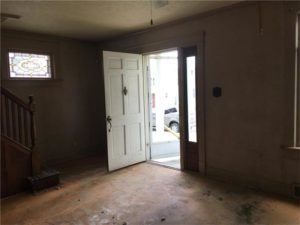
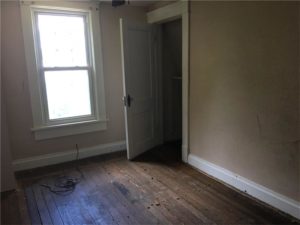
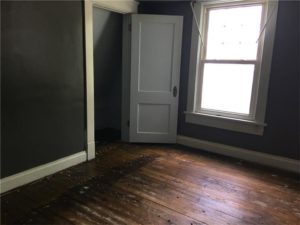
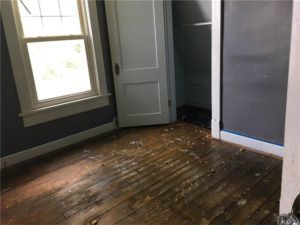
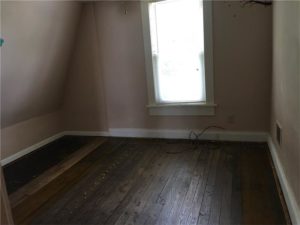
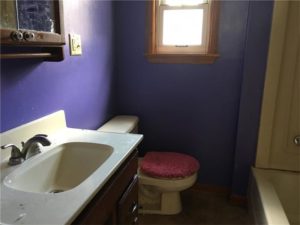
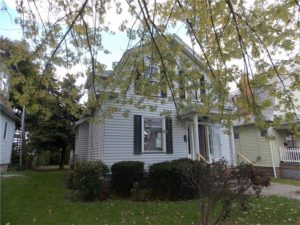
“The home is in pretty bad cosmetic shape. Keep in mind it looks worse than it really is. The photos will be shocking but most appears to be cosmetic repairs. The exterior just needs cleaned up (cut grass, trim hedges, clean and small repairs to gutters and down spouts). However, the interior had a bathroom leak on the second floor, there is alot of trash. It will require new flooring throughout, a new vanity in the bathroom as well as new caulking around the tub. It will need some patching and painting of the interior walls, a new drop ceiling tile and about a 30-yard trash out. I could not test the mechanicals but they appear serviceable. No way to really know until you have them up and running though.”
Summer 2017 – The city had a lot of complains about the grass not being kept.
We could not find these lost Western union checks – they were written out to my personal name.
August 2017 – House listed 25,000 with the broker fee 4000. Average days on market 180 days for a retail ready.
Average days-on-market for homes between $10,400 – $15,600 = 138 (in zip code 16101)
Time suck!
A couple offer/counters.
November 2017 – Property sold and I walk away with $7,000 after sales commissions 9
I only had about $12K in my Roth IRA. I could have kept building that amount via a fund or private money lending (although that was a small amount) because my contributions were 20-40K range. In a Roth IRA you can take out contributions any time. I used to do this for an emergency account but because I am pretty good at finding good deals I would rather have the cash and minimize administrative headaches that takes time away from deal finding, networking, and making podcasts. The fees were about 25 a quarter so that would have been 1% a year. Each transaction I would have done would have been an additional $50 dollars to execute along with the time it consumed.
More information on my recent transitions to syndications please check out my previous podcast.
QRPs
Lesson learned: don’t invest with anyone you don’t know, like, trust, or outside 1 degree of separation. There are deals out there being passed around via daisy chain style where no one really knows who each other are.
Here are the Show Notes…. But first please leave me a review: http://getpodcast.reviews/id/1118795347
Go to this link to grab the Action Board worksheet guild. If you are already an email subscriber the link will automatically get sent out to you with all the post that never make it to podcast.
Optimist/Pessimist 2×2 Matrix – (My friend and his IPA Beer engineered the following idea…)
Good Outcome Bad Outcome
Optimist + +
Pessimist – –
Psychology Today, the average person has 50,000 thoughts a day.
The Rich Are Optimists – 67% of (Tom Corley study) the self-made millionaires in my study forged the habit of being positive and upbeat. A positive, mental outlook is critical to overcoming problems, obstacles, pitfalls, mistakes and failures. Staying positive is a critical component to becoming wealthy. Positivity is like a radar in search of solutions to intractable problems. Thus, positive thinkers are able to see opportunities, where others see only negative consequences.
The Poor Are Pessimists – 70% of the thoughts of the average person are negative (Psychology Today). Negative thinkers are unable to see solutions to problems. Thus, they are unable to overcome obstacles, pitfalls, their mistakes and their failures. Opportunities pass them by because they are not looking for opportunities. They are too focused on the negative consequences.
The Rich Are Decision-Makers – 91% of the rich in my study were decision-makers. Forging the habit of making decisions is critical to success. Those who develop the habit of making decisions are sought after as leaders, by others. Decision-makers have forged the habit of overcoming the fear of making decisions along with the paralysis of analysis associated with those unable to make decisions. The rich do not over think, which is a form of procrastination. It is impossible to know everything you need to know before making a decision. The rich forge the habit of being comfortable being uncomfortable about making decisions.
The Poor Let Others Make Decisions – 98% of the poor in my study were not decision-makers. They succumb to the fear of making a decision. They get lost in analysis and over thinking, which is a form of procrastination. The poor feel uncomfortable about making decisions, so they defer to others.
Don’t examine the roots just eat the fruit!
https://mymorningroutine.com/
Hacking Baggage at the Airport:
Getting your checked baggage off first before everyone else
1) Gate checked because luggage is queued on a First on last out order (FOLO) similar to an elevator. Downside you will have to lug your luggage through security.
2) Have them mark it as fragile
Also you don’t have to pay to gate check a bag, just be nice and ask the counter at the gate.
Here are the Show Notes…. But first please leave me a review: http://getpodcast.reviews/id/1118795347
Reality Shares came from the Jobs Act
April 2013 Reality Shares began
Accredited only
14-20% Class B MFH estimates
Also have preferred equity options 10-14% IRRs
1st lien debt or 2nd lien 7-12%
If you are not connected Crowdfunding options
From a syndications view, they are charged an origination fee
1% asset management team (from cashflow) from reality shares
1% Funding Fee, 1% Asset management fee
Some crowdfunding is taking equity upside
Due diligence – credit checks, background checks, 3rd party check of purchase price verification, then look at the deal (market, pricing)
Less than 5% of deals make it to the platform
There is a max the crowdfunding site with one syndicator (2-3M) to diversity risk for the firm
Reality Shares is a Broker-Dealer
Mobile home investor
His business is not simple or passive
did no go from a career to REI
Started when was 19 years old
Started buying SFHs and 2008 changed things and made Kevin Rebuild
MFH was not scaleable
Then was introduced to mobile home parks
Everyone should start smaller to learn about working with tenants
Anti turnkey rentals 1) based on comps 2) buying retails
Cap rates are only important on the sale
Only look at cash on cash return (not IRR)
used 35% expense ratio
Work with the broker to come to a price – can you help me understand?
MHP have 50/50 LP GP splits where MFH has a little high 70/30 split
40K a year and under, people making 12-15 dollars an hour
Excercise is the success tip
Autin Texas Native
Bought Duplex and fourplex to start (76 on own for passive cashflow)
Started out with the intention of getting passive cashflow
Was working marketing in Minnesota when father had a heart attack and started buying rentals with brother
Was doing self-managing when first started on own
Flexibility in what you do with your time
Father getting sick was the turning point
Boots on the ground lead is very important
Value-add can mean both 20-30% occupied and adding crazy value and 90% occupied and taking it to 95%
Developments have 25% returns per year
“They did send in a partial payment of $965 that we received on Monday.. They now owe for January and $385 past due. for a total of $1,263 I am not sure why they are being so uncooperative for the inspection”
A couple weeks later…
“She has been in the hospital again. I gave her our direct number and she said she will call. She is also supposed to bring the late part and will bringing last months rent in about a week and half. She apologized for the trouble of getting her, but she was not able to return calls.”
I like to work through and with my property management.
They alerted me of the issue.
“Seems like valid reason for being late. Maybe we can ask for hospital invoice or doctor note just for record keeping. We might submit to the potential seller to explain the gap in the rent rolls. That way we can verify it too. “
Rats!
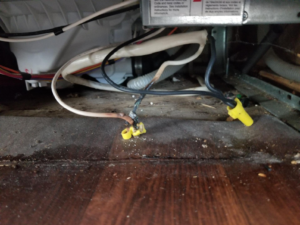
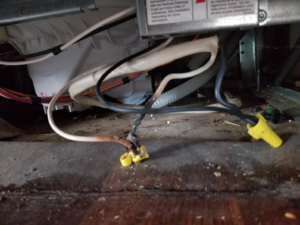
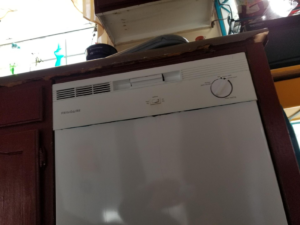
The dishwasher stopped working in this home. It looks like it needs a new sprayer arm and wire harness for $285.89. But the bigger picture is there are rodents in the home that chewed the wires. See pictures.
We will need the approval to repair the dishwasher but first, we will also need to get a quote for rodent removal. The quotes for rodent removal are free so I will send someone out to see how extensive the rodent issue is. I will keep you updated and we will go from there.
Our tech went to this property and reported the following:
dishwasher model# gz8945pg35 wire harness was chewed by rodents also spray arm has burn spots estimate for repair $285.89
Sign up for the Hui Deal Pipeline Club to get access to a Sears pricing list to see how my you are getting screwed for by your property management.
Our tech made a temporary fix to wires so dishwasher is working now. We also recommend to do something about rodents otherwise they may cause more issue….
But hey just got my AHP and private lending not monthly payment J
Mold in one of my properties
Buying a drone-
For the past few years I have been amazed the amazing drone shots.
J Martin posted some shots in Changmai, Thailand and I started to ask him which one he used. Basically there are two of them that everyone gets one that is mobile and in 1080p (300) the other which is larger and in 4K (1000).
I’ve been adding videos to our YouTube channel and think that the 4K is where the future is. I’m making the leap to get the 1000 dollar version. I also am going to consider it a business purchase so I can get a nice entrepreneur discount too. Sometimes I think in amazement how crazy that would be to buy such a toy for a miser like myself. But then I figure I would take cool shots for our investor club when I do due diligence. How cool would it be to take shot of drilling rigs for exploratory drilling? Yup we are going there.
A couple of years ago when we were working our first project in Iowa which we ultimately dropped we did some video and it really brought the project to life.
As a side note, I had shinny object syndrome kick in and thought I would be able to make videos for other companies. Imagine I could go to a CrossFit and record their outdoor workout or go to a wedding (and get free food).
Then I thought that I could get a dime a dozen (commodity employee) or Millennial good with computers to do the tedious editing for me.
But then I stopped myself. But the whole mental exercise brought insight about what I want to ultimately hit my Simple Passive Cashflow number when you work on things for joy and engagement. What better to help people share awesome visuals and be around people on their special day like a wedding or birthday party.
So I heard Uncle Buck Joffrey started intermittent fasting a few months ago and lost 40 lbs. I started doing IF when I started renting out my first home in 2010. I can remember reading the ebook “eat stop eat”.
I needed to step my game up so I decided to find a personal trainer. So stay tuned for that. After spending 60k in 2016 and 30k in 2017 on training and mentorship I truly see the value of it. Of course, as you know I am someone who takes action. I can also say being on the other end mentoring you guys in my paid coaching program that it’s neat seeing the barriers broken. Honestly, I don’t feel like I do much but the results are amazing. As an ex crossfit coach myself, if you would asked me if paying someone 90 dollars to count my reps and pass me the weights… I would have thought you were crazy. But now I get it!
Wanted to share a trend that I have been seeing in the past 6 months in MFH (idk how it manifests in sfh?)
The class c assets are getting beat down by cap rate compression (delta between cap rate and interest rates) and therefore a lot of the experienced investors are getting into class b because the per cost unit is getting pretty much the same. This is moving away from the normal business plan for turning class c to b. The thought is… heck might as well go for the 1980s build instead of 1960-1970s stuff for the same price. Having a newer asset might also be a little more conservative way to go with this stage in the market cycles because in a correction A will move to B… And B will move to C and the lower class D/C in the tertiary areas will see most of the vacancy or rent concessions.
Hurricanes:
I got to pondering looking back when New Orleans was hit by Hurricane Katrina there were short-term disruptions to gas prices especially since Houston is a major think tank for the metro industry. I expect Federal money which might have been focused on (helicopter money) be spent on infrastructure spending or tax cuts NOW be redirected to damage recovery.. Which will manifest as tax breaks, loan subsidies, or other incentives offered to entice investment capital to flow into affected markets.
Definitely an opportunity in the short term to go in there and develop to take advantage of the fiscally earmarked casually funds.
As a long-term buy hold investor what I am keying in on is what the big institutional players (like insurance companies) will do. I suspect they will actually have to pony up and pay claims in Houston and Florida which will divert funding away from their Plan A: financing new class A multi-family apartments in other markets. This results in less new developments coming online which is great for Class B and C mfh investors who have been struggling with the recent cap rate compression.
Other random thoughts:
Low / no equity homeowners will walk from their properties and focus on rebuilding their lives as renters for the next 2 years. These foreclosures will certainly impact values in numerous communities throughout Houston.2. Many insurance companies will re-think the coastal markets and their policy premiums for same. This, along with the inevitable increase in flood insurance premiums will also impact buying power for future homeowners.3. Landlords will be in demanding higher rents as there will be a shortage of housing for the next year or while properties are rebuilt.4. Long-term impact can only be speculated on since this was an epic storm that caused billions in damage to homes, autos and businesses but those purchasing SFR’s better buy very, very low or they could be the next distressed sellers.
Changes in MFH Underwriting and getting deals
I’ve had some hurdles here. It seems the standards in submitting LOI’s have been changing the past 9 months. What changes have you been seeing from the front line?
1/ Business conditions are dictating POF with the LOI. Based on the latest sophisticated investors are underwriting deals with 80/20 terms, 1% interest only and 1.25 DSCR.
It’s becoming more common for brokers to review the buyers’ underwriting before accepting an LOI to present to the sellers. The brokers view these terms as aggressive and are reluctant to submit my LOI. It matters who your lender because it comes down to team and a portion of it is your lender. Large deals have been falling out of escrow due to over-aggressive underwriting that cannot find financing. Las Vegas lenders are underwriting at 65/35 LTV, 1.3 DSCR. You can change your underwriting to match Las Vegas standards, giving brokers more comfort, and therefore remain on the ‘A’ list or do nothing.
A lot of time you will needs POF with the LOI. Use an angel… anyone who is an ‘Angel’ on the LOI, will be given the option to KP and co-sponsor ( if qualified ) the deal if the LOI is accepted. The average $/unit for a C-class, value-add, stabilized asset in a C to B- area is $55-85K. The POF for a 200 unit property at the top end is $5.95M.
2/ Post close liquidity equal to 10% of the loan.
3/ Proof of net worth equal to the value of the property.
4/ Hard money; the standard is becoming 1% of the purchase price (I haven’t submitted an LOI with hard money yet; .5% hard money and see if that places me in best and final).
Question: I heard you say in the podcast that you have a team in Atlanta. How did you go about building a team there? Is there a podcast episode on that?
I think it’s no secret that as the sellers market matures, turnkey properties not in war-zones are becoming endangered species. When I began picking these things up in 2013 you could get inside the loop highway (under an hour commute to the city center) and get a 1980-1990s product. Now you are looking outside of the loop highway and in 1940-1960 properties. The good turnkey providers are frankly making more money selling to retail buyers than us cheapo investors who has got a million questions. The stuff I see coming out on most lists are properties that you would not want to buy. Unless you have someone boots on the group (who is not trying to sell you) and is agnostic to the transaction, you are going in blind to a loaded minefield.
I am beginning to leverage my contacts and finding investor focused real estate agents who know what to look for in a rental property. This effectively cuts out the middleman in the transaction but it requires you to know what you are doing in the first place (two to four transactions or a mentor) so you can coach your agent and arrange for contractors. You find one person who is good you find the others because good people associate with good people.
I feel like the SimplePassiveCashflow Facebook group has reached a tipping point where everything you need from a peer investor network is here. You just have to go about it the right way. One wrong way I see it done and I see it done in other groups and BiggerPockets is being an “ask-hole”. Asking a one off question and not contributing to the community is a sure way to get crickets and a one off answer. But you miss the point, which is to build a relationship. Put your perspective goggles on and think… how can I add value to someone or others? What do they need?
So my call to action is if you want to team up with me and help me source properties and teams let me know. The rest please stand by for PML deals and others on the Hui Deal Pipeline club.
We need to stick together and work collectively. As a Hui. I know what happens when you read a few websites and podcasts and go it Rambo style because I did it myself when I first got started. You will get eaten by the sharks and you won’t know what got taken from you. You leave so much money on the table that you don’t realize a couple years down the road.
I don’t want to discourage anyone from not buying because at the end of the day even with the prices as they are it’s still better than the equity markets. I currently believe that there is a 50% chance we will see a recession in the next three years so keep investing just as long as the numbers make sense. If you don’t know the numbers or think you know get someone to help.
Where do you think the crossover point is?
I am talked to over a couple hundred people over the past year and for those people SAVING less than 30K per year after their day job should invest in rentals or turnkey rentals in a market like kansas city, memphis, atlanta, birmingham, not seattle, san francisco, california…
The short term goal is to gain landlord/acquisition knowledge and build a cashflow base of a couple thousand every month. But once you achieve that you should step up to larger passive partnerships/syndications because the return to pain in the butt ratio is greater. People who call/email/write on forums fail to see this two phase journey. People hear the benefits of MFH and come up with the ridiculous 1000 unit goal when they have not even see if they are borrowing material on their first buy and hold. Eventually, a lot of people quite a fizzle out while starting out on the MFH road when they should have done sfh and this insight.
As much as I advocate for “simple” I am really an advocate for the minimal effective dose to maximize returns with minimal effort.
So I’m trying to learn how to evaluate syndications as a passive investor. I was looking to a deal that was presented to me near your last one and I ran a quick analysis. What do you think?
CONS:
– 1990s build A class than B/C Class @ 120k per door and value-add reposition is from B/C to A, risky at this market cycle in event of a recession and rent contraction (Usually we are buying at 45-65K a door with a stabilized building that have over 90% occupancy)
– Loan is 80.25% LTV -> too high? – (This is not really a factor – you want to be borrowing as much as you can and this is why you are going with such syndication to buy in bulk with others and get better terms. When looking at the loan you need to look at the term such as loan length, if it is recourse or non-recourse, and pre-payment terms)
– Loan is 36 months -> dangerous in this cycle (5 years and less is dangerous, just closed on a property in OKC for 10 year 4.22% 3 year interest only)
PROS:
– Sponsors experienced – how did you verify this? (Talking to investors who were in past deals. Relying on my network to discuss reputation and character. Note: This is not going to be completed by emails or phone calls.)
– Investor waterfall favourable – (Waterfalls create complexity and typically they mean less returns for the passives. Generally, the best terms for investors is a simple 80/20 or 70/30 split. Waterfalls raise a red flag for me. I have seen people balk from a high sponsor fee but that is just one thing, if it’s a deal then the sponsor should be able to take what they want. A deal is something that is underwritten very conservatively – see below)
Based on my limited and growing knowledge, I wouldn’t invest in this deal if I had the funds. What do you think?
(You are scratching the surface of these: A true analysis of the deal requires you to have income and loss statements and rent rolls going back 12 months and possibly 36 months. This is where analysis totally differs from SFH or units under a dozen. Another part is to analyze the rental comps because 90% of the projections are based on the proforma rents per square footage. A lot of smoke and mirrors can be used by leads and brokers to inflate this number. Comps need to be verified and it is really a touchy feely thing. It cannot be a feeling on hey this 1985 property looks like this 1987 property on the westside of the train tracks looks like I can get $1.12/Rent per SF. Warning…I have see a lot of garbage underwriting play with annual rent increases 2.5%+ a year, expenses increase less than inflation – under 2% annual increases, and total rent increases of over 18% – this is something Patrickherbig.com has really opened my eyes too. Past performance is not an indicator of success and 2012-2016 anyone could have made money if you were in the right place.)
I saw the last deal you did was at a 70/30 as opposed to 80/20, which is what I understand to be the generally accepted industry standard for syndications. How do you think about evaluating deals with respect to the profit split, both from the investor and the sponsor perspective? I’m trying to understand the situations where a “below market” upside would be acceptable and how the sponsors decide what structure to use – is it just based on supply/demand and the reputation of the deal sponsors (ie the sponsors/GPs will make the deal as favorable to them vs the LPs as possible while still being able to attract investors)?
I see a lot of yahoos doing 70/30 splits with silly assumptions like 1% expenses increases and expectations of over 20% bump in rents. I also see a lot of 80/20 and 90/10 deals that are run by folks with long and short track records. Beware of a person with a nice suit. I think I need to personally show up better because of people never the less associate a shinny pdf deck and cool bio page as reliability or perceived value. I would not really look at the GP/LP splits. The way I see it if it’s a great deal then we as LPs should have a large room for error and heck yea the GP should be taking a large cut. But things get muddled by the assumptions the GP is using and quite frankly unless you have analyzed 100-200 large MFH properties and put in a few LOIs I don’t think you will be able to see where the red flags are. There is a YouTube video “Bear and basketball awareness test” https://www.youtube.com/watch?v=Ahg6qcgoay4 where you get fixated on this split stuff and forget the fundamentals of the deal.
Thoughts on mobile home parks/ self-storage?
I recognize as both still being in the real estate category as a good way to diversify away from Real Estate in a heated market. I admit I don’t know much about the two, especially self-storage. From what I have gathered from other investors the Cashflow in Mobile homes is a little higher but there is not as explosive upside as apartments. This upside is really never captured in a conservative proforma anyway. Mobile home parks are a not being made and in times of correction, they are going to be in very high demand.
I have been looking at some mobile home parks and talking to a bunch of you if you are more interested in either a single asset higher risk/reward mobile home park or a more diversified play of multiple parks in one.
Lane’s note: I personally don’t like 1031 exchanges for sophisticated investors who will one day graduate to syndications because they are not “like kind” exchange. It just goes to show that understand where your advice is coming from. A lender will want you to get a portfolio loan, a lawyer will want you to get an elaborate entity structure, and a 1031 custodian will want you to do a 1031 exchange.
You get to list and buy a property from who ever
I bought 9 properties by selling 2 properties and delayed the taxes
Note: recorded in 2017 prior to 2018 tax changes
a 1031 exchange avoids capital gain and depreciation recapture
Drawbacks – you have to time the sale and purchase of the new asset
In a sellers market you can get a good price but have trouble finding a good asset
45 day rule – you have this time period begins at the close of escrow of the first property you have to identify a list of property that they would possibly close on
180 day rule – you have this time period begins at the close of escrow of the first property you have to close on the replacement property
Try to line up inventory in the pipeline
Delaware Statutory Trust – you close on relinquished property and park the money goes into the exchange account with intermediary
Reverse exchange – alleviates selling property and not finding anything – you can take all the time in the world to acquire the property and then sell your relinquished property, the problem is that it is costly, qualified intermediary else closes the new property, required cash to purchase new property and possibly need a L1 environmental
Section 721 – donate real estate to partnership interest
And exotic exchange ideas