Assistant.to handles scheduling one-on-one meetings directly from your Gmail and Google Calendar. Select the days and times you’re available and then share those slots with your contacts. The app continuously monitors your schedule to eliminate double bookings and time zone mistakes. Invitees can select their desired meeting time simply by clicking in the email, and the event will sync with their calendars on Outlook, Google, Lotus Notes and more. No need for recipients to open a website or create an account. Integrates with GoToMeeting, Cisco WebEx and more. Comes as an extension for Chrome users. Free.*
Calendly integrates with Google, Outlook, iCloud and Office 365 to create a personalized email or embedded URL where contacts can select and schedule appointments based on your customizable availability and time limits. Helps eliminate double bookings and time zone issues. Free for a basic package. Premium plans start at $8 per month per user.*
Rallly helps you collaborate with others by creating a simple event URL page to share with friends, clients or coworkers. Attendees can discuss the agenda as well as vote on the best time for a meeting. Works great for bigger groups, masterminds, book clubs or even social gatherings. Free.*
YouCanBook.Me connects to your Google, Microsoft or iCloud calendar and shares your pre-selected meeting times and durations with your customers and contacts via website, Facebook or email. Customizable branding, confirmations, reminders, and follow-ups for you and your customers help reduce no-shows. Free for basic plan. $10 per month per calendar without branding.
Make scheduling headaches a thing of the past with one of these amazing apps. #LaneHack #JustTheTip
Looking for a passive fund that invests in distressed notes?
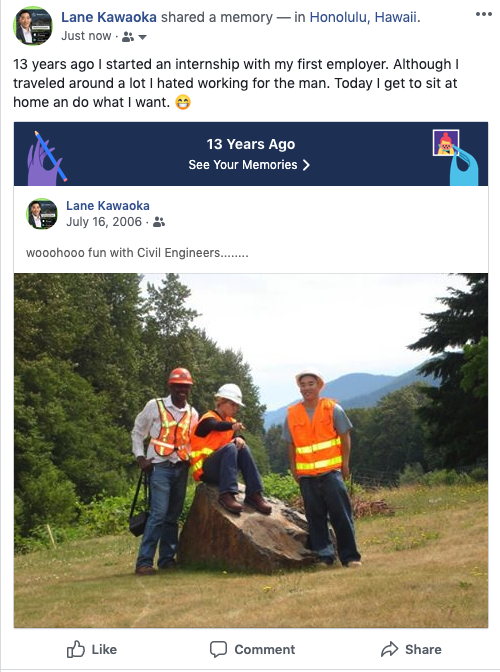
After 12 years working as an employee I finally pulled the plug on my W2 engineering job!
Although it took a decade, Passive real estate investing gave me the security to leave a steady pay check behind. Or as I called it “white collar welfare.”
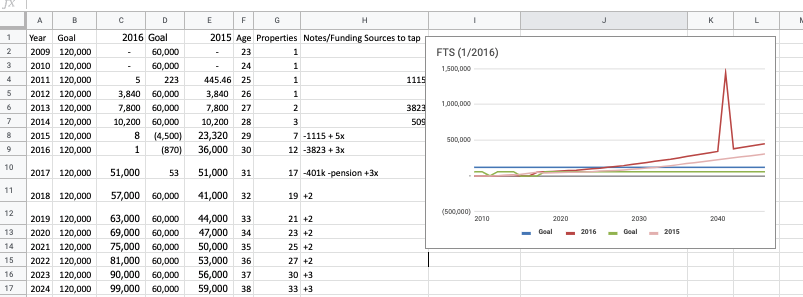
My “FTS or Forget this Stuff” Chart I used to plan my escape (Circa 2009)
As I transition from a world of Obligation (a job) and enter ‘a whole new world’ of Choices…
I am uncertain of the future (and going to miss 100k of salary) but excited about the energy I get to focus to my current passion projects:
1) Hunting for deals and do proper due diligence
2) Travel and new hobbies3) Group Coaching4) Starting a mission to teach basic money stuff5) Get absolutely ripped! Like Fight Club Jacked! …I guess I have to go back to Crossfit :/ No More SUNDAY BLUES! If you are thinking of leaving your job or we have never chatted before feel free to setup a time to talk story (after all helping people along on the journey to financial freedom is what I am really passionate about and this is what I Choose to do). Consider joining the rest of those in the group coaching group following this path.
No more looking over your shoulder as you try to analyze that deal
Where my head was at 2015-2019
Because of my podcast, I have a space to book appointments. (BTW use that Calanderly app allows people to book times on your calendar only when you are free so you don’t have to use 3 emails back and forth to schedule a meeting)
About every other day I talk with a new person who is on the verge or able to leave the rat race. We talk about how much passive income is required some it’s 3000 to travel around Asia and some with families it’s 8000.
I want to highlight that the natural inclination is to leave your job. As for us, all high achievers know what is easy and the beaten path should be questioned. You should stay at your job and keep doing this as a side gig… People always want to jump into entrepreneurship And it’s really not a good idea or even needed.
When we mean entrepreneurship… I mean not dip your toes in but going all in. Like Gary V sleep 4 hours, Grant Cardone x10 stop being a bitch, Burn the boats all in. A lot of motivational gurus will tell you to dream big, commit and go all it – buy that fancy car now so you set that bar high and force yourself to achieve it. They don’t know your situation and often times these gurus are outliers and often they themselves did not follow the same advice.
Don’t buy into survivorship bias. For every entrepreneur who goes all-in and even does it as a side gig only the minority succeeds. To focus only on those successes is a logical fallacy. Despite a superior product and optimal skill set so many things can still go wrong.
You are not going to give your business what it NEEDS when you are worried about putting food on the table and paying rent. This frenzied survival causes two things: First, you are less creative in this survival mode. Outsource yourself as much as possible first. Hire the help first or you will be drowning in manuchia. You will not be leveraging your time or your skills. This will require you to create lean and efficient systems which is what building a business is all about at its core.
As Robert Kiyosaki differentiates in his book “Cashflow Quadrant” an entrepreneur builds a system that they can be removed and scaled where as an entrepreneur who does not build a system is just a glorified self-employee. The second when you are in this survival mode you are taking unneeded risks and making mistakes such as forcing the wrong deal or giving up excessive equity for taking on VC capital.
As a side note a big part of a business is negotiation and in negotiation, the biggest component is the ability to walk away.
Things that make me question putting life energy (time) into learning at my day job: understanding what side railroad turnout is needed on a 2 degree curve, the process of repainting street markings, the working internal relationship in a workplace with people who just don’t want to get fired or want that bonus, learning the in’s of human resources to hire someone due to some bureaucracy. All these a complete waste of time in terms of bettering myself or adding value to the world.
Not having a job and supplemental income source or cash buffer torpedoes your pillar to negotiate. You are effectively the Emperor with no clothes and everyone you deal with and your customers know it. Just as ask any women… they can smell desperation in a potential suitor. You should only quit your job once you can scale. And YOU should be the last part of the business that can’t scale because you have a job and business needs more of you to scale. You have to be the bottleneck. Don’t dilute yourself into thinking you are the bottleneck because you just want to quit your job because it is a badge of honor when it comes to running a business or quitting your job. A lot of entrepreneurs just want to quit their job because they just want to tell all their friends and family they the told the Man to F off, they don’t want a boss, and they have escaped the 9-5 rat race.
It’s cool to be like I’m all-in, I don’t have a JOB. That is an ego thing and we need to be conscious when our ego is leading and not logic.
I spent a decade working my way up through junior level jobs, being a first level supervisor, and managing professional and learned a lot of how a mature business works and interpersonal. I wish I would have had this mindset earlier but I realized recently that working for someone else is a privilege to try things out (FSU) on someone else’s dime. You don’t want to be trying some new marketing scheme or leadership technique the first time when you get your one shot to swing the bat. It is not the time to be “finding your management style” when you step up to the batter’s box with your own capital at risk.
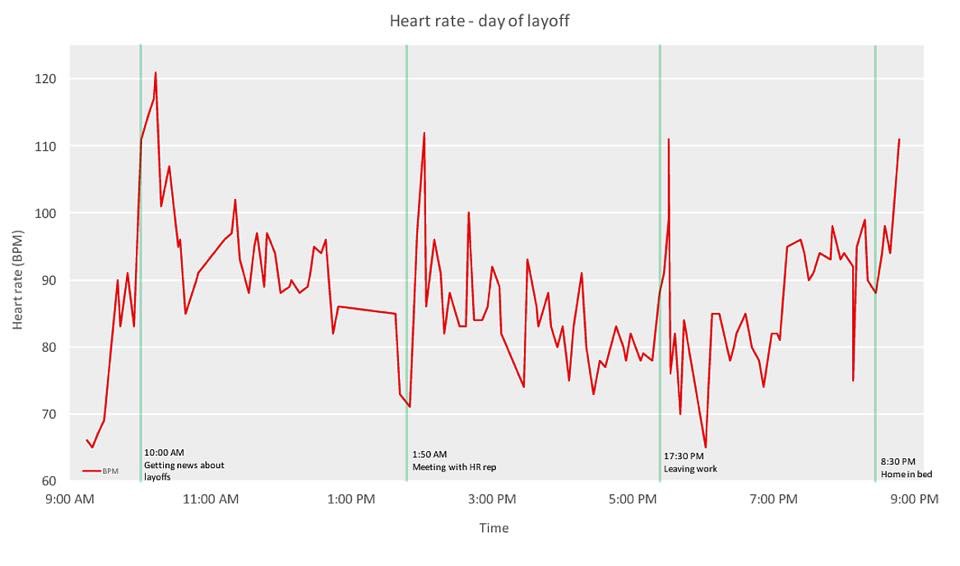
High paid W2 professionals know that any day you can be let go. Here is AppleWatch heart rate data from a Bay Area tech employee who was given a pink slip in the morning.
Here a joke… when at your day job rub off the labels of the letters on the keyboard to use work as a time to master no look typing. Or just try something different because it might work for you in large ventures… you own ventures. In conclusion, ask yourself why am I wanting to leave? Is it because of ego or necessary? And have I acquired both the skills, proof of concept, and starting capital to create this “runway” for my business to thrive.
Here are some tips to just get by when your heart isin’t in it but you have to put food on the table.
Fun Factoid:
65% had 3 or more streams of income.
45% had 4 or more streams of income.
29% had 5 or more streams of income.
A W2 income is one stream of income.
Update 19.03.19… I changed my mind!
In the past few months when I was interviewed on other podcasts and asked me am I still at my day job I would say that I did not mind the (boring) work and liked the people. I joked that if I stayed at home that I would eat junk food all day and never change out of my sleeping clothes (although everyone wears boardshorts and walks around the house without a shirt in Hawaii anyway).
During the 2019 Tony Robbins Unleash the Power Within seminar an idea of quitting my job finally started to grow. Even on day 1 this idea was not there. Then on day two as that Mclendon guy was talking through the process of taking action I started to think to myself about this goal.
It made me uncomfortable… and that’s how you know you are onto something. Some people in life pee in their pants and retract when they get out of there comfort zone and some people move forward knowing they are “3-feet from gold.” Just like how some people sign the back of the checks and some people sign the front of them.
Burn-out is a syndrome conceptualized as resulting from chronic workplace stress that has not been successfully managed. It is characterized by three dimensions: 1) feelings of energy depletion or exhaustion; 2) increased mental distance from one’s job, or feelings of negativism or cynicism related to one’s job; and 3) reduced professional efficacy. Burn-out refers specifically to phenomena in the occupational context and should not be applied to describe experiences in other areas of life.
Despite a $100k a year salary (Easy Money) with minimal effort here are the reasons that I jotted down why I need to leave: 1) My marriage will not work working 6am to 11pm. No vacations after going to 3-4 deal/conference trips. 2) I’m not able to start other ancillary business such as residential real estate or basic financial education program. Don’t have time to start these new businesses. 3) Avoid crowds in everyday errands and vacations
4) 50+ people please depend on me in my Mastermind to find best people and deals (spend time finding providers and professional). It’s irresponsible for me to do this as a side gig. Increase pricing and value. 5) Get to go vacations (5/year) whenever on top of deal trips (4/year) 6) Start family office consulting 7) Time is the most important resource especially time when you are healthy. Someone wise (ex-addict) told me drugs is like trading time for a good time but it can also be linked with stress and doing things that de-energize you.
9) I was not a good engineer anyway. It was not something I was particularly talented at. As opposed to Andrew Luck who could spin a football pretty well and I was not compensated like him too.
And I ran out of these ribbons to pass out at work…
“Fears are good. Dance with it. It means it matters to you.” – Tony Robbins
If you are nervous about making the jump or simply putting it off out of fear of the unknown, here is your antidote. Write down your answers, and keep in mind that thinking a lot will not prove as fruitfulor as prolific as simply brain vomiting on the page. Write and do not edit—aim for volume. Spend a few minutes on each answer.
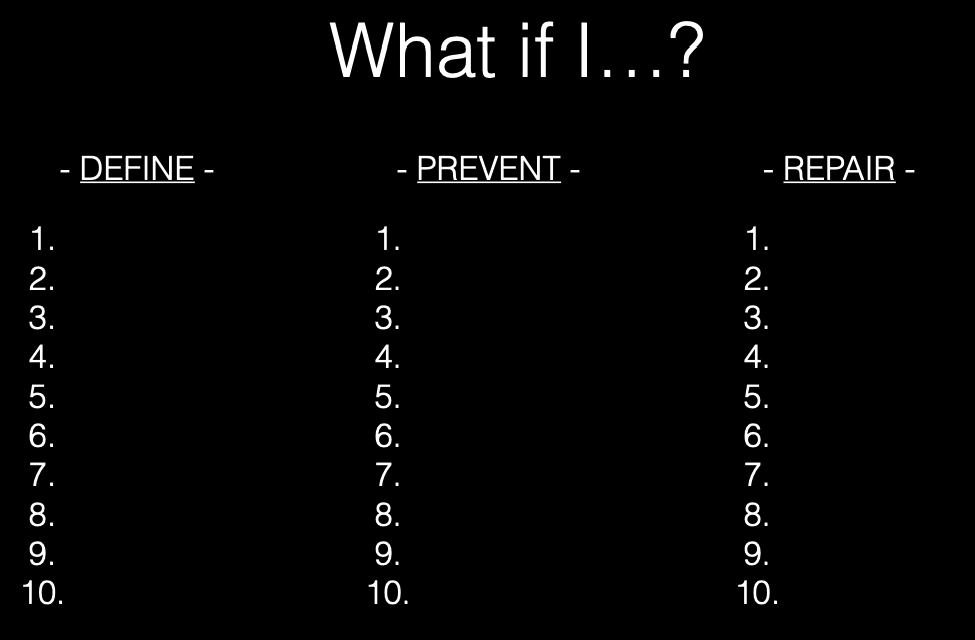
Define your nightmare, the absolute worst that could happen if you did what you are considering. What doubt, fears, and “what-ifs” pop up as you consider the big changes you can—or need—to make? Envision them in painstaking detail. Would it be the end of your life? What would be the permanent impact, if any, on a scale of 1–10? Are these things really permanent? How likely do you think it is that they would actually happen?
What steps could you take to repair the damage or get things back on the upswing, even if temporarily? Chances are, it’s easier than you imagine. How could you get things back under control?
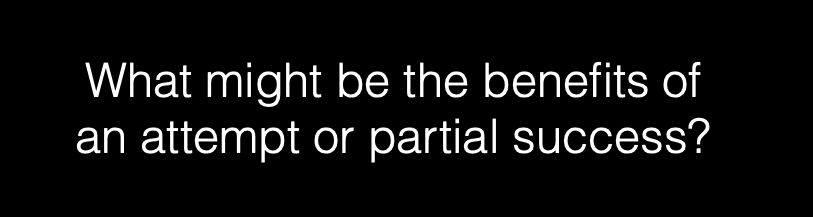
What are the outcomes or benefits, both temporary and permanent, of more probable scenarios? Now that you’ve defined the nightmare, what are the more probable or definite positive outcomes, whether internal (confidence, self-esteem, etc.) or external? What would the impact of these more likely outcomes be on a scale of 1–10? How likely is it that you could produce at least a moderately good outcome? Have less intelligent people done this before and pulled it off?
If you were fired from your job today, what would you do to get things under financial control? Imagine this scenario and run through questions 1–3 above. If you quit your job to test other options, how could you later get back on the same career track if you absolutely had to?
What are you putting off out of fear? Usually, what we most fear doing is what we most need to do. That phone call, that conversation, whatever the action might be—it is fear of unknown outcomes that prevents us from doing what we need to do. Define the worst case, accept it, and do it. I’ll repeat something you might consider tattooing on your forehead: What we fear doing most is usually what we most need to do. As I have heard said, a person’s success in life can usually be measured by the number of uncomfortable conversations he or she is willing to have. Resolve to do one thing every day that you fear. I got into this habit by attempting to contact celebrities and famous business people for advice.
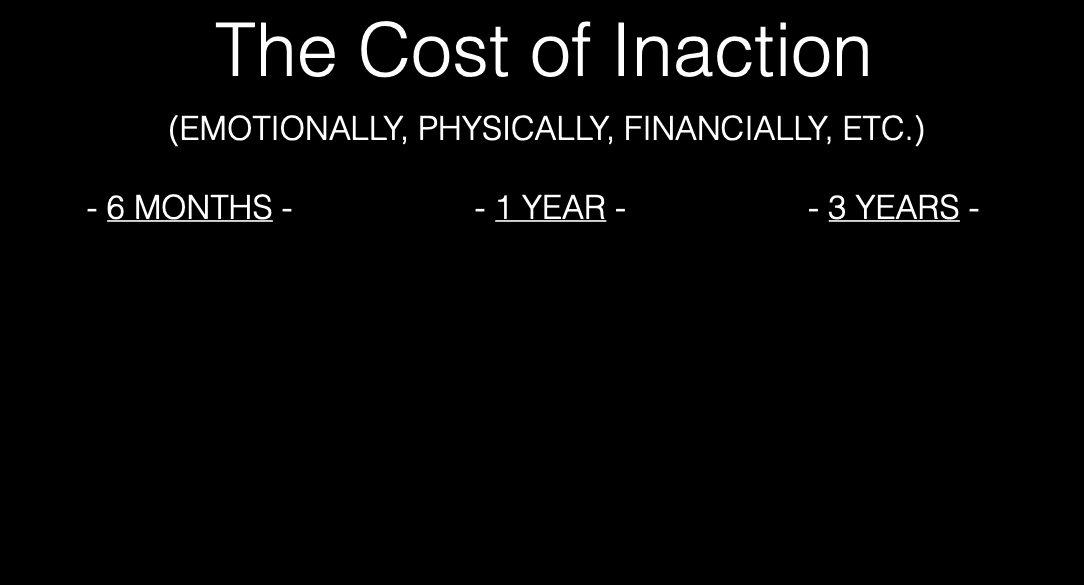
What is it costing you—financially, emotionally, and physically—to postpone action? Don’t only evaluate the potential downside of action. It is equally important to measure the atrocious cost of inaction. If you don’t pursue those things that excite you, where will you be in one year, five years, and ten years? How will you feel having allowed circumstance to impose itself upon you and having allowed ten more years of your finite life to pass doing what you know will not fulfill you? If you telescope out 10 years and know with 100% certainty that it is a path of disappointment and regret, and if we define risk as “the likelihood of an irreversible negative outcome,” inaction is the greatest risk of all.
What are you waiting for? If you cannot answer this without resorting to the previously rejected concept of good timing, the answer is simple: You’re afraid, just like the rest of the world. Measure the cost of inaction, realize the unlikelihood and repairability of most missteps, and develop the most important habit of those who excel and enjoy doing so: action.
Define – Prevent – Repair 1) I don’t have enough Contacts to make more income – call them and align with them and create more opportunities together 2) I don’t have enough Contacts do more deal – this is false in fact my time to build stronger partnerships and going to quarterly events will keep my deal flow healthy and I should just find less people to work consistently with anyway 3) I run out of Cash – get cashflow from deals, use reserves in life insurance to be able to renovate remaining single family rentals to re-leverage into bigger syndications at a few a year for a couple more years. 4) What if I Stall out – hire coaches to keep me accountable and communicate with my Inner Circle 5) What is the worse that can happen? I go back to find another job and use my Professional Engineering designation to find another job in an archaic workforce. I lose some savings and worse slowdown my investing but I already have a size-able amount of holdings to pay normal expenses. Can I live with it? YES!
Strategic action items after:
Daily plan:
Not waste time commuting or putting on clothes to impress people! Look how much time we waste:
Initiatives:
Tips:
In preparation for the big leap I have compiled a list of tips from others who have made their MOVE and never looked back:
Create a Schedule For Yourself – Unlike a W2 job no one is going to harass you from doing things you need to. Write down your to-do lists everyday and if you need to create an hour-by-hour schedule.
Creating a schedule for yourself should also means creating a routine. It’s easy to stay in your sleepy clothes, forget to brush your teeth, or forget to flush to toilet because its only you there and you are likely to go back. Creating this routine will help prepare you for the day and keep you on task longer. It will also help you feel like you have your sh*t together.
Know What Setting is Best For You
Work best on your couch? Cool. If not create your space you will feel comfortableand motivated in. That may be a home office, a stand-up desk, or just the kitchen table.
Learn to change up your settings. Work from home then go to a coffee shop to work, then grab lunch, and then hit up another coffee shop before heading home to finish up a little more work. Breaking up the day!
Minimize Distractions
If you know you are easily distracted by TV – you should not quit your job cause in my observations its not a mark of a high performing non W2 worker.
If your kids need to be watch or dog is needy send them to daycare.
Be aware of what distracts you and how to remove those interruptions and be proactive on removing them.
Add in Breaks
Add in a break for lunch, a workout, walking the dog, appointments, etc.
Feel like I’m part of a community and stay away from getting cabin fever. This may apply to even introverts like me.
Know When To Stop
Decide what time your day will end and try to finish up everything before that time. This could be the time when your kids get home from work or spouse comes back from the gym.
Setting a cut off time could be what keeps your marriage together!
Parting Words (if you are on the fence)
“It will be like going away to college and having no restrictions on your time. This time there won’t be as many parties but there is Netflix this time. Don’t drown in freedom but enjoy living like how 99% dream”
“Finally taking that leap on your own will bring out the best and worse of you.”
Prioritize and list your “life bucket list” and is working your 9-5 contributing significantly or providing the means to achieve your goals.
Maximizing your highest and best use…while in your “prime”. There is a shelf-life for NFL running back when they are “over the hill” at the age of ~30. Software engineers, programmers, investment bankers, etc. can only work the demanding ~60 hour weeks until maybe 35 -40. I would submit, Entrepreneurs and business owners are operating in a challenging environment similar to professional sports. Something like 95%+ of entrepreneurs fail and this is ridiculous failure rate. If you are not putting your all into an already stacked deck, this is not an ideal situation unless you come from money and have a golden parachute to fall back on.
Need time for deep thought and critical thinking…stop and look at the forest and big picture…putting out day to day fires and running from one activity to another 24/7 (building someone elses business) is difficult to leave time for anything else.
You may be in the “sandwich generation” squished between taking care of kids, a demanding career, and aging parents. This leaves almost no time to develop yourself and knock off some of your personal bucket list items. All too often complacency sets in after a decade of two and you don’t develop. We all know if you are not moving forward you are going backward.
https://youtu.be/_o4ZikHkjdY
Another unintended of leaving the W2 for me is a new sense of urgency. It is make it or die time (well go back to a W2 job).
An affordable medical insurance option especially for those who just quit their W2 job.
Insights from less than 100 days from quitting
I typically think of larger projects where were these ventures were once out of reach because I had a day job and limited bandwidth to power the venture forward. Not its uncomfortable that in order for me to make it without that W2 salary that I need to follow through on these ideas. It is frankly a little scary because I have to actually put them in motion. Dare I say… get out of my comfort zone.
It feel absolutely amazing not having to go to work everyday. I don’t want to back to that type of life that I am motivated out of pure fear to make it! I won’t tell people how great it is because I don’t want to go red pill on folks.
I get to plan all sorts of trips to visit deals. Someone gets a deal under contract? I’m on a plane the next week!
1 month after – The only bad thing I have experienced is my post mid-day workout showers are not too hot because I can’t seem to figure out how to turn off the energy-saver mode on my hot water heater. Also lesson learned is just because you can take a nap whenever does not mean you should.
5. Remember that one of the reasons I gave up my easy pay check was to create a work of art on this website and to see those in my group coaching mastermind hit success. This resonated with me:
https://youtu.be/cDfi8BwdGvY
6. 19.05.31 – First couple of months I am very “anxious” about making up the steady income. I wake up thinking how the heck am I going to make a few hundred dollars today… as I fire up the computer and take some Rocket Fuel Latte and work on 7 projects in a few hours. I am still working 7am to 10pm with a little break to do what’s on the board at Crossfit class. People who have walked this path say this “anxious” feeling will pass and I will accept the fact that the reason I am in this position I have the skills/work ethic to create enough whatever so called value to monetize to $100,000 easy. So as I self diagnose its a limiting belief. Hopefully that advice is true that from months 2-6 I will start to find what one thing I need to work on to grow to seven-figures.
https://youtu.be/hMv0Pg1AxFc
So two things will happen: 1) I will stop doing 7 things when I wake up and focus on 1 or 2 and 2) I will start to live a more abundance mindset free of this aforementioned limiting belief where I will say no to high leverage projects and this will lead to more success.
Henry Ford’s Story
Heroes are not born but they are created out of circumstances. Unfortunately what we never think of are those who crumble under circumstances. Quitting your job puts you in the right circumstance to make things happen!
The great thing about entrepreneurship is you don’t have to go to college but you do have to pay tuition through repeated failure and broken hearts & shattered dreams. Of course all that money you lose on your first few ventures. It’s all part of this tuition. Some call it UHK University of Hard Knocks.
We all know the ford motor company’s legendary founder Henry Ford. He to went through these “college years” so to speak. Ford spent 8 successful years at the Edison Company and in 1899. He was offered a big promotion to a supervisor position (with large annual salary of $1,900 dollars a month at the time) but Ford turn the offer down and instead decided to become an entrepreneur and start his own company.
https://youtu.be/gK6q4JqHhok
It seemed like a really bad decision because instead of earning $1,900 dollars a month he was having to figure out how to live on a 150 dollars a month. Within a year he was out of business.
Ford started another company making racing cars that soon failed too. Then Ford started another company and that third company was the Ford motor company in 1908. It took him 8 years after getting rid of the easy W2 job and enrolling in entrepreneur school.
“Your world is changing from a life of Obligations to a life of Choices”
URL/Contact: GetRichEducation.com and Get Rich Education podcast
Began by buying an Anchorage, Alaska four-plex building, and grew nationally and internationally from there.
Founder of GetRichEducation.com Host of Get Rich Education podcast
Active Contributing Writer at Rich Dad Advisors blog
Get Rich Education guests interviewed include Robert Kiyosaki, Harry Dent, T. Harv Eker
1) How much simple passive Cashflow are you making today and how are you doing it?
(You don’t need to give a number if you would like privacy. You can be vague such as halfway to quitting my job, cover my mortgage, Make 25% of my expenses, over $10k, although people like when people open up the kimono.) Covers all expenses for an above-average home, lifestyle full of meaning, giving, time for exercise & travel.
2) What is your Han Solo moment – Han Solo and his buddy Chewbacca from Star Wars were cruising around the galaxy as lowlife smugglers but then cross paths with Luke and Leia and his life took a pivot point. Describe the resistance that was the catalyst for change. Many. Quitting self-property management, launching GRE, Real Estate Guys 2012 Dallas Field Trip.
Did you “burn the boats” or did you let it happen naturally – was there an internal (you decided to make a change on own – what was thought process?) or external trigger (ie got fired from your job)? Internal.
3) Worst life/business moment what did you do after? Lesson learned? Self-management – don’t know how to fix anything, renting to girls just because they were attractive. Lesson learned – hired pro management
4) Current 2-week experiment and 6-month project? (90-180 day goal) A mark of a high performer is to put your ego aside and accept the help of others and mastermind maybe folks can help you by you asking. Not sure I understand, but Keith wants his articles published in Forbes, Fortune magazines.
5) What is your simple passive Cashflow number? Now imagine you had 2x that amount… Describe your ideal day, detailed routine, and what projects you are working on. Income
6) Something that you have recently or thought about “burning your cash” on for time savings or an improvement in quantity of life. Using “Leverage VAs” at $50 an hour. Climbing & summitting North America’s highest mountain – Denali, Alaska.
Your best highest use is most time not being a landlord and being an investor
No one is going to take better care of you properties but its not worth doing yourself
Going from a Quadplex to financial freedom
Don’t be geographically limited – invest where the numbers make sense
A frame work to investing
Value your time… the most important thing. How are your going to do something world changing while you are trying to maintain your job security
Casey is an Outsourced Chief Marketing Officer and his team is available to help organizations that have reached a ceiling of complexity and need marketing and tech implementation to break free. The Tech Guys Who Get Marketing team is the company the “big guys” use when it comes to building complex technology as well as sophisticated marketing engines. Check them out at http://www.techguyswhogetmarketing.com, or check Casey’s Outsourced Chief Marketing and Chief Technology Officer Consultancy out at http://www.caseystanton.com. You can also find Casey on Facebook at http://www.facebook.com/caseystanton where he talks about his approach to business called Functional Marketing™.
Topics we talked about:
How he decided to not go down the W2 road
Four Hour Work Week take aways – time is more important!
Conation – natural behavior of how you approach the world – don’t be too analytical
How to tell if your marketing is dysfunctional – Tracking is everything!
Are you a learner, maximizer, analyzer?
http://kolbe.com/
Your peer group can be the end of you – mute the right people on social media
Focus on your escape velocity
Email me Lane@dev.simplepassivecashflow.com for a free Burnzone book if you are interested in the AHP fund
Design you life if you could do anything – what is your creative passion
Futurist ideas on jobs
Put yourself in the best situation based on your skills – Functional Teams – This is a concept I’ve put together that helps entrepreneurs pull together teams to support themselves or buttress their weaknesses. The first key piece of this is understanding ones conation. I am really passionate about people understanding their conation (natural behavior, ever since they were a child). There are a few assessments people can take to help them self-identify. By knowing your conation, you can set yourself up for success more effectively. These strategies come from the Wunderlick Test’s creator’s daughter Kathy Kolbe and management king Peter Drucker.
The happiest people out there teachers have to grade papers or edit podcasts
How to build Functional Teams in order to get more done and have more fun
SPC040 – Fundamentals – Damion Lupo – QRPs, SDIRA, Morbid backdoor accounts, wall street issues, solo 401ks, precious metals, in service roll over & negative interest rates
To sign up for a QRP or a FREE book – www.totalcontrolfinancial.com/spc
1) Why are some policies more expensive than others?
Coverage, deductible, location
2) What is the difference between actual cash value and replacement cost coverage
Actual cash value will depreciate the claim depending on how old the house is, replacement cost will pay up to policy limits if you rebuild
3) Why should I care about liability coverage
Many investors will be wiped out if sued if there is a major occurrence on their property
4) How is coverage amount determined
Many providers have their coverage methodology determined by software that takes into account labor rate and material cost per zipcode and its usually too high. Since premiums are computed based on coverage amount this can be a critical pricing component
5) Brief discussion on flood insurance
Lender required if in flood zone, if cash purchase owner should at least know if property is in a flood zone or not
6) Shared blanket programs vs Individual policy for each property
Most of the programs offered outside of a couple are shared blanket programs meaning you are an Additional insured vs the “Named Insured”. This means less rights when a claim occurs, kind of like giving someone a power of attorney to negotiate and received an insurance settlement on your behalf
7) USA2 is a good carrier and the reason their premiums are high is usually because their methodology requires an excessive amount of coverage, the higher the coverage amount the higher the premium. USA2 also declines coverage and surcharges coverage if they are not crazy about the property or area the property is located. Still, if the umbrella is worth it to you, you might want to consider moving your rental property to them as that would solve your problem.
$1 million of liability per occurrence and 2 million per aggregate which is fairly standard, and this is your only rental, than ask USA2 if they can write you an umbrella and exclude your rental property ($1 mil occ $2 mil agg is plenty for 1 rental property).




 No More SUNDAY BLUES! If you are thinking of leaving your job or we have never chatted before feel free to setup a time to talk story (after all helping people along on the journey to financial freedom is what I am really passionate about and this is what I Choose to do). Consider joining the rest of those in the