Start with SFH
Think these are your options… what do you want.
Use real estate depreciation to offset business income.
Lesson learned… don’t be your property manager.
#IntermittentFasting
The value of coaching and the network with it.
Have a manager manage your investment – find the key person.
Buy and airplane too.
Enjoy the simple things.
Earn you seed money in your twenties if you are starting right.
Time is the Most Important thing!
Time is short we are limited in the number of days we have. The other day I need to scrub rebt rolls and get Zillow… perfect job for a VA.
Pull alll vendors and email for Atlanta Indy Birmingham.
Use the VAs I use with 10 hours for free.
Sep Bekam is a full time real estate investor and was able to get out of the rat race when he was 31 years old. He currently invests in 4 states and has acquired a portfolio of 50 houses and 80 apartments with his investors. Sep has been interviewed twice on the Real Estate Guys Radio Show and recently co-founded a real estate crowdfunding company. He enjoys helping other investors avoid making the same mistakes he did when he first started.
Quitting your job frees up so much time to progress business
2009 came around and getting fired was the best thing!
Oh no investing is stocks like Washington Mutual
1) How much simple passive Cashflow are you making today and how are you doing it?
(You don’t need to give a number if you would like privacy. You can be vague such as halfway to quitting my job, cover my mortgage, Make 25% of my expenses, over $10k, although people like when people open up the kimono.)
• Six figure range
2) What is your Han Solo moment – Han Solo and his buddy Chewbacca from Star Wars were cruising around the galaxy as lowlife smugglers but then cross paths with Luke and Leia and his life took a pivot point. Describe the resistance that was the catalyst for change. Did you “burn the boats” or did you let it happen naturally – was there an internal (you decided to make a change on own – what was thought process?) or external (you got fired) trigger?
1. Live in Orange County, California
2. Love to travel, paintball, attend seminars
2. Went to school for electrical engineering because that’s what I was taught
4. Started working and felt like Office Space
5. Was very stressful, 2008. Recession hit, I had a nasty, egotistical boss (also an engineer)
6. I was told when to go to work, when I could take a break, when I could eat, and when I could see my friends and family.
7. And then I was laid off after 4 months. I go to school for 26 years to be laid off after 4 months
8. Then went on to pursue masters in robotics
9. Cousin introduced me to Robert Kiyosaki’s book called Conspiracy of the Rich
10. Fell in love with real estate investing. Found podcasts
11. Big influencers: Real Estate Guys (Robert Helms & Russell Gray), J Massey, David Lindahl, Ken McElroy
12. Got the cash flow bug. I wanted to own apartment buildings. I thought it would give me freedom so I could stop trading time for money.
13. Tried investing in OC but nothing cash flowed. Then I began searching for markets that had properties with better cash flow. Everyone told me I was crazy and I should invest locally
14. Bought my first 2 properties in Phoenix. Two 4-plexes.
15. Evictions, broken windows, bleach on the carpets, management excuses, etc. while working full time job
16. When I started investing, I made virtually every mistake possible: overpaid for properties that appraised low, meth labs,
Robert Helms: “Live where you want to live, invest where the numbers make sense”
• Investor Identity – Why does it matter?
• Marketplace: How to find good emerging real estate markets
• Team: Team includes: Property Manager, brokers, leasing agents, evictions Attorney, contract review attorney, Mastermind, insurance brokers, public insurance claims adjusters, CPA, tax attorney, securities Attorney if you are raising capital, etc.
• Deal:
-Self managing vs.hiring a property manager. Managing the Manager
-If I fail, it’s my fault. If I succeed, it’s because of my Team.
Why I am focusing more on single family rental portfolios than apartments?
• When the crowd is going one way, there is a lot of opportunity in the opposite direction
• Gurus often compare owning 1,000 apartments to self-managing 1 house
• Why not manage your houses like an apartment complex?
3) Worst life/business moment what did you do after? Lesson learned?
-When a bank tried foreclosing on one of my apartment complexes…even though we never missed a mortgage payment.
4) A mark of a high performer is to put your ego aside and accept the help of others and mastermind. 2 week experiment and 6 month project? (90-180 day goal) Perhaps people can help you out? Any secret habit to share?
Secret Habit #1: Fast way to underwrite deals: 1.5% rule
Secret Habit #2: Surround yourself with investors that are ahead of you. Not the talkers.
Secret Habit #3: Investor Identity
5) What is your simple passive Cashflow number? Now imagine you had 2x that amount… Describe your ideal day, detailed routine, and what projects you are working on.
• Simple Passive Cashflow number: $50,000/month.
• Double that: $100,000/month
• Travel to Europe 6 times a year. Underwrite deals while living in Lake Como, Italy for 3 months.
6) Something that you have recently or thought about “burning your cash” on for time savings or an improvement in quality of life.
• I could hire more employees, expand the team, invest in additional marketing to be able to help, teach, and create 1,000 millionaires per year.
7) Tony Robbins identifies two large concepts that we are continually struggling to gain perfection at: #1-Art of Fulfillment and #2-Science of Achievement. If you died tomorrow and this was your final words of wisdom, what is your secret to the “Science of Achievement?” And “Art of Fulfillment?” How you do contribute back?
At the Unleash the Power Within seminar, Tony talked about the importance of measuring all of the important aspects of life to ensure fulfillment:
Draw a wheel (circle) on piece of paper and divide it up into 7 or 8 spokes. In each spoke, write the following:
1. Finances
2. Relationships
3. Time
4. Body
5. Emotion
6. Mission
7. Contribution
Then shade each spoke from the center on a scale of 1 to 5. 1 being awful and 5 being excellent. When you’re done shading each wheel, you’ll notice that some areas might be a little bit off balance. Just like the tires on your car, if they are off balance then your car can’t go as fast or run as efficient. It’s important to make sure that the wheel is balanced.
8) Anything we missed and contact info if you would like anyone to get a hold of you. URL?
Facebook: Sepehr Bekam
Like Our Facebook: Real Estate Investing Quotes
Van lines and U-haul report
Similar to how there are turnkey providers for single family that manage everything, is there anything similar for multi family/apartments? spring lake plumbing and tv clay pipes
http://assets.rlb.com/production/2016/06/22082434/RLB-Crane-Index%C2%AE-North-America-January-2016-1.pdf
https://www.google.com/search?q=Rider+Levett+Bucknall+North+American+Crane+Index&oq=Rider+Levett+Bucknall+North+American+Crane+Index&aqs=chrome..69i57j0.343j0j4&sourceid=chrome&ie=UTF-8
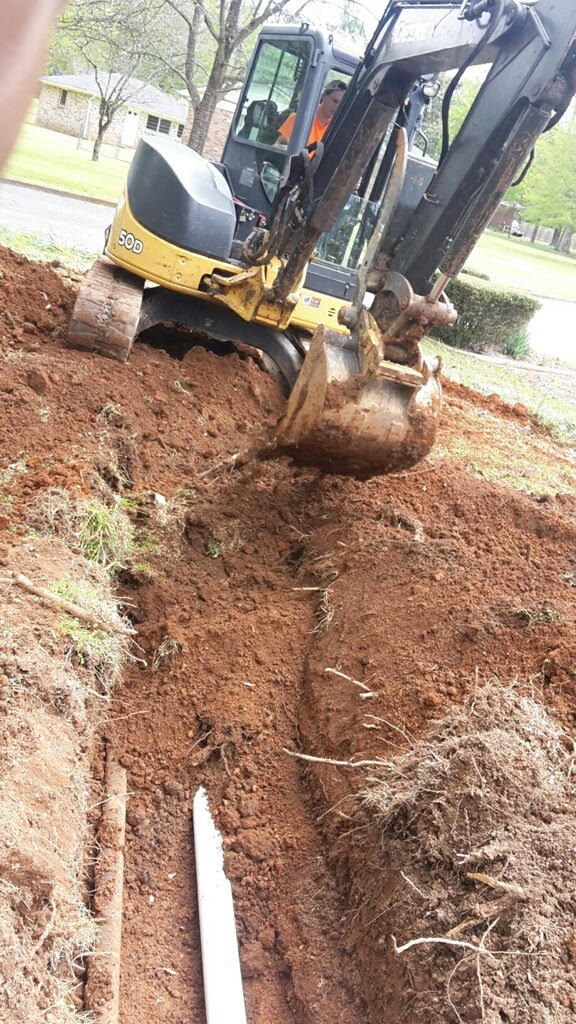
I was having a lot of trouble with the plumbing getting clogged up in this particular property. Especially when it rained.
Come to find out the roots outside the home were growing in the pipes. These pipes were made out of clay and the roots like to find the water source and break the pipes. The solution is to get a Backhoe and operator for half the day to dig up the old pipes and replace with PVC. Where did I get this info??? My day job as an engineer 😛
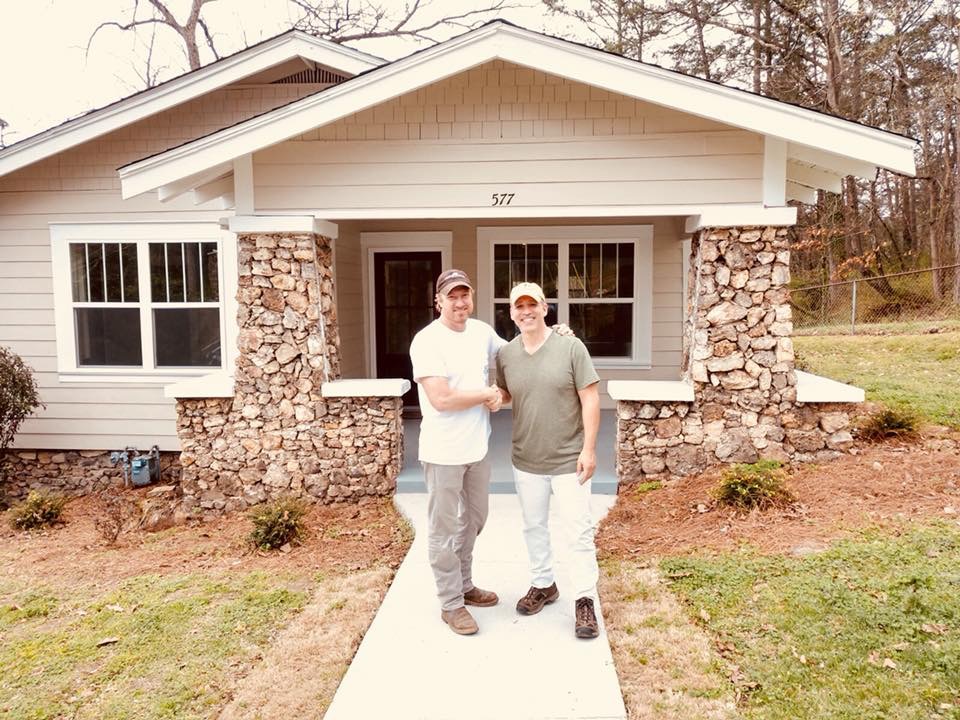
Debt deal typically has less risk but less reward. Below are a couple of my guys (below) who lent money to as the Private Money Lender are sure happy after their hard work and risk. Lucky guys! They sold for $15,000 over anticipated. But for me as the debt investor, I saw no equity upside.
Equity deals have a lot more options on how returns are paid out. You partake in the upside returns and downside risks.
Well, at least the bought be dinner while I was in town.
Self Awareness – Know your skill set.
Hard Work – Out of the three this is what you have most control of.
Empathy – Without this you will not be a good Leader and your business will eventually fail.
American Home Preservation (AHP) is a sponsor of the Simple Passive Cashflow Podcast. But more importantly, I personally invest money in the fund. It literally pays my car lease!
Watch 40-minute webinar here:
Highlights of the investment
You are helping people stay in their homes as AHP buys the loans from the banks and attempts to structure a more manageable payment schedule for the existing homeowner
AHP pays 12% a year. You get 1% every month like clockwork
I use it as an “Opportunity Fund” holding tank because of the liquidity
This is the first property in a series (1 out of 9) of acquisitions that resulted from a couple 1031 exchanges. If this is your first time reading this post I suggest you read these few prefaces first.
This property was put into service in October of 2015 (I know a little behind but I’ll catch up in the next few months). I acquired the property from a marketer that makes connections with the rehabbers in certain markets and finds buyers such as myself who are typically located in low rent to value ratio locations (this does not necessarily mean high-priced locations) such as California, New York, Hawaii, Seattle, Portland, and basically the coastal areas where all the cool kids what to actually live. Marketers have their place if the buyer is totally clueless but once you purchase a few of these properties the marketer really does not offer much value. The only thing I see that they would offer would be someone to be the bad guy role in a negotiation but many of the marketers are buddy-buddy with the rehabber because of their business relationship and won’t stick their neck out for you. As the buyer, you need to take ownership of the due-diligence process and negotiations because that marketer is not a licensed agent and does not have a fiduciary responsibility to you.
Why Birmingham?
Check out my previous post for a bit more context. My goal was straight cashflow so Memphis and Birmingham were at the top of my list as opposed to Atlanta/Texas which seemed to trade off some cashflow buffer for appreciation potential. I was comfortable going with a seemingly grungier city because I was going for cashflow (rent/value). A wise mentor of mine told me once “the security of your investment in a market correction is how much cashflow/buffer there is from between your rent minus expenses… when bad times come, how much can you lower the rent to ride out the bad times.” I think most people get wrapped around in analysis paralysis over the plethora of data such as crime stats, employment trends, population trends, etc. Those indicators tell part of the story but for me the reason I moved forward was just talking to a couple of people who were (not referral based salesmen) investors with disinterested agendas that said “dude, just buy it (from the right people), it just works”. If you have ever heard the saying “stand on the shoulders of giants” that’s what I did – if it worked for these other investors then I’m just going to start where they left off – after all every month I delayed action I lost a potential $200-300 of cashflow. In the end, maybe it’s just because of my personality, I chose Birmingham because I heard so many podcast ads for Memphis and saw all the investors going there.
Due diligence:
I apologize, it has been so long that it’s hard to remember (again I will get better at this, scouts honor), but I can’t really remember much because there were really no huge exceptions in the due-diligence process. I did a 3rd party inspector that I got off a referral from other investors. Remember do not take a referral from anyone on the sellers side as that is a huge red flag for their integrity due to the conflict of interest. A big difference in my growth as an investor is running these processes together with the lender’s parallel process and being able to effectively negotiate additional renovations or contract terms. Looking back I probably over paid a few thousand at least more than I would have today with my experience because you just can’t read about this stuff. Also it’s worth noting that you always should connect with a few property management companies and interview them early in this period. In addition, use them to validate your rental numbers and property location.
Closing:
I paid cash for the property initially because it was the sellers terms. I would never it do it again this way since I basically waived my right to a property appraisal. The next step was to refinance the property with a convention Fannie Mae mortgage to pull out most of my initial investment. We had a lot of trouble getting the property to appraise for the value due to the technical processes of the appraisers. Finally, after the third try I finally got an appraisal number that I was able to live with, but the damage had been done and I had to have all my cash tied up in the deal for 2-3 months. Lesson learned was to always have a financing/appraisal contingency to ensure that the property that you buy appraises and that what you pay is what it is worth. This is another example of a standing on the shoulder of giants, when you are financing from day 1 the bank owns 75-80% of the home via the mortgage and they are doing their due diligence too via the title work and appraisal. Therefore use the banks process as your friend. I got a lot of help from my lender in this transaction as they were the ones behind the scenes working the appraisal issue. This the difference between going with any big bank lender and a lender that works exclusively with investors. Again the golden rule is to always go by referral by another investor.
After the smoke cleared I was out of pocket $27K and had a $50k mortgage. The interest rate was a little under 5% but that does not matter. Sophisticated investors do not look at interest rate and the amount of debt instead they focus on cashflow and effect on net worth because after all who cares if your interest rate is 8% if the deal is returning 20-40%.
Operations:
After all the closing issues got taken care of everything else went pretty smooth and the property got filled by a nice family. Here are the numbers:
5 Rooms/3 Bed/1Bath, 1 story, 1008 SF
Built: 1967
The Story: A nice suburban home in the Center Point area. The property was picked up as a distressed seller and rehabbed
$875 Rent per month
– 10% Property management
– In the first 18 months I have less than 400 dollars of repairs total
– $395 Mortgage/Interest/Insurance/Taxes (PITI)
I typically get $300-400 per month after expenses. Please note: Make sure you are saving 30-50% at least in reserves for cap ex, expenses, repairs, vacancy. I have had good luck these first 18 months however the law of averages will catch up.
Knock on wood – it really does not get any better than this property because in the first 18 months of ownership I have experienced no vacancy and only $300 of repairs. 🙂 So yea things are pretty boring on this one.
Tax Breaks %: 1.7% = 500(25% x depreciation write-off) / 27000 (out of pocket)
Appreciation = ??? I don’t really care but this can potentially be a lot
Inflation = ??? I don’t really care but with all the bailouts and artificially low-interest rate this can be plenty
SPC GIT ‘ER DONE PLAN:
Just do it. Every month of not placing your money into something you lose a potential $200-300 per month. Homes aren’t getting any cheaper and every day you risk a stock market crash.
Here is the deal…about a dozen people in the HUI are buying undeveloped coffee farm parcels at ~15k each. We can get said discount by buying more as a group. If we buy 3 or more we get 400 dollars off each parcel and 6 or more 900 dollars off each parcel… It’s like Groupon for investing!
Personally, I am going to put this in my SD-HSA because this investment does not need any leverage on my end and therefore the best use of these funds. Normal pricing is $18,000 for Producing parcels. I was personally going for the raw parcel because of advantages in the long term growing prospects with the initial planning methods not found in the producing parcels despite the lower initial cashflow.
Let me know if you are interested and join our Facebook event in the HUI as we buyers we discuss the investment together. Deadline to commit is May 30th!
HUI Buys Coffee
Can you spy the HUI investors kicking the dirt (hint: 10X Hat)?
Why coffee and Panama and with International Coffee Farms?
Essentials – I have good conversations with people and it comes up again and again that the best investments are not the shiny tech start up or development deal or flip. Instead, it’s the boring cashflow investment with something that is essential. Just like the Class C/B SFH or MFH, farm investments are commodities. It makes so much sense… as all the Nouveau-rich amateurs are running around speculating, the sophisticated investors are quietly buying up these stable investments.
Ethics– Dave and his team strive for good returns and coffee but also put an emphasis on improving the work environment for his people. Spending a little bit more for better equipment and working conditions for the Panamanian workers may not make the coffee taste better or increase production but it is the right thing to do.
Engineering– Turns out Coffee production is a bit of a science and the team employs modern methods to growing coffee that outperforms local unsophisticated growers.
Through International Coffee Farms you can own a parcel in your very own Specialty Coffee farm, in Panama Deeded 0.5 acre parcels professionally managed for you turnkey from $18,000 USD
“Sustainable Income Through Offshore Sustainable Agriculture”.
When you start out investing in Single Family Homes or Multi-family Class C/B… optimizing every single fee dollar (emergency fund of course) into down payments for more assets that put cash into your pocket, things are simple!
Now when you start to add things into the mix like your mother lives in your home, you want to househack your brother, your wife will only let you get two homes per year, or you can sell a condo for some random reason things get really hard.
Personally, I don’t really have any restrictions of the sort but every situation is different especially if you have one of the aforementioned constraints.
One of these examples is to sell properties when the total return on investment decreases to a point to where the total returns (cashflow, tax benefits, appreciation, and mortgage paydown) get below ~15% or less than the next best thing. Now some people can’t sell these properties to property optimize the equity into other investments and for those people cash-out refis and Helocs are an option.
I will say one bad thing about Helocs is that you can’t get a loan for the entire amount. There is always 10-15% of the equity you are never going to get at – like the last few cups of water in my Brita filter dispenser… errrr! I see people try to quantify Helocs with interest rates but I feel that’s the bad way to argue its usage because it does not take into account the 10-15% left over in equity.