How the Secure Act Screwed over millions?


SECURE Act Summary

  • Expands the ability to run multiple employer plans for plan years beginning after December 31, 2020
  • Safe Harbor Rules Simplified for plan years beginning after December 31, 2019
  • Long Term Part-time Workers permitted to participate in 401(k) plans, which applies generally to plan years beginning after December 31, 2020 
  • 3 consecutive 12-month periods the employee has at least 500 hours of service
  • Repeal Maximum Age for Making IRA Contributions which applies to contributions made for taxable years beginning after December 31, 2019 
  • Increase Age for Required Minimum Distributions to 72
  • Applies to distributions required to be made after December 31, 2019, with respect to individuals who attain age 7012 after such date


RMDs after Death under the Secure Act

  • H.R. 1865 – Sec. 401 Modification of Required Minimum Distribution Rules for Designated Beneficiaries
  • Basically, requires all IRAs and Qualified Plans to be distributed within 10 years of death
  • The Senate version had a 5 year limit


RMDs after Death under the Secure Act

Exception to 10-year rule for certain beneficiaries:

  • Surviving Spouse
  • Children under the age of majority (but only until reach age of majority, then 10-year rule)
  • Disabled
  • Chronically ill
  • Another individual who is not more than 10-years younger


Tacked onto last law to keep the government to

No more stretch IRA (including rotes) – only have 10 years. So much money disappear from average Americans.

Going after inheritance tax next? Back to Clinton days where it was 600k and over. Maybe do a roth conversion? Or get rid of all retirement funds like how I have been advocating for for a couple years now – SimplePassiveCashflow.com/qrp

You can contribute to qrp for last year until you file for next year

You can now have annuities in retirement plans – #Lobbist


roth conversions –

Charitable retainer trust – asset income goes to kids then goes to charity

Naming a charity as a beneficiary

Life insurance

A few others


Note: I personally don’t do retirement accounts because I want to take advantage if bonus depreciation – learn more here

#10 – 2020.02 – The SPC Greensheet

Dear investor,

I hope you are not sick with the Corona-Virus unless you have a lime in it… Ok bad joke just trying to be funny cause everyone seems so sensitive about it. And I’m a little sad about Kobe dying too 🙁

So what would any other investor do who wears Kobe shoes to play basketball but buy into an oil deal. 🎥 Video

After watching the latest Richard Duncan recordings I am paying attention to the corporate debt story. But I don’t buy his line, “if China wins the AI race, as it has won the 5G race, then China will rule the world.”

Talking with other high level family offices it’s funny how they say crowdfunding websites is the place to dump deals you can’t get funded by fools on the internet.

Earlier this month there was some de-escalation between the U.S. and Iran but later the Coronavirus scare brought more volatility to the markets. Why I mention this I don’t know because I don’t really care cause I focus more on cashflow investing but you guys seems to be interested.


Links to past PDF slidedecks.

  1. Financial Freedom for Dentists – https://simplepassivecashflow.com/dentist/
  2. Private Money Lending Top Mistakes – https://simplepassivecashflow.com/lendmistakes/
  3. When is it time to Retire? Accredited Investor Live Coaching Call – https://simplepassivecashflow.com/when-is-it-time-to-retire-accredited-investor-live-coaching-call/
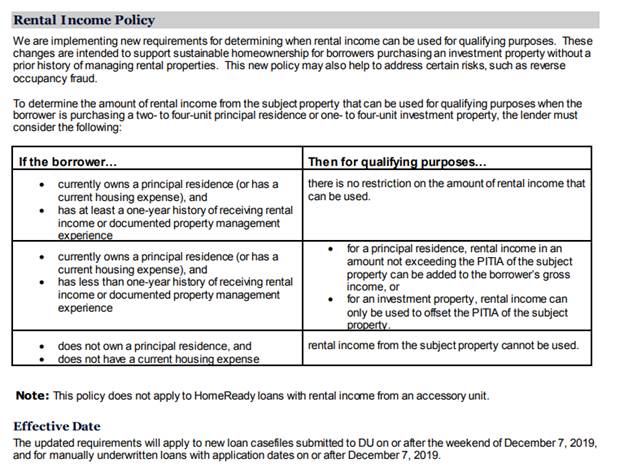
  4. Dec 2019 – Borrowing Standards – Rental Income – https://simplepassivecashflow.com/dec2019lending/
  5. Habits – https://simplepassivecashflow.com/habit/ 
  6. Wealth Management Tips from Centimillionaire Family Office Advisor Richard Wilson (184) – https://simplepassivecashflow.com/familyoffice/

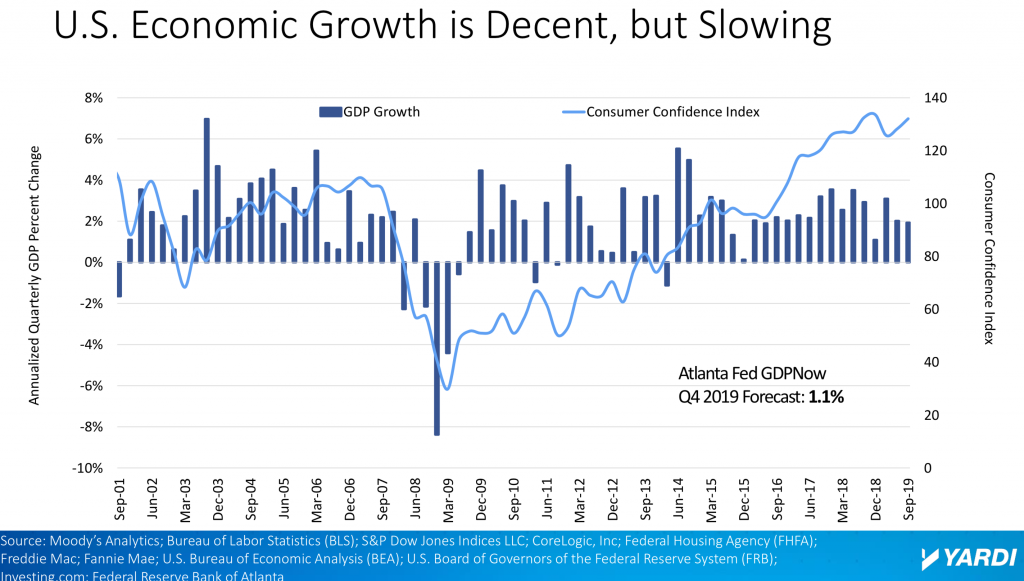
  1. Top Multifamily Markets in 2020: Small Metros, Suburbs “As a result of slower economic growth, apartment demand is projected at 240,000 units in 2020, approximately 20 percent less than 2019’s estimated 300,000 units,” CBRE’s market outlook for 2020 shows.
  2. SECURE Act Summary
    • Expands the ability to run multiple employer plans for plan years beginning after December 31, 2020
    • Safe Harbor Rules Simplified for plan years beginning after December 31, 2019
    • Long Term Part-time Workers permitted to participate in 401(k) plans, which applies generally to plan years beginning after December 31, 2020 
    • 3 consecutive 12-month periods the employee has at least 500 hours of service
    • Repeal Maximum Age for Making IRA Contributions which applies to contributions made for taxable years beginning after December 31, 2019 
    • Increase Age for Required Minimum Distributions to 72
    • Applies to distributions required to be made after December 31, 2019, with respect to individuals who attain age 7012 after such date

    RMDs after Death under the Secure Act

    • H.R. 1865 – Sec. 401 Modification of Required Minimum Distribution Rules for Designated Beneficiaries
    • Basically, requires all IRAs and Qualified Plans to be distributed within 10 years of death
    • The Senate version had a 5 year limit

    RMDs after Death under the Secure Act

    Exception to 10-year rule for certain beneficiaries:

    • Surviving Spouse
    • Children under the age of majority (but only until reach age of majority, then 10-year rule)
    • Disabled
    • Chronically ill
    • Another individual who is not more than 10-years younger
  3. Tacked onto last law to keep the government toNo more stretch IRA (including rotes) – only have 10 years. So much money disappear from average Americans.Going after inheritance tax next? Back to Clinton days where it was 600k and over. Maybe do a roth conversion? Or get rid of all retirement funds like how I have been advocating for for a couple years now – SimplePassiveCashflow.com/qrpYou can contribute to qrp for last year until you file for next yearYou can now have annuities in retirement plans – #Lobbistroth conversions –Charitable retainer trust – asset income goes to kids then goes to charityNaming a charity as a beneficiaryLife insurance

    A few others

    Note: I personally don’t do retirement accounts because I want to take advantage if bonus depreciation

  4. U-Haul Migration Trends: Top Growth Cities of 2019
    1. Raleigh-Durham, N.C.
    2. Kissimmee, Fla. 
    3. Ocala, Fla.
    4. Round Rock-Pflugerville, Texas
    5. West Palm Beach, Fla.
    6. Port Saint Lucie, Fla. 
    7. Bradenton-Sarasota, Fla. 
    8. Coeur D’Alene, Idaho
    9. Manhattan, N.Y. 
    10. Harrisburg, Pa. 
    11. New Braunfels, Texas
    12. Auburn-Opelika, Ala.

    13.Huntsville, Ala.

    1. Spring-The Woodlands, Texas 
    2. Boca Raton, Fla.
    3. Henderson, Nev.
    4. McKinney, Texas 
    5. Temecula, Calif. 
    6. Fort Lauderdale, Fla. 
    7. St. George, Utah
  5. Rent Control Makes a Comeback as Housing Crisis Grows Three states passed new laws in 2019 limiting rent increases, others are considering their own measures and housing is set to be on the agenda in the 2020 presidential election. – [Why are you buying in Blue states]
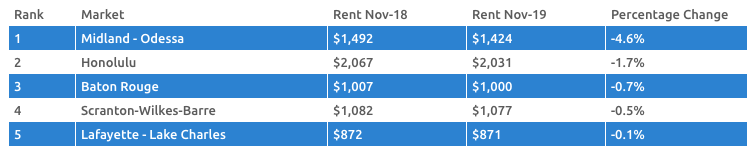
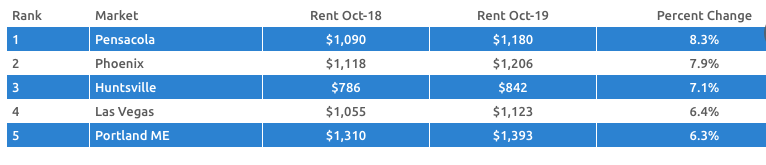
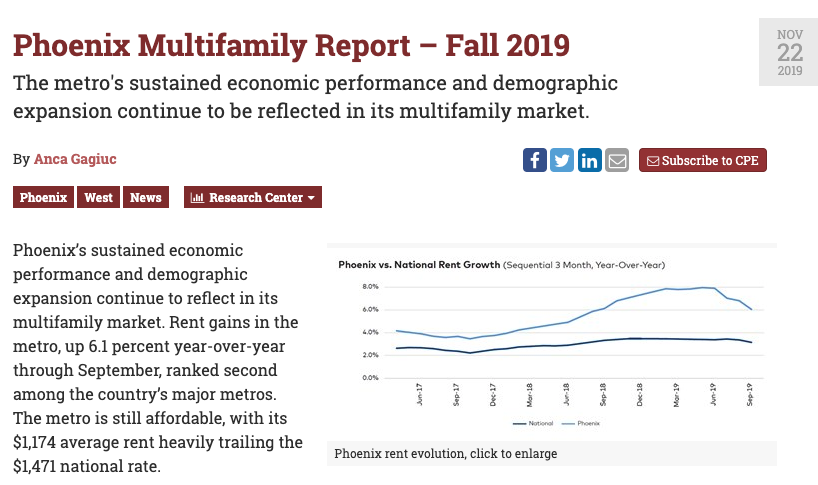
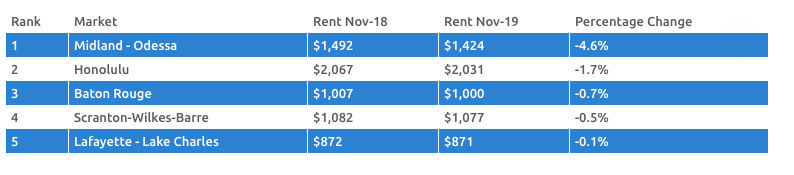
  6. Markets with largest rent growth 😁Markets with largest rent decrease 🙁
  7. Amazon’s 1.4 MSF Florida Project – The e-commerce giant tapped Seefried Industrial Properties to construct a new fulfillment center, which marks the first major development at the new Portland Industrial Park in Deltona near Orlando. The company will create more than 500 new full-time positions at its new Deltona fulfillment center.
  8. Howard Hughes Spends $565M in Houston – The portfolio includes the former headquarters of Anadarko Petroleum and ConocoPhillips, plus a warehouse and developable land.
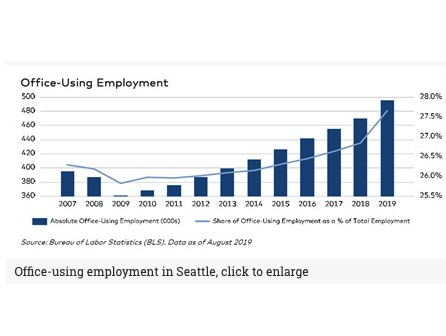
  9. Seattle Office Report – Fall 2019 – Strong market dynamics continue to support the metro’s rapid expansion, with a saturated tech sector extending and shaping the current real estate landscape.
  10.  
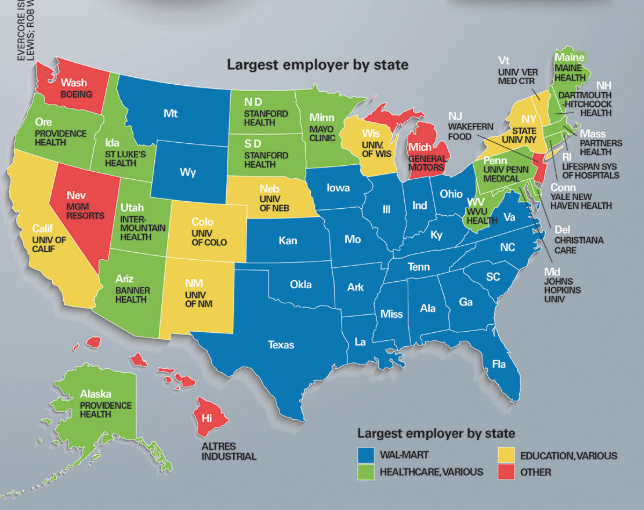
  11. Largest Employer by State
  12. Chinese Investment in U.S. Commercial Real Estate Is Plunging – Chinese investors put 76 percent less money into U.S. CRE year-to-date through September than in 2018.
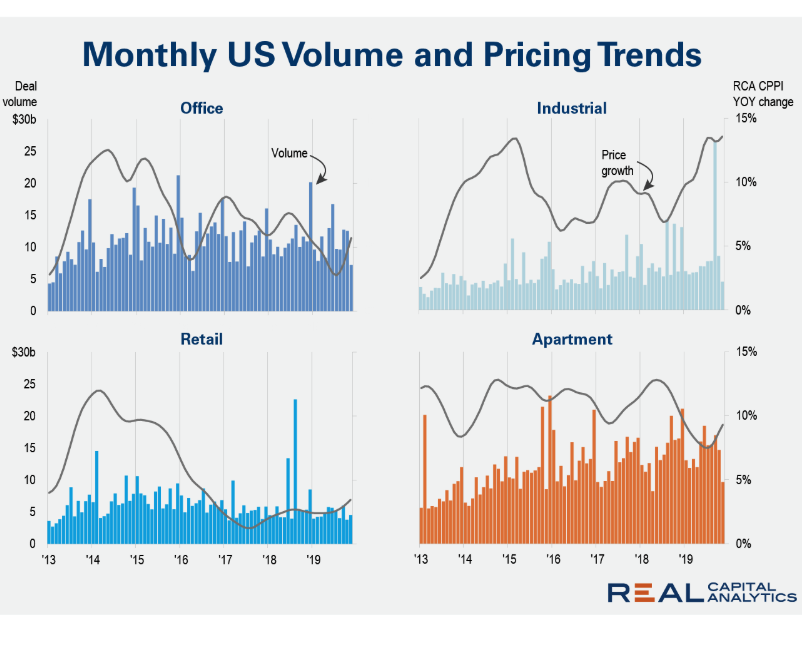
  13. US Monthly Volume and Pricing Trends by Sector – Ramping up activity in the U.S. apartment and industrial sectors over the last five years while moving away from the retail sector.
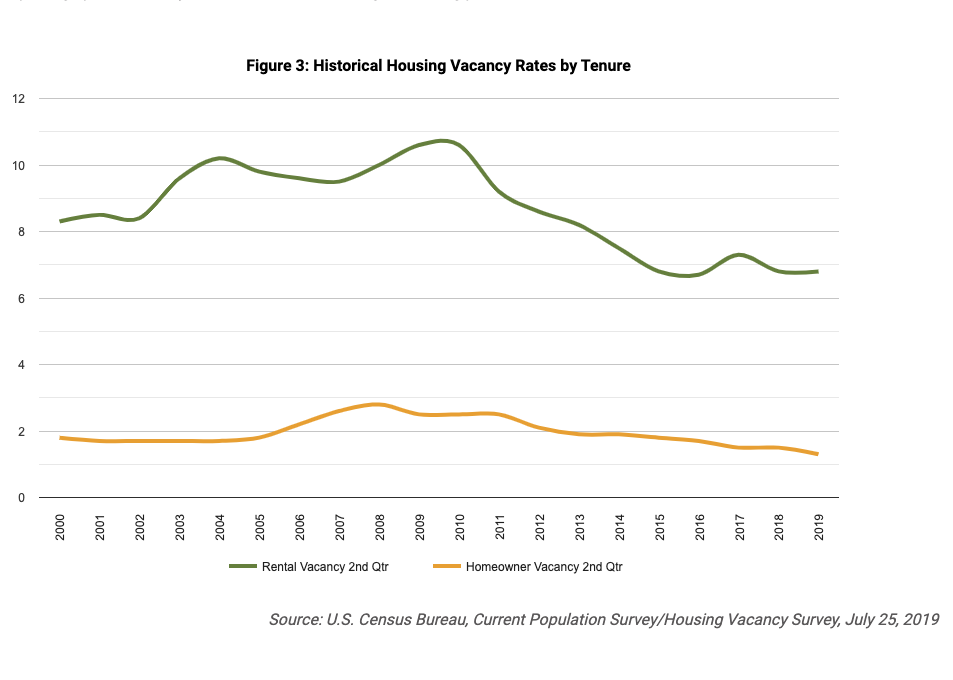
  14. The Impact of the Next Recession on the Multifamily Market 
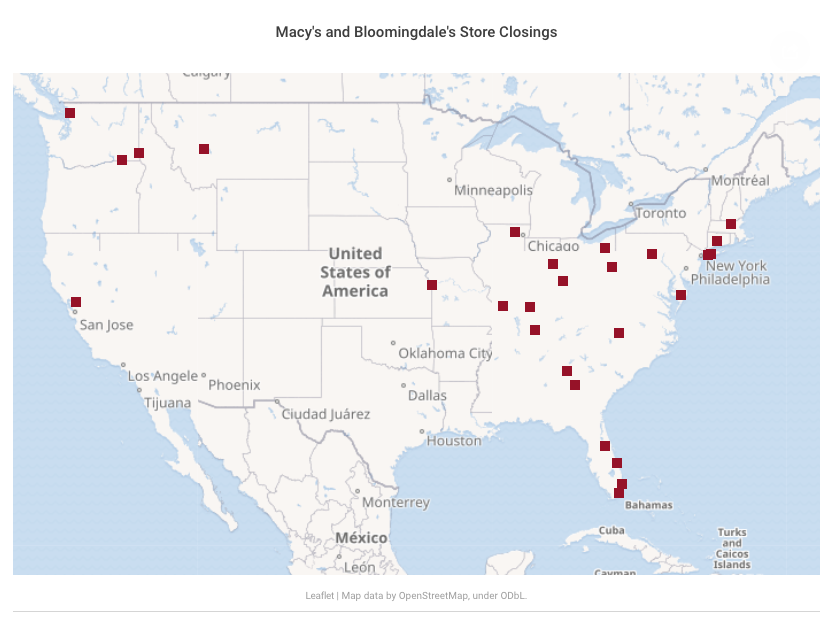
  15. Macy’s Store Closings – Nearly 30 of the retailer’s 641 locations will shutter following a moderate decline in comparable sales through the holiday season. 
  16. 75 Million Ponzi Scheme – The Income Store
  17. Retail Property Taxes Likely To Rise – Pier 1 announced it would close up to 450 of its stores.
  18. Electronics Stores Join Brick-and-Mortar Exodus – Audio equipment giant Bose will close its remaining 119 retail stores in four markets including the U.S.
  19. Despite Missed Sales Projections, Discount Retailer Five Below Will Open 180 New Stores This Year
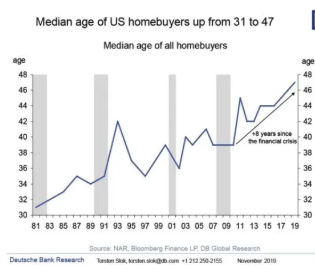
  20. The median age of homebuyers is now 47 
  21. Co-Showering & Multi-generational Houses?!?
  22. Hilton Launches New Lifestyle Brand – The hotel firm has already secured 30 commitments for its latest offering, Tempo by Hilton, which is designed to appeal to the ambitious modern traveler.
  23. Four Strategies for 2020 Success in Class B Multifamily Space – New markets, Tech, Employees, Regulations
  24. Housing market falling short by nearly 4 million homes as demand growsThe 5.9 million single family homes built between 2012 and 2019 do not offset the 9.8 million new households formed during that time, according to an analysis by realtor.comEven with an above average pace of construction, it would take builders between four and five years to get back to a balanced market.“Simply put, new home starts are not keeping pace with demand. Homebuilders have a mountain of opportunity, but a big hill to climb,” said Javier Vivas, director of economic research at realtor.com
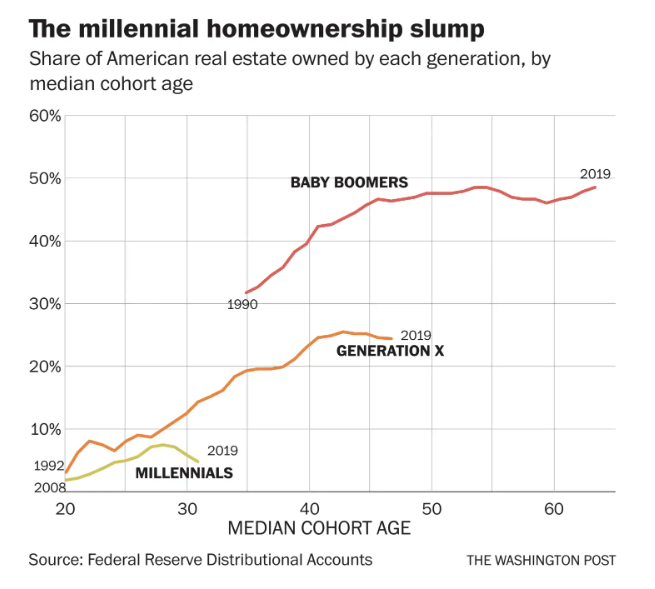
  25. Millennials’ share of the U.S. housing market: Small and shrinking 


Getting to know my investors better. Tours and Hawaii mastermind – SimplePassiveCashflow.com/hui3

I don’t think I have not given anyone do did not book a call some type of referral or feedback.

Focus on being a family office for 1-10M net worth families

Wealth Planning

    1. Succession Planning 
    2. Estate Planning 

Wealth Management

Tax Planning

Trust & Corporate Services

Family Governance

Charity & Philanthropy


Doing the first multi day event in Hawaii.


Learning more about risk types in investment


Booking spring break. Minimum of four trips a year.


Wow January is OVER

No exceptions


Complete #LaneHack list

Passive Investor Accelerator & Mastermind

-Mostly Accredited high paid professionals to connect with personally and build your own network (currently 45 members)
-27 modules of content in a closed membership site
-Bi-weekly Zoom Video calls (25+ on-demand recordings a year plus all library of past calls)
-Now with a membership coordinator check-in’s to help facilitate what you are doing and connect you with the right people in the group (if you are shy)

Learn more and apply – SimplePassiveCashflow.com/Journey

If can do me a favor… If you get a chance people review leave a review for the podcast on iTunes (https://podcasts.apple.com/us/podcast/simple-passive-cashflow/id1118795347) and email simplepassivecashflow.com to a friend.


Transcript:

0:04
When I got smart and so my primary residence to start investing investments that actually made sense who I needed a place to diversify quickly as opposed some money market or some high reward checking account Let’s face it, turnkey rentals are cool and syndications are great but they don’t come around often I stumbled upon the American homeowner preservation fund the owner George new marry once apartments indicator to is now sponsoring the podcast is fun cuts the middleman out to crowd fund the solution to the mortgage crisis in America they empower you to fund the purchase of distressed mortgages and earn returns at smoke any other passive fun if you find something else better out there, let me know oh yeah, they work with families to keep them in their home after buying an underwater note at a huge discount. It’s an opportunity to make an impact on families and communities while earning returns. start investing with a zoals hundred bucks in invest in hp. com if you want the free burn zone book please send me an email at Lane at simple passive cash flow calm

1:03
This week we are going to be doing the 2020 February edition of the green sheet investor letter you guys can check out all these letters and past videos at simple passive cash flow calm slash investor letter. And make sure you check this out on the YouTube channel to make a bunch of slides. And if you’re listening to this on the podcast version, probably going to want to check out a lot of the graphs that are put in there to kind of brings another dimension to this. But however you guys want to consume this podcasts YouTube channel, it’s all fine with me. And those of you who are high net worth passive investors

1:36
still using a 401k or self

1:39
directed IRA, you’re doing it all wrong, man. I don’t have any retirement accounts because I would rather pay taxes on it today when my income is less than in the future. Just very counterintuitive. People will say that you’re going to make a lot less in the future, which as you know, we do things a little bit differently at simple passive cash flow, why I’d like to not use a timing plan or what we call requalified money is that I want to avoid the unify and you bit tax now the one way you can do this VA retirement con is called a QR p or qualified retirement plan you guys can check this out at simple passive cash flow calm slash qR P and also fill out the form there and you can get a free book sent your way to learn more about it and here is the show is

2:20
a story about a dude named Lane he moved to the mainland and bought one place to stay and then one day he went try to rent them out

2:28
and then he became one real investor.

2:33
It is February 2020. This is the monthly market update or I collect a bunch of news articles that I’ve sifted through. You guys can find the show notes on the sun at simple passive cash flow calm slash green 10 that’s with a one zero green one zero. And I do this every month recapping what I’ve been up to at the end and some of the biggest news headlines that I’ve been seeing that I think in pack macro and some Micro markets out there. Again, all these will be posted on the YouTube channels if you guys are missing out on the audio or the video version, guys just checking on this on the audio version, you guys can check out more there too. So if you guys don’t know who I am Lane Kawaoka, I still have my PE and you guys probably found me through the simple passive cash flow podcast. But if you guys haven’t already joined our Facebook community online, probably find it by going through simple passive cash flow. We is what we call ourselves. So biggest news that happened this month case you didn’t know it, but they signed the secure act which basically Rob millions of millions of dollars and millions of Americans without you guys even knowing. So let’s break this down. What is the secure act here? So you remember when the government was kind of going bankrupt and they needed to come up with some new laws to not have that happen while this is the byproduct of it. And what it is, is a way of generating income for the government, which is typically not very good for us. Americans is In a better way, kind of the deal for us got worse. So here’s a few bullet points it expanded the ability to run multiple employer plans for plan years beginning after December 31 2020. Had safe harbor rules apply for plan years beginning after December 31 2019. Long term part time workers permitted to participate in 401k plans which applies generally to plan years beginning after December 31 2023 consecutive 12 period the employer has at least 500 hours of service a repeal the maximum age from making IRA contributions which appeals to contributions made for taxable years beginning after December 31 2019. Increase the age for a minimum required minimum distributions which we call it rmds to 72 and applies to distributions required to be made after December 31 2019. With respect to individuals who attained age 70 and a half after such You guys are probably sleeping, you guys are probably just like any other Americans probably didn’t pick up anything, nothing really popped up there. But here is there were some good things in there. Frankly, I don’t really care because I don’t have any retirement plans myself, I rather invest my money and take all the depreciation today and live off that today. So they changed the rule with rmds after death. So before they got rid of stretch IRAs, you guys can go all that you want. But basically what you were able to do is say your parents died and they had an IRA, they could give it to you and they would keep going stretch, but now they have this little nasty rule a year that basically requires all IRAs and qualified plans to be distributed within 10 years of death. So you got a limit. So if your parents die and you have this money, you got to spend it in 10 years, so the red flag should be going up. Everybody got screwed out there. The Senate version had a five year limit by the way, but it turned out to be a 10 year time horizon. There is a next Up to the 10 year rule for surviving spouse. So if your wife or your husband dies, they have the IRA that 10 year rule doesn’t apply. Also exemptions children under the age of minority. So basically, if you’re a kid and once you become an adult, I believe that 10 year old clients at that point, it doesn’t apply if you’re disabled chronically ill, and another individual who is not more than 10 years younger. So look at it from this direction the government wants to wants to harvest returns from us, the citizen, they want us to pay taxes they want. They want to get the money out of these silly retirement accounts that they promised everybody that they would have tax free, but at some point, they’re going to tax these things. And the government’s just sliding all this revenue up quicker. That’s essentially what’s happening here. So it’s a big, big deal. This is just a good example of how these tax laws can change. Back in the clinton days they inherited tax with way less, it was like 600,000 today their inheritance taxes. Super, super high. You know, that’s why you have kind of read government at this point. But if somebody else gets in there, these rules might change. And one of the biggest things in here is under the RM DS. The biggest exemption is a surviving spouse, they may just choose to get rid of that whole surviving spouse exemption, which means if your spouse passes away other than all that the heartache and the sorrow you’re gonna have to pay taxes on their estate, which I think is unfair, but hey, that’s like a one of the coolest byproducts of this is if you guys are doing the QR PS you guys can contribute up to when you file your taxes. So if you’re like me and all the cool kids filing your taxes in September and October, you can contribute to your to your P for the previous year, all the way up to that point, just like how you’re able to do for your Roth IRAs or IRAs, same kind of rules apply. So the secure act kind of open that up and then now you can have annuities and your retirement plans. So that kind of opens up a whole new door for those of you You guys, you know playing around with life insurance, Internet Banking concepts there. If anybody has any questions on this, feel free to type it into the chat, but I’m going to move on to kind of more rapid fire headline title is top multifamily markets in 2020, or the small metals and the suburbs. And they’re seeing as a result of the slower economic growth apartment demand is projected at 240,000 units in 2020, which is approximately 20% less than that of 2019 estimated 300,000 units CBRE are he comments. rent control is sort of making a comeback. There was real laws passed in late 2019. Limiting and rent increases. If you read into it. It doesn’t seem as bad I guess depending which side of the table you’re standing on right politically, but sometimes they’ll put in restriction where it needs to be based on some higher number that they’re really never get, I think is sort of fair. But regardless, I mean, if you’re investing in California, I don’t know why you arguing that or even any other blue state for that matter probably not getting the rental value of the 1% rental value ratios for anything that’s not a war zone property or C class property or worse. So I don’t know why you would be doing that the U haul release their top 20 growth cities for 2019. And this is something I tracked closely This is the U haul is which used to move around with when you are broke and you didn’t have any money. So it’s it’s a good indicator for what the blue collar workforce housing folks are doing when they have to move. A lot of the influx of people are in the Florida State Raleigh Durham, North Carolina is number one, Ron Rock, Texas is number for a lot of Florida ones in here, Cortland, Idaho Manhattan, Harrisburg, Pennsylvania. Actually, I don’t know if this chart is incredibly useful. I mean, its top growth cities I’d rather see in the more regions and states that’d be how I would use the U haul Report.

9:58
I’m super excited about new program. I’m rolling That’s going to reinvent scammy Real Estate education programs. So excited like Marie Kondo cleaning stuff up excited. Announcing my new mastermind program which consists of a closed members site with 27 packed weeks of content, plus bi weekly group video conference calls to us whatever half of the calls will be centered around granular investing tactics, and the other half will be holistic wealth building strategies that I have learned from the wealthy.

10:25
That’s 25 plus hours of group coaching and masterminding and a secret Facebook group too. I know what you’re thinking none another flippin Facebook group. Well, this one’s going to be different, more intimate, exclusive, and no cheapskates or shady vendors in it. I’ve been coaching individual clients over the past couple years and I figured out what you guys need in a way to provide it in a cost effective way. learn more, go to simple passive cash flow.com backslash journey and join for the first cohort fills up, an introductory pricing goes away.

10:59
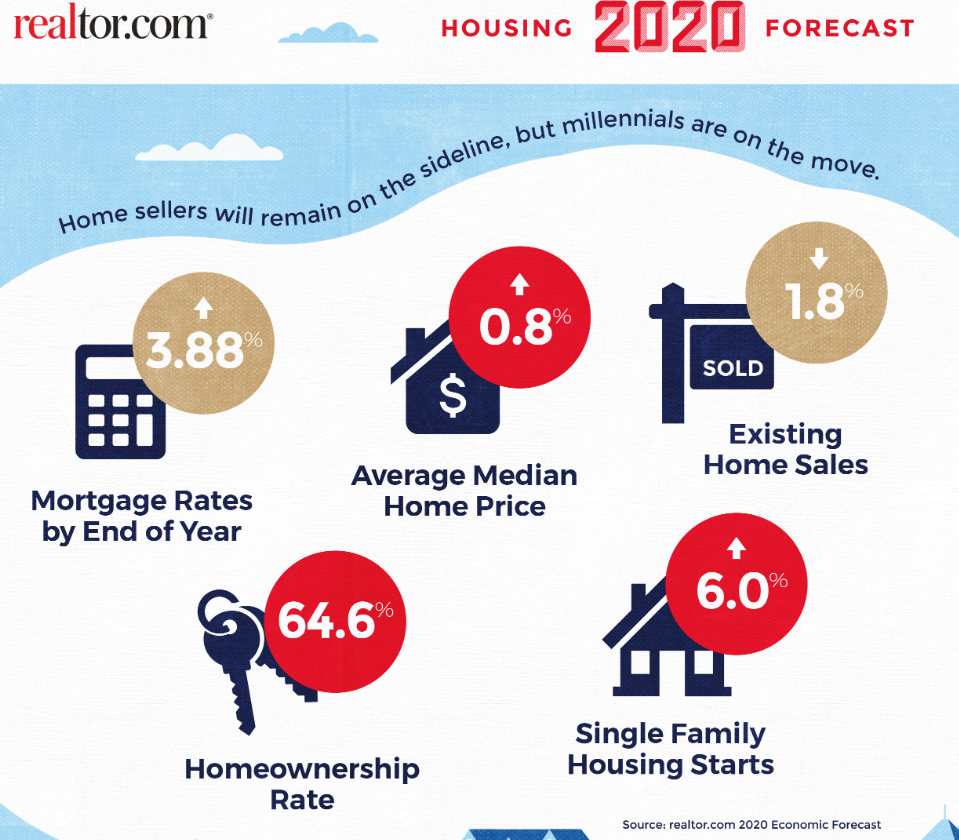
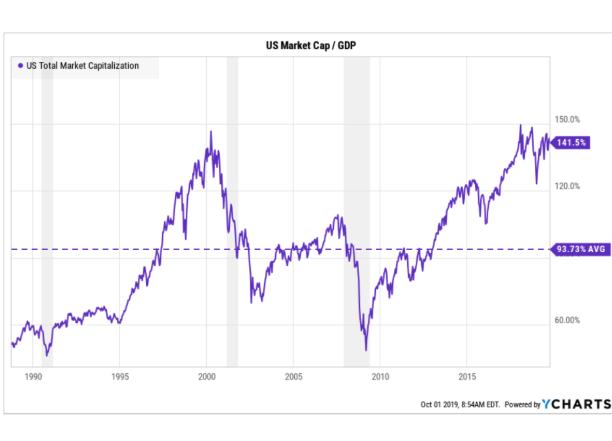
Update online conservation easements This is more for the accredited folks who make over two to $300,000 adjusted gross income per year but for everybody’s entertainment what our land conservation easements so land conservation easements are a tricky way of getting a tax write off by designating a piece of land a land conservation easement, it no development can go there in the future by doing this, it becomes sort of a taxable donation. So just like how you take a bag of old clothes out to the Salvation Army, and you arbitrarily call that $500 but what you’re doing here is you’re taking a piece of land that has some nice environmental value to it like they usually put it around like chump will do this around his golf courses, and they’ll designated a land conservation easement. But the tricky thing is that they’ll like they have the value of land but then they’ll mark up some kind of like fictitious development plan to be basically get an appraised value of when you are five to 10 times higher than what the land is actually worth. So what guys will do is though and invest or basically donate 50 grand and it goes on a taxable donation, but they get like a five to one pop on this stuff. So for every 50 grand they donate, they get 20 $50,000 of deductions, not credits, deductions, but for a guy and, you know, making more than $350,000 a year, that’s a lot of money at 50 cents of every dollar of tax savings. The news is recently a lot of this has been getting a lot of unpopular attention, and it is kind of fishy. So investors are kind of in a holding pattern, how they’re doing this. If they really need to get the tax deduction. What they’re probably doing is just chancing it and doing it but they’re not being overly aggressive and they’re sticking to a boost ratio of five to one or less. So it’s kind of one of those things where you don’t want to be greedy, was it pigs get slaughtered hogs get fat so he basically buying charitable donations at 16 cents on $1 couple of charts markets with the largest rent growth year over year from November to November 2008 22,019 and the with the markets with the largest rent decrease I have these charts flip flop but the list you don’t want to be on these are the losers number one Midland Odessa number two Honolulu number three bathroom rage before Scranton and number five, Lafayette Louisiana and the winners a top five markets are number one Pensacola which went up 8.3% Phoenix Arizona went up 7.9% number three Huntsville Alabama went up 7.1% for is Las Vegas 6.4% and number five, Portland, Maine which we went up 6.3% I’m aware of all these markets of Pensacola was kind of a weird one. I got surprised by that one someone told me it had to do with I guess there was like a hurricane there a while back ago and now this is part of the bounce back. Most markets will just kind of get keep pace with inflation, maybe two to 3% a year more of the hot markets will be five to 8%. So these are hot markets here. Amazon’s 1.4 million square foot Florida project near Orlando is taken off. But don’t be misled by another Amazon fulfillment center. This one’s only going to have 500 new full time positions. And when you’re looking at a tertiary market, for example, Huntsville, 500 jobs, it’s nice right but not that much. Usually a bigger announcement from a major employer might be more like on the 1000 magnitude or higher one the few thousand jobs that’s a big news but I think you see a lot of these new sources for real estate they’ll say a search an employer, but at the end of the day, you really have to see what kind of what’s the numbers how many people are going there. And also what is the multiplier effect for like a Boeing or like a car manufacturing on you have a lot of the ancillary other providers like bait build other pieces of the car the airplane. I don’t know how it is with these Amazon fulfillment centers maybe if somebody sells snacks at the 711 or something like that but I don’t think you have a big multiplier on on that but I could be wrong realtor.com came out with their 2020 housing forecast and they are take it for what it’s worth right a bunch of realtors then again they do like to spend money on a lot of things like probably a lot of number crunchers and data peoples but they’re saying mortgage rates by the end of the year will be going up a little bit to 3.8% average median home price will go up almost 1% existing home sales will go down 1.8% and I believe that talking more about volume than pricing and then homeownership rate 64.6% and single family home starts which are new builds will be going up to 6%. And another site but I found from our friends@realtor.com are is that millennials make up over 46% of the mortgage rates. donations up from 43% last year according to realtor.com. So maybe the millennials are finally moving out of mom and dad’s basement and getting into the game. It’s about time we have some more news on that later. Another news headline says us monthly volume and pricing trends by sector. This is post setup at simple passive cash flow calm slash investor letter, and then you can drill into the February report. From there Howard Hughes spends bottom half a billion dollars in Houston and his portfolio includes the former headquarters of a narco petroleum and chemical Philips plus a warehouse and developable land. A Seattle office report says that in Seattle, there’s strong market dynamics continue to support the metros rapid expansion with a saturated tech sector extending and shaping the current real estate landscape. So yeah, Seattle has a lot of tech jobs, the big white collar workforce apparently they Working in offices, right? Go figure that there’s a little chart there showing the growth of that more of that office space employment. So here was that us monthly volume and pricing trends by sector. So you have the office, industrial retail and apartment space shown. A lot of you guys are into technical analysis. I don’t know if you guys are any good at it. I was never but you have the price growth, which is the line but then you have the volume bars underneath it. And usually when you have a lot of volume and you have movement, then that’s a positive signal that you can really look at as a trend. And when you have movement on low volume, that’s typically a maybe a false positive trend, a little map here of the largest employer in every state. Some of the more popular ones where our community is mostly based out of Washington is bowling. Oregon is Providence health. California is the University of California. That’s a little weird, Nevada. MGM resorts, we don’t care too much about those other states. Hawaii is altered industrial and never heard of them. But pretty much everywhere south east of Texas, Oklahoma, Kansas, Iowa, Illinois, Indiana, Ohio, Kentucky, North Carolina. I think that’s Virginia. Everything south of there is Walmart or the biggest employer in the state. So a little bit of trivia there. So I was reading some articles on newer trends in apartments and some of this was more on the E Class side. Coffee calls the A plus side I mean, these these are like the 1500 dollar to 20 $500 one bedroom apartments. So they’re saying like, what are the new amenities that are going in and all of this has nothing to do with stuff I buy, which is the more workforce housing It is interesting to see what is going in there. So they’re saying like the peloton bikes, the ones that had the little computer screen that apparently people are going crazy over recently, they have gyms in the apartments they want the tenants to feel special. I don’t know what that means but more like white glove service. I know a lot of people have kind of been taking my advice and selling your primary residence because it doesn’t make you any money invest the money instead and a lot of people are really liking the apartment life. You got the pool, you got kids, you don’t have to worry about cleaning anything. They like the pool, you got a gym, there’s a pool, and it’s a lot cheaper to don’t believe that nonsense of renting is just throwing money down the drain. I mean, whoever said that’s probably stuck at the day job. You don’t want to listen to that guy. impact of the next recession on the multifamily market is the next on topic. This came from the US Census Bureau data. So in the green line, it’s showing that the vacancy rate, which typically is between six and 11%, obviously after the recession kind of spiked a little bit but over 10% but slowly but surely the past 10 years it’s been coming down to almost all time lows for About 7% or so. And homeowner vacancy is usually about 1% to 3%. I pulled a chart of the stock market here. I honestly don’t really follow the stock market stresses me out. But from time to time I like to know what’s happened just so I can kind of poke fun at people who like trade stocks and options and think they know what they’re doing. Yeah, I mean, pretty much at all time highs where we were in year 2000. Here market US market cap divided by GDP is what I’m looking at. So I don’t know if you guys have bosses that shop at Macy’s but they might be really sad because nearly 30 of the retailers 641 locations wash clothes following a decline in comparable sales through the holiday season. And we’ve been following this trend the last few months ago and listen to pass investor letters to get was forever 21. I can’t think of the other ones but a lot of these storefronts We’re kind of going out of business. It’s the whole click vs brick battle get it click on your Amazon versus anyway another article that I put up is the retail property taxes is likely to rise and Sapir one announced that it will close up to 450 stores the electronic store Bose A lot of you guys like to wear and be anti social as you go out in public will close the remaining 119 retail stores but it’s not all doom and gloom because if you shop at the discount retailer Five Below they will be opening 180 stores actually bought that place was like a frozen yogurt place at one time and then I went in there and I found that otherwise so Ponzi scheme alert $700 million from the income store. Now we did a podcast maybe about a couple months ago about buying websites sort of like how you buy a distressed house you buy distressed website that is suitable for me you make it a little bit better. So the income store I understand that This this model, right is is sort of like a trading you could you could buy and sell websites on there. I don’t know exactly what they were doing. But apparently they took everybody’s money and this kind of story came out, which is kind of a shame. You know, I’m all for getting these marketplaces open so entrepreneurs can get involved, but it’s times like this where like, it makes everybody gun shy where you get one back after that kind of spoil it for everyone. We were talking a little bit about the millennials possibly moving on and finally buying homes. So there was a study that came out by the Deutsche Bank research that the median age of homebuyers is now 47 years old. And that went up from 31 to 47. And there’s a little graph there. That shows, you know, way back when in 1980, the median home buyer age was 30 years old, and it’s just been going up year after year after year. A lot more since the financial crisis. I mean, I guess people are having kids lot later. Another graph millennial share of the US housing market small and shrinking. So this graph is showing the millennial home ownership, slum share of American real estate home by each generation by medium cohort age. So showing how the baby boomers are they love that homeownership stuff. And then the Generation X folks, they’re kind of hitting their Apex it looks like right now and then the millennials are kind of behind some new trends in apartments or in housing in general are bigger showers so you can cold shower, I don’t know maybe have two people in there. I don’t know what that’s all about. But it was interesting. Like we have a more of a nicer apartment more of a B plus asset. And what we’re having to do there is removed a lot of the bathtubs because people just don’t use it. They’d rather have a more fancy or tiled shower than have a bathtub. They’ll pay more for that. So I don’t know if they’re gonna fit two or more people in there but the showers a little bit more popular more modern these days maybe that has to do with people just being too busy. They just got to go in and out. They can’t put rose petals around their bathtub and drink wine around that time. I was just joking there. Some of you guys need to laugh a little bit later in the day here. And then multi generational housing is becoming more popular and Hilton’s launching this new brand called temple. So it’s supposed to cater towards ambitious modern traveler, whatever that means you’ll have iPhones or something like that for strategies for 2020 success in class, the multifamily space I’ve kind of moved on from classy properties, they’re really difficult they never pay I think it’s just better to be more in a B class type of asset unless you have a really really severely under market and you’re going to do heavy value add like more than five six grand per unit rehab per unit. But this article that there’s four strategies that they cited, first one was new markets. So looking markets that people aren’t looking in number two was employing tech. And I really understand this whole tech angle. They’re saying like, Oh, you have to use Alexa and all you know the little things, all that Amazon stuff, you don’t put that in class B and C properties that’ll grow legs and you’ll you won’t find it anymore. But maybe they’re talking more about the smart thermostats. It didn’t say 10 employees because in these type of areas, your employees are very important the leasing agent you pay them on salary in apartments and then regulations because like all the new rental control laws has been upon all that stuff. Very important recently went to a mastermind and a family office gentleman came in talk to us about a few trends that are happening said that in the year 2025, there’ll be more people turning 65 then babies born so that means there’s going to be a lot more older people soon but don’t go to simple passive cash flow calm slash elf and start to learn how to make your own assisted living facility like A lot of you guys will do that is a huge, huge undertaking and something I tried to do and I just backpedaled and plus the silver wave isn’t there yet, like a lot of the baby boomers are finally retiring, it’s going to be another decade or two until they really start to use that assisted living facilities. Another big trend that they cited was the race for 5g and I don’t know how to pronounce right, like who way but there’s this big, big thing versus them, the United States where they don’t want to use their technology because they think they’re going to steal from us. I don’t know if that’s true if they really gonna steal from us. But you know, being from America probably isn’t good if they win that race. And it’s sort of the modern day race to the moon. It’s riddled with backdoors. Lane two, don’t trust it. Don’t trust it. All right. Good thing. We’re still getting the G here in Hawaii. So it’ll be a while. Another thing that I found interesting from the presentation was, I think in the year 2026, there’s going to be more electric cars than gas cars. That’s sort of the inflection point. You know, a lot of these guys are family office money. And if you’ve never heard of these terms private equity family office and venture capital private equity is kind of the syndications people who are a million dollar to $5 million network. We’re family offices are more on the scale of 50 to 100 plus million dollars, big money housing market falling short by nearly 4 million homes as demand grows. So this is just more of a general article. That’s just reiterating. Look, guys, the country needs housing, and especially housing for folks who don’t make $100,000 or more. And we’re continuing to build new product, but the pace of population growth is increasing, and it’s not keeping up with the pace with demand. And that’s why I think why a lot of us fall back to real estate because it’s sort of a commodity and you’ll always need it. New podcasts and articles that I put together in the month of January 1 was the financial freedom for dentist so I have a lot of dentists in the mastermind program like almost seven or nine of them I realized so I got a bunch of their thoughts together and I remove the identities and zip codes and social security numbers and I put some of the the thoughts there and might be more of a dentist thing but it might also apply if you’re a doctor or any other high paid professional to another article I wrote was the private money lending top mistakes I put it at simple passive cash flow calm slash lend mistakes you can also check out the dentist article at simple passive cash flow calm slash dentists we had an accredited investor Come on the podcast and do a coaching call with me appreciate when you guys do that i a lot of you guys really like to watch vicariously you know for high paid professionals is really many different scenarios that I have a lot of these coaching calls in the YouTube channel. I have them in index and a section if you guys want to check out some of the past ones. Yeah, check those out. And see if they help you but just know that not all situations are like and the biggest part of this at the end of the day is deal flow What are you going to do right like you read that Rich Dad Poor Dad book and you’re like All right, we’re going to take over the world but what are you going to do? You don’t know right? He doesn’t say anything because that kind of changes all the time. Who do you work with December 2019 they changed some borrowing standards. Some of you guys are still buying those rental properties or turnkey rentals there was some changes and how they calculate think that to income you guys can check out there all these links are again on simple passive cash flow calm slash investor letter number five here habits you guys miss the goals webinar. I believe the webinar was simple passive cash flow, calm 2020 dash launch. Do you guys want to go and watch that webinar again, but I made a little sub article on habits and I had Richard Wilson on podcast 184. He is a family office guy who manages and millionaire families. You guys can check that Went out at simple passive cash flow calm slash family office catching up on that chat box here one person mentioned or they’re asking my opinion on the previous retail malls at least metropolitan areas possibly converting to food halls areas for experience halls I’m looking into like commercial commercial centers, these are the more ones with your haircut, place your food place grocery store, because I think you’re always going to have to go to those and that’s why Amazon had the insight to buy whole foods of brick and mortar at the end of the day. I mean, still the minority of transactions are done online. I think the problem is the more mulish you know, your cube malls not the big boxes like the Best Buy and those type of areas but going to the mall, that experiences going away. And yeah, I think you point out a good thing here like food halls, eateries and experience observe definitely coming online, right? We’re like the old 90s retail mall that’s obviously kept dying. But now people want more experiences or something family friendly or just a variety of food options. It’s kind of like a one stop place. I guess it just kind of reinvents the idea of what going to the mall is. I mean, I saw I was just wasting all the time couple weeks ago during the holidays watching this like these guys went into an abandoned mall and YouTube probably find them on Dandan mall videos but yeah, I mean people want more funding hop golf will have that stuff the whole Have you ever been to Vegas guys like to do that? Well, I know you guys are thinking something else at this point. But like the construction equipment, like you have construction equipment, you just, you know move dirt around that kind of stuff or like escape rooms I like escape

31:38
from things like drive a tank or

31:40
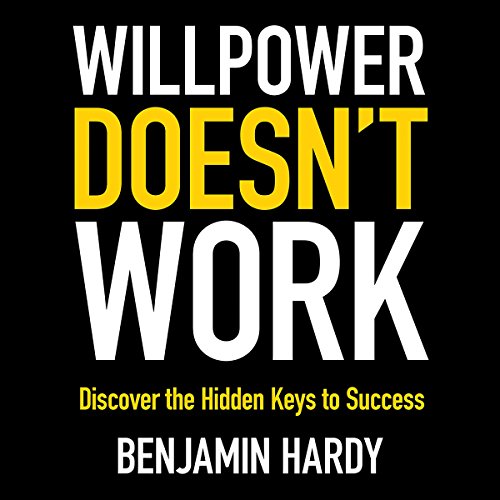
you know, various experiences coming unique. The can’t get a lot of places, right? I know that they call them D boxing to where they take a big space and they’ll chop it up into these little food halls too. That’s another term. I’m more of a spectator with this stuff. I kind of see it. I kind of watch it but I think as an investor, I try and stick to Certain things that I know, but eventually I think at some point multifamily apartments will just get so saturated by people who think that they can do it. Because I guess it’s kind of true, you can kind of just pick a property manager and you can get lucky. And it’s easy. And that’s why a lot of people do it. And that’s why a lot of the dumb money goes there. So eventually things will correct. And apartments won’t be as good cap rates as other things. But I’m going to move into more of what I’ve been doing other than spelling things wrong, like I normally do. But these are the six needs that Tony Robbins always talks about. So this is how I always break it up. We’re meeting growth, trying to get to know my investors better. I probably had about three four calls with investors every day for the past month. I think everybody wants to get on their 2020 goals and book a call, but we haven’t had a chance to connect trying to connect with everybody at least once. So go ahead and do that. And then I’m also planning the tour’s been high gain and do a luau in Hawaii and you guys can check that out symbol passes. Cash Flow calm slash week three, that’s February 714. To 17 way I’m trying to contribute back to others, you know, and those calls, I always try and make it a point to give some kind of referral or critical feedback to anybody because I didn’t really have that when I was building my portfolio. And I think a lot of people don’t realize like, I’m gonna bought my first rental in 2009. And I bought my next one in 2011, I think or 12. But for like about five years, it was like watching grass grow. And I wish somebody would have told me don’t buy 11 rental properties. They’re a pain in the butt. I wish somebody would have told me that number three significance. So I’ve kind of been turned on to this whole family office concept where you kind of work with a smaller number of clients. So I’ve been kind of focusing on maybe turning into a family office where I work with people who are one to $10 million net worth folks where I’m sort of the consultant I’m in the middle of the wheel, doing the wealth planning, estate planning, wealth management, tax planning, trust and Corporate Services, family, governments. And then you know, what is the meaning behind your existence like a charity philanthropy, you can’t just get a tax guy right on your team because the tax guy doesn’t talk to the deal guy who doesn’t talk to the wealth management guy, right? It’s good that you get specialists on your team and you should, but there’s a reason why there are specialists, they don’t have the big picture away. I’m getting uncertainty. And the reason why I put this there and I read all I’m really like certainty, and I know all we all do, we all like to stay in our comfort zone. But I’m going to try do the first multi day event in Hawaii. I’ve been trying to plan it this past week, which is getting to be pretty close up to the wire. That’s just how I do things, but it’s gonna be cool. It’s gonna be awesome. It’s gonna a lot of fun. I think we got probably about over 30 people coming. So it should be good. How am I getting certainty in my life? So we had a gentleman Microsoft come to our mastermind group to kind of talk about how do you grade different investments and he kind of says great idea of budget 1234 of investment grade versus speculative grade investments, and assuming that the performers are using good assumptions and not just bogus yeah you can kind of break it down what kind of investment philosophy do you have? Are you just want to go balls to the wall and just do a high growth or you just want to do cash flow stuff and should you do that if your net worth is under half a million dollars so you got to take on some risk right if your goals are bigger number six love and connection so I been consciously trying to book four trips a year now they don’t have a day job it’s hard because I go traveling all the time to check out deals and but I encourage everybody to plan vacations. I know that sounds really silly but most people don’t do it because if not you can just be Kobe Bryant and just disappear off the face of the ER was all for nothing. And what some of the resistance or distractions that I’ve been facing that I’m sure everybody else’s the heck it’s February right guys, you’re one fourth way through the year and you had all these goals, you probably forgot the damn things, you know. Just remember you’re gonna be like Janet is March going to be like January other than that no exceptions living a good life things are good some junk is buying your bought this like doorstop it’s kind of heavy it’s a Boolean to you guys can get the links on the website and I’ve been like trying to buy a lot of things that are automated. So I have these crazy automation with Alexa and trying to automate everything but I found these super simple you just press the button based on how long you want it to turn on. So the coffee pot I’ll just turn it on for an hour so doesn’t go on. And I’ve been reading this book willpower doesn’t work by Benjamin Hardy, so heavier ears if you like to read books, but here it is in one minute. As human beings we are terrible at executing we need to give ourselves every single chance that we can get to hit success and a lot of that is building systems around making us successful. So what time you’re waking up What do you how do you set the table for your day The next day, I just like reading the book and I would listen to subconsciously and they would mention certain examples and it would like trigger different things for me to change or new systems and put in place I can’t really think of any right now. I would recommend it it’s a pretty quick read no easter egg for you guys they know happy things. Here’s the legal disclaimer And that brings us to the end of the February report. That’s it. We’ll talk to you guys next time.

37:26
This website offers very general information concerning real estate for investment purposes every investor situation is unique always seek the services of licensed third party appraisers inspectors to verify the value and condition of any property you intend to purchase. Use the services of professional title and escrow companies and licensed tax investment and or legal advisor before relying on any information contained herein information is not guarantee as in every investment there is risk. The content found here is just my opinion and things change and I reserve the right to change my mind. Above all else, do your own analysis and think for yourself because in the end You’re the only person who is going to look out for your best interests.


Wealth Management Tips from Centimillionaire Family Office Advisor Richard Wilson (184)

See our Family Office services. Link Here.


Summary: Family offices are firms that serve the ultra-high net worth investors such as centimillionaires and billionaires. While many people would be over the moon after receiving a 1 million dollar check after hours of negotiations and meetings, those same individuals from family offices wouldn’t even show up for such a low amount. In fact, a similar meeting for a family office would leave them in control of an additional 500 million in equity or more.

Richard Wilson gives his insight on how he assists these individuals manage their wealth.

https://simplepassivecashflow.com/hui3/

https://simplepassivecashflow.com/coaching/

https://simplepassivecashflow.com/ohana/

Pulling insights from meeting with 1,000+ single family offices,

having over 1,700 family office speakers on stage at our events

over the last 11 years, and helping dozens setup and operate

their single family offices,


Investing With No Set Strategy:

Families spend 15, 25, or 40 years building a business or real estate portfolio.


Over-Spending & Allocating After Liquidity:
Over-spending and investing right after a liquidity event. 


3 single family residences that will take 8 years to sell if you ever wanted to do so, or purchasing 5 private jets, or leasing 42 cars for your friends and family 


many families spend 15-25% of their net worth within the first 2-3 years after spending
a lifetime earning it –


  1. Ignoring Tax Optimization & Estate Planning:
    Despite doing a million things most entrepreneurs do not take action on trust structure, tax
    optimization, or estate planning 


  1. Lack of Integration:

Cannot operate without a clear set of values, documented mission, rules of engagement for the

family members, or priorities even. 


This leaves the team in disarray, causes confusion, sometimes it also tears families

apart due to not managing expectations as to what the wealth is for. Failure to setup proper governance, communications, quarterly family meetings, ethical policies, direct investment strike zones, processes, and approval steps can cost many families over $1M every year, not just in their first year of liquidity. 


  1. Playing a Generic Game:

Not knowing what game they are playing.

Do not play someone else’s game who has distinct strengths from their own. 


Many families get told what game they should be playing by advisors who are biased by their own solution offerings. 


strengths, location, access, insights, and resources should


1st compartment – Defensive Wealth Management

2nd compartment – Cash Flowing Commercial Real Estate

3rd compartment – Direct investments in operating businesses

Becoming a master at one category such as Stem cells or cannabis and investing in that. You can Passive cashflow your way to 1 million but after that you need to find something you’re passionate about. 

Start learning about real estate investing – SimplePassiveCashflow.com/start

Subscribe to the Top-50 Investing Free Podcast – https://podcasts.apple.com/us/podcast/simple-passive-cashflow/id1118795347

_________________________

Top SimplePassiveCashflow Posts:
This website has been going through daily improvements everyday since 2016. I admit things are a bit all over the place as I learn about these investments and wealth tactics.

Events – SimplePassiveCashflow.com/events
Past Projects – crowdfundaloha.com/past-projects/
Simple Passive Cashflow’s Investor Friend Finder!!! –SimplePassiveCashflow.com/friends
Menu of Investing Options – SimplePassiveCashflow.com/menu
LaneHack – SimplePassiveCashflow.com/lanehack
Passive Investor Accelerator eCourse – SimplePassiveCashflow.com/ecourse
Passive Investor Accelerator eCourse & Mastermind – SimplePassiveCashflow.com/journey
Coaching – SimplePassiveCashflow.com/coaching
Join our Private Investor Club – SimplePassiveCashflow.com/club
Join our Team – SimplePassiveCashflow.com/jointeam
Our Mission – SimplePassiveCashflow.com/mission
Partner Opportunity – SimplePassiveCashflow.com/partner
Products I support – SimplePassiveCashflow.com/products
About Lane Kawaoka – SimplePassiveCashflow.com/about-me
Quarterly Investor Updates – http://simplepassivecashflow.com/investorletter
SPC YouTube Channel – https://www.youtube.com/channel/UC3cIIsGKx3osVU5rt2P0HfQ
Real Estate Book Recommendations – SimplePassiveCashflow.com/books
Backwards Engineering Happiness – SimplePassiveCashflow.com/happy
Rental Property Analyser – SimplePassiveCashflow.com/analyser
Visit Lane in Hawaii – SimplePassiveCashflow.com/retreat
Start Here – http://simplepassivecashflow.com/start
Ultimate Simple Passive Cashflow Guide to…
1031 Exchanges – Simplepassivecashflow.com/1031guide
Newbies – SimplePassiveCashflow.com/noob
Infinite Banking – SimplePassiveCashflow.com/banking
Your Opportunity fund – SimplePassiveCashflow.com/ofund
Taxes – SimplePassiveCashflow.com/tax
Tradelines – Simplepassivecashflow.com/tradelines
Turnkey Rental Guide: simplepassivecashflow.com/turnkey
Syndication Guide – simplepassivecashflow.com/syndication
Crowdfunding – SimplePassiveCashflow.com/crowdfunding
Networking – SimplePassiveCashflow.com/people
Private Money Lending – SimplePassiveCashflow.com/lend
Investing in Coffee/Cocoa – SimplePassiveCashflow.com/coffee
Investing in Non-Preforming Notes – SimplePassiveCashflow.com/ahp
Rent don’t buy – SimplePassiveCashflow.com/home
Investor Fallacy: Return of Equity – SimplePassiveCashflow.com/roe
How to Calculate Investment Returns – SimplePassiveCashflow.com/returns
Why you should break up with your Financial Planner – SimplePassiveCashflow.com/fp
Quitting your job – SimplePassiveCashflow.com/quit

Transcription:

0:00
Richard Wilson is a guy who works with deca millionaires and you guys haven’t heard of the term family office is the term for families that have gotten well beyond that four and a half million dollar mark. They’re more in the 5100 $200 million range. So think of it like Bruce Wayne in the Batman he had Alfred Alfred did a little bit more than your average family office in terms of keeping them out of trouble when they came up and all these gadgets but essentially, you get what a family office does. They’re a consultant that is brought on board basically the kids don’t mess it up and the family wealth keeps moving on. I’m trying to sort of do the same thing here in Hawaii and across my simple passive cash flow nation you guys want to check out my family office offering go to simple passive cash flow calm slash coaching, or go to Rei aloha comm slash ohana to read about my services where I can help out your higher net worth family definitely probably on applies to accredited investors there but accredited investors and above do things very different than your average half a million dollar net worth below you know the infinite banking is just a start but you know now you’re starting to talk about oversee trusts and tricky things like that that are I’d probably say unfair. So if you want to learn more about that you can email Lane at simple passive cash flow and here’s the show.

1:22
What’s up simple passive cash flow listeners once

1:24
in nounce, the first multi day we mastermind in Hawaii will be holding it on

1:31
my island of Oahu,

1:33
Honolulu is on President’s Day 2020 and that’s February 14 and 17. And a reminder, Valentine’s Day is the 14th. But we’ll keep that evening for you. families and couples want to come on down for that we’re actually encouraging spouses and families that come down because that’s part of the whole experience, getting to know other families and getting to know other committee members. gonna be a big part of this. So what to expect structured networking and masterminding with existing CWI investors and other affluent investors, we’re going to create the time and the environment to build real relationships that you can take forward forever. And for you, a students out there will do even be doing a full day of networking and mastermind and education. So once again, bring your families we’re going to have optional excursions such as a luau, happy hours, dinners and some other activities to be able to have fun in the sun. And, you know, space is extremely limited because my vision is to kind of create this as a more intimate environment where we’re all one big little ohana here. So come in and combined business and pleasure in a little tax write off hopefully you can get that right off in before the 2019 ends. Those signing up now we’ll be able to get your free one on one strategy session that if you want to stick around till Tuesday, we can knock that out or if you’re leaving early we can try and get that done throughout the weekend but hope to see you out in Hawaii go to simple passive cash

3:15
flow calm slash week three and we’ll see you guys here how’s it

3:22
going Richard? Thanks for coming on. Good Yeah, thanks for having me here lane.

3:25
Yeah, so give us a little background you know how you got started and advising these sensimilla in their family Sure,

3:31
Dad no at the start it was educated myself. I started writing online when I was learning while meeting with them realize many of them are not meeting with each other too often. That got me on the front page of the Boston Globe many different media mentions which got me speaking invites so I ended up speaking a couple hundred times in 14 countries got a book deal with Wiley bought family offices calm to start sharing that leadership and then the additional books written and all the hundred and 14 conferences with hosted now just kind of built on top of that progress. I mean, less The industry has expanded greatly since I got started 12 years ago. So I got a little fortunate being in the right spot at the right time, you know, thought leadership and just providing value as I’m learning has been the main way that things have grown. Yes, it’s just so people

4:12
kind of left at the bus stop there. What is a family office? What are we talking about? Sure,

4:17
yeah, it’s basically a solution for those who have a lot more money than the average person who are much more wealthy. And the way I like to explain is that if you’re only worth $100,000, and you make a mistake, that’s equal to 5% of your net worth, that’s just $5,000 mistake, maybe you could have hired a consultant to help you avoid that and spend, they could spend a couple hours helping you prevent making that mistake again. But if you’re worth 100 million dollars, or even just $10 million, and you make a 5% mistake, it’s much more painful. And you could have a part time person, a secretary, an investment analyst, an attorney or project manager that would just help you avoid making those mistakes. And so as families become more wealthy, they’re gonna be more likely to make mistakes because they’re very busy. everybody’s asking for their checkbook, their time, to get On their calendar, etc, they’ve got many different business entities, different investments going on deals going down all the time, they might be overseeing a 400, person, team, etc. So they’re more likely to make mistakes and every mistake could cost them $500,000 here, 200,000 there, etc. So a family office solution gets you family office quality solution providers, it gives you less chaos, less stress, better deal flow, and it allows you to really be more effective at what probably created your wealth in the first place, which is typically not coordinating with your CPA or insurance advisor and filling out paperwork for 50 different LLCs and overseeing all that.

5:35
So it’s a lot more than your basic financial planner gets Commission’s off something. It’s more of a holistic advisor right away.

5:43
Yeah, for sure. In fact, many times like one client where onboarding now is worth around 300 million, and we’ll probably be doing six to eight months of heavy estate planning, organizational accounting, legal structure work before we even focus on the investments very much will try to slow him down on Making allocations until we develop a direct investment program with him. And I think it’s not all about the investing. In fact, the best investment many of the ultra wealthy can make is in getting great tax and estate planning in place, because almost nothing else is going to provide a multiplied return in the same year where you’re really just saving so much more than you’re spending on that advice being employed. That’s usually one of the first items to look at.

6:22
So based on clients coming to you guys, are you seeing that they are continually growing wealth? Or is their wealth accelerating in that respect? Or is it sort of decaying? And you definitely see it sputtering out with the next generation with where kind of the spreads that you see.

6:38
Yeah, I mean, there’s a lot of statistics about families losing their wealth over two or three generations. But you know, it just depends on what the family’s goals are. Some families have goals of giving away a lot of their wealth during their life. other families have a real goal of passing along entrepreneurial traits to the next generation. Others say Well, next generation decides what they want to do with their life. We’re going to have enough so they have education and they can buy their first home. Maybe for a medical emergency, there’s some access to capital, but they don’t want the generation to have control the capital. So it really depends on the family. But if you’re an entrepreneur listening to this, and you want to, you know, make sure you’re passing on those traits of hard work ethic and being resourceful, etc, then having something like a family bank that has it’s an informal bank, but with formal rules about how maybe the next generation only gets money for school, first house medical emergency, or a business idea that gets approved by the older generation and the family and then that way, they could buy the chain of three jompa juices or they could buy the chain of 10 carwashes or start that business. They want to start on Amazon etc. But it has to be approved by the family and then you get the money for the business and profits off the business you’re able to keep but you’re not just given a check to go buy Ferrari isn’t a condo in Monaco or Hawaii.

7:49
Right. I think it’s something that as I build my podcasts over the last few years, I’m kind of more getting into the more the advising side and definitely helping people get from zero To a million dollars network that seems to be my sort of claim to fame and that individual, they start working through their 20s and 30s. They’re hustling and they have some kids and they get to about the 50s and 60s, what are some of the planning essentials for someone that have hit that pedestal? $3.5 million shelf as total network? Is it enough to start to bring in a family office? Or what are the best options for that? Somebody?

8:22
Yeah, it’s interesting. It’s good question. I mean, you can definitely take some lessons from the family office world, most multi family offices, the ones who take on 1020 or 50, clients, etc, will want you to have at least seven to 8 million net worth before they’re going to take you on as a client. But if your net worth is growing by a million dollars a year you can probably convince them to take you on because I know that you’re going to be a long term valuable client the serve but some lessons you could take. I think the most important one is to separate your thinking in your wealth management and you’re investing into three compartments and it helps you focus your energy where you can maximize your return. So traditional wealth management is all about defense that stocks and bonds and commodities and fund managers and every is to find things that are uncorrelated. And that’s what the whole wealth management industry talks about. But that’s just one of the three compartments. And so typically, unless you created your wealth and and space, you shouldn’t be managing that yourself doing a whole bunch of research and thinking you’re going to buy Amazon at the perfect time or buy Tesla the best time or short this or that unless that’s your background, you just love that stuff. And that’s your whole life, I would just find the best in class provider and a wealth advisor. they’ll manage that first compartment, which is your defensive compartment of your wealth. And the goal there is not to grow your wealth is to make it so that it doesn’t get lost in great amounts and economy goes down and then it slowly kind of just tracks the market on the way up, hopefully, but no one gives money to a wealth advisor, typically nobody and they’re worth 2 million and now because of that Wealth Advisors, great work on diversification. Now they’re worth 20 million and none of my clients got wealthy because they had a good wealth advisor. So I think that’s important to keep in mind. That’s the first compartment is a defensive wealth management and that should be a certain percentage of your portfolio depending on who you are. The second compartment is cash flowing commercial real estate. Which is area you know very well and I always encourage clients to look at things are already cash flowing that are not too much developments unless for some reason they really like that slant or have an angle on that and is in an area they understand. And usually in this area, they’re finding an independent sponsor or a fund manager, or they’re using a property manager for property they buy directly. So they’re kind of at arm’s length. And most of them don’t like to go into the funds. They don’t know what property they’re getting like to choose the properties one off and work with independent sponsors and that way, but it’s a good medium because they’re not saying Okay, Mr. banker manage my defensive portfolio, they’re saying, okay, sponsor show me four deals a year and I’m going to say yes to one or two of them, and they’re keeping some control of where an investment goes, it could be in one suburb of Indianapolis versus another one or one part of Honolulu versus another part of their more high conviction on that’s not overheated or it’s going to grow more. So that’s the second compartment and usually focusing on two to three types of commercial real estate for it most is a good idea and not going too broad. And then the third compartment is direct investments in Operating businesses, which should probably be in the area where you created your wealth, if it’s manufacturing autoparts should probably narrow your focus just investing in that area or in some area that you really for the next 1025 years you want to be investing in to be an expert in like stem cells or cannabis or something where you’re just going to go all in on that read everything about it only look at deals there and be a real master of investing in that niche. And those are the three compartments that if you break down your decision making then you can see whereas it makes sense for me to have complete control, partial control and who can I trust to help guide me on each of those three areas?

11:33
And you know, kind of piggybacking on that last category there something I’m kind of learning after making this whole podcast simple, passive cash flow, I thought the secret to life is just passive cash flow me You can passive cash flow your way from zero to a million, but you’re not going to passive cash flow your way from a million to 4 million, there’s going to be up to some kind of thing that you enjoy or some special skill that you’re gonna have to create a business in some industry that Richards kind of talking about in that third category,

11:59
right? Yeah, I think it I think otherwise could take a long time. I think that the trick is that all the ultra wealthy clients ICER to get up to really the 30 $50 million level if someone has an ambition to really jump there Well the truth is that I don’t know anyone who’s done that by placing a lot of passive bets you can get sometimes better returns with hard assets behind it by going into commercial real estate sometimes that is possible for sure. But if you are not focusing your creation of value into the world into something very specific, they can really magnify your returns your equity stake in it, then it can be hard to get to that ultra wealthy level. But you know, some people are very risk adverse some people have needs for high incomes. Obviously, there is no recommendation for all investors out there should take a lot of risk in a very specific area for sure that’s not good advice. But if if someone is coming to you lane and saying like how do I grow my wealth more rapidly, I would say to think in those three compartments and think where it makes sense to apply the most of their control and then find the best in class for the other areas. So every hour you’re spending on a project, it’s an area where you have an advantage over everybody else in the marketplace or you have a unique focus. So you’re making progress over competitors or over the market with every day of energy you invest. I think

13:11
people generally intuitively understand that. But now they’re like, well, I gotta get in general partnership. And so these deals, how do I do that? I’m like, dude, you gotta find the deal. You gotta run it, or she could have you had to add some value, right? People just don’t get that. I think some of these, right?

13:26
Yeah, yeah. Now that’s true. I’ve heard that similar conversation. I mean, I think otherwise, you have to be putting up 50% of the deal or you know, some big amount of the LP base, yeah, systematically or something. Just click and delete the contact.

13:42
Other than the 27 weeks of curated content for the passive investor, the new mastermind will offer bi weekly power calls with the following format. first week of every month, we will dial in on being a direct investor for simple passive cash flow 1.0 I call it which is getting your first rental Nicole shading sourcing operation etc. second week of every month, we will discuss holistic wealth building topics or what I call simple passive cash flow two point O plus, which is holistic Wealth Management syndications private placements, tax legal lifestyle design, etc.

14:19
Get a sense of this forum by

14:20
checking out the guide the taxes video at simple passive cash flow calm backslash tax, I’ll be honest, some things I can’t see the general public because it’s too personal. And it’s not to say bad things about others. Unless you’re in the mastermind. One rule we have is what happens in the mastermind stays in the mastermind. To get in go to simple passive cash flow calm, backslash journey. Don’t be left out and join the day. If you’ve been waiting on the sidelines. This is your moment and not to be taken by an institutionalized education program. about this idea of like integration, right synergies, profession and interest. What are some things that you’ve kind of tied people together? Like, Hey, have you tried this idea of this type of business?

15:03
Yeah, yeah, I’m glad you brought that up usually in the podcast with that, because nobody ever asked me about it. And they asked me if I have any last things I want to add. And it’s that idea of integrity or integration. And I think it’s very important for someone who is investing because if your background is a computer programmer or an engineer, then you could add value potentially in that area and look for companies in that space. So a good example is an investor friend that lives here. I live on the island of Key Biscayne, one of my neighbors made his money in debt investing or reading a debt platform for consumers. And he wanted to start investing in multifamily properties. And I said, Well, one way to look at it is how can you invest in the debt side of the multifamily space, that’s where your expertise is, you might come in as a normal LP investor on some deals, but if a sponsor ever wants to structure it as a debt note, or if you can find real estate investment structured as debt notes or come up with a creative structure, it might be a way for you to help people get deals closed and you get an X percent return with the collateral of an apartment building. behind that, that’s an example of playing a unique game in the marketplace. I’ve got another friend who helps sponsors by waiting until they close the deal. Maybe the sponsor put up 10%. And then three to six months after closing, they will go to the sponsor and say, Hey, I know you’re looking to do your next deal, I’ll buy out 8% of the 10% that you just put down on your last deal. Now you’ve got eight out of the 10% that you need on your next one, but they get to then see three to six months of operating history, are the rents coming in as planned, the person that sell you the property lie about the condition of the units, you know, did everything settle fine at closing and etc? Or are there problems that are coming up, etc, and allows them to get superior due diligence done because of that unique model they have? And I think it’s just important to look at yourself what others are doing and try to create a unique game for yourself as an investor. You know, if you’re just using someone else’s template that’s not unique to your DNA and your background, then I think that you’re not going to excel like your background, for example is in engineering, right, link. That’s right,

16:57
but I don’t like to do with operations and stuff like that. Right, right

17:01
but have you might have a unique attention to detail on the due diligence approach and setting up this podcast. I’ve never seen someone more organized and doing so it’s like the links and stuff you had in there and made it very easy to work together on getting this podcast done. And so those unique aspects of who you are could allow you to find the things and due diligence that others Miss might allow you to walk through a property or look at construction or cost of things have a much better estimate and intelligent assessment and the average real estate investor or because of your unique background, maybe you’re able to identify a group of engineering company owners or an insider industry group where the cost of join is very high. So the only people who are joining are very successful making 300 500,000 a year or they run a big team of engineering services or an engineering company and because of that, you’re just naturally meeting investors left and right who appreciate that special skill set that you bring to your deals.

17:55
I think I’ll add that you’re not going to find this at the W two day job. You’ve got to kind of take that leap of faith, kind of like how I did. And I haven’t really found that what I’m personally want to do with my time. But the same here it is a passive cash flow simple part, what you do after is it’s really the hard thing.

18:10
Right? Right. Well, hopefully it’s combination of something that uses your DNA background where you can make a lot of money and what you’re really passionate about. And hopefully those combinations can be something very unique in the marketplace. So with your geographical focus, you only have one or two competitors, or no competitors. And I think that you can use those screens to narrow it down. I found that you know, you did, a lot of energy goes into creating a podcast like this, but I found that most people won’t ever start a podcast, I won’t ever write a book, it will never go to public talks. And much of the time is because they’re not sure on what they want to stand for what they want to get done. And if you’re unsure about something, then it feels risky to invest your energy into it. But if you can make a decision based on those three areas, and you know, it’s a unique game that you’re playing, then you can invest far more energy into it than others are investing in their projects. And then the marketplace will recognize you because of your certainty. You’re able to I run circles around a competition with what you’re putting out what you’re getting done and just the amount of energy that you’re infusing into your projects

19:06
right so they will switch gears a little bit the person listen to the podcast, they get it, they’re they’re kind of actively building portfolio that may or may not be taking that next step to building their business but at some point, the guys are listening to this podcast get it and they’re going to be a net worth of a million to $5 million in the next decade or two. You know it’s scary right? Because you’ve created all this wealth you can give it to your kid he’s just gonna may likely be a trust fund kid you know, I went to private school so I know how it works right? I see all these right the girl up and how kind of new components they become prices. How do you what is the best mindset for that kind of parent who means well and wants to pass off? Well, the right way has some skills and traits.

19:48
Sure, I mean, as much as you can, I think encouraging them starting their own business when they’re in grade school or high school like I had started five businesses before I got out of high school and I had a business in college. I got out of college started in Another business. So I think encouraging that, you know, we have our daughters to lemonade stands, and they’re only two, four and six years old, but they do lemonade stands maybe twice a month and they’ll think they made $56 last time and our goal this time is to make $100. And you know, that is their allowance and they make them count the money they will cash register. One of them is the salesperson one of them’s the money handler one of them’s pouring a lemonade and you know, just infusing that into the family DNA. So they’re excited about it. And they they get that like, we bought the lemonade for $10. That’s how much the supplies cost. And then we brought in $56. So we made $46. So that’s the profits from doing that. It’s something as simple as that. And my father took me to business meetings growing up when he was running his business. And I think that helped me He also read ink magazine a lot growing up. So I always reading about these great stories of people’s high growth companies. And that got my brain early on. And I talked to my girls a lot about what I’m doing in the business and what’s going on, even if they don’t seem to be listening sometimes. And I think that kind of rubs off on the kids. getting them involved early, putting them in charge of something, maybe buying them a small business or getting them to run something and letting them fail if they need to fail to learn. So do you think that not all kids have that entrepreneurial bug? Or are all people in general, do high net worth families? They sort of trying to infuse that small business mindset. But are they okay with them becoming a dentist or doctor or some more traditional academic, I mean, only a percentage even want their kids to be entrepreneurial? For sure. I found that a percentage are okay with whatever path they want to take. And it don’t even have a preference for them to be an entrepreneur, even though they were

21:36
entrepreneurs themselves.

21:38
Yeah, many of them are open to them doing whatever path makes them happy. And then no matter what their intention, many of them fail to direct the kids where they want them to. Just like with my girls, I have no idea. God forbid something. They make horrible decisions. I hope not but they could be anything when they grow up. I’m not sure obviously, they’re so young, but it’s a big challenge for many families just because they have a lot of money and even if they have been highly intentional about where they want to Right there kids, you can’t control all the different variables and they’ve got a mind of their own. So I think that is a big challenge for many families and communicating with the monies for and expectations around who’s going to get what money and why very difficult and the tears a lot of families apart. So I think it’s something that’s good to be talking about as kids grow up and manage those expectations and manage what are the family values? What are the goals, you know, what are the expectations that people don’t think they’re going to be inheriting $10 million, so they just drink at their frat for seven years at college and don’t worry about their own career versus really encouraging them to go out and get their own career I think also as possible having it be so that the kid has money for school food, etc, but not a lot of money to go on crazy trips and have a Mercedes on their 16th birthday and etc. You know, and may if they want money, then they need to go earn the money. It’s not free. You have to go create value in the world.

22:54
I mean, you guys help the family on the money side but raising productive adults that’s up to them then yeah, we

22:59
know couples, therapist types that can work through family issues if there’s a big problem going on within the family. And we can help put in into place governance policies and rules and ethical policy for the family office and help them avoid some major pitfalls. But some families don’t have it as a high priority, or it’s so messed up already, when they come to us that they really need the help of a therapist to address the one son who’s a drug addict or something of that nature.

23:26
All right, so what would you suggest for somebody who has aging parents that has a pretty decent sized estate yet? They just saved their way to getting that? What would be the suggestion there to take over that estate? Right?

23:39
Well, I think as early as possible, it’s good to meet with an estate attorney, a tax attorney and start structuring things. There are things you can do annually that if you just wait until they’re on their deathbed, you’ll have missed out on a lot of opportunities to structure things right and you will end up giving up more to the IRS and you’ll pay more taxes than you needed to if you wait Tell somebody who’s terminally ill I mean, if somebody is 60 already or 6570 any wait too long, then by the time decisions start to be made, there can be questions within the family if the person was mentally coherent enough, or whether there should have been a power of attorney enacting chaos, fighting within the family, maybe the uncle or the cousin or another sibling thinks that because maybe you’re local, and like, I don’t know you well enough later to know if you have a sister or brother or 10 of them. But let’s just give an example of if it was your parents, and let’s say you had a sibling in San Diego, but your parents were local to you there in Hawaii. And let’s say you are local, and then you help your parents work through these decisions. And somehow, even though you think it’s totally fair and equal, and that was the whole intent, you think that was the whole settling of the issue. If the sister thinks because you’re local, you got a better shake out of it because you got to keep the house or you got to do something extra with the assets and you benefit more than she does. She might be very upset about such a thing. I’ve seen it happen many times with families At the same time, the brother can feel like hey, I help the parents, instead of going into the senior living. I helped them manage their care for seven years because they didn’t want to go into senior living. I helped meet with the attorneys 22 times. I didn’t take compensation for any of that. So yeah, I’m living in the house because I was taking care of them in the house, you know, so you can see how easily this stuff can turn into like nobody talking to each other for 20 years. You know, so that’s the sad part about it. Yeah, to be really careful about it and kind of predict and just like over communicate when these types of things are going to be inevitably happening. Right. The one of the biggest things I see that screw people up the parents, they’re very sentimental about this physical house. It’s just always easier if you just would liquidate everything and just do a simple math exercise and divided by the amount of people and right or rent it out and then split it equally by the amount of people. Many times properties haven’t been refinanced and ages could be refinanced, a little distribution and then a rental drip but it totally depends on the family obviously, and what their needs are and their ages, etc. Right. It’s just the insight I think a lot of people just sort of blindly being blind is the tough part in between this one the 10 $5 million zone, it’s not quite enough to get somebody on board and like a family office level. But yeah, it’s true. I would, you know, that you bring up a really good point is that until you’re at the eight or 10 million level, it’s hard to get family office quality solution providers, but because I’ve seen so many families get such an ROI out of their estate planning tax advice area is one area where you shouldn’t look at it as a cost. It really should be seen as an investment in interviewing the five to seven trust in the state planners, tax advisors, maybe someone who can do both things within one team and get to know them over one or two meetings or interviews and get the best one that you can get as the best one is used to dealing with deca millionaires, even if you are at 5 million is going to know the more advanced planning that could be an option where if you go to the guy who seems really nice and is really local to you, but his average client is one minute Net Worth and you’re at five, he might miss some major things that could have saved save you a lot on taxes and would have paid the bill five times over. So it’s not smart to choose an advisor in that area based on the cost. It’s really an investment, right? You wouldn’t buy an apartment building because it costs 1 million versus the other one costs 2 million like, oh, let’s get the cheaper one. It’s better to always go cheap. You know, it’s about the ROI.

27:23
What What is the typical compensation structure for a $10 million family office or 100 million dollar family office?

27:30
Yeah, so usually, usually it’s percentage and usually be anywhere from 30 to 50 basis points on the low end up to 1% of assets under management. But for estate planners are usually charging a hourly fee, but then they’ll usually have sort of a base retainer and the hourly fees can be 300 $800 an hour and then associates on their team will be lower. That’s definitely not inexpensive. But there’s some wealth management firms out there that have performance fee based arrangements so they’re not charging you Failure is charging a performance fee on how your portfolio does while working with them. And that’s kind of a newer trend. And are these

28:05
guys do they also pick up some compensation via selling certain securities? Or is that no goal

28:12
it could be if it’s disclosed, it’s always about being transparent, disclosing everything disclosing conflicts of interest or even potential conflicts of interest and just kind of over communicating that with clients and but most Wealth Advisors just have their wealth advisory firm although probably about 10% of the marketplace. I have a real expertise in an area like stem cells or self storage or something and then that might be a reason why clients want to work with them. They were really strong on this everything else we do traditional wealth management, everything else we we find the best in class, but here’s why we’re best in class in self storage, etc.

28:47
So typical clients, they’ll pay by the hour, let’s just say then they’ll come in how often for

28:52
tune ups and oil changes. I mean, estate planners in tax attorneys will typically charge by the hour but they might have a base rate teeners, they might charge you 1500 a month or 5000 a month, and then have a per hour charge as well. And that retainer gets you a certain number of hours. For the wealth management firm, or a multi family office type solution, it’s going to be more about, hey, we’re going to charge say, 70 basis points on your 7 million and assets that we’re going to be managing. And then as that grows, you might get a break in fee once you hit 10 million and assets being managed, etc.

29:26
That’s typically much call Richard whenever you want.

29:30
I mean, I’m glad you said that, because here’s what happens a lot of the time is that the dynamic needs that you might have could be related to direct investments you want to do, right? So the calling for extra advice on investment decisions that usually occurs because somebody offered you an investment in a multifamily property or an operating business or some new investment opportunity came up and you brought up a sore point for the whole wealth management industry is they’re pretty good at diversifying your assets, fund managers quality stuff. stocks bonds. And there’s 40,000 people that can do that probably in Hawaii alone on some base level, but many multifamily offices and wealth management firms fail to advise that all on cash flow in commercial real estate, hard assets, direct investments and operating businesses is a huge blind spot for the industry. To the extent where with our advisory solution is simply the millionaire advisors, we are only helping with the direct investment portion, if somebody wants to full balance sheets solution and the defensive Wealth Management portion. We have a $6 billion family office partner and we can do that together in conjunction with them, but we’re just providing the piece that we feel like everyone else is not providing to these families. And that’s the type of stuff that requires more intra month of conversations back and forth. So it’s not just plug and play like I’ll take your 7 million will diversify it across, you know, one of our normal portfolio breakdowns based on your investment policy statement and you know, we’re good and we’ll adjust to each quarter and tell you how we’re doing that’s more of a efficient thing that you can scale that people like yourself, people that wants to get the Five 710 million they want to do direct investments I found very commonly, from based on what you see guy listen to the

31:05
podcasts, they’re about $5 million net worth, they’re getting up to retirement ages and you know, definitely a lot of this stuff passing down the baton, and then they just don’t know where to start. I mean, how many hours do you think someone like an advisor would be able to get them up to speed and something that they would be looking for?

31:23
Right, right. I think that it can be pretty intensive work. depending on the complexity of the client, they might need to do four to five half day meetings to make sense and come up with a game plan of what needs to be done. And then based on the complexity of that game plan, you’ll need to engage one or two other solution providers, you might need a higher quality CPA might need a great estate planner or a tax attorney. And then the carrying out of the actual investment management plan could take four to nine months or even a year to get things allocated in the right areas. When it comes to direct investments. It’s not a good thing to get allocated all at once you know, some are it fluctuates, you want to be at different entry points, you want to make sure you’re investing in the best deals possible, not just rushing in and allocating all $7 million to what’s in front of you right now, you always want to have some liquid for a great opportunity. And the real estate markets been going up so long, a lot of families want to stay, you know, 1020 25%, fully liquid. So when the market goes down, they can be fully allocated and not before that point. Right. So the reason we brought Richard on

32:26
the podcast is just to tell you guys a little bit about the sort of industry as you’re building your network, so you don’t get stuck at the all these deals, but I don’t know what to do with it after. So do you think we miss Richard though, kind of help the folks as a journey through the one and then the three and then the $5 million net worth levels?

32:45
Yeah, I think that just bringing it back to plan a unique game, making sure everything is integrated and aligned and what you’re spending your time on, who you’re working with, where you’re based, where your investments are, what industry they’re in, and then making sure you’re playing the long term game over. lot of families position their portfolio. So inevitably, whether it’s 1015 or 20 years, they have a great wealth accumulation. So just setting things up. So you’re doing well long term because it’s not like the stock market and what’s happening with Tesla stock. It’s not like you’re managing Tesla. And after I do quarterly earnings reporting, most people listening to this have a 1020 year time horizon for retiring for, you know, building up to that $10 million goal, which I know a lot of people at one to five, eventually their goals be worth 10 million. So I think that making sure you’re playing a game, that long term is very sound and your high conviction on will make you more energized to take action on it and and really put energy into making that game work.

33:41
All right. Well, thanks for coming on and talking to us poor people a little bit. We’ll get there eventually. Yeah, Google, Richard Wilson found me offices. He’s all over there. So that’d be the way to get ahold of him.

33:53
Great. Yeah, thanks for having hairlines appreciate it. All right. Thanks. Take care.

34:01
This website offers very general information concerning real estate for investment purposes every investor situation is unique. Always seek the services of licensed third party appraisers and inspectors to verify the valuing condition of any property you intend to purchase. Use the services of professional title and escrow companies and license tax investment and our legal advisor before relying on any information contained herein information is not guaranteed as an every investment there is risk. The content found here is just my opinion and things change and I reserve the right to change my mind. Above all else, do your own analysis and think for yourself because in the end, you’re the only person who is going to look out for your best

34:37
interests.


Habits

“Dude, you can’t just rely on willpower. Need to create systems.”
Lane Kawaoka
Industrial (Systems) Engineer


I have been to Tony Robbins twice and every time pretty much all 10,000 leave that arena on fire thinking they can do anything. They unleash the power within and normal life weighs them down. One major indicator of success is doing the right things time and time again.

I have also spend well over $100,000 on various non-traditional education which includes many seminars and masterminds. Everyone who joins those programs has the peer group and the ecosystem to make what they want come true but why do most (99-95%) fail?

Systems and execution is the answer.

I can’t sit next to you everyday to help you execute. The best I can is jump on a private call with you on the Accelerator every two weeks but between that you are all on your own.

But I can help you create your systems and habits.

Jerry Seinfeld

Comedian Jerry Seinfeld has a famous hack that you can learn more about here.

I urge you that while you are making your goals consider performance goals which are daily or weekly habits.

Remember that it typically takes more than 21 cycles to turn a habit into a long term baseline behavior.

Make your 2020 goals here

Tips or suggestions to add to your habit list

  1. 2-minutes of ab exercises every day (my 2020 goal I am tracking on my $100 Daily Habit Board)
  2. Cold showers
  3. Intermittent fasting (something I have done since 2011 – and has sort of lost its positive effect?)
  4. Going to the gym 3 times a week
  5. Reading 20-min before bed
  6. Reviewing your goals nightly or in the morning
  7. A weekly date
  8. Watching TV (something bad) with running treadmill (something good) an example of pairing activities (or habit stacking)
  9.  Drink 2L of water
  10. Take you kids to school everyday (not in a rush)


Buy the same Daily Habit Board

Dec 2019 – Borrowing Standards – Rental Income

For all you investors still looking to get your own turnkey rentals or direct ownership deals there are some recent changes as of December 2019 on borrowing standards as it relates to how FNMA and FHLMC are looking at using rental income for qualifying.

Basically, if you own/rent currently and have a year history, lenders can use all of the income.

If you own/rent and don’t have a year lenders can offset the payment.

If you don’t own/rent and have no history then lenders can’t use any of the rental income.  This could become an issue for some of our borrowers who live rent free and are trying to get into the investment game.

If you need a referral to a lender. Please shoot me an email at Lane@SimplePassiveCashflow.com. I don’t get paid for it (that would be illegal anyways)… I only want to help you get to financial freedom and for you to find your endgame.


#9 – 2020.01 – The SPC Greensheet

Dear investor,

It was a restful holiday season yet busy time as we transitioned ownership into the last few deal we closed in Q4 of 2019.


Links to past PDF slidedecks.

  1. Transitioning to Syndications & LP Tips Webinar
  2. Infinite Banking with Whole Life Insurance for 2020
  3. New investor portal with 3 free modules and past deal webinars
  4. 2020 Goals Launch

  1. Florida’s 1st LGBTQ Senior Housing Project Breaks Ground – MHN 19.10.25 – [Simply pointing out a trend in ALF]
  2. NAS Acquires 27,465 SF Flex Building in Springdale, Arkansas Leased to BNSF Logistics – REBusiness 19.12.02
  3. Redstone Arsenal growing to 50,000 workers by 2025 – Huntsville Real-Time News 19.12.04 -“Huntsville’s Redstone Arsenal will grow from 44,000 employees now to “over 50,000 by 2025,” its senior commander said today, and it plans $2 billion in infrastructure investments in the next five years to keep growing.”  Plus new $175M Plant
  4. Top markets for MF Rent Growth – MHN 19.11.29 – 
  5. Freddie Mac: Here’s what to expect from the housing market in 2020 and beyond – Housing Wire 19.11.27 -The GSE also expects home price growth to slow over the next few years, with annual growth rates of 3.2%, 2.9% and 2.1% in 2019, 2020 and 2021, respectively.
  6. An end to Fannie, Freddie conservatorship by 2022? – Housing Wire 19.11.14 – “If all goes well, 2021, 2022 we will see very large public offerings from these companies. Fannie and Freddie could be looking at exiting government control by 2022 or 2023, according to Calabria.”
  7. On a year-over-year basis, the September starts of buildings with five or more units were 5.8 percent below September 2018. – MHN 19.11.18
  8. U.S. Job Gains Surprisingly Solid in October – Realpage 19.11.06
  9. Phoenix Multifamily Report – Fall 2019
    The metro’s sustained economic performance and demographic expansion continue to be reflected in its multifamily market. – CPE 19.11.22 – [Its a hot market but it also fell a lot in the recession]
  10. 19.12.28 Matrix Multifamily National Report-November 2019
  11. Airbnb is banning all “open-invite parties and events” – Newsweek 19.12.06 – “Hosts who attempt to circumvent this ban and allow guests to throw large parties will be subject to consequences”
  12. 5 Markets With the Greatest Rent Loss – MHN 19.12.12 
  13. Average New Apartment Size Shrinks in East and West Coast Cities – National RE Investor 19.12.19 -In buildings developed since 2010, apartments average roughly 940 sq. ft. in size, according to RealPage. That’s down from an average size of roughly 1,000 sq. ft. in buildings created before 2010. “Prior to 2010, properties were more likely to feature a more prominent mix of two- and three-bedroom floorplans as opposed to studios and one-bedrooms”
  14. Other trends: Boomers downsizing, pop up stores, rumors on accredited status


Plan for 2020.

First Multi-day Mastermind – SimplePassiveCashflow.com/hui3

Lead goals seminar. 2020 Goals Launch

Approach higher level guests and authors to have on podcast.


Trying out some new mastermind groups. Traveling to new places.


Traveled to Japan.. again


Scheduled meetings. SimplePassiveCashflow.com/talk


Holidays… I just seemed to not get much done until the evening.

I am paying 50%/10% marketing commissions on my eCourse and Mastermind. More info here – https://simplepassivecashflow.com/referral

Product pages:
https://simplepassivecashflow.com/ecourse/
https://simplepassivecashflow.com/journey/

Bought cold press juice subscription

David Goggins – Can’t Hurt Me (All book recommendations)

Complete #LaneHack list

Passive Investor Accelerator & Mastermind

-Mostly Accredited high paid professionals to connect with personally and build your own network (currently 45 members)
-27 modules of content in a closed membership site
-Bi-weekly Zoom Video calls (25+ on-demand recordings a year plus all library of past calls)
-Now with a membership coordinator check-in’s to help facilitate what you are doing and connect you with the right people in the group (if you are shy)

Learn more and apply before out max head count is reached and 2020 pricing takes effect – SimplePassiveCashflow.com/Journey

If can do me a favor… If you get a chance people review leave a review for the podcast on iTunes (https://podcasts.apple.com/us/podcast/simple-passive-cashflow/id1118795347) and email simplepassivecashflow.com to a friend.


Transcript:

0:03
What’s up simple passive cash flow listeners wanted to announce the first multi day we mastermind in Hawaii will be holding it on my island of Oahu, Honolulu is on President’s Day 2020. And that’s February 14 to the 17th. And a reminder, Valentine’s Day is the 14th. But we’ll keep that evening for you. families and couples want to come on down for that we’re actually encouraging spouses and families have come down, because that’s part of the whole experience. Getting to know other families and getting to know other community members is gonna be a big part of this. So what to expect structured networking and masterminding with existing CWI investors and other affluent investors. We’re going to create the time in the environment to build real relationships that you can take For forever and for you, a students out there will do even be doing a full day of networking and mastermind and education. So once again, bring your families we’re going to have optional excursions such as a luau, happy hours dinners and some other activities to be able to have fun in the sun. And, you know, space is extremely limited because my vision is to kind of create this as a more intimate environment where we’re all one big little ohana here. So come in and combined business and pleasure in a little tax write off hopefully you can get that right off in before the 2019 ends. Those signing up now we’ll be able to get a free one on one strategy session that if you want to stick around till Tuesday, we can knock that out or if you’re leaving early, we can try and get that done throughout the weekend. But Hope to see you out in Hawaii go to simple passive cash flow. dot com slash week three. And we’ll see you guys here.

2:26
Okay is January 2020. And this is the monthly market update. If you guys have not heard of me before, I have simple passive cash flow podcasts where it’s all about passive investing in real estate and potentially other non real estate items as we get deeper and deeper into the market cycle. So the first is a collection of different news articles that I’ve got it but I do this every year, those who aren’t familiar with what’s shown here. This is the Google keywords. You can look at keywords in Google and look up different trends and you can see how the world is what they’re searching for, throughout the different times. So I’ll go in here and I’ll screw around, I’ll put in the word recession, and obviously in the year 2008, everybody was searching for it. And it’s been nothing so far, except there was some kind of blurb here recently. I don’t know what that’s all about. But then, you know, you compare it to other words, like I put in in blue here, retirement investing and recession seems like people are starting to get back on the investing bandwagon after 2010. So, you know, a lot of you guys are looking for turnkey rentals or even single family homes in general, man, it’s just so competitive out there. retirements kind of been steady. I was in San Diego the other month and a guy from john burns gave a speech on market conditions. They’re like good slides in here. I just took this one to add in the presentation. Where do we expect the growth to be the strongest will it’s all the southern states and this is what I mentioned before. Peter likes little smiley face in United States. I think the further I had properties was Pennsylvania and Indianapolis. But I since sold those properties. Now my most northern property is up in the mines. And yeah, it’s a pain in the butt. You got all this pipes breaking and you know the trends are all everybody’s moving to the south. Maybe it has something to do with people getting older and they want to retire. But I believe it starts at markets. You’re looking at job growth in the southern states for a lot of blue collar jobs. And I think that’s what’s driving a lot of the Southern growth to certain markets. So a commercial headline here, Florida’s first LGBTQ senior housing breaks ground, kind of interesting, and I don’t want to get political or or get people upset or anything like here but so like you Like senior housing it is what it is. They say like seniors like to live in clusters with their own racial similarity people. So it’s just it’s interesting how these things develop like this, some Huntsville news here and some Arkansas news here, a couple secondary tertiary markets that are really starting to get on the radar. And I think Gone are the days where you can just wait for deals coming from Memphis, Kansas City, Indianapolis, you know all the perennial turnkey markets that have been pushed for almost a decade now. You’ve got to go you’ve got to go and uncover some higher hanging fruit these days. So Redstone Arsenal is in Huntsville are going to 50,000 workers by 2025 new plants new a class development there and spring for Arkansas. They just leased to BNSF logistics company that I’m very familiar with. The railroad company railroads are known to be leading indicators for the economy at least that’s how it was for when you were coming out of the recession in 2010 2012. They’re the ones who are are hauling a lot of the raw materials the lumber the chemicals to to industries to them process and make the final product top markets for multifamily rent growth from multi housing news look at that Huntsville Alabama and I’m a little upset because I don’t want anybody to know about little Huntsville This is probably the first month I’ve ever seen it on crack this list Las Vegas has been there but we all know kind of stay away from Las Vegas because it’s a very cyclical market. Pensacola was number one Phoenix was number two Huntsville was number three Las Vegas number number four and five was Portland, Maine, and that is 4% change year over year growth. The some news that we’ve been falling on the Fannie Mae Freddie Mac saga in past news, Fannie Mae, Freddie Mac, it becomes sort of public entities after the Great Recession of 2018 Kind of collapsed government stepped in and there’s there’s talks about them going back to private organizations, some articles here and we’ll have all this in if you guys go to simple passive cash flow calm slash investor letter, all these articles and links are found there if you would like to share that with other people, maybe you have a person who is not completely on board with investing. So Freddie Mac says here that they expect the housing market in 2020 and beyond the GSE also expects home prices growth to slow over the next few years with annual growth rates of 3.2% 2.9 and 2.1 respectively, from 2019 to 2021, respectively,

7:45
still growth but I think that

7:46
everybody’s integrins that things are kind of slowing down but still moving forward. But definitely that Gone are the days of the four to 7% increases another article at the end offending me Freddie conservation ship by 2022 They’re saying that if all goes well 2021 2022 will see a very large public offering of these companies. What does that mean? Well, I think most investors will get freaked out because oh my god, I can’t find a Fannie Mae, Freddie Mac loan for my properties anymore. I wouldn’t worry about it. There’s always going to be some other way. And then this is the government. I’d be surprised if anything you mean happens by 2023. This is also happen. I think, earlier this year for our deals. We were talking to our direct Fanny lender, and they said this is in the summertime that they had hit their annual quarter or quota for 2019. And they weren’t gonna be lending anymore, but they had a meeting of the minds and then a couple weeks later, they get it all figured out and then they just move some things around and they they opened up the floodgates again, next article here on a year over year basis. The September starts of buildings with five or more units were 5.8% below September 2018. These two charts are showing the rents been pretty stable. Between a 2% to 4.3% rent increase and in relation to the CPI and then on the right side here is a chart of the multifamily starts and what that is, is new inventory coming online. Typically Class A builds are being built up ranging in 300,000 to 450,000. This last calendar year. Have you ever listened to a podcast or been in a seminar and too afraid to ask a slightly personal question, our mastermind will have an intimate feel where people are going through the program together and at their own pace if needed, in order to foster friendships. When I was learning and paying thousands of dollars for masterminds and mentorships the network however, hokey pokey as it sounds was a big part of it. What happens in the mastermind stays in the mastermind will use the BI weekly webinar sessions to the set concepts with real life examples here how someone else might implement something like infinite banking concept on a hotseat session. Our group will attract thought leaders to meet just with our exclusive group. We can get FaceTime and ask individual questions. Why? Because our group will be people who put their money where their mouth is and go out and make things happen as opposed to your local Rei Club, which is traditionally just a bunch of tire kickers and some sharks simple passive cash flow calm backslash journey to learn more.

10:28
Us job gains surprisingly solid in October says real page and this comes from the Bureau of Labor Statistics. So unemployment has gone down from almost 10% to now little under 4%. So almost like a straight line steadily going down. I mean, everybody’s working out there seems like monthly change in employment if they fluctuate, but I think the orange line shows the story right there all time. lows in unemployment now one of all time but been the lowest since about a decade, another Interesting market that I’ve been kind of looking at lately is Phoenix, Arizona. This article here Phoenix multifamily report is showing the metro sustain economic performance and demographic expansion continues to be reflected in the multifamily market. I’m watching it it’s a hot market and it typically is if you look back at the last correction and growth cycle it’s growing a lot now but i don’t know i mean, me personally, it’s very intriguing but yet it also fell a lot in the recession too, but I think I think it would work if you bought like a smaller multifamily in a higher price area like Arcadia submarket is super solid a class but if you push like a C class up to be of course that sounds good in theory, what sounds good in theory isn’t really found the ball out there. It’s very rare, but I think that would be a cool way to ride this wave. So the yardie matrix report is a pretty good news source for real estate and commercial real estate. Some of their takeaways is that the US economy is a glass half full glass half the The situation where the GDP growth in quarter three was okay at 1.9%. And we expect q4 to be a little lower us oil production is keeping inflation low below 2%. The yield curve, which has inverted been inverted for five months now, or we’re talking about is that people talk about the yield curve when the 10 year curve inverted and that was supposed to be marking the end of humanity and the markets as we know it, but we’re all still here saying it’s flattened following the September 18 and October 30. rate cuts the European and Chinese economies are still in poor shape. The US service sector labor market is extremely tight in wages continue to rise, manufacturing and farm sectors are struggling. There is a highly elevated risk of recession mid 2021, which that’s their opinion. I’m reading other news sources that are not free that don’t say that but I again, I think it’s good to go into deals with cash flow in mind. Just don’t get caught with your past. Down is kind of the same yardie continues to say here demographic and lifestyle changes are fueling strong demand for multifamily due to aging population increasing divorce rates and more younger people living at home contribute to smart demand. And overall housing production is unlikely to catch up with household formation. And this is what keeps putting upward pressure on rents and occupancy. And I think this is why you’re seeing pressure for rent control a lot of the California type of markets and it continues to talk about some more political risk more from yardie. They came out and it’s just another graph here of GDP growth. It’s been pretty much positive for a decade Consumer Confidence Index. I don’t know how they measure that, but right now it’s at all time highs for the last two decades and the Atlanta fed GDP q4 2019. forecast is 1.1. So they also brought up this interesting thought about inflation. Why is there no inflation and they’re saying the US oil is flooding the market now I only recently started to check oil I did an oil and gas deal by myself and the last year

14:05
so now I’m actually know what the what the price of oil was before I didn’t really care. But now I’m kind of starting to pay attention to it. And that’s I think that’s indicative of like learning, right? Like if you wanted to learn Bitcoin go put in 500 bucks and you’ll start to pay attention to it. So I think what what they’re saying here is why isn’t inflation going up? Well, the US oil supply is kind of coming into the market and I think that’s what’s kind of I don’t know if I’m saying it right, but maybe it’s a cheaper support soil. For those of you guys doing Airbnb and short term rentals. I do have a simple passive casual Facebook group just for that but I’m not a big fan of doing the short term rental stuff and other bad news headline here Airbnb is banning all open invite parties and events says Newsweek hosts who attempt to circumvent this ban, and allow guests to throw large parties will be subject to consequences. Now I thought this was a great idea about 510 years ago right? If you’re pretty frugal and you want to downsize or have a small apartment you want to have friends over what do you do you get a cool big air b&b and you you trashed a place there or you have everybody come over there but apparently Airbnb dawns upon that five markets with the greatest rent loss so you don’t want to be on this list number one Midland Odessa they had a percent change of negative 4% number 200. Hawaii Gee, I wonder where that is. It’s it’s kind of funny because we don’t really have boy doesn’t really have seasons out here. Number three, Baton Rouge number four Scranton, number five Lafayette like Charles I’m in some fields and like Charles downs kind of alarming to me. So a lot of you guys sent me this article and I thought I’d put it in here because since you guys were interested in me, I didn’t really care. Number one, it still has to go through a lot of voting. But so the SEC is proposing to update accredited investor definition to increase access for investments to a minority portation what they’re doing is they’re adding this term sophisticated are accredited for accredited investors, you can sort of test your way into being accredited by doing like a series six or seven. They haven’t figured it out yet, nor have they approve this. But for those investors who are sophisticated, and maybe like half a million dollars net worth, you’re able to test to be a credit status. But again, I don’t know why this even matters because 97 to 90% of deals out there, if you go to the SEC website, you, you look, we actually spend the time and go look, the Egor database, 90 to 97% of those deals out there are 456 beat deals, which include non accredited investors, sophisticated investors, I don’t know why people always fight to get into five or six seed deals. In my opinion, the reason why they’re doing is they can’t raise the money from their list. That way, they have to go to some crowdfunding website and they have to kind of throw a hail mary for investors, but that’s just the way I look at it. crowdfunding websites just cost too much too. Obviously not for the investors but for the audience. Operator it just costs too much money to have money raised that way. I don’t know why any good operator would use that as a means of raising capital unless they’re desperate average new apartment size shrinks in the East and West Coast City says the national Ari investor in buildings developed since 2010. Apartments average roof size was 940 square feet that’s down from an average size of a roughly 1000 square feet in buildings created or before 2010 same prior to 2010 properties were more likely to feature a more prominent mix of two and three bedroom floor plans as opposed to studios in one bedrooms in this kind of goes hand in hand with like like in Hawaii, they there’s a lot of multi family households, a lot of people living under one roof. So if you guys have been keeping up with simple passive cash flow, calm content, I say that jokingly because it’s almost impossible to do it but these are the new articles that I created this month and the first one is transitioning to syndications and help Tips webinar that was a recent podcast and it’s also an a webinar video forum. So if you guys haven’t checked out this and passive cash flow YouTube channel, go ahead and search for that if you’re listening to this on the podcast just all be on video form for you to look at the cool pictures I spent all my time searching for you guys make it worthwhile for me check it on the YouTube channel. And so the next article here that I worked on was infinite banking with whole life insurance for 2020 when I have Chris miles as a guest, and he actually went through and showed a comparison of two policies, something that I know it’s never been done before, but I keep telling these guys like my podcast listeners, and my folks are super smart. Like you just can’t keep bringing the same old lame stuff. It’s boring. Number three here, new investor portal with three modules and the past deal webinars. So I launched the simple passive cash flow members portal, it is free, but you only get the first three modules of the course and you guys can do that by signing up for the newsletter. The investor club at simple passive cash flow calm slash club I also created this other 2020 goals lunch which after this meeting, we are going to stick around and we are going to go through this goals lunch exercise together and it looks like we have a good amount of people. So we can definitely do a lot of utilize these virtual breakout rooms to hair off and get some interaction within our tribe. So I’m kind of transitioning to my personal activities this past month, it gives my investors insight into my life and maybe gives you some ideas and some things you guys to work on. I break them up into six categories. And the first one is growth. So I spent a lot of December planning for 2020 I one of these ideas I had in my head was to finally do a multi day mastermind in Hawaii. And we’ve done one in Sonoma before and then last year we did one in would have been Phil Washington near Seattle but never in Hawaii because I had this living belief that nobody would fly out to Hawaii to see me but apparently a lot of people will these days or maybe it’s just Hawaii but you guys can check that out simple passive cash flow calm slash Hawaii three h UI three for details on that if you’d like to join us but personally I’ve implemented this new idea of profit first by Mike mccalla Wits he gave a keynote speech at our last mastermind and initially it’s kind of sounds kind of obvious almost elementary like yeah, obviously dummy like you pay yourself first right you put money aside first he brought this matrix here and I’m showing on the screen but it shows where you are in terms of how much money you bring in says real revenue range but that’s more of like

20:42
instead of real revenue concert more profit. So let’s just say you’re bringing in zero to two quarter million dollars your profit you should put aside as pure profit is 5%. So you should put like, you know, out of 100 grand five grand into the bank or make Different bank account like me personally, I’m going to put that in my wife’s account and consider that gone. Hopefully that builds a little goodwill for me. So I can keep investing. The next category is owners pay. So this is where you pay yourself a salary for what you’re doing. And it’s different. It’s a little different from profit, but very similar. So they’re recommend in here 50% to set aside so your salary and these kind of go back to overview of this, like this is more for entrepreneurs, but I feel like all us real estate investors are sort of like entrepreneurs, where the trouble is like, when do you take profits off the table and actually start living instead of putting your nose to the grindstone and keep saving and putting more money into the next few in the next few in the next in the next year. This gave me a little bit more framework. The next category is taxes. So it’s 15% whether you make zero dollars or bazillion dollars, of course some investors making over $300,000 a year might say like what the heck, that’s 15% but I see it all the time. You know, that’s why you got to be investing. You got to get the deductions and then the bonus depreciation, that’s how you get down to that 15% number 2018, I paid 14%. And this past year, I paid 4% of taxes and all following the rules. So the IRS wants to automate, they can come and get it, you know, maybe they’ll learn a thing or two, when I figure or at least tell me how to do it the right way, operating expenses. Now, this is something that I took away like, and this is what I see as an investor as the, you know, putting back into your business or buying more properties. So they’re saying, the less you make, the less you should be putting back into your business or investing but for me, it was I was doing so many things by myself in terms of running the investment side and running the education company and then going to the gym every day and stuff like that, I realized that my overhead was super low. And I was working like 12 hour days. I mean, last night, I was up to like three o’clock in the morning doing some of this stuff, and that shouldn’t be the case and that’s going to probably going to lead to burnout. So going through this profit first exercise, I really lies that I need to allocate at least 30% to spending on things like I bought this drink this drink is like a fortune it’s like five or six bucks but as opposed to going to the store and buying all the vegetables a cold press it I just buy

23:13
it at some point time is more valuable than money. But if your net worth is under a quarter million dollars, I’m not talking to you, sir. You need to keep working and being a cheapskate In my opinion, second category or contribution I’m going to lead this goals seminar right after this. That’s kind of like give back to the community I do every year made it a lot better this year than last year. So there are some new things if you guys have done it in the past. So people like like to go through this exercise. It’s kind of a live experience. And we’ll be doing this also in Hawaii, but I’ve got a few other tricks up my sleeve to add to the content. But those of you guys who be sticking around the whole thing is playful out and I think you’ll get a lot out of it. third category is significance. So close couple of deals late last year, the hundred four unit and how Phil and then the 212 unit in reflections that I went and visited last time I was in Dallas last month and I played around with the golf cart. You guys saw me on social media playing around with that. Yeah, that’s that’s why I do what I do. Because I can play around with the quote unquote, other property is that what that is called approach on higher level guests and others and authors on the podcast. So what I’m looking to do, there’s find things that you guys are interested in. So if like, I’m having a more mindset person coming in, but not one of those fooful people, and I’m going to steer them in the right direction. But this is all simple passive cash flow. It shouldn’t take very long to do all this stuff. And I keep telling a lot of people in the mastermind, if you’re spending more than like, five, six hours a month, being a passive investor, you’re doing it the wrong way. You need to figure out how to do a lot more efficiently because you’re doing it wrong. And I get it like if it’s your first few months, you’re going to be consuming podcasts left and right, but there’s an easy way of doing it and then there’s a hard way of doing it. So if there’s any content out there that you want Want me to use the simple passive capital podcast to get certain guests to ask our questions and let me know. I’m always looking for feedback for the podcast to add more value out to you guys. category four is uncertainty. I’m trying to take some new mastermind groups and stop going to the normal real estate groupie ones out there which just usually has a bunch of newbies at it. And what’s been frustrating is I can’t tell who are like legit people because everybody is wearing their nicest suit and everywhere you go, it looks like the NBA Draft. So I’ve been trying some different mastermind groups outside of real estate and just traveling to new places meeting different people. I will be out to Huntsville earlier this month. If you guys want to come in, walk some properties with me out there, put that out to the mastermind group. I usually release my travel schedule a number five certainty to here because you always want to have certainty in your life. You can’t be all like get all your comfort zone nonsense all the time. So I went to Japan last week I was in Japan and just ate a bunch of food. It’s very comfortable. There. That’s, that’s what I did. My Christmas number six year love and connection schedule more meetings to this. I mean yesterday I talked to like eight people throughout the day but before the year gets moving and if we haven’t talked before let’s get on the phone and let’s connect simple passive cash flow calm slash talk before the year gets busy and I don’t have time for that anymore get signed up for that some resistance distraction barriers or noise that I’ve been dealing with, you know, with all the holidays, and I can’t seem to get anything done. Everybody just wants to have dinner things like the holidays are over. Also, you guys have any friends who are interested in simple passive cash flow getting that lifestyle and you’re tired of talking to them blue in the face, and they don’t listen to podcasts and things silly things like that recommend the e commerce and connect us via email and then I’ll pay out a referral fee. Let me do the hard work and educating and you can just have lunch with them 510 years from now when you’re both retired.

27:00
other random things I bought I bought this cold pressed juice subscription. I guess that’s I don’t I guess that’s considered something where it’s super easy and maybe I should probably find something harder to do but that’s what I bought this month and it really buying myself any Christmas presents, unfortunately this year, but I’ve been reading this book, David Goggins a lot of people talk about this guy. So my good buddies, they listen to this podcast, he’s kind of crazy. He does ultra marathons and he went to buds like three times if you listen to like the first chapter, it’s all about his childhood how he’s abused and it’s actually kind of graphic and I listened to it on my audio book I don’t read it’s definitely shakes you up for sure. Here’s a link out to that and I’ve got all my other recommended books if you click this link in the show notes, which is at simple passive cash flow calm slash investor letter, and then the the easter egg here is that the passive investor axillary and mastermind is in your 2020 and if you guys are interested in that, please go to simple passive cash flow calm slash journey and if you just Interested in the E course, go to simple passive cash flow calm slash e course. But maybe we have time for a couple of questions. If you are any comments about some of the news we kind of went through earlier, we can do that now. Or we can go right into the goals seminar about the recession at the beginning, what could happen with a recession and the return on the syndication, say that the recession of three years and what will change in the expected return? Well, I mean, I don’t know specifically what deal you’re talking about. But every deal is different, right? And that’s why you can be investing in all types of things. For me, I go into investments that are producing cash flow today, so that there’s a little bit of buffer there, right. And I think a lot of people, they’ll have this mindset of I’m not going to invest because everybody’s saying it’s the top of the market cycle, right? But we don’t know it could go for another four years, Trump’s likely going to get reelected and this week could be on this part drunken party for another four years. You’re gonna miss out you’re missing out because you listen to somebody Random headline or some there’s a lot of fear base articles and new and new subscriptions out there and I wouldn’t get cash flow investing confused with fix and flipping real estate is all for it’s all considered real estate and I think that’s to me that’s hot that’s the difference that I see if it cash flows. That’s that’s a big indicator that I look for this website offers very general information concerning real estate for investment purposes every investor situation is unique. Always seek the services of licensed third party appraisers and inspectors to verify the value and condition of any property you intend to purchase. Use the services of professional title and escrow companies and licensed tax investment and or legal advisor before relying on any information contained herein information is not guaranteed as an everyday investment there is risk the content found here is just my opinion and things change and I reserve the right to change my mind. Above all else, do your own analysis and think for yourself because in the end, you’re the only person who is going to look out for your best interests.

Transcribed by https://otter.ai

When is it time to Retire? Accredited Investor Live Coaching Call


Summary: Live coaching call of an Accredited investor. Discussing when to retire and how to transition to cashflowing assets such as multifamily apartments or syndications.


Start learning about real estate investing – SimplePassiveCashflow.com/start

Subscribe to the Top-50 Investing Free Podcast – https://podcasts.apple.com/us/podcast/simple-passive-cashflow/id1118795347

_________________________

Top SimplePassiveCashflow Posts:
This website has been going through daily improvements everyday since 2016. I admit things are a bit all over the place as I learn about these investments and wealth tactics.

Events – SimplePassiveCashflow.com/events
Past Projects – crowdfundaloha.com/past-projects/
Simple Passive Cashflow’s Investor Friend Finder!!! –SimplePassiveCashflow.com/friends
Menu of Investing Options – SimplePassiveCashflow.com/menu
LaneHack – SimplePassiveCashflow.com/lanehack
Passive Investor Accelerator eCourse – SimplePassiveCashflow.com/ecourse
Passive Investor Accelerator eCourse & Mastermind – SimplePassiveCashflow.com/journey
Coaching – SimplePassiveCashflow.com/coaching
Join our Private Investor Club – SimplePassiveCashflow.com/club
Join our Team – SimplePassiveCashflow.com/jointeam
Our Mission – SimplePassiveCashflow.com/mission
Partner Opportunity – SimplePassiveCashflow.com/partner
Products I support – SimplePassiveCashflow.com/products
About Lane Kawaoka – SimplePassiveCashflow.com/about-me
Quarterly Investor Updates – http://simplepassivecashflow.com/investorletter
SPC YouTube Channel – https://www.youtube.com/channel/UC3cIIsGKx3osVU5rt2P0HfQ
Real Estate Book Recommendations – SimplePassiveCashflow.com/books
Backwards Engineering Happiness – SimplePassiveCashflow.com/happy
Rental Property Analyser – SimplePassiveCashflow.com/analyser
Visit Lane in Hawaii – SimplePassiveCashflow.com/retreat
Start Here – http://simplepassivecashflow.com/start
Ultimate Simple Passive Cashflow Guide to…
1031 Exchanges – Simplepassivecashflow.com/1031guide
Newbies – SimplePassiveCashflow.com/noob
Infinite Banking – SimplePassiveCashflow.com/banking
Your Opportunity fund – SimplePassiveCashflow.com/ofund
Taxes – SimplePassiveCashflow.com/tax
Tradelines – Simplepassivecashflow.com/tradelines
Turnkey Rental Guide: simplepassivecashflow.com/turnkey
Syndication Guide – simplepassivecashflow.com/syndication
Crowdfunding – SimplePassiveCashflow.com/crowdfunding
Networking – SimplePassiveCashflow.com/people
Private Money Lending – SimplePassiveCashflow.com/lend
Investing in Coffee/Cocoa – SimplePassiveCashflow.com/coffee
Investing in Non-Preforming Notes – SimplePassiveCashflow.com/ahp
Rent don’t buy – SimplePassiveCashflow.com/home
Investor Fallacy: Return of Equity – SimplePassiveCashflow.com/roe
How to Calculate Investment Returns – SimplePassiveCashflow.com/returns
Why you should break up with your Financial Planner – SimplePassiveCashflow.com/fp
Quitting your job – SimplePassiveCashflow.com/quit

Transcription:

0:07
What’s up simple passive cash flow listeners once in nounce, the first multi day we mastermind in Hawaii will be holding it on my island of Oahu, Honolulu is on President’s Day 2020. And that’s February 14 to 17. And a reminder, Valentine’s Day is the 14th. But we’ll keep that evening for you. families and couples want to come on down for that we’re actually encouraging spouses and families have come down, because that’s part of the whole experience. Getting to know other families and getting to know other committee members is gonna be a big part of this. So what to expect

0:49
structured

0:50
networking and masterminding with existing CWI investors and other affluent investors. We’re going to create the time in the environment to build real relationships that you can take For forever and for you, a students out there will do even be doing a full day of networking and mastermind and education. So once again, bring your families we’re going to have optional excursions such as a luau, happy hours dinners and some other activities to be able to have fun in the sun. And, you know, space is extremely limited because my vision is to kind of create this as a more intimate

1:29
environment

1:30
where we’re all one big little ohana here. So come in and combined business and pleasure in a little tax write off hopefully you can get that right off in before the 2019 ends. Those signing up now we’ll be able to get a free one on one strategy session that if you want to stick around till Tuesday, you can knock that out or if you’re leaving early, we can try and get that done throughout the weekend. But Hope to see you out in Hawaii go to simple passive cash flow. dot com slash week three and we’ll see you guys here

2:06
a simple passive cash flow listeners today we have Mr. accredited investor Lee here we’re going to be going through his personal financial sheet and hopefully I would say a lot of you guys are in this situation is on the verge of being accredited so let me introduce codename Lee here How’s it going? Good yes so once you kind of give us the high level and and where you’re at with life and what you’ve done up to this point and a little bit of your day to day because you do for work and tell us a little bit about yourself.

2:34
Okay, I’m a engineer for general contracting Hawaii and I’ve been doing it or been with them for about 20 years I’ve been in the business about 35 so I started investing in about five years ago started with get

2:48
funding for flipping houses here in Hawaii and then I started going to the mainland because they had a little bit better profit. So you kind of came to this a little bit later. I mean, you are no more investing for one K off market or a decade or two, what wish you to look elsewhere?

3:04
Well, it kind of started late in my time in investment. So just looking at the time I wanted to retire and the amount of time I had now needed to accelerate my portfolio for my retirement. So I figured real estate investment might be a good idea to meet my retirement goals. Being an engineer, you can kind of do the math math doesn’t lie but what you end up with

3:25
Yeah, so that’s what I did. I was coming up short so I figured I needed to find another way other than stocks and going K to meet my retirement goal see are mostly a passive investor doing private money lending to a bunch of local flipper, what were some of the the rates you’re getting there. And how did that go for you,

3:41
the local vendors, I would say like 10 to 15% 15% would be kind of lucky.

3:49
that a long time ago though, right now, like cap rates are getting compressed now. So everyone’s starving for deals, that’s still the going rate.

3:56
Now, so I would say about five years ago, so not that long, but it’s getting harder the margin is getting harder to get 15% 10% is kind of the norm but even that I think it’s going even lower because of the offer ratio so I went to the mainland and went to this seminar and kind of bought in and I did three deals one I made out maybe about 20 to 20% profit another way just broke even and third one

4:22
I lost everything What were you guys doing was the operation was flipping houses

4:25
okay Roman oh

4:26
yeah all over the US different cities I’m making you can make money doing it. But I mean, I live in Hawaii too. I’m actually got the rehabs in the progress right now. And I’m know I’m getting gouged on price but I have no leverage being remote mean I know people get an inspector to inspect the work part way but I don’t know. I think it’s just a single point of failure and you’re gonna get screwed at some point. Yeah, I noticed a key so you gotta have a good contractor realtor and like you see an inspector and some of these people that you deal with, you know, they were all part of a group but you don’t really know that. And their experience so if they don’t have a good contract there it’s like the first time they ever worked with them and you know the history and background like one of my deals contract actually was doing shoddy work so we had to do that on goal me being a passive investor I didn’t know who this contractor was or what his experience was unfortunately they found somebody else to finish up the job and so when we broke even we didn’t make anything but we didn’t lose anything and I think one thing I noticed a lot of people just don’t realize flipping houses you’re a private money lender you have no upside you’re not equity investing is a debt investor and even when you’re doing your own burst out of stage and all these profits are all active income and as I learned from very high net worth investor the game as much attacks game as it is making money game, you know, you’re not getting any depreciation there too. Yeah, that’s

5:48
correct. You’re absolutely right. The profit I made I have a sequel. Yeah, the tax you off of that profit. And so there’s not much tax relief on that. Yeah.

5:58
I mean, whether you have an LLC or something Corporate all falls down to yourself.

6:02
And then when you take it out to your personal then you get taxed again. So it gets kind of a double tax.

6:07
So which might be fine if you’re a broke guy, right making like 2040 grand a year but you’re not a broke guy so I’m kind of digging into the personal financial sheet and you guys are looking at the YouTube channel we have this displayed on the screen. So if you guys want to go over there and check that out, you know, a bunch of other coaching ones that we’ve done just like this, but I’m looking at celje 38 years monthly salary is 9000 bucks a month. That’s pretty good in Hawaii. Right took I took like a 30% pay cut. When I went from Seattle to Hawaii,

6:39
you did Oh my goodness.

6:40
I don’t know people survive out here but so that every dollar that you make private money lending or flipping a house gets taxed at a pretty high rate exactly what it is that like 20 to 30% there. So the way I break down this personal financial, the first thing I do is I look at this upper right hand quadrant and I’m just kind of seeing where you are in terms of network. You’re right under a million bucks. So that’s good. And then I’m trying to look at your income and expenses. This is sort of your monthly cash flow. Right? And what I’m looking at is, you know, as much as I praise the higher salary there, you know, that doesn’t matter because I talked to a lot of people that make 250 Grand 400 grand a year yet they can barely save $10,000 a year, which is just like boggles my mind.

7:24
Yeah. So lifestyle, I guess.

7:27
San Francisco and ours.

7:31
Once your world changes of their anyway, it’s this bottom left you 53 cell, which is the net cash flow per month, so you’re able to put away probably about $30,000 a year. That’s about right.

7:45
Yeah, that’s about right.

7:46
Yeah. So I will put you in like the top maybe 80% of my podcast list, or I mean, I think the top 510 percent are the guys able to save 50 grand a year but then hey, this is doable, right? I mean, at this rate You’re able to buy one turnkey rental a year and a $30,000 downpayment. But your net worth is high enough where I wouldn’t really suggest buying single family home but like I tell people, you don’t want to be like me and by 11, turnkey rentals, you’re just going to realize you’re just like, create another job for yourself. Yeah, I

8:16
don’t want to deal with the management and the idiq.

8:18
Right. So you’ve got a lot of your assets are sort of tied up in equity in your home. So let’s kind of dig into that currently, your home is appraised at 525. Okay, balance of 385.

8:33
Part of that was investing in these flips, so I will use my healer. Okay, so part of that is coming back and once a clip is completed, and right now I was doing some private lending to one of the associates I’ve been dealing with, and she just needed a kind of like a bridge loan. So it was about eight weeks, so it should be due in a couple of weeks. So reduce debt, he lacked balance.

8:56
So first question I would ask is like are you going to live in this house for A long time you think this kind of your forever home? Yeah, I think so that’s the case you know you have some nice equity here. Maybe you might want to think about getting a new, new 30 year loan, especially before you retire. Right? And I think once you get fully invested, I don’t know why you’re even working to be honest. But before even but make sure you you get that 30 year mortgage, that’s all fresh. He drained the equity out of it.

9:25
Yeah, actually, the mortgage is paid off so that the only mortgage proceeds that he learned

9:30
Oh, goodness gracious, yeah, you need to go get a loan tomorrow. I’m being very serious, actually. He looks are nice because it’s not like you have to pay origination fees with that stuff. I tell people use it as a temporary as you’re trying to dabble and all these real estate investments and you’re getting used to it. It’s a great way to kind of dip your toe in the water and I know in Hawaii there’s a lot of introductory keylock teaser rates, which I have already a local comm slash lock, spreadsheet and cheat sheet for that. you’re somebody who’s already kind of drinking the Kool Aid and you get this stuff. I’d say it’s time to go and get after the whole thing, because the problem with the helix is they only give you up for like, what 80% of the value? Yes, that’s right. So it’s kind of like one of those Gator a bit gets where you’re never getting at that bottom 20%.

10:17
But it’s interest only versus a 30 year locked in with a principal and interest. So your monthly is higher than to get the healer which is a lower interest only rate and you can pay whatever you want on the principal.

10:29
Yeah. If you’re kind of just dabbling and you haven’t bought into the whole alternative investing thing. I think it’s a good idea, but the fact that you get at that extra 20% and I know what these banks do this like it shouldn’t be a thing where they sort of downgrade the appraisal value. How do they dp risk their side of the investor?

10:46
Yeah, I noticed that

10:48
you’re absolutely right. Yeah, those tricky suckers.

10:52
Oh, really, there’s probably about 30% maybe even more of the equity. You’re never getting it. So hey, you’re an engineer. Do you then numbers for yourself. It’s kind of up to you, but that’d be my suggestion. Okay. When I

11:04
was getting my first few rentals, I found networking and local Rei club absolutely a waste of time. Most of the people you network with, especially in random networking events will not lead to anything. The running joke amongst sophisticated investors is that the local real estate club is the worst place for us passive investors to find peers because it’s just a bunch of broke people. That’s why people are seeking real estate advice to get unbroke hashtag BP. For the same reason I am turned off by the 10 x crackered own followers because they are really a ninja in disguise, no income, no job, no assets. And some cases they have a scarcity mindset motivated individual willing to step over whoever they need to they are not broke anymore. For more networking tips go to simple passive cash flow.com backslash people since 2016, I’ve given hundreds, almost thousands of free calls my podcast listeners. And now you can chat with me but you got to join the who deal pipeline club. I do this to filter the right people into my circle. I’m always watching and taking notes. Tip I give freely and generously to those who reciprocate and exhibits generosity. Some people are givers and other takers. I’ve lost so much money on the table giving out free advice, contacts, and resources. This is the way I filter people who I want to work with in the future. Ultimately, I play the long game. The mastermind journey the simple passive cash flow is a platform to find like minded, curated, not broke people are jerks, and the best chance for busy adults to meet lifelong friends even when you have graduated from the program. For the price I’m offering for the networking alone, it’s worth it. But way by the way, you get 27 weeks of organized content and bi weekly semi private coaching calls to simple passive cash flow.com backslash journey Learn more

13:04
see going down here and see here the he locks you had, you know here you had an interest rate of 2.5% I think that’s a logical fallacy that most people will say, Oh, that’s a great interest rate. Why would you want to trade that in for three and a half percent today sophisticated investors don’t really look at interest rate. I mean, that’s 21% not not losing sleep over that what I would lose sleep over is what if the economy turns right and now all these Keizer keylock rates go away and then worse the equities gone that you can’t draw from the law because this is all fine and dandy now, but if you were to lose the equity, your car goes away where he would have locked in a 30 year loan got that cash? Yeah, that’s true. But if you weren’t going to look live in that home for the next 10 years, I would say maybe that would be a better strategy. That’s why I asked you if you’re going to live in that home for a while. So what’s this other condo

13:56
here? Oh, my sister and I own condo. Okay,

14:00
so it’s worth about the ad. Yeah. You guys or was only 50 grand loud.

14:07
Yeah, that was part of the

14:08
deal. So tell me about that relationship. Are you guys getting along? Well, yes.

14:13
My sister and I get along really well. So she trusts us. And

14:16
so does she invest in real estate too? And the alternative investing? Really?

14:22
Yeah. Sounds like my family.

14:25
Let’s see. I’m working on it.

14:27
Yeah, yeah. Why you would you keep this condo? Or you got renters in here?

14:31
No, that actually my sister lives in that condo. So it’s all paid off. It was absolutely yeah, yeah.

14:36
Why doesn’t she get her own mortgage? Can she buy on her own? What do you mean because what I’m looking to do is just like your primary residence, drain the equity out of this thing. Get it?

14:45
Oh, I see. Like I said, we’re working on it.

14:47
So let’s say like the low hanging fruit for you is the your primary residence. And then as you do equity, this is the second you might happen to this a year from now.

14:57
Yeah, I try not to touch that because as hers in Something is left in the cold. Yeah,

15:04
here’s how I would explain it to her, you go out and get a new mortgage on this. And then I think the mortgage payments would might be, what about 2000 bucks a month, right? So you set aside 100 grand or 50 grand, and now she can live off that for five years. And surely she can get on her feet in five years, right. But in the meantime, you’re turning your money more effectively. I think people have that false sense of security is what they need. But like I said, you’re going to tap the primary residence for equity first, and for now, I would just start having the conversation can be slower than working with the government on this year. That’s true, though. Just like your construction projects. I’m sure some of your environmental permits or take like a year, two years, this might be a little faster, but I would start the conversation now. And what I would do is I would have the property in her name, mortgage in her name, and there’s a little bit of liability there, too. It’s just better to get get it out of your building. Now. That’s the reason why I asked you guys get along some people got like drug addicts, sisters or brothers? Right?

16:03
Yeah, I have some friends that do. So

16:06
yeah, that’s just another thing to keep in mind. So this is the just regular Term Life home. So you got some 401k money. Is that still on touch then? Yeah. So in terms of risks, like if there is a recession, I don’t know what’s worse, having the money in your 401k or the or the equity in your home, I really don’t know I don’t have a crystal ball. But let’s say this would be another source of equity to start investing this $400,000 and I have this conversation with almost every other person I have a call with people they think this 401k is not getting taxed on but the argument I always say is like, hey, you’re going to get taxed on this 100 grand either now or later, I would rather pick it out now hidden taxes on it now because in the future, you’re going to be paying more tax because number one, you’re going to be making more money unlike how financial experts say you’re going to be living on rice and beans on your own. I want you to be living on caviar and you can Whatever. And I mean, the country’s not going in the right direction taxes are going to go up How else we’re going to pay off all this stuff?

17:06
Yeah, we might not have security system either. Yeah. So how can you get this 401k out of it in taking out loans?

17:13
Yeah. So taking the loan is like your short term solution. That’s kind of how you are using the key lock for you. Right, but other primary residence and you’re still another like six months, 18 months from like, really, really needing this cash cow. I would say I’m assuming this is what your primary source of income your construction company, right, so yeah, yeah. So you’re currently still working with them? What I would do is I would call your HR and ask them Can I do it in service transaction, and there’s kind of a little blurb I wrote on this on my time and guide at simple passive cash flow, comm slash q Rp. But you want to basically see if they can do that, from what I hear about informally pulling my folks is that 20% of companies will allow you to do it in service transaction and be able to get the money out of this thing, but it depends how they set it up. They’re 401k

18:01
Yeah, I tried to ask him about that. It seems like they have strict rules on taking out certain amount you might

18:06
want to ask again and talk to a supervisor because most times people don’t have a freakin clue about this stuff. And they’ve been told this they need to go in the manual and look this stuff up. It’s a long shot, you know, the only be like, 20% of time that they can. But if I were you, I know you’re not going to do this. I would just quit my job and just be a full time investor. Take all your passive losses, get your active income. I mean, you’ve got enough net worth to make it happen, but I know you’re not going to do that. That’s what I would do. And then I can get at my 400 grand.

18:37
That’s true. That’s just one way of getting it the 400 Yeah, cuz How old are you now? 61

18:42
Yeah, I know. You’re probably thinking well, I just wait to normal age but what’s the normal eight most people who are 65 they’re sick and they’re broke.

18:49
Are they still working? Yeah, Tuesday’s get a higher score their retirement age.

18:54
Yeah, I mean, maybe you can like even go take a contractor role, right and just to get at the 400 Grand and take a peek. Who cares about your income, you get so much money sitting on the sideline. Yeah, and they don’t really do anything. Yeah, you don’t need to get up for work every day. At this point, of course, you gotta get proof of concept for what you’re investing in, right? But I’m just kind of telling you what’s possible and then loans or you can do that in service transaction or just quit the government. I mean, they need people like you, I know, we kind of talked before, I mean, you actually kind of enjoy your job. It’s not too stressful. So get that. But I mean, just think about it. If you quit your job, you put this 400 grand and something like HP, you know, I’m not saying you would put it all in there, right. But that’s 40 grand coming at you every year, you know. Now you can go work half time, and pretty much get the same thing. And I would call HP sort of your bronze level invest 10% a year, no depreciation on that either. Just like the private money lending stuff. I would say like the Roth a Roth IRA is your first lover here that you’ve already paid the taxes on. So all you have to do is pay the penalties on that to get that out. You can take out all the distributions and I’m just guessing, you know, maybe 30 grand or this is what you deposit it in, right? Yeah, if are you I would just take that out tomorrow, the 30 grand Roth IRAs 401, K’s all don’t make any sense, in my opinion, because you’re kind of stuck investing in garbage investments. I know a lot of people try and sell the self directed IRA, which I’m not a fan of at all. I mean, you can invest in private money lending stuff, but those are pretty bad investments, in my opinion, because you don’t get the deduction. What about the GRP? So you can you can put your 401k roll into a Q Rp. But again, you don’t get any of the deduction? Oh, I see. I think the Q RP is definitely better than the sub directed IRA, because the self director are going to be getting the unified tax and all that stuff on the leverage portion in pretty much every deal there that’s hitting those nice returns are using leverage to get that. But hey, you know, a lot of people make a lot of money selling self directed IRAs. So that’s why it’s out there. Right. Just like the 1031 exchange, people make money off doing it. Not to say it’s not a bad thing. But all too often that tool is sort of used for most things when it shouldn’t be. So yeah, first thing here, I would get the 30 grand of what you put in out tomorrow. You run out of cash. But yeah, you got a lot of slack here, right? I mean, you’ve got cash all over the place. I think need deals, right. You need to put your money into you long term equity deals done looking for. Yeah, I mean, a lot of this stuff. You have the conversation with your sister about the condo, but that’s still a year off you off? I would say But yeah, I mean, any kind of questions. I mean, I don’t know why you’re working man. I’d say the only other thing would be is your spouse work? I’m not married. Yeah. So you can marry some kind of like real estate agent. Now you can get that real estate professional thing. Oh, yeah. I mean, but that’s another reason why you should just quit your job. Because then you can get the real estate professional status. Now you can take those passive losses.

21:50
Right, right. Yeah, I have some friends that their spouse is a realtor. In fact, my daughter’s a realtor. So

21:57
yeah, there you go. You got an 800 credit score, but that doesn’t mean anything. You don’t want to buy your own rental properties. No, there’s I mean, at this point, I don’t know if you’d like to do all that travel hacking, but you can have fun with that stuff. If you’re bored. Just get all the credit cards you want bomb your credit score.

22:12
Yeah, I don’t need that. Yeah.

22:15
Some people find it fun. But yeah, I mean, there’s any questions that are next step? Well,

22:18
I was thinking of investing. You’re talking about some bonus depreciation deals and getting through those? Yeah, let’s say syndicated deals.

22:27
Yeah, let’s say like, come around my group, don’t talk to me talk to the other people in the deals and see what kind of feedback they have. From my experience in 2018. I think I must have got like a few hundred thousand dollars of passive losses. I asked like my lawyer, and some of my people, my inner circles, like so I’m not paying taxes, right, but the next few years and they’re like, no negative ghostrider you’re not paying any taxes. You’re gonna pay a sum, right? Just the, you know, keep the auditor’s off your back, right. But I mean, it’s crazy. Oh, that’s all the rich though, right? Yeah. So the rich do it and they’re just following the tunnel. Expo this kind of going out with the outside pitch and just riffing at the right field. Yeah, but I would say yeah, you gotta like build up your passive investor network. Unfortunately, I haven’t found too many groups locally where you have people who are even a net worth of $500,000 or above. I mean, that’s the key. You have to find people that are around your network, which sounds really horrible from economic or, I mean, just makes me sound like a jerk, but it’s all part of a journey. And you’re trying to find people sort of at your point in the path.

23:29
Yeah, just gotta keep on looking at Yes, yeah, find the right group. You know, one question I always ask

23:33
my investors is, Do you know anybody in your network currently doing private placements or syndications, and it’s very polarized. Most people they have nobody. And this is why they’re kind of subjected to these private money lending deals, and you’re only getting eight to 10 12%. You get none of the upside. You get no depreciation or the other guys who Yeah, they have a few people in their network doing it and they’re already a couple dozen deals, it’s crazy. It’s like the rich get richer and the poor get poorer. But it’s not in rich in terms of money. It’s more rich in terms of network, like I’ve always hear about the term your network is your network, which is being an engineer. I thought that was kind of BS. But now I think when your network goes above $500,000, that becomes so true. You don’t really need a network to get from zero to 500,000. You just got to bust your butt and go to your day job and work hard to get there. But to take that next step, there definitely is a strategy ship. Yeah, I mean, was there any other acts legal or infinite banking questions you had or anything under the sun? Yeah, you

24:36
know, the infinite bank, easy that kind of like you’re setting up your own bank, and you’re lending. What is the benefits of that? Yeah. So

24:42
what you’re doing there is it’s not really for life insurance. It’s just life insurance, but you don’t get taxed on the game. So it says, Oh, I see. Right, but you’re able to put it in there. You make like a small return, but it’s tax free, and then you borrow from there at a rate but it’s tax deductible because it’s a business expense. So there’s a little bit of a Delta there. But you can make it into a bank account for yourself where you just sort of store liquidity for yourself. And now it’s off the table in terms of liability. It’s still good occasion, but it

25:11
has tax advantages, because you’re not really paying tax on it.

25:14
Right? Right. But the money’s not making anything. So you got to take that money out in terms of a thing alone from yourself, then invest. Right, right. But when you get ca invest that money and profits, does that get tax or? Yeah, yeah, it might be good for your situation, because you have so much slack. If tomorrow You did the right things, you you got a loan on your primary and then that condo, and then you pulled out your Roth IRA, you probably have like four to $600,000 in the video, I wouldn’t suggest you invest that in syndication all in the first year. And they took me 18 months to kind of meet the people and learn that investment. So I invested 50 grand, I probably put a cap on you and say yeah, and the next six months to a year you can’t invest more Than $100,000 No, you’re not allowed to just going to do something stupid or invested. Right, right.

26:06
Well, yeah, I kind of wanted to fill out the syndicated deal and not go overboard and put it all in. So

26:12
yeah, yeah, if you start out with 50,000 and then see how it goes, right, so you got like $400,000 and you’re going to invest 100. Now, what are we going to do with the other 300? Right? Yeah, that’s where all right, this money is not doing anything, we might as well just start priming the pump on your infinite banking. So you’re not just shooting from the hip here, maybe you put in like 20 grand a year to start on the low side. And then it’s usually like a plan where you have to sign out to do it for five or six years. Right? Right. So that would sort of allocate 120 grand over the next five years of that liquidity and you know, what’s nice about is you can layer another policy on top of it and increase it as your you kind of get the hang of it. Because what will likely happen is you put in 20 and then you might backdate it six months so you can put another 20 all in a couple of days. So you up to 40 grand. And then next year you put another 20. And you kind of use it right? You’re using it for quiddity events, you’re like, Oh, I like this. So I might play another $10,000 policy on top of that,

27:11
what’s the normal percentage that comes out of the investment for for the insurance portion.

27:15
So it’s a step down thing. So in the beginning, you’re typically doing maybe 30 35%. In terms of fees, by the time of year three comes around, it goes down to maybe about 10%. And

27:29
so the more the more you put in the

27:30
non non is not the more you put in, it’s just like on the timeline is, you know, it’s usually five or six years is how much you have to commit to putting incremental payments. And so the, if you think about it, like if you think about in terms of a graph, like it’s a step down thing, like goes down as time that the fee percentage than the beginning, it’s 35% 30% of what you put in and then steps down 10% of what you put in here three then buddy Oh,

27:56
I see. I see. Okay,

27:58
yeah. And I think like, you know, basically Your age, that 35% ship you pretty much the ballpark.

28:04
This kind of like the surrender years, the longer participate in the amount of return is is more, right right and

28:11
your situation where your net worth is. And based on how much slack you have like a good idea, just do something or like 25 grand a year, you just get that rolling you probably people up to 50 grand a year if you wanted to. So for the guy listening on this YouTube channel on the podcasts, like if you got under $500,000 this is not for you, right? This is more for people with higher net worth because of that 35 30% of the fees go away to the life insurance, right? It’s a great way to make fees for these guys are those people you need every dollar to go through a down payment for rental property. You just can’t afford that you got to deploy all the troops to go make money for you can kind of batten down the hatches like how you’re doing here. The way I do it is I would recommend the like the logic I would use is all right, you’re going to you’re going to create some kind of at the payment schedule and the next one to five years right so maybe this next six months you just don’t do any but six months 18 months you’re going to deploy 100 grand in a couple of years and then after that you’re going to go in a deal every six months or something like that, it should be conservative. All right, and then you know, you kind of put that on a spreadsheet on a timeline one year 12345 and then you also overlay on top of that pay 25 grand is going to go out this year for my life insurance next year for life insurance and then just kind of play out your liquidity and make a plan that way as much as a joke around that you know, you probably should quit your job I know you’re not going to do that you’re not going to see the feedback for another couple of years

29:40
yeah, that’s what that’s what I wanted to do is see how it works out and then if it doesn’t, yeah, maybe I will quit my job but you get have to

29:47
see for yourself. I mean, not how it feels go well, but a you get the depreciation and nothing

29:53
is guaranteed investment. So

29:54
yeah, but you go at least going into the deal where it’s cash flowing day one and A better way of doing it.

30:01
Yeah, can be that

30:02
was there anything else you want to chat about? Oh, you’re in good shape here. I mean, I, maybe we check in in a couple of years, I’m sure we’ll be starting to think about when that retirement day when you’re going to pull the pin, you know, hopefully sooner than later. But I think that’s the main thing, mindset wise, I mean, I’m just looking at this numbers here. And if over me, I’ve deployed 200 grand of it the next six months, and I’m pretty sure you could retire on that. But let’s go with a real life conservative plan of attack here and I’m thinking maybe in the next couple years, you’re going to start to see these fields that you go into, start the pan out, get stabilize the cash flow, and then start to figure out when when the last day is and then you know, I would say in the next year, you’re gonna start to see a little signs of this and maybe you can even start over like what am I going to do after I like retire, you know, yeah.

30:53
Pick up a hobby or something.

30:55
Yeah, maybe flip some houses or something.

30:56
There you go. Just for fun,

30:59
just for fun, right? But how do you want to do that? That’s a DOB that’s a more competitive game. Oh

31:05
that’s I was got funny I wasn’t doing that wasn’t doing the deals because yeah these guys are just tearing each other apart yeah it’s it’s a lot of work you got a lot of communication with your contract a realtor yeah

31:16
yeah rosters these house flippers they pay all my taxes for the state and federal for me yeah they do god bless them

31:27
god bless america

31:30
all right leave up till next

31:31
year Great thanks Lee

31:37
this website offers very general information concerning real estate for investment purposes every investor situation is unique. Always seek the services of licensed third party appraisers and inspectors to verify the value and condition of any property you intend to purchase. Use the services of professional title and escrow companies and licensed tax investment and or legal advisor before relying on any information contained here at information is not Gary T as in every investment there is risk. The content found here is just my opinion and things change and I reserve the right to change my mind. Above all else, do your own analysis and think for yourself because in the end, you’re the only person who is going to look out for your best interests.

Transcribed by https://otter.ai


Private Money Lending Top Mistakes

  1. Never buy a note on something you wouldn’t want to own. Consider the worse case scenario where if your borrower defaults you take it over. You might need to have a team there or some contacts local that you trust.
  2. If the loan goes into default, take action immediately start the timeline just like an eviction.
  3. Do not loan money to someone you would feel uncomfortable foreclosing on such as a friend or relative.
  4. If you are lending money on repairs you might want to originate a separate note with a higher interest rate with separate collateral as to not encumber the original asset with debt that you put you in a lower leverage position if you ever have to collect.
  5. Beware of borrower robbing Paul to pay Peter. Collect monthly installments so you know if the borrower is getting into financial trouble.
  6. If you don’t know what you should get in terms of interest rate or don’t know how to evaluate the risk get a mentor or hire a 3rd party professional who will give you their opinion of the deal. Don’t do a sucker deal even if they are offering you 12-15%+.
  7. Get lender’s title insurance for the loan. The purpose of title insurance is to shift risk away from you to the title company when creating a real estate note.
  8. Verify that there is property insurance on the deal and that you are named as an additional insured. Even though it’s a remote chance of any issues it costs very little to have you covered. Plus you as the lender often has more to lose than the flipper.
  9. Insist that the borrower provide you with evidence of payment when property taxes, insurance, and homeowner’s association fees become due and are paid, or when possible have your loan servicer set up escrow service to pre-collect the required funds.
  10. Get a personal guarantee if you are lending to an entity or to an individual with some weakness. Or, have the borrower execute a Deed in Lieu (DIL) of foreclosure and send it to you or your custodian. Should the borrower default, you can record the DIL to save the expense and time of foreclosure.

TRANSCRIPTION:

0:00
Today’s podcasts gonna be talking a little bit about private money lending. And this is where you lend your money to a more active investor and you’re the passive investor and you’re typically getting like eight to 15%, which

0:15
is just going to be what’s up simple passive cash flow listeners wanted to announce the first multi day we mastermind in Hawaii will be holding it on my island of Oahu, Honolulu is on President’s Day 2020. And that’s February 14 to 17. And a reminder, Valentine’s Day is the 14th. But we’ll keep that evening for you. families and couples want to come on down for that we’re actually encouraging spouses and families to come down because that’s part of the whole experience. Getting to know other families and getting to know other committee members is gonna be a big part of this. So what to expect

1:01
structured networking and masterminding with existing CWI investors and other affluent investors, we’re going to create the time in the environment to build real relationships that you can take forward forever. And for you, a students out there will do even be doing a full day of networking and mastermind and education. So once again, bring your families, we’re going to have optional excursions such as a luau, happy hours, dinners and some other activities to be able to have fun in the sun.

1:35
And no space is extremely limited because my vision is to kind of create this as a more intimate environment where we’re all one big little mahana here. So come in and combine business and pleasure in a little tax write off hopefully you can get that right off in before the 2019 ends.

1:56
Those signing up now we’ll be able to get a free one on one strategy session that

2:00
If you want to stick around till Tuesday, you can knock that out or if you’re leaving early we can try and get that done throughout the weekend. But Hope to see you out in Hawaii go to simple passive cash flow comm slash week three, and we’ll see you guys here.

2:32
What’s up simple passive cash flow listeners if you’re looking to join in our opportunities, go to simple passive cash flow calm slash club and get in on the deal flow you’ll get access to all the goodies in our Google Drive. And you’ll get prompted to get a free 15 minute strategy call with me so we can get to know each other a little bit better. If you’ve been lurking and listening on the podcast, I want to hear from you and I want to help you out get you going for the new year.

3:00
So again, that’s simple passive cash flow calm slash club.

3:05
Today’s podcasts gonna be talking a little bit about lending private money lending and this is where you lend your money to a more active investor as and you’re the passive investor and you’re typically getting a anywhere from like eight to 15% return. Now the caveat there that this is an active return

3:29
in terms of taxes, and it is not. There’s no depreciation coming back at you for this if you guys want to follow along and go to the show notes and info page, go to simple passive cash flow comm slash land where we’ve done a previous webinar on this topic, but today and what I wanted to hash out because you know, in the past year I’ve had some students in the mastermind do some private money lending and some these deals have gone bad. So what I wanted to do today is I had a

4:00
In addition to this article, and these are the top 10 mistakes that I have seen people go wrong with when lending the private money lending to number one here, never buy a note or something you wouldn’t want to own. And when I say this, like, you know, because you always have to understand that if things don’t go well, and sometimes they don’t, you might have to take over the property. And that’s the nice thing about private money lending is that you own title, it’s a collateralized loan. And some of them were situations or when you’re in a deal with non collateralized debt, you know, and what that means in layman’s terms is if the guy screws up, you don’t have any asset or not protected. Consider the worst case scenario here where if you’re the borrower defaults, you take it over, do you really want to take that thing over? Don’t maybe you should reconsider your loan to value calculations and just so nobody gets left behind. The loan to value calculation is

5:00
A great way to start out assessing the risk. So if you’re taking over property that’s $80,000, and you’re giving them $100,000 loan, you’ve got 80% loan to value, typically, you want to stay anywhere from the 60 to 80% range, something does happen and the borrower does default. You know, maybe you can cut losses at 20%. And, you know, there’s always gonna be friction costs and headache costs, at least that way you’re covered, your original investment is, is covered there.

5:29
Number two, so if the loan does go into default, make sure you take immediate action and start the timeline. Just thinking and fiction. You know, there’s a procedures on this, again, this is where it’s nice to be working with people, you know, like or trust, you know, they they could go into default, but they could act in a very, very professional matter and, but you still want to do is follow the timeline because they’re procedures and different in every state. I’m not familiar with all of them, but that’s where you get a lawyer involved in that.

6:00
jurisdiction to represent you.

6:03
Number three here do not loan money to someone you would feel uncomfortable for foreclosing on such as a friend or relative.

6:13
So sometimes you got to foreclose and you got to do what’s necessary. Number four, if you’re lending money on repairs, you might want to originate a separate note with a higher interest rate with separate collateral not to uncover their first original asset with that this will do is put you in a lower leverage position if you ever have to collect. So what we’re talking about here is most times what you’re going to do is you’re going to go on first lien onto the property and you know, first thing is important because you’re first in line to collect if you’re the second or third lien holder, imagine getting in line second and third. Now what we’re talking about here is you know, if sometimes what they’ll do is they’ll get of the the flipper or the active real estate

7:00
operator will ask for a loan for the repairs, they might get you or they might get somebody else to lend on the actual acquisition of the property. But they may need more money for the repairs at this point in time. You got to ask yourself how are you covered? What’s your collateralized debt here? Are they going to encumber the property because if they are, well they’re probably putting you in second place there. So something to think about.

7:25
If you’re going to go in second position now, I would probably be looking at more of a 12 to even a 20% interest rate cuz that much higher risk level

7:37
number five, put yourself in the shoes of a flipper active real estate operator. Now if you’re losing money, you have to pay rent you got to put food on the table will happen a lot of times these guys will pay Paul to rob Peter or vice versa and even though he paying you the monthly installments, you don’t know if the bar

8:00
Getting into financial trouble. So just be aware that this could happen be looking out for the sign. And this is where it comes into knowing people personally. And sometimes you can kind of keep track of them. I mean, it’s your money, you can do it however you want social media is that good use for this. Number six, if you don’t know what you should get in terms of interest rate, or you don’t know how to evaluate the risk, get a mentor or hire a third party professional who give you their opinion of the deal. Don’t go into a sucker deal, even if they’re offering you 12 to 15%. So this is very common, you know, most newer investors will just be shopping based on rate. As I mentioned earlier, you know, let’s just say for example, you’re taking a first lien on a property. Like I said, anywhere from eight to 12% is the normal range. But if you’re working with a newbie, I mean, I wouldn’t even invest in that type of deal.

8:57
But if you have to maybe 15

9:00
A 20% might be fair for that type of deal. A lot of people in my collective genius mastermind you know, these are the pros flipping over 100 houses per year they have investors that are lend money to them and, you know, low single digits, which is crazy.

9:16
I’d sure like to get some of those guys to invest with me. But, you know, that’s, that’s what reliability does. And in the grand scheme of things is something is very reliable. You know, it’s a lower risk and, you know, they’ve earned it, they earn the right to pay 5% for money, and that’s what you call cheap money. Number seven, get lender’s title insurance for the loan.

9:42
And the purpose of this title insurance is the shift of risk away from you to the title company when creating a real estate note.

9:52
Number eight very similar to title insurance, get property insurance on the do that and make sure your name does an indigent additional insurance.

10:00
I don’t think it costs anymore or might not be might be pretty negligible. But in a remote chance if there’s any issues like a construction worker falls or any kind of lawsuit, you know, you’re sort of involved in the deal. Even if you’re in a limited partner type of facet, you could be named in a lawsuit plus you as the lender probably has more to lose than the flipper because the flippers the ones that are borrowing the money, typically, they’re not in pretty good financial straits. Most times house flippers are pretty broke. They’re active real estate operators and, you know, unless they have a lot of rental properties, their net worth isn’t typically as high as it seems. And in a lawsuit, the deeper pockets so the always the ones that are kind of targeted first.

10:51
Number nine insist that the bar provide you with evidence of payment when property taxes, insurance and homeowners association fees become

11:00
And are paid, you can look up your property taxes on your own typically and see and you can probably put in the property address and see if that’s been paid with insurance and the homeowners association fees you’re gonna have to do a little bit digging on it. You know, I think the same goes trust but verify here.

11:20
You can also set up your loan servicer to collect to escrow the pre collection of these funds also

11:30
on and number 10 here get a personal guarantee if you’re going to lend to an entity or an individual with some weakness. Now LLC These are a way that people can hide behind them and fold up

11:47
one way of protecting yourself is to have the bar execute a deed in lieu of foreclosure and send it to you for Chris Odeon. Should the bar default you can record the deed and lose

12:00
And take over the property to save the expense and time of foreclosure

12:05
know there’s there’s a lot more information on private money lending on the page at simple passive cash flow comm slash lend

12:13
but me personally I kind of moved away from private money lending I like my infinite banking strategy to make low single digits when my money is not doing anything but I try and keep my money and hire IR type of deals that are value add and cash line day one such as multifamily apartments or mobile home parks these days I’m kind of playing around with some oil and gas investments and what I don’t like about private money lending is that your debt investor you’re not an equity investor equity investors have more upside. Another mistake I see is a lot of the lower net worth guys seem to be doing the private money lending and it’s completely the opposite the people with the Lord network need to be going after equity deals. You know, let the guy

13:00
A two $3 million net worth in their Roth IRAs or their self directed IRAs, do the private money lending at high single digits. Those guys don’t really need to grow their money. And hopefully they’re working with people they know like or trust. But, you know, it’s the people who go to the local areas are these kind of newbie groups are the people investing in or what I say kind of suckered into these deals as private money lending, when really they should just be going into private placements and actually good deals out there. But again, you know, that requires a good network and to be a little bit more experience.

13:41
But if you guys have any questions, feel free to shoot me an email Lane at simple passive cash flow, and we’ll catch you guys next time. Aloha.

13:54
This website offers very general information concerning real estate for investment purposes, every investor

14:00
Your situation is unique. Always seek the services of licensed third party appraisers inspectors to verify the value and condition of any property you intend to purchase. Use the services of professional title and escrow companies and licensed tax investment and or legal advisor before relying on any information contained herein information is not guaranteed as an everyday investment there is risk the content found here is just my opinion and things change and I reserve the right to change my mind. Above all else, do your own analysis and think for yourself because in the end, you’re the only person who is going to look out for your best interests.

Transcribed by https://otter.ai

2020 Launch – Guided Goals Webinar

Let’s kick off another year [define endgame] with a 30-minute goals brainstorming session.

***I will assign accountability partners to those who join us and would like to participate.

Want to join us in person Feb 14-17? Check out the details here.


Resources:

  1. Editable worksheet to follow along link
  2. Download of “Action Board” guide to make you Vision Board 2.0
  3. Download PDF deck


Here are some shallow things that I am shooting for in the next two years…

  1. Assistants to help me so I don’t work 12 hour days 7 days a week. HIRING
  2. A new book DONE
  3. A smaller core of inner circle Hui Mastermind members GETTING THERE
  4. Get to 11% body fat WENT OPPOSITE WAY


SPC followers are typically younger than 30 or older than 35. My observation is that when people have kids, that takes all precedence.


DO NOT READ BELOW THIS LINE UNITL AFTER THE WEBINAR!


____________________________________________

5 things you accomplished this past year?

STOP – Move around… do 10 push up, jumping jacks, squats!


5 more things you accomplished this past year? Reflecting and celebrating the wins this past year


Top 3 things that were impossible?

What did you do to make those three things possible?


Track Record of success:
The Hui Deal Pipeline Club has acquired over $215 Million dollars of real estate acquired by syndicating over $24 Million Dollars of private equity since 2016.
16 Apartments Buildings Purchased, 7 Manufactured Home developments, and an Assisted-Living Facility
3,000+ total units 8 US Markets – AL, GA, OK, LA, IA, TX, MO, MS Started investing in 2009 – 10 years of experience
3,100 investors and 80 new Kool-Aid drinkers every month!

[Health: Get to 155lbs]

[Wealth: Get rid of all turnkeys, do fund]

[Relationships: Create community]

[Personal (skill, hobby, enjoy?): Find something new and fun]


SMART check? Specific – Measurableble – Attainable – Realistic – Timely

On the last day of this year… I will be immensely satisfied when I…

[Get down to 155 lbs before October 2020…]


If it does not scare you bit… Its not high enough.

If you accomplish it what will it give you?

[A level that I can maintain and focus on quality.]


In TEN YEARS… I will be immensely satisfied when I…

[$25k passive a month with still being able to interact with a person a day]


Consider your Eulogy – Eavesdrop letter on your funeral


“We overestimate what we can do in one year and underestimate what we can do in ten years” -Tony Robbins


5 things you did NOT accomplished this year?

[Weight goals
Find a new hobby outlet
Operate in a less frantic mode]


Why not?

1) Disconnect
2) surrogate to accomplish the same why
3) used the wrong strategy
4) lacked knowledge/resources/people
5) you took the easy way
6) crabs in a bucket (peer group)


Creating the plan…


Break down the goal in four chunks:

1) Complete routine of activity 3 days a week
2) Evaluate progress in March 1
3) Possible add 4/5th day of activity
4) Evaluate progress in June 1 and at that point address diet


3 People hack: 1 person above you, at your level, and below you that you mentor


Setup environment/systems

Full Habit article link here

Scheduling in the calendar (not recurring cause it won’t be special)

Daily Habit Board Natural image 0


Four tendencies: upholder, rebel, questioner, obliger


Rewards/Penalties


Beware of the Pitfalls

Say No

Musterbating

Shoulding

Negative beliefs

Taking action

  • Revisit this exercise in next week
    • Most of you folks are hard-charging achieving types who listen to my podcast at 2X speed. For once you need to stop that just for this exercise.
    • Set the timer for 20-40 minutes and get into the right State.
    • Getting into this State is critical. Music, a little wine, whatever floats your boat…
    • Get a pen, paper, (or your computer/mobile device) and a quiet space and here we go…
  • Scheduling in the calendar (not recurring cause it won’t be special)
  • Every 2-4 weeks review big goals
  • Would you like an accountability partner? Lane@SimplePassiveCashflow.com
  • Peer group – immersion mastermind & retreat – SimplePassiveCashflow.com/hui3

Passive Investor Accelerator & Mastermind

-Mostly Accredited high paid professionals to connect with personally and build your own network (currently 45 members)
-27 modules of content in a closed membership site
-Bi-weekly Zoom Video calls (25+ on-demand recordings a year plus all library of past calls)
-Now with a membership coordinator check-in’s to help facilitate what you are doing and connect you with the right people in the group (if you are shy)

Learn more and apply before out max head count is reached and 2020 pricing takes effect – SimplePassiveCashflow.com/Journey

Enter to Win a free eCourse by subscribing to the YouTube Channel which has 1,170+ subscribers (Quarterly Drawing)


Additions for 2021

Abstainer or Moderator aka “All or Nothing” type of person

Personally I am really bad at eating a small or moderate bit of one thing like popcorn. I buy the large size cause you get a free refill. I know myself so its either feast or famine.

Other things I can moderate quite well like buying doodas. Or this other cool stuff.

How are you? Can you practice moderation? Can you give yourself permission and partake responsibly? Are you practicing 80/20 the Pareto rule.
Or do you go off the freaking rails like a heroin addict!
I am going to give credit to Gretchen Rubin where I first heard of this distinction.

Step one – decide or understand what you are.

Step two – create a strategy to help you stay on track or do that positive habit or stop that bad habit.

Step three – evaluate strategy and constant improvement.


Transcription:

1:04

Aloha, welcome to the year 2020.

1:06

On today’s edition, you guys are going to be listening in on a recent goals webinar that unless you’re not part of the cuido pipeline club, you don’t get emails like this for invites out to these special virtual meetings that I have from time to time. I’ve been doing this goals meeting for the past few years. And this is the 2020 version of it. If you guys are struggling to find a CPA or if your current one looks at you cross eyed when you tell them you’re trying to save taxes and they see something lame, like invest in your 401k or Roth IRA, you probably need a new CPA and you guys need a referral, shoot me an email glanceable passive cash flow. Let me know what you’re working with. That way I don’t send you to the wrong one. Again, you guys can check this out on the YouTube channel, simple passive cash flows YouTube channel, and we’re taking a little drawing in the YouTube channel where you guys subscribe, and once a quarter we’ll try to pick a winner from there and we’ll give them a prize What’s up simple passive cash flow listeners wanted to announce the first multi day we mastermind in Hawaii will be holding it on my island of Oahu, Honolulu is on President’s Day 2020. And that’s February 14 to the 17th. And a

2:22

reminder, Valentine’s Day is the 14th.

2:25

But we’ll keep that evening for you. families and couples want to come on down for that we’re actually encouraging spouses and families to come down. Because that’s part of the whole experience. Getting to know other families and getting to know other committee members is gonna be a big part of this. So what to expect structured networking and masterminding with existing CWI investors and other affluent investors. We’re going to create the time in the environment to build real relationships that you can take forward forever For you, a students out there will do even be doing a full day of networking and mastermind and education. So once again, bring your families we’re going to have optional excursions such as a luau, happy hours dinners and some other activities to be able to have fun in the sun. And, you know, space is extremely limited because my vision is to kind of create this as a more intimate environment where we’re all one big little ohana here. So come in and combine business and pleasure in a little tax write off hopefully you can get that right off in before the 2019 ends. Those signing up now we’ll be able to get a free one on one strategy session that if you want to stick around till Tuesday, you can knock that out or if you’re leaving early, we can try and get that done throughout the weekend. But Hope to see you out in Hawaii go to simple passive cash flow calm slash, we re We’ll see you guys here.

4:09

Alright, so this is the 2020 launch for goals. If you guys go to simple passive cash flow calm slash 2020 dash launch, you’ll get access to the cheat sheet here on the top are the important links that you want to get your hands on. So the first one is an edible worksheet to follow along link. So what this is, is I’m going to guide you through some questions to go through and this is just make it easier. And I was hoping to create some kind of environment where people will take over what other people are doing and they get some good ideas. And then the other downloadable here is the little cheat sheet for how to creating an action board for yourself. But if you’re a visual person, and it does show that you put up pictures of what you want to achieve, you see it from time to time it just kind of reminded of your goals. I’m not a big fan of the whole law of attraction partly because if the law of attraction True the opposite should be true so if you think of something really bad and and then happened to so you guys can follow along here get the slide deck here so I asked this question in the we Facebook club and a couple other groups that I have online and if you guys aren’t in this group go to simple passive cash flow calm slash club and then join the club there and you guys should get access to the private Facebook group. But the question I asked was either these three things what is getting in your way of achieving your goals because all your failure of not achieving what you want is contributed to attention focus or time or not having enough energy so I kind of pulls it out there and although informal poll and the big ones that came up a lot, I think was time and then second attention and focus energy didn’t seem to be a big thing for me personally, I think after quitting my job I got all the all time in the world. That’s why I didn’t check that box with Alan For me it was just attention and focus. So if it is attention Focus then let’s actually set the attention and focus right now. If not, we’re just doing whatever throughout the whole year. So here’s some things I’m going to ask you guys to get out of your comfort zone a little bit, we’re going to use lies the breakout rooms in this. And we’re going to ask you guys to get a pen and paper out or your mobile device and write some notes down. And just to kick things off here some things that I kind of get done in 2018, I was trying to get some assistance. So I have to work 12 hour days, seven days a week, and currently that’s in progress right now try to get a new book done. And that was done. Try to get a smaller core inner circle who he mastermind members in getting there and trying to get to 11% body fat, but that went the opposite way. So yeah, acknowledge that failure right there. And if you’re not hitting your goals, you need to do something else. Like sometimes what I’ll do is I’ll have a project that not getting done for like two or three weeks, like recording all these videos that’s going in the E course is really hard, and I don’t Get it done. I’m going to wake up super early one morning sort of a penalty to myself. So that’s just another example for the physical fitness one. If I’m not losing the weight or I’m not on the track, I’m going to add another day of going to the gym. I was always frustrated by the numerous investing education programs out there who gouge their investors charging them 5000 10,025 and $40,000. I don’t know about you, but I thought it was completely wrong when they trick people actually had them call their credit card providers to get a credit line increase to pay for the program. Many of these people could not afford these expensive coaching options and should have used it as a down payment for the first investment. If someone only had 20 grand they should use that to buy a rental to get started. Let me make one thing clear our mastermind is not for you if you’re broke, it’s a cost effective way to mitigate mistakes when building your portfolio. People in this group are going to be a pre selected population of professionals and high net worth individuals. You’ll be a good company. That is after Apply and get in at simple passive cash flow calm backslash journey and yeah if you’re lonely in Chicago to find motivated friends who want to do more than sit at their w two jobs collecting and paycheck and go home and watching Netflix all day because all they can afford is 899 a month on their digital entertainment budget then this is a place for you to simple passive cash flow calm backslash journey to learn more.

8:23

So at this point, I want you guys to write down five things you accomplished this past year. So if you’re just sitting there not doing anything you need to get a pen and paper out and play full out and just this is not going to take very long just probably gonna roll probably rush to this and about 2030 minutes and if you guys are watching this on the replay, you guys can you know skip forward to the pauses but we are going to roll through this quickly so you guys can get off on your merry way. But if we’re doing this for real, I probably leave a lot more time for you guys to write out your thoughts. So stop where you’re at and move around to some jumping jacks, some squats and push ups. And if you’re not doing anything, maybe you should consider what’s your what’s going on. I mean, are you too cool for school or what you get everything done last year? Well, if not, you better get down and give me 10 is need to get yourself moving. And the whole point of this is to get yourself in a better state because we’re going to kind of create the intentions for the year mazels do it from a place of London and in a good mood. So if you’re not a moving around person, and you’re in mobile will think of something that you made you laugh or made you smile, or just freaking smile, fake smile, if you can, that works, too. And I’ll preface like the next 2030 minutes of saying like some of what I’ll be presenting may seem like you already know this. So we’ll see a little bit out there. I won’t ask you guys to jump around. Again, we’re done with that and some will seem totally off the wall. And that’s where I’m going to challenge you to get really curious. I’m going to end this goal setting activity with a bunch of tips that hopefully you haven’t seen before, but if you have Take a chance, take it as an opportunity to reevaluate some new strategies around. So again, go back to the five things that you accomplished this past year and write some more and reflecting on what they were and celebrating the wins for this past year, because it’s not like you didn’t do anything. 365 days, I forgot what that song was in rent, but 5100 edited. If you guys seen that play, you probably sing it in your head, and it probably ruined your evening. But the reason why we’re doing this is at some point in this year, you’re going to lose momentum. For some of you guys, it’ll be tomorrow afternoon. For others, it might be in the first quarter, second quarter, or even in December, but I know for sure you’re not going to be at 100% all the time. So you want to refuse this as a little less of being like, Oh, look at that stuff I did last year. I’ve accomplished a lot and hopefully that gets you out of your rut. So out of those circle or add three things that were impossible from that list. Now what were the three big one and maybe make a side note. What did you do? To make those things possible, was it a strategy? was a system you put in place? Or was it some kind of internal dialogue that you told yourself couple years ago, I kind of had a better vision of what this weedle pipeline club was going to be all about and over like the last few years, quite over almost a quarter billion dollars and brought in $24 million from now over 200 investors in our group, I wouldn’t have believed them. This is a good example of an impossible goal. And what did what did I do to make this possible? And obviously it’s a big goal, a lot of aspects to it, but I think it was just keep working at it every day strategizing, re planning and using that strategy, because if it’s worked for you in the past, it can possibly work for you in the future. It’s just the way you’re wired up to finish that up top three things that you thought were impossible and worth the strategies that it took to happen. So next step here is to do a smart check. SM AR t Specific, Measurable, Attainable, Realistic and timely. So an example of this would be on the last day of this year. I will be immensely special. satisfied when I get down 255 pounds before October 2020. Right? It’s specific. It’s measurable. 35 pounds in there. I don’t know if it’s quite attainable if you’re a foreigner pounds realistic, and there’s a timely thing you’re too but I always talk about the four legged stool in terms of your life where one leg is health. The other leg is wealth, relationships and personal stuff like more spiritual stuff. Take the time now and write at least one in each of these categories. Other self help groups, they’ll recommend like the wheels, what they call it, which has not four legs, but like 16 legs, which I think is just really confusing. And yeah, be careful when you make things really confusing. You end up doing nothing. So I like to keep things simple, the simple passive cash flow right so I keep it to these for another metaphor that I’ve heard when I was working at my job was certain things are glass balls, certain things are rubber balls, juggling all these balls and you’re always going to be overwhelmed. Then there’s always gonna be balls in the air, but there’s certain balls be dropped them, they’ll shatter. They won’t just bounce things like relationships, I think you could probably consider that the last ball where things in your business depending on the situation, it could be a little more resilient. So I’m going to quick here because you guys can watch the replay later again and again. So if this goal does not scare you, but it’s not high enough, and if you accomplish it, what will it give you? It’s good to write why you’re doing something because again, when the year goes by, and your motivation dip naturally dips and 30 to 60 days from now, you’re going to want to reaffirm Why the heck you were doing this in the first place. So once you’re done with that next exercise is kind of on that same line of the Y is here’s an exercise that I personally do often I’d say probably you know once or twice a year is in 10 years, I will be immensely satisfied when I and I fill in the blank and it could be $25,000 passive a month with still being able to interact with a person a day was something I had written in In the past, I’ve been kind of changing my expectations on like people have been saying like, I want 100 doors, I want $25,000 passive, I challenge a lot of people in the mastermind where I keep telling them like, that’s just a number, tell us what that will give you what kind of a lifestyle so you get very specific here in 10 years, I would be immensely satisfied when I wake up when I want to, and that is at 943. No one is home, I get to jump in my Maserati and go to not my job, but I’m just going to go to Starbucks to do this stuff. And then I just continue on this sentence, create your lifestyle, and we pick this 10 year timeframe because Tony Robbins says, you know, we overestimate what we can do in one year and underestimate what we can do in 10 years and something I’ve been noticing I have talks with investors quite often I’ll be multiple times a day and a lot of people are new to investing and this this concept of pull versus push were the differences. Why do people call up this random guy on the internet with this podcast? Pretty much pretty They’ll call a lot of financial personal information. And most times it’s something that’s compelled them or push them to do it. And that is some kind of unfortunate incidents that has happened at their day job, for example, like maybe they got passed over by a promotion. Or maybe they maybe they’re going to get fired. They had, you know, got put on probation, or maybe they just had their second kid and they just did the math the other day, and they realized they’re not going to have enough to be able to have the retirement that they want. Or maybe somebody else is driving a nicer car than them and they’re pissed. There’s something that compels people to get out of their normal set tracks. Unfortunately, this only lasts for about I’d say about like three to nine months, typically. And I’ll even see it in a lot of highly motivated people. I check back in on random people that I talked to, I know where they’re at when they give me a call, and I kind of track them. I can do this because I have social media and I can spy on everybody. So my finding is the people that kind of transcend that three to nine months. period are people who find some kind of bigger meaning that holds them to the next level. It’s kind of like getting going from year one to year two to year three to year four. And that mechanism is your Why Why are you doing this? And I outlined that in my book, why do I do simple passive cash flow and stay up to three o’clock in the morning because I feel like there’s a whole bunch of bad financial advice out there that’s just robbing people’s lives and not only retirement and I’ve kind of set out to help people in that facet. So as corny as it sounds, it’s been working. I’ve been at this for about four years and haven’t missed a week yet on the podcast. Don’t get me wrong, I wanted to quit little times. And before I quit my day job I was went down to like bi weekly podcasts. So define that why and I wrote a further article what simple passive cash flow calm slash goals, which is more of a deep dive into this defining end game you guys can do on your own time. If you guys come to Hawaii, we’re going to be doing This in person. So we’re going to skip this networking break here. And we were going to talk to our partner about our goals and vision. The partner was going to give us feedback if it was smart because something I find is what works well as you know, share this with your partner, your friend and have them call you out on it if it’s smart, but we don’t have time for that today we need to get moving next step in the action plan here is to write down five things you did not accomplish this past year. Now these things could be you didn’t hit your weight loss goals. Yeah, I caught myself at it, I got a little slower finding new hobby outlet. I didn’t do that I thought I was gonna play a new musical instrument or do something new. I don’t know, maybe I just not thinking hard enough. But I didn’t really do anything like that sort this past year. I normally operate in a frantic mode, doing all this stuff, and I didn’t really improve that. So those are some of myself and hopefully that gave you some ideas to call yourself on it. And that just goes to show right it’s either lack of time focus, or lack energy. Those are the three things that this all points down to four failure, no more specifically, you know, here’s some six common things that get in our way. Number one, we just disconnect from the goal. Maybe it’s because of a week why we were pushed at one point. But then once that push, that quick motivation went away, and we got used to the status quo, we weren’t able to follow through number two here, maybe we find a surrogate for that goal to accomplish that same way. So the example of that would be you wanted to leave your day job because you didn’t like your boss, but then your boss left and you’re fine. Now, actually, things improved. Number three, use the wrong strategy. And that’s what we’re kind of going to work on for the rest of the time here is, you know, working on strategy, I’m a big strategy guy, as opposed to some of the Fufu stuff and think about it and it might happen attitude. Number four, you lack the knowledge resources or people before a lot of people that’s why they join the mastermind to get around the right people because as you know, passive investors especially accredited investors, or even people 500,000 dollars network are higher. It’s all in the network and the people that you know, and the other people trying to do the same thing. You know, knowledge is found in podcasts and books at some point, you kind of run the circuit on that maybe that was once the barrier for you. Number five, you took the easy way. And maybe number six, it was the whole crabs in a bucket theory, where you just had the wrong people around you that weren’t growth mindset and kind of pulled you back down. So now look at your goals and at least take one of them now and break down the goal into four chunks. Example of the whole physical fitness here is being broken down. And I like to use physical fitness because it’s very logical as opposed to some of these bigger goals. Just to outline the procedure. First step would be creating a routine of activity three days a week number two, see this is a defined check in point. So evaluate process in March 1. And when you do that, you literally want to write it down or put it on the calendar or whatever you use and put it in as you evaluate the process and what you’ve been doing up to that point and You might have to change your course correction, number three part of the strategy here, that’s that earlier strategies not working, maybe you add a fourth, fifth day of working out. And then the step four here, evaluate progress in June 1. And at that point, really start to looking at the diet. So take your goals, break it down into four chunks, it may not be the best strategy, but look better than nothing, at least you have a plan going in, I’m going to go over a variety of different tricks or hacks that you can use to improve your strategy that you have right now. So first one is that the person hacks so this involves you getting someone who who was five years ahead of you at your level, and someone who you can mentor in something that you’re working on, which sounds counterintuitive. So the first person that you’re kind of looking up to this person is going to have the lay of land for you and be able to advise you, the person at your level that’s going to be sort of my accountability partner, keep you motivated and the person under your level, this kind of keeps you up at your level. And some people they just want to let people down and by teaching other people You inherently learn a lot I thought I didn’t know much about investing. When I started this podcast I was just going to talk about what the stuff I did but apparently by talking about it I kind of got a pretty good understanding and a good way to communicate different concepts. So that’s a prime example of that. The next tip here you can sort of employ is this concept of the four levels of a mentors sold for the first level, the lowest level or mentors that unconscious you absorb. So these would be the podcasts you listen to the books, you read the news articles, you read the stuff that you see on TV, this is all the unconscious stuff that you’re bringing in and the influence your thoughts and creatures, your set points on the way you act. The second level is informal mentors. Now these are the guys who could possibly five years or more ahead of you that’s going to help you out give you the lay of land here there but make no mistake after your chance meeting with them or maybe it’s a serious they don’t really have skin in the game. They’re here just to be a cool person and help you out. I think a lot of senses just in our we Facebook group club, it’s a lot of good networking. But at the same time, it’s a lot of informal networking and informal mentoring, where you might just talk to one person. And that’s it. And that’s why I like the passive investor accelerator and masterminds and you’re able to really get to know people, it becomes more of a reciprocal relationship for the informal mentor, they’re helping you out, but they’re not bought in as like the third level, which is the more of a formal mentor where you’re actually paying this person for their services. Or maybe you’re not paying for the services, but they have skin in the game that may be akin to like your children, right? Because if you screw up, they’re probably going to come and mooch off your money. So you don’t want that to happen. Where informal mentors kind of like your niece or nephew you know, you don’t really care if they run around in the restaurant or not yours you set the deal with them once in a while. The last level the highest level is you kind of completing the circle of life and becoming a mentor of yourself and paying it forward. Here’s some environmental systems you can create for yourself. I bought this habit board hasn’t come in the mail yet. So I’m excited to see if it works for me or not, but you build a habit and you put a push pin in the hole every day that you complete that task. And I think Jerry Seinfeld created this productivity hack where you don’t break the chain. It’s your job to figure out what is this daily habit or already habit or whatever to do that’s going to move slowly towards your goals over the long term. And it could be something like you’re going to do a set of ABS at eight o’clock every day, or you’re going to go to the gym every day, or some of you guys to brush your teeth every day. So this all goes down to the whole there’s a very popular books, Benjamin hardy wrote willpower doesn’t work The Power of Habit, obviously you guys know what that’s all about. But you don’t really need to read the books. Just trust me. The systems and creating your environment are very important because willpower is weak. We fall victim to what’s easy, and what’s easy isn’t typically aligned with where a direction we’d like to have. There’s another book here by Gretchen Rubin, the 14th sees she’s got four types of people, the upholder, the rebel, the questioner and neoplasia. I think she has like a quick quiz on her website to quickly identify who you are. But I’ll kind of go through these four categories of holders the person who always follows the rules. And for someone who would like myself who was more of a question or a question everything, the upholders are really annoying to me because they are more about process than getting things done. The rebel is the person who always does the opposite of what everybody says and what society wants. And the Oh pleasure does things for other people instead of keeping things doing things for themselves. So go back to the upholder, the person who follows the rules. So you create rules for yourself. That’s a strategy for you. If you’re a rebel, or if you’re you know, if your kids are rebel, right? You have them come to the conclusion that they should not eat candy. Let them say what do you want to have a sore stomach? Well, last time you had a sore stomach, if you had the candy, it’s just kind of creating the fence around them and letting them make the decision for themselves because If you make the decision, you’re going to go the opposite way. And we kind of do this to ourselves unconsciously the questioner is the person who questions things. So I would say myself being a questioner, I think what works a lot is understanding the why why am I doing this reconfirm? What’s the big picture here, then the openledger person who wants to please other people, any nouns, the simplest like you set up calendar invites with other people to set you on the right goals the right thing. So you go to the gym with another person, you carpool with the person. That way when you you don’t want to go to the gym, you don’t want to let the other person down or yourself down rewards and penalties here are another way of strategizing to set yourself up for success. Some people respond more to the stick and which is the penalty getting hit and some people respond more to setting up milestones and rewards. So you’re kind of working towards milestones along the way, and you give yourself maybe a treat here or maybe you buy yourself something or maybe You take yourself off to a massage Michelangelo says here that I saw the angel in the marble and carved until I set him free. So he said this, if you think about the statue of the Michelangelo was this big marble block, and it really wasn’t anything until he removed the outer layer. And a lot of times, just saying no can be the best thing. I mean, look into your life, everybody’s on demand for your time and energy. But if you’re especially if you’re in a blazer and you’re trying to please everybody, you’re going to be drained pretty quickly, and you’re not going to have any bandwidth to do anything that you want it to do. So also beware of muster baiting. These are the person who says I must do this, I must do that must and also same time, look out for the shitting on yourself. How do you deal with your muster Bader and a shitter, to use words that create possibility ownership and forward momentum to example, I’m choosing to take control of my financial freedom today, or I’m choosing to direct my money or I’m choosing to be more consistent with my motivation. It’s funny You watch a lot of people and you’re very conscious to the words that they’re choosing and the way they view the world, but to that person, it’s their blind spot, and they can often mean their downfall. And we are very blind to our own self self torture questions. If you’re a person who beat yourself up use what instead of why, instead of why can’t I be more consistent to know what can I do to be more consistent in a way it’s instead of arguing with yourself try and be more collaborative with yourself and try and address the problem the negative loops or belief you have will get you in the magic words that you can use our up until now. So you can use up until now I thought insert the negative loop or the self torture phrase that you’ve been using for the longest time. So build goals and strategies, at least four steps and with the check in points and here’s a little guide for for the check in points is you know, set the timer for 20 to 40 minutes getting into the right state. Maybe you need to put on Nice music, maybe you need a little wine, whatever floats your boat and get a pen and paper or on your computer, mobile device and a quiet space and check in on yourself and see how your strategy is working and make sure you schedule these check ins in the calendar. If not, I guarantee you will not happen create a check in schedule here I put two to four weeks as a recommendation. But sometimes it might be a more appropriate to do more of a quarterly check in or half a year check in but find something that’s appropriate. If you’re signing up to do something every two weeks and every four weeks and you don’t do it because it’s impractical. It’s not the right chicken schedule for the right scope of the project or scope size, then you’re going to lose a lot of momentum. And it’s kind of like Well, I’m going to go to the gym and do 1000 push ups well likely you’re not going to do anything make the goal small and obtainable and then you’ll get momentum on your side. And you know, we have see strategies because mike tyson says everybody has a plan until they get punched in the mouth. All right. It works. Online is still open if you guys want to record some stuff on there, hopefully you guys can get some good ideas and some other people’s goals if you want to steal some of there’s no problem with that. But that concludes our goals webinar this year. Hope to see you guys out in Honolulu on February 14 to 17th go to simple passive cash flow calm slash week three to get involved with that and also the passive investor acceleration mastermind. If you guys like this interaction, we kind of do this quite often. We do this every two weeks, and we pair up people and we get to start to build their relationships that way and also the online community there. I hope you guys have a good 2020 and we’ll post this on the website and the YouTube channel. If you guys want to go ahead and review this on your own time and make sure you add more goals. My suggestion would be to make three to seven goals anymore is too much in the overwhelm any less you might get stalled on a wonderful it’s always good to Have two or three that you can keep moving on. Thanks for listening guys and we’ll see you guys at the next investor letter meetings will pass a casual comm slash investor letter for that and hopefully you guys have a good 2020

30:12

right

30:17

this website offers very general information concerning real estate for investment purposes every investor situation is unique always seek the services of licensed third party appraisers and inspectors to verify the value and condition of any property you intend to purchase. Use the services of professional title and escrow companies and licensed tax investment and or legal advisor before relying on any information contained herein information is not guaranteed as an everyday investment there is risk. The content found here is just my opinion and things change and I reserve the right to change my mind. Above all else, do your own analysis and think for yourself because in the end, you’re the only person who is going to look out for your best interests.

Transitioning to Syndications & LP Tips

Summary:

About me & How I got started with out of state rentals
Sankey diagram of what I did each year
Golden rule of investor for high paid professionals
Three tips for dealing with the day job
Where do you invest?
Should I be a LP or GP?
Investing 201 – where should I fall on the passive investor spectrum
Ten Tips for being a LP
What I am investing in and what will happen.

Youtube link: https://www.youtube.com/watch?v=lXQUqF70Po0?sub_confirmation=1

Website link: SimplePassiveCashflow.com/syndication

Transcription:

Unknown Speaker 0:00
This next hour if you guys are kind of looking for a big overview, I’m going to talk about who I am. And my transition from going from single families to multifamily investing, kind of compiled 10 random tips that I do as a limit partner to vet deals, and also looked into the crystal ball,

Unknown Speaker 0:18
tell you what I’m going to be doing in 2019 and 2020. This is a story father to me, lane, met him one day he went try to rent them out. And then he became one

Unknown Speaker 0:29
real investor me a

Unknown Speaker 0:33
little bit background myself. I grew up in Hawaii. Beautiful place, I don’t really get up to the beach very much. Most times. I’m sitting right here in my office, working on a deal or something. But here’s why I like Hawaii. I mean, this this kind of picture in the middle kind of encapsulates Hawaii. It’s very community base. You know, everybody, everybody knows you. I like it. I lived in Seattle for the past 14 years up until last year. That’s why I like Hawaii. Everybody drives scroll as if you’re rich, you drive a Camry. It’s a community of, of people. And you know what I didn’t like about living in Seattle was it just always seemed like a big rat race. And as I got more and more cash flow, tried to find things that made me more happier and more content. So been here since about 18 months now. I grew up here. My professional resume. I have a bachelor’s in science and industrial engineering and civil engineering Master’s in construction management also from University of Washington. I’m a professionally licensed engineer. My first job out of college I graduate in 2007. If you guys had been the math at home, I’m about 33 years old, supervised 100% traveling union capital maintenance crew for Mr. Buffett’s railroad. supervisor over $50 million at work their 2013 2015 I change roles in that company and it became more for project engineer, were designed for men constructed over 180 $5 million of construction there. And that’s me. I’m like the picture there among the left. Those are some of my guys. Great times. I don’t miss that work at all. You know, it’s 24 seven, non stop 2015 17 I became a city engineer, learn more about sidewalks, streets, signal straight into broken projects, $2 million worth of total projects there. And this is where I started to go from private to the nonprofit sector. And I start to get a little bit more my life back and today I am I I used to be an airfield engineer, and did this project at Honolulu airport was a taxiway alpha project. And that’s just me at work. I have a little YouTube video on my YouTube site is screwing around. A little bit more personal stuff about myself. If you guys want to read my full quirky bio with simple passive cash flow.com slash about me. I’m a self proclaimed cheapo. These are all kinds of the stuff that I would do ridiculous stuff when I was like in my 20s from 2007 to actually kind of got more conscious of this stuff and I try to stop doing doing these kinds of things, but these are the kinds of things I would do to save money for downpayment, some properties. One tip I have for you guys that picture on the bottom right from mod pizzettes. If you ever been the mod pizza, you know they have pizzas there but you may or may not know they have salads there and you can just load it up for like 12 bucks and get like a salad the last few four days. Here’s my real estate resume today 15 apartment buildings to manufactured homes or mobile home parks and assisted living facility. 2100 total units $255 million of real estate 10 US markets But I’ll kind of go over, you know, my ascent into those 2100 units. Because I think people don’t realize how long and slow this is to get started. You know, I began in 2007 working. It took me a couple years to save up my first down payment for my first a class friends in Seattle, Washington. If you’re familiar with Seattle, it’s I bought it at Maple Leaf, which is a very great suburb of Northern Seattle. I bought it for 350. It rented for 2200 a month. And like I said, You know, I was working construction. So what I would do is I would leave home on like Sunday morning, get to work Sunday evening for work Monday, Tuesday, Wednesday, Thursday, Friday. If I was lucky, I would be able to get home on Friday, but most times they’d be on Saturday. I was like living in this home bachelor about myself and I just realized like he didn’t make any sense. So I just started to rent it out. Cut An old property management company. And that’s how I became an accidental landlord. And to me, I was making 2200 a month with the rents the mortgage was like 1600. So, to me, it just seemed like I was making like 600 bucks a month of extra beer money.

Unknown Speaker 5:18
So that was when, like, the wheels start to really turn with me. And I started to realize that was my ticket out of the big rat race, bought a couple more units in Seattle. And then 2012 happens, you guys probably can put yourselves in that mind frame, especially if you’re in a primary market. You know, a lot of the properties didn’t cash flow anymore. And I realized the difference between primary secondary and tertiary markets, that I just wasn’t going to be able to buy anything in cash flow. And this is when I started to, you know, it’s a pivot point. And, you know, I think pivot points very important in investing careers and life or you kind of realize something may or may not be working for you may have worked in the past, and you pivot to towards something else. So I try to have one of those turnkey properties in Birmingham. And it worked. So what does anybody do, but like just sell all their Seattle stuff. And that’s what I did. I turned 31 exchange into 11 single family properties in Birmingham, Atlanta, Indianapolis. And I bought this little other one in Newcastle, Pennsylvania, and was a little random, and then I started to dabble into international farmland and investing. You guys can ask me later about that about the coffee, coffee parcels. But at that point, I didn’t really know what I was going to do after that, you know, I had this thought in my mind that I was going to get 10 single family homes to get funded out. You know, I started investing a lot of money in my own education, different masterminds, traveling to different conferences, spending money on networking, because I started to realize that going to the local Ria was just it wasn’t the crowd that I wasn’t Looking for it was just spensive flippers and wholesalers. And I’m sure you guys realize, but it seems to me that the Ria is filled with, you know, broke people. You know, it wasn’t filled with the people I was trying to look for which were the doctors, lawyers, engineers, you know, kind of like myself to kind of copy and fall, what they were up to. I realized that I need to come to events like this, you know, where you get around like minded people. That way you can kind of like see what other people are doing and build relationships. More importantly, this diagram here kind of shows what I went through the last from 2007 to now. This is called a Sankey diagram. Engineers are kind of known for flow flow charts and stuff like that. Well, here’s a new one for your Sankey diagram. So what it is is on the left side, you what you’re showing is how much money I was making it my job and I believe my starting salary way back in 2007 was like 16 grande and which is a lot back then. And especially through 2008 910 when there was a recession, and I was just lucky to have a job. But you know, on the right side, you kind of go and you show you these are expenses and at the bottom of the page on the savings there that was pretty much what I was saving. And remember, I was the housing few thousand dollars a month after a while I started to live nowhere. You know, that was kind of my my cheapo tendencies. I would just stay in company lodging and hotels all the time. As I became a landlord, here’s what I would suggest, you know, go on Google Sankey diagram. Try and make one of these things on your own and it helps communicate to your family kind of what’s happening here. being put multiple income, you can put multiple different passive streams of income on here and you can show us How you expenses are coming

Unknown Speaker 9:04
so that’s me your one this is how I started

Unknown Speaker 9:09
you know I bought that first rental here in an extra $300 a cash flow and then just bumped my savings up year to bought another rental

Unknown Speaker 9:20
for savings

Unknown Speaker 9:23
and at this point in year two just a couple months this is where I started to read actually read rich dad poor dad about a couple years into this process and you know, then I started to listen to all the podcasts back then 2009 10 and I just realized I was just another hamster but uh, you know, bigger ham, stir in the wheel. Because you know yet I was making a pretty good salary back then. It just, it just didn’t seem like it was enough. I think a lot of high paid professionals kind of feel like this even though you may be making 200 $300,000 You have to keep working, if not at all stops. So you’re three you buy another rental, your savings goes up. For same thing, after a while, you know, it starts to kind of snowball on you because you need those rental properties add up and you can possibly buy one a year or even more than that. So at this point five years into the game, I kind of learned this, this monster I kind of stepped out of that construction management newbie role, which I feel like it’s a very important stage for a lot of people working, you know, for 510 years, you got to just pay your dues, and do those those jobs. But essentially, I kind of grew up to what I where I’m at today. And here’s my big mantra that I talked to a lot high paid professionals and goes something like this. So if you’re able to save more than $30,000 a year have substantial liquid liquidity. And when I mean save, I mean that’s minus expenses, and includes your passive investments. There are most people, they live in a paycheck to paycheck, even though they they’re well made like hundred $50,000. It’s kind of amazing. I talked to some people, they made like 250. And they’re only able to save like five grand a year. And I’m like, What the heck, man, right? Like, where’s this money going? And then they’re like, Oh, we got kids. I’m like, Man, what did these kids eat? It’s a little ridiculous. In my opinion. That’s what I always ask this, like, at the end of the day, I don’t care how much you make. It’s how much you save is big indicator here. If you have to say more than $30,000 a year substantial liquidity currently, which is over $200,000 in the bank, or in a lot. Being a landlord and especially flipping, it’s just not scalable, that that stuff is merely a form of capital creation. In my opinion. Many of us doctors, lawyers, engineers, accountants are better off at our day jobs with our salaries. And I’m sorry to say that to folks, I think a lot of people that have those jobs, think that they’re going to go quit it one day and become a real estate investor. And I’m here to say that unfortunately, your highest and best use may be right back at your day job that you may or may not like, there were able to generate capital into put into passive investing with tax benefits that come along with it that are sort of the the hidden intangibles and something I’m kind of learning more and more about. As I move along. If you’re already saving at that level, you will likely to be financially free in four to seven years. So beginning with the end in mind, and I would say take the more passive approach. And then if you’re doing single family homes, do the math with $300 per property at cash flow, you’re going to need like 20 or 40 of these things to replace your income. I had 10 of these things or 11 of these things, and I thought I had good systems in place. But with 10 or 11, I had one or two evictions. A year, and three or four big things that happen. So if you imagine if you had 30, just three x those numbers and you guys can read that full article there simple passive cash flow calm backslash syndication for full article. But as we move along, you know that’s with that in mindset that was where I kind of took a turn a pivot in my journey, you know, start to pick up syndication deals. And as you can see, it’s a little bit more scalable.

Unknown Speaker 13:27
And 2016 was that big pivot point for me, when I started to look into multifamily. I stopped buying single family homes. And this is a chart that I made. And I think we’ve heard like the crossover point and kind of made this crossover point to point all where I overlay the green line, which is, you know, this is your job like, as you kind of take on more and more roles in your organization. You’re constantly increasing expectations at work, keep going up and up and up. But 568 years into the investing game I think what you’ll find what happened to me is my motivation network decrease greatly. And part of this was I at my job, my first workplace, I had a lot of bad experiences with my supervision. I mean, my first five years were fine. But then everybody comes to a point in time where they they just run into, you know, difficult personalities. And at that time in 2014, I believe I was probably making more money than my boss, my boss’s boss. At the end of the day, I always get these pop ups on my LinkedIn profile, like, you know, we found jobs, you might be interested. I’m not looking for another job these days. So surviving the W two, we’re all and I’ve got five tips for you, folks. Number one, don’t take promotions unless you have to, you know, like for example, you know, there’s a there’s a promotion available, and somebody who’s going to Get it you don’t want to work for maybe you should just take it just you know have to work for a difficult person or in capable person. But, you know, again, these are just some of my personal tips. Number two, swallow your pride. And this is something that I kind of learned, like I said, you know, working for two people who were thinking about their family more than their their people. I like working for people with good character and integrity as opposed to just burning bridges to get to their next promotion or to get their bonus. Number three, avoid energy drainers. So this includes people you work for people you work with, your time and energy should be spent on investing and finding more deals in the future. get the work done, go home. Number four, is the big question. Do you talk about investing or not talk about and thing to other people. I am was more of a private person, I didn’t even talk much about what I did in my first job. And partially because, you know, people found that I was buying rental properties. And they probably would have used it against me in any kind of performance review. Some of you may or may or may not be in those kinds of situations, but that’s what I was in. That was a big thing for me to kind of keep it to myself at that first job. Once I started to change job I used to kind of, you know, you talk a little bit what you do. And you kind of see that a lot of people do you have rental properties and you know, be open to possibly investing with you or maybe you can team up. So my story there, you know, one time at work, I actually dropped my investor card and now my my current partner that we’ve picked up, you know, he was kind of a really the guy who pushed me into the multifamily stuff, because he was going to these boot camps. Flying flying to these places, he picked up the car and he texts me say, Hey, didn’t know you’re a real estate investor, we should talk about this. So you never know who you’re going to meet. You never know who’s in the next cubicle. But you know, the good comes at the bad You never know if the person is going to be very scarcity minded and you know, sometimes you have that crabs in the bucket behavior work where the other workers are just thinking what we’re all here making the same salary. Nobody’s going to be getting ahead. You know, we’re all here to spend the eight hours and we should be working, which, you know, I believe you may need to you need to do the job up but, you know, if you’re a professional, you get the job done. satisfactory and then you know, that’s that’s what you’re paid for. No more, no less.

Unknown Speaker 18:00
So as I move along here, you know, you’re a it’s kind of brings us up to kind of serve president day 2018 and beyond in 2017. Like I said, I moved back to Hawaii. I invested another $30,000 into my education. So I’ve kind of almost spent over 100 grand just on like conferences, masterminds and traveling and checking up properties going on trips. I partnered with my investors in the Guido pipeline club, and you guys can join that. There below simple passive cash flow calm backslash club. The year on the bottom is fudged, I’m terrible speller. I need to improve on that. But hey, I’m an engineer. And that’s not what we do very well. We’re good at numbers. we’ve acquired over $255 million in real estate and raise over $13 million within my group. It’s a picture of us center last mastermind in Sonoma. There is my buddy Patrick. He’s the guy I actually picked up my best friend. card at the door luckily was him and not the boss together that the synergy there we kind of traveled to a lot of these conferences and masterminds together and we call MFP investments. And we picked up 2100 total units these last few years, my financial brain was kind of like it was all on this financial independence. And I think at the age of 27, I saw the light at the end of the tunnel. And I was able to kind of predict in the future that’s very near future. I was gonna be financial free and I could just go to the beach and just hang out and drink pina coladas all day long. But then I started to realize what kind of a lame existence that was. So I started to make this podcasts in 2016 mostly as a way to communicate what I was doing my friends because a lot of them were like, oh, you’re buying these properties and Birmingham, you can go and look at them and you know, answer the same questions over and over again. And you know, it’s, it’s real estate. So most people will never ever do anything because there’s money involved and it’s getting out of your comfort yada yada. So I made this podcast put on iTunes, Google Play, and you guys can check that out and started the YouTube channel even did a charity where we raised money for cancer and then at that point, this whole thing started to blow up on me. Which was unexpected. I got all this like, Cool emails and it just never happened to me before. where people would send me this stuff. You guys can check out simple passive capital.com backslash testimonials, I mean, some of this stuff is kind of neat, like, can’t make this stuff up. And at that same time 2016 I went to a Tony Robbins, up w unleash the power within seminar. And I’m actually going to that again coming march in Los Angeles and if you guys want to come along symbolize Cash flow.com backslash mastermind, Tony is the URL and you can you guys can join us we’ve already got about 2030 people coming with us. But at that, at that seminar, it’s a four day seminar, he kind of goes over the six human needs. And one of those is contribution back to others. And that’s kind of on the higher end of, if you think of mazz Maslow’s hierarchy of needs. You know, once you’ve got the cash flow, you’ve got pretty much all the necessities, you’re living in Hawaii, life’s Good, good people around you, you want to find a way to give back to others. And for me doing the podcasts, just helping people get started was kind of my way of contributing back to the world. And as things were growing, you know, I kept on seeing this, this financial struggles that a lot of people have in Hawaii and in Seattle, where I was, you know, people, they spent all this time and energy to get this house. This big yard, which happens to be the only place they can afford is like two hours away from where they work. So they’re driving around commuting all day long. Everyone’s all stressed out and everyone’s unhappy and why a lot of it stems from money management issues. So kind of my big Why is you know, to help people, whether it’s getting an estate turnkey rental or step into the big syndication game, is to get them financially free ultimately. You know, and I and I found out the problem to this was some people just would not take the first step on their own my first half of my presentation.

Unknown Speaker 22:36
So I do have two questions that have come in. Do you invest in secondary or tertiary markets,

Unknown Speaker 22:41
secondary and tertiary? I think these days tertiary markets are really where you’re finding the deals that just because even the secondary markets aren’t really working these days. But I’ll kind of go into that a little bit more in detail. I’ve got some cool charts and Sure, sure, buff drawings that I think the engineers like. I like it

Unknown Speaker 23:01
in here is is why haven’t you quit your job and moved into real estate full time?

Unknown Speaker 23:06
Because, well, I’m 33 years old. I don’t have kids yet. And I know you got kids write down like things. I’m 35 you’re only two years away. Yeah, yeah. And I hear from everybody. And that’s kind of one of my big things. I’ve gotten a lot of mentors that are kind of in the next stage of life 40s 50s 60s. And it’s giving me a lot of good insight. People tell me to kind of run with the ball as hard as I can now. But at some point, I believe that that recession is next 123 years away, and I want to be holding on to a good government job. And at some point, you know, that this, this investing thing is a little bit. The stuff that I do as the more active I’m in general partnerships, but as a passive investor, you really should really shouldn’t be that hard. I mean, if you’re spending more than a couple hours every day As a passive investor, you’re doing it wrong. So it’s not that’s not that passive

Unknown Speaker 24:05
anymore at that point.

Unknown Speaker 24:06
Right, right. And like for me, like, I actually like my job now, there’s always three components I look at as a job, like, you know, do you like who you work for? Do you like who you work with? And do you like what you’re doing? I’ve never had the thing where I actually like what I do, like, like what I, you know, I’m actually doing as an engineer. But right now I like who I work with and like, who I work for. So two of the three is fine, and it’s, it works for me. I like structure and the day I’ve stayed home and few days to do investing stuff, when things get busy, and I find that I get just as much done when I’m kind of at work. It’s amazing what you can get get on your phone and if you implement systems. I like structure if I stayed at home all day long and eat junk food. And it’s kind of neat to go to work to it has that feeling of like you stole something right? You’re there, you’re picking up two paychecks. I mean, and plus, I don’t know, maybe I’m just like, I just don’t want to make my parents upset or something like that they spent all this money at this college and I don’t know, maybe I just need identity in life.

Unknown Speaker 25:14
I have another question that came in here. Um, if you are dependent on the cash flow from apartments, when do you sell income assets and still preserve your cash flow, although you may get a good chunk of sale.

Unknown Speaker 25:27
I will say that my turnkeys is a good example of that right as as I bought my turnkey rentals, they appreciate it a little bit. And you know, because I love these places, I bought them born in secondary markets back in 2000. And I bought the Seattle properties in 2009 10. But then I bought these other ones and 1314. So at some point in the beginning, you’re making a lot of money, your return on equity, and if you want to take a look at the dive into the numbers, I think that Simple passive cash flow, calm, backslash, ROI or returns, but initially you’re making like 30% as you know, in mortgage, pay down appreciation, tax benefits, all that stuff and appreciation. But as you get more and more equity, which is a good thing you return to equity goes down. So this is kind of speaking to a lot of people who have a lot of equity in their primary residences or rentals. At some point, a sophisticated investor will be leveraged to get that return equity back up, and then eventually natural you’ll get more appreciation it’ll be more this this downward trend and then you re leverage that’s what you’re supposed to do and manage the see curves and at the end of the day for engineering speak, it’s all area under the curve that’s that’s you making money. So what I’m doing is I’m selling off that my turnkey rentals and putting in larger multifamily or other syndications.

Unknown Speaker 26:58
So the next question is It says here is am I right that you are a so called equity partner only raising the money not finding deals not managing property management company.

Unknown Speaker 27:09
That is correct. That is hard work.

Unknown Speaker 27:13
But I did that I did that not all the boots on the ground, the ramrod and contractors, the flying to these places that take a broker out to lunch. I did that for 18 months, I you know, did all that I really didn’t get anywhere because living in Seattle, I just don’t think you can live in Seattle, like, you know, not be in the state where these places are and be able to be successful in in actually, you know, getting properties. It’s very difficult. I mean, it’s possible, but it’s a very slim chance of happening. And I think that’s where you need to partner with somebody who’s boots on the ground doing the stuff. You always got to figure out what your highest and best uses.

Unknown Speaker 27:59
What Do you invest in value add or stabilize properties?

Unknown Speaker 28:03
think everybody throws around the term value add all over the place I invest in stabilized properties with about two to $8,000 a rehab per unit. So you guys tell me what that is? I don’t I don’t like that term value add because you know, I’ve, I’ve watched like dozens and dozens and dozens of these presentations and when I hear that I’m already skeptic already. But tell me what the rehab budget is per unit and that’s what I go off of.

Unknown Speaker 28:31
That’s a good point. That’s a good point. Where are you buying the multifamily properties? And are you flying out to look at each one of these deals?

Unknown Speaker 28:39
Most of them is in the south southeast, right because that’s where like the market drivers for employment and growth are down there. I’m not saying that you can’t find the value add do in the primary market but I think you’re just competing with too many on sophisticated with money in a primary market and am I going to fly to these places will eventually I am but I think That’s why you, you’ve kind of focus on the people portion first. And what’s nice about when I started with this, you know, when I was sitting in conferences, I would meet up with peers at that time. And you start to trust people as you start to climb the ladder of success together. And that point you start to trust people and then you’re also doing the thing alongside with them. So you can talk in terms of data points and like know, maybe you both visited a property in Dallas in 2015. And then a deal comes up in 2017. And you know, you’re able to say well, I remember that was time we went to Dallas and we you know, wait at this place Oh, and the next part of England visits kind of like that, that that kind of feel and of course you got to go back check them at the end right. Once you once you’ve got the property or at some point in the due diligence, you will fly there yourself. The limit partner tips here so so for those of you who just woke up and what is a syndication well in my I like to use the 10 plane analogy where the cockpit has the general partners. And the cockpit of the general partners could be one person could be two people could be I’ve seen as much as like eight or 10 people, lot of deadweight in that eight to 10 people cockpit but essentially, you know, there’s somebody who finds a deal somebody who brings all the investors along somebody who does have boots on the ground, some somebody who signs on the loan with their balance sheet or their user net worth and liquidity to help qualify for the loan. So it’s a lot of different roles here. me as a equity razor I’ve been Luckily, I’ve been lucky to sit on that jump seat you can kind of see in a picture there and if you can see my mouse but there it is, but it’s been a really cool place for me to sit and get a behind the curtain view of what’s happening. Initially, I would just sit there and you know, help out with the admin stuff. And the rest Investor Relations stuff but now being in like These deals it’s been really cool to kind of see what actually happens through those windshields and what actually gets communicated back in coach where all the limited partners are sitting. So that’s essentially the the makeup of a syndication. And I think a lot of people are always having to ask this question, do I be a GP or an LP? Here’s my personal two part tests and you need to ask yourself number one, are you good at being a lounder I which includes managing tenants, contractors, deal analysis, deal hunting, deal brokering. And this is where I was, I was talking earlier about, you know, I just didn’t like to take brokers out to lunch and call them up on the phone. I mean, for me, that was a real pain in the butt to do that but I think that’s what you have to do to be top of mind with the brokers you got to take them out to Dallas Mavericks game. And for me sitting in Seattle, that just was impossible. I wasn’t possible. You can run Was I guess, but it was just unlikely for me to do that all the way out there, nor did I even like it. And that’s the important thing here. That brings up number two, do you enjoy doing any of this? Um, I, you know, like I said, I’m a project manager for construction projects and you know, being a landlord has like managing contractors and I’m really good at it. I know all the the way that these contractors play the game, you know, that’s why there’s con and because they’re all con men. So you have to police these people and I do it for a living, but I don’t like doing it. Again, I don’t know why even working anymore. But you know, I don’t like doing that. You always have to ask yourself, What is your goal? What are you trying to do here? What kind of life are you trying to make? I think if your goal is to be like, you know, I’m trying to pick up 1000 units or this month of cash flow. I think that’s a horrible goal. You need to look beyond that trend, do a more of a lifestyle, design goal. If you said both to yes yes to these questions, well then congratulations you get to be a classy and be multifamily investor and deal with all this stuff. This is that big guidance I gave earlier in the talk to professional w two employees. And this is the expert of this of that quote and it says if you’re already saving at that, you know $30,000 or higher level, you’re likely to be financially free and four to seven years. So I emphasize begin with the end in mind and take more of a passive approach and I emphasize again, begin with the end in mind.

Unknown Speaker 33:41
Check out that article, simple passive cash flow, calm backslash syndication. And you know, we just did in my group goals seminar that you guys can listen to and kind of follow along and brainstorm your own goals there at simple passive capital. com 2019 dash launch But here’s the evolution of what I did and what I can teach my folks, you know, simple passive cash flow zero point O is get out there, go work your butt off for a few years to save money to go get some single family homes or some multifamily and then simple passive cash flow 2.0 we’re kind of where I’m at these days is transitioning to more of a passive investor in syndications. But I’m not here yet but simple passive cash flow three point O is finding your passion, creating your lifestyle the way you want. And I don’t know if you like golf, but I think golf is not really that great of retirement. If you think yeah, if you think what you’re going to do once you hit your your cashflow number, is go golf and do whatever like that. I think you need to find something that contributes back to people in something bigger than yourself. But hey, who am I To say something interesting that no of all my investors, it’s, there’s a big age gap between like the age of 30 and 42. You know, when kids come to the picture, there’s like a dozen years where like nothing gets done. So my investors are either younger than 30 or older than 42. And it’s it’s very rare that that are between that age. And that’s kind of where I am personally like I’m before the kids come in the picture. So I’m trying to take this thing as hard and as as high as I can get it now, because I know for the next decade, I probably will do nothing. And that’s it, but hopefully I’ve kind of set it up or doing nothing is exact thing I need to be doing. And then for those of you who have kids, don’t be discouraged. But somewhere between the ages of 10 to 15 your kids will likely not like you anymore, and you’re going to need some hobbies. So that’s where this real estate investing comes in. It’s pretty awesome. It’s kind of like hunting, in a way. You’re looking for treasure with these deals, honestly, you guys flow charts. And here’s the flow charts. This is what the way I advise high level what people should do. And if you look at the in the middle, don’t don’t pay much attention to the stuff on the outside. But the middle is the first is the first questions like how much time to devote to real estate investing. And this determines if your energy levels if you’ve got a job. And then the next thing is like, you know, what’s your annual household salary? if you’re if you’re making more than like 120 grand a year, you probably should be more of a passive investor. But if you don’t have anything else to do, or you’re barely making 50 grand a year, then yeah, you should probably be an investor. And this is where, you know, most of the people that work to me are high paid professionals. And it’s always funny because like, you know, you Read all these blogs about people leaving their job and quitting their job replacing their income. And for me, I don’t know how that’s possible, right? Like, where am I going to go and collect, like, you know, hundred thousand dollar paycheck? And, you know, barely do anything because I’m pretty good at it and I’ve created systems to do my work for me to answer earlier question, I think my job is sort of passive. I mean, that’s why I guess that’s why you go get a degree and you spend all that time but it’s a very poor return on investment. At the end of the day, there’s active side of this as a passive side of this, you need to figure out which side of the spectrum you’re on. And you need to ask the questions, you know, accuracy was more the general partner side, what is your highest and best use and these are some of the questions you need to ask yourself as a passive investor and if you if you got money, you’re probably better off there. If you have management skills more. Your doubled to hourly rate is greater than 80 bucks an hour of One are your network consists of high net worth folks that you can collaborate with and, you know, go into deals together. And, you know, also have other people to kind of be your spies out there, which deals are good. I, I’m a fan of Gary Vaynerchuk. And he is one of his tenants that he talks about a lot are self awareness. And when you know this, everything sort of changes. I talked to a lot of people on the phone I give away like free investor calls, strategy calls.

Unknown Speaker 38:31
probably done over 1000 of these over the past couple years. And it’s always funny to talk to somebody who is kind of that that cat kitten, their cute little kitten there and he thinks that they’re big lion. And Amida as the Science Guy, I always sort of like check up on these kind of kittens, and they never go anywhere. They just bomb out because they’re not self aware. They Never really end up to where they want to go because they don’t have the necessary needs. They’re not fitting themself into the right place. And you know, the four big things you need to think about the four biggest resources out there and they fall in these categories time, money, knowledge and network. need to figure out what you’re good at and what you’re bad at. You’re not if you’re good at all, we need to check yourself, son because you’re probably not good at any Why don’t I quit my job? or Why did I go to be more of a passive investor? Why don’t I you know, dig for deals and fly out to these places that go look at properties to go purchase. Why am I more in the passive rod and I started to do do all that for about 18 months, I analyze like 100 200 properties. I got really good at analyzing deals, but my head really hurt because I kept banging my head against the wall in 2016 17 analyzing these horrible deals. That didn’t even make any sense. And then we go into best and final with some of the our peers and we just get bombed out at that table and I don’t know how those deals are are doing these days but this is my real spreadsheet that I would keep to myself and this is might be my little tracker. So I’ve got the year here the My ultimate goal was and you know this this always changes right? A $10,000 passive income a month was sort of my goal and still as I mean that’s that’s a good amount. And then you know, this is back in like 2016 is when I did this last one, I don’t really keep track of this anymore. My goal so basically what I did here was I kind of tracked my age and how many units I had and passive cash flow and then kind of projected when I would be at my goal, and I realized that I had enough net worth and my in my 11 single family homes and picking up a few syndications was putting me definitely on the flight path. To be where my goals were. So at that, at that point, I was like, I had my realization of like, I don’t need to be busting my butt and doing all this stuff, I can just be a passive. And I’ll get to my goals where I want to be. And luckily, I started early. And I think that’s why I was able to project to be in a really good place on this chart, like it in my 40s. And then you ask yourself the question, you know that is that, is that work for me? Or do I need to accelerate it even more? And when you accelerate things you take on more risk, right, which a lot of people don’t realize, and I was comfortable with getting to my goal. You know, at this point in my life, I mean, life is, life is about sort of enjoying the journey. Again, as I said before, if your goal is to own 1000 units or whatever, that’s a bad goal, because picking a number out of the sky, you just figure out what kind of a lifestyle you You want to have and define the rules of the game. And that’s that’s a key thing. If you don’t have the rules of the game defined, you’ll never win the game. It’ll just be continual. Just pick up units, pick up properties, rinse, wash, repeat, do it over and over again and you’ll never be happy. I use this analogy of the the train station or the buses or trains. You know, nobody ever really stays to the end of the line of the train or bus. Only people who do are kind of the weirdos who are kind of drifting around in life, don’t be that person. Here’s just kind of the meat and potatoes of my presentation here. I want to make sure you guys get a lot of value. 10 tips to be a limited partner will kind of roll these three these one by one.

Unknown Speaker 42:52
Not going to really go into like analysis of properties. I do think every limit partner needs to understand this Full analyzer, I think this is like a dozen lines. If you guys want this, you guys can email me it’s in my shirt drive want to get access to that, at least understand how these numbers work, you know and ally cap rates. It’s a it’s a good starting point, of course you want to graduate towards that for analyzer. So you can analyze each and every input. But the, this is a star, right? So the first thing is we’re the resources to collect the rent projections and how to use in and the rent projections are the input on these larger spreadsheets that I think is probably one of the most influence on the on the outcome of the performance of the of the property on paper. One of the sources I like to use is gardi. The other one, I think it’s a plan or a way, but there’s these big data houses. I like to keep this stuff Don’t know why they’re keeping this stuff maybe like the apartment ecosystem is kind of paying for the data or something like that or keeping them. So when you look at the data, you always gotta kind of look at it in a septic point of view of like, you know, is this really true, but at least you know, relative, you can compare different markets. And each spreadsheet has this component where you’re trying to apply a rent escalator to each year. So here you are you saying, you know, on the national scale, two and a half percent, is what it should be for 2018. They’re predicting 2.9% for 2019. But two red flags should go off. Number one, it’s not a national market, you should be really looking digging into the individual markets. And how are they getting these numbers because all these numbers are all wrong right here is I wouldn’t be using these numbers in my spreadsheet I’d be using anywhere from like one to two and a half percent for most markets as a rent escalator every year. Here’s another good example of that. I think this is yardie, too. I looked, I looked up this one up last week and they’re showing Dallas is 4.3%. I’m like, Whoa, no way. But then I think partially what’s driving this number off is that they’re including the Class A stuff, and I look at mostly Class B and C. So I think that’s why it’s a little higher, but I still went, you know, for a class C multifamily in Dallas. I think you’re lucky if you’re getting 2.5% these days. I mean, there I read articles of like how Fort Worth is outperforming Dallas right now. I mean, Dallas is probably was the hottest market and there’s still a lot of drivers for people moving in. But now from 2012 to 2015. You could, you didn’t have to do very much in terms of rehabbing and to get the bumps and rents. I mean it was mostly market. Appreciate which is which is awesome, right? And that’s, I guess that’s why it’s important to pick a right market. So you get you can get lucky like that. Another thing here is like here’s the occupancy which is sort of like the rent escalator, you just want to check that they’re using the right one. And here’s how yardies sort of describing the national occupancy again, you know, you don’t want to be looking at national statistics, but I just brought this up here just to discuss it.

Unknown Speaker 46:26
You know, and know the differences between they call it lifestyle and renter by necessity, I like that net renter by necessity. So, basically Class B and C These are people who can own a house lifestyles more than the luxury Class A developments and you know, renter by necessity is usually going to be higher occupancy, then the lifestyle component. I would say that this is pretty accurate. I mean, this is occupancy But you always got to keep in mind that you’re really tracking economic occupancy at the end of the day. And if you guys don’t know what economic occupancy is, like, let’s just say apartment is 100% occupied. Whoo. Right? I mean, every broker tells you that, but then you come to find out like 20% are dead beats not paying, well, then then it would be 80% economic occupancy. So you always have to be as a limited partner. It’s a cat and mouse game too, with the syndicator. Because they’re always going to tell you, you know, one or the other, and either try manipulate the other the economic vacancy, if they give you the occupancy or vice versa. You know, they might even say, Oh, it’s, it’s, you know, we were really conservative, we’re going to do 90% occupancy, but they only put 1% at for economic vacancy, when they really should be using three or four. I think a lot of deals kind of use the same format for the p&l projection This is a performance so again you know we all know about for performance which means toilet paper and French This is what I was talking about the gross on the income you know you want to kind of calculate this on your own what are the increases every year and that’s the escalator when I’m we’re just talking about on the rents other calculate your noi and pick a cap rate so here’s kind of a refresher for those The nice thing about multifamily and commercial properties it’s based off in a why not comparable sales which can be skewed by a high one or low one. Noi is basically how the property performs in terms of number How good is it making money as a business and in here is the that famous forma love form us. We take the noi divided by the cap rate and that’s your magic number on how much the property is supposedly value. So the noi is going to kind of stay what it’s at, you know, you have control over that obviously, but the cap rate is another outside variable. It has a direct impact on the property value. So if you want to show a higher property value Yeah, just use a lower cap rate. Not going to go over this because I’m sure you guys have talked about this in length. How the noi you know, bumping and rents affects the total value how you create value overnight, whoo multifamily. But this is really important because in the analysis spreadsheet, there’s one cell called the reversion cap rate or the exit cap rate. And when you’re underwriting properties, you don’t know what that future cap rate you’re going to sell it at and and because you don’t know and it’s a shot in the dark. What you’re trying to do is you’re trying to be conservative. And a good rule of thumb, the users use 1% higher on the reversion cap rate than the prevailing cap rate for the asset class to ensure conservative underwriting. And it’s a little counterintuitive, right? Like you’re going to bump the cap rate, the reversion cap rate up to be more conservative, but trust me play around with a other formula and you’ll see how the numbers work and you’ll get it. The cap rate going up means people are paying more for less noi. And that’s kind of where we are now. People are paying less than less kaprat.

Unknown Speaker 50:35
Paying paying more for less cap more noi today.

Unknown Speaker 50:41
So if the market gets stronger, you know your 6.5 cap today matrix a four 6.25 cap in the future. Obviously, we want to assume that it’s going to go higher, to be conservative. So here’s an example. If you’re doing 6.25 today, that’s your prevailing cap rate for like Class See, I don’t want to say one, we’ll call it a no, call it Timbuktu or whatever. in Timbuktu class see a 6.25, you play the role, you want to use a 7.25. And, and if I use that plus 1% on the top line there, you’ll get like 100% return in five years after you put in all these other inputs, you put in all the rental tables and everything. But now let’s just say you want to sharpen the pencil a little bit as a syndicator. And you want to show a higher returns for paper because maybe it wasn’t 100% return in five years. Maybe your deal sucks and it’s really like 80% return in five years. Well, if you’re if you’re to show like a point seven 5% cap rate reversion plus, now you can pump it to 114% return in five years. And that’s what I’m kind of seeing in a lot of deals these days. You know, some shorts sharpen the pencil and putting the reversion cap rate at less and less than less and in this little sensitivity analysis here you see how it just skewed all the returns? I mean I’m a syndicator I do this all the time I should know you know the reversion cap rate is probably with that with like I said with the rent, no rent increases those are probably the two biggest levers you can pull it play around with the numbers and here you can there’s a sensitivity table and see how it really affects sales prices and and whatnot. Typical terms on lending today I’m seeing 4.55% Fannie Mae Freddie Mac community banks insurance companies are Anna are lending on these things. You want to look for 25 to 30 year amortization and pull up to 12 year terms in that that’s actually really important the eight to 12 year term on on these notes It’s, that’s probably much more important than the interest rate or the amateur ization for me. Because the way I see that is, you know, here’s a market cycle right here, I’m thinking we’re somewhere around this expansion phase where for the crust, and that eight year know, or 12 year notes should supposedly be long enough to span this market cycle here to get you to the other side. Obviously, like a three year note will put you right likely pretend in the trough and you’ve got to sell in the worst part of the market. So that’s what you know that term is doing. Today even seemed like interest only, like up to seven years I heard I mean, that’s crazy. And that can be very misleading because it sounds really cool, right? Well, they got seven years interest only I Oh, whoo. But then that really user IR because it’s not the property making money. It’s the fact that you just got interest only. You’re going to Pay that at some point. And just something to be aware of.

Unknown Speaker 54:07
Number five here recourse was non recourse that this is in red because this is one of the biggest thing that I look at, I like to go into non recourse debt, because you don’t have to pay it back if there’s trouble. recourse that is, is sort of the traditional financing that we all have. And our primary residences are rentals, if you if you fall behind, you always got to pay it back. That’s, that’s how the world works. But the non recourse debt if you fall into these, these four major things in a 90 stabilize, it’s a it’s a larger loan. Somebody on the general partnership team has their fenny card, and the debt service coverage ratio falls in line. I don’t know if it’s 1.25 1.2. I’m not not really paid much attention to that. But whatever it is, these days that those are the big things that qualifies for and this is a big thing that you know those You looking to pick up smaller multifamily is like in the 30 to 50 unit size. You know as you go to the smaller deals it’s a higher interest rate because the banks know that that’s a lot more riskier. They have a lot more amateurs in that sector. The limited partner you want to be looking that they’re doing a cost segregation and you know this is your K one which I like is a lot easier than me keeping up all my p&l is on my schedule ease for my single family homes. As we know properties go up in value but on paper we get a flow down and depreciation on your personal w two taxes and I did a book club on this we wrapped up the fourth session yesterday. If you guys want to check out those four webinars you can go simple passive cash flow calm backslash tax, but I was kind of talking about like in 2017 I was able to take $25,000 for for my passive losses on my personal side because don’t make too much money only made like $90,000 a night who So, I was, I didn’t get into that phase out, because I think if you get above $150,000 of income you, you’re not allowed to carry any passive losses to offset it. So I think I paid like 14 grand of total taxes or like, like, which is unheard of, right? Like, I mean, I paid less taxes than a school teacher in 2017. It’s getting crazy. On these bigger deals. What they do is they do this cost segregation, you can read the full article there. But here’s a sheet that we got back from one of our cost segregation folks, on a quote, this is on a thing is a $2 million asset. You know, here was what we would have depreciate it if you did it every year. And what this other category bonus depreciation after is what we were able to take in year one. And here is that property here, you know that equates to $130,000 of additional savings just right off the bat, and the cost segregation fee and that one was 6000 bucks, which is like a no brainer, right? You pay the six grand to get that cost savings of $130,000. But on a smaller property This doesn’t make sense, right? And this is where syndications and multifamily single family homes are the water because you can do stuff like this. There’s one of my k ones in a deal where I went into late last year last last year. We didn’t make any money but we had depreciation there, you know, a couple grand tip number seven here, you need to understand what it what the type of deal you’re working in. Here are the different asset classes Class A, B and C and F. Class A are probably your newer builds class, be outside today’s are like your 1980s 1990s builds. Classes are like 1960s 1970s you know, years How old the properties is kind of the big indicator of this. I like to stay in assets like in this area where where you can get the highest yields and try and reposition it to get it a little higher to maybe like a b minus or a B.

Unknown Speaker 58:19
Again, like I said, it’s rehab per unit is what I look at two to $8,000 will usually get that nice little bump. You know, and obviously you don’t want to over build interesting nuance like Huntsville, for example, we picked up the properties there. Huntsville has a lot of techie people engineers that follow the simple passive capital com cheapo lifestyle, so they’re not willing to pay extra money for you know, a nicer places to kind of interesting nuance. Whereas apparently Dallas people are like $30,000 millionaires out there that they that they’re willing to do that, you know, the next thing to always keep in mind is like what kind of location property and it could be a junk see class property but what location is, you know, this is not really john the scale but I like to try and find obviously better locations because you can’t really do anything about the neighborhood but you can do something about the class of the building. number tip number eight here is that hierarchy and question like going from single family homes to syndications and then we kind of talked about this earlier, but here are some additional thoughts and you know, when as a GP Do you go or when is the LP do you go to the GP or when you go from single family homes to syndications people who I don’t think you can really dive right into kind of going to the bigger stuff right away. I think you got to kind of dabble get your experience. That’s just where I, I am personally In my opinion, but the article there is simple passive cash flow.com backslash syndication, if you want to take a read of that. Nine months stakes, I see unsophisticated investors take a look at first they focus on the general partner LP split. I mean, if if a deal is like 7030, and then they’re like, Oh, this one’s a 21, go after the 20. That is like not a good way of investing folks. Like, here’s how the deal works like syndicators, they get a deal. They they fix the limited partners, profits to maybe about 80 to 100% return in five years, and they see how much the general partners can take. That’s how it’s done. So in my opinion, I’d rather be in a 5050 deal with a lot of meat on the bone that the pay the general partners that much because there’s a lot more safety there than like a 9010 split deal. Investors, they also look at the preferred rate of return, which is the, which is the wrong way of looking at because the general partners are the smartest guys in the room, and they’re cooking the numbers so that Yeah, they’re going to give you a proof on the front end, but they’re taking it on the back end, the deal gets taken or gets hits a home run that they’re taking a larger majority of that than they would have if there was no press. Of course, the cap rate gate is what I call and that was the whole discussion earlier about the cat The reversing cap rate. You should be checking your comps for occupancy and economic vacancy. Here’s a little thing that we got from co star to kind of verify rents but you need to be walking these properties being like a tenant like a mystery shopper and a way people don’t dig into the performer and investor people they don’t know like or trust and that’s where people you know, you’re asking me what my mistake that I lost 40 grand because I worked with a shyster You can read more about that.com backslash fail there. But here’s what I more I met today, you know, more holistic wealth building and when you’re investing in syndication, there’s four ways you’re you’re trying to diversify in this stuff. different operators, I only try and work with an operator, at least at most a few deals at this point, I don’t want to at some point I feel like an operator is going to choose her family over the deal. Maybe I just have I don’t trust people, but that’s just the way they think. And that’s how I operate different asset classes, different geographical markets, different business plans, similar buy and hold spot somewhere five of your pump and dumps. And I also see most investors investing no more than 5% of their net worth into any one deal. holistic wealth building continue, you know, maybe not about getting 15 to 25% a year and multifamily it’s about real leveraging that lazy equity you have maybe it’s an icky lot. Implementing the infinite banking or managing their liquidity can be more about that. It’s simple passive cash flow, calm, backslash or fun. Getting your retirement funds back in the game. That was what Damon was talking about there with his qR P and asset protection action and simplifying taxes or optimizing taxes, something I’ve been focusing on. So here’s what I’m investing in these days. Forced appreciation in case there’s a catastrophic thing in the economy and a cash flow day one not in Performa.

Unknown Speaker 1:03:17
Here’s what I think is going to happen when the economy goes bad. And here are the greenhouses and the red apartments that we’re looking at. These are the type of investor or type of tenants that live in each property. And as we know most of the population lives in the C Class D class homes. The baby boomers will move here the gen X’s will move there, the gen y’s will move here the millennials will live there there’s kind of that upward trend but as soon as the recession hits, this bell curve slips backwards and everybody falls back. And this is why I like classy multifamily and B and I try and stay away from the a class nicer stuff. There’s a little joke Melinda’s a move back in their home with the parents home in the classes in everybody. knows about these market cycles. And this is what I’m kind of paying attention to 2008 was our last top or bottom. It’s been 11 years so far. And we’re due for another correction, which has supposedly happens every eight to 12 years. The 10, two year just just inverted a few weeks ago, and that’s a big indicator. And I’ve looked at all these ways to invest, I put it on graphs and this you guys want to take a picture. This is a cool one, but every way you can sort of invest and put it on there. Today we’re talking about the non recourse syndications and the high value add syndication or multifamily and I think it’s over there. And I still think that there are good places to invest as we come to a more mature market cycle. I always talk about this and you know, this is the way I basically built my portfolios, you know, pick up turnkey rentals. Then you get into the syndication now you start to play around with like a little bit. Different stuff more homerun deals like higher risk higher Turn hotel syndications assisted living, you start to build your liquidity fund and you know that’s kind of how I think you should build your portfolio. I’m very against Wall Street I feel like it’s very corrupt there and I like to help middle class people find safer, more profitable investments, trying to create like a who we are a community of successful investors who kind of work together and collaborate my website simple passive cash flow calm for working professionals. And, you know, here’s my email contact and goodies for you. You guys can join the any local social club I have subscribed to my podcast interview for access to my 2016 member private Facebook group. And the new mastermind is being launched here soon, probably next month, you can check out that it’s simple, passive capital.com backslash journey. It’ll be a 27 week curated course you’ll have motivated peers coming out to Hawaii check out simple passive cash flow calm backslash retreat. I thought oh my I’ve got my little cheat sheet of all the good places to eat and stuff to go visit on a wahoo and some of the neighbor islands

Transcribed by https://otter.ai

Start learning about real estate investing – SimplePassiveCashflow.com/start

Subscribe to the Top-50 Investing Free Podcast – https://podcasts.apple.com/us/podcast/simple-passive-cashflow/id1118795347

_________________________

Top SimplePassiveCashflow Posts:
This website has been going through daily improvements everyday since 2016. I admit things are a bit all over the place as I learn about these investments and wealth tactics.

Events – SimplePassiveCashflow.com/events
Past Projects – crowdfundaloha.com/past-projects/
Simple Passive Cashflow’s Investor Friend Finder!!! –SimplePassiveCashflow.com/friends
Menu of Investing Options – SimplePassiveCashflow.com/menu
LaneHack – SimplePassiveCashflow.com/lanehack
Passive Investor Accelerator eCourse – SimplePassiveCashflow.com/ecourse
Passive Investor Accelerator eCourse & Mastermind – SimplePassiveCashflow.com/journey
Coaching – SimplePassiveCashflow.com/coaching
Join our Private Investor Club – SimplePassiveCashflow.com/club
Join our Team – SimplePassiveCashflow.com/jointeam
Our Mission – SimplePassiveCashflow.com/mission
Partner Opportunity – SimplePassiveCashflow.com/partner
Products I support – SimplePassiveCashflow.com/products
About Lane Kawaoka – SimplePassiveCashflow.com/about-me
Quarterly Investor Updates – http://simplepassivecashflow.com/investorletter
SPC YouTube Channel – https://www.youtube.com/channel/UC3cIIsGKx3osVU5rt2P0HfQ
Real Estate Book Recommendations – SimplePassiveCashflow.com/books
Backwards Engineering Happiness – SimplePassiveCashflow.com/happy
Rental Property Analyser – SimplePassiveCashflow.com/analyser
Visit Lane in Hawaii – SimplePassiveCashflow.com/retreat
Start Here – http://simplepassivecashflow.com/start
Ultimate Simple Passive Cashflow Guide to…
1031 Exchanges – Simplepassivecashflow.com/1031guide
Newbies – SimplePassiveCashflow.com/noob
Infinite Banking – SimplePassiveCashflow.com/banking
Your Opportunity fund – SimplePassiveCashflow.com/ofund
Taxes – SimplePassiveCashflow.com/tax
Tradelines – Simplepassivecashflow.com/tradelines
Turnkey Rental Guide: simplepassivecashflow.com/turnkey
Syndication Guide – simplepassivecashflow.com/syndication
Crowdfunding – SimplePassiveCashflow.com/crowdfunding
Networking – SimplePassiveCashflow.com/people
Private Money Lending – SimplePassiveCashflow.com/lend
Investing in Coffee/Cocoa – SimplePassiveCashflow.com/coffee
Investing in Non-Preforming Notes – SimplePassiveCashflow.com/ahp
Rent don’t buy – SimplePassiveCashflow.com/home
Investor Fallacy: Return of Equity – SimplePassiveCashflow.com/roe
How to Calculate Investment Returns – SimplePassiveCashflow.com/returns
Why you should break up with your Financial Planner – SimplePassiveCashflow.com/fp
Quitting your job – SimplePassiveCashflow.com/quit